
Kids' & Children's Cap Manufacturing: CPSIA Compliance and Sizing - Cost & MOQ Breakdown
Every week, our sales team answers detailed questions about kids' & children's cap manufacturing: cpsia compliance and sizing - cost & moq breakdown. We wrote this guide so that wholesalers, streetwear brands, corporate buyers and promotional resellers can compare options with full information, and avoid the traps that show up only after production has started.
Sizing tiers for kids' headwear
Size tiers are a pattern-engineering issue, not a catalog label. For most children’s programs, the workable head-circumference bands are infant 38-44 cm, toddler 46-50 cm, kids 52-56 cm, and youth 54-58 cm. The overlap is deliberate because fit changes with crown profile, hairstyle bulk, and where the cap sits on the brow. What matters in production is that each band has its own block, visor geometry, crown depth, and sweatband length. An infant 5-panel usually needs a 5.5-6.0 cm visor and 9.0-10.0 cm crown depth, while a youth 6-panel baseball cap typically runs a 6.8-7.0 cm visor with 11.5-12.0 cm depth. If you scale one pattern by percentage, the opening may grade correctly while the cap still drops over the eyes or rides too high. Any competent kids custom cap manufacturer should be holding separate paper patterns, grading specs, cutting markers, and sealed fit samples for each tier. Compliance and decoration have to be engineered into those size tiers from the start. Infant and toddler caps usually need shorter hook-and-loop lengths, lower-profile seams, softer fused front panels, and fewer hard trims; decorative top buttons, exposed rivets, and long functional cords create avoidable CPSIA risk. For U.S. programs, each colorway and material set should be reviewed for lead and phthalates through a CPSC-accepted lab, and current China pricing is commonly $250-400 per composite submission depending on trim count and material mix. Embroidery also has to be resized, not merely scaled: a 9,000-stitch front logo that runs clean on a youth crown can tunnel or wrinkle on a toddler block unless it is re-digitized for lower density, typically around 0.35-0.40 mm stitch spacing on 210-240 gsm cotton twill, with lighter underlay on Tajima or Barudan heads. MOQ pressure usually comes from size fragmentation more than raw fabric yield. A 1,200-piece order spread across infant, toddler, kids, and youth behaves like four SKUs in the factory: separate markers, sewing settings, sweatband cuts, carton ratios, and size labels. That often adds 8-15% to FOB cost versus a single-size run before testing or extra fit approvals. In current Yiwu pricing, a basic brushed-cotton kids baseball cap in one size typically lands around $2.10-3.20 FOB at 108 pieces per color, excluding lab work. Infant soft caps in jersey or interlock are often $1.80-2.70 FOB at 300 pieces, while structured toddler styles with PVC patches, sandwich brims, or ZSK flat embroidery generally need 144-288 pieces per color per size to stay efficient. On larger programs, the sensible approach is to collapse adjacent bands, for example 52-54 cm and 56-58 cm, then validate with physical wear-test samples rather than spreadsheet grading alone.
CPSIA lead and phthalate testing — when required
If a cap is marketed for children 12 and under in the U.S., CPSIA lead and phthalate compliance should be locked at the BOM stage, not after the PO is placed. The classification trigger is broader than a 50-54 cm size range. CPSC looks at intended use, age grading, graphics, packaging, retail placement, and whether the styling plainly targets kids. A toddler bucket hat with a chin strap, an infant beanie sold in baby packaging, or a youth snapback with cartoon embroidery will usually be treated as a children’s product. The hard limits are straightforward: 100 ppm total lead in accessible substrate materials and 90 ppm lead in paint or other surface coatings. For phthalates, labs typically screen polymer components to 1,000 ppm each for DEHP, DBP, BBP, DINP, DIBP, and DnOP because that is where headwear failures usually sit. A kids custom cap manufacturer that assumes "fabric is safe, so the hat is safe" is making the standard factory mistake; the chemical risk almost always comes from trims, coatings, and soft plastics rather than the main shell fabric.
On actual production runs, 10 oz cotton twill or 180-240 gsm brushed chino is rarely the compliance problem. Failures usually come from PVC heat transfers, silicone badges, plastisol prints, vinyl sweat labels, rubber brim stickers, coated eyelets, and cheap decorative trims bought without resin traceability. Change a PP snap to a softer PVC strap after testing, switch patch backing adhesive, or source a metallic finish from a different plating vendor, and the old report may no longer support the shipment. The practical method is to map each regulated component in the BOM to a valid report from a CPSC-accepted laboratory, then issue a Children’s Product Certificate and tracking label against that exact material set, supplier, and production date range. In China, lead substrate testing commonly runs $65-$120 per material, coating lead another $40-$80 where relevant, and phthalates $90-$160 per polymer component. A mixed-material children’s cap with a silicone patch, snap closure, printed label, and coated trim often lands at $380-$900 in compliance testing before retest fees, courier, and sample prep. AQL 2.5 final inspection will not catch a phthalate failure; the control point is engineering out risky trims before bulk production starts.
Small-parts inspection: what passes, what fails
For children under 36 months, the small-parts rule is binary: if any detached component fits completely inside the CPSC small parts cylinder, 31.7 mm in diameter by 57.1 mm deep, the style fails. In cap production, that immediately puts rhinestone settings, dome studs, riveted ornaments, detachable PVC patches, metal charms, and most press-fit novelty trims into the red zone before bulk sampling. The expensive mistake is judging safety from a salesman sample. Accredited labs run use-and-abuse testing under 16 CFR and 1501 protocols, including tension, torque, compression, impact, and seam-stress checks. On the factory floor, the repeat offenders are weak heat-transfer adhesion, merrowed patch edges with too few catch stitches, low-density satin borders that open under pull, and applique corners without proper back-tacking. Any kids custom cap manufacturer that handles infant or toddler programs should assume every added component is a compliance risk until the construction survives pre-test. A failed lab submission typically means $350 to $700 in retest fees per style, plus replacement sample freight, a lost production slot, and dead trim inventory that cannot be reworked.
What usually passes is also what gives the fewest surprises: direct embroidery, water-based print, and fabric applique sewn down with a full perimeter lockstitch. For under-3 caps, I trust brushed cotton twill and 10 oz canvas with logos run on Tajima or Barudan heads at a stable stitch density, not glued badges pretending to be permanent. If you need applique, use soft fabric with edge turn or tight satin coverage and lock the start-stop points so the piece cannot peel from one corner. Closures deserve the same scrutiny as decoration. Plastic snapbacks are frequent abuse-test failures because prongs or cap pieces can break free; self-fabric straps, compliant hook-and-loop, or elastic backs are easier to keep inside the pass zone. I also flag top buttons, metal eyelets, zipper pulls, and ornamental tabs during pre-production because they are often missed until third-party testing. Safer construction is not automatically higher cost: replacing a molded badge and custom snap with embroidery plus a fabric strap usually changes cost by only $0.18 to $0.45 per cap at 1,000 pieces, while avoiding trim tooling MOQs that can push a style above 1,000 units per color.
EU REACH and toy safety standards for kids' caps
For most EU shipments, a children’s cap is treated as apparel under REACH, not a toy, and that shifts the risk onto the bill of materials. A seasoned kids custom cap manufacturer should worry less about whether the graphic looks playful and more about what is actually sewn, plated, molded, or heat-applied into the cap. The failures I see most often are not in the 210-280 gsm cotton twill shell; they are in soft PVC patches that exceed Annex XVII phthalate limits, plated eyelets and snap components with lead or cadmium issues, low-cost plastisol transfers carrying restricted plasticizers, and black or red dyes that are not properly screened for azo amines. A usable compliance file has to cover shell fabric, sweatband, buckram, seam tape, sewing thread, embroidery yarn, hook-and-loop, snapback resin, heat-transfer film, care labels, hangtags, and every coated or molded trim. On kids’ brushed chino and cotton twill, disciplined mills can usually keep formaldehyde under 16 mg/kg and maintain color consistency within roughly Delta-E 1.5 to 2.0 lot to lot, but that does not save you if an unapproved trim gets swapped after salesman sample approval. Under REACH, SVHC obligations still sit at 0.1% w/w on the candidate-list basis, so one substituted closure can compromise the whole style.
EN 71 only becomes the right route when the cap has real play value, not just cartoon embroidery or a bright Pantone TCX palette. A standard 6-panel cap with direct embroidery on Tajima or Barudan heads, woven labels, and fixed appliques generally stays in the apparel lane. Once you add detachable ears, removable pom-poms, clip-on ornaments, squeakers, or other parts a child can pull off and handle separately, the discussion changes fast: EN 71-1 for mechanical and physical properties comes into play, including small-parts assessment, torque and tension testing, seam security, and sharp-edge or sharp-point review. That is where many importers get caught, because a cap that already passed CPSIA substance controls for the U.S. is not automatically aligned with EU requirements when the product function crosses toward toy use. The practical control is simple but strict: lock the design intent before counter-sampling, specify no accessible detachable components where possible, and reinforce decorative attachments with lockstitch construction, back-tacking, or bar-tacks rather than light single-needle fastening. If play-feature trims remain, budget roughly $180-$450 per material set for REACH chemical screening and another $250-$600 per style for EN 71 work, with cost rising based on trim count, colorways, and component complexity.
Decoration techniques safe for kids' caps
Flat embroidery is the safest baseline for children’s caps because it avoids applied films, molded trims, and hard edges that can crack or detach in wear. For infant and toddler programs, I would usually exclude 3D puff entirely: the EVA foam underlay adds bulk, stiffens the crown, and leaves a harsher reverse side against the forehead. The better specification is flat embroidery on Tajima, Barudan, or ZSK multi-head machines using 120D/2 polyester thread, color matched to Pantone TCX within a realistic Delta-E 1.5-2.0. Digitizing discipline matters more than most buyers realize. A 45-55 mm front logo that is packed too densely can lock up a 180-220 gsm cotton twill panel, create scratchy needle penetrations inside, and fail wear comfort long before the cap looks defective. Any competent kids custom cap manufacturer should review the backside as seriously as the face: soft tricot or cover tape over the embroidery backing, clean thread trimming, no exposed jump stitches, and enough panel flex after wash and perspiration testing.
PVC patches are where attractive samples often turn into compliance headaches. A supplier declaration is not sufficient; the finished patch, by colorway, should be screened to CPSIA limits for total lead and the standard phthalate panel, especially on neon pigments, soft-touch coatings, and low-durometer compounds where formulation drift is common. If a patch is sewn on, attachment strength needs its own control point. Edge lift starts first, so inline inspection should include random pull checks and seam review under an AQL 2.5 plan, not just a visual pass. Third-party screening in China typically runs $120-$250 per component, which can materially change the economics on a 300-500 piece order. Heat transfers can be acceptable, but only when the film stays thin and the press recipe is tight; over-pressing on cotton twill or brushed microfiber makes the decorated area boardy. For under-3 programs, water-based transfers or sublimation on high-polyester fabric are usually the safer route because there is no thick surface layer to crack, peel, or create a rigid hand feel.
What a kids'-cap buyer's compliance pack contains
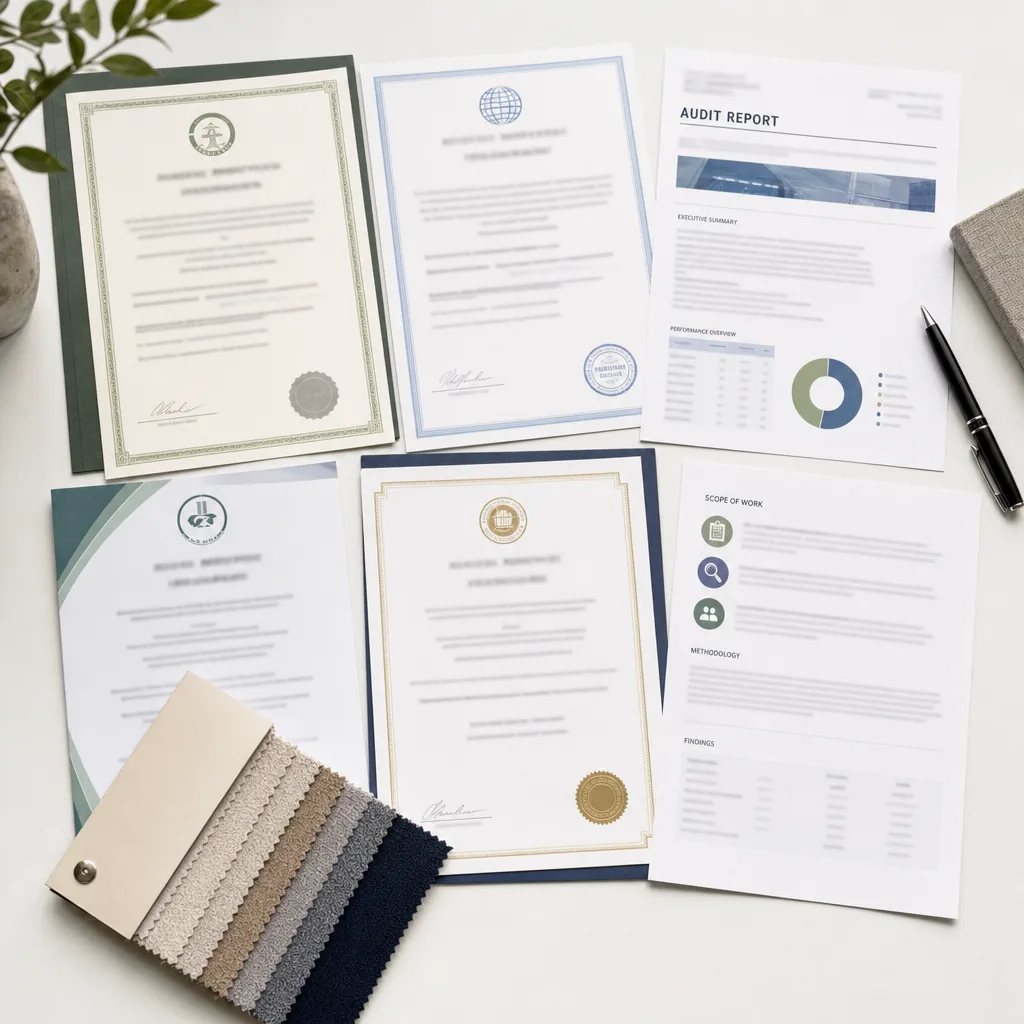
The non-negotiable document is a CPSIA test report tied to the exact bill of materials for that style, colorway, and PO, not a recycled pass report from a similar cap. A credible kids custom cap manufacturer should be able to provide third-party lab results covering every child-accessible component: shell fabric, sweatband, visor board, closure, top button, eyelets, print ink, heat-transfer film, labels, and any PVC, TPU, or silicone trim. For U.S. children’s headwear, buyers typically expect total lead content under 100 ppm for substrate materials and phthalates below 0.1% on applicable plasticized parts, with the age grade clearly stated for products intended for children 12 and under. If the report does not show the style code, component breakdown, sample photos, CPSC-referenced test methods, and numeric pass results, it will not hold up well in a retailer compliance review or Amazon Children’s Product Certificate file.
The weak point is usually not fabric chemistry but attachment security. A proper compliance pack should include small-parts and pull testing for top buttons, snaps, rivets, silicone badges, poms, and plastic snapback pegs, especially on infant and toddler programs where one detached hard part can trigger a rejection. Safer construction for under-3 styles is usually stitched eyelets, self-fabric buttons, and elastic-back or hook-and-loop closures, with no decorative metal or molded rubber trims. The file should also confirm labeling details: fiber content such as 100% cotton twill 240 gsm or 65/35 poly-cotton brushed twill 220 gsm, country of origin, care label placement, and the CPSIA tracking label with factory code, production month/year, and lot or style number printed on a permanent inside label rather than only on the carton.
Retail compliance teams usually want traceability and factory due diligence in the same pack. That means current sedex-audit-cap-supplier-guide.html">BSCI 2.0 or Sedex SMETA 4-Pillar audit records, plus approval documents that connect the tested sample to the shipped goods: Pantone TCX or coated Pantone callouts, signed trim cards, packaging declarations for suffocation warnings and polybag gauge, and approved embroidery strike-offs where applicable. If embroidery is part of the style, the file should specify thread type and production conditions, such as 40 wt polyester run on Tajima or Barudan heads, because stitch density that looks fine on a 280 gsm brushed cotton can pucker badly on a lighter 180 gsm twill. Those records are not paperwork for its own sake; they are what let a buyer isolate one lot, one shade, or one trim failure instead of disputing an entire season’s shipment.
Frequently Asked Questions
What is the minimum order quantity (MOQ) for custom hats?
Our standard MOQ is 100 pieces per design and color, with sampling available from 1 piece. For complex multi-color logos or premium fabric upgrades, the MOQ can be lowered with a small per-piece surcharge.
Do you support sustainability certifications?
Yes. We work with GOTS organic cotton, GRS-certified recycled polyester, OEKO-TEX Standard 100 fabrics, and are BSCI and Sedex audited. Certification documentation can be provided per order.
How long does production take?
Sampling takes 7 to 12 days. Bulk production runs 20 to 30 days depending on quantity, fabric availability and decoration complexity. Inspection and packing adds another 3 to 5 days before shipment.
What logo decoration techniques do you offer?
3D puff embroidery, flat embroidery, woven patch, leather patch, PVC patch, screen printing, sublimation, applique and laser etching, all in-house with no subcontracting.
Can I order a sample before bulk production?
Yes. We strongly recommend approving a pre-production sample before mass production. Samples are charged at 35 to 60 USD each plus express shipping, fully refundable against confirmed bulk orders over 500 pieces.
What's the MOQ for custom embroidered baseball caps no minimum?
When evaluating custom embroidered baseball caps no minimum, the key considerations are construction quality, decoration capability, MOQ flexibility and lead time. Anything that can fit through a 31.7 mm small-parts cylinder fails for kids under 3. That means: no decorative beads, no detachable patches, no plastic snap closures on infant caps. Use Velcro or fabric strap. EU treats kids' apparel under REACH; toys (with structural play function) under EN 71. Embroidered logos, sewn-on patches, fabric straps — all REACH. Hats with…
How does ordering high quality custom baseball caps work?
When evaluating high quality custom baseball caps, the key considerations are construction quality, decoration capability, MOQ flexibility and lead time. Anything that can fit through a 31.7 mm small-parts cylinder fails for kids under 3. That means: no decorative beads, no detachable patches, no plastic snap closures on infant caps. Use Velcro or fabric strap. Infant (0-12 months, 38-44 cm), toddler (1-3 years, 46-50 cm), kids (4-12 years, 52-56 cm), youth (12-16 years, 54-58 cm). Manufacturing tooling differs at each tier.
How does ordering baseball cap with custom logo work?
When evaluating baseball cap with custom logo, the key considerations are construction quality, decoration capability, MOQ flexibility and lead time. CPSIA test report (current, under 12 months old), small-parts inspection certificate, fabric content label confirmation, BSCI/Sedex social audit, tracking-label compliance (CPSIA requires manufacturer + production date on the cap). Infant (0-12 months, 38-44 cm), toddler (1-3 years, 46-50 cm), kids (4-12 years, 52-56 cm), youth (12-16 years, 54-58 cm). Manufacturing tooling…
What's the MOQ for custom hat embroidery no minimum?
When evaluating custom hat embroidery no minimum, the key considerations are construction quality, decoration capability, MOQ flexibility and lead time. Flat embroidery is universally safe. PVC patches must be phthalate-tested. Heat-transfer print must use water-based ink (not solvent-based) for the under-3 segment. Sublimation is fine. Infant (0-12 months, 38-44 cm), toddler (1-3 years, 46-50 cm), kids (4-12 years, 52-56 cm), youth (12-16 years, 54-58 cm). Manufacturing tooling differs at each tier.
Ready to start your custom hat project?
Send us your tech-pack, sketch or even just an inspiration photo. We will respond with a detailed quotation and digital mock-up within 24 hours.
Request a free quoteRelated guides
Refreshing a Hat Collection: A Repeat-Order Playbook for Established Brands
Read article →
Ball Caps for Women: A 2026 Sourcing Playbook for International Buyers - 2026 Buyer's Guide
Read article →
Festival Bucket Hats Reorder Planning Guide for Custom Hat Buyers
Read article →We hope this guide demystifies kids' & children's cap manufacturing: cpsia compliance and sizing - cost & moq breakdown and helps you move forward with confidence. If you have questions specific to your project, our English-speaking sales engineers are one message away.