
Hat Sizing & Fit for International Markets: US, EU, UK, JP Standards - Cost & MOQ Breakdown
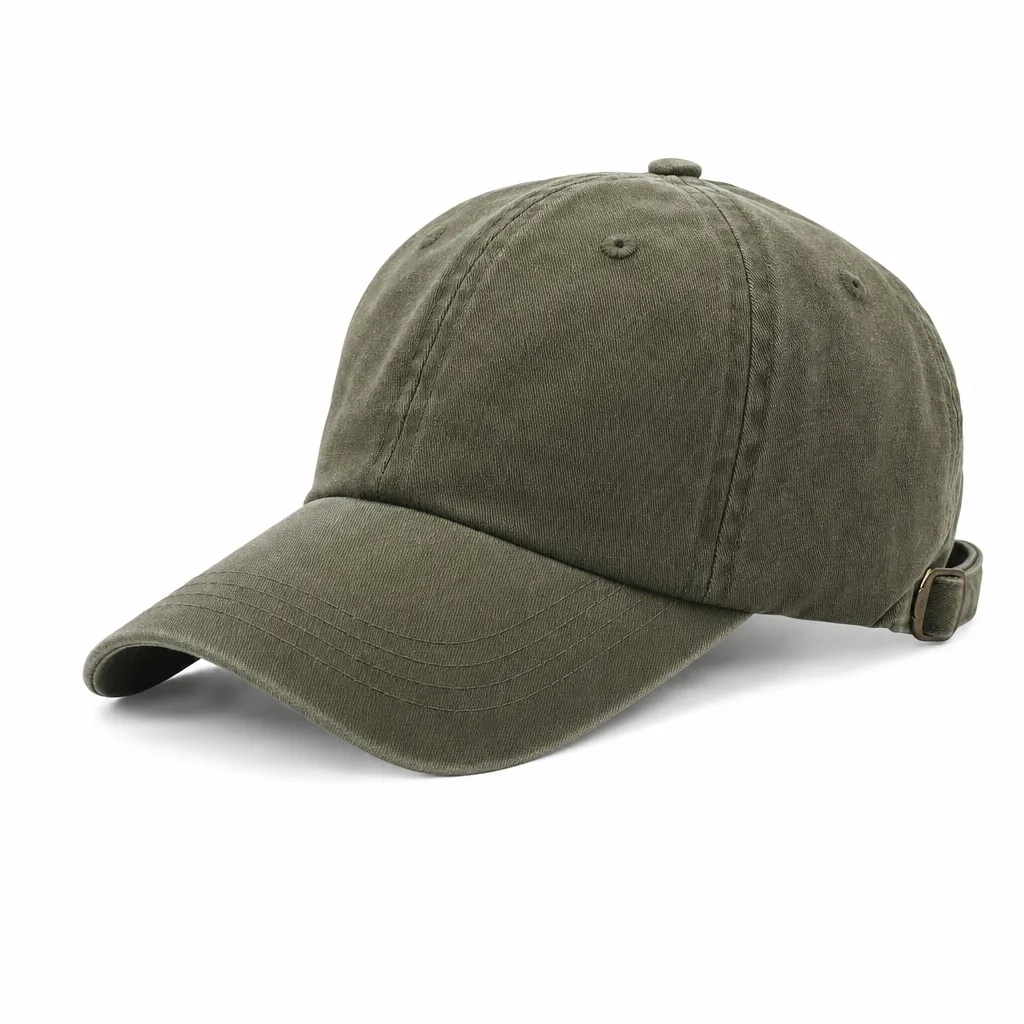
Every week, our sales team answers detailed questions about hat sizing & fit for international markets: us, eu, uk, jp standards - cost & moq breakdown. We wrote this guide so that wholesalers, streetwear brands, corporate buyers and promotional resellers can compare options with full information, and avoid the traps that show up only after production has started.
Why sizing varies by region
Regional size variation starts with the target silhouette, not the circumference tape. A hat sizing chart can convert 58 cm to US 7 1/4, but it cannot show whether the customer expects a deep, wrapped fit or a lower-profile crown with flatter sidewalls. In US licensed sports and streetwear, buyers usually accept a finished crown depth around 17.0 to 17.5 cm on a 59FIFTY-style cap, plus firmer buckram and more front-panel lift. In Japan, that same 58 cm can be rejected if the front stands too tall, the side profile looks bulky, or the oval pinches at the temples. On the line, small build changes move perceived size fast: switching sweatband foam from 2 mm to 4 mm, increasing visor curve, or changing side-panel angle can make one cap feel close to half a size smaller even when the measured opening still passes spec. Head form is the second reason simple conversion tables fail. North American programs are generally more tolerant of long-oval shapes and higher hairstyle volume, while Japanese and some Korean accounts are stricter about pressure at the front temple and rear occipital point. A cap blocked on the wrong mold may still land within a ±0.3 cm circumference tolerance and still wear badly because the width-to-length ratio is wrong. That is why experienced factories approve regional fit on physical head forms, not only against a basic hat sizing chart. At CrownsForge, we normally review fit samples on market-specific blocks before bulk, because one pattern correction in the side panel or sweatband landing can be the difference between a clean launch and an 8 percent return rate.
Retail standards and closure choices make the regional gap even more obvious. EU buyers usually merchandise in centimeters, UK programs often follow the same logic, and US consumers still shop by 7 1/8, 7 1/4, and 7 3/8. The conversion looks simple on a hat sizing chart, but production is not a straight relabel. Each 1/8 size step changes crown opening geometry, sweatband length, and blocking tension. A sweatband finishing at 57.5 cm instead of 58.0 cm may clear inline measurement, yet online customers will notice immediately if the listed fit is precise. In Germany and the UK promotional channel, a one-size cap covering roughly 54 to 60 cm is usually acceptable; in Japanese streetwear, that spread is often too broad, so buyers ask for narrower grading or a shallower pattern to control both comfort and silhouette. Closure design exposes those expectations faster than shell measurement alone. A standard plastic snapback usually gives 6 to 7 usable peg positions and a real comfort range around 54 to 61 cm, but the fit depends on rear opening depth, strap stiffness, and how the back arch sits against the occipital bone. Southern European fashion accounts often want a tighter back profile with less visible strap excess, so we shorten the tail or reduce the opening width. US mass retail tends to prefer wider adjustment travel because it reduces exchange risk across mixed demographics. That is why fitted versus adjustable is a tooling decision, not just a label choice: mold selection, panel geometry, sweatband stretch, steaming, and final pressing all have to match the destination market, or a nominal 58 cm cap can finish closer to 56.5 to 57.0 cm after assembly.
Fitted caps: US numeric vs EU centimeter sizing
For fitted caps, centimeters have to be the master spec and US fractions should sit on the hat sizing chart as a selling conversion, not the production control point. The clean mapping is standard: `6 7/8 = 55 cm`, `7 = 56 cm`, `7 1/8 = 57 cm`, `7 1/4 = 58 cm`, `7 3/8 = 59 cm`, `7 1/2 = 60 cm`, `7 5/8 = 61 cm`, and `7 3/4 = 62 cm`. Where factories get into trouble is assuming that label size equals finished feel. On fitted bodies, internal circumference regularly moves `±0.3 cm` and can drift toward `±0.5 cm` after stitching, steaming, and final pressing, especially with a `28-32 mm` sweatband, thick rear seam turn-back, hard front buckram, and heavier shells like `16-18 oz` wool serge or dense polyester twill. A cap labeled `57 cm` can still wear nearly half a size tight if the block is too round, the crown depth is shallow, or the front panels are overbuilt. The only measurement that matters is the finished cap after final press on the approved block: inside circumference, front-to-back length, side-to-side width, crown depth, and visor set all need to match the sealed sample, not a generic spreadsheet.
Market practice is less uniform than many buyers assume. EU importers usually issue fitted orders in pure centimeters; US sports and streetwear accounts still write POs in fractions; UK buyers often switch between both depending on whether the line is licensed, fashion, or teamwear; and Japanese customers are typically the least forgiving when the size ticket says `58 cm` but the cap wears closer to `57.5`. On low-stretch constructions such as wool blend serge, brushed cotton twill, or firm-fused polyester bodies, that mismatch drives returns fast. Good factories do not stop at `AQL 2.5` carton checks; they verify size on the correct long-oval or round-oval block, confirm post-press stability, and isolate any size drift by lot. At CrownsForge, we keep separate development blocks for different oval profiles because a numeric size without shape control is incomplete. The commercial math is just as important: a true fitted program in `55-62 cm` usually needs `25-50 pcs` per size, so MOQ lands around `200-400 pcs` per color, while size sorting, stickering, and carton segregation typically add `US$0.18-0.45` per cap in packing and inspection cost.
Adjustable / one-size models
Adjustable caps reduce fit complaints faster than any pattern tweak, but they do not eliminate the need for a proper hat sizing chart. A standard adult snapback built on a 58 cm block usually gives a sellable range of 54-61 cm with a 7-position PE snap; in actual wear, the comfort zone is narrower, closer to US fitted 6 7/8 through 7 1/2. Strapback closures with a self-fabric strap and metal tri-glide or buckle read more premium, but once you factor back-opening tension and hair bulk, the practical range is usually 55-60 cm. That matters in export programs because Japan and parts of the EU reject vague “one size” claims faster than US promo buyers; low-profile crowns that feel acceptable in Los Angeles often trigger pinch complaints in Tokyo when the front panel is over-fused or the sweatband seam is bulky. Closure choice also shifts cost and claims more than most buyers expect. In Yiwu sourcing, the trim delta between a stock PE snap and a fabric strap with metal slide is commonly just $0.06-$0.18 per cap at 3,000 units, but labor is the bigger variable: snap installation is fast, standardized, and easier to keep within AQL 2.5, while strapbacks add stitch steps, bartack risk, and plating consistency checks. On washed cotton twill, brushed chino, and garment-dyed dad caps, metal hardware looks cleaner at retail, but mixed plating lots in gold, nickel, or gunmetal create obvious carton-to-carton shade variation if the supplier cannot hold a reasonable visual tolerance. CrownsForge typically pull-tests buckle attachment and checks bartack security after washing because 12 oz canvas and wool-blend bodies expose weak back-strap construction quickly.
Elastic-fit caps are routinely oversold because the measured stretch range is wider than the wearable range. An elasticized rear band may bench-test at 56-60 cm, but once you add 3D embroidery, seam tape, and a fused buckram front, the cap can feel half a size smaller. That is why experienced factories compare the shell against a fitted-to-adjustable hat sizing chart before PPS approval instead of trusting nominal elastic specs. The gap is most visible in EU and Japan orders, where buyers expect cleaner size logic and return rates climb quickly if the crown grips at the temples or rides high above the ears. The cost structure is also less forgiving than buyers assume. Elastic insertion, sweatband handling, and recovery control usually add $0.12-$0.28 per unit over a basic snapback, depending on fabric weight and whether the style uses a full stretch sweatband or only a rear elastic section. Defect risk is higher too: twisted elastic, uneven recovery, and wavy back openings are easy to catch at AQL 2.5 final inspection and hard to rework cleanly. In practice, elastic systems perform best on lighter brushed cotton, polyester-spandex performance fabrics, or softer acrylic-wool blends around 180-260 gsm. On rigid high-gsm canvas or heavily structured trucker bodies, the band stretches but the crown does not, so the wearer feels compression instead of flexibility.
Children's and youth sizing
Build children’s and youth caps on dedicated blocks, not shrunken adult patterns. Once your head-circumference data spans more than one grading band, the economics already favor a separate size run: children typically fit 50–54 cm, youth 54–56 cm, while most adult baseball-cap development still centers on 56–58 cm. The failure I see most often is a factory trimming an adult block by a few millimeters and calling it “kids.” The tape may read correctly, but the cap still sits too low over the ears, gaps above the brow, and overhangs at the visor. A usable hat sizing chart should lead with finished head circumference in centimeters, then map to market language such as US youth, EU/UK centimeter sizing, and JP retail labeling. Age bands like “6–12 years” are weak merchandising shorthand, not fit data, especially in school uniform, team, and attraction-gift programs where return rates spike when parents buy by age instead of measured circumference.
Circumference is only the first spec. Children’s heads are proportionally rounder, so the pattern has to change: on a structured 6-panel cap, crown height usually comes down 8–12 mm, visor length drops from roughly 7.0 cm to 6.0–6.5 cm, and the back opening plus sweatband length need rebalancing so the cap seats cleanly without pressure points. If you keep youth and adult fitted sizes in the same marker, notch alignment drifts on the sewing line and finished measurements can wander past ±3 mm; that may pass casually in the US, but Japan and Korea buyers often reject that variance, especially on licensed or school programs. The added cost is modest: a dedicated kids’ block and sample round usually adds about $80–$180 per style, with unit cost increasing only $0.12–$0.35 because sewing minutes at eyelet, sweatband, visor binding, and top-button operations barely change. Realistic MOQ is 144–300 pcs per color for cut-and-sew, lower only when shell fabric, closure, and embroidery setup stay standardized.
QC has to follow the size split or the pattern work gets wasted. Inspect finished circumference, crown symmetry, visor centerline, and back-opening range to AQL 2.5, and check each size run on approved headforms before packing; on embroidered styles run on Tajima or Barudan heads, also confirm logo placement relative to crown height, because a front logo scaled for adult panels often looks oversized on youth crowns. Keep separate carton labels, barcode files, and regional size mapping for US, EU, UK, and JP channels, since a 54–56 cm youth cap may be sold beside adult small in one market and as a dedicated youth line in another. Our standard practice is to lock the hat sizing chart into the approval pack with tolerance notes, closure range, and market labeling before bulk production. That prevents the common last-minute mistake of forcing one adjustable SKU to cover a 52 cm child and a 56 cm youth head, then paying for relabeling, repacking, and avoidable chargebacks later.
Tech-pack sizing instructions
The tech pack must lock three dimensions before you sample: internal circumference measured on the sweatband seam line, finished crown height from button to sweatband, and brim length from the front crown join to the visor tip. If you leave any of these as “standard,” the factory will default to its own block, and that is where international cap fit starts drifting between markets. For adult fitted cap sizes, I tell buyers to specify internal circumference in both centimeters and inches, with a tolerance of plus or minus 0.3 cm for fitted programs and plus or minus 0.5 cm for casual adjustable programs. A clean hat sizing chart should show each size break against the actual sweatband circumference after sewing, not the paper pattern measurement before assembly, because sweatband folding and seam turn can easily eat 2 to 4 mm. On structured 6-panel caps, crown height should also note whether you are measuring center front rise or side crown rise; mix those up and your sample can look a full size off even when the circumference is technically correct.
Brim length sounds simple, but it causes a surprising number of approvals to fail, especially when buyers compare US sports caps, EU fashion caps, and JP streetwear fits side by side. The tech pack should state finished brim length, brim width at the widest point, sandwich count if applicable, and visor curve standard such as flat, semi-curved, or pre-curved to a target radius. A brim listed only as “7 cm” is incomplete if the factory is using a different plastic insert thickness or board stiffness; a 1.6 mm PE insert and a 2.0 mm recycled PP insert do not wear the same even at identical length. For snapback adjustable size development, you should also define the overlap allowance at the back opening, because a nominal 58 cm cap with a 7-hole strap can still fit very differently depending on whether the usable range is 54 to 60 cm or 56 to 62 cm.
For one size fits all hats, the safest approach is to build the spec from the target market’s head-size distribution, not from a generic OS label. In practice, that means your fitted hat size chart snapback program should identify the base body size—usually equivalent to 58 cm finished circumference on an adult mid-profile cap—then define the closure range, crown depth, and sweatband stretch recovery. Our standard practice is to call out sweatband material weight as well, because a 180 gsm brushed cotton twill band and a 1.5 mm foam-backed polyester band change perceived fit even when the tape measure says the same number. If you sell across US, EU, UK, and Japan, include a conversion note directly in the tech pack so the factory is not guessing between 7 1/4, 58 cm, and JP L. That single line prevents a lot of expensive rework at pre-production stage, where resizing even one custom mold or sweatband grading set can add $120 to $300 and push MOQ-sensitive orders into a second sample round.
Sample fitting protocols
A fitting protocol breaks down as soon as a factory validates export caps on one generic headform. For international programs, I want an 8- to 12-person wear panel mapped to a hat sizing chart, with measured head circumferences from 54 to 62 cm in 1 cm steps and at least one tester each for the US, EU, UK, and Japan. Comments like “too tight” or “too shallow” are useless unless they are tied to circumference, crown depth, and actual wearing position. A 58 cm sample that passes on a US streetwear fit can still fail in Japan because the front panel rides high, the sweatband presses the temples, or the customer wears the cap lower on the brow. Every fit record should log head circumference, front-to-back head length if available, hairstyle during testing, ear coverage, and preferred crown profile so you can separate a true size problem from a shape problem caused by panel angle, visor pitch, or sweatband tension. Side-by-side fitting only works if you compare the actual constructions being sold: closed-back fitted, snapback with a standard 7-hole plastic closure, and a buckle or self-fabric strap program. “One size fits all” is a sales phrase, not a technical spec. A nominal 58 cm snapback body may grade across roughly 55 to 60 cm, but the real comfort window is usually tighter once you evaluate crown spring, back-opening breakout, and strap angle on-head. Mark each closure position, photograph the profile and rear opening, and log acceptance by market; in practice, positions 3 through 5 may be commercial in the US while EU and UK testers shift the preferred midpoint. If a buyer is reviewing both fitted and adjustable silhouettes, score visor balance, crown height, and rear-opening appearance at the same time, because those are common rejection points even when the circumference still matches the hat sizing chart.
The cheapest place to catch fit errors is before embroidery placement, buckram stiffness, and bulk cutting are frozen. I usually recommend three intentional fit samples per style: target spec, minus 0.5 cm, and plus 0.5 cm, with crown depth adjusted by 3 to 5 mm when the complaint is vertical fit rather than raw circumference. In Zhejiang and South China, that typically adds about $35 to $80 per sample for standard cotton twill or 300 to 340 gsm brushed chino; imported wool blends, molded buckram, or laser-perforated performance polyester push the number higher, and international courier often costs more than the sewing room. If color approval is happening at the same stage, keep fabric and sweatband checks against Pantone TCX separate from fit notes and hold shade deviation to an agreed Delta-E tolerance so visual issues do not contaminate sizing feedback. MOQ should be set after wear-test data is clean, not before. A fitted cap program usually needs broken size runs such as 56, 57, 58, 59, and 60 cm, and practical factory MOQs are often 48 to 72 pieces per size if markers and cutting are planned correctly; adjustable bodies can usually consolidate into 144 to 300 pieces total because the size risk sits in one shell. The bigger operational mistake is ignoring tolerance drift. A finished circumference variance of 0.7 cm is enough to turn a passing pre-production sample into a returns problem once sweatband shrinkage, visor sewing tension, and top-button alignment start stacking up. Our standard practice is to release bulk only after closure settings, wear-test notes, and measured tolerances are reconciled back to the hat sizing chart and reviewed with an AQL 2.5 mindset, because fit failures are expensive after embroidery, labeling, and carton packing are already sunk.
Frequently Asked Questions
What logo decoration techniques do you offer?
3D puff embroidery, flat embroidery, woven patch, leather patch, PVC patch, screen printing, sublimation, applique and laser etching, all in-house with no subcontracting.
Can I order a sample before bulk production?
Yes. We strongly recommend approving a pre-production sample before mass production. Samples are charged at 35 to 60 USD each plus express shipping, fully refundable against confirmed bulk orders over 500 pieces.
What is the minimum order quantity (MOQ) for custom hats?
Our standard MOQ is 100 pieces per design and color, with sampling available from 1 piece. For complex multi-color logos or premium fabric upgrades, the MOQ can be lowered with a small per-piece surcharge.
How long does production take?
Sampling takes 7 to 12 days. Bulk production runs 20 to 30 days depending on quantity, fabric availability and decoration complexity. Inspection and packing adds another 3 to 5 days before shipment.
What file format should I send for my logo?
Vector files (AI, EPS, PDF) are ideal. High-resolution PNG or JPG at 300 dpi on transparent background works as a fallback. Provide Pantone color references for accurate reproduction.
What's the MOQ for custom new era 59fifty fitted hats no minimum?
When evaluating custom new era 59fifty fitted hats no minimum, the key considerations are construction quality, decoration capability, MOQ flexibility and lead time. Head shape, retail expectations, fashion norms. Conversion chart 6 7/8 = 55cm, 7 = 56cm etc.
What should buyers know about new era 9fifty snapback?
When evaluating new era 9fifty snapback, the key considerations are construction quality, decoration capability, MOQ flexibility and lead time. Head shape, retail expectations, fashion norms. Conversion chart 6 7/8 = 55cm, 7 = 56cm etc.
How does ordering baseball cap embroidered custom work?
When evaluating baseball cap embroidered custom, the key considerations are construction quality, decoration capability, MOQ flexibility and lead time. Head shape, retail expectations, fashion norms. Conversion chart 6 7/8 = 55cm, 7 = 56cm etc.
What's the MOQ for custom embroidered baseball caps no minimum?
When evaluating custom embroidered baseball caps no minimum, the key considerations are construction quality, decoration capability, MOQ flexibility and lead time. Head shape, retail expectations, fashion norms. Conversion chart 6 7/8 = 55cm, 7 = 56cm etc.
Looking for a reliable hat manufacturer in China?
CrownsForge has produced custom hats for 800+ brands across 40 countries. From 100-piece launches to 100,000-piece retail programs, we deliver on time and on spec.
Get in touchRelated guides
BSCI vs Sedex vs WRAP vs WCA: Compliance Audit Standards Compared (2026 Update) - 2026 Buyer's Guide
Read article →
Sustainable Cap Packaging: Options, Costs and Retail-Buyer Demands - 2026 Buyer's Guide
Read article →Bucket Hat Corduroy Fabric And Trim Spec Guide for Custom Hat Buyers
Read article →Sourcing custom hats does not have to be complicated. With the right manufacturing partner, clear specifications and a small upfront investment in sampling, you can launch a retail-quality product in 30 to 45 days.