
Fitted vs Snapback vs Adjustable: A Closure-Type Buyer's Guide - Supplier Checklist
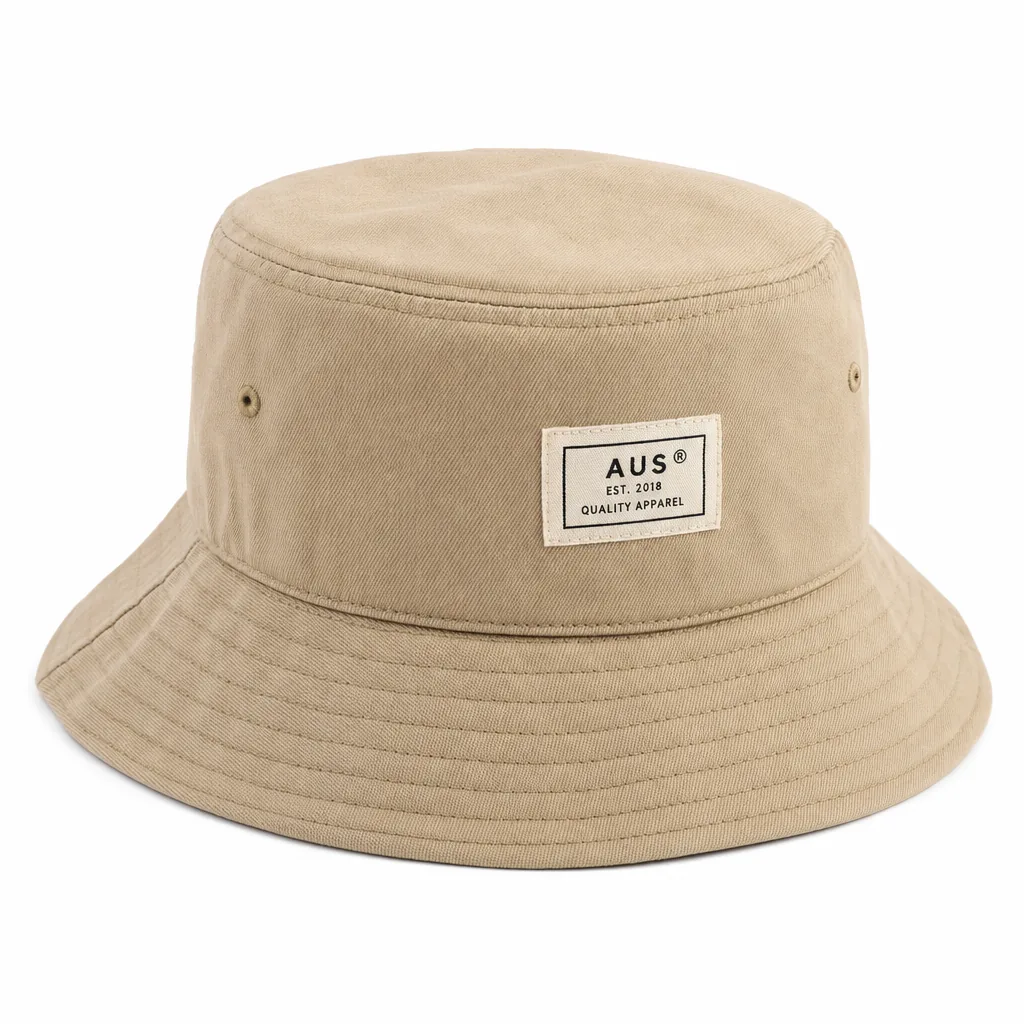
Fitted vs Snapback vs Adjustable: A Closure-Type Buyer's Guide - Supplier Checklist is one of the most-asked questions we receive from international buyers, and for good reason. With dozens of factories competing for your order and an alphabet soup of technical terms in every supplier quote, even experienced importers can feel lost. This guide consolidates what we have learned producing custom hats for clients in 40+ countries.
Fitted caps: how the tooling and sizing works
Sizing is where fitted production gets expensive fast. A snapback can hide a 20-35 mm head-circumference range in the back strap, but a fitted cap has to hit each size cleanly from 6 7/8 to 8, usually in 1/8 increments, so every size becomes its own SKU with its own sweatband cut length, blocking form, carton ratio, and QC record. On paper, a 1,200-piece order sounds efficient; on the floor, six sizes means six mini-runs, and the line loses time every time operators reset size-specific headforms, relabel bundles, and recheck circumference. In a fitted cap vs snapback decision, that fragmentation is the first cost driver buyers underestimate. The shell may share one panel die, but work-in-process handling, inspection, and packing do not. Edge sizes are the usual problem: 6 7/8 and 8 often run too small for sewing efficiency yet still require full setup. That is why fitted caps commonly carry a $0.40-$1.20 higher FOB than the same crown in snapback form, before freight or duty are even considered.
Tolerance control is also much tighter than most buyers assume. For licensed sports retail, a factory should hold finished inner circumference to about ±3 mm after sewing, steaming, and blocking; once you drift past that, returns start clustering between adjacent sizes such as 7 1/4 and 7 3/8. The real control points are sweatband length, seam allowance consistency across six joins, buckram rebound, and finishing temperature, not just the fabric shell. A 260 gsm brushed cotton twill shrinks and relaxes differently from a 180-220 gsm polyester/spandex performance fabric, and even a sweatband with 3%-5% spandex can change perceived fit enough to fail wear tests despite matching tape measure spec. Dense front embroidery on Tajima or Barudan heads can stiffen a high crown and alter how it seats, especially on structured 59FIFTY-style blocks, so we normally approve at least two adjacent PP sizes before bulk and inspect against approved headforms under AQL 2.5. MOQ pressure follows the size curve: economics are cleaner at 144-288 pieces per size, which pushes a six-size order to 864-1,728 units very quickly and shifts the real risk from manufacturing to size forecasting.
Snapback: the universal adjustable
Snapback is still the safest adjustable program for bulk buying because the closure is standardized, tolerant on fit, and easy to replenish across factories. A standard adult plastic snap usually has 7 or 8 holes and covers roughly 54-62 cm head circumference, which is why it remains the default for streetwear drops, promotional caps, and team sideline inventory. In a fitted cap vs snapback decision, snapback usually wins when the sales channel is e-commerce or wholesale, where you cannot afford to carry a full 6 7/8 through 7 5/8 size curve. The resin matters more than many buyers realize: better closures are injection-molded PP, which keeps flex life in repeated open-close use better than brittle low-cost blends that crack in cold weather or whiten at the hinge after a few cycles. Stock closure colors are normally black, white, and navy from existing molds; custom color matching is possible, but molded plastic rarely tracks crown fabric as tightly as dyed textile trims, so a realistic approval tolerance is often Delta-E 1.5-2.5 against the shell fabric and should be signed off from a physical trim card, not a digital mockup.
The biggest failure point is not demand, but poor-grade snaps hidden on an otherwise acceptable cap. Bad closures usually show flashing on the peg edges, inconsistent hole spacing, weak tab memory, and loose bartacks where the strap is secured into the back opening. Factory QC should include repeated cycle testing, seam pull checks on the rear tab attachment, peg symmetry inspection, and finished-goods inspection at AQL 2.5, with special attention on back-arch distortion after embroidery. On structured 5-panel and 6-panel builds, heavy fill stitching too close to the rear opening can torque the crown, create puckering, and leave the closure sitting crooked; on Tajima or Barudan lines, that usually traces back to poor underlay planning or an unstable cap frame setup rather than the shell fabric alone. Material choice changes performance as well: 260-320 gsm cotton twill is the commercial standard, acrylic/wool blends are common on heritage sports shapes, and 180-220 gsm brushed polyester is typical for price-sensitive promo runs. Compared with strapback, snapback assembly is usually faster and about $0.08-$0.25 cheaper per unit; compared with fitted, it dramatically reduces SKU count, carton splitting, and size-based dead stock.
Strapback: fabric strap with buckle
Strapback earns its place when hand-feel and perceived value matter more than speed of adjustment. Instead of an injection-molded PE snap, you are specifying a self-fabric tail, cotton twill tape, nylon webbing, or leather strap running through a metal slide buckle, tuck buckle, or tri-glide. That immediately shifts the cap toward fashion headwear: unstructured 6-panel dad hats, washed chino twill caps, and heritage baseball profiles read cleaner with a strapback because the closure is integrated into the silhouette, not hanging off it like a piece of sports hardware. In a fitted cap vs snapback comparison, strapback usually lands closer to the fitted side visually, especially when the strap tucks neatly and the back opening is kept shallow. A realistic adjustment range is about 54-62 cm finished inner circumference, but that depends on crown depth, sweatband bulk, back opening height, and whether the strap is single-pass or tuck-in construction.
The difference between a cheap strapback and a premium one is all in the spec. Entry builds often use 16s cotton twill with a generic plated iron buckle; better programs move to 260-320 gsm garment-washed chino, 20-25 mm herringbone tape, or 1.6-2.0 mm vegetable-tanned leather tabs with edge paint. Hardware should not be treated as decorative only: black nickel and gunmetal finishes are notorious for flaking if plating is thin, so buyers should call for salt-spray performance, rub testing, and nickel/REACH declarations for EU programs. On the sewing line, the repeat failures are predictable—twisted strap insertion, off-center buckle set, raw-edge fray, and wavy topstitching at the back opening—so the tech pack needs buckle finish, strap width, tuck length, and stitch count per inch locked down. FOB impact versus a plastic snap is usually an extra $0.20-$0.60 per cap at 300-1,000 pieces, and more if you add genuine leather or custom molded hardware. For inspection, AQL 2.5 is the right baseline, with color matching checked under D65 and strap-to-body variation held within commercial Delta-E tolerance.
Velcro / hook-and-loop
Hook-and-loop is the lowest-cost mainstream closure, and the savings matter once volume moves past 5,000 pcs. On a standard 6-panel 100% cotton twill cap, a 20 x 80 mm or 25 x 85 mm nylon hook-and-loop set usually lands at $0.05-$0.11 ex-factory in Zhejiang; an injected PP snap set is more like $0.12-$0.25, while a metal buckle with self-fabric tuck strap runs $0.20-$0.42 depending on plating and strap construction. Assembly is faster as well. Operators are feeding tape, setting alignment, and sewing a box stitch or box-X at roughly 18-22 SPI, not handling male/female snap parts or buckle hardware that can scratch eyelets and top buttons during sewing. That cost structure is why hook-and-loop dominates promotional orders, school programs, youth team caps, and military-style cadet shapes where FOB control matters more than shelf presence. In a fitted cap vs snapback conversation for retail, this closure is rarely chosen for style; it is chosen because it solves cost and size coverage cleanly.
Its strongest advantage is fit tolerance. A well-patterned back opening with quality tape will usually cover 54-60 cm on youth blocks and around 56-62 cm on adult caps, eliminating the fixed size jumps you get with a 7-hole plastic snap. That matters for event merch, uniforms, and reseller programs trying to avoid split size ratios. The downside is wear performance: low-grade tape loses shear strength after repeated open-close cycles, collects lint, and can snag tricot, mesh, or long hair if the hook edge is rough. On the factory floor, weak tape shows up early in inline QC and again at final inspection under AQL 2.5 if the supplier bought purely on price. The safer spec is woven nylon hook-and-loop with dense hook count, heat-sealed edges, balanced reinforcement, and color matching against a Pantone TCX reference with an acceptable Delta-E tolerance agreed before bulk.
The aesthetic penalty is real, and buyers should be honest about it. Exposed tape interrupts the rear profile and reads cheaper from three feet away than a clean snapback arch or a buckle strap with a finished tuck, even when the crown shape, visor curve, and embroidery are strong. That is why hook-and-loop performs better on washed cadet caps, ripstop tactical styles, low-cost polyester promos, and kids' caps than on streetwear or licensed sports retail. Our standard practice is to qualify this closure by width, tape composition, peel strength, stitch count, and back-view sample approval, and to confirm the loop side is soft enough to avoid neck irritation. In practical terms, hook-and-loop wins on speed, cost, and fit range; in a fitted cap vs snapback decision tied to perceived value, it usually falls behind before the salesman sample is signed off.
Buckle (metal slide or tuck-buckle)
Buckle closures make sense when the cap needs to look premium at arm’s length, not loud at shelf distance. They belong on dad hats, washed twill 6-panels, and unstructured chino programs where a metal slide or tuck-buckle gives a cleaner back profile than a PP snap. For buyers comparing fitted cap vs snapback options, buckle caps are not a compromise between the two; they solve for a different brief: quieter branding, finer size adjustment, and higher perceived value on fashion-driven silhouettes. On adult caps, the strap is usually 18 to 20 mm wide, cut from self-fabric, with an effective adjustment range around 54 to 60 cm. Cost-wise, a stock antique-brass, matte-nickel, or gunmetal buckle typically runs $0.10 to $0.18 more than a basic plastic snap set at production scale, while a custom logo mold or debossed buckle can add $0.30 to $0.45 per cap after tooling amortization and MOQ are factored in. It also pairs better with 220 to 260 gsm washed cotton twill, 8 oz chino, or peach-finish canvas, where the hardware supports the garment-washed hand feel instead of clashing with it.
Most buckle problems come from strap engineering, not the metal part. If the strap is cut off-grain, left raw-edged, or built from a soft face fabric without reinforcement, it will fuzz, curl, or jam after store try-ons. The safer spec is a folded-edge self strap, or a self-fabric shell backed with hot-cut polyester tape when the shell fabric lacks body. Tuck-buckles need especially tight tolerances: if the slot is even 0.5 mm too narrow against a heavy canvas strap, the adjustment drags immediately; too loose, and the tail walks out during wear. I would spec nickel-free plating, burr-free edges, and minimum 24-hour salt-spray resistance for U.S. retail, then inspect function under load, not just appearance. AQL 2.5 is the right audit level for mixed fashion headwear, with buckle alignment held within 2 mm of center back, strap box stitching at roughly 8 to 10 SPI, and repeated adjustment cycling to catch slip. Buyers targeting 61 to 62 cm head sizes should confirm longer strap length and tuck-channel geometry during sampling, because buckle closures do not hide oversize range as cleanly as snapbacks.
Cost comparison and fit tolerance
SKU count—not closure hardware—is where a fitted cap vs snapback program separates on cost. A fitted order usually needs 5 to 7 size SKUs per color, with adult runs concentrated from 6 7/8 to 7 5/8 in 1/8-size increments, so one style turns into multiple cutting markers, size stickers, carton ratios, and replenishment headaches. On a 300-piece order for a 6-panel 20% wool / 80% acrylic cap with 3D front embroidery and a flat visor, fitted pricing is typically $4.80 to $6.40 FOB China; the same shell with a standard 7-hole PE snap is more like $3.90 to $5.20. The snap set itself only costs about $0.10 to $0.18. The real premium comes from fragmented inventory, slower line balancing, and dead stock risk in edge sizes like 6 7/8 and 7 5/8, which most buyers underestimate until reorder season.
Fit tolerance is where fitted programs get expensive in production. A true fitted cap is usually controlled within +/-3 mm on finished circumference, checked after sweatband setting, crown blocking, and final steaming; if the body lands large or small, there is no closure to absorb the error. On better factories, circumference is checked with a head-form or calibrated tape at inline and final inspection, while seam matching, back seam deviation, and sweatband splice position are watched closely because each one shifts perceived fit. Snapbacks are more forgiving: a standard adult body often covers roughly 58 to 61 cm, so small variance in the crown or sweatband rarely becomes a return.
Adjustable caps also keep trim economics cleaner, but the closure choice still matters by channel. A self-fabric tuck strap is often the best low-cost premium look; antique brass buckle-and-grommet hardware usually adds around $0.12 to $0.35 per cap, while genuine leather straps add $0.40 to $0.90 depending on leather thickness, edge paint, and debossed or screen-printed logo treatment. Velcro usually saves another $0.08 to $0.20 against plastic snap hardware, but it reads promotional and loses hand feel after repeated cycles. For most streetwear drops, team merch, and event programs, adjustable is the safer buy because one size reduces warehouse complexity and protects sell-through. Fitted only earns its higher cost when exact sizing, league-style authenticity, or a clean back profile matters enough to justify the extra SKU burden and tighter QC from the first PO.
Frequently Asked Questions
How long does production take?
Sampling takes 7 to 12 days. Bulk production runs 20 to 30 days depending on quantity, fabric availability and decoration complexity. Inspection and packing adds another 3 to 5 days before shipment.
Can I order a sample before bulk production?
Yes. We strongly recommend approving a pre-production sample before mass production. Samples are charged at 35 to 60 USD each plus express shipping, fully refundable against confirmed bulk orders over 500 pieces.
What file format should I send for my logo?
Vector files (AI, EPS, PDF) are ideal. High-resolution PNG or JPG at 300 dpi on transparent background works as a fallback. Provide Pantone color references for accurate reproduction.
Do you support sustainability certifications?
Yes. We work with GOTS organic cotton, GRS-certified recycled polyester, OEKO-TEX Standard 100 fabrics, and are BSCI and Sedex audited. Certification documentation can be provided per order.
What logo decoration techniques do you offer?
3D puff embroidery, flat embroidery, woven patch, leather patch, PVC patch, screen printing, sublimation, applique and laser etching, all in-house with no subcontracting.
How does ordering baseball cap custom embroidery work?
When evaluating baseball cap custom embroidery, the key considerations are construction quality, decoration capability, MOQ flexibility and lead time. Fitted caps are stitched at exact size (6 7/8 through 8). Production requires per-size dedicated runs. MOQ effectively multiplies by number of sizes you stock. Fan-favorite for pro sports retail. Plastic snap closure with 8 standard positions. Universal sizing fits most adults (54-62 cm). The streetwear default for 30+ years.
How does ordering custom embroidered trucker hat work?
When evaluating custom embroidered trucker hat, the key considerations are construction quality, decoration capability, MOQ flexibility and lead time. Fabric or leather strap with metal slide buckle. Premium streetwear (dad hat aesthetic), heritage retail. Adjustable across a wider range than snapback but slightly slower to adjust. Fitted caps are stitched at exact size (6 7/8 through 8). Production requires per-size dedicated runs. MOQ effectively multiplies by number of sizes you stock. Fan-favorite for pro sports retail.
How does ordering custom dad hat embroidery work?
When evaluating custom dad hat embroidery, the key considerations are construction quality, decoration capability, MOQ flexibility and lead time. Fabric or leather strap with metal slide buckle. Premium streetwear (dad hat aesthetic), heritage retail. Adjustable across a wider range than snapback but slightly slower to adjust. Premium retail standard for dad hats and unstructured caps. Brass slide buckle is the heritage default. Tuck-buckle (the small flat metal clip) is also popular on Japanese-influenced premium…
How does ordering custom embroidered baseball caps work?
When evaluating custom embroidered baseball caps, the key considerations are construction quality, decoration capability, MOQ flexibility and lead time. Fitted caps are stitched at exact size (6 7/8 through 8). Production requires per-size dedicated runs. MOQ effectively multiplies by number of sizes you stock. Fan-favorite for pro sports retail. Cheapest closure, easiest to adjust, but visually downmarket. Common on promotional caps, kids' caps, military-style cadet caps.
Do MLB players wear fitted or snapbacks?
MLB Authentic On-Field caps are the official baseball hats worn by players during Major League games. They feature performance materials, official team branding, and the iconic New Era 59FIFTY fitted design.
Are snapbacks or fitted hats more popular?
Style & Popularity Since then, fitted caps have gone in and out of style, with snapback designs being the preferred choice in the mainstream fashion scene. The classic design of snapbacks makes them incredibly versatile, lending themselves to virtually any outfit style.
Is a snapback a hat or cap?
A snapback is a type of baseball cap — but with a key difference: the closure.
Do MLB players wear fitted or snapback?
Most MLB Authentic On-Field caps sold at hatclub.com are produced in the New Era 59FIFTY fitted style. This fitted silhouette is one of the most recognized hats in baseball. Key features of the New Era 59FIFTY fitted cap include: Structured high crown.
Looking for a reliable hat manufacturer in China?
CrownsForge has produced custom hats for 800+ brands across 40 countries. From 100-piece launches to 100,000-piece retail programs, we deliver on time and on spec.
Get in touchRelated guides
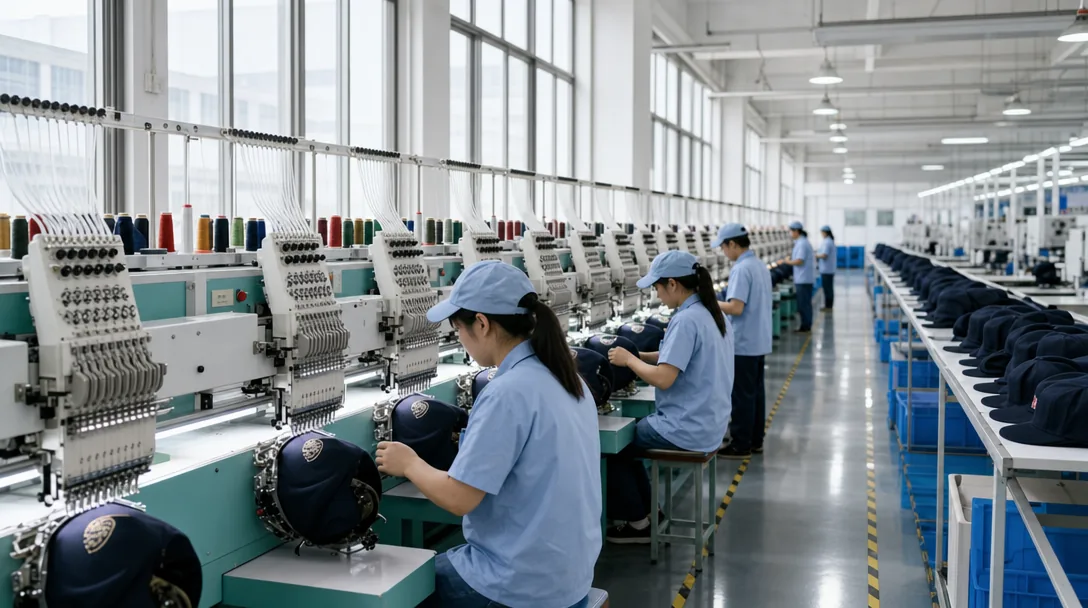
Bulk Trucker Hats Reorder Planning Guide for Custom Hat Buyers
Read article →
Custom Hats for Men: A 2026 B2B Sourcing Guide - Cost & MOQ Breakdown
Read article →
Kids' & Children's Cap Manufacturing: CPSIA Compliance and Sizing - 2026 Buyer's Guide
Read article →Sourcing custom hats does not have to be complicated. With the right manufacturing partner, clear specifications and a small upfront investment in sampling, you can launch a retail-quality product in 30 to 45 days.