
Festival Bucket Hats Supplier Audit Checklist for Custom Hat Buyers
Every week, our sales team answers detailed questions about festival bucket hats supplier audit checklist for custom hat buyers. We wrote this guide so that wholesalers, streetwear brands, corporate buyers and promotional resellers can compare options with full information, and avoid the traps that show up only after production has started.
Why festival bucket hats supplier audit checklist needs a separate sourcing plan
A festival bucket hats supplier audit checklist needs its own sourcing plan because the buyer is usually managing event deadlines, mixed retail/promotional expectations, and higher public-facing risk than a normal cap order. Festival merchandise is not just “bucket hats with a logo.” Buyers often need 3,000–50,000 pieces split across bright Pantone TCX colors, reversible panels, woven labels, chin cords, RFID hangtags, and sometimes glow, reflective, or recycled fabric claims. That changes the audit questions immediately: can the factory control color Delta-E under 1.5–2.0 across cotton twill and polyester, does it have needle detection for metal trims, and can it pack by SKU for venue delivery without carton relabeling chaos? Generic hat sourcing often focuses on unit price and logo placement. Festival bucket hats sourcing must also verify event-date capacity, shade consistency under outdoor lighting, sweatband comfort, and whether the supplier understands retail barcodes, polybag warnings, and country-specific fiber labeling.
The biggest cost decisions are fabric, decoration method, and construction complexity. A plain 160–180 gsm cotton twill bucket hat may quote around $1.45–$2.20 FOB China at 5,000 pieces, but a reversible 90s bucket hat with two printed panels, woven patch, and contrast topstitching can move to $2.80–$4.20 before freight. Bucket hats for men often need deeper crowns and larger circumference grading, while styles marketed as fitted hats women or a ladies bucket hat UK range may require smaller size ratios, softer brim memory, and different care-label wording for UK/EU compliance. Decoration also affects schedule: flat embroidery on Tajima or Barudan heads is predictable, but allover sublimation, jacquard tape, or applique patches need pre-production sampling and shrinkage checks. If the supplier cannot show fabric test reports for AZO, formaldehyde, colorfastness to perspiration, and seam slippage, the low quote is usually hiding risk.
Lead time and compliance should be audited before artwork approval, not after the deposit. For festival bucket hats, the factory may promise 25–35 days production, but that assumes greige fabric availability, approved strike-offs, no trim shortages, and stable embroidery files. Realistically, I plan 7–10 days for lab dips or print strike-offs, 5–7 days for a pre-production sample, 25–40 days bulk production, and 7–18 days freight depending on air, sea, or DDP truck/rail combinations into Europe. A proper festival bucket hats supplier audit checklist should confirm sedex-audit-cap-supplier-guide.html">BSCI 2.0 or Sedex SMETA 4-Pillar status, subcontractor control, AQL 2.5 final inspection, and whether the factory keeps broken-needle logs. At CrownsForge, our standard practice is to lock the BOM, carton plan, and inspection checklist before bulk cutting, because once 20,000 printed panels are cut, fixing a compliance or sizing mistake becomes scrap, not rework.
Factory capability checks before quoting
Before accepting a quotation for festival bucket hats, verify the factory can actually build the decoration package you are asking for, not just sew a plain bucket body. For embroidery, ask which machines are on site: Tajima, Barudan, or ZSK multi-heads are normal for stable satin stitching, while cheap single-head subcontracting often causes uneven density and puckering on 8 oz cotton twill. Request stitch-count pricing bands, usually USD 0.12–0.18 per 1,000 stitches in Zhejiang for bulk, and confirm they can run 3D puff, flat embroidery, metallic thread, and appliqué without changing vendors. For patches, separate woven labels, rubber PVC, chenille, leatherette, and sublimated patches because each uses different MOQ, mold fees, and heat-press settings. A serious factory should provide patch placement tolerance of ±2 mm, logo color control by Pantone TCX or TPX, and Delta-E targets under 1.5 for dyed fabric lots. This is the first hard filter in any festival bucket hats supplier audit checklist.
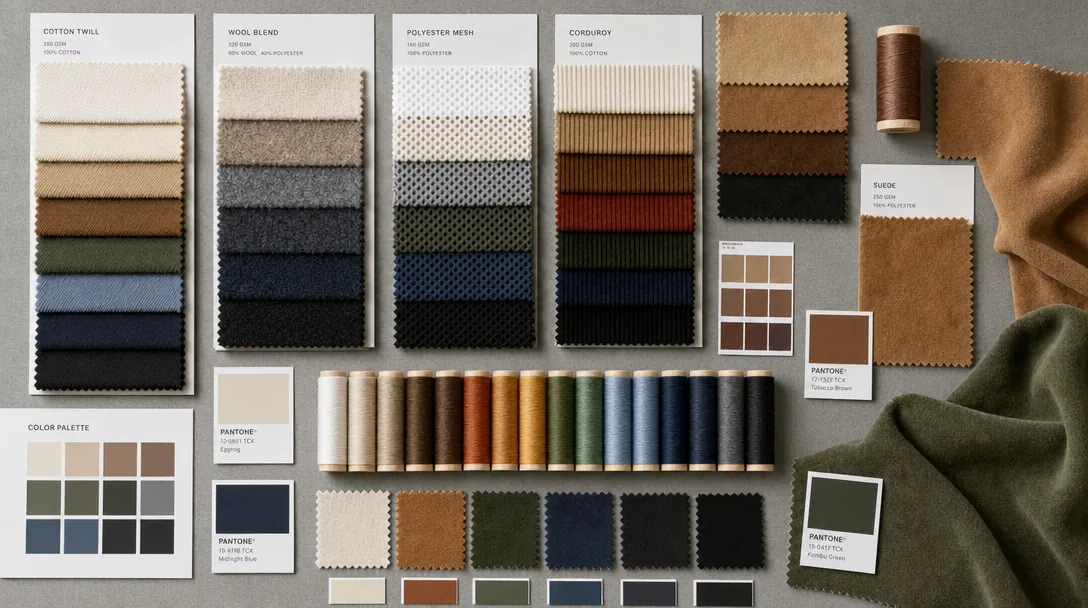
Fabric and construction checks matter more than buyers expect because bucket hats collapse badly when the brim spec is wrong. Ask for fabric swatch cards showing cotton twill at 260–320 gsm, washed canvas at 10–12 oz, nylon taslan at 70D–210D, recycled polyester with GRS transaction certificates, and mesh or terry options if you are developing a 90s bucket hat look. Panel construction should be specified as two-panel crown, four-panel crown, or cut-and-sew crown with top disc, because the pattern affects embroidery distortion and size grading. Bucket hats for men usually need a 58–60 cm head circumference, while fitted hats women and ladies bucket hat UK programs often require 56–58 cm with a shallower crown. Check brim width, stitch rows, binding tape, sweatband material, eyelet type, chin cord, toggle, reversible construction, and pack-flat recovery. Our standard practice at CrownsForge is to keep approved pre-production samples with seam allowance, SPI, and brim-board notes attached to the tech pack.
A capable sample room should produce a corrected sample in 5–7 working days, not three weeks, and should document every deviation from the buyer’s spec sheet. Ask whether the sample room has its own pattern maker, CAD plotting, heat-transfer press, embroidery sampling head, snap/button machines, and wash-test access; otherwise, each change becomes a subcontractor delay. For closure or adjustment options, bucket hats may use drawcords, inner elastic, Velcro, metal adjusters, detachable chin straps, or no closure at all, but the supplier should explain safety and market issues, especially for children’s festival merchandise. Audit readiness is the last quoting checkpoint: request BSCI 2.0 or Sedex SMETA 4-Pillar reports, business license, needle control procedure, broken-needle log, metal detection policy, and AQL 2.5 final inspection format. Communication is also auditable. If the merchandiser cannot confirm MOQ, sampling fee, FOB Ningbo/Shanghai terms, DDP carton data, carton drop-test standards, and approval timeline in writing, the price is not reliable.
MOQ, pricing and sample approval
MOQ is where a festival bucket hats supplier audit checklist becomes practical, because price promises mean nothing if the factory is hiding fabric minimums or decoration setup in the second invoice. For woven cotton twill bucket hats, a realistic MOQ is 300–500 pcs per color when using stock fabric; custom-dyed cotton, nylon taslan, or 210D polyester usually pushes to 800–1,000 pcs per Pantone TCX shade because dye houses charge by vat. Small trial runs of 100–200 pcs are possible, but buyers should expect a surcharge of $0.40–$1.20 per hat. Plain festival bucket hats often land at $1.80–$3.20 FOB Ningbo/Shanghai; embroidered, printed, or reversible versions usually sit at $3.20–$6.80 depending on fabric gsm, lining, brim stitching rows, and trim quality.
Decoration costs need to be separated clearly before sample approval. A Tajima or Barudan embroidery setup normally costs $35–$80 per logo, while woven labels are about $45–$90 per design plus 1,000–3,000 pcs label MOQ. Screen print screens run $25–$50 per color, and heat-transfer films for a 90s bucket hat look can add $0.25–$0.70 per position. For embroidery, I ask digitizers to show stitch count, thread brand, underlay type, and density; 0.38–0.45 mm spacing is common for flat logos, but dense fills on soft washed cotton can pucker badly. Bucket hats for men often need a slightly deeper crown and firmer brim, while fitted hats women or ladies bucket hat UK orders may require smaller grading, softer hand feel, and less aggressive brim stiffness.
PPS approval should lock every visible and measurable detail, not just the logo. Our standard practice at CrownsForge is to approve one physical pre-production sample against Pantone TCX or TPX references, allowing Delta-E under 1.5 for solid fabric when the material permits it, and under 2.0 for washed cotton because garment washing shifts shade. The PPS file should include brim width tolerance, crown height, seam allowance, eyelet count, label placement, drawcord length if used, polybag spec, carton marks, and barcode position. Sampling takes 7–10 days after artwork and deposit; bulk production is usually 20–35 days after PPS approval for stock fabric, or 35–50 days for custom dyeing. Add 5–7 days if you require AQL 2.5 final inspection, moisture testing, and packed-carton checks before shipment.
Quality inspection and shipping risk
The biggest shipping risk with festival bucket hats is not a late vessel; it is discovering shape, shade, or logo defects after the goods reach your warehouse. A proper festival bucket hats supplier audit checklist should lock the inspection level before production starts, not after cartons are sealed. For normal orders we use ANSI/ASQ Z1.4, General Inspection Level II, AQL 2.5 for major defects and AQL 4.0 for minor defects; critical defects are zero-tolerance. Measure crown height, brim width, circumference, and seam symmetry on a statistically valid sample, with typical tolerances of ±0.5 cm on brim width and ±1.0 cm on head circumference. Bucket hats for men usually run 58–60 cm, while fitted hats women specs often sit closer to 56–58 cm, so mixed-size POs need separate measurement tables. Do not accept one generic size chart across a festival line, especially for reversible or padded styles where fabric bulk changes fit.
Color and decoration failures need separate inspection because they rarely show in a flat pre-production photo. For cotton twill, washed canvas, or nylon taslan, require lab dips against Pantone TCX with a practical Delta-E target under 1.5 for solids and under 2.0 for garment-washed colors. Colorfastness should be checked to rubbing, perspiration, and washing; a Grade 4 result is the minimum I trust for bright neon festival bucket hats that will be worn in heat and rain. Embroidery defects include loose bobbin thread, missed stitches, puckering around dense fills, and registration drift over 1 mm on multi-color logos. On Tajima, Barudan, or ZSK heads, a 90s bucket hat with a 6,000-stitch front logo is usually safe, but heavy 12,000-stitch patches on soft washed cotton can collapse the crown unless backing and tension are adjusted. A ladies bucket hat UK order with metallic thread or chenille needs slower machine speed and extra needle-change checks.
Carton control is where many otherwise acceptable orders become expensive claims. Every master carton should show PO number, style code, color, size ratio, carton count, gross/net weight, country of origin, and scannable SKU or EAN labels if the buyer needs retail intake. Our standard practice at CrownsForge is to photograph carton markings, polybag warnings, hangtags, and packed carton layouts before final inspection release. For FOB Ningbo or Shanghai, the buyer controls freight cost and sailing choice, but the supplier must still confirm CBM, carton dimensions, and ready date before booking. DDP is cleaner for small brand teams, but quote it with duty line, HS code, destination ZIP, and delivery surcharge assumptions clearly separated. Reorder documentation should include approved sample photos, thread color codes, fabric gsm, wash recipe, packing method, inspection report, and defect history. Without that paper trail, the second run often drifts more than the first.
Buyer checklist for the next RFQ
A firm quote starts with a tight tech pack, not a mood board. For a festival bucket hats supplier audit checklist, I want the buyer to send front, side, inside, and top photos of the reference hat, plus one photo with a ruler across brim width and crown height. Add the target silhouette: classic 90s bucket hat with soft downward brim, structured streetwear bucket, reversible festival style, or wider ladies bucket hat UK retail fit. Specify size range in centimeters, not just S/M/L; for bucket hats for men we usually see 58–60 cm, while women’s fitted hats can sit closer to 56–58 cm depending on hair volume and market. If you need elastic, drawcord, chin cord, sweatband branding, woven label, or packable construction, list it before pricing. Changing those after sampling can move FOB by $0.20–$0.85 per piece.
Send fabric direction with measurable targets: 100% cotton twill at 220–260 gsm, nylon taslan around 120–160 gsm, polyester oxford 300D, washed canvas, corduroy 8-wale or 11-wale, or recycled polyester with GRS transaction certificate requirement. For color, give Pantone TCX or TPX codes and state acceptable Delta-E tolerance; for retail programs I normally push Delta-E under 1.5 for shell fabric and under 2.0 for trims. If artwork is involved, provide vector AI/PDF files, embroidery size in millimeters, thread colors, placement from seam or brim edge, and stitch type. Tajima, Barudan, and ZSK heads all handle clean bucket embroidery, but tiny text below 4 mm height or dense 3D puff on curved crown panels should be flagged early. For all-over print festival bucket hats, send repeat size, print method, and whether panels must match at seams.
Your RFQ should also state order quantity by color and size, target Incoterm, destination, packaging, inspection standard, and compliance needs. A serious buyer asks for pricing at 300, 500, 1,000, and 3,000 pieces, because cutting room efficiency and embroidery head utilization change sharply across those brackets. Say whether you need FOB Ningbo/Shanghai, DDP Los Angeles, DDP London, or Amazon FBA carton labeling; freight can add $0.35–$1.20 per hat by sea-plus-truck, and much more by air in peak season. Include requested sample type, approval deadline, and production window. Our standard practice at CrownsForge is to quote only after confirming AQL 2.5 inspection level, carton drop test needs, polybag warnings, country-of-origin labeling, and audit requirements such as BSCI 2.0 or Sedex SMETA 4-Pillar. That is the practical festival bucket hats supplier audit checklist that prevents fake low quotes.
Working with CrownsForge
For bulk QC, I treat the festival bucket hats supplier audit checklist as a production-control document, not a paperwork exercise. Incoming fabric is checked for gsm, shade band, shrinkage, and hand feel; cutting panels are bundled by shade to avoid mixed crowns and brims. In-line QC checks seam allowance, brim symmetry, topstitch spacing, sweatband joining, label placement, and decoration position every 300–500 pieces per line. Final inspection normally follows AQL 2.5 for major defects and AQL 4.0 for minor defects, with carton drop checks when the buyer uses DDP or Amazon-style fulfillment. Export coordination should include HS code confirmation, polybag warning text, recycled-content claims if any, and destination-specific labeling. A ladies bucket hat UK order may require different care wording, VAT/EORI data, and carton marks than a U.S. streetwear drop. Factories with BSCI 2.0 or Sedex SMETA 4-Pillar reports are easier to audit, but buyers should still verify subcontracted embroidery and washing units.
Frequently Asked Questions
How long does production take?
Sampling takes 7 to 12 days. Bulk production runs 20 to 30 days depending on quantity, fabric availability and decoration complexity. Inspection and packing adds another 3 to 5 days before shipment.
Do you support sustainability certifications?
Yes. We work with GOTS organic cotton, GRS-certified recycled polyester, OEKO-TEX Standard 100 fabrics, and are BSCI and Sedex audited. Certification documentation can be provided per order.
What file format should I send for my logo?
Vector files (AI, EPS, PDF) are ideal. High-resolution PNG or JPG at 300 dpi on transparent background works as a fallback. Provide Pantone color references for accurate reproduction.
What is the minimum order quantity (MOQ) for custom hats?
Our standard MOQ is 100 pieces per design and color, with sampling available from 1 piece. For complex multi-color logos or premium fabric upgrades, the MOQ can be lowered with a small per-piece surcharge.
Can I order a sample before bulk production?
Yes. We strongly recommend approving a pre-production sample before mass production. Samples are charged at 35 to 60 USD each plus express shipping, fully refundable against confirmed bulk orders over 500 pieces.
How does ordering custom fitted hats for men work?
When evaluating custom fitted hats for men, the key considerations are construction quality, decoration capability, MOQ flexibility and lead time. Explain the buyer intent behind festival bucket hats supplier audit checklist, when it differs from generic hat sourcing, and what decisions affect cost, lead time and compliance. Describe how CrownsForge manages festival bucket hats supplier audit checklist programs with sampling, decoration, QC and export coordination.
What should buyers know about bucket hat men?
When evaluating bucket hat men, the key considerations are construction quality, decoration capability, MOQ flexibility and lead time. Explain the buyer intent behind festival bucket hats supplier audit checklist, when it differs from generic hat sourcing, and what decisions affect cost, lead time and compliance. Describe how CrownsForge manages festival bucket hats supplier audit checklist programs with sampling, decoration, QC and export coordination.
What should buyers know about nike bucket hats for men?
When evaluating nike bucket hats for men, the key considerations are construction quality, decoration capability, MOQ flexibility and lead time. Explain the buyer intent behind festival bucket hats supplier audit checklist, when it differs from generic hat sourcing, and what decisions affect cost, lead time and compliance. Describe how CrownsForge manages festival bucket hats supplier audit checklist programs with sampling, decoration, QC and export coordination.
What should buyers know about kangol bucket hat 90s?
When evaluating kangol bucket hat 90s, the key considerations are construction quality, decoration capability, MOQ flexibility and lead time. Explain the buyer intent behind festival bucket hats supplier audit checklist, when it differs from generic hat sourcing, and what decisions affect cost, lead time and compliance. Describe how CrownsForge manages festival bucket hats supplier audit checklist programs with sampling, decoration, QC and export coordination.
Looking for a reliable hat manufacturer in China?
CrownsForge has produced custom hats for 800+ brands across 40 countries. From 100-piece launches to 100,000-piece retail programs, we deliver on time and on spec.
Get in touchRelated guides
Corduroy Hat: Properties, Costs and How to Spec It Right
Read article →
Cap Fabric Guide: Cotton Twill, Wool Blend, Polyester & Performance Materials
Read article →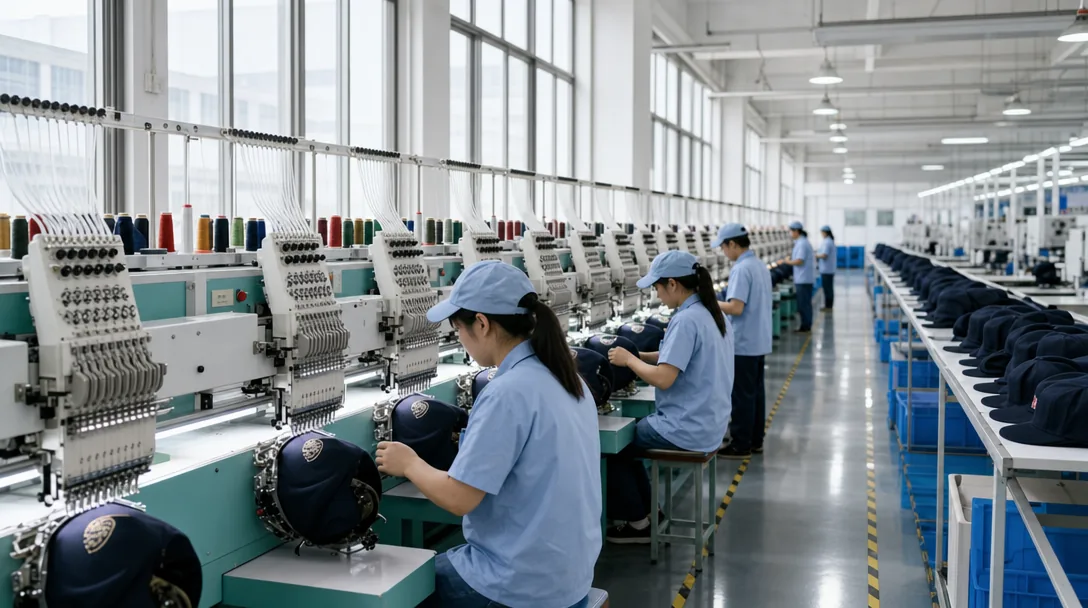
Country Hats For Men Sample Approval Process for Custom Hat Buyers
Read article →We hope this guide demystifies festival bucket hats supplier audit checklist for custom hat buyers and helps you move forward with confidence. If you have questions specific to your project, our English-speaking sales engineers are one message away.