
Embroidery Stitch Count & Thread Density: A Cost-and-Quality Reference - Supplier Checklist
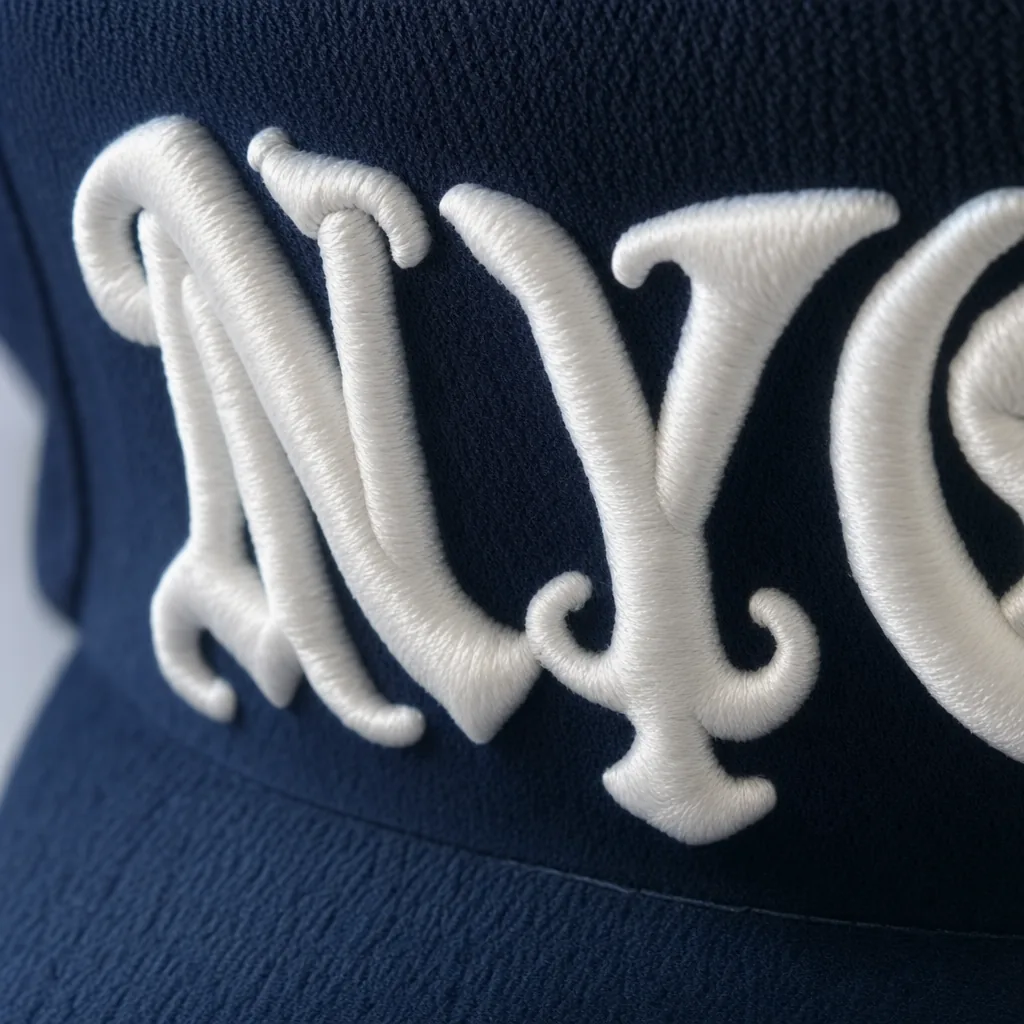
Every week, our sales team answers detailed questions about embroidery stitch count & thread density: a cost-and-quality reference - supplier checklist. We wrote this guide so that wholesalers, streetwear brands, corporate buyers and promotional resellers can compare options with full information, and avoid the traps that show up only after production has started.
What stitch count actually measures
Stitch count is the total number of programmed needle penetrations in the run file—usually `DST` for production, with editable source kept in `EMB`, `OFM`, or `PXF`—and it has only a loose relationship to logo size. Two front logos that both measure 8 cm wide can be miles apart in count: a clean satin-driven build might sit at 6,000 to 8,500 stitches, while a badge-style design with tatami fills, edge-run underlay, center-walk underlay, pull compensation, lock stitches, and four color changes can climb to 15,000 to 19,000. When I review an embroidery stitch count cap inquiry, I ignore the artwork mockup first and inspect the digitizing structure: satin column width, fill coverage, stitch angle, trim sequence, jump length, and whether the file was digitized for a cap driver instead of a flat hoop. As a working benchmark, a small 55 mm side logo often lands around 3,500 to 6,000 stitches, while a production-safe structured-cap front at 90 to 110 mm wide usually runs 10,000 to 18,000 stitches on normal 40 wt polyester thread.
What stitch count actually measures is machine workload per head, which is why it affects price faster than most buyers expect. On a Tajima, Barudan, or ZSK cap machine running 700 to 850 rpm, 1,000 stitches generally equals about 0.9 to 1.2 minutes once you factor in trims, color changes, thread settling, and the slower speed needed over the center seam. An 18,000-stitch front logo therefore does not just “cost a bit more” than an 8,000-stitch logo; it can consume well over twice the real machine time and increase thread-break exposure, especially with text below 3 mm, metallic thread, or dense fills sewn across seam tape on buckram-backed cotton twill. On a 12-head line over a 10-hour shift, that difference can move output from roughly 480 to 520 caps down to 260 to 320, depending on stoppages and style complexity. The important distinction is that stitch count is not the same as density: 10,000 stitches spread across 85 to 95 cm2 may sew cleanly, while 10,000 stitches packed into 30 to 40 cm2 often creates puckering, flagging, poor edge definition, and heat buildup at the needle. Good digitizing controls fill spacing, underlay, and compensation instead of padding the count for fake coverage.
Thread density and visual reading
Readability on an embroidery stitch count cap is driven by density per area, not the headline stitch total. For flat embroidery on a buckram-backed front panel, tatami fill usually lands in the safe window at 0.35 to 0.45 mm spacing; on most cap logos that works out to roughly 45 to 60 stitches/cm² once stitch length, angle, and overlap are factored in. That covers well on 108x58 cotton twill, brushed chino around 260 to 300 gsm, and 600D polyester without turning the crown boardy. Open the fill much past 0.50 mm and grin-through starts showing after steaming, especially on dark Pantone shades over white buckram. Tighten it below 0.32 mm and the surface gets glossy, hard, and prone to puckering around tight curves. Satin columns are a separate calculation: text strokes under 4 mm wide usually sew best at 0.30 to 0.38 mm spacing with 0.2 to 0.4 mm pull compensation and a center-walk plus edge-run underlay, otherwise counters and inside corners collapse fast.
3D puff is where bad digitizing becomes obvious. On 2 mm to 3 mm EVA foam, a clean puff file needs lower apparent density than flat fill, longer top stitches, and selective edge trapping instead of brute-force packing. If the file is too open, foam telegraphs through; if it is too dense, counters in A, R, P, and e close after trimming and heat pressing. On Tajima or Barudan cap frames, overdense puff also slows production in a measurable way: a front logo that should run at 700 to 750 spm often has to be throttled to 550 to 600 spm to control thread breaks, needle heat, and flagging. That directly affects cost per dozen more than a buyer realizes from the stitch count alone.
The better file is usually the one with balanced density zones, not the one with fewer stitches on paper. I have seen a 10,000-stitch logo sew cleaner than a 7,500-stitch version because it used proper underlay, angle changes, and relief in small fills instead of forcing detail into every square millimeter. For approval, the practical checks are simple: edges should stay crisp under D65 light, thread coverage should remain even after pressing, and crown distortion should still pass an AQL 2.5 inspection standard for appearance. Any factory that knows cap embroidery should be able to explain density by zone, tie it back to fabric weight, buckram stiffness, and thread type—usually 120D/2 rayon or polyester—and justify why the file reads cleanly on the finished cap, not just why the quote says 8,000 or 12,000 stitches.
How factories actually price stitch count
The first thing buyers get wrong is assuming stitch count pricing is linear from stitch one. In most China cap factories, it is not. The common structure is a base decoration charge built into the cap price up to roughly 8,000 to 10,000 stitches, then an overage charged per additional 1,000 stitches. On a standard six-panel cotton twill cap priced at $4.00 FOB, an 8,000-stitch front logo often stays at the same $4.00, while a 14,000-stitch logo lands around $4.20 to $4.30. The usual surcharge band is $0.02 to $0.05 per 1,000 stitches over the threshold, depending on machine time, thread changes, and whether the logo runs cleanly on Tajima or Barudan heads without repeated trims and stops. That is why an embroidery stitch count cap quote should always state both the included stitch allowance and the overage rate, not just a vague "embroidery included" note.
What actually drives the extra cost is production efficiency, not just thread consumption. Polyester embroidery thread itself is cheap; even a 40 wt rayon or polyester setup from Madeira or Gunold adds only a few cents unless the design uses many colors. The expensive part is head time, trimming, panel handling, and defect risk during cap embroidery digitizing. A dense fill that looks acceptable on a screen can sew slowly, pucker buckram, or require underlay changes that push the real stitch count pricing higher than expected. We usually see front logos sew efficiently around moderate embroidery thread density, but once the file is built with excessive fill, short satin columns, or too many jump trims, the machine minutes per dozen rise fast. That is why embroidery cost per stitch is a useful reference, but not the whole factory calculation.
The practical supplier check is to ask for three numbers on every quote: included stitches, surcharge per extra 1,000 stitches, and the approved production stitch count from the final DST file. Then ask whether the count changed after sampling, because thread density per cm² often gets adjusted once the design is tested on real cap fabric rather than flat artwork. A clean 14,000-stitch logo on brushed cotton may run fine, while the same artwork on corduroy or washed chino may need more underlay or pull compensation, increasing count and risk. Good factories also watch coverage, not only count; if embroidery thread density is too high, you can get tunneling, edge distortion, and a Delta-E mismatch effect where thread colors visually darken because the stitches are packed too tightly. For buyer-side control, treat 8,000 to 10,000 stitches as the standard included band, and challenge any quote that hides the exact threshold.
Stitch direction, pull compensation and registration
Pull compensation is where cap embroidery is won or lost. A 265 gsm cotton twill front, 350 gsm brushed chino, and 16 oz melton wool crown do not rebound the same after penetration, so one DST should never be dropped across all three without rework. On structured 6-panel caps, a solid starting range is 0.15 to 0.30 mm expansion on satin columns 1.5 to 4.0 mm wide; heavy wool, fused fronts, or foam-backed panels often need 0.30 to 0.35 mm, while soft unstructured cotton usually gets ropey above 0.20 mm. We also shorten stitch length at tight curves and terminals, because long satins that look clean on-screen will flare open after steaming. The reliable check is not the live sew-out on the machine, but the panel after steam, cooling, and a 24-hour rest, when fabric memory shows its hand. That is why an embroidery stitch count cap estimate based only on logo size is sloppy costing. An 8,000-stitch design can run crisp on buckram-backed twill, then pucker or split open on a softer face fabric if the digitizer leaves the same underlay, density, and pull values untouched. Good cap files balance edge-run, zigzag, and selective center-walk underlay against the actual front construction, backing, and seam rise. On a finished cap, stitch direction also affects distortion as much as shine: a fill at 45 degrees reflects differently than one at 90 degrees under retail LED lighting, and poorly planned angle changes make block letters look off even when the registration is technically inside tolerance.
Registration failures usually show first in 0.8 to 1.2 mm outlines, narrow knockouts, and logos that cross the center seam. On finished cap fronts, ±0.3 mm is a realistic production tolerance on stable cotton twill with good buckram support; on brushed cotton, melton wool, or any design climbing over seam bulk, ±0.5 mm is more honest. Asking for tighter than that on bulk runs means tighter hooping discipline, better cap-driver setup, and a controlled sew sequence, not just a cleaner file. We judge registration on the actual cap body, not a flat strike-off, because crown curvature, seam tape, and front-panel shaping change how outlines land once the cap is on the machine. Stitch density has to respect both fabric and machine speed. On medium twill, if fill spacing goes tighter than roughly 0.40 to 0.45 mm without stripping back underlay, you invite cupping, needle heat, and top-thread fray, especially on Tajima or Barudan cap frames running 750 to 900 rpm with 40 wt polyester or 120D/2 rayon. Small details also have hard limits: strokes under 1.0 mm, knockouts below 0.8 mm, and reverse text under about 4.5 mm cap height are all high-risk in production unless the buyer accepts slight fill-in or softened edges. That is the practical limit an embroidery stitch count cap quote should account for: file total matters, but production-safe registration matters more.
3D puff stitch density vs flat embroidery
3D puff breaks down when a digitizer uses flat-fill logic. On cap fronts, a reliable puff setup is usually 0.45-0.60 mm spacing, roughly 45-70 stitches/cm², over 2 mm or 3 mm EVA foam; go tighter and the satin starts slicing the foam instead of spanning it. The result is obvious on Tajima, Barudan, and ZSK cap frames: collapsed loft, shiny thread abrasion, exposed foam at inside corners, and frequent thread breaks on short runs. Letter strokes under about 1.5 mm and tight internal angles are the first areas to fail, especially with 40 wt rayon or polyester thread. That is why an embroidery stitch count cap quote should never reward raw stitch volume on puff logos. Higher counts often mean more needle penetrations, more run time, and a flatter logo that actually looks cheaper on the finished hat.
Flat embroidery works by the opposite rule because the thread must fully cover the shell without foam support. On chino twill, acrylic-wool, and standard cotton twill, clean fills typically run around 0.35-0.45 mm spacing, about 70-95 stitches/cm², with edge walk plus center underlay adjusted to the fabric and panel backing. A stiff 600D polyester front can tolerate higher density than a soft 280 gsm washed cotton crown; use the same file on both and you get grin-through on one style and puckering on the other. The usual factory shortcut is reusing one digitized file for both 3D puff and flat areas, which distorts embroidery stitch count cap pricing without improving definition. A capable supplier should specify foam thickness, satin-column minimums, underlay type, and whether the file was tested on the actual curved cap body, not just a flat strike-off, because crown shape and buckram stiffness change how density behaves in production.
The best checkpoint is to ask for density by section rather than only total stitches. For 3D puff, suppliers should be able to state where spacing was intentionally opened, confirm a minimum satin width of about 1.5-2.0 mm, and explain how pull compensation and stitch angle were modified around borders, stacked layers, and small text. For flat sections, they should be ready to discuss backing weight, front-panel structure, and target coverage in terms that match the shell material. If a factory can only sell the job by a bigger embroidery stitch count cap number and cannot separate puff settings from flat settings, that is a technical red flag. The better file is usually the one with disciplined density, fewer avoidable penetrations, and cleaner relief at production speed, not the one padded with stitches for quoting.
When to bill back digitizing setup to your customer
Charge digitizing on the first approved run and show it as a separate setup line, not hidden inside the unit embroidery rate. For caps, digitizing is not admin work; it is technical preproduction. The digitizer converts AI, PDF, or PSD artwork into a machine file such as DST, DSB, or EMB, then sets tatami or edge-run underlay, pull compensation, stitch angle, trim sequence, and cap-driver path so the logo holds registration over the center seam and curved crown. A standard 6-panel front logo in China typically costs $30 to $80 per design to digitize. If the file includes 3D puff foam, metallic thread, appliqué, or small lettering under about 4 mm finished height, expect $90 to $150 because two to four sew-outs are often needed before the file runs cleanly on Tajima or Barudan cap frames. If you quote an embroidery stitch count cap program, keep that one-time setup separate from the per-1,000-stitch or per-piece charge so the buyer can see which cost is tooling and which cost scales with volume.
Do not recharge digitizing on repeat orders unless the file has to be rebuilt. Once the sample is approved, production should mean loading the existing file, matching thread to Pantone TCX or nearest cone stock, and running standard parameters with only routine machine-side adjustments. A new digitizing fee is justified when the artwork changes, the sew size shifts materially, or the cap construction changes enough to alter compensation and density. A real example is moving the same logo from an unstructured 230 gsm brushed cotton twill dad cap to a structured 600D polyester snapback: the backing support, crown stability, foam response, and needle choice can all change, and the original file may sew poorly without rework. Put the rule in the PO in plain language: digitizing is one-time, revisions are billable only when artwork, size, placement, or cap construction changes. If the supplier cannot explain the revision in terms of stitch path, density, underlay, or machine setup, the recharge is usually margin padding rather than technical necessity.
Frequently Asked Questions
How long does production take?
Sampling takes 7 to 12 days. Bulk production runs 20 to 30 days depending on quantity, fabric availability and decoration complexity. Inspection and packing adds another 3 to 5 days before shipment.
Do you support sustainability certifications?
Yes. We work with GOTS organic cotton, GRS-certified recycled polyester, OEKO-TEX Standard 100 fabrics, and are BSCI and Sedex audited. Certification documentation can be provided per order.
What file format should I send for my logo?
Vector files (AI, EPS, PDF) are ideal. High-resolution PNG or JPG at 300 dpi on transparent background works as a fallback. Provide Pantone color references for accurate reproduction.
What is the minimum order quantity (MOQ) for custom hats?
Our standard MOQ is 100 pieces per design and color, with sampling available from 1 piece. For complex multi-color logos or premium fabric upgrades, the MOQ can be lowered with a small per-piece surcharge.
Can I order a sample before bulk production?
Yes. We strongly recommend approving a pre-production sample before mass production. Samples are charged at 35 to 60 USD each plus express shipping, fully refundable against confirmed bulk orders over 500 pieces.
How does ordering custom hat embroidery near me work?
When evaluating custom hat embroidery near me, the key considerations are construction quality, decoration capability, MOQ flexibility and lead time. Total stitches in the embroidery file (DST or EMB) generated by digitizing artwork at production size. A 5cm-wide simple logo runs 4,000-7,000 stitches; a 7cm complex logo with 3+ colors runs 12,000-20,000 stitches. Machine time is roughly 1 minute per 1,000 stitches per head. Stitches per cm² determines how filled-in the embroidery looks. Industry standards: tatami fill…
How does ordering new era custom embroidery work?
When evaluating new era custom embroidery, the key considerations are construction quality, decoration capability, MOQ flexibility and lead time. Total stitches in the embroidery file (DST or EMB) generated by digitizing artwork at production size. A 5cm-wide simple logo runs 4,000-7,000 stitches; a 7cm complex logo with 3+ colors runs 12,000-20,000 stitches. Machine time is roughly 1 minute per 1,000 stitches per head. Stitches per cm² determines how filled-in the embroidery looks. Industry standards: tatami fill…
How does ordering baseball cap custom work?
When evaluating baseball cap custom, the key considerations are construction quality, decoration capability, MOQ flexibility and lead time. Most factories quote a flat decoration fee per cap if stitch count is under 8,000-10,000. Above that, add $0.02-$0.05 per 1,000 stitches over the threshold. So a 14,000-stitch logo on a $4.00 cap might quote $4.20-$4.30 vs. $4.00 for an 8,000-stitch logo. Total stitches in the embroidery file (DST or EMB) generated by digitizing artwork at production size. A 5cm-wide simple…
What should buyers know about new era hats near me?
When evaluating new era hats near me, the key considerations are construction quality, decoration capability, MOQ flexibility and lead time. Total stitches in the embroidery file (DST or EMB) generated by digitizing artwork at production size. A 5cm-wide simple logo runs 4,000-7,000 stitches; a 7cm complex logo with 3+ colors runs 12,000-20,000 stitches. Machine time is roughly 1 minute per 1,000 stitches per head. Stitches per cm² determines how filled-in the embroidery looks. Industry standards: tatami fill…
How many stitches to embroider a hat?
Medium complexity designs with multiple colors, intricate details, and more advanced stitching techniques may require a higher stitch count, ranging from around 5,000 to 10,000 stitches. Machine speed for these designs can be set around 500-700 SPM, and each project may take around 10 to 20 minutes.
Looking for a reliable hat manufacturer in China?
CrownsForge has produced custom hats for 800+ brands across 40 countries. From 100-piece launches to 100,000-piece retail programs, we deliver on time and on spec.
Get in touchRelated guides
Snapback vs Fitted vs Adjustable: Cap Closure Systems Compared
Read article →
Sustainable Custom Hats: Eco-Friendly Materials, Recycled Fabrics & Certifications
Read article →
Switching Hat Manufacturers Mid-Program Without Losing Quality - Supplier Checklist
Read article →We hope this guide demystifies embroidery stitch count & thread density: a cost-and-quality reference - supplier checklist and helps you move forward with confidence. If you have questions specific to your project, our English-speaking sales engineers are one message away.