
Embroidery Stitch Count & Thread Density: A Cost-and-Quality Reference - Cost & MOQ Breakdown
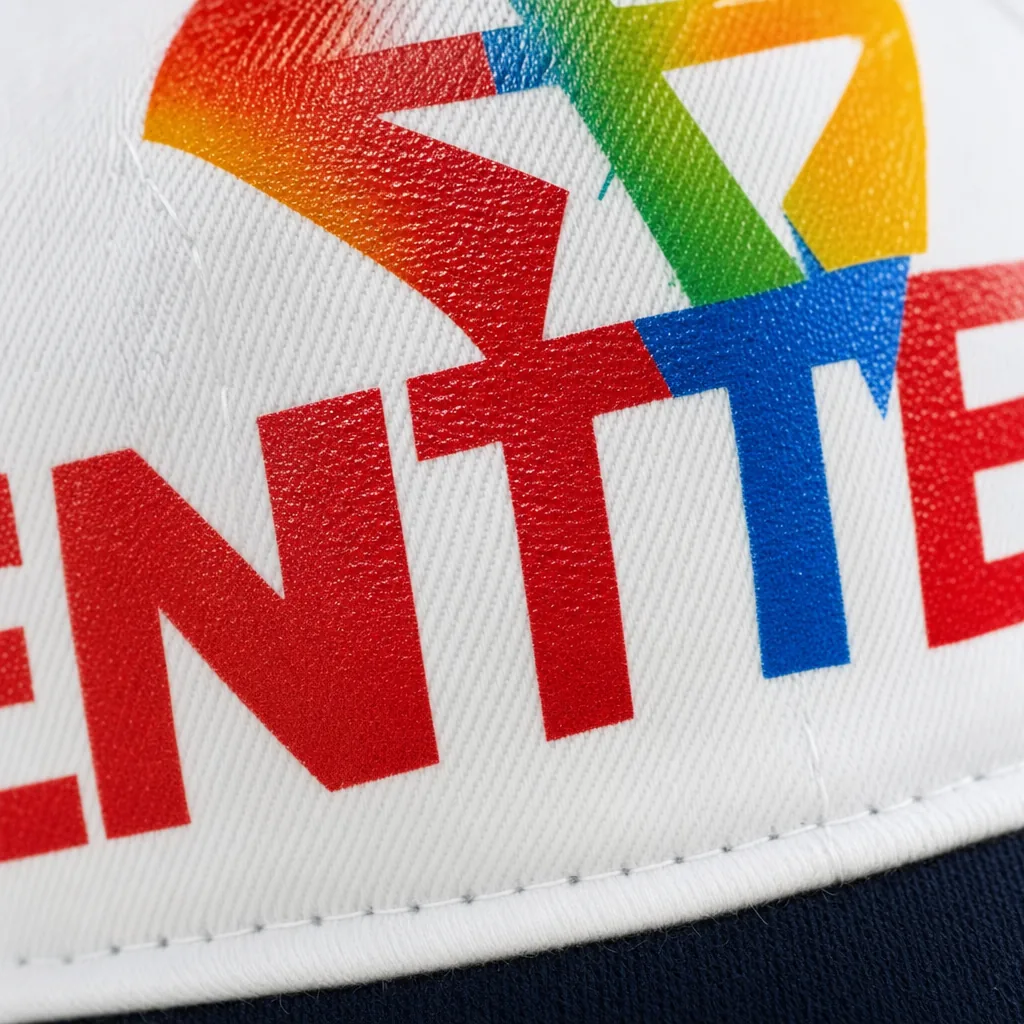
Every week, our sales team answers detailed questions about embroidery stitch count & thread density: a cost-and-quality reference - cost & moq breakdown. We wrote this guide so that wholesalers, streetwear brands, corporate buyers and promotional resellers can compare options with full information, and avoid the traps that show up only after production has started.
What stitch count actually measures
Stitch count is simply the total number of needle penetrations in the approved production file at final sew size; it is not a quality grade and it is not a proxy for logo dimensions. On cap programs, that file is usually delivered as DST for compatibility, then tested on the actual machine setup, whether the floor is running Tajima TFMX, Barudan BEKY, or ZSK Sprint heads. For an embroidery stitch count cap quote, the only number that matters is the run-ready file for the correct cap profile, hooping method, and fabric. I have seen the same 60 mm front logo digitized at 6,800 stitches with open satin columns, then balloon to 13,500 stitches once the designer requested tatami fills, outline borders, knockdown underlay, and 4 mm-high text. On a structured 6-panel cotton twill cap with buckram, curvature compensation and push-pull corrections typically add 5% to 12% versus the same artwork on a flat panel or beanie patch. Useful benchmarks are narrower than most buyers think. A clean 50 to 55 mm chest-style mark adapted for a cap front usually falls around 4,000 to 7,000 stitches. A 70 mm crest with filled areas, merrow-style borders, and legible small copy more often lands in the 12,000 to 18,000 range, before you count trims, tie-ins, lock stitches, and color-change stops. Those non-visible penetrations matter because they still consume machine time and increase risk on lighter fabrics. Our standard practice is to judge complexity from the approved sew-out, not a JPEG or AI mockup, because a flat visual cannot show underlay strategy, stitch angle changes, or compensation values that materially change the final count.
What drives stitch count upward is construction density, underlay, and pathing, not vague claims of “more detail.” With standard 40 wt trilobal polyester thread, cap tatami is commonly digitized at roughly 0.40 to 0.45 mm row spacing. Tighten that to 0.35 mm to force heavier coverage and the count rises fast, but sew quality often drops on 260 to 320 gsm cotton twill, brushed chino, or pigment-dyed canvas because the fabric cannot absorb the extra penetration cleanly. Satin columns behave differently: width, short-stitch handling, pull compensation, and split-satin decisions all affect count. Then underlay adds another layer of penetrations before the top thread even shows; edge walk, center run, and zigzag underlay can add 8% to 20% depending on the logo structure and fabric stability. On the factory floor, stitch count matters because it converts directly into machine minutes. A cap frame may be rated for 1,000 spm, but clean production on front logos is more realistically run around 750 to 850 spm once you account for cap curvature, trims, thread changes, and occasional thread breaks. A 15,000-stitch logo rarely sews in 15 minutes flat; live cycle time is usually closer to 16 to 20 minutes per head including handling. That is why cost jumps sharply between a 48-piece test order and a 288-piece repeat: setup time is fixed, but occupied head time scales with every extra penetration. Over-digitized files may look dense on screen, yet on real caps they create flagging, puckering, needle heat, and lower first-pass yield under AQL 2.5 inspection, especially when buyers insist on small text below 5 mm cap height or fills over seam intersections.
Thread density and visual reading
Density is what the eye reads first; stitch count is just the accounting behind it. On a cap front, an 8,000-stitch logo can read premium or cheap depending on coverage per square centimeter, underlay, and pull compensation. For standard flat embroidery on structured cotton twill, tatami fill usually lands best at 0.40 to 0.50 mm row spacing, with stitch length around 3.5 to 4.5 mm; in practical terms that is roughly 35 to 48 stitches/cm2. Satin columns used for outlines, narrow borders, and type under 6 mm tall generally need tighter spacing, about 0.30 to 0.38 mm, to keep edges closed over the curved crown. Once you open spacing beyond that, fabric grin-through shows up fast on brushed twill, washed chino, and lighter acrylic blends, especially where the buckram flexes at the upper crown. That is where buyers often misread an embroidery stitch count cap file. A high stitch total sounds substantial on paper, but if the digitizer reduced underlay, skipped proper edge walk, or cut pull compensation to save machine time, the sew-out still looks thin and unstable. On the factory floor, I would rather see a 7,200-stitch file with clean center-walk underlay and controlled compensation than a 9,000-stitch file bloated with unnecessary fill. Good digitizing matches density to fabric weight, crown firmness, and logo geometry; bad digitizing chases a bigger stitch number and hopes visual finish follows.
Density affects cost immediately because every tighter interval adds penetrations, machine minutes, and risk. Tightening a tatami fill from 0.45 mm to 0.38 mm typically increases stitch count by about 15% to 18% on the same logo size, and that extra volume rarely improves readability if the artwork already has full coverage. In China, bulk cap embroidery is commonly priced either by complexity band or at roughly USD 0.20 to 0.45 per 1,000 stitches, so an overbuilt file quietly lifts unit cost while also slowing the line. On Tajima, Barudan, and ZSK heads, dense files on structured fronts often need to run closer to 700 to 850 rpm instead of 900+ rpm to reduce thread fray, needle heat, and flagging around high-fill areas. 3D puff gives you even less room for error because foam changes how the top thread bites and sits. Over 2 to 3 mm EVA foam, usable coverage usually falls around 50 to 70 stitches/cm2, with wider satin runs, firm tack-down edges, and enough pull compensation to keep counters in letters like A, R, and P from closing. Push density too hard and the thread cuts into the foam, loft drops, and the top plane looks crushed after steaming and carton pressure. Go too loose and you get foam grin-through and broken highlights. Our standard approval check is simple: judge puff from about 30 cm under 5000K neutral light, because that distance shows edge definition and crown balance far better than a phone macro ever will.
How factories actually price stitch count
Most cap factories do not price embroidery stitch-by-stitch from the first needle penetration. They quote an included band, then charge only when the design breaks that ceiling. For a standard 6-panel cotton twill, brushed chino, or acrylic-wool serge cap, the normal allowance is 8,000 to 10,000 stitches for one front-center location. That covers the bulk of team logos, script marks, and mid-size crests without forcing the merchandiser to rework every RFQ. On a Tajima, Barudan, or ZSK multi-head, the runtime difference between a 5,500-stitch file and an 8,500-stitch file is often less than 45 to 60 seconds, so many factories simply absorb it into the base decoration price. The embroidery stitch count cap starts to matter when the file moves into 12,000 to 15,000 stitches, especially on structured crowns where thread tension, trims, and panel stability become less forgiving. At that point FOB moves for real, not because thread is expensive by itself, but because extra machine minutes, more color changes, and higher breakage risk reduce line efficiency. In practical terms, a 300-piece order on a basic cotton twill shell might hold at $3.90 to $4.10 FOB with an 8,000-stitch front logo, then climb to roughly $4.20 to $4.35 once the same logo is redigitized to 14,000 stitches. Overage is commonly billed at $0.02 to $0.05 per additional 1,000 stitches, but the exact number depends on head count, labor loading, and whether sampling already exposed thread-break issues.
Stitch count alone is a lazy pricing metric if the digitizing is poor. A disciplined 14,000-stitch file with proper edge-run underlay, balanced satin columns, controlled pull compensation, and limited jump trims can run cleaner than an 11,000-stitch file stuffed with overlap, short stitches under 1.2 mm, and unnecessary tie-ins. On cap fronts, stable fill density is usually around 0.40 to 0.50 mm spacing; push tighter than that and you often buy needle heat, puckering, and crown distortion rather than better edge definition. That is especially true on acrylic-wool serge or foam-backed fronts, where the wrong backing weight or excessive top thread tension can leave hoop marks and visible waviness after packing. A buyer should ask for four numbers before approving any embroidery stitch count cap quote: the included stitch threshold, the overage rate per 1,000 stitches, the one-time digitizing fee, and whether density edits after the first sample are included. Those details change real landed cost more than most people expect. On small runs of 48 to 100 pieces, digitizing commonly adds $25 to $60 and factories protect margin with a higher decoration surcharge because setup time is spread over too few units. At 300 to 500 pieces, that setup cost is diluted, so the effective embroidery cost per cap drops even if the included stitch band stays fixed. Our standard practice is to review the DST or EMB file before quoting overages, because a bad file can inflate stitch count by 10% to 20% with no visual benefit.
Stitch direction, pull compensation and registration
Pull compensation is where a production file stops being artwork and starts being manufacturable. On a structured 6-panel cap front with 1.8-2.2 mm buckram, a satin column digitized at 3.0 mm typically needs 0.15-0.25 mm pull compensation per side on 10 oz cotton twill, 0.08-0.15 mm on 20-24 oz melton wool, and 0.20-0.35 mm on brushed chino or washed canvas because the nap opens after needle penetration. Skip that, and the embroidery stitch count cap on the quote looks efficient while the sewn sample shows edge exposure, tunneling, or a raised ridge around dense fills. On ZSK, Tajima, or Barudan cap frames, I do not approve a new logo without at least a 2x2 sew test: two fill spacings, usually 0.40 mm and 0.45 mm, against two compensation settings on the actual shell fabric and backing combination. A front panel that looks clean off the machine can shift another 0.15-0.20 mm after steaming, buttoning, and carton compression, especially on structured crowns packed 100-144 pcs per master carton.
Stitch direction controls readability more than most buyers realize. The same 40 wt rayon or polyester thread—Madeira Classic 40, Gunold Poly 40, Isacord 40—can reflect visibly darker or lighter depending on angle, so a horizontal fill next to a vertical fill may read almost half a shade off under 4000-5000K retail LEDs even when the thread code is identical. If the spec calls for a Pantone TCX match within roughly Delta-E 1.5-2.0, directional zoning matters more than trimming 1,500-2,000 stitches. I would rather split a broad fill into two or three directional sections with edge run, zigzag underlay, and clean travel than force one oversized block that flashes unevenly and crushes counters below 1.2 mm. Registration is the hidden cost driver. On a stable twill cap front running 700-850 rpm, good sequencing should hold color-to-color registration within 0.3-0.5 mm; on wool blends, seam-adjacent placements, or center-seam logos, drift can quickly widen to 0.6-0.8 mm. Our standard practice is to let the fill settle before locking a border, then shorten satin stitch length from about 4.5 mm to 3.8-4.0 mm across seam humps and add tie-ins where push is predictable. A lower stitch file is not automatically cheaper if it creates fraying, white fringing, and AQL 2.5 rejects.
3D puff stitch density vs flat embroidery
Most bad puff logos are not under-sewn; they are over-digitized. On an embroidery stitch count cap, 3D puff should carry less density than flat embroidery because 2 mm EVA foam supplies the height and the thread’s job is to cap and contour it, not crush it. For a standard center-front logo, 45 to 65 stitches/cm2 is the workable range on most Tajima or Barudan cap frames, with satin columns ideally kept above 2.5 to 3.0 mm and stitch lengths around 3.5 to 4.5 mm. Once you pack the file past that, needle penetrations start cutting the foam into a perforated strip, especially at inside corners, serif tips, and small radius curves. That is when you see the classic production failures: broken foam during trim-out, top stitches sinking into the puff instead of bridging across it, and ragged edge lines after steaming. In practice, clean 3D output depends more on restrained underlay, correct pull compensation, and stable top-thread tension than on chasing a higher stitch number. A balanced 8,500-stitch puff file will usually run cleaner than an 11,000-stitch file copied from a flat embroidery program.
Flat embroidery fails the other way: too open and the cap body shadows through; too dense and the panel starts puckering, especially on softer washed chino and brushed cotton twill. On structured 6-panel fronts with buckram, flat fills usually hold around 70 to 85 stitches/cm2 with 40 wt polyester or rayon; on less stable surfaces, 60 to 70 stitches/cm2 is safer to prevent tunneling, flagging, and border distortion. That density gap changes the cost math more than buyers expect. The same front artwork that runs as 8,000 to 10,000 stitches in 3D puff can climb to 10,500 to 13,000 stitches in flat fill because you need more coverage for edge definition and fabric opacity. Chinese factories still quote many cap programs in stitch bands, then add roughly $0.03 to $0.08 per extra 1,000 stitches depending on volume, machine utilization, and thread changes. Our standard practice is to judge the file by repeatability, not just total stitches: if a design cannot hold shape across 144 pieces or 1,440 pieces at AQL 2.5 without rework, the nominal stitch count is irrelevant because the real cost shows up in downtime, rejects, and redigitizing.
When to bill back digitizing setup to your customer
Bill back digitizing only when the logo needs real cap-specific engineering; charging it on every PO is lazy quoting. A production-ready cap file is not a fast DST conversion from left-chest art. The digitizer still has to build edge-run and center-walk underlay, set pull compensation, choose stitch angles, control push over the center seam, reduce trims, and sequence the sew order for a curved crown on a cap frame. On a structured 6-panel baseball cap, a clean flat logo usually takes 20 to 45 minutes to digitize and test; 3D puff, metallic thread, appliqué tack-downs, or serif text below 4 mm letter height can easily take 45 to 90 minutes with at least one extra sew-out. In most China factories, the real setup cost is typically $30 to $80 for standard flat embroidery and $80 to $120 or more for puff foam channels, tight registration, or specialty thread trials. On an embroidery stitch count cap program, that fee should sit as one-time tooling, separate from the per-1,000-stitch embroidery rate, because a file that runs clean on a flat panel often collapses, tunnels, or drifts on a cap.
Do not rebill digitizing on repeat orders unless something technical changed in the file or the cap. If the factory already holds the approved DST, EMB, or native Wilcom file, plus the sew-out approval, Madeira or Gunold thread chart, backing specification, needle setting, and machine recipe for that exact logo, there is no new setup cost worth talking about. Loading the file into a Tajima, Barudan, or ZSK head is production prep, not engineering. Legitimate re-digitizing triggers are specific: a logo width change of about 5 to 10 percent, a move from front panel to side or back arch, a fabric switch from washed cotton twill to acrylic-wool, a method change from flat embroidery to 3D puff, or a density revision such as fill spacing from 0.45 mm down to 0.40 mm. Those changes can push a front logo from 8,500 stitches to 11,000 or more, increase thread consumption by 15 to 25 percent, and raise puckering risk enough to fail internal appearance standards. The clean way to quote it is simple: one logo, one size, one placement, one approved file; repeats are free unless the art, cap construction, or embroidery method changes.
Frequently Asked Questions
How long does production take?
Sampling takes 7 to 12 days. Bulk production runs 20 to 30 days depending on quantity, fabric availability and decoration complexity. Inspection and packing adds another 3 to 5 days before shipment.
Do you support sustainability certifications?
Yes. We work with GOTS organic cotton, GRS-certified recycled polyester, OEKO-TEX Standard 100 fabrics, and are BSCI and Sedex audited. Certification documentation can be provided per order.
What file format should I send for my logo?
Vector files (AI, EPS, PDF) are ideal. High-resolution PNG or JPG at 300 dpi on transparent background works as a fallback. Provide Pantone color references for accurate reproduction.
What is the minimum order quantity (MOQ) for custom hats?
Our standard MOQ is 100 pieces per design and color, with sampling available from 1 piece. For complex multi-color logos or premium fabric upgrades, the MOQ can be lowered with a small per-piece surcharge.
Can I order a sample before bulk production?
Yes. We strongly recommend approving a pre-production sample before mass production. Samples are charged at 35 to 60 USD each plus express shipping, fully refundable against confirmed bulk orders over 500 pieces.
How does ordering custom hat embroidery near me work?
When evaluating custom hat embroidery near me, the key considerations are construction quality, decoration capability, MOQ flexibility and lead time. Total stitches in the embroidery file (DST or EMB) generated by digitizing artwork at production size. A 5cm-wide simple logo runs 4,000-7,000 stitches; a 7cm complex logo with 3+ colors runs 12,000-20,000 stitches. Machine time is roughly 1 minute per 1,000 stitches per head. Stitches per cm² determines how filled-in the embroidery looks. Industry standards: tatami fill…
How does ordering new era custom embroidery work?
When evaluating new era custom embroidery, the key considerations are construction quality, decoration capability, MOQ flexibility and lead time. Total stitches in the embroidery file (DST or EMB) generated by digitizing artwork at production size. A 5cm-wide simple logo runs 4,000-7,000 stitches; a 7cm complex logo with 3+ colors runs 12,000-20,000 stitches. Machine time is roughly 1 minute per 1,000 stitches per head. Stitches per cm² determines how filled-in the embroidery looks. Industry standards: tatami fill…
How does ordering baseball cap custom work?
When evaluating baseball cap custom, the key considerations are construction quality, decoration capability, MOQ flexibility and lead time. Most factories quote a flat decoration fee per cap if stitch count is under 8,000-10,000. Above that, add $0.02-$0.05 per 1,000 stitches over the threshold. So a 14,000-stitch logo on a $4.00 cap might quote $4.20-$4.30 vs. $4.00 for an 8,000-stitch logo. Total stitches in the embroidery file (DST or EMB) generated by digitizing artwork at production size. A 5cm-wide simple…
What should buyers know about new era hats near me?
When evaluating new era hats near me, the key considerations are construction quality, decoration capability, MOQ flexibility and lead time. Total stitches in the embroidery file (DST or EMB) generated by digitizing artwork at production size. A 5cm-wide simple logo runs 4,000-7,000 stitches; a 7cm complex logo with 3+ colors runs 12,000-20,000 stitches. Machine time is roughly 1 minute per 1,000 stitches per head. Stitches per cm² determines how filled-in the embroidery looks. Industry standards: tatami fill…
How many stitches to embroider a hat?
Medium complexity designs with multiple colors, intricate details, and more advanced stitching techniques may require a higher stitch count, ranging from around 5,000 to 10,000 stitches. Machine speed for these designs can be set around 500-700 SPM, and each project may take around 10 to 20 minutes.
Looking for a reliable hat manufacturer in China?
CrownsForge has produced custom hats for 800+ brands across 40 countries. From 100-piece launches to 100,000-piece retail programs, we deliver on time and on spec.
Get in touchRelated guides
Snapback vs Fitted vs Adjustable: Cap Closure Systems Compared
Read article →
Sustainable Custom Hats: Eco-Friendly Materials, Recycled Fabrics & Certifications
Read article →
Switching Hat Manufacturers Mid-Program Without Losing Quality - Supplier Checklist
Read article →We hope this guide demystifies embroidery stitch count & thread density: a cost-and-quality reference - cost & moq breakdown and helps you move forward with confidence. If you have questions specific to your project, our English-speaking sales engineers are one message away.