
Embroidery Stitch Count & Thread Density: A Cost-and-Quality Reference (2026 Update)
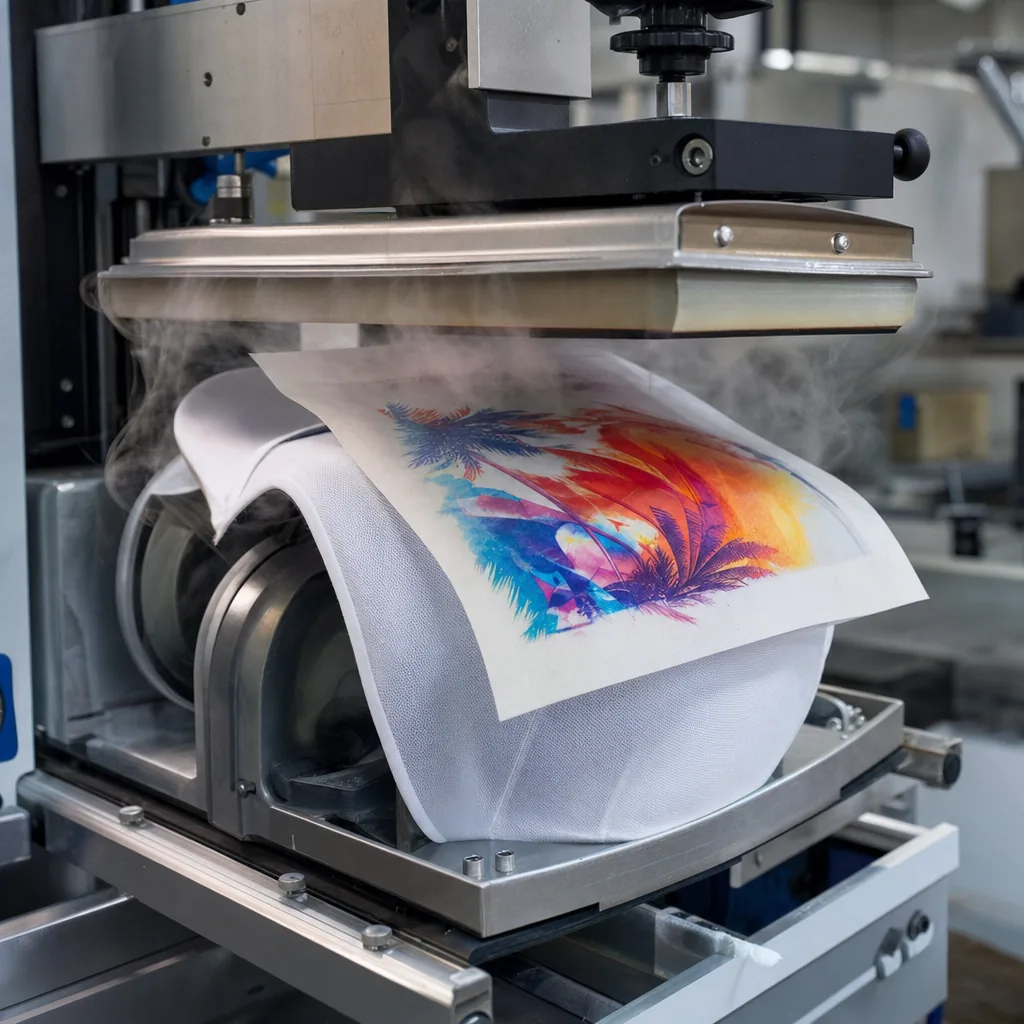
Every week, our sales team answers detailed questions about embroidery stitch count & thread density: a cost-and-quality reference (2026 update). We wrote this guide so that wholesalers, streetwear brands, corporate buyers and promotional resellers can compare options with full information, and avoid the traps that show up only after production has started.
What stitch count actually measures
Stitch count is the exact number of needle penetrations in the production file, not a guess from logo size, vector complexity, or a screenshot from Wilcom. For cap work, the number that matters comes from the final machine-ready DST, DSB, or ZSK TBF file after the design has been resized to the actual embroidery field and digitized for the cap profile. Editable formats such as EMB, OFM, or CND still contain object data, pull compensation, stitch angles, and sequence logic, so their preview counts are only provisional. In practice, the same logo can move sharply once it is adapted from a flat sample to a structured crown with buckram, center seam, and curved cap frame. That is why any serious embroidery stitch count cap quote has to be based on the approved sew file. A 50 mm wordmark on 108 x 58 front panels in 260 gsm brushed cotton twill may run 4,800 to 6,200 stitches using mostly satin columns with light edge-run underlay. Put the same art onto a foam-backed 600D trucker front, add zigzag underlay, widen pull compensation from 0.20 mm to 0.35 mm, and increase stitch length control around the center seam, and the file can jump 15 to 25 percent without changing the visible logo size. Buyers who price from artwork alone usually miss the variables that actually drive the machine file.
Stitch count is useful because it predicts machine time far better than thread consumption. A Tajima, Barudan, or ZSK cap machine may be rated at 750 to 900 stitches per minute, but on a real production floor you should budget closer to 1.0 to 1.2 minutes per 1,000 stitches per head once trims, color changes, thread breaks, cap loading, and quality checks are included. A 6,000-stitch front logo usually ties up a head for about 6.5 to 8 minutes; a 15,000-stitch crest with four color changes commonly lands at 16 to 20 minutes. On a 1,000-piece order, that difference affects line balancing, overtime, and whether the job fits in one shift or spills into a second. What stitch count does not tell you is whether the file is well digitized. An 18,000-stitch logo can sew badly if density is excessive or underlay is wrong for the substrate. I regularly see cap files packed at 0.35 mm fill spacing where 0.40 to 0.45 mm would hold coverage with less distortion, especially on structured 6-panel baseball caps using 40 wt polyester thread, 75/11 sharp needles, and buckram-backed fronts. Overbuilt files cause flagging, top-thread looping, seam pinch, and tunneling on satin borders. Our standard practice is to judge stitch count together with density, underlay type, stitch direction, and sew test results under AQL 2.5 review, because a disciplined 10,000 to 12,000-stitch file often reads cleaner than a bloated 16,000-stitch version.
Thread density and visual reading
Thread density, not raw stitch total, is what determines whether a cap logo reads cleanly from 1 to 2 meters. For standard flat fills on headwear, the practical tatami band is usually 35 to 48 stitches/cm² using 40 wt polyester thread and 0.40 to 0.48 mm row spacing. Satin columns for outlines and small copy behave differently: once a stroke narrows into the 0.8 to 2.5 mm range, digitizers should think in spacing and column width, not blanket “high density.” At roughly 0.35 to 0.45 mm spacing, those areas land closer to 60 to 90 stitches/cm² depending on pull compensation, underlay, and whether the panel is 210 gsm washed chino or a firmer 340 gsm acrylic-wool blend. Below that window, twill grain and washed-face slub start showing through after steaming; above it, the front panel gets hard, edges bloom outward, and the center seam or visor join begins to telegraph through the logo. That is why an embroidery stitch count cap quote based only on total stitches is incomplete: 9,000 stitches spread across 55 cm² will read crisp and flexible, while the same 9,000 packed into 34 cm² often looks swollen and wears stiff.
Density is fixed at digitizing; operators on Tajima or Barudan heads can fine-tune tension, but they cannot rescue a file built too heavy for the cap body. A competent digitizer changes stitch angle, underlay stack, travel path, and sequence based on crown structure and substrate. On a structured 6-panel cap with 2.0 to 2.5 mm buckram, 38 to 42 stitches/cm² tatami with edge-run plus zigzag underlay usually gives full coverage without twisting the panel. Move that same logo onto 210 to 240 gsm cotton twill or pigment-dyed brushed twill, and density often needs to come down 8 to 12 percent, with stitch length capped around 4.0 to 4.5 mm to avoid tunneling across the center seam. For 3D puff, 2 to 3 mm EVA foam is safest around 50 to 70 stitches/cm²; push beyond that and 40 wt polyester starts cutting the foam on inside corners and serif tips. Our standard practice is to flag those files before sampling, because even a modest 300 to 600-stitch increase can raise thread-break frequency, trimming time, and reject risk under AQL 2.5, moving real factory cost by about $0.08 to $0.25 per cap.
How factories actually price stitch count
Most cap factories do not quote embroidery off an exact stitch meter; they price by stitch bands because machine time is what erodes margin. On a standard structured 6-panel baseball cap, the house allowance for a front logo is typically 8,000 to 10,000 stitches at 300 pieces or above FOB Ningbo or Shanghai. That is why an embroidery stitch count cap quote often stays unchanged whether the file sews 8,300 or 9,700 stitches. Once the design breaks the factory threshold, the surcharge is usually stepped per extra 1,000 stitches: about $0.02 to $0.035 at 500 pieces, $0.035 to $0.05 at 144 to 288 pieces, and $0.05 to $0.08 on micro runs where setup and hooping time dominate. On a brushed cotton twill cap costing roughly $3.80 to $4.20 FOB with plastic snapback and standard sweatband, a 14,000-stitch front logo usually adds $0.18 to $0.30. The thread itself is almost irrelevant. 120D/2 polyester or rayon is consumed in fractions of a gram per cap; the real cost is tying up a 12-head Tajima, Barudan, or ZSK cap line for longer cycle time per dozen.
Stitch count alone is a blunt instrument. A capable digitizer can hold a 90 mm front logo to 8,500 to 9,500 stitches using edge-run underlay, sensible fill spacing, and satin columns wide enough to sit cleanly over center seam and buckram without tunneling. A poor file can inflate the same art to 12,000 or 13,000 stitches with double underlay, excessive overlaps, short satin splits, and overpacked fills that add no visual gain but increase thread breaks. On cap frames, actual production speed is usually 650 to 750 rpm on structured fronts, not the 900 to 1,000 rpm listed in machine brochures, because curvature, seam crossings, and trims force slower running. Add 4,000 unnecessary stitches and you add head-minutes, trim cycles, operator interventions, and a higher reject risk under AQL 2.5. Our standard practice is to review pull compensation, sequencing, trim path, and target density before approving any surcharge, because two 10,000-stitch files can sew very differently. For commercial cap embroidery, fill spacing around 0.40 to 0.50 mm is usually safer than forcing dense coverage that stiffens the crown, fuzzes edges, and shifts perceived shade beyond a workable Delta-E against the approved Pantone TCX reference.
Stitch direction, pull compensation and registration
The failure point in an embroidery stitch count cap is usually geometry, not total stitches. A file that sews clean on a flat 245 gsm chino twill swatch can still break down on a structured 6-panel cap once you introduce buckram, crown curvature, and the front center seam. On cap jobs, I treat pull compensation as a live variable, not a preset: satin columns on stable twill often land at 0.15-0.25 mm, while brushed acrylic, melton, or any seam-crossing element can require 0.30-0.40 mm to keep columns from splitting open. Needle and thread matter just as much. A DBxK5 75/11 with Madeira Classic 40 rayon will not behave the same as a 70/10 running Gunold Poly 40, especially on Tajima or Barudan cap frames at 750-850 spm. Change backing from a single 1.5 oz cutaway to a cap stack with tearaway plus seam tape, and your edge spread changes again. That is why cap files need to be tested on the finished shell, not approved from a flat-panel strike-off. Most puckering, crown-side grin-through, and seam drift come from underestimating cap-specific pull and push, not from being 800 stitches over budget.
Stitch direction controls readability before stitch count does. Fill angles determine how light rolls across the logo under 4000K to 5000K retail LEDs, and on black or navy caps that reflectivity can make two matching thread lots look visibly different even when lab checks are within Delta-E 1.0-1.5 of the approved Pantone TCX target. Adjacent fills should usually be separated by 15-30 degrees so shapes stay distinct without adding heavy outline borders that only increase thread buildup. For compact logos, I would rather open a fill to 0.45-0.48 mm and plan proper edge-run plus zigzag underlay than force a 0.40 mm fill across grain or over the center seam and watch registration wander. Small bordered marks also need realistic trapping: 0.20-0.35 mm between color stops is normal on caps because perfect vector edges do not survive real sewing conditions on ZSK, Tajima, or Barudan heads. At CrownsForge, first-off approval is done on the finished cap, then registration, exposed underlay, and seam distortion are checked under AQL 2.5. In production, a disciplined 9,500-stitch file will usually outperform a bloated 12,000-stitch file in both appearance and reject rate.
3D puff stitch density vs flat embroidery
The expensive mistake on front logos is treating 3D puff like flat fill. Puff should be digitized lighter: on cap-grade 2.0 to 3.0 mm EVA foam, I usually keep effective coverage around 45 to 65 stitches/cm², with satin columns opened to roughly 0.45 to 0.65 mm spacing depending on thread and letter width. If you push puff into flat-fill territory, the top stitches become a compression layer that kills loft, rounds the corners, and buries the foam edge. On Tajima or Barudan wide-angle cap frames, that also means more needle heat, more thread breaks, and more flagging because the needle is penetrating face fabric, buckram, and foam too frequently in the same zone. For any embroidery stitch count cap review, puff and flat areas should be quoted separately; averaging them into one number usually inflates the stitch estimate while hiding the real failure risk in production.
Flat embroidery works in the opposite density band because coverage, not loft, is doing the visual work. On structured 6-panel caps in 108x56 cotton twill around 240 to 280 gsm, I normally see clean results at 65 to 90 stitches/cm² for fills, with satin borders tightened as needed for edge sharpness and underlay adjusted to stop grin-through on dark grounds. Small copy under 5 mm cap height often needs more stabilization from edge-run or zigzag underlay, but that does not mean copying the same settings into foam sections. A file with 0.35 mm spacing can look fine on-screen and still sew like cardboard when converted to puff, especially on logos mixing raised and flat planes. The cost difference is practical, not theoretical: an 8,500-stitch flat front may run slower and fail more often than a 7,000-stitch puff logo if the puff file has clean travel paths and fewer trims. In China FOB quoting, cap embroidery still commonly pencils out around $0.12 to $0.28 per 1,000 stitches, but runtime, break rate, and reject risk track density by area more closely than the raw DST total.
When to bill back digitizing setup to your customer
Charge digitizing back only when the logo is genuinely new or the embroidery stitch count cap program needs engineering work beyond a simple file export. On caps, digitizing is not an admin fee; it is the setup that controls underlay, pull compensation, stitch direction across the front panels, center-seam avoidance on a 6-panel crown, and the first sew-out on the actual cap body or a matching 280 gsm twill test piece. For a normal left-chest-style front logo scaled to cap size, a realistic one-time fee in China is about $30 to $80. If the artwork has 3D puff, micro text under 4 mm, fine serifs, or multiple placements like front plus side hit, $80 to $150 is more normal because the file usually takes extra edits and at least one correction sew-out on a Tajima, Barudan, or ZSK head. That cost is separate from the running price: machine minutes, thread, backing, trimming, and AQL 2.5 inspection live in the production quote, while digitizing pays for the file build and proofing. Once the buyer approves a production sew-out, the file should be treated like tooling and not rebilled on a straight repeat order. A new setup fee is justified only if measurable inputs change: artwork revision, logo width cut below roughly 55 mm, flat embroidery converted to 3D puff, thread switched from 40 wt polyester to rayon, or the cap fabric changes enough to alter tension and coverage. A file tuned for 150D polyester performance fabric will usually need edits when moved to a washed cotton dad cap or a structured cotton twill snapback, because density and underlay behave differently on each surface. The supplier should keep the approved DST, revision log, Pantone TCX-to-thread match, and signed sew-out photo. If the factory tries to charge fresh digitizing for the same placement, same size, same cap profile, and same stitch density, that is usually margin recovery, not technical necessity. Ask for the prior DST issue date and a side-by-side sew-out before agreeing to another setup fee.
Frequently Asked Questions
How long does production take?
Sampling takes 7 to 12 days. Bulk production runs 20 to 30 days depending on quantity, fabric availability and decoration complexity. Inspection and packing adds another 3 to 5 days before shipment.
Do you support sustainability certifications?
Yes. We work with GOTS organic cotton, GRS-certified recycled polyester, OEKO-TEX Standard 100 fabrics, and are BSCI and Sedex audited. Certification documentation can be provided per order.
What file format should I send for my logo?
Vector files (AI, EPS, PDF) are ideal. High-resolution PNG or JPG at 300 dpi on transparent background works as a fallback. Provide Pantone color references for accurate reproduction.
What is the minimum order quantity (MOQ) for custom hats?
Our standard MOQ is 100 pieces per design and color, with sampling available from 1 piece. For complex multi-color logos or premium fabric upgrades, the MOQ can be lowered with a small per-piece surcharge.
Can I order a sample before bulk production?
Yes. We strongly recommend approving a pre-production sample before mass production. Samples are charged at 35 to 60 USD each plus express shipping, fully refundable against confirmed bulk orders over 500 pieces.
How does ordering custom hat embroidery near me work?
When evaluating custom hat embroidery near me, the key considerations are construction quality, decoration capability, MOQ flexibility and lead time. Total stitches in the embroidery file (DST or EMB) generated by digitizing artwork at production size. A 5cm-wide simple logo runs 4,000-7,000 stitches; a 7cm complex logo with 3+ colors runs 12,000-20,000 stitches. Machine time is roughly 1 minute per 1,000 stitches per head. Stitches per cm² determines how filled-in the embroidery looks. Industry standards: tatami fill…
How does ordering new era custom embroidery work?
When evaluating new era custom embroidery, the key considerations are construction quality, decoration capability, MOQ flexibility and lead time. Total stitches in the embroidery file (DST or EMB) generated by digitizing artwork at production size. A 5cm-wide simple logo runs 4,000-7,000 stitches; a 7cm complex logo with 3+ colors runs 12,000-20,000 stitches. Machine time is roughly 1 minute per 1,000 stitches per head. Stitches per cm² determines how filled-in the embroidery looks. Industry standards: tatami fill…
How does ordering baseball cap custom work?
When evaluating baseball cap custom, the key considerations are construction quality, decoration capability, MOQ flexibility and lead time. Most factories quote a flat decoration fee per cap if stitch count is under 8,000-10,000. Above that, add $0.02-$0.05 per 1,000 stitches over the threshold. So a 14,000-stitch logo on a $4.00 cap might quote $4.20-$4.30 vs. $4.00 for an 8,000-stitch logo. Total stitches in the embroidery file (DST or EMB) generated by digitizing artwork at production size. A 5cm-wide simple…
What should buyers know about new era hats near me?
When evaluating new era hats near me, the key considerations are construction quality, decoration capability, MOQ flexibility and lead time. Total stitches in the embroidery file (DST or EMB) generated by digitizing artwork at production size. A 5cm-wide simple logo runs 4,000-7,000 stitches; a 7cm complex logo with 3+ colors runs 12,000-20,000 stitches. Machine time is roughly 1 minute per 1,000 stitches per head. Stitches per cm² determines how filled-in the embroidery looks. Industry standards: tatami fill…
Looking for a reliable hat manufacturer in China?
CrownsForge has produced custom hats for 800+ brands across 40 countries. From 100-piece launches to 100,000-piece retail programs, we deliver on time and on spec.
Get in touchRelated guides
Snapback vs Fitted vs Adjustable: Cap Closure Systems Compared
Read article →
Sustainable Custom Hats: Eco-Friendly Materials, Recycled Fabrics & Certifications
Read article →
Switching Hat Manufacturers Mid-Program Without Losing Quality - Supplier Checklist
Read article →We hope this guide demystifies embroidery stitch count & thread density: a cost-and-quality reference (2026 update) and helps you move forward with confidence. If you have questions specific to your project, our English-speaking sales engineers are one message away.