
Embroidery Thread Libraries: Madeira, Isacord and What Your Cap Factory Uses (2026 Update)
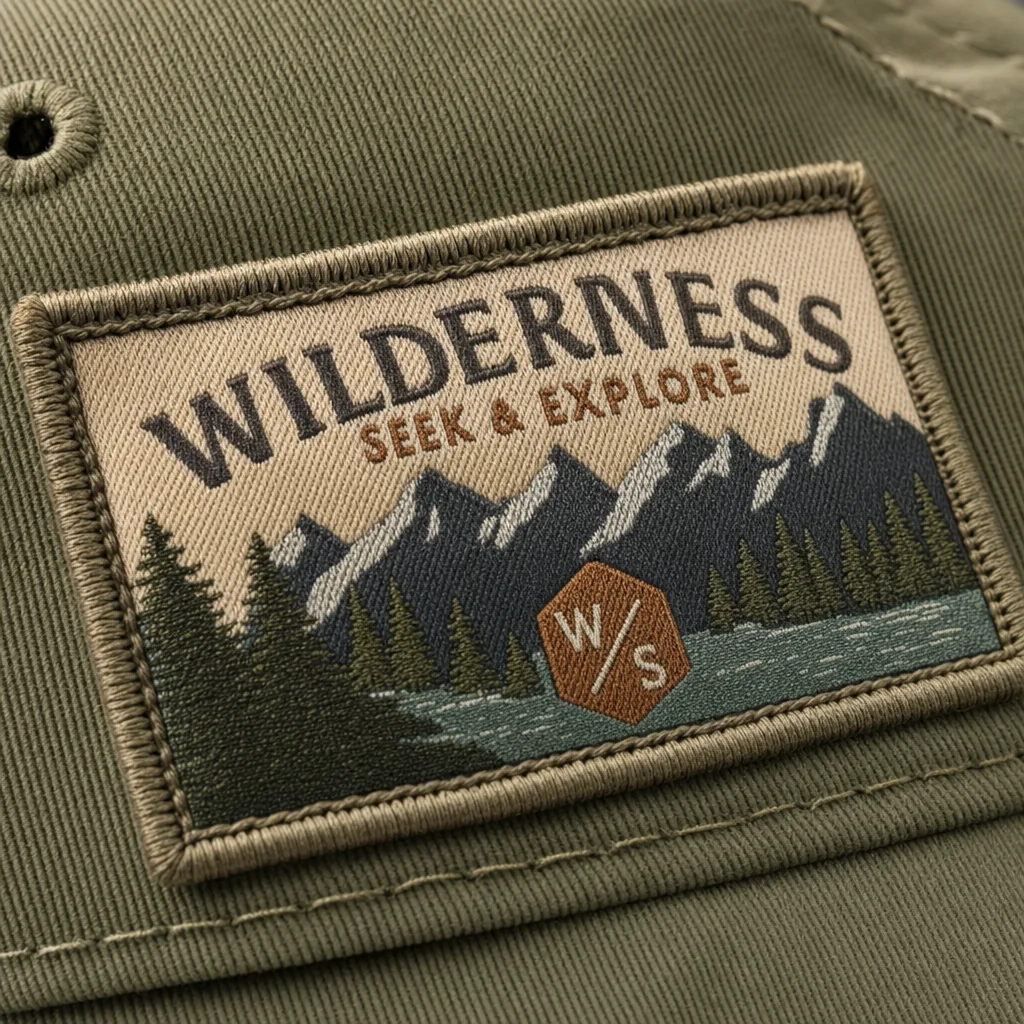
Embroidery Thread Libraries: Madeira, Isacord and What Your Cap Factory Uses (2026 Update) is one of the most-asked questions we receive from international buyers, and for good reason. With dozens of factories competing for your order and an alphabet soup of technical terms in every supplier quote, even experienced importers can feel lost. This guide consolidates what we have learned producing custom hats for clients in 40+ countries.
Three thread libraries that dominate cap embroidery
Madeira still anchors premium cap embroidery because Polyneon 40 has the most stable repeat behavior across replenishment lots, especially in problem shades like 187C-type reds, deep navy, and near-black corporate blues that drift visibly under D65 or 5000K retail lighting. On paper the library is larger, but a cap factory usually carries about 380 to 420 active cone colors; the long-tail shades are ordered only for licensed sports, franchise work, or repeat corporate programs. For buyers worried about embroidery thread color hat consistency, that matters more than catalog size. A stable shade card, controlled luster, and predictable cone-to-cone performance reduce the need to re-approve every PO when the logo sits front and center on a structured crown. Machine behavior is where Madeira earns its place. On Tajima, Barudan, and ZSK cap frames, 40 wt trilobal polyester typically runs clean at 700 to 850 spm on standard flats, but dense satin columns, small text under 4 mm, and 3D puff are safer at 650 to 750 spm to limit fraying, top-thread breaks, and looping. Good factories also know Polyneon is not magic: thread path tension, needle size, and underlay strategy still decide whether a dark fill sews clean or starts fuzzing at the edge. If the line is using DBxK5 needles, proper thread conditioning, and sane stitch density around 0.40 to 0.45 mm for satin, Madeira usually gives the least drama in production.
Isacord 40 from Amann is the second library serious cap factories keep, not because it is cheaper, but because it closes real color gaps that show up in commercial logo work. Its fluorescent range is stronger, its warm grays are more usable, and it has several blues, teals, and blue-greens that sit between standard Madeira references. That becomes practical on orders of 288, 576, or 1,200 caps where custom-dyed thread is financially pointless; a bespoke dye lot can add $80 to $150 per shade before freight, with no advantage on a mid-volume run. For embroidery thread color hat matching, Isacord is often the fastest way to hit a closer visual result without forcing a compromise on brand color. Robison-Anton still matters mainly because many U.S. promotional and uniform buyers still reference old RA numbers in legacy art files and sample books. In China, most factories stock Madeira as the primary library, then cross-match into Isacord or Robison-Anton when the customer spec requires it. The real control point is not the brand name but the approval method: cross-reference the thread code to Pantone Solid Coated or Pantone FHI TCX, sew the logo on the actual shell fabric, and review the strike-off in a D65 lightbox. Our standard practice is to judge stitched appearance, not Delta-E alone, because sheen, stitch angle, underlay, and crown fabric color can shift perception more than the cone card suggests. Buyers should ask to see the stocked thread chart, cross-match log, and sewn approval sample; without those, “we use top thread” means nothing.
The Pantone-to-thread translation problem
Pantone-to-thread conversion fails for a simple reason: embroidery thread is a closed library, while Pantone is an open color specification system. A cap factory may hold 800 to 1,500 active shades across Madeira Classic 40, Isacord 40, or Gunold Poly 40, but Pantone Fashion, Home + Interiors already runs past 2,600 TCX references, and Pantone Solid Coated is a different deck again. So an exact embroidery thread color hat match is often impossible before sampling starts. On the factory floor, nobody serious is “auto-converting” Pantone in software and trusting the result. The merchandiser, digitizer, or lab tech pulls the nearest cone, checks it in a D65 light booth, and compares the stitched result—not just the raw thread—to the approved standard. For branded headwear, Delta-E 2.0 to 3.0 is a realistic tolerance; under 2.0 is achievable on some blacks, navies, and clean reds, but not reliably across neons, heathers, dusty earth tones, or optical brights.
Structure changes color more than most buyers expect. Trilobal polyester has a higher luster than a flat Pantone chip, so a satin column on a Tajima or Barudan head can read darker at the edge and brighter through the center, while a fill at roughly 0.40 to 0.45 mm spacing often looks lighter because more light bounces off the stitch surface. The base material matters too: the same embroidery thread color hat approval can shift warmer on brushed cotton twill, cooler on heather jersey, and harsher on white foam-backed fronts than on black chino twill, where contrast makes edge cleanliness and underlay coverage far more critical. That is why digital mockups are useless for final color approval. The correct process is to specify the Pantone reference, define the acceptable thread family if licensing requires it, and approve a sewn strike-off on the actual shell fabric before PPS. At CrownsForge, our standard practice for non-licensed programs is nearest-stock thread within Delta-E 2 to 3; for licensed or corporate identity work, we lock the exact Madeira or Isacord code before bulk because two “equivalent” shades can still diverge visibly once stitched at production density.
What 'closest match' really means visually
"Closest match" in cap embroidery means a controlled visual tolerance, not a factory taking a blind guess. On finished hats, most buyers will accept a thread-to-Pantone variance around Delta-E 2.0 to 3.0 when the logo is viewed at roughly 50 to 70 cm under D65 lighting or a calibrated 5000K light box. That tolerance is realistic because thread is not read like a flat ink drawdown. On 270 to 320 gsm cotton chino twill, brushed twill, or 600D polyester, the color breaks into satin columns, fills, and running stitches, so minor variance often disappears once the design is sewn. This is why an embroidery thread color hat approval that looks slightly off on a Madeira or Isacord shade card can still read correctly on the crown. The bigger issue is optical behavior. Trilobal polyester reflects more light than a matte Pantone TCX or FHI chip, so stitch angle, stitch density, underlay type, and thread tension change the apparent shade. A 0.40 mm gap line, a 45-degree satin column, or edge walk showing through a narrow fill can push the same thread cooler, brighter, or more metallic-looking than it appeared on the cone card. On the factory floor, we trust the sewn strike-off more than the catalog number because it shows the real interaction between thread sheen, fabric absorbency, and machine setup.
3D puff shrinks the acceptable window fast because the embroidery surface becomes more continuous and more reflective. Once you run 2.0 to 3.0 mm EVA foam under wide satin columns, even Delta-E 1.5 to 2.0 can become visible, especially in athletic red, royal, charcoal, and black-based tonal logos where undertone drift shows immediately. Madeira Classic 40 and Isacord 40 can both be "close" to the same Pantone, yet one red may lean orange and the other blue-red; on a large front logo stitched over foam, that difference stops being academic. The same problem shows up on light heather gray crowns, where navy thread can suddenly read purple under retail lighting. The only approval that reliably protects brand color is a sewn sample on the actual shell fabric, using the exact thread library, digitizing, density, underlay, and machine type planned for bulk production on Tajima, Barudan, or ZSK heads. For licensed or brand-sensitive programs, ask for the thread code, the Pantone target, a daylight photo, and ideally a physical strike-off. That usually adds $20 to $60 and 1 to 2 working days, which is trivial compared with remaking 1,200 caps after the embroidery thread color hat looked acceptable on a screen proof but turned greenish on the finished front panel.
Specifying thread library on your tech-pack
Lock the thread library in the tech pack before sampling. A color name like “red” is not a spec when one line may stock Madeira Polyneon and another may pull Isacord 40 on the same Tajima or Barudan floor. The line item should name the brand, series, weight, exact code, and visual reference in one string: “Madeira Polyneon No. 40, color 1843, Pantone 18-1664 TCX.” That gives the digitizer, thread store, and embroidery supervisor one target instead of three interpretations. For any embroidery thread color hat program, that is the minimum viable instruction set, especially on logos mixing tatami fill, 0.8-1.2 mm satin columns, and fine outlined copy where polyester sheen shifts under D65 light, store LEDs, and outdoor daylight. If you only write a Pantone, the factory still has to guess which thread library is the controlling standard; if you only write a thread code, the buyer has no independent color reference when approving strike-offs.
If retail consistency matters, write the fallback library and substitution rule into the same page of the tech pack. A practical note is: “Primary thread: Madeira Polyneon 40. Approved alternate: Isacord 40. Substitution only after approval against Pantone TCX from physical thread wrap or strike-off.” That matters because silent swaps usually happen for stock reasons, not machine reasons; Madeira and Isacord both run cleanly on Tajima, Barudan, and ZSK heads when top tension, bobbin tension, and needle size are set correctly. In China, a non-stock cone can add 3-7 days and roughly $8-18 per cone, so undocumented conversion is common unless the rule is explicit. Break codes out by logo position as well: front crown fill, outline, side hit, rear arch, and visor embroidery do not read the same on 260 gsm brushed cotton twill, 300 gsm acrylic-wool melton, or heather jersey. Our standard practice is to check thread cards against bulk fabric under D65 light and flag visibly commercial shifts, typically around Delta-E 2.0-3.0, before bulk approval.
Why metallic, fluorescent and pastel threads cost more
The surcharge starts before the cone reaches the embroidery floor. Standard 40 wt trilobal polyester shades such as black, optic white, navy, and 186C-equivalent athletic red turn fast in Madeira Classic 40 and Isacord 40, so distributors buy deeper stock, mills run longer dye lots, and lot continuity is better. Metallics, fluorescents, and pale pastels move slower, are dyed or converted in shorter campaigns, and carry higher landed cost per 5,000 m cone. In real cap costing, a standard polyester shade often contributes only $0.02 to $0.05 per cap; metallic gold, neon lime, or pastel lilac is more typically $0.08 to $0.25, depending on stitch count, fill density, and whether the order is 144 pieces or 2,000. That premium gets worse when a buyer wants one embroidery thread color hat standard across several low-volume SKUs, because specialty cones sit in inventory longer and may not be reusable on the next PO if the shade is brand-specific.
Metallic thread is usually the most expensive category because it raises both machine time and defect risk. Most metallic embroidery yarns use a polyester or rayon core wrapped in metallized film, which increases drag through guides, tension discs, and the needle eye. On Tajima, Barudan, and ZSK heads, a logo that runs at 850 to 950 spm in standard polyester often has to be dropped to 600 to 750 spm in metallic, with an 80/12 or 90/14 needle, reduced top tension, and more frequent operator checks for fraying, heat buildup, and thread breaks. Full-fill metallic coverage can add 20 to 40 percent to machine time on structured caps, especially over buckram-heavy fronts. Fluorescents and pastels create a different cost problem: color control. Neons are unstable against Pantone TCX references under mixed lighting, and pastels show tiny lot shifts immediately. For any embroidery thread color hat approval, we check thread against the actual shell fabric under D65 light; on pale shades, even Delta-E 1.0 to 1.5 can look wrong on brushed cotton twill or recycled poly twill. That is why these colors trigger more strike-offs, tighter shade sorting, and more disputes at AQL 2.5 than dark core shades ever do.
Thread fastness: washing, light, abrasion
Polyester is the only rational default for caps exposed to sweat, UV, and daily handling. In 40 wt headwear embroidery, the dependable baseline is trilobal polyester such as Madeira Polyneon 40 or Isacord 40, typically around 120 denier/2, because it keeps shade and sheen far better than rayon once the cap leaves the sample room. No buyer should approve an embroidery thread color hat from a cone card alone. Approve against a sewn strike-off under a D65 light box, tied back to a Pantone TCX reference or approved physical standard, and ask for actual fastness figures: wash fastness grade 4–5, water fastness 4–5, perspiration fastness 4–5, and light fastness at least 6 on the Blue Wool Scale, preferably 7 for core logo colors that sit on shelf for months. On caps, the weak points are obvious on the factory floor: UV hits the front panels, sweat salts attack the lower crown, and customers rub the brim and logo with oily hands. That is exactly where cheap generic cones fail first.
Light fastness is where rayon usually drops out of the conversation for headwear. It can look softer under showroom lighting, but outdoor promo caps, golf programs, team merchandise, and any spring-summer SKU need polyester, especially for saturated scarlet, athletic royal, and black that fade fastest under UV. The brand name matters less than process control: shade approval under D65, incoming lot traceability, reserved dye lots for repeat orders, and a realistic tolerance. In practical QC, Delta-E above about 1.5 against the approved standard is already visible on dark navy, black, and bright red logos; once you get near 2.0, reorder complaints become predictable. Abrasion fastness matters just as much as wash data because raised fills, satin columns, and 3D puff outlines show fuzzing early if the thread or setup is poor. On Tajima, Barudan, and ZSK heads, premium polyester should run clean with #75/11 or #80/12 needles and stable top-to-bobbin tension. If a supplier claims consistent embroidery thread color hat performance, ask for crocking results, lot records, and finished-cap inspection to AQL 2.5 rather than trusting a familiar cone label.
Frequently Asked Questions
What file format should I send for my logo?
Vector files (AI, EPS, PDF) are ideal. High-resolution PNG or JPG at 300 dpi on transparent background works as a fallback. Provide Pantone color references for accurate reproduction.
Can I order a sample before bulk production?
Yes. We strongly recommend approving a pre-production sample before mass production. Samples are charged at 35 to 60 USD each plus express shipping, fully refundable against confirmed bulk orders over 500 pieces.
What is the minimum order quantity (MOQ) for custom hats?
Our standard MOQ is 100 pieces per design and color, with sampling available from 1 piece. For complex multi-color logos or premium fabric upgrades, the MOQ can be lowered with a small per-piece surcharge.
How long does production take?
Sampling takes 7 to 12 days. Bulk production runs 20 to 30 days depending on quantity, fabric availability and decoration complexity. Inspection and packing adds another 3 to 5 days before shipment.
What logo decoration techniques do you offer?
3D puff embroidery, flat embroidery, woven patch, leather patch, PVC patch, screen printing, sublimation, applique and laser etching, all in-house with no subcontracting.
How does ordering custom trucker hat near me work?
When evaluating custom trucker hat near me, the key considerations are construction quality, decoration capability, MOQ flexibility and lead time. Madeira (German, premium), Isacord (Amann, broad palette), Robison-Anton (US, broad palette). Most China factories stock at least Madeira + one of the other two. Thread color libraries are discrete (1000-1500 colors). Pantone has 1100+ TCX colors. Not every Pantone has an exact thread match. Factories pick the closest available — typically within Delta-E 2-3.
How does ordering custom hat embroidery lids work?
When evaluating custom hat embroidery lids, the key considerations are construction quality, decoration capability, MOQ flexibility and lead time. On flat embroidery: Delta-E 3 is generally invisible to most buyers. On 3D puff (large saturated area): Delta-E 2+ can be visible. Important to approve thread sample before bulk. Smaller production runs at the thread mill = higher per-yard cost. Metallic threads also stress embroidery machine needles, sometimes requiring slower machine speeds.
What's the MOQ for custom baseball cap no minimum?
When evaluating custom baseball cap no minimum, the key considerations are construction quality, decoration capability, MOQ flexibility and lead time. Polyester thread (Madeira Polyneon, Isacord) is the standard — excellent color fastness across all three tests. Rayon thread has a slight sheen advantage but lower light-fastness; rarely used for retail cap programs. Madeira (German, premium), Isacord (Amann, broad palette), Robison-Anton (US, broad palette). Most China factories stock at least Madeira + one of the other two.
What should buyers know about difference between dad hat and baseball cap?
When evaluating difference between dad hat and baseball cap, the key considerations are construction quality, decoration capability, MOQ flexibility and lead time. Polyester thread (Madeira Polyneon, Isacord) is the standard — excellent color fastness across all three tests. Rayon thread has a slight sheen advantage but lower light-fastness; rarely used for retail cap programs. Madeira (German, premium), Isacord (Amann, broad palette), Robison-Anton (US, broad palette). Most China factories stock at least Madeira + one of the other two.
Ready to start your custom hat project?
Send us your tech-pack, sketch or even just an inspiration photo. We will respond with a detailed quotation and digital mock-up within 24 hours.
Request a free quoteRelated guides
Beanies for Men: Properties, Costs and How to Spec It Right - Cost & MOQ Breakdown
Read article →
Cotton vs Polyester vs Wool: A Cap Fabric Decision Tree - Cost & MOQ Breakdown
Read article →
Building a Repeat-Order Workflow with Your Hat Factory (2026 Update)
Read article →Sourcing custom hats does not have to be complicated. With the right manufacturing partner, clear specifications and a small upfront investment in sampling, you can launch a retail-quality product in 30 to 45 days.