
Cotton vs Polyester vs Wool: A Cap Fabric Decision Tree - Cost & MOQ Breakdown
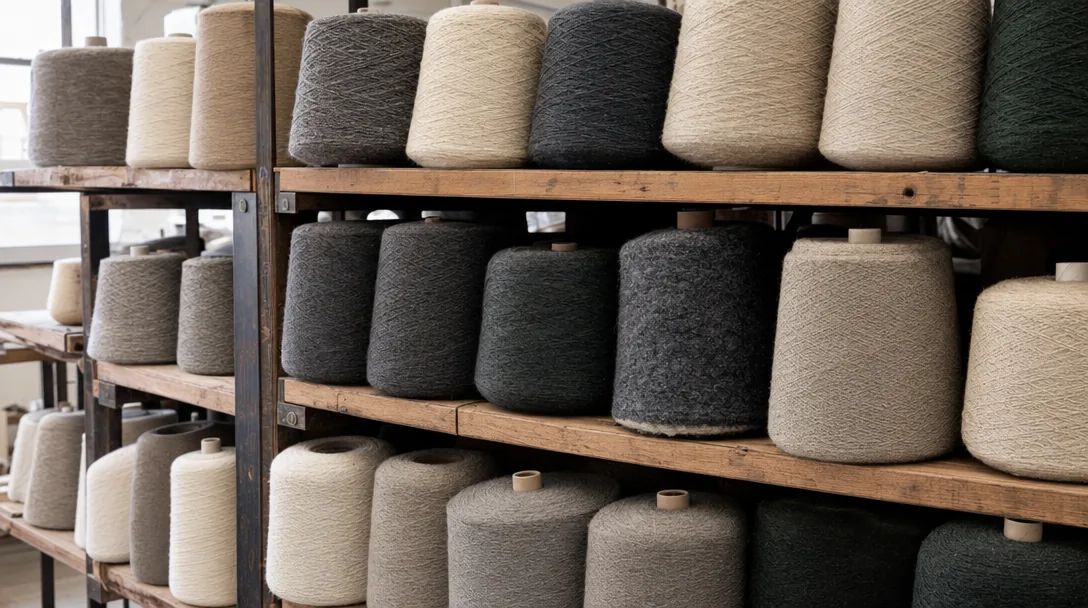
Cotton vs Polyester vs Wool: A Cap Fabric Decision Tree - Cost & MOQ Breakdown is one of the most-asked questions we receive from international buyers, and for good reason. With dozens of factories competing for your order and an alphabet soup of technical terms in every supplier quote, even experienced importers can feel lost. This guide consolidates what we have learned producing custom hats for clients in 40+ countries.
The three dominant cap fabric families
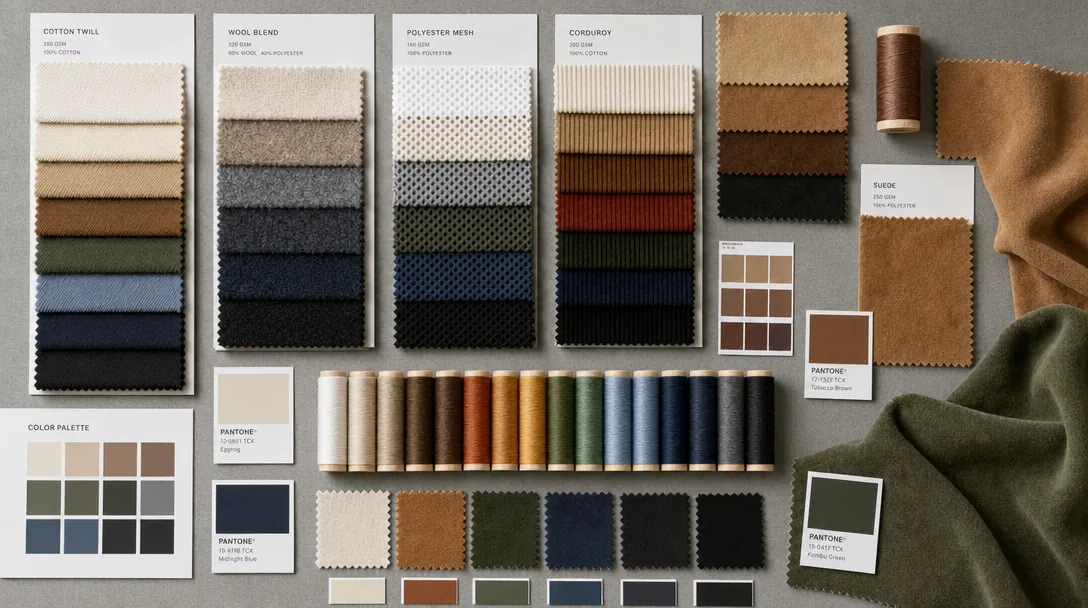
Most bulk cap programs still resolve into three fabric families—cotton, polyester, and wool blend—and each behaves differently in cutting, embroidery, blocking, and final audit. Cotton usually means brushed twill, chino twill, or light canvas at 180-280 gsm, often in 10x10 or 16x12 constructions for 6-panel dad caps and structured baseball shapes. Polyester is a wider technical bucket: basic poly twill, peach-finish microfiber, or performance woven shell fabrics at roughly 120-220 gsm, commonly built from 75D, 100D, or 150D filament yarns. Wool is the smallest category and the least forgiving on cost. Most commercial snapbacks use 80/20 acrylic-wool suiting, while true melton wool for premium crowns typically runs 300-450 gsm and is noticeably harder to press cleanly at the seam joins. On the factory floor, these three dominate because they stay predictable under needle penetration, front-panel buckram, crown steaming, and AQL 2.5 inspection. Corduroy, ripstop, and suede-touch novelties can work, but they raise sampling risk, slow replenishment, and usually increase defect exposure on shade matching and panel distortion.
For most buyers, the real cotton vs polyester cap decision is about use case, not aesthetics. Cotton remains the default when the brief calls for a softer hand, washed look, and better perceived value at retail. It also embroiders cleanly on Tajima or Barudan heads when the front panel is stabilized with 0.4-0.6 mm buckram and the fabric is not over-softened in wash. The downside is moisture and color consistency: cotton absorbs sweat, dries slowly, and dye-lot variation is real, so a workable lab-dip standard is Delta-E below 1.5-2.0 against the approved Pantone TCX reference, not an unrealistic zero-variance target. Polyester wins in golf, teamwear, and promotional programs because it absorbs less water, holds whites and brights more consistently across reorders, and is easier to source in repeatable lots. If a customer asks for moisture-wicking performance, ordinary fashion twill is the wrong answer; they usually need microfiber polyester or a performance woven shell paired with a quick-dry sweatband.
Wool blend sits in a separate lane, driven more by silhouette and brand positioning than by pure function. An 80/20 acrylic-wool blend is still the standard for vintage-style snapbacks because it gives the slightly hairy surface and firmer hand buyers expect without the shrinkage, sourcing friction, and price of 100% wool. In practical sourcing terms, these blends are also easier to place in lower volumes, with some stock-supported programs workable from 144 pieces per color. True melton wool is a different proposition: mill MOQs are often 50-100 meters, replenishment is slower, and finished cap cost typically rises by about $0.60-$1.80 per piece depending on weight, milling, and finish. It also needs tighter control at pressing and packing because seam bulk is higher and crown memory is stronger than cotton or polyester. That is why wool stays a premium niche, while cotton and polyester carry the real production volume in most cap factories.
When cotton wins
Cotton wins when hand feel and perceived value decide the sale faster than moisture management. In a practical cotton vs polyester cap comparison, brushed cotton twill at 240-280 gsm, usually woven in 108x56 or 108x58, still performs better for dad hats, unstructured 6-panels, and casual baseball caps in the USD 18-40 retail range because it feels broken-in straight out of the carton. Buyers touching the cap for three seconds can tell the difference between washed cotton and a flat 150D-300D polyester shell. Cotton also accepts enzyme wash, garment wash, pigment dye, peaching, and overdyed vintage treatments with less surface harshness, which is why it keeps showing up in collegiate, heritage, and workwear programs. If the design brief calls for softness, muted color, and a less technical look, cotton gets you there without relying on rubber patches, specialty coatings, or heavy trim spend. Color and finish are where cotton quietly earns margin. Stock cotton twill is easy to source in commercial shades that can be matched close to Pantone TCX references, and for piece-dyed lots we usually accept Delta-E under 1.5 to lab dip. MOQ is also friendlier: 144-300 pcs per colorway is common for stock cotton programs, while custom developments in blended or specialty fabrics often start higher. A standard custom cotton cap with flat embroidery and a self-fabric strap typically lands around USD 2.10-3.60 FOB China; add heavy garment wash, antique brass hardware, printed seam tape, or internal taping upgrades and that number moves fast toward USD 4.20-plus.
Cotton is also more forgiving in production, which matters once artwork leaves the screen and hits the floor. Medium-weight cotton twill grips backing cleanly and shifts less than slick polyester during embroidery, so satin columns, fill areas, and small copy usually hold registration better on Tajima or Barudan heads. For front logos in the 8,000-12,000 stitch range, cotton controls puckering, seam grin, and crown distortion better than lightweight poly shells, especially when paired with the right backing combination: medium tear-away for softer crowns, cut-away for denser embroidery, and lower thread tension to avoid tunneling. That is not theory; you see it immediately after hooping, pressing, and final shaping. There are tradeoffs, and serious buyers should account for them up front. Cotton absorbs sweat, fades faster under UV, and can shrink 2-4% after aggressive wash treatment unless the fabric has been pre-shrunk or sanforized. We normally check embroidery edge clarity after pressing and again after wash testing because cotton relaxes slightly, even when the sew-out looked perfect on the machine. For quality control, this is exactly where AQL 2.5 inspection catches issues that a pre-production sample can miss: bill-to-crown shade variation after wash, skewed closure alignment, and needle-cut damage around dense logos. When the end use is fashion retail, event merchandise, or lifestyle uniforming rather than high-output sportswear, cotton is usually the safer call.
When polyester wins
Polyester wins as soon as the cap is expected to survive sweat, UV, and repeated laundering better than it needs a soft, natural hand. In a real cotton vs polyester cap comparison, performance buyers usually stop debating after basic wear testing: a 150 gsm microfiber polyester twill or 75D peach-finish rPET shell will typically dry 35-45% faster than a 220 gsm brushed cotton twill after a soak-and-spin test, and it will hold crown shape better in six-panel athletic builds with laser-cut vents, perforated side panels, or welded seam tape. That matters for golf tournaments, running clubs, fishing brands, and promo programs that expect the cap to be worn hard, shoved into gym bags, and washed often. Polyester also outperforms cotton on print-heavy designs. Sublimation, heat transfer, and reflective film application stay sharper on poly surfaces, especially for neon gradients, sponsor grids, and photographic textures that tend to dull or bleed on cotton twill.
The cost advantage is usually in the finished program, not just the raw fabric price. In China, common stock-dyed polyester cap fabrics in 75D, 100D, or 150D constructions often work out to about US$1.10-1.70 per cap in fabric consumption at mid-volume, while specialty cotton canvas, enzyme-washed twill, or wool blends rise quickly once shrinkage allowance, dye-lot minimums, and higher cutting loss are added. MOQ is also easier: many mills will support 300-500 meters per color on standard polyester twill, which fits cleanly into custom runs of 144-288 caps if the pattern is not overly specialized. Decoration is another reason polyester wins. A tightly woven poly twill gives cleaner small-text embroidery than many soft cottons when digitized correctly, and on Tajima or Barudan heads we usually back lightweight crowns with 65-80 gsm cutaway or tearaway to control tunneling. The main caution is heat: press temperatures above roughly 130°C can glaze the surface or leave hoop marks, so any factory claiming consistent polyester quality should be controlling shade to Pantone TCX and holding body fabric within Delta-E 1.5 on repeat orders.
When wool blend wins
An 80/20 acrylic-wool melton earns its keep when the cap has to look expensive before the customer touches the swing tag. That is where the cotton vs polyester cap discussion usually misses the point: wool blend is not a middle ground, it is a different architecture. In real cap production, melton that performs well on 6-panel snapbacks and fitteds is usually 380-450 gsm, tightly fulled, and finished with a short, dense nap. That construction gives the crown more wall than 10x10 cotton twill at roughly 260-320 gsm and far more structure than entry polyester suiting at 180-240 gsm. On the sewing line, that extra body reduces panel relaxation around the fused buckram, keeps the front seam cleaner after topstitching, and holds the visor break better after compression packing. Buyers notice it most on high-profile crowns, where cheap twill starts to read soft and slightly collapsed after transit. The fabric premium is real, but modest in context: on a standard FOB order, switching from stock cotton twill to melton typically adds about $0.55-$1.10 per cap, while the perceived retail jump is usually much larger. Wool blend also wins when the logo is embroidery-heavy and unforgiving. Dense satin borders, front-center fills, and 3D puff outlines sit cleaner on melton because the base fabric is more dimensionally stable and the nap disguises minor needle strike. On Tajima or Barudan heads, we normally slow melton runs to around 650-750 spm using 40 wt polyester or rayon thread, especially when fill density exceeds 0.35 mm or the design has short satin columns that would sink or tunnel on lighter cotton. A competent digitizer will increase pull compensation slightly and reduce underlay aggression so edges stay crisp without white needle flash. The tradeoff is MOQ and color flexibility. Stock black, navy, and dark heather are usually available for 144-piece color lots, but custom melton dye lots often start around 300-500 meters, translating to roughly 700-1,100 caps depending on size mix and marker efficiency. Pantone TCX matching is straightforward on solid shades; on heathers and melanges, a Delta-E under 1.5 is rarely realistic, and buyers should approve lab dips accordingly.
Cost differential and retail positioning
Retail math, not FOB alone, decides whether the fabric works. In Yiwu, most cap costing still starts from stock 6.4 oz cotton twill at roughly 220-230 gsm for a 6-panel dad cap or structured baseball cap. Move up to a cleaner 7.5 oz twill at 255-265 gsm and the factory delta is usually only $0.20-$0.40 per cap if you keep the same reactive dye process and skip garment wash or enzyme wash. Standard 75D or 100D microfiber polyester is typically in the same range at +$0.20-$0.50, while GRS-certified recycled polyester is more often +$0.40-$0.70 once you add certified yarn cost, transaction certificates, and line segregation. On paper that makes a cotton vs polyester cap decision look trivial, but at 5,000 units the spread is already $1,000-$3,500 before ocean freight, import duty, and distributor margin. Polyester usually earns that delta through channel fit: lower moisture regain, stronger crocking and light fastness, and easier positioning for teamwear, outdoor, and promotional programs where consistency matters more than a softer natural hand.
Wool is not an incremental upgrade; it changes the retail ladder. An 80/20 acrylic-wool suiting blend commonly adds $0.80-$1.20 per cap over baseline cotton twill, while 100% wool melton is more like +$1.50-$2.30 depending on gsm, micron feel, and whether the mill can match the requested Pantone TCX within a Delta-E of about 1.0-1.5. That premium is hard to defend on an $18-$22 retail cap, but it becomes rational when the product is built for a $38-$55 price point with felt applique, satin lining, higher-density PE visor board, or metal trim. Embroidery also behaves differently on each fabric. Wool melton and dense wool blends usually give cleaner edge definition under Tajima or Barudan heads than soft brushed cotton, especially on 3D puff, heavy tatami fills, and narrow satin columns. Our standard practice is to judge that fabric upgrade by gross margin, stitch clarity, and rework risk under AQL 2.5 inspection—not by fabric surcharge alone—because a cap that embroiders cleaner and sells one tier higher is often cheaper in the full P&L than a nominally lower-cost cotton body.
Decoration receptiveness by fabric
Decoration drives hidden scrap faster than fabric price, and cotton is still the easiest base to keep in tolerance. In a real cotton vs polyester cap decision, 100% cotton twill usually gives the broadest decoration window with the fewest machine-side corrections: flat embroidery, 3D puff, woven labels, PVC patches, applique, plastisol prints, and most DTF transfers. A hard-finished 16x12 cotton twill at 240-280 gsm, or 10 oz canvas, gives better needle penetration and stitch support than slick synthetics, so 3-4 mm lettering, satin borders, and clean fill edges run more consistently on Tajima or Barudan heads. When puff fails on cotton, the root cause is normally build spec rather than fiber: foam too high at 3 mm instead of 2 mm, weak backing under 70 gsm, poor edge-run compensation, or density pushed too tight beyond roughly 0.40 mm spacing. That matters in sampling, because cotton lets you re-digitize, swap from embroidery to patch, or revise logo scale without reopening the whole material program. Polyester performs best when the decoration method matches the fabric chemistry, not when the operator treats it like cotton. Sublimation only works reliably on polyester-rich shells—practically 85% polyester and up, ideally white or pastel panels—because the disperse dye bonds into the fiber. That makes 100% polyester microfiber, interlock, and 300D performance woven the correct substrates for team caps, fishing styles, and moisture-management programs. Embroidery on poly is workable, but digitizing needs compensation for yarn slip and panel movement: lower density, stronger underlay, tighter hoop control, and sometimes a 75/11 sharp instead of a ballpoint to improve edge definition. Coated or water-repellent polyester is where buyers get burned; plastisol or transfer adhesives can crack, ghost, or show dye migration after curing at 150-160°C unless you test the exact finish first. Heat-seal TPU badges, silicone transfers, and flat embroidery are usually the safer choices on poly. Wool melton sits at the premium end: a 20-24 oz wool blend handles bold embroidery, merrowed patches, and 40 wt thread beautifully, but the nap will swallow hairlines and serif details unless tension, presser-foot pressure, and underlay are tuned very carefully on ZSK or Barudan heads.
Sustainability framing
Sustainability on caps is a paperwork issue before it is a fabric issue. If a supplier cannot show a valid GOTS transaction certificate for cotton, a GRS scope certificate and TC for recycled polyester, or RWS paperwork for wool, the hangtag claim is just decoration. In a real cotton vs polyester cap decision, buyers should also ask where the certification breaks: spinner, dye house, lamination mill, and cut-and-sew factory all need to sit inside the chain of custody if the finished cap is going to carry the claim cleanly. The cost uplift is usually smaller than buyers expect. GOTS cotton twill or canvas at 180-260 gsm typically adds about $0.18-$0.45 per cap, while GRS-certified rPET woven fabric at 120-180 gsm usually adds $0.12-$0.35. RWS wool is the volatile one; on a 20-24 oz melton or wool-blend cap body, the surcharge is often $0.40-$1.20 per piece, and freight waste climbs because shade matching failures are more common.
MOQ is where “sustainable” programs usually get stuck. The problem is not a 20- or 30-cent fabric premium; it is that certified mills do not like running short custom dye lots, especially when the buyer wants Pantone TCX approval with Delta-E under 1.5 across repeat orders. GOTS cotton brushed twill can work at 300-500 caps per color when the mill already holds greige stock in program, but a custom-dyed run can quickly move the real minimum to 500-1,000 meters. GRS polyester is generally easier to scale because recycled yarns are already standard in 75D-300D woven shells, microfiber, and taslon used for sports and promotional headwear, so replenishment and shade continuity are more predictable. Wool is still the least forgiving: certified programs often mean stock colors only, larger fabric commitments, and tighter inspection for barre, shedding, seam bulk, and panel-to-panel shade banding. On the sewing floor, cotton remains the most forgiving substrate for clean embroidery registration and stable 3D puff on Tajima or Barudan heads, while slick rPET fabrics need tighter digitizing, lower stitch density, and firmer backing control to prevent puckering and needle deflection.
Frequently Asked Questions
What logo decoration techniques do you offer?
3D puff embroidery, flat embroidery, woven patch, leather patch, PVC patch, screen printing, sublimation, applique and laser etching, all in-house with no subcontracting.
What file format should I send for my logo?
Vector files (AI, EPS, PDF) are ideal. High-resolution PNG or JPG at 300 dpi on transparent background works as a fallback. Provide Pantone color references for accurate reproduction.
Can I order a sample before bulk production?
Yes. We strongly recommend approving a pre-production sample before mass production. Samples are charged at 35 to 60 USD each plus express shipping, fully refundable against confirmed bulk orders over 500 pieces.
How long does production take?
Sampling takes 7 to 12 days. Bulk production runs 20 to 30 days depending on quantity, fabric availability and decoration complexity. Inspection and packing adds another 3 to 5 days before shipment.
Do you support sustainability certifications?
Yes. We work with GOTS organic cotton, GRS-certified recycled polyester, OEKO-TEX Standard 100 fabrics, and are BSCI and Sedex audited. Certification documentation can be provided per order.
What's the MOQ for custom embroidered trucker hats no minimum?
When evaluating custom embroidered trucker hats no minimum, the key considerations are construction quality, decoration capability, MOQ flexibility and lead time. Cotton (woven twill or canvas), polyester (woven twill or microfiber performance), and wool blend (typically 80/20 acrylic-wool or 100% melton). 95% of custom caps fall into one of these three families; specialty fabrics (corduroy, denim, suede, nylon ripstop) appear in 5% of orders. Cotton twill 6.4-7.5 oz is the streetwear and casual retail default. Soft hand-feel, takes…
What's the MOQ for custom embroidered baseball caps no minimum?
When evaluating custom embroidered baseball caps no minimum, the key considerations are construction quality, decoration capability, MOQ flexibility and lead time. Cotton (woven twill or canvas), polyester (woven twill or microfiber performance), and wool blend (typically 80/20 acrylic-wool or 100% melton). 95% of custom caps fall into one of these three families; specialty fabrics (corduroy, denim, suede, nylon ripstop) appear in 5% of orders. Cotton twill 6.4-7.5 oz is the streetwear and casual retail default. Soft hand-feel, takes…
How does ordering custom trucker hat near me work?
When evaluating custom trucker hat near me, the key considerations are construction quality, decoration capability, MOQ flexibility and lead time. Cotton (woven twill or canvas), polyester (woven twill or microfiber performance), and wool blend (typically 80/20 acrylic-wool or 100% melton). 95% of custom caps fall into one of these three families; specialty fabrics (corduroy, denim, suede, nylon ripstop) appear in 5% of orders. Cotton twill 6.4-7.5 oz is the streetwear and casual retail default. Soft hand-feel, takes…
What's the MOQ for custom embroidered hats no minimum no setup fee?
When evaluating custom embroidered hats no minimum no setup fee, the key considerations are construction quality, decoration capability, MOQ flexibility and lead time. Cotton (woven twill or canvas), polyester (woven twill or microfiber performance), and wool blend (typically 80/20 acrylic-wool or 100% melton). 95% of custom caps fall into one of these three families; specialty fabrics (corduroy, denim, suede, nylon ripstop) appear in 5% of orders. Cotton twill 6.4-7.5 oz is the streetwear and casual retail default. Soft hand-feel, takes…
Is cotton or polyester better for a cap?
Polyester twill offers superior durability and wrinkle resistance compared to its cotton counterpart. This synthetic fabric is highly resistant to stretching and shrinking, ensuring hats maintain their shape and size over time.
Ready to start your custom hat project?
Send us your tech-pack, sketch or even just an inspiration photo. We will respond with a detailed quotation and digital mock-up within 24 hours.
Request a free quoteRelated guides
Corduroy Hat Vintage Sample Approval Process for Custom Hat Buyers
Read article →
5 Panel Camp Cap Wholesale: A 2026 B2B Sourcing Guide
Read article →
How to Vet a China Hat Manufacturer Before You Wire the Deposit
Read article →Sourcing custom hats does not have to be complicated. With the right manufacturing partner, clear specifications and a small upfront investment in sampling, you can launch a retail-quality product in 30 to 45 days.