
Corduroy Hat Vintage Sample Approval Process for Custom Hat Buyers
Every week, our sales team answers detailed questions about corduroy hat vintage sample approval process for custom hat buyers. We wrote this guide so that wholesalers, streetwear brands, corporate buyers and promotional resellers can compare options with full information, and avoid the traps that show up only after production has started.
Why corduroy hat vintage sample approval process needs a separate sourcing plan
The corduroy hat vintage sample approval process needs its own sourcing plan because the buyer is usually approving a look, not just a cap shape. A generic 6-panel cotton twill cap can be judged by fit, stitch density, and logo placement; corduroy adds wale direction, pile height, shade variation, and garment-wash behavior. A 14-wale cotton corduroy reads cleaner and more retail, while 8-wale looks more retro but can distort on tight crown curves. For a corduroy bucket hat, the brim roll and side seam bulk often decide whether the piece feels vintage or just heavy. Buyers also need to lock the target color early: a corduroy hat brown in Pantone TCX 18-1022 will shift after enzyme wash more than flat cotton canvas, and Delta-E under 1.5 is often unrealistic after garment washing. I usually set approval around a controlled tolerance band, not a single lab-dip fantasy.
Cost and lead time move differently with corduroy hat vintage styles because the fabric is less forgiving in cutting and decoration. Directional nap means markers cannot be rotated freely, so fabric consumption can rise 6-12% compared with non-directional twill. Low MOQ mills may quote cotton corduroy at about $3.20-$4.80 per yard, while organic cotton hat material with GOTS paperwork can run $5.50-$7.20 per yard and add 7-12 days for document checks. Embroidery also needs separate testing: Tajima, Barudan, and ZSK heads can all run cleanly, but raised logos on corduroy need backing, lower speed, and sometimes a flatter digitized fill to avoid burying thread in the pile. A vintage wash adds another sample round because shrinkage, brim stiffness, and label puckering only show after bulk-like processing, not on a fresh sewing sample.
Compliance decisions should be made before the sample is cut, not after the buyer falls in love with it. If the order is for EU retail, I want fabric composition, azo-free dye confirmation, nickel-free buckle testing if used, and REACH-sensitive trims reviewed before the salesman sample. For promotional buyers, the pressure is often DDP price and delivery date, but AQL 2.5 inspection still has to account for corduroy-specific defects: crushed nap, color shading between panels, wale mismatch at center front, and oil marks from pressing. Our standard practice at CrownsForge is to separate approval into fabric handfeel, color/wash, decoration, fit block, and packing drop-test instead of treating one sample as approval for everything. That structure makes the corduroy hat vintage sample approval process slower by roughly one to two weeks, but it prevents the expensive problem: approving a pretty prototype that the factory cannot repeat at 1,000 or 10,000 pieces.
Factory capability checks before quoting
The first capability check is whether the factory can build the decoration exactly as drawn, not whether it can “do embroidery.” A corduroy hat vintage sample approval process should start with stitch-density review because corduroy ribs swallow fine lines and small serif lettering. On 14-wale cotton corduroy, I normally reject artwork under 1.2 mm stroke width for direct embroidery unless it is converted to a satin-friendly shape. Tajima, Barudan, and ZSK heads can all run clean work, but the digitizing file matters more than the logo brochure. For puff embroidery, the factory should confirm foam height, needle size, backing type, and whether the rib direction will distort the edge. For patches, ask for the exact method: merrowed woven patch, laser-cut felt, genuine leather, PU, silicone, rubber PVC, or heat-transfer twill. Each has a different MOQ, mold fee, and sample risk; a PVC patch can add $80-$180 in tooling, while a flat woven patch may only add $15-$40.
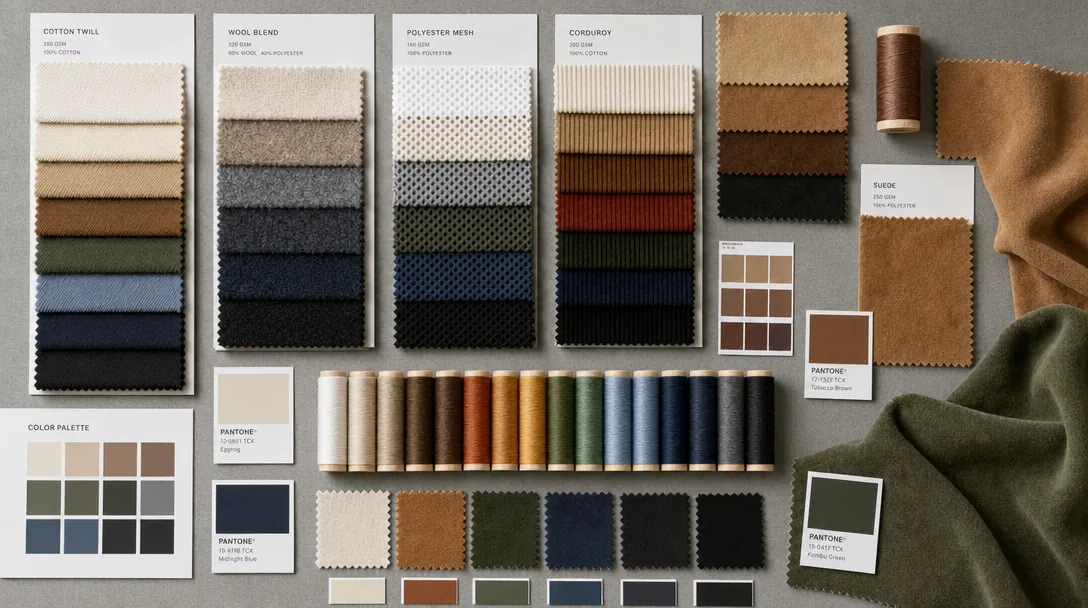
Fabric and construction checks should happen before price is issued, especially for corduroy hat vintage styles where the buyer expects soft collapse, not a stiff promo cap. A real factory should identify wale count, fiber content, fabric weight, and color tolerance in writing: for example, 100% cotton 16-wale corduroy at 260-300 gsm, or cotton-spandex corduroy for a less rigid bucket hat corduroy shape. If the order calls for a corduroy bucket hat, panel matching across the crown matters because mismatched rib direction looks cheap under showroom lighting. A corduroy hat brown should be matched against Pantone TCX or a physical swatch, with Delta-E under 1.5 for lab dips if the buyer is running retail replenishment. For an organic cotton hat, the factory must confirm whether the mill can supply GOTS or OCS documentation, not just write “organic” on a proforma invoice. Panel count, brim rows, fused versus unfused front panels, sweatband material, and seam taping all affect both sample accuracy and bulk consistency.
The last check is operational: can the factory’s sample room, compliance team, and merchandiser keep the approval path under control. Our standard practice at CrownsForge is to confirm sample-room capacity before quoting, including whether the same pattern maker and embroidery technician will handle both prototype and pre-production sample. A normal custom cap sample takes 7-12 days after artwork and fabric are approved; dyed corduroy or custom-washed vintage finishing can push that to 18-25 days. Closure options should be confirmed at this stage: antique brass buckle, self-fabric strap, snapback, elastic loop, Velcro, or fitted sizing, because each changes pattern balance and carton cube. Buyers should also ask for audit readiness before paying sample charges. sedex-audit-cap-supplier-guide.html">BSCI 2.0, Sedex SMETA 4-Pillar, factory license, needle-control records, metal detection logs, and AQL 2.5 inspection history are not paperwork decorations; they predict whether bulk shipment will survive a retailer QC visit. Good communication is measurable too: clear tech-pack comments within 24 hours, photos under neutral light, and defect language that names the issue instead of hiding behind “handmade tolerance.”
MOQ, pricing and sample approval
MOQ on a corduroy hat vintage program is usually driven less by sewing capacity and more by fabric dyeing, trims, and decoration setup. For stock 8-wale or 11-wale cotton corduroy, a practical MOQ is 300 pieces per color and style, with 100-piece size splits possible on bucket hats if the brim pattern is unchanged. Custom dyed corduroy normally starts at 600 to 1,000 pieces per Pantone TCX shade because mills will not run small dye lots cleanly. A basic 6-panel corduroy cap often prices around USD 3.80 to 5.60 FOB Ningbo at 500 pieces, while a bucket hat corduroy style with lined crown, quilted sweatband, or enzyme wash can move to USD 5.20 to 7.80. Organic cotton hat versions add roughly USD 0.35 to 0.90 per unit depending on certificate chain and yarn availability. A corduroy hat brown sample sounds simple, but brown is one of the shades where Delta-E drift is obvious under D65 light, so lab dip approval matters.
Decoration setup should be separated from unit price because it changes how the buyer reads the quote. Flat embroidery usually carries a USD 35 to 60 digitizing fee per logo, while 3D puff may add USD 0.25 to 0.55 per piece because stitch count, foam waste, and slower Tajima or Barudan run speed all increase cost. Chenille patches, woven labels, metal buckles, branded snapbacks, and custom inner taping each need their own sample charge, often USD 45 to 120 per trim. For corduroy, I do not approve embroidery only by stitch count; I check stitch density against wale direction because 9,000 stitches on twill behaves differently from 9,000 stitches on raised pile. Our standard practice at CrownsForge is to review PPS photos plus a physical pre-production sample for Pantone TCX fabric color, thread color, logo placement tolerance within plus or minus 2 mm, brim curve, sweatband tension, and trim finish before bulk cutting.
The corduroy hat vintage sample approval process should include one proto sample, one corrected fit sample if needed, and one PPS locked before production; skipping the PPS is where buyers lose control of hand feel and color. Sampling normally takes 7 to 10 days for stock corduroy and 14 to 21 days for custom dyed fabric or washed effects. After PPS approval, bulk production is typically 25 to 35 days for 500 to 2,000 pieces, plus 5 to 8 days for final inspection, packing, and export handling. Packaging decisions affect both price and defect rate: individual polybags add about USD 0.05 to 0.08 each, kraft hangtags USD 0.06 to 0.15, and molded inserts for a corduroy bucket hat can add USD 0.18 to 0.35 but reduce crown crushing in DDP parcel shipments. Final QC should be written around AQL 2.5 for major defects, with specific checks for pile direction mismatch, shade variation between panels, loose embroidery backing, and distorted brim stitching.
Quality inspection and shipping risk
The biggest shipping risk in a corduroy hat vintage sample approval process is assuming a soft, washed-looking fabric can be inspected with loose standards. I would still set final inspection at AQL 2.5 for major defects and AQL 4.0 for minor defects, with critical defects at zero tolerance. For corduroy, the inspector must check pile direction panel by panel, because a crown cut with mixed nap will look like two different colors under warehouse lighting. Measurement tolerance should be written on the approved sample sheet: crown height +/-3 mm, brim width +/-2 mm, circumference +/-5 mm, and bucket hat corduroy brim drop +/-3 mm. Anything wider than that becomes visible once the hat is packed flat or nested in dozens.
Colorfastness needs more attention than buyers expect, especially on a corduroy hat brown or other garment-washed shade. For export orders, I prefer ISO 105 rubbing tests with dry rubbing at grade 4 minimum and wet rubbing at grade 3-4 minimum; dark brown, black, and navy corduroy can stain inner taping if the dye is not fixed properly. Embroidery inspection should look beyond broken threads. On Tajima, Barudan, or ZSK heads, dense satin stitching can crush the corduroy ribs, so the sample approval file should include stitch density, backing type, thread code, and pull compensation settings. Common reject points are puckering around small lettering, exposed bobbin thread, skipped stitches on curved seams, and logo placement drifting more than 2 mm from the approved sample.
Carton control is part of quality, not just logistics paperwork. Each master carton should show PO number, style code, color, size run if any, carton number, gross/net weight, and country of origin; inner polybags should match the packing list exactly, especially for mixed styles like corduroy bucket hat, organic cotton hat, and 6-panel corduroy hat vintage caps in one shipment. FOB Yiwu or Ningbo gives the buyer more freight control, but DDP can be cleaner for small replenishment orders under 20 cartons if duty classification, HS code, and destination warehouse requirements are confirmed before production. Our standard practice at CrownsForge is to keep a sealed gold sample, final tech pack, Pantone TCX or lab-dip record with Delta-E target, embroidery tape file, carton photos, and inspection report together, so reorders do not slowly drift after the first shipment.
Buyer checklist for the next RFQ
A firm RFQ starts with a tech pack, not a mood board. For a corduroy hat vintage sample approval process, send the hat type first: 6-panel dad cap, unstructured 5-panel, bucket hat corduroy, or corduroy bucket hat with short brim. Include crown height, brim length, panel count, seam tape color, sweatband material, closure type, and target size range. For fabric, specify wale count and weight: 8-wale cotton corduroy at 280–320 gsm behaves very differently from 14-wale fine corduroy at 220 gsm. If you need organic cotton hat positioning, say whether you require GOTS-certified fabric, OCS blended yarn, or just organic cotton content on the care label. For color, do not write “brown vintage.” Give Pantone TCX or TPX, acceptable Delta-E tolerance, and whether garment wash, enzyme wash, or pigment dye is expected. A corduroy hat brown after wash can shift 1–2 Pantone steps if the lab dip is approved on raw fabric only.
Send artwork in production formats before asking for price: AI, EPS, PDF vector, or DST/EMB if embroidery has already been digitized. JPEG mockups are useful for placement, but they do not show stitch density, pull compensation, or thread direction. For embroidery, list logo size in millimeters, thread colors by Madeira or Pantone reference, 2D or 3D puff, and whether the logo crosses seams. On Tajima, Barudan, and ZSK heads, a 55 mm front logo with 8,000 stitches costs and runs differently from a 95 mm chain-stitch script at 15,000 stitches. For woven labels, send label size, fold type, edge finish, and placement photo. For leather patches, define genuine leather, microfiber, PU, or debossed suede, plus patch thickness and stitch color. If the look is corduroy hat vintage, include real photos of wear, fading, brim curve, and wash-down level instead of filter-heavy Instagram screenshots.
Your RFQ should also include commercial assumptions: quantity by color and size, target FOB Ningbo/Shanghai or DDP destination, packaging requirement, inspection level, and deadline for photo sample, pre-production sample, and bulk shipment. Our standard practice at CrownsForge is to quote only after checking fabric availability, logo technique, wash process, and carton volume, because those four items move the unit price more than most buyers expect. A 300-piece order using stock 11-wale corduroy may price around USD 4.20–6.80 FOB depending on decoration, while custom-dyed corduroy with low MOQ can add USD 180–350 in dye-lot charges plus 7–12 days. Include your required compliance standard if relevant: BSCI 2.0, Sedex SMETA 4-Pillar, recycled polybag, CPSIA for youth caps, or nickel-free buckle. The cleaner the RFQ, the fewer sample revisions, and the faster the corduroy hat vintage sample approval process moves from concept to approved PP sample.
Working with CrownsForge
The fastest way to approve a corduroy program is to lock the fabric first, not the logo. For a corduroy hat vintage project, we normally start with 8-wale or 11-wale cotton corduroy at 260–320 gsm, then confirm pile direction, hand feel, and color under D65 light before cutting the first sample. A corduroy hat brown request is not specific enough for production; we match to Pantone TCX or a physical swatch and keep bulk tolerance within Delta-E 1.5–2.0, because corduroy pile reflects light differently across panels. For bucket hat corduroy styles, shrinkage is checked before pattern grading, since a 3% fabric movement can make the brim curl or the crown sit too tight. CrownsForge usually prepares one fit sample and one pre-production sample, with buyer comments consolidated into a single revision sheet so the pattern room, embroidery team, and merchandiser are not chasing separate instructions.
Decoration approval needs more control on corduroy than on twill because the raised ribs can distort fine stitches and small serif lettering. On Tajima, Barudan, or ZSK embroidery heads, we increase underlay density, test 75D/2 polyester thread, and avoid tiny 1 mm gaps that disappear into the pile after steaming. For vintage effects, I prefer garment wash, enzyme wash, or light pigment spray after embroidery trials, not before, because thread shine and puckering change after wash. If the buyer wants an organic cotton hat claim, we separate the fabric paperwork from the decoration artwork: GOTS or OCS transaction certificates must match the purchase lot, while the logo file needs its own stitch count, backing type, and placement tolerance. A typical front embroidery approval includes stitch count, thread card, 3D foam if used, backing tear strength, and placement tolerance of ±2 mm from center line.
The practical corduroy hat vintage sample approval process ends with a sealed pre-production sample, not a nice photo in a chat thread. We tag the approved sample with fabric lot, Pantone reference, trim card, sweatband spec, label layout, carton mark, and measurement table, then use it as the factory-floor standard during cutting, sewing, pressing, packing, and final inspection. For a corduroy bucket hat, QC pays extra attention to brim symmetry, top-stitch spacing, pile bruising, loose fibers trapped in seams, and whether the crown collapses evenly after packing. Our standard final inspection follows AQL 2.5 for major defects and AQL 4.0 for minor defects, with needle detection when required by licensed sports or kids’ programs. Export coordination is built into the sample stage: FOB Ningbo or Shanghai is simpler, while DDP to the U.S. or EU requires HS code review, carton CBM planning, and audit documents such as BSCI 2.0 or Sedex SMETA 4-Pillar when the buyer’s compliance team asks for them.
Frequently Asked Questions
Do you support sustainability certifications?
Yes. We work with GOTS organic cotton, GRS-certified recycled polyester, OEKO-TEX Standard 100 fabrics, and are BSCI and Sedex audited. Certification documentation can be provided per order.
Can I order a sample before bulk production?
Yes. We strongly recommend approving a pre-production sample before mass production. Samples are charged at 35 to 60 USD each plus express shipping, fully refundable against confirmed bulk orders over 500 pieces.
What is the minimum order quantity (MOQ) for custom hats?
Our standard MOQ is 100 pieces per design and color, with sampling available from 1 piece. For complex multi-color logos or premium fabric upgrades, the MOQ can be lowered with a small per-piece surcharge.
How long does production take?
Sampling takes 7 to 12 days. Bulk production runs 20 to 30 days depending on quantity, fabric availability and decoration complexity. Inspection and packing adds another 3 to 5 days before shipment.
What logo decoration techniques do you offer?
3D puff embroidery, flat embroidery, woven patch, leather patch, PVC patch, screen printing, sublimation, applique and laser etching, all in-house with no subcontracting.
What should buyers know about organic cotton bucket hat?
When evaluating organic cotton bucket hat, the key considerations are construction quality, decoration capability, MOQ flexibility and lead time. Explain the buyer intent behind corduroy hat vintage sample approval process, when it differs from generic hat sourcing, and what decisions affect cost, lead time and compliance. Describe how CrownsForge manages corduroy hat vintage sample approval process programs with sampling, decoration, QC and export coordination.
What should buyers know about brown corduroy bucket hat?
When evaluating brown corduroy bucket hat, the key considerations are construction quality, decoration capability, MOQ flexibility and lead time. Explain the buyer intent behind corduroy hat vintage sample approval process, when it differs from generic hat sourcing, and what decisions affect cost, lead time and compliance. Describe how CrownsForge manages corduroy hat vintage sample approval process programs with sampling, decoration, QC and export coordination.
What should buyers know about bucket hat men nike?
When evaluating bucket hat men nike, the key considerations are construction quality, decoration capability, MOQ flexibility and lead time. Explain the buyer intent behind corduroy hat vintage sample approval process, when it differs from generic hat sourcing, and what decisions affect cost, lead time and compliance. Describe how CrownsForge manages corduroy hat vintage sample approval process programs with sampling, decoration, QC and export coordination.
What should buyers know about vintage bucket hat mens?
When evaluating vintage bucket hat mens, the key considerations are construction quality, decoration capability, MOQ flexibility and lead time. Explain the buyer intent behind corduroy hat vintage sample approval process, when it differs from generic hat sourcing, and what decisions affect cost, lead time and compliance. Describe how CrownsForge manages corduroy hat vintage sample approval process programs with sampling, decoration, QC and export coordination.
Ready to start your custom hat project?
Send us your tech-pack, sketch or even just an inspiration photo. We will respond with a detailed quotation and digital mock-up within 24 hours.
Request a free quoteRelated guides
Hat Sizing & Fit for International Markets: US, EU, UK, JP Standards
Read article →Private Label vs White Label Caps: Which Model Fits Your Brand?
Read article →
Hat With Patch Fabric And Trim Spec Guide for Custom Hat Buyers
Read article →Sourcing custom hats does not have to be complicated. With the right manufacturing partner, clear specifications and a small upfront investment in sampling, you can launch a retail-quality product in 30 to 45 days.