
Custom Made Trucker Hat: The 2026 Sourcing & Manufacturing Playbook - Cost & MOQ Breakdown
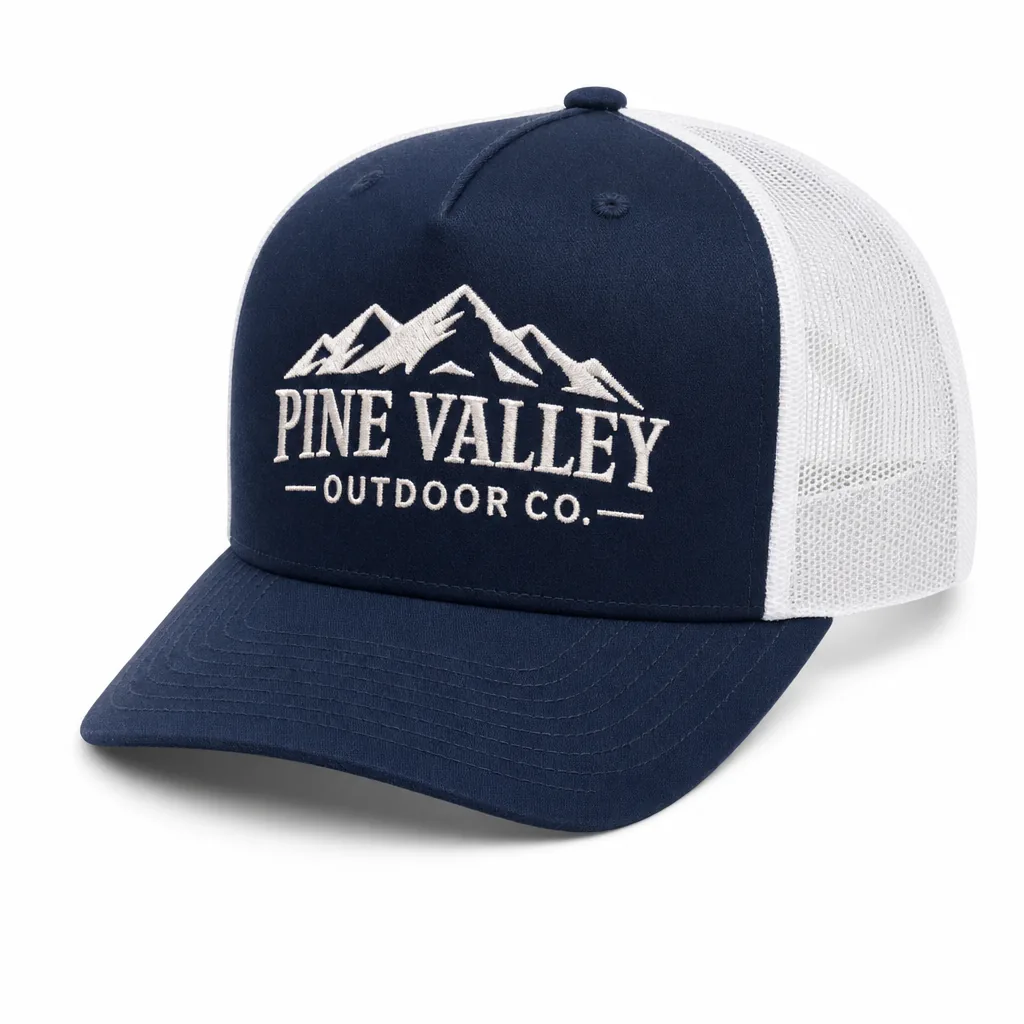
Every week, our sales team answers detailed questions about custom made trucker hat: the 2026 sourcing & manufacturing playbook - cost & moq breakdown. We wrote this guide so that wholesalers, streetwear brands, corporate buyers and promotional resellers can compare options with full information, and avoid the traps that show up only after production has started.
Custom Embroidered Hats
Embroidery is still the safest decoration method for a custom made trucker hat that has to survive carton compression, DC handling, sweat, and repeat wear, but only if the cap is engineered around the logo. On the production floor, the file is digitized into DST or DSB, then test-sewn on the actual front panel build using Tajima, Barudan, or ZSK cap frames; a sew-out on flat backing alone tells you very little. Front substrate is the make-or-break variable. A 5 mm polyester foam front gives the loft buyers want for bold sports or streetwear logos, but dense fills above roughly 10,000 to 12,000 stitches can tunnel or crush the foam if underlay, pull compensation, and stitch direction are wrong. Cotton twill at 260-300 gsm, brushed canvas, and foam-backed polyester all require different tensions, needle sizes, and density settings. Most avoidable delays start with bad artwork handoff. If the buyer sends a low-res JPEG and says “front logo,” the factory is forced to guess logo height, outline weight, and thread breaks before sampling even starts. Send vector art, final logo size in millimeters, Pantone TCX references for thread matching, and call out whether the design is flat stitch, satin, tatami fill, or 3D puff. That one step cuts approval rounds and reduces the chance that a custom made trucker hat looks clean in the sample but fails when scaled across 12 or 24 embroidery heads.
Pricing should be built from the embroidery spec, not from a vague trim sheet. For a custom made trucker hat, the quote changes with crown profile, front panel material, mesh denier, visor curve, closure type, sweatband content, seam tape color, number of embroidery locations, and stitch-count range. A 5,000-stitch center-front logo runs fast and stable; a 14,000-stitch 3D puff design with side hit and rear wordmark is slower, riskier, and belongs in a different cost band. In China, stocked trucker bodies can sometimes run at 48-100 pieces per colorway with a small-lot surcharge, but fully custom builds are more realistically 144-300 pieces per color. For 2026, standard FOB pricing for a foam-front, mesh-back trucker with one front embroidery usually lands around $2.30-$4.90 each; add puff embroidery, woven loop labels, printed seam tape, suede visor fabric, or multiple logo positions and the number often moves beyond $5.50. Digitizing is normally separate at about $20-$60 per logo. Inspection should prioritize embroidery failure points before general sewing defects. The repeat issues are jump stitches, fill-to-outline misregistration, exposed foam on puff logos, puckering around dense fills, needle cuts on light foam, visor distortion after crown assembly, and thread-shade drift against the approved Pantone reference. For licensed programs, holding thread color within Delta-E 2.0 is a practical standard, and bulk inspection at AQL 2.5 is normal, but first-off approval by machine head matters more than buyers realize because one head can sew visibly tighter than the next. Our standard practice is to check backing trim, forehead comfort, and logo consistency before carton pack-out; if the artwork relies on tiny serif text, tonal fades, or very fine negative space, woven patches or heat-applied emblems usually reproduce better than embroidery at scale.
Custom Hat Embroidery
Embroidery is the first quality signal buyers read on a custom made trucker hat, so it has to be specified like a production process, not treated as an attachment in an email thread. A workable tech pack should lock the file format after cleanup and digitizing—usually DST for Tajima or DSB for Barudan—plus decoration type, finished logo size, target stitch count, thread brand, and fabric-specific limits. On 5-panel foam truckers, good factories embroider the front panel flat before crown assembly; otherwise the center seam pushes the design off registration and puff areas collapse at the fold. For most foam-front layouts, keep the embroidery field around 100-120 mm wide by 50-60 mm high, use 40 wt polyester thread from Madeira or Gunold, and ban text below roughly 4 mm cap height unless you accept legibility loss. If 3D puff is required, specify 2 mm or 3 mm EVA, satin column width, edge coverage, and whether the design combines flat fill with raised borders. Color should be called out in Pantone TCX or coated Pantone, with thread matching held to a realistic Delta-E of about 2.0-2.5 rather than “exact match.” Most bad samples come from vague embroidery instructions, not from the Tajima, ZSK, or Barudan heads themselves.
Embroidery cost is driven by machine minutes and rejection risk, not by how simple the logo looks on screen. At a China factory level, a standard front logo on a 5-panel foam trucker usually adds about $0.35-$0.85 per piece at 300-500 units when the design stays in the 5,000-12,000 stitch range with one to four thread colors. Once you add 3D puff, metallic thread, appliqué, side hits, back arch embroidery, or frequent thread changes, the decoration cost typically moves to $1.10-$2.20 per cap because run speed drops, trims increase, and operators lose efficiency on every color swap. Digitizing is commonly $20-$60 per file unless the order value is high enough to absorb it, and true custom builds usually start around 144 pieces per colorway, while stocked-body programs can sometimes go as low as 48-100 pieces if only the logo changes. Inspection should be against the sealed pre-production sample under AQL 2.5, with clear tolerances such as logo placement within +/-2 mm, no exposed backing, no loose jump stitches, and no foam tunneling after sweatband setting. That matters because embroidery behavior changes dramatically across foam, brushed cotton canvas, corduroy, washed chino twill, and 600D polyester; a cheaper cap body is not cheaper if it cannot hold the logo cleanly at production speed.
Custom Trucker Hat
The difference between a giveaway cap and a retail-ready custom made trucker hat is almost always in the bill of materials, not the logo file. The standard China market build is still a 5-panel foam trucker with a 3-5 mm laminated polyester front, polyester mesh around 120-160 gsm, PE visor board at roughly 1.8-2.2 mm, a generic PVC snap, and a basic polyester sweatband. That spec is cheap and fast, but it collapses under heat, carton pressure, and repeat wear. If you want shape retention and a better hand feel, stop writing “trucker cap, embroidered front” and start locking the actual components: 10x10 brushed cotton twill or 65/35 poly-cotton twill on the face, mesh denier, visor insert stiffness, sweatband blend, seam tape color, and snap supplier grade. Buyers who leave those items open usually receive spot-market trims, which is why bulk runs end up with brittle closures, wavy brims, and mesh that goes shiny after a few weeks in sunlight or a single wash cycle. Decoration has to be engineered around the cap structure. On a proper line, the sequence is panel cutting, front lamination, embroidery or patch application, crown sewing, visor joining, sweatband setting, closure attaching, steaming, shaping, metal detection, and packing. Foam fronts are especially unforgiving: lettering under 3 mm, narrow satin borders, and heavy fill areas will push, sink, or distort unless the file is digitized for the substrate and run on stable heads like Tajima, Barudan, or ZSK. A usable tech pack should specify Pantone TCX or coated references, logo size in millimeters, crown height, visor curve, mesh color, top button, eyelets, inner label copy, and carton ratio. For retail programs, I would not approve bulk without a pre-production sample and then a sealed counter sample, with fabric and main thread held to a Delta-E target under 1.5-2.0.
MOQ and FOB on a custom made trucker hat move more on trim complexity than most buyers expect. If you stay with stock foam fronts, stock mesh, and one-position flat embroidery or screen print, workable MOQs are usually 144-300 pieces per colorway. Once you add custom inside taping, a woven flag label, branded snap, rope, suede-touch microfiber front, molded rubber patch, or individual polybag with barcode sticker, the real MOQ tends to jump to 300-500 pieces per style and color. In current factory math, a fair FOB China range is about $2.10-$3.20 for a basic printed foam trucker, $2.80-$4.50 for an embroidered twill-and-mesh build, and $4.80-$7.50 for a higher-spec retail cap with custom trims and packaging. Below those numbers, something is usually being stripped out: stitch count, fabric weight, visor board quality, or inspection discipline. Final inspection is where weak factories show themselves. The failure points that matter are panel symmetry, crown shape after carton compression, visor curvature consistency, stitch density, loose thread trimming, patch edge adhesion, mesh tearing at seam joins, skipped sweatband stitches, and snap pull strength. AQL 2.5 is standard for branded headwear, but visible logo defects should be controlled tighter, closer to AQL 1.5, because one off-center front logo can sink the resale value of the entire lot. Our standard practice is to freeze three variables before bulk: embroidery backing, visor mold, and closure supplier. Those are the parts most likely to drift between approval sample and production, and that drift is exactly how a clean sample turns into a disappointing shipment.
Custom Trucker Hats
The make-or-break decision on a custom made trucker hat is the front-panel build, not the mesh. The market default is still a 5-panel silhouette with a seamless foam front because it gives the cleanest embroidery field and keeps cost low, but that spec mainly suits promo volume, not every retail brand. Basic programs usually run 2.5-3.0 mm PU foam laminated to 100% polyester tricot, 140-160 gsm polyester mesh, and a standard PE snapback; in 2026 China ex-factory terms, that lands around $2.10-$3.20 with flat embroidery at moderate stitch counts. If the brief calls for a better handfeel and less “gas station trucker” shine, move the front crown to 10 oz cotton twill, brushed poly-cotton twill, or cotton canvas with medium buckram, then pair it with softer hex mesh or sandwich mesh in the 120-140 gsm range. That upgrade typically pushes FOB cost to $3.40-$5.20 depending on stitch count, patch type, and label package. Embroidery on trucker fronts is where weak factories get exposed. A large fill logo on foam has to be digitized for compression, underlay, and pull compensation, otherwise the front panel tunnels, the center seam drifts, and the crown loses symmetry by bulk production. On Tajima, Barudan, or ZSK heads, I would rather reduce fill density and balance edge-run plus tatami settings than chase a “fatter” sew-out that collapses the panel after steaming. The spec sheet should lock crown height, visor length, visor curve, buckram hardness, seam construction, sweatband composition, closure grade, and logo application method with measurable tolerances. For color-sensitive orders, approve fabric, mesh, and thread under D65 lighting with Pantone TCX references; holding Delta-E below 1.5 on the main body and below 2.0 on embroidery thread is a realistic control point, especially when white foam, dyed twill, and black mesh absorb dye differently.
MOQ and trim choices change the economics fast. If you stay with stock mesh, stock snaps, and standard inside taping, most factories can run 144-300 pieces per colorway without killing efficiency. Once you add custom-dyed front fabric, molded PVC or rubber patches, printed seam tape, woven labels at multiple positions, or retail-ready packaging, the real production sweet spot moves to 500-1,000 pieces per style. Specialty builds with multilayer appliqué, premium sweatbands, or branded closures usually start around $5.80 and climb from there. CrownsForge standard practice is to warn buyers early that a sharp pre-production sample proves almost nothing if the factory has not locked material yield, embroidery settings, and trim availability for replenishment. Inspection is where a trucker program either stays margin-safe or starts generating claims. The repeat defects are predictable: foam bubbling, front-panel collapse after embroidery, visor curve mismatch, mesh skew from over-pulled seams, weak snap posts, and puckering around patch stitch-down edges. For embroidery-heavy caps, check registration drift, thread breaks, backing show-through, stitch count consistency, and underlay coverage against the approved sew-out; for patch programs, test heat-press adhesion, peel strength after conditioning, and edge security after repeated flexing. A disciplined factory should inspect to AQL 2.5 for major defects and 4.0 for minor, compare bulk against a sealed golden sample, and run carton drop tests plus needle detection where retailer compliance requires it. The real sourcing test is whether the supplier can hold crown shape, color consistency, and closure reliability across the next three POs, not whether they can make one clean sample.
Hat Trucker Custom
A repeatable custom made trucker hat starts with crown engineering, not logo decoration. Lock the profile first: high-profile foam front, mid-profile buckram-backed 5-panel, or lower-profile unstructured build all sew and wear differently, and you cannot swap them without changing the silhouette. A usable tech pack should call out front fabric by construction and weight—180-220 gsm brushed cotton twill, 14-wale corduroy, suede-look microfiber, or 600D polyester for a stiffer crown with lower shrinkage—plus back mesh spec, usually 100-140 gsm polyester. Nylon mesh feels softer in hand, but polyester mesh generally gives better UV shade stability and fewer repeat-order color claims. If you do not fix visor curve, rows of visor stitching, crown height, sweatband composition, closure type, and Pantone TPX or TCX references, the same supplier can deliver a crisp retail profile on one PO and a soft, collapsing crown on the next. Decoration has to match the build. Flat embroidery on Tajima, Barudan, or ZSK heads runs clean on twill and poly fronts, while 3D puff usually needs 2-5 mm EVA underlay and a lower stitch density so the edges do not cave in after packing. Foam-front truckers accept screen print and heat transfer well, but heavy embroidery can tunnel the face and distort the front panel. For bulk control, specify logo placement tolerance at plus or minus 2 mm, crown and visor dimensions at plus or minus 0.5 cm, and define packing standards down to carton count and drop resistance. Those are not fussy factory notes; they are the difference between a sales sample that photographs well and a bulk custom made trucker hat program that stays consistent across 1,000 to 10,000 pieces.
MOQ and cost are driven more by construction complexity than by the word custom. In China, a standard custom made trucker hat in chino twill with polyester mesh, a PP snapback, and one-location flat embroidery usually runs 144-300 pieces per colorway if the factory is using open-stock bodies; fully cut-and-sew programs often start at 300-500 pieces per style-color. Ex-factory pricing is typically $2.20-$3.80 at 500 pieces and $1.75-$2.90 above 3,000 pieces with standard trims and packaging. Add-ons move the needle fast: printed seam tape, woven flag label, private-label sweatband print, size sticker set, hangtag, or individual polybag usually adds $0.18-$0.55 per cap, while melton wool blend fronts, genuine leather patches, molded silicone badges, or rope details can push the build to $4.50-$7.50. Most trucker failures are easy to predict before sewing starts. The common ones on the factory floor are front-panel distortion after embroidery, mesh splitting at the back-seam join, crooked patch placement, inconsistent visor curve, weak snap studs, sweatband crocking, and top-button drift off center. A fully customized pre-production sample with new digitizing, branded closure tab, and custom mesh color usually costs $35-$80, often credited back after bulk order confirmation. If shade accuracy matters, approve lab dips under D65 lighting and hold dyed fabric to Delta-E below 1.5, with trims below 2.0. For inspection, AQL 2.5 works for general retail, but licensed sports or stricter brand programs should tighten logo placement and thread-color standards and require in-line QC photos from cutting, embroidery, sewing, and packing—not just final-carton shots.
Trucker Custom Hat
The make-or-break decision on a custom made trucker hat is the shell spec, not the artwork. Most factory-ready programs run either a 5-panel high-profile crown or a 6-panel mid-profile build, usually with a 2.5-3.0 mm EVA-laminated foam front, 210-240 gsm cotton or polyester twill on the visor and front facing, 120-160 gsm polyester mesh, and a PP snapback closure with 7 adjustable holes. If a supplier only writes “trucker mesh” on the quotation, that is a red flag; the useful questions are mesh denier, rebound after needle penetration, and whether the side and back panels deform after sewing, steaming, and carton compression. A proper tech pack should lock crown height, visor length and curve, front-panel backing, rope or sandwich detail, sweatband material, seam tape color, top button, closure finish, and the exact decoration method—flat embroidery, 3D puff, woven patch, TPU badge, sublimated patch, or screen print. Color control is where repeat orders usually go wrong. “Black mesh” and “black twill” can come from different mills and still miss each other badly under daylight or store lighting. For any custom made trucker hat program that will reorder across seasons, specify Pantone TCX references for fabric and embroidery thread, then set an acceptable Delta-E tolerance—ideally within 1.0-1.5 for branded colors and no looser than 2.0 for secondary trims. Our standard practice is also to confirm sweatband composition, often 180-200 gsm polyester-cotton or microfiber, because low-grade sweatbands twist after sewing and make the cap sit crooked even when the embroidery is clean.
Most trucker failures happen during assembly and decoration, not cutting. The production flow is straightforward on paper—foam and fabric cutting, crown sewing, visor attachment, sweatband and seam tape closing, top button and snapback setting—but foam-front caps punish sloppy machine settings. On Tajima, Barudan, or ZSK cap frames, the embroidery file needs the right underlay, stitch density, pull compensation, and frame tension for foam construction; otherwise you get tunneling, exposed foam on satin columns, distorted letter edges, or a crushed front crown that never recovers. If you want consistency, specify logo placement tolerance at ±2 mm, 3D puff height at 2-3 mm, visor length around 7.0-7.5 cm, and a stitch-count ceiling so the front panel does not turn rigid and buckle. Pricing is wider than many buyers expect because trim upgrades add labor fast. A stock-material custom made trucker hat with a standard front embroidery of roughly 6,000-8,000 stitches typically lands around $2.10-$3.40 FOB China at 500-1,000 pieces, depending on fabric mix, profile, and carton density. Add 3D puff, side embroidery, rope trim, printed seam tape, woven loop labels, or molded rubber patches and the realistic FOB range moves to about $3.20-$4.60. MOQ is commonly 144 pieces per colorway when the factory can pull from stock twill, stock mesh, and standard closures, but custom-dyed fabric, bespoke mesh, metal snaps, or private-mold closures usually push the starting line to 500-1,000 pieces. Final inspection should be set to AQL 2.5, with special attention on mesh seam slippage, cracked snap pins, off-center top buttons, uneven brim curvature, and foam collapse after pack-out at 25 pieces per polybag and 100 or 144 pieces per export carton.
Working with CrownsForge for custom made trucker hat programs
Sampling speed is usually the first place a custom made trucker hat program wins or loses money. A photo sample should be out in 3 to 5 working days after artwork approval; a wearable prototype is more realistically 7 to 10 working days when the style needs new fabric booking, fresh embroidery digitizing, or a new TPU, PVC, or silicone patch mold. Stock-supported 5-panel foam fronts with standard 18x14 nylon mesh move fastest because the shell bodies are already cuttable, while brushed cotton twill, recycled poly mesh, or custom underbill prints add material lead time immediately. The real bottleneck is almost never the sewing line; it is incomplete approvals. If the buyer has not locked Pantone TCX or TPG references, crown height, visor curve, snap closure spec, mesh denier, seam tape color, button color, and embroidery stitch count, sampling drifts into revisions. One unnecessary re-sample cycle typically adds $40 to $120 per SKU once remaking charges and DHL or FedEx freight are counted.
MOQ follows trim complexity, not factory mood. A straightforward custom made trucker hat with flat embroidery, stock snapback, standard woven inside label, and no special print can often run at 144 pieces per colorway. Add printed seam tape, custom underbill art, mixed closures, multiple patch applications, or non-stock fabrics, and the sensible floor moves to 300 to 500 pieces because trim MOQs, fabric loss, and line changeover start to outweigh the margin. In Yiwu, a basic 5-panel foam/mesh cap is commonly $2.10 to $3.20 EXW; a 6-panel cotton/poly trucker with 3D embroidery, custom tape, inside label, and hangtag is more like $3.80 to $5.80 EXW before freight. Woven patches can work around 200 pieces, but molded rubber patches and metal badges usually need 500-plus units to absorb tooling logically. At CrownsForge, the better question is not just price per cap, but what the quote actually covers: digitizing, mold cost, carton marks, export filing, and replacement terms tied to final inspection at AQL 2.5.
The biggest failure point in a custom made trucker hat program is not stitching quality; it is weak control over approvals, decoration, and inspection. The safe sequence is fixed: artwork review, construction sheet sign-off, pre-production sample approval, raw material color check, inline QC, final inspection to AQL 2.5, and carton-by-carton packing verification before balance payment. Buyers should care whether embroidery and patch application are in-house. When Tajima, Barudan, or ZSK heads, heat-transfer stations, and label attachment sit under one roof, logo placement stays tighter, thread tension is more stable, and patch temperature and dwell time are easier to standardize. That matters on repeat orders where a 3 mm placement drift becomes a claim issue, not a cosmetic issue. For retail and licensed accounts, the paperwork is as important as the cap: sedex-audit-cap-supplier-guide.html">BSCI 2.0 or Sedex SMETA 4-Pillar audit records, needle logs, Pantone approvals with an agreed Delta-E tolerance, and REACH or CPSIA declarations for snaps, inks, and PVC trims. That documentation feels bureaucratic until the reorder jumps from 2,000 to 20,000 pieces and the second lot has to match the first without argument.
Frequently Asked Questions
What is the minimum order quantity (MOQ) for custom hats?
Our standard MOQ is 100 pieces per design and color, with sampling available from 1 piece. For complex multi-color logos or premium fabric upgrades, the MOQ can be lowered with a small per-piece surcharge.
Which shipping methods do you support?
We support FOB, CIF and DDP shipping. Air express for samples and small orders, sea LCL for 100 to 500 pieces, sea FCL for 5,000+ pieces. Door-to-door DDP available for US, EU, UK, Canada and Australia.
Do you support sustainability certifications?
Yes. We work with GOTS organic cotton, GRS-certified recycled polyester, OEKO-TEX Standard 100 fabrics, and are BSCI and Sedex audited. Certification documentation can be provided per order.
Can I order a sample before bulk production?
Yes. We strongly recommend approving a pre-production sample before mass production. Samples are charged at 35 to 60 USD each plus express shipping, fully refundable against confirmed bulk orders over 500 pieces.
What file format should I send for my logo?
Vector files (AI, EPS, PDF) are ideal. High-resolution PNG or JPG at 300 dpi on transparent background works as a fallback. Provide Pantone color references for accurate reproduction.
How does ordering custom hat trucker work?
When evaluating custom hat trucker, the key considerations are construction quality, decoration capability, MOQ flexibility and lead time. Cover everything buyers ask about custom embroidered hats: how it's manufactured, what specs to request from a factory, typical MOQ and pricing, common quality issues to inspect for, and how this ties back to the broader custom made trucker hat sourcing decision. Cover everything buyers ask about custom hat embroidery: how it's manufactured, what specs to request from a…
How does ordering custom embroidered trucker hats work?
When evaluating custom embroidered trucker hats, the key considerations are construction quality, decoration capability, MOQ flexibility and lead time. Cover everything buyers ask about custom embroidered hats: how it's manufactured, what specs to request from a factory, typical MOQ and pricing, common quality issues to inspect for, and how this ties back to the broader custom made trucker hat sourcing decision. Cover everything buyers ask about custom trucker hats: how it's manufactured, what specs to request from a…
How does ordering custom made hats for men work?
When evaluating custom made hats for men, the key considerations are construction quality, decoration capability, MOQ flexibility and lead time. Cover everything buyers ask about custom embroidered hats: how it's manufactured, what specs to request from a factory, typical MOQ and pricing, common quality issues to inspect for, and how this ties back to the broader custom made trucker hat sourcing decision. Cover everything buyers ask about custom trucker hats: how it's manufactured, what specs to request from a…
How does ordering high quality custom trucker hats work?
When evaluating high quality custom trucker hats, the key considerations are construction quality, decoration capability, MOQ flexibility and lead time. Cover everything buyers ask about custom embroidered hats: how it's manufactured, what specs to request from a factory, typical MOQ and pricing, common quality issues to inspect for, and how this ties back to the broader custom made trucker hat sourcing decision. Cover everything buyers ask about custom trucker hats: how it's manufactured, what specs to request from a…
Need a low-MOQ test order?
We help emerging brands launch with as few as 100 pieces. Premium fabric, in-house embroidery, retail-ready packaging.
Start a small orderRelated guides
5 Panel Hat Vintage: A 2026 B2B Sourcing Guide
Read article →
Custom Embroidered Hat: The 2026 Sourcing & Manufacturing Playbook
Read article →
Golf Hats For Men Supplier Audit Checklist for Custom Hat Buyers
Read article →We hope this guide demystifies custom made trucker hat: the 2026 sourcing & manufacturing playbook - cost & moq breakdown and helps you move forward with confidence. If you have questions specific to your project, our English-speaking sales engineers are one message away.