
Custom Made Trucker Hat: The 2026 Sourcing & Manufacturing Playbook (2026 Update) (2026 Update) - Supplier Checklist
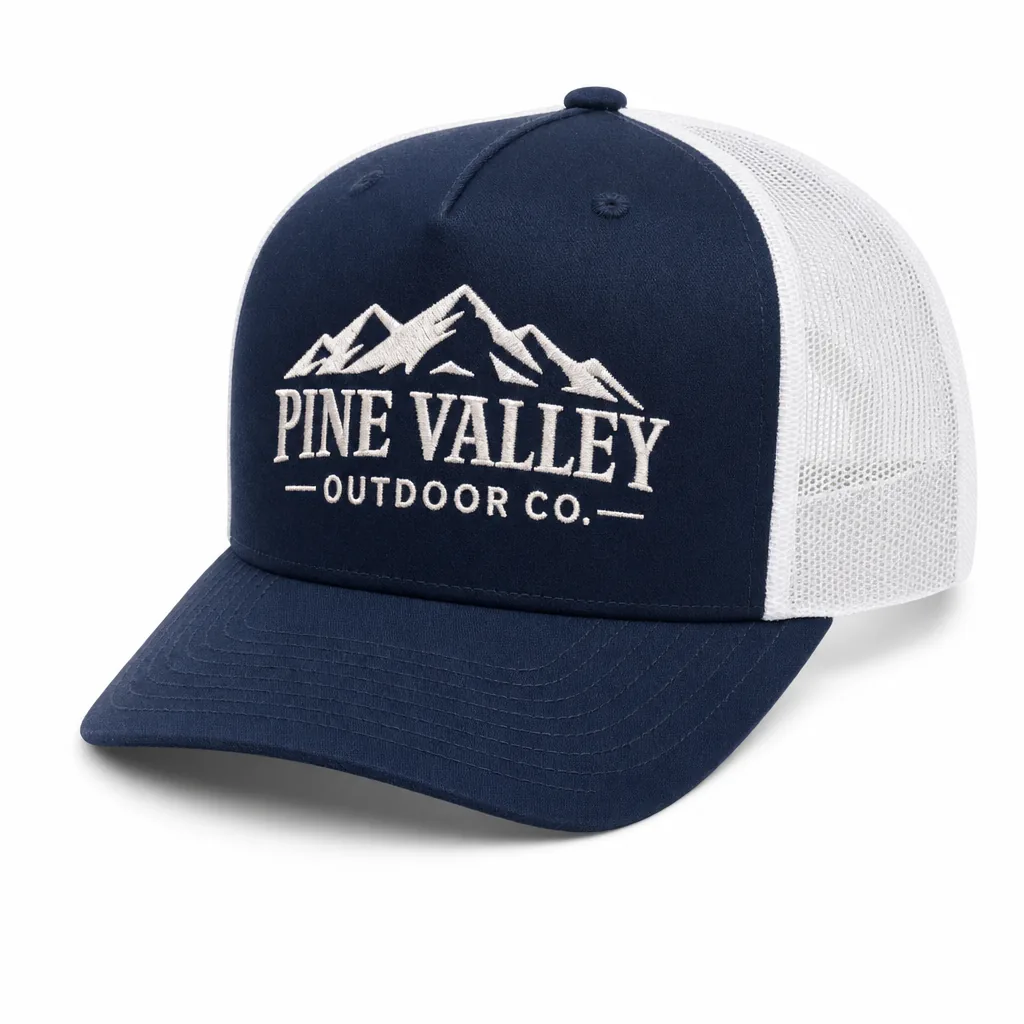
Custom Made Trucker Hat: The 2026 Sourcing & Manufacturing Playbook (2026 Update) (2026 Update) - Supplier Checklist is one of the most-asked questions we receive from international buyers, and for good reason. With dozens of factories competing for your order and an alphabet soup of technical terms in every supplier quote, even experienced importers can feel lost. This guide consolidates what we have learned producing custom hats for clients in 40+ countries.
Custom Embroidered Hats
Embroidery is the point where a custom made trucker hat either reads retail or promotional, and the difference is usually in the digitizing, not the thread brand. A trucker front is typically poly foam laminated to tricot or a buckram-backed 210-230 gsm twill, so it behaves nothing like a flat cotton dad cap. Any file should be digitized specifically for cap frames on Tajima, Barudan, or ZSK heads; reusing a left-chest DST is how you get tunneling, ripples, and crowns pulled out of shape. On foam fronts, a practical starting range is 0.40-0.45 mm fill density, with satin columns capped around 5.5-6.0 mm before switching to tatami. Good digitizers also balance edge-run and center-walk underlay so the logo stands up without slicing the foam. For 3D puff, 2 mm EVA works for cleaner small characters, while 3 mm is safer for bold block letters; enclosed counters on letters like A, R, and 8 should stay flat once they fall under roughly 5 mm height. Bulk placement tolerance on the front panel is realistically ±2 mm. Anyone quoting ±0.5 mm on mass production truckers is quoting wishful thinking, not process capability.
Cost is driven by stitch count, color changes, and material customization far more than by the fact that it is a trucker silhouette. At 300-500 pieces, a standard custom made trucker hat with stock polyester mesh, plastic snapback, and a 5,000-8,000 stitch front logo usually lands around $2.10-$3.40 EXW in Zhejiang. Once you add 3D puff, metallic thread, side or back embroidery, or front logos above 10,000 stitches, pricing more often moves into the $3.80-$5.20 range. Piece-dyed stock fabrics are normal at these MOQs; true custom dyeing to Pantone TCX generally starts around 500 pieces per color because mills need the volume to control shade and keep Delta-E within a commercially acceptable range. Digitizing is usually $25-$80 per logo, woven labels and printed seam tape add about $0.08-$0.22 each, and suppliers should break out the hat body cost from the embroidery adder so you can compare quotes cleanly on EXW or FOB terms.
Most trucker embroidery defects are predictable and easy to catch if the inspection sheet is written by someone who has actually run cap frames: registration drift between color layers, loose bobbin looping hidden under backing, thread breaks heat-trimmed after repair, and crown distortion from over-tensioning the frame. Foam fronts with lower denier face fabric are especially vulnerable to needle cutting if the supplier runs the wrong needle size or pushes density to compensate for poor digitizing. Set AQL 2.5 for majors, then inspect logo centering, side-seam balance, inside backing trim, stitch coverage, and thread color against Pantone references; on embroidered goods, a practical standard is to agree the match under D65 lighting before bulk starts. Also measure crown symmetry after embroidery, because aggressive hooping can shift the front by 3-5 mm, which is obvious once worn even if it looks acceptable on a flat table. Our standard practice is to approve both a pre-production sample and a worn sample, since a trucker can pass tabletop photos and still fail the forehead curve in actual use.
Custom Hat Embroidery
Embroidery is where a custom made trucker hat either looks retail-ready or immediately reads cheap, and the failure points are predictable. Buyers reject the same defects every season: puckering around dense fills, peaking on foam fronts, broken or looping thread, satin columns that split at corners, and logo placement drifting more than 2 to 3 mm off center. On a 5-panel trucker, the foam-backed front is less forgiving than brushed cotton twill; if the digitizing ignores cap curvature, the logo will tunnel at the crown and the panel can collapse after hooping. Ask for a pre-production sample sewn on the actual substrate, not a flat strike-off on random twill, and require a first-run machine photo showing hoop type, cap frame, backing spec, and thread sequence before bulk cutting starts. A competent shop should be running Tajima, Barudan, or ZSK cap heads at roughly 650 to 850 spm for foam-front work, with underlay and pull compensation adjusted for the mesh-backed structure rather than copied from a baseball cap file.
Inspection standards should match the value of the branding, not just generic apparel AQL language. AQL 2.5 can govern carton-level defects, but embroidery itself needs tighter visual limits: no loose thread tails above 3 mm, no exposed bobbin, no visible needle strikes on the face, and no thread color mismatch beyond Delta-E 2.0 to 3.0 against the approved Pantone TCX or dyed thread card under D65 lighting. For placement, I would hold front logos to ±2 mm vertically and horizontally, because 4 mm drift is obvious on a trucker crown. Backing matters just as much as stitching: 35 to 50 gsm tear-away works for light fills, while dense logos on EVA foam fronts often need a cleaner cutaway strategy to prevent rippling after packing. At CrownsForge, we lock the DST file, Madeira or Gunold thread code, needle size, and placement template before bulk sewing, because trying to rework embroidery after panel assembly usually costs $0.30 to $0.80 per cap and often destroys the margin entirely.
Custom Trucker Hat
The part that decides whether a custom made trucker hat looks retail-ready or cheap is the front build, not the mesh. Most quality failures start with the wrong structure: entry promo styles often use 3-5 mm EVA foam laminated to polyester jersey, while better programs move to buckram-backed cotton twill or polyester twill at 180-240 gsm for a cleaner crown and more stable embroidery field. If crown height, panel shape, brim length, brim curve, and seam allowance are not fixed on the tech pack, the factory will default to a house block, and your PPS-to-bulk match will drift fast. Call out crown depth in millimeters, visor board thickness, mesh denier, snapback peg count, sweatband material, and logo position measured from center front and visor seam. Those specs control fit, silhouette, and even carton performance in transit. Embroidery is where weak factories get exposed. On small copy under 4 mm cap height, you need to know whether they are running Tajima, Barudan, or ZSK heads and what digitizing compensation they apply for foam-front push and panel curvature. For most trucker logos, satin density in the 0.35-0.45 mm range works, with edge-run and zigzag underlay defined instead of leaving the digitizer to guess. Thread should be specified as 120D/2 polyester or rayon by brand and finish, not just “poly thread.” Use Pantone TCX for fabric, Pantone Solid Coated for logo colors, and require lab dips or thread cards with Delta-E under 1.5 on core brand shades. “Close enough” is how white thread turns warm gray and a custom made trucker hat arrives looking off-model.
Price only stays predictable when the construction is standardized and the artwork is production-friendly. At 300-500 pieces, a basic 5-panel foam-front trucker with polyester mesh, PE snapback, and one-location flat embroidery typically lands at $2.90-$4.40 FOB China. Add rope trim, woven flag label, custom seam tape, under-visor print, interior taping, or a molded suede patch, and the workable range moves to roughly $4.80-$6.80 FOB. Small runs at 50-100 pieces can be useful for test drops, but the factory has to amortize sampling, digitizing, trim loss, and line setup over fewer units, so expect the cost to jump 20-35% and available trim options to narrow. Quotes far below market usually hide lighter mesh, lower-density stitching, thinner visor board, or reused house trims. Quality control on a custom made trucker hat is mostly about consistency across the lot, not whether one salesman sample looked good. The defects that keep showing up in final inspection are front-panel lean, visor asymmetry over 3 mm, mesh shade variation between dye lots, embroidery puckering on dense fills, exposed bobbin on the inside, and crowns crushed by weak master cartons. AQL 2.5 for major visual defects and AQL 4.0 for measurements is normal for wholesale; licensed retail programs often tighten appearance standards and add metal detection if trims or labels require it. Carton spec matters more than buyers think: a 24-piece inner with tissue fill or crown support adds only a few cents per hat but sharply reduces deformation after ocean transit. Our standard practice is to lock the construction sheet before comparing prices, then evaluate factories on sample accuracy, inline inspection records, and shipping discipline rather than the cheapest FOB number.
Custom Trucker Hats
The make-or-break variables in a custom made trucker hat are structural, not graphic. Start with panel architecture and materials, because shape failure shows up long before a logo problem does. A 5-panel foam trucker gives you a larger uninterrupted front for screen print or oversized patches, while a 6-panel twill trucker wears closer to the head and tolerates embroidery better on curved crowns. For the front panel, specify either 60/40 cotton-poly twill at 220-260 gsm with buckram backing, or laminated polyester foam at 3-5 mm with recovery requirements after compression packing. Cheap foam is the usual culprit when crowns arrive creased and never stand back up. On mesh, polyester in the 180-220 denier range with uniform hex openings is the safe baseline; low-tension mesh may feel soft at inspection but it collapses at the side seam and throws the crown out of square after a few wears.
Lock the construction spec in writing or the bulk run will drift to whatever stock the factory has on hand that week. Crown height should be called out in millimeters, not described as “mid” or “high”; for example, 115-120 mm for a standard adult trucker. Also define visor profile, PE board thickness at 1.5-2.0 mm, sweatband content, top button wrap, snapback material, and row count on the closure. Repeatability is the real sourcing test. For a standard custom made trucker hat, 300-500 pieces per colorway is workable, but custom-dyed mesh, washed twill, molded rubber patches, or specialty closures often push the MOQ to 1,000 because the mill and trim suppliers have their own minimums. In 2026, FOB China pricing is still fairly stable: $1.20-$2.20 for a basic print build, and $2.50-$4.50 for a structured embroidered version with custom inside taping, woven label, and individual polybag, depending on stitch count, patch method, and carton yield.
Most failures in trucker production are predictable and should be written into the inspection plan before sewing starts. The common defects are off-center front seams, embroidery pull that distorts buckram or foam, mismatched mesh dye lots, visor curvature variation between cartons, and snapback tabs set one notch off center. Dense front embroidery over roughly 8,000-10,000 stitches on a narrow panel needs proper underlay, balanced thread tension, and clean digitizing for Tajima, Barudan, or ZSK heads; otherwise you get tunneling, needle cutting, and puckering around the logo. Put Pantone C or TCX references, acceptable Delta-E tolerance, stitch count range, patch dimensions, closure spec, and panel symmetry tolerance directly on the PO. If the supplier cannot document the control point, they will not hold it consistently across multiple lines. CrownsForge’s standard practice is sealed PP sample approval followed by AQL 2.5 inspection against the first production reference sample, with checkpoints for crown symmetry, seam slippage, stitch density, odor, label placement, and closure alignment. A custom made trucker hat can look fine in approval photos and still fail on hand feel, shape memory, or color consistency once volume starts.
Hat Trucker Custom
A custom made trucker hat goes wrong when buyers approve artwork before they lock the bill of materials. The construction spec has to be frozen first: 5-panel or 6-panel, crown height, front-panel stiffness, visor curve, mesh type, sweatband composition, seam tape artwork, and snapback grade. In practice, the front is usually 180-260 gsm cotton twill, brushed chino, or 65/35 poly-cotton, backed with hard buckram at roughly 0.45-0.65 mm for a structured retail shape. Rear panels are commonly 90-140 gsm polyester mesh or 70-100D nylon mesh; those two do not wear the same, and nylon mesh typically has a cleaner hand but higher cost. A standard PE visor insert with 8-10 rows of stitching is still the safest build for carton compression and shape retention. If a factory only gets a logo file and a reference photo, bulk production drifts fast on silhouette and handfeel. The same embroidery on a high-crown 5-panel foam trucker reads much bolder than on a low-profile 6-panel with soft buckram, even when the stitch file is identical.
The factory sequence is simple on paper but full of failure points: panel cutting, buckram fusing, logo application, crown sewing, visor setting, sweatband closing, eyelet and top-button setting, steaming, shaping, trimming, and needle control or metal detection depending on customer protocol. Most avoidable defects start at logo application. On Tajima, Barudan, or ZSK heads, the wrong hoop pressure or thread tension will pucker a fused front panel, and 3D puff foam that looks sharp in-line can collapse after packing if the underlay or density is wrong. For any custom made trucker hat with embroidery, I would insist on strike-offs on the actual shell fabric, not a twill swatch, because stitch behavior changes once the front panel is fused and the cap is assembled against mesh. Our standard practice is to define real tolerances in the tech pack: Pantone TCX for fabric and thread, Delta-E under 1.5-2.0 under D65 light, crown height ±3 mm, visor length ±2 mm, and logo or patch placement ±2 mm from center. If patches are used, specify the edge finish outright—merrowed, laser-cut, woven, PVC, or heat-transfer—because each one performs differently under flexing and master-carton pressure.
MOQ and FOB pricing move more on sourcing and decoration than on the basic trucker silhouette. In China, stock-color programs usually open at 144-300 pcs per colorway, but once you add custom-dyed fabric, printed seam tape, proprietary camo, or branded interior labels, MOQ typically jumps to 500-1,000 pcs because dye lots and trim runs need to amortize. For 2026, a realistic FOB range for a custom made trucker hat is about $2.10-$3.20 with standard flat embroidery, $2.80-$4.50 with 3D puff or a woven patch, and $4.20-$5.50 when you stack on rope trim, woven flag label, hangtag, sticker, and individual polybag. Foam-front truckers, recycled mesh, and specialty closures can push above that. At final inspection, use AQL 2.5, not a casual visual check, and focus on claim-driving defects: crooked patch placement, visor asymmetry, skipped stitches at the sweatband join, rear mesh tearing near bartacks, mixed snap colors, thread breaks, loose trimming inside the crown, and top-button shade mismatch versus the shell. Those are production-control failures, not cosmetic nitpicks.
Trucker Custom Hat
The front panel decides whether a custom made trucker hat looks retail-ready or like cheap promo stock. The low-cost standard is still a 5-panel shell with a 3-5 mm foam-laminated polyester front, 75D-100D mesh, pre-curved PE visor, and PVC snap closure. It works for simple art, but dense embroidery on soft foam is where runs go sideways: puckering, tunneling, and needle cutting show up fast once stitch density pushes past about 0.40 mm without proper edge-run underlay and pull compensation. On Tajima, Barudan, or ZSK heads, most front logos land around 6,000-12,000 stitches; if the artwork needs 3D puff, chain stitch, or a crisp merrowed patch, I would spec a structured front in 180-260 gsm cotton twill, brushed canvas, or poly-cotton with buckram instead of gambling on laminated foam. That one material change usually does more for sell-through than adding extra trims later.
A usable spec sheet for a custom made trucker hat should read like a factory order sheet, not a design brief. Lock the panel count, crown height, visor length and curl, front structure, mesh denier, sweatband composition, snap grade, embroidery file format, stitch-count range, Pantone TCX or coated references, and color tolerance targets such as Delta-E below 1.5 for dyed fabric and below 2.0 for thread match. Also call out the details factories often improvise if they are missing: braid at the visor seam, seam-cover width, woven flag label position, printed inside taping, button fabric, edge binding, carton pack-out, and whether metal detection is required. MOQ is usually 144-300 pieces per colorway for a stock body, but a true cut-and-sew body with custom mesh, labels, and interior branding is more realistically 500-1,000 pieces per style. Current South China pricing is roughly $2.20-$3.40 FOB for a stock-body trucker with one-location flat embroidery, and $3.80-$6.50 FOB for a retail-grade build with custom pattern, 3D embroidery, woven trims, and upgraded sweatband, before testing, duty, and DDP freight.
Inspection is where trucker-cap programs either keep margin or lose it. The chronic defects are predictable: logos drifting off center, twisted visors, crushed foam fronts, mesh shade mismatch, uneven crown height, loose inside overlock at the sweatband, and snapbacks that crack after cold-weather transit. I would run final inspection at AQL 2.5 major / 4.0 minor, verify logo placement within +/-2 mm, check visor symmetry against the sealed sample, pull-test mesh seam joins, and review color under a D65 light box because black, navy, and charcoal mismatches disappear under warm warehouse lamps. Packing matters just as much as sewing quality on foam-front styles; 25 pieces per inner with crown support or paper stuffing protects shape far better than 50 loose caps pressed into a master carton. Audit status such as sedex-audit-cap-supplier-guide.html">BSCI 2.0 or Sedex SMETA 4-Pillar matters for licensed or chain-retail programs, but audit paperwork will not catch visor-angle drift on line 3, which is why CrownsForge treats the first 30-50 pieces as a hard inline checkpoint before the run scales.
Working with CrownsForge for custom made trucker hat programs
The biggest failure point in a custom made trucker hat program is sample-to-bulk drift, not whether the quote is $0.20 cheaper. A factory should separate artwork engineering from sewing immediately: first check the tech pack within 24 hours, confirm panel spec, visor shape, mesh type, closure, and decoration method, then issue embroidery digitizing or patch strike-offs before cutting any sample. For a standard 5-panel or 6-panel cap using stock chino twill front panels and 100% polyester mesh, digital mockups and embroidery strike-offs should be ready in 2 to 3 working days, with a sewn prototype in 5 to 7. If you call for Pantone TCX dyed front panels, custom 8 mm sandwich piping, molded silicone patches, or specialty mesh colors, expect 10 to 14 working days because lab dips, mold setup, and heat-press adhesion trials need approval first. That extra time is cheap insurance against bulk problems like crown collapse, seam misalignment over the center front, or patch edge lift after carton compression.
MOQ follows component complexity more than hat style. A basic custom made trucker hat with stock twill, standard poly mesh, plastic snapback, and flat embroidery can realistically start at 144 pieces per colorway, but once you add washed canvas, RPET mesh, 210D ripstop, all-over sublimation, 3D puff, woven labels, or mixed decoration, the practical MOQ usually moves to 300 to 500 pieces because setup loss, trim waste, and rework erase small-lot efficiency. On the floor, Tajima, Barudan, and ZSK heads do not sew identically; thread tension, underlay, and stitch density can shift enough to change the hand feel and edge definition of a logo. That is why approval should happen at component level, not just on one finished sample: fabric swatch, closure sample, sweatband print, patch strike-off, and embroidery density target in stitches per millimeter.
A supplier is only reliable if the control plan is documented and repeatable. The minimum workflow for retail headwear should include PO confirmation, locked BOM, pre-production sample signoff, inline inspection, and final inspection to AQL 2.5, with checkpoints at cutting, embroidery, sewing, and packing. Our standard practice is to measure crown height, bill curve, panel symmetry, snapback centering, and top-button position during inline, because those defects are cheaper to correct before 48 hats are sealed into an export carton. Compliance should also be verified up front: BSCI 2.0 or Sedex SMETA 4-Pillar, plus test declarations for azo dyes, lead, cadmium, and phthalates; if RPET is specified, recycled-content traceability should sit in the file before bulk starts. For programs scaling from 500 to 20,000 pieces, lock a Delta-E tolerance under 1.5 on dyed components, define carton drop standards for e-commerce, and maintain a reorder file with approved artwork, Madeira or Gunold thread codes, panel patterns, and trim specs so the second PO matches the first without rebuilding the hat from memory.
Frequently Asked Questions
How long does production take?
Sampling takes 7 to 12 days. Bulk production runs 20 to 30 days depending on quantity, fabric availability and decoration complexity. Inspection and packing adds another 3 to 5 days before shipment.
Can I order a sample before bulk production?
Yes. We strongly recommend approving a pre-production sample before mass production. Samples are charged at 35 to 60 USD each plus express shipping, fully refundable against confirmed bulk orders over 500 pieces.
What file format should I send for my logo?
Vector files (AI, EPS, PDF) are ideal. High-resolution PNG or JPG at 300 dpi on transparent background works as a fallback. Provide Pantone color references for accurate reproduction.
Do you support sustainability certifications?
Yes. We work with GOTS organic cotton, GRS-certified recycled polyester, OEKO-TEX Standard 100 fabrics, and are BSCI and Sedex audited. Certification documentation can be provided per order.
What logo decoration techniques do you offer?
3D puff embroidery, flat embroidery, woven patch, leather patch, PVC patch, screen printing, sublimation, applique and laser etching, all in-house with no subcontracting.
How does ordering custom hat trucker work?
When evaluating custom hat trucker, the key considerations are construction quality, decoration capability, MOQ flexibility and lead time. Cover everything buyers ask about custom embroidered hats: how it's manufactured, what specs to request from a factory, typical MOQ and pricing, common quality issues to inspect for, and how this ties back to the broader custom made trucker hat sourcing decision. Cover everything buyers ask about custom hat embroidery: how it's manufactured, what specs to request from a…
How does ordering custom embroidered trucker hats work?
When evaluating custom embroidered trucker hats, the key considerations are construction quality, decoration capability, MOQ flexibility and lead time. Cover everything buyers ask about custom embroidered hats: how it's manufactured, what specs to request from a factory, typical MOQ and pricing, common quality issues to inspect for, and how this ties back to the broader custom made trucker hat sourcing decision. Cover everything buyers ask about custom trucker hats: how it's manufactured, what specs to request from a…
How does ordering custom made hats for men work?
When evaluating custom made hats for men, the key considerations are construction quality, decoration capability, MOQ flexibility and lead time. Cover everything buyers ask about custom embroidered hats: how it's manufactured, what specs to request from a factory, typical MOQ and pricing, common quality issues to inspect for, and how this ties back to the broader custom made trucker hat sourcing decision. Cover everything buyers ask about custom trucker hats: how it's manufactured, what specs to request from a…
How does ordering high quality custom trucker hats work?
When evaluating high quality custom trucker hats, the key considerations are construction quality, decoration capability, MOQ flexibility and lead time. Cover everything buyers ask about custom embroidered hats: how it's manufactured, what specs to request from a factory, typical MOQ and pricing, common quality issues to inspect for, and how this ties back to the broader custom made trucker hat sourcing decision. Cover everything buyers ask about custom trucker hats: how it's manufactured, what specs to request from a…
Looking for a reliable hat manufacturer in China?
CrownsForge has produced custom hats for 800+ brands across 40 countries. From 100-piece launches to 100,000-piece retail programs, we deliver on time and on spec.
Get in touchRelated guides
Compliance Documentation Checklist for First Hat Import to US/EU (2026 Update)
Read article →
Ball Caps for Men: A 2026 Sourcing Playbook for International Buyers - Cost & MOQ Breakdown
Read article →
Merino Wool Beanie: Properties, Costs and How to Spec It Right - Cost & MOQ Breakdown (2026 Update) (2026 Update)
Read article →Sourcing custom hats does not have to be complicated. With the right manufacturing partner, clear specifications and a small upfront investment in sampling, you can launch a retail-quality product in 30 to 45 days.