Custom Made Trucker Hat: The 2026 Sourcing & Manufacturing Playbook (2026 Update) (2026 Update) - 2026 Buyer's Guide - 2026 Buyer's Guide - Supplier Checklist
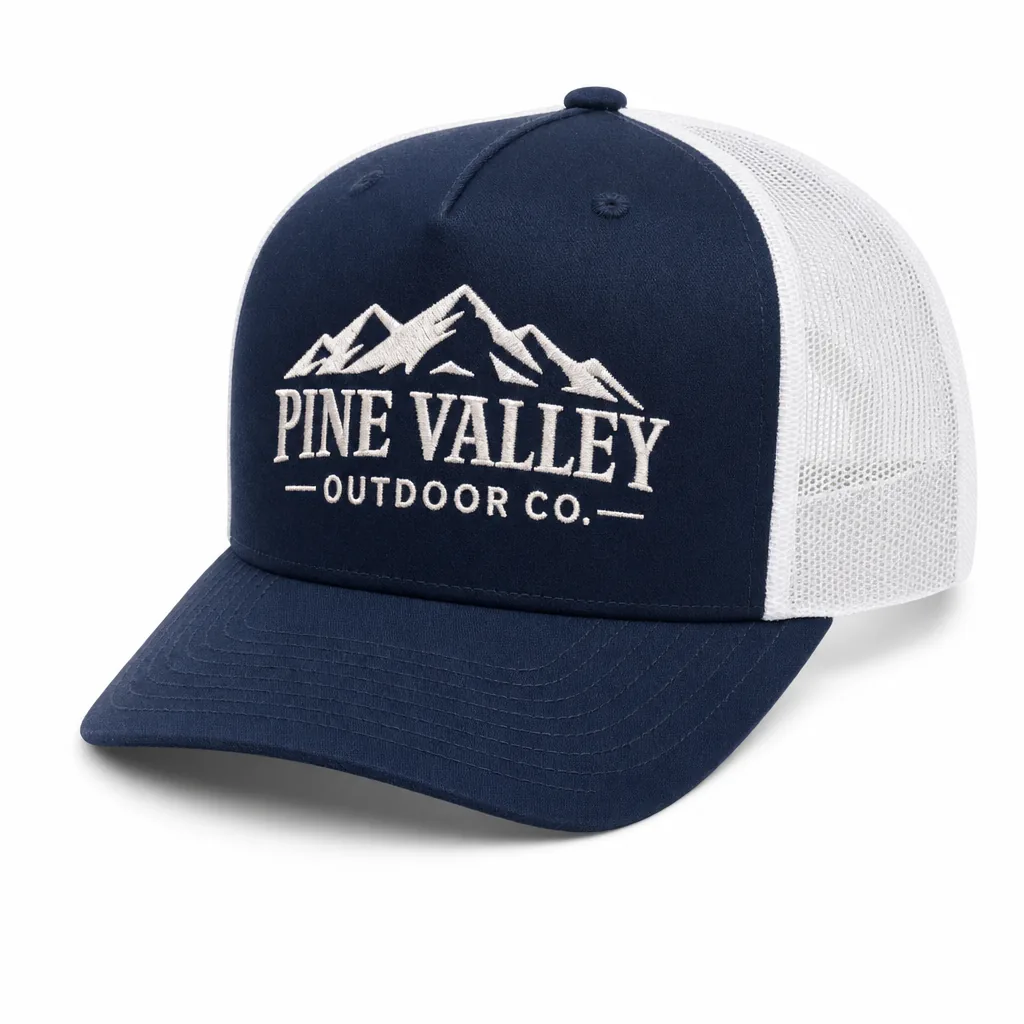
Custom Made Trucker Hat: The 2026 Sourcing & Manufacturing Playbook (2026 Update) (2026 Update) - 2026 Buyer's Guide - 2026 Buyer's Guide - Supplier Checklist is one of the most-asked questions we receive from international buyers, and for good reason. With dozens of factories competing for your order and an alphabet soup of technical terms in every supplier quote, even experienced importers can feel lost. This guide consolidates what we have learned producing custom hats for clients in 40+ countries.
Custom Embroidered Hats
Embroidery is where a custom made trucker hat either reads retail or bargain-bin, and the make-or-break step is digitizing for the exact crown construction, not just loading a logo into a Tajima or Barudan. A 5-panel foam trucker with a 3 to 5 mm EVA front behaves nothing like a buckram-backed 65/35 poly-cotton twill crown at 210 to 240 gsm. Foam amplifies every mistake: too much underlay causes tunneling and foam show-through, satin columns wider than about 5.5 to 6.0 mm start to bite at the edges, and dense fills can distort the panel before sewing. The correct workflow is clean vector art, DST or EMB digitizing, strike-off on the actual shell fabric, panel embroidery, then sewing, blocking, and final shape check. If the front logo includes copy under 4 mm cap height, flat embroidery is usually safer than puff because abrasion and laundering close those counters quickly. Buyers asking for “3D puff” without defining the raised zones, foam thickness, stitch type, and edge treatment are usually the same buyers approving second strike-offs. A proper tech pack should call out logo size by position, pre-assembly versus finished-cap embroidery, target stitch count, front panel material, mesh denier, sweatband composition, closure type, and visor board spec. Thread choice matters more than many sourcing teams assume: 120D/2 polyester holds color better than rayon in outdoor use, especially on black and red logos exposed to UV. On ZSK and Tajima multi-heads, a fill-heavy file can add 15% to 25% needle time versus a cleaner mixed satin-and-run-stitch build, which directly affects price and line efficiency. That is why our standard practice at CrownsForge is to quote from the estimated stitch count, then re-cost after the strike-off confirms real run time and sewability.
A realistic 2026 FOB target in South China for a 5-panel custom made trucker hat with 5,000 to 8,000 stitches is about $2.20 to $3.80 at 300 to 1,000 pieces, assuming standard poly mesh, snapback closure, and no special trims. Add roughly $0.25 to $0.60 for 3D puff, $0.15 to $0.40 for a side hit, and another $0.08 to $0.20 if the artwork requires frequent thread changes that slow the head count. Fully custom material programs usually need 144 to 300 pieces per colorway because dyed twill, branded taping, and private-label sweatbands create minimums upstream; stock-body programs can start at 48 to 100 pieces if the factory is pulling from in-house blanks. If a supplier quotes the same price for a 3,000-stitch left chest style and a 9,000-stitch foam-front logo, they are either guessing or planning to recover margin somewhere else. Inspection needs to focus on embroidery failure modes, not just generic cap defects. The repeat offenders are off-center placement, poor registration between fill and outline, hidden thread breaks, exposed puff foam at sharp corners, and crown distortion after sewing because the front panel was pulled off grain. For inline and final QC, ±3 mm logo placement tolerance is realistic, and AQL 2.5 is the right baseline for major defects on fashion, team, and promo orders. Check strike-offs in daylight and under a 5000K lightbox against the approved Pantone TCX or dyed lab dip; black-on-black and tonal navy logos often look acceptable in phone photos but fail under retail lighting when the fill angle is inconsistent or the satin edge is frayed. Also check visor-to-crown alignment after blocking, because heavy front embroidery can create a visible skew even when the stitching itself is clean.
Custom Hat Embroidery
Embroidery is the point where a custom made trucker hat either reads retail-grade or gets rejected as off-spec, and the decision is mostly made in digitizing, not at the machine. Foam-front 5-panel truckers need a different punch file than buckram-backed 6-panel cotton twill because 2-4 mm EVA foam compresses, rebounds, and tunnels if you run woven-cap densities. On Tajima, Barudan, or ZSK cap frames, a clean front logo on foam usually holds best at roughly 0.35-0.40 mm stitch density with 40 wt polyester thread, edge-run plus tatami underlay, and enough pull compensation to prevent column pinch and distorted corners. Buyers routinely overdesign small copy; serif text under about 4.5 mm cap height, or thin keylines under 0.8 mm, should be converted to satin, simplified, or deleted before sampling. If the supplier cannot state the production file format, typically DST or DSB, the estimated stitch count, and the usable front embroidery field in millimeters, they are quoting decoration without real process control.
Color approval needs factory logic, not wishful thinking. Embroidery thread is matched to the nearest Madeira, Gunold, or equivalent supplier code; it is not dyed to the exact Pantone TCX of the fabric, so demanding a perfect visual match on a curved foam front is how approvals drag out. For branded programs, lock the nearest thread reference in the tech pack, set Delta-E tolerances for printed trims and woven labels separately, and approve the embroidery from a sewn strike-off under D65 lighting, not a phone photo shot under mixed LEDs. Technique also has to be specified in writing because flat embroidery, 3D puff, appliqué, and mixed construction follow different artwork rules. Puff is the one that causes most preventable claims: 2 mm foam versus 3 mm foam changes edge coverage, border sequencing, and top-stitch spread, and if the digitizer does not compensate, you get collapse, pinholes, exposed underlay, or crushed areas after carton packing.
The best protection against disputes is a complete spec sheet tied to measurable inspection points. For a custom made trucker hat, define front panel width, crown height, foam thickness, mesh type and denier, sweatband composition, closure style, visor sandwich, seam tape color, embroidery placement map, backing type, and stitch-count cap by location. Also state whether the main logo is sewn on cut panels or after cap assembly; front-center embroidery is usually cleaner on cut panels because the field stays flatter, while side and back logos are normally run on finished caps. In the current China market, stock-body foam-mesh truckers with one 5,000-8,000 stitch front logo typically start around 144-300 pieces per colorway and land near $2.10-$3.60 FOB, while fully custom bodies are more realistically 500-1,000 pieces per style-color and often run $3.80-$5.50 FOB once 3D puff, metallic thread, or multiple locations are added. Inspection should call out logo centering within +/-3 mm, no loose tails over 3 mm, no bobbin show, stable puff height, visor symmetry, and thread-lot color continuity at AQL 2.5; licensed retail programs often tighten major visual defects to AQL 1.5.
Custom Trucker Hat
A good custom made trucker hat is won or lost in the shell spec, not the logo. The baseline construction is still 5-panel or 6-panel with a foam-backed polyester front, polyester or nylon mesh back, PE visor insert, sweatband in cotton twill or poly tricot, and a PP snap closure with 7-hole adjustment. For a retail high-profile fit, I would hold crown height at 110–120 mm; promo-grade caps are usually 95–105 mm and collapse faster under large embroidery. If the artwork is tall or includes 3D puff, call out 3–4 mm front foam, 3–5 mm EVA support behind the front panel, and mesh in the 75D–150D range so the side and back panels do not feel flimsy against a structured face. Buyers should also lock visor stitch rows, top button material, seam tape content, and color references using Pantone TCX for textiles and Pantone Coated for printed trims. Decoration is where cost and defect rate separate. Flat embroidery on Tajima, Barudan, or ZSK heads is still the standard, but once stitch count passes about 10,000 on a foam front, weak digitizing causes tunneling, puckering, and distorted satin columns unless underlay, pull compensation, and density are tuned for loft. For patches, specify edge type, thickness in mm, backing, and attachment method; “patch logo” by itself is how you get lifting corners after ocean transit. Screen print on foam is cheap, but uneven cure and rebound lead to cracking far sooner than buyers expect. On branded programs, I would require shell lot color tolerance at Delta-E below 1.5, thread shade tolerance below 2.0, and a pre-production sample made to the actual BOM, not a similar stock blank.
The best RFQ for a custom made trucker hat reads like a factory tech pack, not a mood board. At minimum, list panel count, profile, front material, mesh spec, visor shape, sandwich brim yes or no, closure type, sweatband construction, seam tape print, label locations, packaging method, carton pack, and target finished weight. If the logo is embroidered, include artwork size in millimeters, estimated stitch count, backing requirement, and whether 3D puff is allowed; thin outlines, tiny counters, and long satin runs drive rejection rates up quickly on foam fronts. A realistic FOB China range for a basic cap with stock mesh, standard snap, and one-location flat embroidery is about $2.20–$4.20 at 500 pieces, with workable MOQs around 144–288 pieces per colorway. Add custom-dyed fabric, woven labels, printed interior tape, branded snaps, or retail polybag-plus-insert packing, and FOB usually lands closer to $4.80–$7.50. Most failures show up in four places: embroidery distortion, panel asymmetry, visor shape, and snap breakage. Final inspection should check registration drift, exposed underlay, foam show-through on puff embroidery, needle cuts, crown centering, top button alignment, mesh tension, visor squareness, and closure fatigue; 3–5 mm off-center is enough to sink a retail run. Cheap PP snaps also get brittle in cold-weather distribution, so ask for opening-cycle tests and brim flex checks before bulk release. Our standard practice is AQL 2.5 final inspection with defect photos by category and confirmation of which steps—cutting, embroidery, sewing, packing—are in-house versus subcontracted. If a supplier can only provide top-view glamour shots and keeps saying the sample is “same same,” they are not controlling repeatability in bulk.
Custom Trucker Hats
A good custom made trucker hat is won or lost on structure, not the logo. The baseline spec should state panel count, crown height, foam thickness, mesh denier, visor board, sweatband, and closure grade; “trucker cap” by itself is too vague to buy against. For a stable high-profile build, I’d call out a 5-panel or 6-panel shell with 3-4 mm EVA or PU foam laminated to 130-160 gsm brushed tricot or poly twill, plus a PE visor board at 1.6-1.8 mm. Once crown height pushes past 11.5 cm, under-spec foam starts collapsing in export cartons and the front panel takes a set that steaming won’t fully recover. On the back, 100% polyester 75D-100D warp-knit mesh is the dependable range; cheaper low-denier mesh tears at the side seam, snags during trimming, and yellows faster under UV. Decoration has to be engineered around that structure. If you want clean 3D puff embroidery, specify whether the logo is sewn on cut panels with flat frames or after assembly on cap frames, because registration and edge sharpness change a lot on foam fronts. Tajima, Barudan, and ZSK heads all behave differently on trucker crowns, especially around small counters, satin columns under 2.0 mm, and underlay density needed to keep puff foam from breaking through. A solid tech pack should also lock visor arc, seam tape color, top button material, sweatband width, snap gauge, and Pantone TCX references for every visible part. For color control, Delta-E tolerance of ≤1.5 on dyed twill and ≤2.0 on mesh is realistic; mesh reflects light through the holes, so it will not read exactly like the front panel under D65 lighting.
Most failures come from loose specifications and weak inspection, not from the cap style itself. For repeatable output, define logo placement from center front and visor seam, stitch count or run time for embroidery, puff foam height, patch border width, and whether the edge is merrowed, satin-stitched, heat-cut, or laser-cut. Then inspect to AQL 2.5 with tightened checkpoints on visor symmetry, crown height variance within ±3 mm, snap engagement, mesh puckering at the side seam, and embroidery drift. Those are the defects buyers notice from retail distance. If the channel is mass retail or licensed merchandise, add carton drop testing, metal contamination control where required, and pre-shipment packing verification; high-profile trucker caps nested too tightly will flatten before they reach the DC. Price only makes sense when the bill of materials is transparent. At 500 pieces, a basic custom made trucker hat with poly foam front, polyester mesh, PP snapback, and one-location flat embroidery typically lands around $2.10-$3.40 FOB China. Add 3D puff, woven or TPU patches, printed seam tape, recycled rPET mesh, custom underbill fabric, or inner-label upgrades and the range usually moves to $3.80-$5.80. I’d ask every supplier to break the quote into shell fabric, mesh, closure, decoration, packaging, and testing, because factories often save $0.15-$0.30 by downgrading from a 55 g snap to a lighter one, cutting sweatband weight from 180-220 gsm to 150 gsm, or loosening topstitch density below 7-8 SPI. CrownsForge standard practice is to seal a pre-production sample and inspect bulk against that exact standard for crown shape, logo placement, visor match, and pack-out density; trucker caps are easy to approve in sample form and easy to ruin in bulk packing.
Hat Trucker Custom
A custom made trucker hat is won or lost in the spec pack, not the artwork. The non-negotiables are crown architecture, front-panel material, and mesh quality. For promo builds, the standard recipe is a 5-panel shell with 3-5 mm laminated foam front panels and polyester mesh in the 110-140 gsm range; for retail, a 6-panel body with 180-240 gsm cotton twill or poly-cotton twill fronts gives cleaner stitch definition and less front-panel collapse after wear. On the floor, the sequence is predictable: cutting, fusing or buckram setting, embroidery on Tajima or Barudan heads, sweatband setting, visor joining, closure attachment, and blocking on heated forms. If the sample approved by the buyer does not lock crown height, visor curve, and panel shape, the sewing line will revert to the factory’s standard shell, and that is usually where fit complaints begin. The small construction choices are what separate a throwaway cap from something that can sit at retail. Specify crown height in millimeters, visor length, underbill fabric, seam tape color, front eyelets versus no-eyelet foam face, mesh hole pattern, and snapback resin grade before you ask for pricing. Moving from 6 rows to 8 rows of visor stitching, upgrading the sweatband from 25 mm to 30 mm, or using heavier buckram to hold a taller crown usually changes FOB by only about $0.12-$0.45 per cap at 500 pieces, but it changes perceived quality immediately. At CrownsForge, our standard practice is to freeze these points at pre-production sample stage because a vague mood board is not a manufacturing document.
The best spec sheets for a custom made trucker hat read like a control plan, not a design brief. Call out front-panel composition, mesh denier, visor sandwich thickness, sweatband content, closure gauge, logo method, finished weight target, packing ratio, and color standard using Pantone TCX where fabric is dyed and coated references where plastic trims are matched. For embroidery, define stitch-count ceiling, backing weight, thread brand if colorfastness matters, and placement tolerance; on licensed programs, body fabric is commonly held within Delta-E 1.5-2.0 to the approved standard, and mixed dye lots should be blocked before cutting. MOQ for stock materials is typically 144-300 pieces per colorway, but once you add custom-dyed mesh, molded TPU patches, woven interior labels, or proprietary closures, the practical MOQ usually moves to 500-1,000. Most factory failures are structural before they are cosmetic, so inspection has to go deeper than logo approval. The recurring defects are visor skew, crown asymmetry, front-panel tunneling on foam builds, puckering on twill fronts, mesh tearing at seam joins, top-button drift, and snapback pin cracking after repeated use. Embroidery registration should stay within 2-3 mm of approved placement, and final inspection should run at AQL 2.5 for major defects with closure cycle testing, carton drop checks, and needle detection when retailer protocols require it. A realistic 2026 FOB China range is still about $2.20-$3.40 for a basic foam-front trucker with one-location embroidery at 300-500 pieces, while washed twill or premium poly-twill versions with private-label seam tape, woven labels, and silicone or TPU patch applications typically land at $4.20-$6.80 depending on stitch time, trim count, and packing method.
Trucker Custom Hat
Shape control is what separates a usable custom made trucker hat from a cap that looks different carton to carton. The shell may be 5-panel or 6-panel, but the critical specs are crown height, front support, mesh denier, visor insert, and closure resin grade. Promo builds usually run a 3-5 mm polyester foam front, 75D-150D polyester mesh, PE visor board, and a 180-220 gsm poly-cotton sweatband. Retail builds are usually tighter: 210-260 gsm cotton twill or brushed canvas front panels, 100D-140D recycled polyester mesh, and buckram stiff enough to hold crown height within +/-3 mm across production. If the tech pack does not state finished crown height in mm, visor curve radius, mesh spec, and snapback material, quotes from Yiwu and Dongguan factories are not comparable. Decoration exposes weak construction immediately. Flat embroidery on Tajima, Barudan, or ZSK heads needs proper underlay and pull compensation, or block letters will pinch and the front panel will tunnel. For 3D puff, foam density and satin stitch coverage matter more than artwork detail; too much steam during finishing will crush the puff before shipment. Patch applications are less forgiving than buyers assume: TPU, woven, and silicone patches usually need heat-press validation around 145-160 C, with dwell time and pressure recorded, because cheap mesh can shrink, glaze, or distort under heat. Lock artwork size in mm, stitch count range, seam tape color, top button construction, and Pantone TCX references for every visible component before sample approval.
Pricing only becomes meaningful after the spec pack is frozen. On stock materials, a basic foam-front mesh-back custom made trucker hat with flat embroidery generally sits around $2.10-$3.40 FOB China at 300 pcs. A cleaner retail program with cotton twill front panels, custom inside taping, woven label, upgraded sweatband, and better trimming is more realistically $3.80-$6.20 FOB. Practical MOQ is usually 144-300 pcs per colorway when using available fabric and standard closures, but custom-dyed materials, recycled trims, branded seam tape, or molded logos push workable MOQs to 500-1,000 pcs. Freight is a bigger cost driver than many first-time buyers expect because trucker caps cube out quickly; standard packing is often 24 pcs per inner and 144 pcs per master carton, and landed DDP cost can jump 20-35% if the delivery window forces air or sea-air. The most common failures are small but repeatable: front panel asymmetry, visor sandwich misalignment, tearing at rear mesh seam joins, twisted sweatbands, weak snap engagement, and embroidery registration drift from panel to panel. For color-sensitive programs, visual approval is not enough. If you need Pantone TCX alignment across twill, thread, patch, and plastic closure, set an agreed Delta-E tolerance because those substrates take dye differently; Delta-E under 1.5 is realistic on fabric-to-fabric, but plastic often needs a wider allowance. Final inspection should be run at AQL 2.5, with snap tensile checks, needle detection or metal contamination control where required, carton drop testing, and a 24-hour form-retention test after packing to catch crown collapse. Our standard practice is to reject shape variance before decorative defects, because poor structure cannot be fixed in final inspection.
Working with CrownsForge for custom made trucker hat programs
Most custom made trucker hat programs fail in sampling, not production. The factory can sew 5,000 caps a day; the hard part is freezing the shape early enough that bulk does not drift. If your tech pack does not specify crown height, front-panel foam thickness, visor profile, stitch density, closure model, and artwork size by panel, expect rework. A realistic first proto lead time is 5 to 7 business days when the artwork is vector-clean and standard materials are already in the mill card: 100% polyester mesh, 108x58 cotton twill, or 5 mm EVA-backed foam. One fit correction or logo revision usually adds 3 to 4 business days. Salesman samples with woven labels, branded hangtags, barcode stickers, and retail polybags typically take 7 to 10 business days because trim approvals and pack-out details create more delay than sewing. MOQ discipline matters more than buyers like to admit. For a first run, 144 to 300 pieces per colorway is the practical range if you want stable costing and clean line setup. Below that, a custom made trucker hat only stays economical when the shell fabric, mesh back, visor board, sweatband, and snap closure are shared across SKUs. Once you start mixing closure types, adding printed seam tape, specifying contrasting undervisors, or splitting between two brim curves, the ex-factory cost rises fast from changeover loss and trim breakage rather than raw material consumption. At CrownsForge, that is usually where buyers discover that a $0.12 trim decision can add $0.35 to $0.60 per cap after downtime, scrap, and repacking are counted.
Decoration is where a custom made trucker hat either looks retail-ready or obviously outsourced. The spec should call out Pantone Coated or Pantone TCX references, approved lab dips, and a measurable shade tolerance; Delta-E under 1.5 is a serious standard, while 2.0 to 2.5 is more common on dyed cottons and recycled polyester mesh. For embroidery, Tajima, Barudan, and ZSK cap frames can all hold clean registration, but small text under 4 mm should never be approved from a DST file alone. It needs a physical sew-out because satin column width, underlay, foam expansion, and needle penetration will close counters quickly on 3D puff. If the front panel uses hard buckram plus 2 mm PU foam, the digitizing has to be built for that stack-up, not guessed from flat artwork. Scaling safely depends on visible process control, not sales promises. A buyer moving from 300 pieces to a 10,000-piece seasonal order should expect current sedex-audit-cap-supplier-guide.html">BSCI 2.0 or Sedex SMETA 4-Pillar status, broken-needle records, trim traceability, and material declarations for azo-free dyes and REACH-sensitive inputs when the market requires them. The bulk flow should be rigid: PO review, BOM lock, pre-production sample approval, line set meeting, in-line inspection, and final audit at AQL 2.5. Weekly WIP reports matter more than a low ex-factory quote because embroidery queue time, snapback shortages, and vessel cutoff dates are what actually move delivery. On DDP shipments, landed cost commonly swings by $0.25 to $0.90 per cap depending on destination, carton density, and whether the pack-out is optimized for cube efficiency or crown-shape protection.
Frequently Asked Questions
What file format should I send for my logo?
Vector files (AI, EPS, PDF) are ideal. High-resolution PNG or JPG at 300 dpi on transparent background works as a fallback. Provide Pantone color references for accurate reproduction.
What logo decoration techniques do you offer?
3D puff embroidery, flat embroidery, woven patch, leather patch, PVC patch, screen printing, sublimation, applique and laser etching, all in-house with no subcontracting.
Do you support sustainability certifications?
Yes. We work with GOTS organic cotton, GRS-certified recycled polyester, OEKO-TEX Standard 100 fabrics, and are BSCI and Sedex audited. Certification documentation can be provided per order.
Can I order a sample before bulk production?
Yes. We strongly recommend approving a pre-production sample before mass production. Samples are charged at 35 to 60 USD each plus express shipping, fully refundable against confirmed bulk orders over 500 pieces.
Which shipping methods do you support?
We support FOB, CIF and DDP shipping. Air express for samples and small orders, sea LCL for 100 to 500 pieces, sea FCL for 5,000+ pieces. Door-to-door DDP available for US, EU, UK, Canada and Australia.
How does ordering custom hat trucker work?
When evaluating custom hat trucker, the key considerations are construction quality, decoration capability, MOQ flexibility and lead time. Cover everything buyers ask about custom embroidered hats: how it's manufactured, what specs to request from a factory, typical MOQ and pricing, common quality issues to inspect for, and how this ties back to the broader custom made trucker hat sourcing decision. Cover everything buyers ask about custom hat embroidery: how it's manufactured, what specs to request from a…
How does ordering custom embroidered trucker hats work?
When evaluating custom embroidered trucker hats, the key considerations are construction quality, decoration capability, MOQ flexibility and lead time. Cover everything buyers ask about custom embroidered hats: how it's manufactured, what specs to request from a factory, typical MOQ and pricing, common quality issues to inspect for, and how this ties back to the broader custom made trucker hat sourcing decision. Cover everything buyers ask about custom trucker hats: how it's manufactured, what specs to request from a…
How does ordering custom made hats for men work?
When evaluating custom made hats for men, the key considerations are construction quality, decoration capability, MOQ flexibility and lead time. Cover everything buyers ask about custom embroidered hats: how it's manufactured, what specs to request from a factory, typical MOQ and pricing, common quality issues to inspect for, and how this ties back to the broader custom made trucker hat sourcing decision. Cover everything buyers ask about custom trucker hats: how it's manufactured, what specs to request from a…
How does ordering high quality custom trucker hats work?
When evaluating high quality custom trucker hats, the key considerations are construction quality, decoration capability, MOQ flexibility and lead time. Cover everything buyers ask about custom embroidered hats: how it's manufactured, what specs to request from a factory, typical MOQ and pricing, common quality issues to inspect for, and how this ties back to the broader custom made trucker hat sourcing decision. Cover everything buyers ask about custom trucker hats: how it's manufactured, what specs to request from a…
Ready to start your custom hat project?
Send us your tech-pack, sketch or even just an inspiration photo. We will respond with a detailed quotation and digital mock-up within 24 hours.
Request a free quoteRelated guides
Cap Sweatband Material Selection for Custom Headwear Buyers
Read article →
Bucket Hat Women: Properties, Costs and How to Spec It Right (2026 Update)
Read article →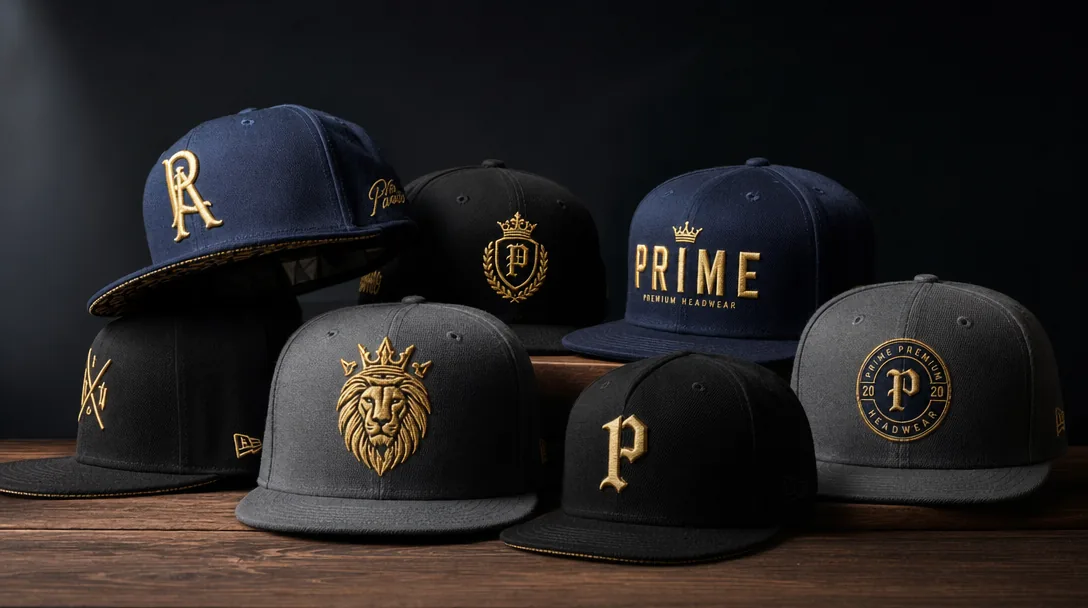
Reflective Trim Running Cap Bulk: A 2026 B2B Sourcing Guide
Read article →We hope this guide demystifies custom made trucker hat: the 2026 sourcing & manufacturing playbook (2026 update) (2026 update) - 2026 buyer's guide - 2026 buyer's guide - supplier checklist and helps you move forward with confidence. If you have questions specific to your project, our English-speaking sales engineers are one message away.