
Custom Logo Hats: When to Use It, Costs, and What to Ask Your Factory - Supplier Checklist
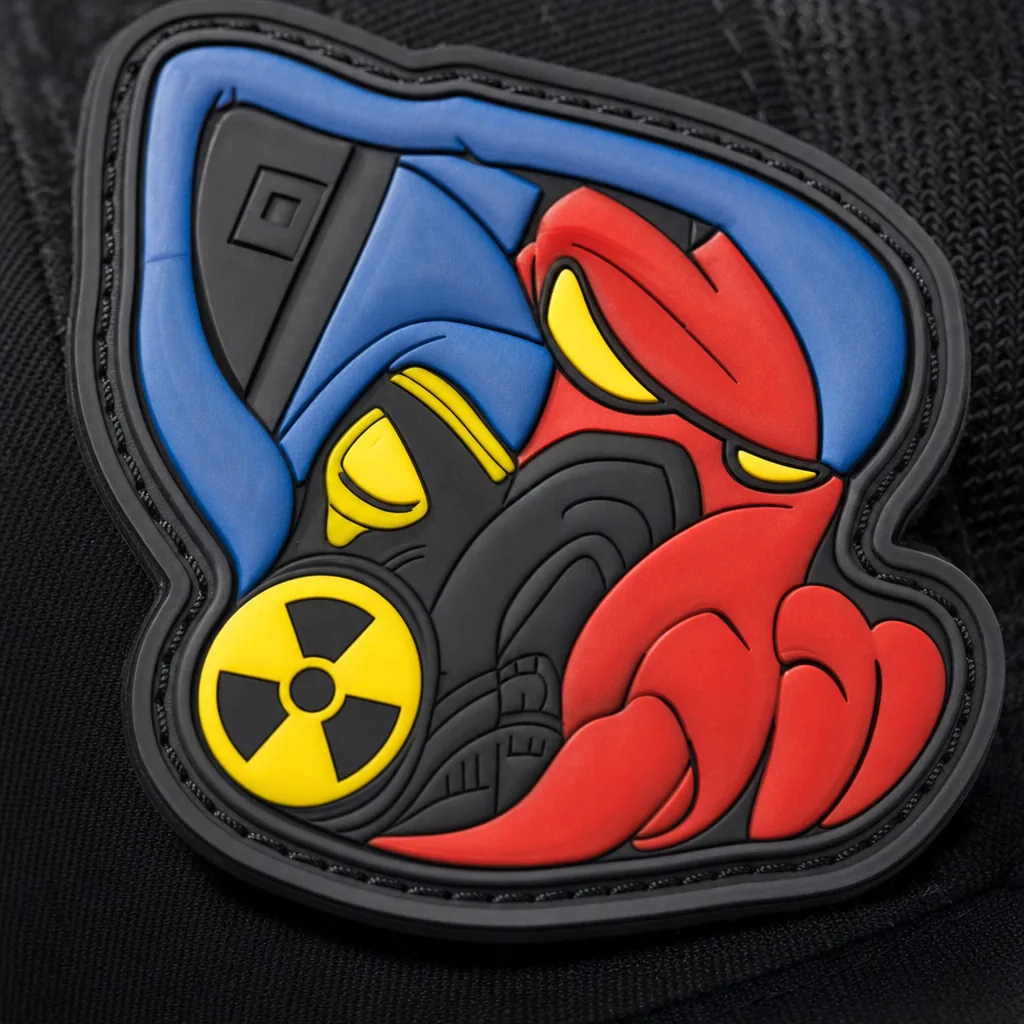
Custom Logo Hats: When to Use It, Costs, and What to Ask Your Factory - Supplier Checklist is one of the most-asked questions we receive from international buyers, and for good reason. With dozens of factories competing for your order and an alphabet soup of technical terms in every supplier quote, even experienced importers can feel lost. This guide consolidates what we have learned producing custom hats for clients in 40+ countries.
Custom Embroidered Patches
Use embroidered patches when direct embroidery will compromise the artwork or the cap panel. The failure points are predictable on custom logo hats: serif text below roughly 1.2 mm, hard color transitions, trademarked logos with negative space, and unstructured crowns that tunnel under needle penetration. A patch isolates those risks. The logo is built flat on 100% polyester twill, wool felt, or a woven ground, usually on Tajima, Barudan, or ZSK multi-head machines, then finished with a merrow edge, satin stitch border, heat-cut edge, or laser-cut edge before attachment. That separate workflow gives you a true approval gate. You sign off on the loose patch strike-off first, confirm thread mapping against Pantone TCX references, and check edge quality before the factory commits cap panels and labor. The spec sheet needs numbers, not adjectives. A usable callout would read: 65 x 45 mm finished size, 100% polyester twill base, 0.7 mm average satin column, 70% to 75% stitch coverage, laser-cut edge, heat-seal backing plus perimeter lock stitch, Madeira or Gunold thread, placement centered on front within plus or minus 2 mm. If you leave it at “embroidered badge,” the factory will make assumptions on border width, backing, and stitch density, and that is where rework starts. For retail custom logo hats, approve both the patch strike-off and a sewn cap sample. A patch can look clean on release paper and still skew on a 5-panel camper, lift at the corners on foam truckers, or telegraph seam bulk on low-profile dad hats.
Patch pricing is driven more by complexity than by the cap body. In Yiwu, a basic 2.5 inch merrow-edge patch in 4 to 6 thread colors typically runs about $0.18 to $0.35 each at 1,000 pcs; a laser-cut patch with 8 to 10 colors, tight lettering, or high-density fill is usually $0.45 to $0.90. Once you add multiple patch sizes, left-side plus front placements, or different border constructions in one PO, the practical MOQ often shifts from 144 to 300 pcs per colorway up to 300 to 500 pcs. Applied to a standard 108 x 56 cotton chino twill cap, total FOB for custom logo hats usually lands around $2.20 to $4.80, depending on fabric weight, closure, inner taping, and whether the patch is sewn, heat-applied, or both. Inspection is where patch hats either hold retail value or quietly look cheap. The repeat defects are over-dense digitizing that causes puckering, exposed jump threads, frayed cut edges, weak corner adhesion, and placement drift across the size set. Our standard practice is to treat patch attachment and location as AQL 2.5 major checkpoints, not cosmetic notes. If the patch is heat-applied, ask for the adhesive spec and press parameters; heat seal alone is not enough for hats exposed to sweat and carton compression, so require a perimeter stitch or hidden tack stitch. Also ask the supplier to verify color consistency to Delta-E below 1.5 against approved thread cards where brand colors matter. If they cannot show centered bulk photos by colorway and repeatable strike-offs, the issue is process control, not bad luck in sampling.
Custom Hat with Patch
Patch caps live or die at the handoff between two processes: cap sewing and emblem production. That split is where most quality problems start. For custom logo hats with fine typography, woven patches usually hold cleaner detail once letter height falls below 2.5-3.0 mm; satin-stitch embroidery starts closing up earlier, especially on fills tighter than 0.40 mm stitch spacing or small counters inside letters like R, A, and P. Soft PVC works well for fishing, workwear, and outdoor programs because it wipes clean and resists sweat better than felt or printed twill, but buyers should budget the tooling correctly: a simple 2D mold is commonly $80-$150, while layered 3D relief or multiple cavities can run higher. Patch size also changes how the front panel behaves. On a structured 6-panel cap, anything much beyond 70 x 50 mm adds stiffness that can print through the buckram; on cotton twill under about 220 gsm, that often shows up as tunneling, drag lines, or a distorted crown after sewing.
A real quote starts with a tight tech pack, not just an AI file. Call out patch material, finished size in millimeters, edge finish (merrow, laser-cut, heat-cut, or turned edge), backing, stitch colors by Pantone TCX, placement tolerance, and whether the patch is attached before crown assembly or on the formed cap. Attachment method matters: standard embroidered or woven patches can run on a single-needle lockstitch, but thick leather, felt applique, and irregular shapes are safer on a post-bed or pattern sewer to keep corners flat and topstitch spacing even. If a supplier proposes glue only, that is a red flag; adhesive can help positioning, but it should not be the primary bond on goods exposed to sweat, compression packing, and repeated wear. In Yiwu, a basic acrylic/wool snapback with one embroidered patch usually lands around $3.20-$5.80 FOB at 300 pieces, while a washed cotton dad cap with a woven or embroidered patch is more often $2.60-$4.50 FOB. MOQ is typically 144-300 pieces per colorway for standard patches, but genuine leather and molded PVC often start at 300-500 because of die loss, setup waste, and extra approval rounds.
Inspection needs to focus on patch performance on the finished hat, not just the approval photo. The defects that actually cause claims are placement skew over 3 mm, loose corner tacks, bubbling from poor heat-fuse backing, needle strikes on leather, and puckering on unstructured fronts. For embroidered patches, check fill coverage, border density, jump-stitch trimming, and thread color against the approved standard; for shade-sensitive programs, the factory should discuss commercial tolerance honestly, including visible Delta-E drift between thread lots. A sensible control plan is inline inspection plus final inspection to AQL 2.5, with random pull tests because edge security usually fails before the patch face does. Patch-based custom logo hats make the most sense when you need texture, mixed materials, or one badge shared across multiple silhouettes without re-digitizing each front panel. If the artwork is simple, large, and cost pressure is heavy, direct embroidery is usually cheaper, faster, and less failure-prone than adding a separate patch program.
Custom Patch for Hat
Patch selection is where many custom logo hats go wrong, because buyers approve artwork first and only think about construction after the sample looks acceptable on screen. On the factory floor, the workable options are embroidered twill, woven, printed, and molded PVC or TPU, and each has a hard limit. If copy drops below about 4 mm cap height, or keylines are thinner than 0.5 to 0.6 mm, standard embroidery will fill in and lose legibility; woven patches, typically 50D to 75D polyester yarn on high-density looms, hold small typography far better. For a raised varsity or athletic look, embroidered patches with 70% to 90% stitch coverage and either merrow edge or laser-cut satin border read stronger on 260 to 320 gsm cotton twill, wool blends, and brushed canvas. PVC is the right call for fishing, outdoor, and tactical styles because it resists water, sweat, and abrasion, but anything over roughly 1.8 to 2.0 mm thick can deform an unstructured 6-panel front if there is no buckram support.
The patch should be specified as its own component, not vaguely listed as “front logo.” A usable tech pack calls out finished size in millimeters, edge construction, backing type, base cloth, stitch coverage or weave density, Pantone TPX/TCX references, and attachment method. For woven and printed patches, ask for strike-offs with Delta-E under 2.5 to the approved standard; for embroidery, approve an actual sew-out, not a digital mockup, because run angle, underlay, and pull compensation change the shape. Placement tolerance should be written as ±2 mm at center front and measured from seam landmarks, otherwise side and back applications drift quickly. In production, patches are made offline first—embroidered on Tajima, Barudan, or ZSK heads, woven separately, or molded with tooling for PVC—then attached during cap assembly. Typical MOQ follows patch setup cost more than the cap body: 144 to 300 pcs is common for embroidered or woven patch hats, while molded PVC programs usually start around 500 pcs. Ex-factory in Zhejiang, a mid-profile cotton twill cap with patch generally lands around $3.30 to $5.80 for embroidery, $3.70 to $6.40 for woven, and $4.60 to $7.80 for PVC, before DDP freight and duties. Our standard practice is to inspect patch placement and front-panel appearance at AQL 2.5, because bubbling, skew, needle tracking, and puckering are what buyers reject first.
Custom Patch Hat
A custom patch hat is the right call when direct embroidery cannot hold the artwork on a curved front panel. Fine serifs, distressed textures, halftone-style shading, and logos with more than 6 color breaks usually reproduce cleaner as a separate component than on a cap frame. For custom logo hats with small copy, woven patches are the safest spec: once letter height drops below about 3 mm, a woven damask construction in the 80D to 100D range will hold edges that standard satin-fill embroidery will blur. Embroidered patches still work, but only if the art is simplified and stroke width stays above roughly 0.8 mm; otherwise fills close up and outlines wobble, especially on high-speed Tajima or Barudan runs above 700 to 850 stitches per minute. Material choice matters more than most buyers expect. Woven damask gives the sharpest detail; embroidered twill gives more texture but less definition; printed twill is useful for gradients but needs tighter color control; molded PVC holds shape well but adds weight and freight cost; leather looks premium but introduces shade variation lot to lot. Attachment method should follow the shell fabric, not just aesthetics: merrow or satin stitch is reliable on cotton twill and acrylic, while heat-applied patches on nylon, Taslon, or foam trucker fronts need peel testing and temperature control to avoid glue bleed, panel warping, or patch lift. Our standard practice is to confirm whether the patch is applied pre-assembly or post-assembly because that directly affects crown puckering and placement accuracy.
Most patch programs go wrong in the spec sheet, not in the sample approval. A workable tech pack for custom logo hats should lock down patch size in millimeters, border type, base material, backing, attachment method, cap fabric, Pantone reference, and approved placement tolerance. Front-center tolerance of ±2 mm is realistic in bulk; ±1 mm is possible only on very stable constructions with jigs and slower throughput. If the patch is large—say 70 x 50 mm or more—confirm whether the front panel is fused and whether application happens before or after blocking, because oversized patches on soft unstructured crowns can telegraph wrinkles fast. Costs are straightforward if the factory is honest about the variables. In Yiwu and Dongguan, MOQ for a fully custom patch cap is usually 100 to 144 pieces per colorway, with better pricing from 300 pieces up. At 300 units, a 6-panel cap in 260 gsm cotton twill with a sewn woven patch typically runs about $2.20 to $3.80 FOB China; molded PVC, suede-touch shells, or genuine leather patches can push the range to $3.80 to $6.50. The recurring defects are crooked angle, off-center placement, loose merrow edge, needle marks, and color drift on printed patches. Ask for Delta-E control under 2.0 to 3.0 on printed components, AQL 2.5 final inspection, first-off placement photos, and peel or wash testing records if any patch uses heat adhesion. That paperwork tells you whether the factory has a process or is just hoping the bulk lot matches the sample.
Custom Patch Hats
Patches are the right call when direct embroidery starts corrupting the artwork. If your logo has serif text below 4 mm cap height, counters under 0.8 mm, distressed edges, or fine line breaks that would close up under thread tension, a patch will reproduce it more cleanly on custom logo hats. This matters even more on uneven shells like 8-wale corduroy, brushed canvas, sherpa fleece, and enzyme-washed twill, where stitches sink into the face, outlines spread, and negative space fills in after steaming. A patch also reduces setup waste across mixed cap styles: one approved badge can usually run on a 5-panel camper, trucker, unstructured dad hat, or bucket without re-digitizing for crown curvature, front seam position, or foam backing. Treat the patch as its own component spec. Lock the finished size in millimeters, base material, edge finish, backing, attachment method, and placement tolerance before sampling; ±2 mm is realistic on sewn caps, while tighter tolerances usually add cost without improving sell-through. Woven damask patches hold finer detail than embroidery, especially around 0.8 mm strokes and small type, while embroidered twill patches give more texture but lose micro-definition. Molded TPU, silicone, and debossed PU leather create stronger dimension, but they need stable heat and pressure control during application or you get corner lift, crown puckering, or visor warp. The clean approval route is always two-stage: approve the loose patch first, then approve the finished cap after attachment.
Cost is driven more by badge construction than by the hat body. On a 500-piece run in China, a standard 260-280 gsm cotton twill cap with a 60 x 40 mm embroidered patch usually lands around $3.20-$5.80 FOB, depending on closure, fabric weight, and stitch density. Woven patches can shave a little off that number, while molded rubber, TPU, or PU leather badges commonly add $0.30-$1.20 per cap once thickness, mold fee, and attachment method are fixed. Real working MOQ is often 144-300 pieces per colorway for basic woven or embroidered patches, but specialty badges, mixed placements, or multi-material programs usually need 500-1,000 pieces to keep the line efficient. If a quote comes in suspiciously low, check whether the factory is pricing a true sew-on patch, a heat-seal patch, or just a temporary PSA backing meant to hold the badge before stitching. The supplier checklist needs to go past unit price. Ask for Pantone references for both cap fabric and patch ground, thread brand and spec for embroidered patches, yarn denier and loom density for woven patches, and a realistic color tolerance; Delta-E under 2.0 is achievable lot to lot on controlled materials, but not across cotton twill, TPU, and PU leather at the same time. Our standard practice is to inspect patch hats to AQL 2.5 with special attention to centering, skew, edge stitch cleanliness, backing show-through, post-press bubbling, and logo distortion after downscaling. For heat-applied badges, require a peel check, rub test, and wash or sweat simulation before approval. That is the real reason patches stay relevant in custom logo hats: they cost more than direct embroidery, but they protect detail that stitches on a curved crown simply cannot hold.
Hat Patch Custom
For custom logo hats, the patch choice is mainly an attachment and substrate decision, not an artwork decision. In production, the four patch constructions that matter are merrowed embroidered, woven damask, molded PVC or TPU, and printed twill with either a satin-stitch border or laser-cut edge. Each has non-negotiable technical limits. Embroidered patches need strokes of about 0.8 mm minimum and text no smaller than 4.5–5 pt on a standard 58 cm cap front, or the fill density closes counters and the copy muddies. Woven damask can resolve finer detail—down to roughly 0.3–0.4 mm line width—so it handles small type and cleaner tonal transitions better, but low pick density looks flat and inexpensive on melton wool, 10x10 cotton twill, or heavy brushed chino. PVC gives the best depth and weather resistance, usually at 0.8–1.2 mm thickness, but on curved crown panels the mold and edge geometry have to be right or the perimeter tents instead of sitting flush. Printed twill is the workaround when a logo has halftones or more than 8 to 10 colors, because direct embroidery or woven construction will either simplify the art too aggressively or drive the unit cost up for no visual gain.
Most patch failures come from the joining method, not the patch itself. Heat-film only attachment is a shortcut I would avoid on structured 6-panel caps in cotton twill, pigment-washed chino, or 8-wale corduroy; after roughly 20 to 30 wear cycles, edge lift is common unless the patch is perimeter stitched. On foam truckers, pressing above 145–155°C or running too long a dwell time can crater the EVA foam and leave gloss marks on the polyester mesh side panels. My standard spec for patches above 45 x 45 mm is stitch-down attachment, placement tolerance of ±2 mm from crown centerline, and maximum rotation of ±1.5 degrees. The factory brief should read like a control sheet: patch size in millimeters, visible border width, backing type, stitch count or coverage, exact distance from visor seam, and Pantone callout by substrate—Pantone TCX for textile patches, Pantone Coated for PVC or printed faces—with a realistic color tolerance such as Delta-E under 2.0 under D65 light. FOB China, a 300-piece run of cotton twill custom logo hats with sewn embroidered patches usually lands around $2.20–$3.60 per cap; woven patches are often $0.10–$0.25 lower, while molded PVC or multilayer applique more often sits at $3.90–$5.80 once mold cost, thickness, and color count are included. Inspect to AQL 2.5 and focus on the real defects: off-center placement, tunneling over buckram, skipped stitches, adhesive bleed, over-press shine, merrow gaps, and strike-off to bulk color drift.
Working with CrownsForge for custom logo hats programs
The fastest way to de-risk a custom logo hats program is to lock the sampling path before anyone argues about unit price. At CrownsForge, a clean tech pack with logo size, Pantone TCX references, fabric callouts, closure type, and packaging specs usually turns into a first prototype in 5 to 7 working days for standard embroidery, and 7 to 10 days when the style involves custom embroidered patches, molded rubber badges, or specialty fabrics like 270 gsm brushed cotton twill or 600D recycled polyester. For first-time buyers, we normally recommend a pre-production sample after artwork approval instead of jumping straight from digital mockup to bulk, because stitch density, patch edge finish, and crown profile can shift the visual balance more than people expect on a 6-panel cap versus a foam trucker. MOQ flexibility matters too: straightforward embroidery styles can often start around 144 to 300 pieces per colorway, while a custom hat with patch usually lands closer to 300 to 500 pieces because patch setup, merrow or laser-cut finishing, and extra attachment labor add fixed cost that has to be absorbed somewhere.
Decoration capability is where many factories quietly subcontract, and that is where timelines slip and quality drifts. A solid supplier should be transparent about whether embroidery runs in-house on Tajima, Barudan, or ZSK heads, whether patch backing is heat-seal, stitch-down, or Velcro, and what tolerances they hold on placement. For a custom patch for hat program, I care less about fancy renderings and more about measurable controls: embroidery thread matching within commercially acceptable Delta-E, patch placement tolerance within about plus or minus 2 mm, pull testing on sewn patch corners, and confirmation that crown buckram, seam tape, and sweatband materials can handle the attachment method without puckering. Unit cost usually breaks down like this: a basic cotton twill cap with flat embroidery may sit around $2.20 to $4.20 FOB China at 500 pieces, while a custom patch hat with woven or embroidered patch often adds $0.35 to $1.20 depending on size, border type, backing, and whether the patch is sewn by edge run, satin tack, or multi-point stitch box.
Compliance and workflow discipline are what separate a reliable scale partner from a workshop that only looks good on Alibaba. If you are placing custom patch hats for retail, team licensing, or corporate programs, ask for current sedex-audit-cap-supplier-guide.html">BSCI 2.0 or Sedex SMETA 4-Pillar reports, plus material test support for azo dyes, REACH, CPSIA lead content where relevant, and fiber-content declarations if you are labeling for the U.S. or EU. Production control should include an approval trail for artwork, strike-off, material swatches, pre-production sample, inline photos, and final inspection to AQL 2.5, not just a promise that "QC will check." Our standard workflow is PO review within 24 hours, BOM confirmation, raw-material booking, line scheduling, inline inspection during panel sewing and decoration, then final packed-carton audit before balance payment. For scale-up brands, that structure matters because once monthly volume passes 3,000 to 5,000 pieces across multiple SKUs, the real risk is not sewing quality alone; it is version control, carton assortment errors, and missing trim approvals that create expensive delays in FOB or DDP shipments.
Frequently Asked Questions
Can I order a sample before bulk production?
Yes. We strongly recommend approving a pre-production sample before mass production. Samples are charged at 35 to 60 USD each plus express shipping, fully refundable against confirmed bulk orders over 500 pieces.
How long does production take?
Sampling takes 7 to 12 days. Bulk production runs 20 to 30 days depending on quantity, fabric availability and decoration complexity. Inspection and packing adds another 3 to 5 days before shipment.
What file format should I send for my logo?
Vector files (AI, EPS, PDF) are ideal. High-resolution PNG or JPG at 300 dpi on transparent background works as a fallback. Provide Pantone color references for accurate reproduction.
Do you support sustainability certifications?
Yes. We work with GOTS organic cotton, GRS-certified recycled polyester, OEKO-TEX Standard 100 fabrics, and are BSCI and Sedex audited. Certification documentation can be provided per order.
Which shipping methods do you support?
We support FOB, CIF and DDP shipping. Air express for samples and small orders, sea LCL for 100 to 500 pieces, sea FCL for 5,000+ pieces. Door-to-door DDP available for US, EU, UK, Canada and Australia.
How does ordering custom embroidered logo hat work?
When evaluating custom embroidered logo hat, the key considerations are construction quality, decoration capability, MOQ flexibility and lead time. Cover everything buyers ask about custom embroidered patches: how it's manufactured, what specs to request from a factory, typical MOQ and pricing, common quality issues to inspect for, and how this ties back to the broader custom logo hats sourcing decision. Cover everything buyers ask about custom hat with patch: how it's manufactured, what specs to request from a…
How does ordering custom hat leather patch work?
When evaluating custom hat leather patch, the key considerations are construction quality, decoration capability, MOQ flexibility and lead time. Cover everything buyers ask about custom hat with patch: how it's manufactured, what specs to request from a factory, typical MOQ and pricing, common quality issues to inspect for, and how this ties back to the broader custom logo hats sourcing decision. Cover everything buyers ask about custom patch for hat: how it's manufactured, what specs to request from a factory,…
How does ordering custom embroidered baseball hats work?
When evaluating custom embroidered baseball hats, the key considerations are construction quality, decoration capability, MOQ flexibility and lead time. Cover everything buyers ask about custom embroidered patches: how it's manufactured, what specs to request from a factory, typical MOQ and pricing, common quality issues to inspect for, and how this ties back to the broader custom logo hats sourcing decision. Cover everything buyers ask about custom hat with patch: how it's manufactured, what specs to request from a…
What's the MOQ for custom embroidered patches no minimum?
When evaluating custom embroidered patches no minimum, the key considerations are construction quality, decoration capability, MOQ flexibility and lead time. Cover everything buyers ask about custom embroidered patches: how it's manufactured, what specs to request from a factory, typical MOQ and pricing, common quality issues to inspect for, and how this ties back to the broader custom logo hats sourcing decision. Cover everything buyers ask about custom hat with patch: how it's manufactured, what specs to request from a…
Ready to start your custom hat project?
Send us your tech-pack, sketch or even just an inspiration photo. We will respond with a detailed quotation and digital mock-up within 24 hours.
Request a free quoteRelated guides
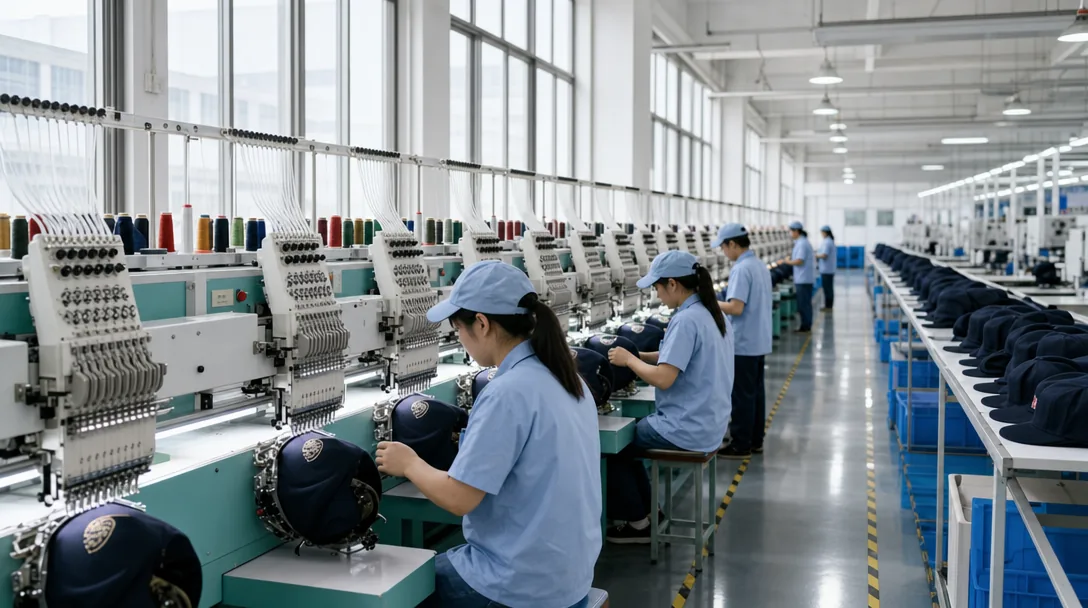
Blank Hats Export Shipping Checklist for Custom Hat Buyers
Read article →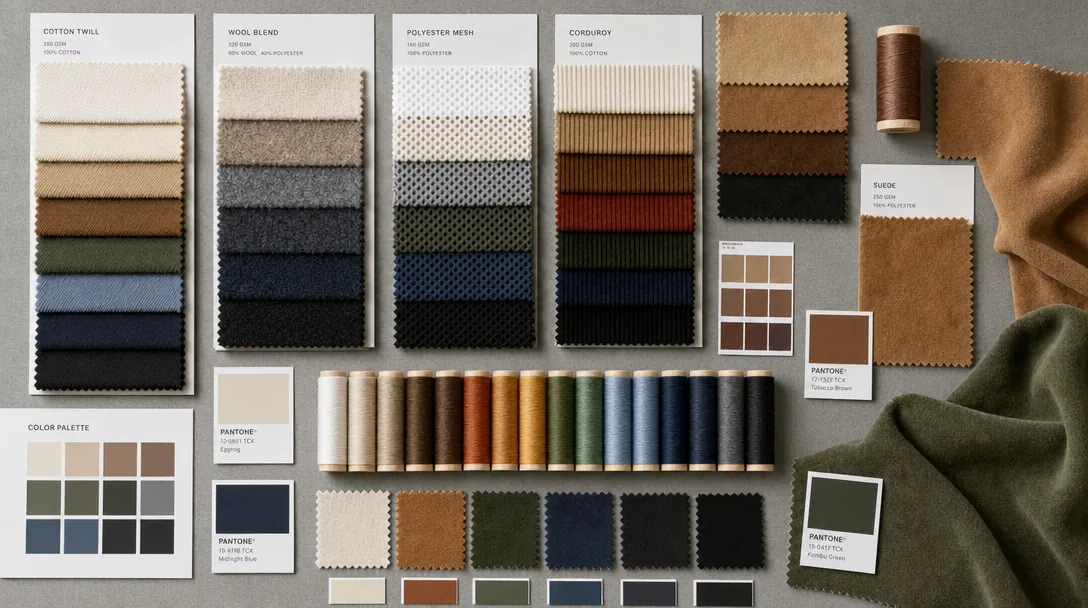
Corduroy Hat Men's: Properties, Costs and How to Spec It Right - Cost & MOQ Breakdown
Read article →Bulk Trucker Hats Export Shipping Checklist for Custom Hat Buyers
Read article →We hope this guide demystifies custom logo hats: when to use it, costs, and what to ask your factory - supplier checklist and helps you move forward with confidence. If you have questions specific to your project, our English-speaking sales engineers are one message away.