
Custom Hat Patch: When to Use It, Costs, and What to Ask Your Factory - 2026 Buyer's Guide - Cost & MOQ Breakdown
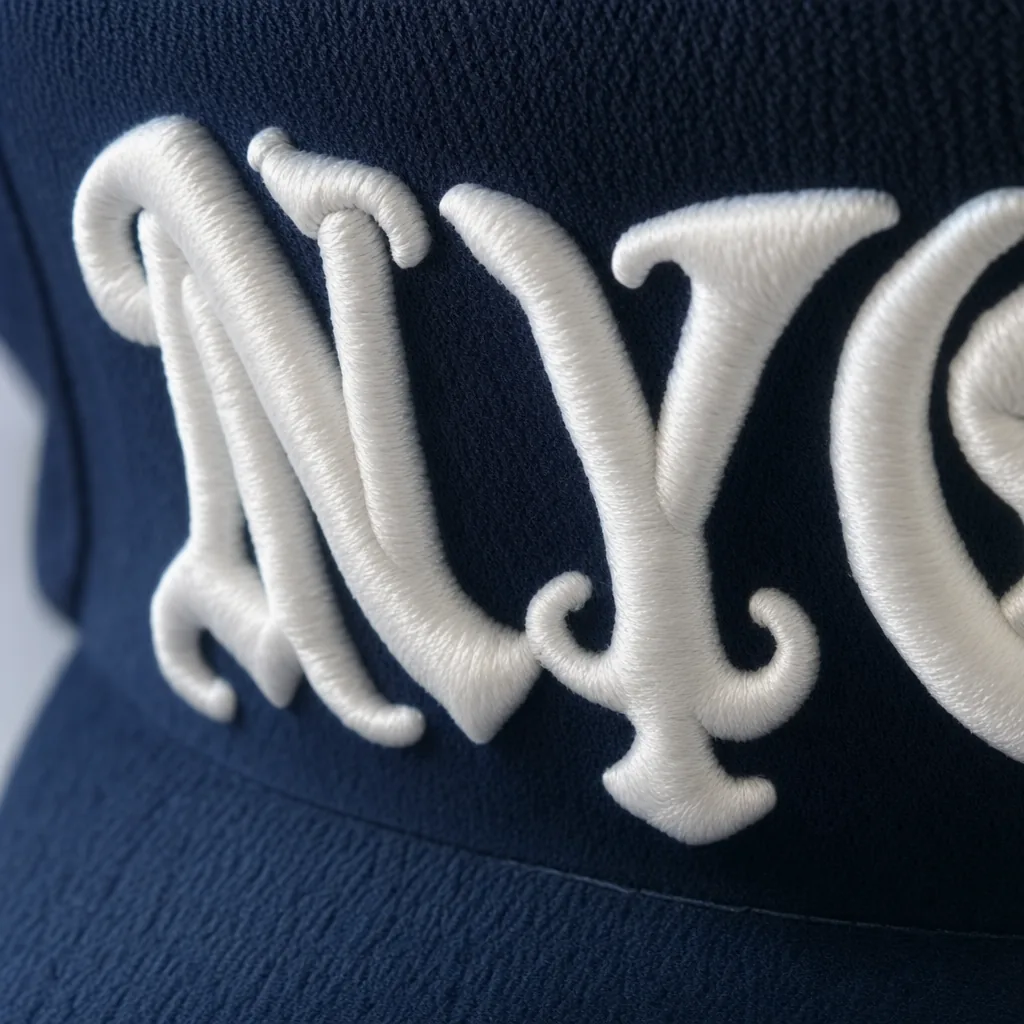
Custom Hat Patch: When to Use It, Costs, and What to Ask Your Factory - 2026 Buyer's Guide - Cost & MOQ Breakdown is one of the most-asked questions we receive from international buyers, and for good reason. With dozens of factories competing for your order and an alphabet soup of technical terms in every supplier quote, even experienced importers can feel lost. This guide consolidates what we have learned producing custom hats for clients in 40+ countries.
Custom Logo Hats
A custom hat patch makes sense when the artwork would break down in direct embroidery: text under roughly 1.2 mm cap height, distressed outlines, mascot faces, tonal shading, or a deliberately vintage surface that flat stitching cannot reproduce. On a real production line, the patch is almost always made separately from the hat body, then attached in finishing by lockstitch, zigzag, satin-edge sew-down, heat press, or hand applique depending on substrate and edge style. Those patch types are not interchangeable. Woven damask using 50D to 75D polyester yarn holds the sharpest small copy; embroidered twill gives more loft but starts losing definition on fine serif text; molded PVC at 0.8 to 1.2 mm thickness survives salt spray and abrasion better than thread-based trims; printed microfiber handles photo-style art but needs tighter color control, usually Delta-E below 2.0 against the approved Pantone TCX or coated reference. The hat itself determines whether that patch will sit cleanly or fail after packing. A 5-panel foam trucker, a brushed cotton dad cap, and a 110-fit performance cap do not tolerate the same heat, pressure, or needle density. Unstructured crowns can pucker under oversized patches, and low-grade EVA foam fronts often crater at the patch perimeter after pressing. A 270 gsm cotton twill front with firm buckram will usually accept a stitched woven patch cleanly; a 150 gsm recycled polyester ripstop may show needle distortion unless SPI, backing, and presser-foot pressure are adjusted. At CrownsForge, we do not approve a custom hat patch off a tabletop strike-off alone; we validate on a sewn sample, then recheck after 24 hours recovery and after carton compression, because edge lift and panel warping often appear only after the cap has been pressed, stacked, and shipped.
Most cost overruns on patch caps come from vague specs, not from the patch itself. Buyers should lock the patch size in millimeters, placement from center line and visor seam with a tolerance of ±2 mm, border finish, backing, attachment method, Pantone reference, and—if embroidered—the stitch count or at least target coverage. The cap substrate also needs to be written clearly: 100% cotton twill 270 gsm, heather jersey laminated to buckram at 220 gsm, or 150 gsm recycled ripstop all behave differently in pressing and sew-down. For MOQ, a custom hat patch on a stock cap body usually works at 144 to 300 pieces per colorway, but molded PVC tooling, leather dies, custom inner tape, or branded metal closures push practical runs closer to 500 pieces. The 2026 FOB China range is straightforward if the spec is honest. Basic direct-embroidered caps often land around $2.20 to $3.60, while a woven-patch cap with machine stitch-down is more realistically $3.10 to $5.20. Genuine leather, molded PVC, premium retail packing, and custom trims can add $0.35 to $1.80 per unit. Inspection should target post-finishing failure points, not just aesthetics on the pre-production sample: patch placement drift, adhesive strike-through on light fronts, loose border stitching, edge lift after 24 hours, crown asymmetry, and color mismatch between patch thread and shell fabric. Bulk inspection at AQL 2.5 is standard, but patch programs also need a peel-test benchmark for heat-applied styles, backside cleanliness checks on sewn patches, and needle-detection confirmation when required by the destination retailer. Any factory that cannot tell you whether the patch embroidery runs on Tajima, Barudan, or ZSK heads is probably too far from the process to control it well.
Custom Embroidered Patches
An embroidered custom hat patch makes sense when the logo needs texture, when one badge has to run across multiple cap bodies, or when you expect frequent SKU changes. The practical advantage is that the embroidery is built on a flat substrate first, so detail is controlled by the patch spec rather than by the curve and seam break on a 6-panel crown. Common base cloths are 210-250 gsm polyester twill, acrylic felt, cotton duck canvas, and 600D oxford; each handles stitch tension differently and changes edge cleanliness. Most competent shops in China are running Tajima, Barudan, or ZSK heads with 40 wt polyester thread because it holds color better under UV exposure and wet crocking than rayon. For outdoor, golf, team, or workwear programs, rayon is usually a mistake despite the higher sheen. Keep artwork within production reality: readable text should be at least 2.0-2.5 mm high, satin columns should stay above 1.0 mm, and knockouts tighter than 0.8 mm tend to fill in after stitching, pressing, and cap attachment. Merrow borders give depth but only on rounded shapes; laser-cut heat edges suit sharp silhouettes, while die-cut flat patches look cleaner on modern streetwear but need tighter sewing control to avoid wandering.
Most cost problems start with vague specs, not with factory pricing. A usable RFQ for a custom hat patch should call out finished size in millimeters, base fabric, border type, backing, attachment method, target stitch coverage, Pantone TCX reference, and placement tolerance on the front panel; if you skip those, two factories can quote the same art on completely different assumptions. Stitch count matters more than buyers think: a 2.25-inch patch can run 6,000 stitches with open-fill digitizing or 14,000-plus with heavy coverage, and that difference shows up in machine minutes, thread use, and puckering risk. In Yiwu or Dongguan, a standard embroidered patch at 500 pieces usually lands around $0.18-$0.45 each, while applying it to the hat adds roughly $0.03-$0.12 depending on edge sewing versus heat placement plus top stitch. Digitizing is commonly $25-$60 per design, sample charges are separate, and practical MOQ is 100-300 pieces, though 50-piece runs are possible with a setup surcharge.
Patch failures are usually predictable. The repeat offenders are excessive stitch density, merrow gaps on tight corners, weak heat sealing on laser-cut edges, thread breaks that expose the ground cloth, and crooked attachment after the front panel distorts over buckram. Color arguments also need to be managed early: embroidery thread does not hit Pantone the way ink does, so approval should be based on actual thread cards or an agreed nearest-shade tolerance, not a digital mockup. For finished caps, inspect symmetry from center front, perimeter stitch security, needle damage on brushed cotton or nylon taslon, edge telegraphing through structured fronts, and whether the patch sits flat over the crown curve. AQL 2.5 is a sensible final standard for retail orders, but I would still require one sealed pre-production sample and close-up approval photos before bulk. At CrownsForge, our standard practice is to wear-test any patch using metallic thread, 3D foam underlay, or fine serif text, because those three details generate more remakes than almost anything else on patch hats.
Custom Hat with Patch
A custom hat patch is not a surface trim; it changes the build sequence, defect map, and often the real MOQ. You are effectively managing two components that have to finish as one sellable SKU: the patch itself and the cap body. On structured 6-panel snapbacks, A-frame truckers, and foam-front promo caps, the cleanest result is usually pre-sew attachment on the open front panel before crown closing. That keeps stitch tension even, prevents buckram drag, and reduces seam-side skew when the patch crosses center front. On washed chino dad hats, pigment-dyed twill, and unstructured brushed cotton, post-sew attachment is often safer because soft crowns telegraph alignment drift more easily after washing and pressing. If artwork includes serif text under 4 mm cap height, lines below 0.6 mm, or tight negative space, an embroidered custom hat patch is the wrong construction. Woven damask, dye-sublimated twill, or printed microfiber will hold edge definition much better than a dense satin-and-fill embroidery run on Tajima or Barudan heads.
Most failures on a custom hat patch program come from underspecified tolerances, not bad sewing. A usable tech pack should state patch size in millimeters, placement from center front and visor seam, border type, substrate, backing, attachment method, and maximum finished thickness. In production, ±2 mm from center front is a normal tolerance; premium retail programs should target ±1.5 mm. Color should reference Pantone TCX for textile grounds with an agreed Delta-E standard: under 1.5 for brand-controlled business, under 2.5 for promo volume. Thickness matters more than buyers expect. A molded TPU patch at 2.8 to 3.2 mm can look premium on the table and still crease a front panel after export carton compression. For embroidered patches, specify merrow width, satin border width, stitch-count range, and thread quality equivalent to Madeira or Gunold. For woven patches, 50D to 75D yarn gives cleaner small copy than coarse promo constructions. Ex-factory China pricing on a stock cotton twill cap is typically $2.10 to $3.60 at 300 to 500 pieces for an embroidered custom hat patch, while TPU, silicone, or leather usually adds $0.35 to $0.90 per cap and may push MOQ to 300 to 500 pieces if a die or mold is involved.
Do not approve the hat sample first and assume the patch will behave later. Approve patch strike-offs before bulk hat sampling, especially for debossed leather-look badges, molded rubber, and detail-heavy embroidery where digitizing density can turn a crisp logo into a stiff brick. If the patch is heat-applied, write the adhesive grade and test conditions into the spec; cheap film may survive the sample room press and then start lifting after container temperatures exceed 55°C. For leather and synthetic leather, separate genuine leather, microfiber PU, and PVC in writing because they age differently. Low-grade PU often edge-cracks after 3,000 to 5,000 flexes, and crocking on dark debossed patches is common if the topcoat is weak.
Inspection should be run at AQL 2.5 with defect checks that match the patch type, not just the cap body. The recurring issues are edge lift, center-seam skew, puckering at patch corners, needle cuts on laser-cut edges, adhesive bleed, and poor rebound after compression packing. Our standard practice is to recheck packed samples after 24 hours under carton pressure because structured front panels can fail after compression even when inline sewing looks clean. That matters most on tall-crown truckers and foam fronts, where a heavy custom hat patch can leave a permanent witness line on the buckram if the spec ignores thickness and carton load.
Custom Patch for Hat
Patch choice affects the cap structure as much as the decoration, so the right custom hat patch starts with readability, thickness, and crown shape. In production, the four patch types buyers actually use are embroidered twill, woven damask, laser-cut appliqué, and molded soft PVC. Embroidered patches are usually built on 100% polyester twill with 75D or 120D rayon/poly thread, then finished with a merrow edge or hot cut. They look right on sports, workwear, and heritage caps, but they are the wrong tool for fine detail: I would not approve type under 4.5 mm cap height or strokes under about 1.2 mm because satin fill closes up fast on a curved front. Woven patches use finer 50D to 75D polyester yarn and hold small text, thin outlines, and cleaner negative space much better than embroidery, especially for streetwear artwork that would turn muddy under high stitch density. PVC is the outlier because it solves durability but creates balance and attachment issues. A 2D or 3D molded PVC patch can usually be matched to coated Pantone within Delta-E 1.5 to 2.0 if the compound mixer is competent, and it holds up well against sweat, rain, and abrasion. The tradeoff is weight and stiffness: once you get above roughly 2.5 to 3.0 mm patch thickness on a low-profile 5-panel or unstructured dad cap, the front can feel top-heavy and start to torque. Attachment is where factories miss details. Sewing is still the safest method on chino twill, brushed cotton, corduroy, and 600D poly because it survives laundering and summer heat better than adhesive-only bonding. Heat press can work, but only if the shell fabric, buckram, and finish tolerate 140 to 160°C without glazing, shrinkage, or glue bleed; cheap foam trucker fronts are usually the first failure point.
Most tech packs for a custom hat patch are too vague to price or sample correctly. A factory needs the finished patch size in millimeters, border type, base fabric, stitch coverage or woven density, backing, attachment method, placement point, and placement tolerance; for cap fronts, ±2 mm from approved position is a reasonable production limit, and looser than that starts to look sloppy on a retail shelf. Color callouts should use Pantone TCX for textile bodies and coated Pantone for PVC or printed references, with an agreed Delta-E tolerance if shade consistency matters across reorders. If the cap is a foam trucker, specify front panel construction and foam thickness as well. A dense embroidered patch sewn onto a weak 3 mm EVA-backed front panel will pucker even when the patch itself passes inspection. It is also smart to ask for the minimum line width and smallest legible letter height the supplier will guarantee, and whether the digitizing is tuned for Tajima, Barudan, or ZSK heads; underlay, thread tension, and compensation values are not universal. Cost is driven more by patch construction than by the hat body. In China, patch hats usually run at MOQ 100 to 300 pieces per colorway, while standalone patch production often starts at 500 because digitizing, loom setup, edge finishing, and PVC mold charges are fixed. At 1,000 units, an embroidered patch typically adds about $0.22 to $0.65 per cap over a blank, woven adds roughly $0.18 to $0.45, and molded PVC lands around $0.40 to $0.90 depending on size, mold depth, and color count. Our standard practice is to inspect to AQL 2.5 and call out failure points separately: off-center placement beyond ±2 mm, skipped stitches, merrow unraveling, edge lift after heat exposure, adhesive bleed, and patch shadowing through thin crown fabric. For sewn patches, corner pull testing matters; for heat-applied patches, require a tape test and a post-press aging check. If a supplier cannot explain those controls plainly, they are probably subcontracting the process and troubleshooting after the damage is done.
Custom Patch Hat
A custom hat patch should be engineered as a separate component, not treated like decoration added at the end. The hat body and the patch need their own specs, approvals, and defect criteria before they become one SKU. A 65 x 45 mm woven damask patch with merrow border, a 2.0 mm molded PVC badge, and a debossed PU patch can all fit the same front panel, but they behave very differently under heat, needle penetration, and crown curvature. Woven and embroidered patches are usually attached by lockstitch or narrow zigzag; PVC and TPU often need a heat-tack plus perimeter stitching; leather, faux leather, and suede microfiber need controlled platen temperature and dwell time or you get glossing, shrinkage, edge curl, or adhesive bleed. If the tech pack does not lock patch size in mm, border construction, backing, Pantone TPX/TCX reference, attachment method, and placement tolerance, the first dispute will usually be between the patch vendor and the cap sewing line, not between you and the factory.
Cap construction decides whether a custom hat patch looks retail-grade or cheap. A structured 6-panel crown in 240-280 gsm cotton twill or 600D polyester can carry a 2.25 inch center-front patch cleanly; a washed unstructured chino cap will deform if the patch is too thick, too stiff, or bridges the center seam. For dependable production, specify patch dimensions, corner radius, thickness, stitch count or woven denier, placement tolerance of +/-2 mm, and color tolerance of Delta-E under 1.5 on dyed fabric and under 2.0 on printed surfaces. On the floor, placement should be controlled with an acrylic or metal jig, not operator eyesight. If the patch itself is embroidered on Tajima, Barudan, or ZSK heads, digitizing needs pull compensation and proper underlay because curved panels will ovalize circles and open satin borders if the file was built flat. Our standard practice is to approve a patch strike-off, a blank cap, and then a sewn PPS sample, because puckering, seam grin, and front-panel collapse only show up after final attachment.
MOQ and cost are usually driven more by the patch process than the cap shell. In Yiwu and Dongguan, a standard 6-panel twill cap with a sewn woven or embroidered patch is commonly workable at 144-300 pcs per colorway, but chenille, genuine leather, and molded PVC often push the practical MOQ to 300-500 pcs because mold charges, hide yield loss, and setup waste have to be amortized. For 2026 FOB China pricing, a basic cotton twill snapback with one 2.0-2.5 inch woven patch typically lands around $2.10-$3.20; embroidered patch versions run about $2.20-$3.60; PVC, chenille, and real leather usually sit in the $2.90-$5.80 range depending on patch size, edge finish, and whether attachment is fully machine sewn or partly manual. Do not accept a bundled quote. Ask for cap body cost, patch unit cost, attachment labor, and one-time charges separately. Real setup costs are usually $40-$120 for embroidery digitizing, $30-$90 for woven patch loom setup, and $80-$200 for a PVC mold. Inspect patch hats to AQL 2.5 major and 4.0 minor, with special attention to placement drift over 3 mm, puckering, hard heat-cut edges, loose jump threads, and stitch security after wash and rub testing.
Custom Patch Hats
A custom hat patch is the right solution when the logo carries detail that a curved front panel cannot hold cleanly in direct embroidery. As a rule, satin columns below 1.0 to 1.2 mm, text under roughly 4 mm cap height, thin keylines, faux tonal transitions, and debossed grain all break down once the needle starts pulling into buckram or unstructured cotton twill. A patch isolates that complexity on a stable substrate first, then lets you attach a finished piece to the cap with controlled placement. That matters on foam truckers, brushed chino twill, corduroy, and washed cotton, where direct stitching can telegraph the seam, distort the crown, or show adhesive shadow on light shades. The factory conversation should start with patch construction, not with the hat blank. Ask for face material and weight—common examples are 210- to 330-gsm polyester twill, woven damask for high-definition logos, 0.8 to 1.2 mm PVC, or 1.6 to 2.0 mm genuine leather—then specify backing, border, and attachment method. Merrow works for classic round or rectangle patches; laser-cut with heat seal handles tight silhouettes; turned-edge reads more premium but costs more labor. If the supplier cannot explain whether the custom hat patch will be sewn on with a post-bed single-needle lockstitch, zigzag edge stitch, or stitch-and-glue process, they are probably outsourcing the critical operation and losing control of alignment.
For retail-grade work, define the patch like an engineered component. Give finished size in millimeters, placement from the center-front seam or visor seam, and a tolerance no looser than +/-1.5 mm; on premium programs, we usually hold visible front placement to +/-1.0 mm. Use Pantone Solid Coated for synthetics and plastisol references, Pantone TCX when matching dyed textile trims, and ask for a Delta-E target of 2.0 to 3.0 if brand color is sensitive. Request strike-off photos under D65 lighting, then approve one sealed PP sample before bulk. Left-right drift that looks harmless on a single cap becomes obvious across 12 dozen packed units, especially on 5-panel crowns where there is no center seam to visually hide misplacement. Cost is driven more by patch build than by the cap itself. A standard 3-inch embroidered twill custom hat patch sewn onto a stock 5-panel trucker or cotton twill baseball cap usually lands around $2.10 to $3.80 ex-factory China at 300 pieces per colorway, with practical MOQs of 100 to 144 pcs. Woven patches can be slightly cheaper at scale on fine-detail logos, but many patch mills want 300 pcs minimum to amortize setup. Genuine leather typically runs $3.50 to $6.00 per cap because of hide yield loss, embossing die charges, and shade sorting; molded PVC often carries an $80 to $180 tooling fee but gets efficient above 500 pcs. Inspect finished goods to AQL 2.5 for appearance and placement, and verify both stitch integrity and adhesion after a 60 to 70 C heat hold if any glue assist was used.
Working with CrownsForge for custom hat patch programs
Most custom hat patch failures are locked in before sewing starts: art supplied at badge scale instead of cap scale, patch thickness ignored on a curved crown, or buyers approving a flat strike-off without seeing it on the actual front panel. The efficient workflow is two approval gates, not six rounds of emails: digital art and construction review in 24-48 hours, then one physical sample in 5-7 working days using stock materials, or 10-14 working days if the cap needs dyed-to-match twill, microfiber suede, brushed cotton, or custom mesh. On first orders, I strongly prefer separate approval of the patch and the cap body before final assembly; it isolates problems faster and prevents chasing two variables at once. Decoration method should follow the artwork, not the other way around. Fine lettering under 2.0 mm and halftone detail usually belongs on a woven patch, while heavier athletic insignias run better on Tajima or Barudan heads with controlled stitch density and clean edge walk. TPU and molded PVC work when you need wash resistance and a raised surface; chenille makes sense for varsity programs but needs edge control so it does not fray at the corners. A patch that looks perfect at 55 mm on a flat card can tunnel on a structured 5-panel crown with 1.8-2.2 mm buckram, especially if the merrow border is bulky or the backing is overbuilt. At CrownsForge, standard practice is to test attachment method against panel structure first: sew-down, heat-apply, or combo tack stitch depending on crown stiffness and target use.
MOQ and unit cost are driven more by patch construction than by the hat shell. A basic 6-panel 100% cotton twill cap with a sewn woven custom hat patch, stock snapback or Velcro closure, and Pantone-close fabric matching usually starts at 144 pieces per colorway. Once you move into genuine leather, molded PVC, multi-layer appliqué, or custom metal trims, the practical MOQ often rises to 300-500 pieces because of die charges, setup time, and a higher assembly reject rate. Sample charges for a standard sewn patch cap are typically $35-$80; if the order needs a deboss die, PVC mold, or laser-cut template, $90-$150 is more realistic. Buyers should confirm in writing whether sample fees are credited back on bulk POs, because factories handle that differently. For 2026 FOB China buying, realistic pricing is about $2.10-$3.40 for a woven-patch cap at 300-500 pieces, $2.60-$4.20 for embroidered emblem builds, and $3.80-$6.50 for genuine leather patch versions depending on hide grade, stitch count, and hardware. Repeatability matters more than saving $0.08 on first cost. Set measurable tolerances: Delta-E under 1.5 where instrument reading is valid, fabric weight within ±5% gsm, patch placement at ±2 mm, and pull testing for any heat-applied construction. Final inspection should be run at AQL 2.5 with checkpoints on patch alignment, brim symmetry, top-button centering, closure function, edge cleanliness, and thread tension. If the factory is audited to sedex-audit-cap-supplier-guide.html">BSCI 2.0 or Sedex SMETA 4-Pillar, that is useful, but it does not replace an actual pre-shipment quality standard tied to the custom hat patch program.
Frequently Asked Questions
Can I order a sample before bulk production?
Yes. We strongly recommend approving a pre-production sample before mass production. Samples are charged at 35 to 60 USD each plus express shipping, fully refundable against confirmed bulk orders over 500 pieces.
Do you support sustainability certifications?
Yes. We work with GOTS organic cotton, GRS-certified recycled polyester, OEKO-TEX Standard 100 fabrics, and are BSCI and Sedex audited. Certification documentation can be provided per order.
How long does production take?
Sampling takes 7 to 12 days. Bulk production runs 20 to 30 days depending on quantity, fabric availability and decoration complexity. Inspection and packing adds another 3 to 5 days before shipment.
What file format should I send for my logo?
Vector files (AI, EPS, PDF) are ideal. High-resolution PNG or JPG at 300 dpi on transparent background works as a fallback. Provide Pantone color references for accurate reproduction.
Which shipping methods do you support?
We support FOB, CIF and DDP shipping. Air express for samples and small orders, sea LCL for 100 to 500 pieces, sea FCL for 5,000+ pieces. Door-to-door DDP available for US, EU, UK, Canada and Australia.
How does ordering custom leather patch trucker hat work?
When evaluating custom leather patch trucker hat, the key considerations are construction quality, decoration capability, MOQ flexibility and lead time. Cover everything buyers ask about custom logo hats: how it's manufactured, what specs to request from a factory, typical MOQ and pricing, common quality issues to inspect for, and how this ties back to the broader custom hat patch sourcing decision. Cover everything buyers ask about custom embroidered patches: how it's manufactured, what specs to request from a factory,…
What's the MOQ for custom leather patch hats no minimum?
When evaluating custom leather patch hats no minimum, the key considerations are construction quality, decoration capability, MOQ flexibility and lead time. Cover everything buyers ask about custom logo hats: how it's manufactured, what specs to request from a factory, typical MOQ and pricing, common quality issues to inspect for, and how this ties back to the broader custom hat patch sourcing decision. Cover everything buyers ask about custom patch hats: how it's manufactured, what specs to request from a factory, typical MOQ…
How does ordering custom embroidered trucker hats work?
When evaluating custom embroidered trucker hats, the key considerations are construction quality, decoration capability, MOQ flexibility and lead time. Cover everything buyers ask about custom logo hats: how it's manufactured, what specs to request from a factory, typical MOQ and pricing, common quality issues to inspect for, and how this ties back to the broader custom hat patch sourcing decision. Cover everything buyers ask about custom embroidered patches: how it's manufactured, what specs to request from a factory,…
How does ordering custom baseball hats with logo work?
When evaluating custom baseball hats with logo, the key considerations are construction quality, decoration capability, MOQ flexibility and lead time. Cover everything buyers ask about custom logo hats: how it's manufactured, what specs to request from a factory, typical MOQ and pricing, common quality issues to inspect for, and how this ties back to the broader custom hat patch sourcing decision. Cover everything buyers ask about custom patch hats: how it's manufactured, what specs to request from a factory, typical MOQ…
Ready to start your custom hat project?
Send us your tech-pack, sketch or even just an inspiration photo. We will respond with a detailed quotation and digital mock-up within 24 hours.
Request a free quoteRelated guides
Ball Caps for Men: A 2026 Sourcing Playbook for International Buyers - Cost & MOQ Breakdown
Read article →
BSCI vs Sedex vs WRAP vs WCA: Compliance Audit Standards Compared (2026 Update) (2026 Update) (2026 Update)
Read article →
10 Questions to Ask a Cap Manufacturer on Your First Call - Supplier Checklist
Read article →We hope this guide demystifies custom hat patch: when to use it, costs, and what to ask your factory - 2026 buyer's guide - cost & moq breakdown and helps you move forward with confidence. If you have questions specific to your project, our English-speaking sales engineers are one message away.