
Custom Hat Embroidery: The 2026 Sourcing & Manufacturing Playbook (2026 Update)
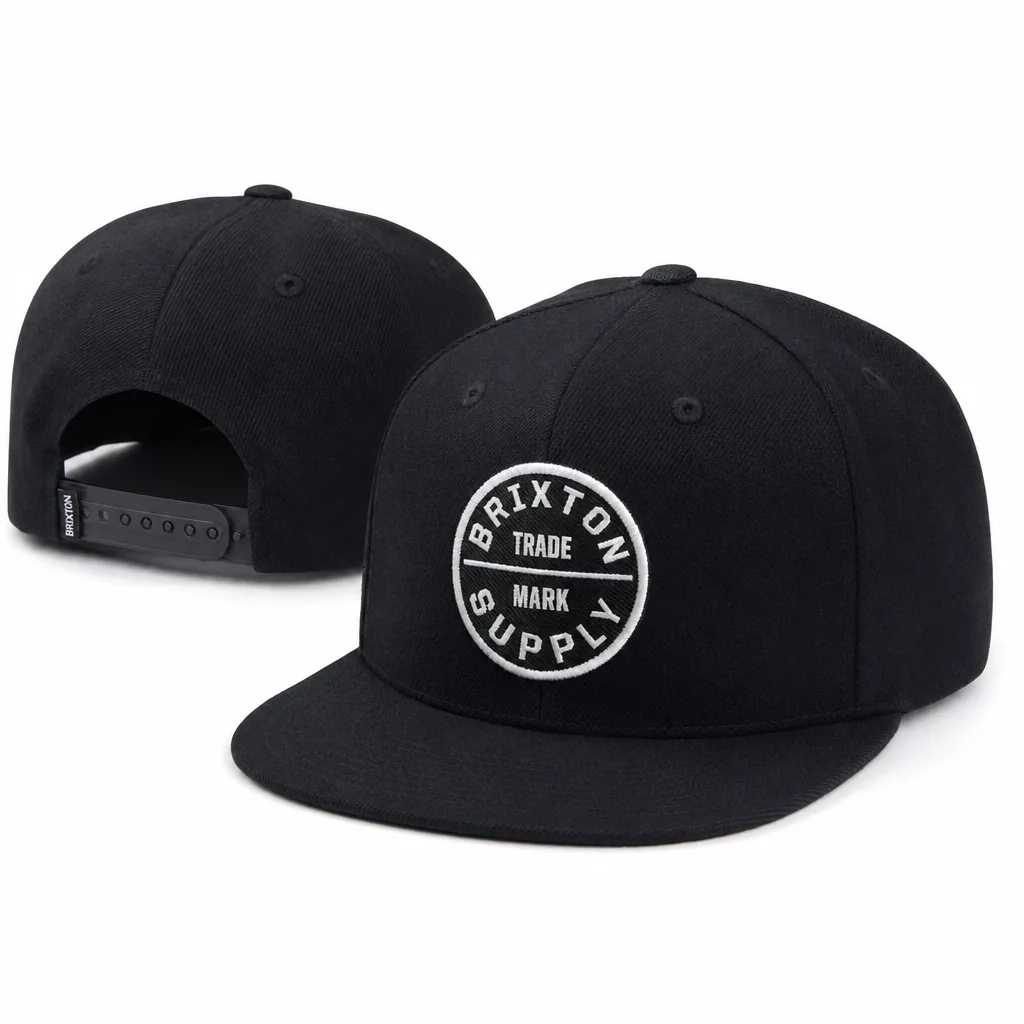
Every week, our sales team answers detailed questions about custom hat embroidery: the 2026 sourcing & manufacturing playbook (2026 update). We wrote this guide so that wholesalers, streetwear brands, corporate buyers and promotional resellers can compare options with full information, and avoid the traps that show up only after production has started.
Custom Embroidered Hats
The biggest failure in custom hat embroidery happens before the first sew-out: buyers approve artwork without locking the cap architecture that the embroidery has to live on. A 95 mm front logo that runs clean on a structured 6-panel in 260 gsm cotton twill can pucker, split at the center seam, or sink into a foam trucker if the same digitizing file is reused with unchanged underlay, pull compensation, and density. On the factory floor, artwork is converted to DST, EMB, or OFM files, then tested on Tajima, Barudan, or ZSK heads using the actual shell fabric, buckram, and backing—not a generic swatch. Thread choice matters too: 40 wt polyester is the default for lightfastness and abrasion resistance; rayon is used selectively when the brand wants higher sheen and accepts lower wet-rub performance. For 3D puff, 2 mm EVA works for tighter lettering, while 3 mm is safer for bold block forms above roughly 5 mm stroke width. If the front panel height, seam-to-logo clearance, max embroidery area, and target stitch count are not fixed before sampling, the factory is improvising critical decisions that should be on your spec sheet.
A usable spec for custom hat embroidery needs construction data, not just a logo file and Pantone callouts. List fabric by weave and weight—108x56 cotton twill at 240-260 gsm, brushed chino around 220-240 gsm, recycled polyester at 180-220 gsm, trucker mesh at 75-100 denier—plus crown structure, sweatband composition, visor board thickness, closure, and color tolerance. For color-managed programs, Pantone TCX or TPG references should be paired with Delta-E targets: under 1.5 for premium retail, under 2.0 for standard promotional runs. Embroidery specs should include logo size in millimeters, expected stitch count, fill density range, satin width limits, backing type, and approved sew-out photos under daylight and a D65 light box. Placement tolerance should be capped at ±3 mm, because a centered logo that drifts 5 mm reads as a defect immediately at retail distance. MOQ is typically 144-300 pieces per colorway for stock-body caps with one front hit, and 300-500 for cut-and-sew truckers once custom labels, pattern setup, and material sourcing are involved. Our standard practice is AQL 2.5 for majors and 4.0 for minors, but embroidery-specific defects—thread breaks, poor registration, foam exposure, hoop burn, needle cuts on lightweight nylon, and distortion from bad stabilization—should be called out separately on the inspection checklist.
Custom Made Trucker Hat
The front panel decides whether a trucker hat looks premium or cheap, because that is where custom hat embroidery either stays crisp or telegraphs every production mistake: seam strike, foam scorching, tunneling, and puckering. For logo-first programs, a 5-panel crown is usually the right call; deleting the center seam gives satin columns, 2.5-3.0 mm knockout text, and 3D puff a usable landing zone. The most stable 2026 builds are still either a 3-5 mm polyester foam front laminated to tricot or a 220-260 gsm cotton chino twill front, paired with 75D-100D polyester mesh, a PE pre-curve visor, and a PVC snapback. Once satin stitch length pushes past 6.5-7.0 mm or lettering drops below roughly 4 mm cap height, digitizing has to compensate with edge-run plus center-walk underlay and lower fill density in the 0.35-0.40 mm range, otherwise the needle perforates the face and the foam shows through. A vague tech pack that says only “trucker style” wastes a week before sampling even starts. The factory needs panel count, finished crown height, front-panel spec with foam or buckram callout, visor curve, sweatband fiber content, seam tape color, closure finish, and logo placement in millimeters from crown seam and visor seam. Color approval should be against Pantone TCX or Pantone Coated references with an agreed Delta-E tolerance, usually under 1.5 for the main body fabric and under 2.0 for trim. Stitch count also needs to be locked before sampling; a standard front logo usually runs 5,000-8,500 stitches, but a puff-heavy build can exceed 10,000 and change both cost and sew time. On Tajima, Barudan, and ZSK cap frames, clearance near the visor seam is different enough that a logo sitting 8-10 mm too low can run clean on one line and distort on another.
Cost moves quickly once a trucker hat stops being a basic front-logo program. In Zhejiang, a standard 5-panel custom trucker hat with chino twill front, polyester mesh back, PVC snap, and one front embroidery placement typically runs about $2.10-$3.60 FOB China at 300-1,000 pieces per colorway in 2026. Add foam front construction, 3D puff, side and rear embroidery, woven flag label, printed seam tape, or a custom visor sandwich, and the practical range shifts to $3.80-$5.80 FOB. Sampling is rarely free when real digitizing and machine setup are involved; $35-$80 per design is normal, and most disciplined suppliers credit that against bulk after order confirmation. Once you split colorways, require individual polybags, or assort sizes and labels by SKU, many factories will raise MOQ from 144-300 pieces to 300-500 because thread changes, cap-frame downtime, and packing labor erase margin. The defect list on trucker programs is mostly structural, not cosmetic, and buyers often catch it too late. A good front panel should hold shape after embroidery instead of collapsing at the lower third, mesh diamonds should remain square without side-panel torque, and visor topstitching should stay balanced within about 2-3 mm side to side. The reject points I would watch hardest are off-center logo placement, foam burn marks, thread nests hidden behind the sweatband, cracked snap posts after pull testing, and color drift between visor fabric, top button, and closure beyond the approved standard. AQL 2.5 is a sensible finished-goods baseline, but embroidery-heavy trucker hats need tighter checkpoints on logo position tolerance, stitch density consistency, and carton assortment accuracy. At CrownsForge, we also check post-embroidery reshaping because even clean sewing can fail if the crown is pressed too hard and the panel memory breaks.
Custom Trucker Hat
The real make-or-break point on a trucker is the front panel package, not the mesh count alone. For custom hat embroidery, the best base is still a 5-panel build with a seam-free front, 100% polyester or poly-cotton foam-backed face, 0.8-1.2 mm buckram, and an 80-100 gsm foam lamination. That stack holds 3D puff and dense fills far better than a soft cotton twill front, which collapses once the needle hits tension. Typical crown height runs 9-11 cm, with a pre-curved visor using a 2.0-2.2 mm PE insert and a 7-hole PP snap closure. Mesh choice matters, but in a very practical way: 16x12 mesh gives a firmer hand and cleaner silhouette, while 18x14 breathes better but can look flimsy on a taller crown. If the logo exceeds about 8,000 stitches, uses satin columns wider than 5 mm, or stacks puff under narrow outlines, embroider the front panel before cap assembly. On Tajima, Barudan, or ZSK heads, pre-sewing embroidery consistently cuts strike-through, registration drift, and crown distortion versus stitching after the foam front has already been joined and blocked.
A trucker spec falls apart when the tech pack is vague. You need front panel construction, mesh denier, crown height, visor curve, sweatband material, seam tape color, top-button fabric, snap resin grade, stitch count, backing type, and Pantone TCX references for every visible part; for dyed components, a Delta-E of 1.5-2.0 against approved lab dips is realistic, not generous. MOQ is usually 144-300 pieces per colorway on stock materials, but once you add dyed-to-match mesh, underbill printing, woven labels, or multi-location embroidery, the workable floor moves to 500-1,000 pieces. In Yiwu, a stock custom trucker hat with flat front custom hat embroidery typically lands around $2.20-$3.80 FOB China at 300 pieces; 3D puff, applique, chain stitch, or upgraded closures push it toward $4.50-$6.50, with development charges of $80-$250 per style for fully bespoke programs. For QC, use AQL 2.5 on finished goods and add in-line gates at panel cutting, embroidery approval, and post-steaming shaping. The defects that actually cause claims are crown skew, visor asymmetry over 4 mm, mesh tearing at seam joins, bobbin show-through on white foam, side-logo drift of 3-5 mm after blocking, and snap cracking in low-temperature transit.
Custom Trucker Hats
On trucker styles, the failure point is usually the foam-mesh construction, not the artwork. A standard 5-panel trucker front uses 3-5 mm PE or EVA foam laminated to a 100-140 gsm polyester tricot face, with side and back mesh typically in the 60-90 gsm range, often 18x14 or 20x16. That structure behaves nothing like cotton twill, so custom hat embroidery has to be digitized for the cap body you are actually sewing. On Tajima, Barudan, and ZSK heads, we usually cut fill density by 10-15% versus a structured twill cap, hold stitch spacing around 0.35-0.40 mm, and avoid long uninterrupted fills that cause tunneling across the foam. Text under 4 mm is unreliable on most foam fronts, and with 3D puff the tolerance gets tighter because loft, underlay, and needle penetration exaggerate every registration issue. If the foam is soft, a 7,000-10,000 stitch front logo can dimple the crown; if the mesh is brittle, rear seams start cracking after carton compression and ocean transit.
The spec sheet should be locked before anyone asks for final pricing. For truckers, that means panel count, crown height, foam thickness, mesh construction, visor length, bill stitch rows, closure type, sweatband material, seam tape, and exact logo position measured from the crown seam and visor edge in millimeters. Dyed components should be approved to Pantone TCX with a Delta-E target under 1.5 on lab dips, and snapbacks should call out resin grade because low-cost PP closures get brittle faster than better POM blends in cold-weather transit. On molded fronts, embroidery placement can shift 3-5 mm after blocking, so sampling on the finished cap body matters far more than approving art on a flat strike-off. Our standard practice is to test the logo on the actual production shell, then check crown symmetry, visor curvature, stitch balance, and puckering before releasing bulk. That one step prevents more rework than arguing over PDF proofs. For 2026 sourcing, expect 144-300 pcs per stock colorway for a basic foam/mesh trucker, but 500-1,000 pcs once you add custom-dyed mesh, woven labels, printed seam tape, molded patches, or private-mold snaps. A straightforward flat-embroidered cap at 500 pcs typically sits around $2.10-$3.40 FOB Ningbo, while 3D puff and branded trims push it into the $4.20-$6.80 range before freight, inspection, and duty.
Hat Trucker Custom
Your tech pack has to control stitch behavior, not just artwork size. For custom hat embroidery on foam-front truckers, specify Pantone TCX for shell matching, thread reference, minimum text height, maximum stitch count, underlay type, backing weight, visor stitch rows, sweatband composition, and point-of-measure tolerances; 3 mm letter height is already aggressive unless the digitizer opens the columns and drops density. On foam, clean results usually land around 0.35-0.40 mm stitch spacing with edge-walk underlay, not the tighter settings used on brushed twill caps, and that needs to be written into sample comments before the factory defaults take over. Stock-body MOQ is typically 144-300 pcs per colorway, with 2026 FOB China pricing around $2.10-$3.60 for 3,000-6,000 stitches; add 3D puff, woven labels, printed seam tape, custom taping, or special visor fabric and you are more likely in the $3.80-$6.20 range. First samples usually take 7-12 days on stock bodies or 18-28 days on fully custom components, while bulk for 1,000-3,000 pcs runs about 25-40 days, plus dye-lot time if you need Delta-E 1.5 or tighter on trims.
Trucker Custom Hat
The front panel determines whether a trucker cap will embroider cleanly; the mesh is secondary. On truckers, custom hat embroidery fails when buyers approve artwork before locking the front substrate, crown profile, and seam layout. Most commercial bodies are 5-panel or 6-panel builds with a 3-5 mm EVA or PU foam front laminated to polyester tricot, or a buckram-backed cotton/poly twill front, paired with 70D-120D polyester or nylon mesh, a PE pre-curved visor, and a 7-hole PVC snapback. For bold retail logos, seamless foam fronts create better loft and give 3D satin columns room to stand; for fine copy, merrow-style borders, or tighter stitch registration, twill over buckram is more stable because the needle path stays flatter and rebound is lower after sewing. Crown profile is not cosmetic. A mid-profile trucker usually finishes at 110-120 mm crown height, while a high-profile streetwear shape is closer to 125-130 mm; that 10-15 mm difference changes the usable embroidery field and can make approved artwork look undersized or stretched once it is run on a cap frame.
Setup on truckers is less forgiving than on brushed cotton dad caps. On Tajima, Barudan, or ZSK cap frames with 270-degree rotation, soft foam fronts need reduced top-fill density, firmer edge-walk underlay, and more conservative pull compensation or the panel will tunnel around the logo. I generally avoid text below 4 mm cap height on foam, and I treat artwork above roughly 10,000-12,000 stitches as a risk unless the front has enough structure to resist sinking. A usable RFQ should call out panel count, crown profile, front substrate, mesh denier, sweatband composition, visor stitch rows, seam tape color, closure resin, and Pantone TCX references for both fabric and embroidery thread. For branded programs, thread-to-fabric color matching should target Delta-E below 1.5; on mesh, slub twill, or heathered fronts, below 2.0 is the realistic factory hold. CrownsForge typically approves both a flat strike-off and a sewn cap-frame sample on the production substrate before bulk cutting, because trucker defects are predictable: foam crush, off-center placement, needle cuts at the mesh join, visor seam waviness, brittle snaps, and crown collapse after carton compression. Stock-body programs usually start at 144-300 pieces per colorway, while true custom bodies with dyed mesh, custom sweatbands, woven seam tape, and private visor tooling are usually 500-1,000 pieces, with typical 2026 FOB ranges of $2.20-$4.80 and $4.80-$8.50 respectively under AQL 2.5 major / 4.0 minor inspection.
Working with CrownsForge for custom hat embroidery programs
The real failure point in custom hat embroidery is approval control, not whether a Tajima or Barudan head can sew a clean satin border. If artwork, digitizing notes, shell specs, and PPS comments are not locked in sequence, bulk drift is almost guaranteed. Our standard practice is a 24-hour spec review against a line-by-line BOM: cap profile, crown height, visor curvature, buckram, shell fabric weight in gsm, backing type, sweatband, label placement, Pantone TCX targets for fabric, and Coats or Madeira thread mapping for the embroidery. We also call out hard limits early—logo width crossing a center seam, minimum serif thickness, 3D foam wall height, and stitch count by logo area. On a structured 6-panel cap, a 2 mm shift off center is enough to make the front panel look crooked at retail. That is the kind of mistake that survives approval photos and gets caught only when the carton is opened.
For new custom hat embroidery programs, a realistic timeline is 5 to 7 working days for a paid development sample after artwork and trim confirmation, then another 3 to 5 days for a PPS once comments are closed. Repeat orders are faster because the .DST file, needle sequence, cap frame settings, and approved block are already frozen. MOQ should follow construction reality, not wishful pricing: 48 to 100 pieces per colorway can work for a stock-body trucker with standard mesh and snapback, but a fully custom body with dyed-to-match twill, woven labels, printed seam tape, and proprietary trims usually needs 300 pieces per style-color to absorb fabric waste, trim MOQs, and setup loss. Otherwise the true cost creeps up by about $1.20 to $2.50 per cap, even before freight.
MOQ flexibility only makes sense when the decoration method matches the artwork and the substrate. Flat embroidery is the safest starting point for most custom hat embroidery because machine time, reject risk, and digitizing variables are predictable. Raised 3D foam, appliqué, chain stitch, metallic thread, and mixed embroidery-plus-patch builds behave very differently on cap frames; each changes setup loss, operator skill needs, and the defect profile. A dense white fill on black brushed cotton twill can show edge pull if the underlay is too aggressive, while a satin border on lightweight poly mesh can tunnel if the backing is too soft or the stitch density is pushed beyond what the fabric will hold. That is why the sample must run on the actual shell fabric with the intended backing, typically 70 to 100 gsm tear-away or cut-away, not on a generic strike-off that hides the real behavior of the material.
The suppliers worth scaling with run hard process gates and document them. Retail programs should have BOM approval, color standard or lab dip review, embroidery file signoff, PPS approval, inline checks, and final inspection at AQL 2.5 before shipment. If the factory claims compliance, ask for current sedex-audit-cap-supplier-guide.html">BSCI 2.0 or Sedex SMETA 4-Pillar reports, needle control logs, and carton traceability by PO, style, and colorway. On the floor, first-off embroidery should be checked against a sealed sample, logo placement held to ±1.5 mm, and QC should cover more than stitches: visor symmetry, crown shape, snap function, loose trims, thread ends, and carton assortment accuracy all matter. That discipline is what keeps a replenishment program stable season to season instead of drifting every time a new operator or embroidery head touches the order.
Frequently Asked Questions
How long does production take?
Sampling takes 7 to 12 days. Bulk production runs 20 to 30 days depending on quantity, fabric availability and decoration complexity. Inspection and packing adds another 3 to 5 days before shipment.
Do you support sustainability certifications?
Yes. We work with GOTS organic cotton, GRS-certified recycled polyester, OEKO-TEX Standard 100 fabrics, and are BSCI and Sedex audited. Certification documentation can be provided per order.
What is the minimum order quantity (MOQ) for custom hats?
Our standard MOQ is 100 pieces per design and color, with sampling available from 1 piece. For complex multi-color logos or premium fabric upgrades, the MOQ can be lowered with a small per-piece surcharge.
What logo decoration techniques do you offer?
3D puff embroidery, flat embroidery, woven patch, leather patch, PVC patch, screen printing, sublimation, applique and laser etching, all in-house with no subcontracting.
Can I order a sample before bulk production?
Yes. We strongly recommend approving a pre-production sample before mass production. Samples are charged at 35 to 60 USD each plus express shipping, fully refundable against confirmed bulk orders over 500 pieces.
How does ordering custom embroidery trucker hat work?
When evaluating custom embroidery trucker hat, the key considerations are construction quality, decoration capability, MOQ flexibility and lead time. Cover everything buyers ask about custom made trucker hat: how it's manufactured, what specs to request from a factory, typical MOQ and pricing, common quality issues to inspect for, and how this ties back to the broader custom hat embroidery sourcing decision. Cover everything buyers ask about custom trucker hat: how it's manufactured, what specs to request from a factory,…
How does ordering custom embroidered trucker hats work?
When evaluating custom embroidered trucker hats, the key considerations are construction quality, decoration capability, MOQ flexibility and lead time. Cover everything buyers ask about custom embroidered hats: how it's manufactured, what specs to request from a factory, typical MOQ and pricing, common quality issues to inspect for, and how this ties back to the broader custom hat embroidery sourcing decision. Cover everything buyers ask about custom trucker hats: how it's manufactured, what specs to request from a…
How does ordering custom embroidery patches for hats work?
When evaluating custom embroidery patches for hats, the key considerations are construction quality, decoration capability, MOQ flexibility and lead time. Cover everything buyers ask about custom embroidered hats: how it's manufactured, what specs to request from a factory, typical MOQ and pricing, common quality issues to inspect for, and how this ties back to the broader custom hat embroidery sourcing decision. Cover everything buyers ask about custom trucker hats: how it's manufactured, what specs to request from a…
How does ordering custom made hats for men work?
When evaluating custom made hats for men, the key considerations are construction quality, decoration capability, MOQ flexibility and lead time. Cover everything buyers ask about custom embroidered hats: how it's manufactured, what specs to request from a factory, typical MOQ and pricing, common quality issues to inspect for, and how this ties back to the broader custom hat embroidery sourcing decision. Cover everything buyers ask about custom made trucker hat: how it's manufactured, what specs to request from a…
Ready to start your custom hat project?
Send us your tech-pack, sketch or even just an inspiration photo. We will respond with a detailed quotation and digital mock-up within 24 hours.
Request a free quoteRelated guides
Snapback vs Fitted vs Adjustable: Cap Closure Systems Compared
Read article →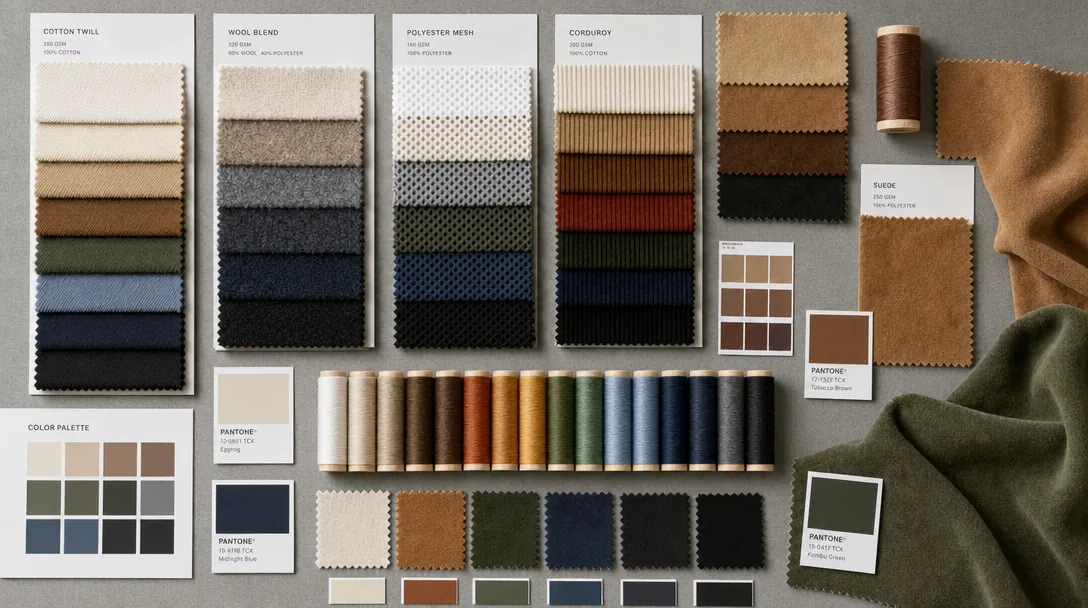
Sustainable Custom Hats: Eco-Friendly Materials, Recycled Fabrics & Certifications
Read article →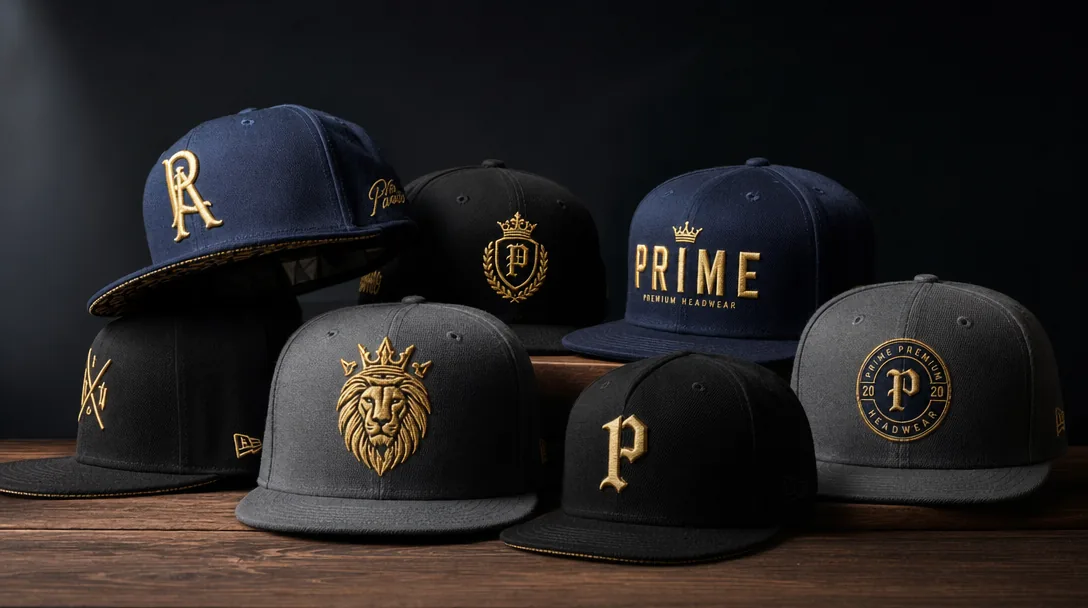
Woven Label Beanie Custom Bulk: A 2026 B2B Sourcing Guide
Read article →Sourcing custom hats does not have to be complicated. With the right manufacturing partner, clear specifications and a small upfront investment in sampling, you can launch a retail-quality product in 30 to 45 days.