
Custom Golf Hats: A Manufacturer's Guide to Performance Headwear
Every week, our sales team answers detailed questions about custom golf hats: a manufacturer's guide to performance headwear. We wrote this guide so that wholesalers, streetwear brands, corporate buyers and promotional resellers can compare options with full information, and avoid the traps that show up only after production has started.
The golf-specific silhouettes that dominate retail and tournament programs
The best-selling silhouettes in golf are still the ones that solve a real on-course problem. A performance baseball cap with a curved brim is the default for driving range work and casual member wear because it blocks sun, handles sweat, and keeps its shape after repeated laundering. A 5-panel low-profile golf cap sits lower on the head than a standard 6-panel dad cap, which matters when players want less wind drag and a cleaner line under sunglasses. For custom golf hats, those two shapes account for most club orders because they read as athletic without looking overly technical, and they take front embroidery or a woven patch cleanly when the logo needs to stay sharp at 60 to 90 mm wide.
Tournament programs usually push more specialized pieces. A rope hat with the rope detail above the brim has become the standard for retro-leaning retail walls and sponsor drops, especially when the buyer wants a sharper fashion signal than a plain performance cap. Performance bucket hats are better for all-day sun coverage on hot, exposed courses; they sell when the brief prioritizes UV protection over a classic tour look, usually in lightweight polyester with a sweatband and quick-dry finish. Visors still move in club shops and women’s programs because they keep the crown open for ventilation, but they need a firmer brim board and cleaner binding to avoid looking cheap after a few wears.
For pro-shop retail and wholesale golf hats, the silhouette choice should match the decoration method, not just the artwork. A custom golf hat with 3D embroidery works best on structured fronts with enough crown height, while sublimated panels or TPU patches fit smoother on low-profile builds and rope hats. At CrownsForge, the same order often splits across custom golf caps for tournament staff, custom golf hats with logo for sponsor giveaways, and a cleaner retail version with tighter QC on stitch density and color match to Pantone TCX. A golf hat manufacturer has to think in these terms because the margin is in reducing rejects, not just chasing trends: a curved-brim cap, bucket, and visor each need different carton packing, seam allowances, and trim sourcing before they can move as reliable wholesale golf hats.
Why golf demands performance fabric (not cotton twill)
Cotton twill is the wrong starting point for golf because it traps water in the yarn structure and keeps it there. Once a player starts sweating, a standard 250-300 GSM cotton crown can gain enough moisture to feel heavy, collapse at the forehead, and stay damp long after the front nine. For custom golf hats, the better base is moisture-wicking polyester, usually a 100-150 GSM microfiber or interlock that moves sweat off the skin and spreads it across a larger surface area for faster evaporation. That matters on a full 18-hole round, especially in humid markets where a hat that dries in 20 to 30 minutes is materially better than one that is still wet at the turn. A good golf hat manufacturer will also pay attention to yarn finish and fabric hand, because a soft touch is not useful if the crown holds heat or clings when the player is on the back nine.
The practical spec is not just "polyester". Golf headwear needs a fabric that balances air permeability, UV resistance, and shape retention after repeated wash and wear cycles. In factory terms, that usually means performance microfiber with a stable knit or woven construction, low shrinkage, and a finish that resists pilling after abrasion from sweat, sunscreen, and repeated packing in a golf bag. If the hat includes a sweatband, the inner tape should pull moisture away from the forehead instead of saturating the front panels. This is where custom golf caps outperform basic promotional caps: they keep the brim structure firm, do not sag when wet, and dry fast enough that the player can wear them again the next morning. For wholesale golf hats, that performance difference is what separates a usable retail program from a giveaway item that ends up in the trunk of a car.
Custom golf hats with logo work best when the fabric supports the decoration method instead of fighting it. Polyester accepts embroidery cleanly, especially on structured fronts, while cotton twill can distort once the panel absorbs moisture and the thread tension changes. That is why we usually specify performance polyester for custom golf hats with logo when the buyer wants a sharp front panel, stable color, and predictable fit across a production run. The color side matters too: golf buyers often want exact team or brand shades, so fabric approval should be checked against Pantone TCX and measured for Delta-E, not judged by eye under warehouse light. If the order is for a retail program, the cost delta from cotton to performance polyester is usually modest, but the reduction in complaints about sweat marks, slow drying, and misshapen crowns is significant. For a custom golf hat that has to survive real play, performance fabric is not a premium extra, it is the baseline.
UPF sun protection for golf programs
Most performance polyester lands at UPF 30+ without much drama because the weave is tight enough to block a good share of UVA and UVB. That is fine for basic tournament merch, but it is not the same as a certified UPF 50+ program. Once buyers in Australia, Florida, Arizona, or Hawaii start writing sun-safety into the spec sheet, custom golf hats need a treated fabric, not just a decent knit. In practice that means a coated or chemically finished polyester, usually 160 to 220 gsm, with dark or medium shades holding the rating more consistently than pale colors. If the brief calls for custom golf hats with logo, the logo method matters too: high-density embroidery can punch holes into a light crown, while heat transfer or patch placement may preserve the fabric rating better on the finished custom golf hat.
For a golf hat manufacturer, the test route is straightforward but not cheap. AS/NZS 4399 is the reference most programs ask for, and SGS or BV usually charges about $300 to $500 per SKU, depending on colorways and whether the lab wants fabric-only or finished-garment samples. That cost is manageable on wholesale golf hats, but it becomes a problem if a buyer keeps splitting the line into too many trims, panels, or closures. The right approach is to lock the shell fabric first, then keep the bill of materials stable across sizes and decoration methods. CrownsForge’s standard practice is to treat UPF as a fabric selection issue, not an afterthought, because once the crown construction changes, the test result can move with it. Most custom golf caps sold into compliance-heavy programs should be planned with documentation, not just a style image.
Moisture-wicking sweatband: the detail buyers don't notice until summer
For custom golf hats, the sweatband is where comfort is won or lost, and most buyers ignore it until midsummer complaints start coming back from the course. A standard cotton sweatband will load up with perspiration within 9 holes in hot, humid weather, then it stays damp and starts feeling heavy, salty, and abrasive against the forehead. A polyester-elastane wicking sweatband solves that by pulling moisture off the skin and spreading it across the cap structure so it can evaporate faster. In production, that usually means a 35 to 45 mm band with a brushed face, a more stable knit back, and clean topstitching so it does not curl after repeated wash cycles. The material upgrade adds about $0.15 to $0.25 per cap depending on the trim spec and order quantity, which is a small line item compared with the cost of returns or bad pro-shop feedback.
For a golf hat manufacturer, this is not an optional premium feature; it is standard practice on pro-shop programs and on most custom golf hats with logo orders that need to hold up through a full season. The difference shows up fastest in sweat-heavy rounds, where a cheap cotton band can feel saturated before the back nine while a wicking band keeps the crown lighter and the fit more stable. On wholesale golf hats, we usually spec the sweatband alongside the crown fabric, because a 100% cotton twill shell behaves differently than a polyester performance shell and the trim has to match the use case. If the customer is ordering custom golf caps for retail, club resale, or tournament giveaways, this detail is worth carrying through the whole program; otherwise the cap may look correct on the rack but fail where the golfer actually feels it.
Rope hats: why this silhouette became the golf hero category
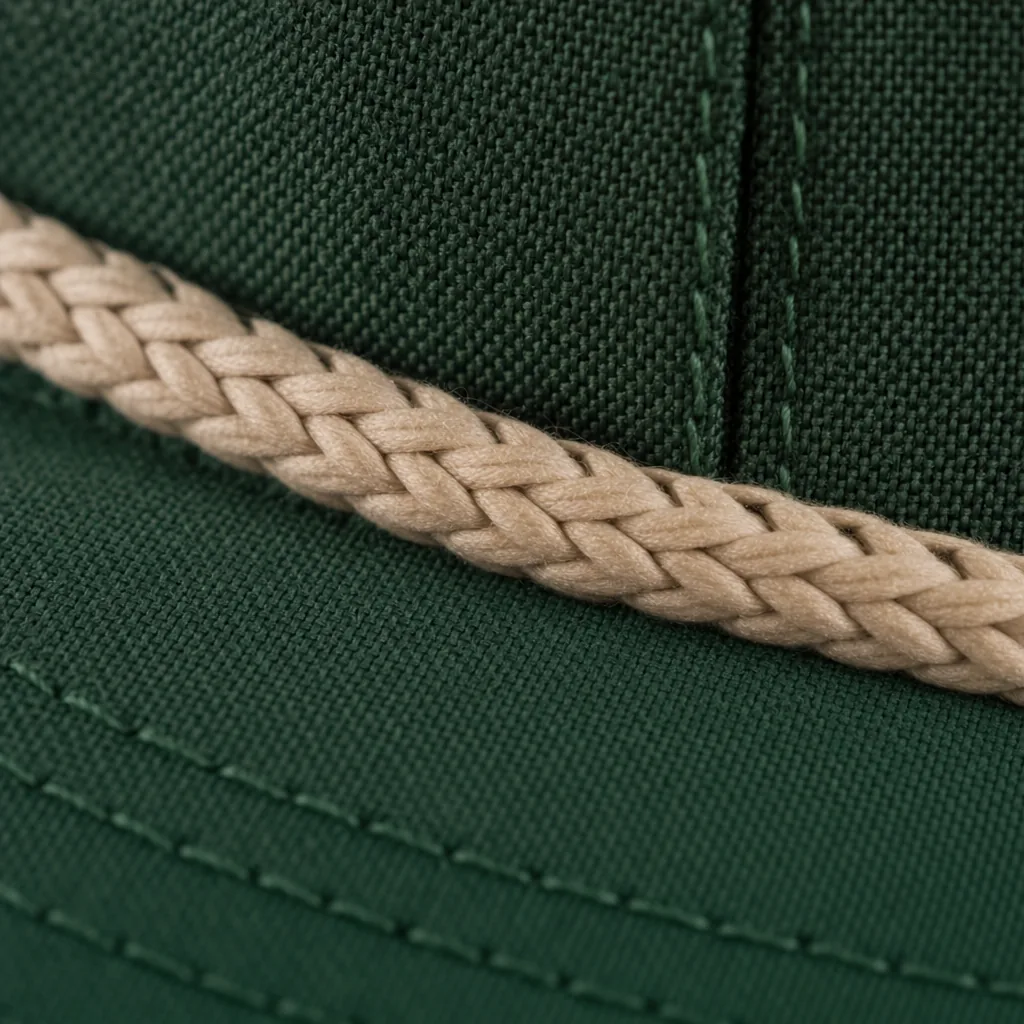
Rope hats moved from a niche fishing and sailing silhouette into the center of golf because they solved a simple problem: they look sharp on camera without giving up the low-fuss wearability players want in heat. The modern version is usually a 5-panel or 6-panel cap with a structured front, a contrast rope above the brim, and a medium profile that sits cleaner than a deep trucker. Imperial, Melin, and Branded Bills pushed the style into golf retail, but the reason it stuck is practical: it reads like a premium casual hat, not a locker-room afterthought. For custom golf hats, that matters because buyers want something that feels current but still works for pro shop assortments, tournament merch, and lifestyle drops.
From a golf hat manufacturer perspective, rope hats are straightforward to build but easy to get wrong if the crown shape, rope thickness, and brim curve are not controlled. The best custom golf caps usually use nylon or performance polyester, sometimes with laser-perf side panels, a moisture-wicking sweatband, and an unlined front panel so the embroidery does not buckle. Custom golf hats with logo work well here because the front panel is broad enough for 3D puff, flat stitch, or a clean woven patch. For wholesale golf hats, MOQ 100 pieces is realistic for this silhouette, which makes it useful for smaller clubs, streetwear founders, and promotional buyers who want a custom golf hat that does not look like generic stock headwear.
Tournament + club merchandise compliance and timing
Major tournaments and club programs do not tolerate loose timing. For PGA member events, club championships, and charity tournaments, the safe window is 90 to 120 days before delivery, because approval cycles eat time fast: artwork sign-off, thread matching, panel sampling, and packaging spec review all happen before production starts. If the buyer wants custom golf hats with logo placement, the first thing we lock is the color standard, usually Pantone TCX for fabric and a thread chart with Delta-E kept tight enough that the pro shop does not see obvious drift under daylight. A golf hat manufacturer that works this business seriously should be asking for final artwork, sponsor approvals, and PO confirmation early, not after the sample is already on the table.
For custom golf caps tied to tournament branding, the failure points are predictable: a washed-out navy, a visor curve that looks wrong on shelf, or embroidery that distorts on structured front panels. The production path is usually 7 to 10 days for proto/sample development, 20 to 35 days for bulk on standard twill or performance polyester, then another week for final inspection and carton labeling. If the order includes multiple sizes, mixed closures, or UV-performance fabrics, add buffer. In practice, wholesale golf hats for club programs should be booked with a firm tolerance on stitch count, crown height, and closure type, because changing those details after lab dip approval usually resets the clock and the cost.
Retail timing is even less forgiving. Pro-shop calendars are seasonal, so inventory for May through September should be ordered by January if the buyer wants a clean landing before member events and spring sales. That matters for custom golf hats because sell-through depends on having the right color run and the right logo variant in stock when traffic peaks. At CrownsForge, the standard practice is to confirm packing format, carton marks, and inspection level before bulk starts, then run AQL 2.5 on final goods so the shipment does not get held up by avoidable defects. For wholesale golf hats, the smartest buyers treat timing, compliance, and color matching as one workflow, not three separate problems.
Working with CrownsForge on golf programs
Most golf programs fail at the fabric stage, not the logo stage. For custom golf hats, the shell fabric has to survive UV, sweat salt, and repeated clubhouse laundering without turning shiny or skewing color. Our working library covers 110-160 gsm performance polyester, including birdseye mesh, heather interlock, and 75D x 150D mechanical-stretch dobby for structured 5-panel and low-profile 6-panel silhouettes. We normally match body and visor within Delta-E 1.0-1.5 against Pantone TCX references, because a front panel that drifts warm under sunlight will make even clean embroidery look cheap. Moisture-wicking sweatbands are a standard option rather than an upsell; the common build is a 35 mm brushed polyester band with quick-dry finish, or a 37 mm Coolmax-style knit when the buyer wants faster evaporation and softer handfeel. On landed cost, a basic custom golf hat in this category usually sits around $2.85-$4.20 FOB Yiwu at 1,200 pieces, while recycled yarns, laser-perf side panels, or specialty closures can push it closer to $4.80-$5.60 before freight.
UPF claims need paperwork, not assumptions. When buyers ask for custom golf hats with logo that can legitimately sell as sun-protection product, the clean route is fabric-first testing through Intertek or SGS to AATCC 183, then confirming the finished cap still meets target performance after fusing, embroidery needle penetration, and vent-hole construction. A lightweight white birdseye polyester may only clear UPF 30 unless the yarn density is tightened, while a darker 130 gsm dobby or laminated microfiber often reaches UPF 50+ more consistently. At CrownsForge, our standard practice is to flag any front-panel decoration above 10,000 stitches on low-profile crowns, because dense embroidery can distort the crown line and create a hot spot right where golfers notice pressure after 18 holes. For that reason, we often steer programs toward run-stitch outlines, applique patches, or HD silicone transfers when the art is wide. On the production side, sample lead time is typically 7-12 days including strike-off approval, and bulk runs land in 25-32 days once fit, color, and trim are signed off.
Rope styles look simple until the details drift, and that is where an experienced golf hat manufacturer earns its keep. Rope-hat tooling on file matters because the spacing between the visor seam and the braid has to stay consistent within about 2 mm, otherwise the cap looks off-spec the moment cartons are opened. For custom golf caps, we usually hold 3 mm and 5 mm rope options in polypropylene braid and cotton-poly blends, with crown templates already balanced for semi-curve visors and shallower golf fits. Decoration on these bodies is optimized for low-profile crowns, so the safer window is 5-6 mm embroidery height on Tajima or Barudan heads rather than oversized 3D puff that fights the front-panel angle. Buyers sourcing wholesale golf hats should also ask about packing method early: 24 pcs per inner with crown support saves shape but adds roughly $0.06-$0.09 per cap, while flat-packed bulk cartons can cut freight cube at the cost of more reshaping on arrival. For FOB Yiwu programs, that tradeoff often matters as much as the unit price.
Frequently Asked Questions
Do you support sustainability certifications?
Yes. We work with GOTS organic cotton, GRS-certified recycled polyester, OEKO-TEX Standard 100 fabrics, and are BSCI and Sedex audited. Certification documentation can be provided per order.
Which shipping methods do you support?
We support FOB, CIF and DDP shipping. Air express for samples and small orders, sea LCL for 100 to 500 pieces, sea FCL for 5,000+ pieces. Door-to-door DDP available for US, EU, UK, Canada and Australia.
How long does production take?
Sampling takes 7 to 12 days. Bulk production runs 20 to 30 days depending on quantity, fabric availability and decoration complexity. Inspection and packing adds another 3 to 5 days before shipment.
What is the minimum order quantity (MOQ) for custom hats?
Our standard MOQ is 100 pieces per design and color, with sampling available from 1 piece. For complex multi-color logos or premium fabric upgrades, the MOQ can be lowered with a small per-piece surcharge.
What logo decoration techniques do you offer?
3D puff embroidery, flat embroidery, woven patch, leather patch, PVC patch, screen printing, sublimation, applique and laser etching, all in-house with no subcontracting.
What's the MOQ for custom embroidered baseball caps no minimum?
When evaluating custom embroidered baseball caps no minimum, the key considerations are construction quality, decoration capability, MOQ flexibility and lead time. Performance baseball cap with curved brim, 5-panel low-profile golf cap, rope hat with rope detail above the brim, performance bucket hat, and visor. Each has a specific use case — driving range, tournament play, club merchandise programs and pro-shop retail. Standard cotton twill absorbs perspiration and stays heavy. Golf demands moisture-wicking polyester (typically…
How does ordering baseball cap custom logo work?
When evaluating baseball cap custom logo, the key considerations are construction quality, decoration capability, MOQ flexibility and lead time. Performance baseball cap with curved brim, 5-panel low-profile golf cap, rope hat with rope detail above the brim, performance bucket hat, and visor. Each has a specific use case — driving range, tournament play, club merchandise programs and pro-shop retail. Standard cotton sweatband saturates within 9 holes of summer play; polyester-elastane wicking sweatband moves…
How does ordering custom baseball team hats work?
When evaluating custom baseball team hats, the key considerations are construction quality, decoration capability, MOQ flexibility and lead time. Performance baseball cap with curved brim, 5-panel low-profile golf cap, rope hat with rope detail above the brim, performance bucket hat, and visor. Each has a specific use case — driving range, tournament play, club merchandise programs and pro-shop retail. Rope hats (a 5-panel or 6-panel cap with decorative rope above the brim, often in contrast color) became the golf…
What's the MOQ for custom logo hats no minimum?
When evaluating custom logo hats no minimum, the key considerations are construction quality, decoration capability, MOQ flexibility and lead time. Rope hats (a 5-panel or 6-panel cap with decorative rope above the brim, often in contrast color) became the golf cap of the 2020s. Originally a fishing/outdoor silhouette adopted by Imperial, Melin and Branded Bills. We produce equivalents at MOQ 100 pieces. Performance baseball cap with curved brim, 5-panel low-profile golf cap, rope hat with rope detail above the brim,…
Ready to start your custom hat project?
Send us your tech-pack, sketch or even just an inspiration photo. We will respond with a detailed quotation and digital mock-up within 24 hours.
Request a free quoteRelated guides
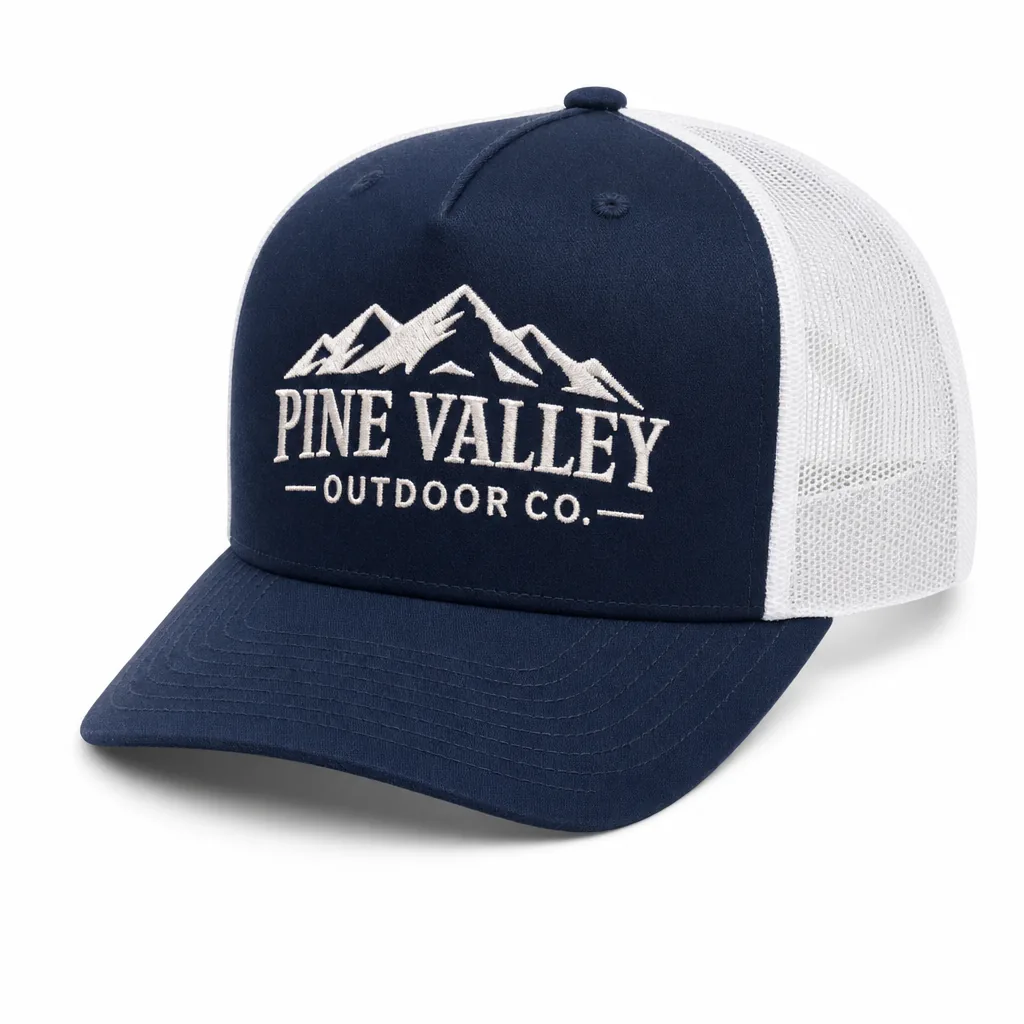
Wholesale Trucker Hats with Custom Logo: A Complete Bulk Sourcing Playbook
Read article →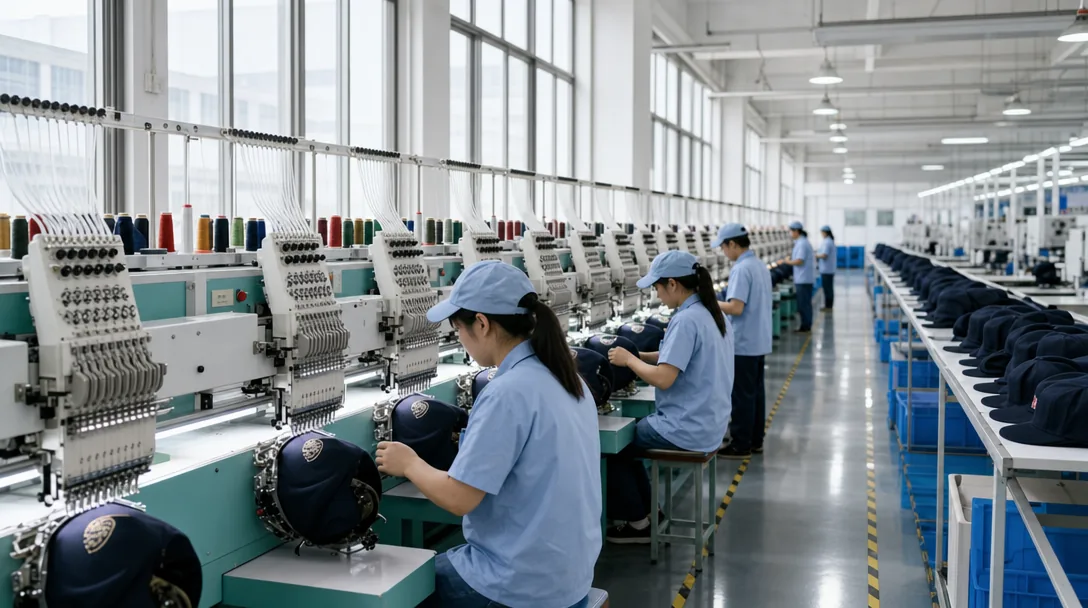
Custom Hat Order Lead Time: From Sample to Delivery Explained
Read article →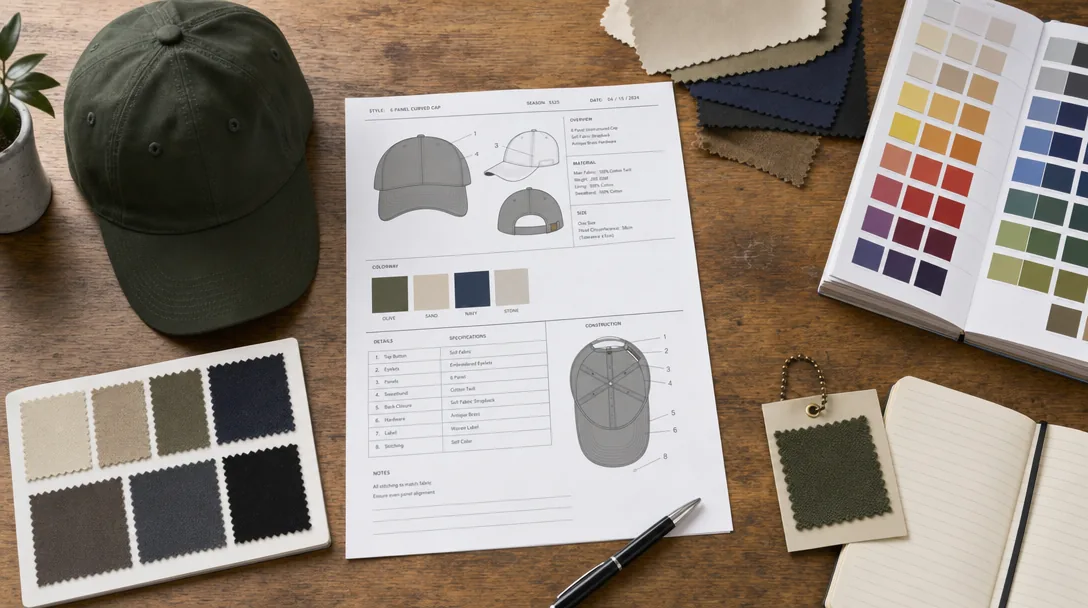
Switching Hat Manufacturers Mid-Program Without Losing Quality
Read article →Sourcing custom hats does not have to be complicated. With the right manufacturing partner, clear specifications and a small upfront investment in sampling, you can launch a retail-quality product in 30 to 45 days.