
Custom Hat Order Lead Time: From Sample to Delivery Explained
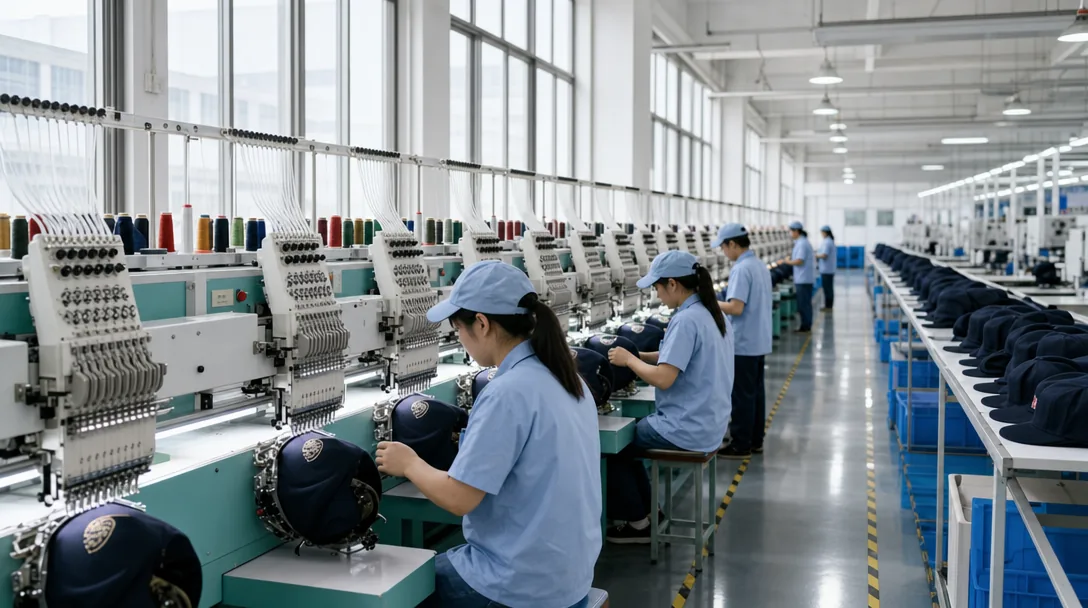
For brand owners, wholesalers and procurement teams entering the custom headwear category, custom hat order lead time: from sample to delivery explained is one of the highest-leverage decisions you will make. Get it right and your unit economics, retail story and reorder cycle all improve. Get it wrong and you carry the cost for years.
The 4 phases of a hat order
The real custom hat lead time starts with sampling, and this is where most buyers underestimate the calendar. A decent sample lead time is usually 5 to 10 working days for a straightforward 6-panel cap with existing patterns, but if you need new panel shapes, 3D puff embroidery, or a fresh Pantone TCX match, add time for digitizing, strike-offs, and thread approval. On the factory floor, I care less about the promised date and more about whether the tech pack is complete: crown height, visor curve, stitch count, label placement, and closure type. If any of those are vague, the sample loop stretches fast because every small change resets the machine setup and approval chain.
Bulk production is where the hat production schedule becomes real, because material arrival and line balancing control the pace more than sewing speed. For a standard custom trucker hat bulk order, bulk cap production days are often 12 to 20 days after PP approval and deposit, assuming the mesh, foam, sweatband, and back closures are already booked. A China hat factory lead time can slip if one component is delayed; I have seen one missing plastic snapback lock hold up an entire carton run. On embroidered orders, Tajima, Barudan, or ZSK heads can run fast, but only after the digitizing file is stable and the thread tension is set so you do not get loose loops or needle strikes.
Inspection, packing, and shipping are the phase buyers forget to budget, yet they can add 3 to 7 working days before the cartons leave the building. Our standard practice is AQL 2.5 inspection on size, stitching, embroidery alignment, color delta, and carton count, then polybagging, dozen packing, and master carton labeling for export. If the order is going FOB, the ship date depends on vessel cut-off; if it is DDP, you also need to factor in customs clearance, local trucking, and last-mile delivery, which is why a realistic custom hat lead time is never just the sewing days. Air freight can move in 5 to 8 days door to door, while ocean freight from Ningbo or Shanghai to the U.S. West Coast often lands around 18 to 28 days after sailing, depending on the route and congestion.
Sampling: 7-12 days realistic
A realistic sample lead time for a custom hat is 7-12 days, and that assumes the artwork is usable on day one. The clock usually starts with digitizing if the logo will be embroidered: a clean left-chest style mark might take 3-6 hours to digitize, but a dense 3D puff front can take longer because stitch direction, underlay, and pull compensation all have to be tuned before anyone touches fabric. For printed patches or woven labels, the bottleneck is often material matching, not the sewing itself. If the client wants Pantone TCX alignment on twill or brushed cotton, we first pull greige or dyed stock, then check shade tolerance against a standard light box, because a 1.0-1.5 Delta-E miss is visible on a cap bill even when it looks fine on a monitor.
The actual hand-built sample is not a production cap; it is a controlled test piece, usually made on the same crown blocks, buckram weight, sweatband spec, and closure type intended for the order. On the factory floor, one sample can bounce between embroidery heads, cutting, sewing, and pressing before it is approved, especially for a custom trucker hat bulk order where foam front, mesh back, and curve shape all need to hold together after washing and packing. If the first sample comes back with a tilted front panel, loose seam allowance, or an off-center patch, you lose another 1-2 days fixing it. In practice, the custom hat lead time at sampling stage is less about sewing speed and more about how fast the buyer can confirm details without changing the spec sheet midstream.
Courier time is the last piece people forget when they ask for a China hat factory lead time. Even if the sample is finished on day 8, international express to the U.S. or Europe usually adds 3-5 more days depending on routing, customs, and whether the buyer wants a pre-production sample or a sales sample. For urgent programs, we will sometimes ship the sample separately by DHL while the hat production schedule is already being queued for bulk cap production days, but that only works if the approval is expected to be clean. If the buyer is still debating fabric weight, visor curve, or closure type after the sample arrives, the calendar slips immediately because every revision resets the sampling cycle and pushes the bulk order behind it.
Bulk production: 20-30 days
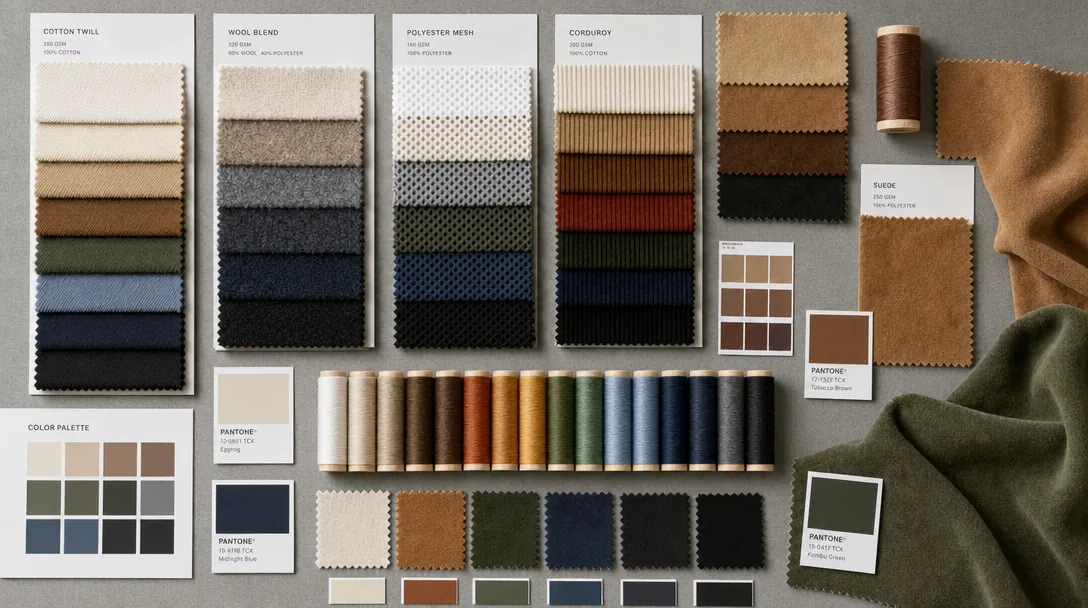
Bulk production is where the clock gets real, and for a normal custom hat lead time, 20-30 days is the range that makes sense for a clean order with standard materials already available in Yiwu. The first bottleneck is fabric procurement: 100% cotton twill, brushed cotton, washed denim, nylon, or polyester mesh can all be sourced quickly, but if you want a specific 320 gsm cotton twill, a custom dyed crown fabric, or a matching mesh backed to a Pantone TCX color, you lose time waiting for shade approval and mill delivery. On a typical hat production schedule, day 1-3 is fabric receiving and inspection, then marker making, panel cutting, and panel bundling. If the bill of materials includes a nonstandard sweatband, woven label, or special closure like a matte black tri-glide, those trims need to be checked before cutting starts, because one missing component can freeze the entire line.
Embroidery and sewing usually decide whether the order finishes on time or drifts past the promised custom hat lead time. A standard six-panel cap might run on Tajima, Barudan, or ZSK heads with 12,000-15,000 stitches per panel logo, but dense 3D puff, small text, or multi-color gradients slow down throughput and raise defect risk. In a clean bulk cap production days schedule, embroidery is normally done before front panel assembly so the shape stays stable, then panels move to crown sewing, peak stitching, eyelet punching, and taping. For a custom trucker hat bulk order, the mesh back and foam front require different handling than a cotton dad cap, and the sewing team has to watch thread tension, seam alignment, and visor curve because rework eats half a day per batch if the first operation is off by 2-3 mm.
Finishing is where factories either protect the shipment date or create a last-minute fire drill. After sewing, each cap goes through trimming, logo cleaning, button setting, final pressing, and metal detector or needle check if the buyer requires it; then cartons are packed by size ratio, style, and colorway. A realistic China hat factory lead time also includes in-line quality control and final AQL 2.5 inspection, because a batch with crooked crowns, uneven topstitching, or a Delta-E color mismatch above 2.0 should be caught before loading, not after arrival. If the artwork changes after PPS approval or the buyer asks to split the shipment into partial deliveries, the schedule slips fast. That is why the fastest orders are the ones that lock fabric, trims, embroidery file, and size spec before bulk starts, not after the line is already running.
Inspection & packing: 3-5 days
Inspection is where a lot of “fast” orders quietly slow down, because every defect found here has to be sorted before cartons close. For a normal custom hat lead time, I budget 3 to 5 days for in-line QC plus final QC, depending on order size and decoration complexity. On the factory floor, that means checking stitch density, panel alignment, crown height, brim curve, thread trimming, label placement, and color matching against the approved sample or Pantone callout. For embroidery jobs, we also inspect thread breaks, registration, and puckering under proper lighting, not just by eye at the packing table. If the hat is part of a custom trucker hat bulk order, mesh consistency and foam front shape matter as much as logo quality, because those defects show up fast once cartons are opened.
Final inspection should be run to AQL 2.5 for major defects and tighter where the buyer asks for retail distribution. In practice, that means random sampling from finished goods, not cherry-picking from the top carton. We count against the full lot, verify size ratios, and confirm carton marks, polybag thickness, barcode labels, hangtags, and insert cards if the order is retail-ready. A sloppy hat production schedule often ignores this step, then pays for it later in chargebacks or returns. For a China hat factory lead time, I always tell buyers to treat inspection as part of production, not an afterthought, because once the goods are packed and sealed, any correction becomes expensive rework instead of a 10-minute fix.
Packing usually takes longer than people expect because retail-ready packaging has its own labor sequence: folding, tissue insertion, barcode scan, carton count, desiccant if required, and moisture-safe sealing for ocean transit. If the buyer wants individual polybags, size stickers, master cartons, and export marks aligned with Amazon, wholesale, or team-store requirements, that adds real time to the schedule. On a clean run, 3 to 5 days is realistic for bulk cap production days at scale, but only if approval samples, carton specs, and packaging instructions are already locked. In my experience, the biggest delay is not the packing itself; it is waiting for last-minute artwork changes or missing label data after inspection has already passed.
Sea vs air shipping timelines
Air express is the fastest way to move finished caps, but it is rarely the cheapest once you get past a few hundred cartons. For a standard custom trucker hat bulk order, courier line-haul from South China to the U.S. West Coast usually lands in 5–7 days door-to-door if customs clears cleanly. That timing only works when the cartons are packed, labeled, and handed off with accurate commercial invoices, HS codes, and consignee details. If the paperwork is sloppy, you lose the advantage fast, and the custom hat lead time suddenly stretches because the freight is waiting at the airport instead of moving.
Sea freight is slower but much more predictable on cost. For LCL, the practical door-to-door window is 30–40 days because you are waiting on consolidation, deconsolidation, and terminal handling at both ends. FCL is usually better at 25–35 days door-to-door, especially if you are shipping a full 20GP or 40HQ and the forwarder has a direct sailing route. In a real hat production schedule, the cargo booking date matters almost as much as the stitching date, because missing one vessel can add a full week to the China hat factory lead time before the boxes ever leave Ningbo or Shanghai.
When buyers ask about bulk cap production days, they often forget that freight mode changes the true delivery promise more than the sewing line does. A factory may finish the run in 12–18 working days, but if the shipment is going by sea, the door date is still governed by the vessel cutoff, export truck transit, and destination port congestion. Our standard practice is to separate sample lead time, production completion, and freight transit into three line items, because that is the only honest way to quote custom hat lead time without surprises. If you need retail launch certainty, build in buffer for customs exam, inland delivery, and at least one missed sailing in peak season.
How to compress lead time in a rush
The fastest way to shorten custom hat lead time is to stop treating every step as a queue. If you already know the fabric family, pre-book it before artwork is even final. For common programs like 100% cotton twill, 100% polyester mesh, or foam front panels for a custom trucker hat bulk order, I reserve grey goods and trims first, then lock the hat production schedule around those arrivals. That can shave 5 to 8 calendar days off a normal cycle, especially when mills are sitting on stock in Ningbo or Shaoxing. If you wait until PO confirmation to start sourcing, you lose the first week to fabric matching, dye-lot checks, and trim replenishment, which is where rushed orders usually die.
Parallel processing matters more than overtime. A disciplined factory will run sample lead time, logo digitizing, panel cutting, and carton planning at the same time instead of in sequence. For example, while the buyer approves the 3D mockup, the embroidery team can digitize for Tajima or Barudan heads, and the QC team can pre-set AQL 2.5 checkpoints for stitch density, crown symmetry, and color tolerance under Pantone TCX. On a standard program, bulk cap production days are often 12 to 18 days for 3,000 to 5,000 units, but a well-managed rush can cut 3 to 4 days simply by overlapping tasks that many low-end factories keep separate. The real custom hat lead time bottleneck is usually approval latency, not sewing capacity.
For urgent freight, use partial air shipment instead of trying to air-freight everything. Ship the first 10% to 20% of finished goods by air for launch or retail deadlines, then move the balance by sea or rail once the booking clears. That approach is common when the China hat factory lead time is acceptable but the delivery window is not. Airing only the top sizes or first colorway can protect a retailer’s launch date without blowing the margin on the entire order. On a 10,000-piece run, moving 1,000 to 1,500 pieces by air can add roughly USD 1.20 to 2.80 per unit on top of FOB, while the remaining cartons travel by ocean at normal freight rates. It is not cheap, but it is usually cheaper than missing a sell-through window or paying for lost shelf space.
Frequently Asked Questions
What logo decoration techniques do you offer?
3D puff embroidery, flat embroidery, woven patch, leather patch, PVC patch, screen printing, sublimation, applique and laser etching, all in-house with no subcontracting.
Which shipping methods do you support?
We support FOB, CIF and DDP shipping. Air express for samples and small orders, sea LCL for 100 to 500 pieces, sea FCL for 5,000+ pieces. Door-to-door DDP available for US, EU, UK, Canada and Australia.
Do you support sustainability certifications?
Yes. We work with GOTS organic cotton, GRS-certified recycled polyester, OEKO-TEX Standard 100 fabrics, and are BSCI and Sedex audited. Certification documentation can be provided per order.
What file format should I send for my logo?
Vector files (AI, EPS, PDF) are ideal. High-resolution PNG or JPG at 300 dpi on transparent background works as a fallback. Provide Pantone color references for accurate reproduction.
How long does production take?
Sampling takes 7 to 12 days. Bulk production runs 20 to 30 days depending on quantity, fabric availability and decoration complexity. Inspection and packing adds another 3 to 5 days before shipment.
How does ordering baseball cap custom embroidery work?
When evaluating baseball cap custom embroidery, the key considerations are construction quality, decoration capability, MOQ flexibility and lead time. Fabric procurement, panel cutting, embroidery, sewing, finishing. Sampling, bulk production, inspection & packing, shipping.
How does ordering custom embroidered baseball hats work?
When evaluating custom embroidered baseball hats, the key considerations are construction quality, decoration capability, MOQ flexibility and lead time. Sampling, bulk production, inspection & packing, shipping. Digitizing, fabric prep, hand-sewing the sample, courier shipping to client.
How does ordering custom embroidered trucker hat work?
When evaluating custom embroidered trucker hat, the key considerations are construction quality, decoration capability, MOQ flexibility and lead time. Sampling, bulk production, inspection & packing, shipping. Digitizing, fabric prep, hand-sewing the sample, courier shipping to client.
What should I know about bulk custom trucker hats?
When evaluating bulk custom trucker hats, the key considerations are construction quality, decoration capability, MOQ flexibility and lead time. Sampling, bulk production, inspection & packing, shipping. Digitizing, fabric prep, hand-sewing the sample, courier shipping to client.
Need a low-MOQ test order?
We help emerging brands launch with as few as 100 pieces. Premium fabric, in-house embroidery, retail-ready packaging.
Start a small orderRelated guides
Bucket Hat Women: Properties, Costs and How to Spec It Right
Read article →
Custom Logo Hats: When to Use It, Costs, and What to Ask Your Factory
Read article →Sustainable Cap Packaging: Options, Costs and Retail-Buyer Demands
Read article →If you are ready to take the next step on custom hat order lead time: from sample to delivery explained, our team can put a tailored quotation and digital mock-up in your inbox within 24 hours. Send the inquiry form on our contact page or message us directly on WhatsApp.