
Custom Golf Hats: A Manufacturer's Guide to Performance Headwear - Cost & MOQ Breakdown - Cost & MOQ Breakdown
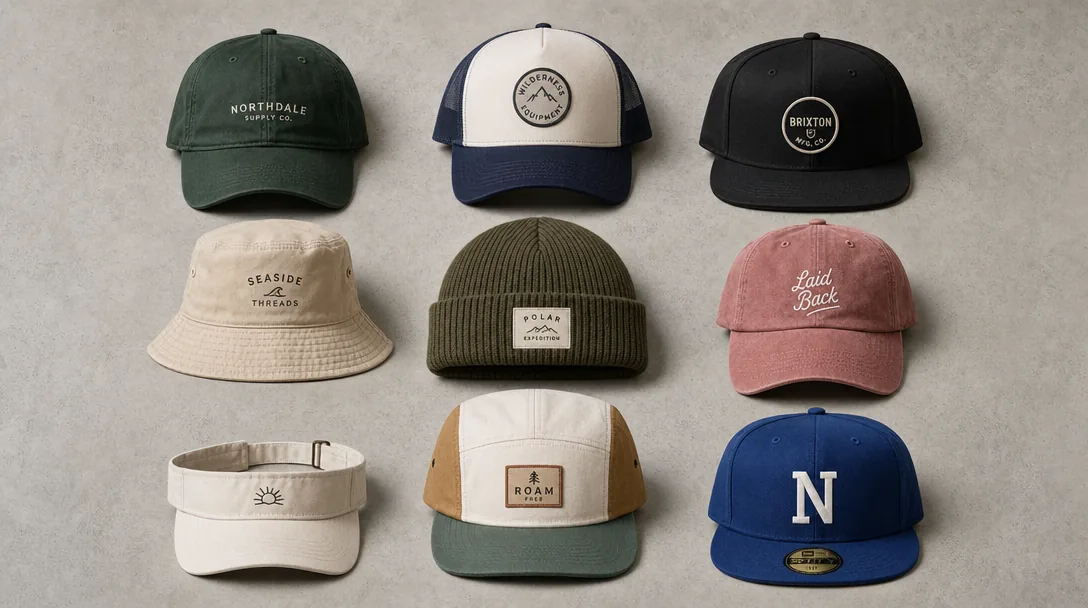
For brand owners, wholesalers and procurement teams entering the custom headwear category, custom golf hats: a manufacturer's guide to performance headwear - cost & moq breakdown - cost & moq breakdown is one of the highest-leverage decisions you will make. Get it right and your unit economics, retail story and reorder cycle all improve. Get it wrong and you carry the cost for years.
The golf-specific silhouettes that dominate retail and tournament programs
The curved-brim performance cap still owns the bulk of tournament, resort, and club-logo volume because it fits the widest range of head shapes and gives buyers the fewest wear complaints over 18 holes. In factory terms, that usually means a 6-panel low- or mid-profile silhouette with a 58-60 cm standard head spec, front-panel height around 16.5-17.5 cm, and a pre-curved visor using a 2.0-2.2 mm PE insert. The most stable builds are cut from 92/8 polyester-spandex twill at 180-220 gsm, 130-160 gsm microfiber, or laser-perforated woven polyester, then paired with a moisture-management sweatband and low-bulk seam construction at the side joins. Buyers sourcing custom golf hats should focus less on trend language and more on recovery, panel tension, and brim memory; a cap that bags out after a rain delay or cart ride gets reordered once, then dropped. At 300-1,000 pieces, a solid mid-tier spec usually lands around $3.20-$5.80 FOB China, with practical MOQs starting at 144 pieces per colorway.
The strongest retail shift has been toward low-profile 5-panel caps and rope hats, especially in member-guest programs, resort shops, and younger private-label collections. A proper golf 5-panel is not a recycled streetwear block: front-panel height is usually held at 8.5-9.5 cm, the crown angle is softened, and the visor is moderately curved so the silhouette works with performance polos instead of looking flat and oversized. Common materials are 70D-150D taslon, poly-nylon blends, and brushed technical twill, finished with snapback, micro hook-and-loop, or molded TPU strap closures. Decoration choice matters more here than many buyers expect. Flat embroidery is still the safest option on Tajima or Barudan heads, while woven badges hold edge definition below 1.0 mm line width better than direct embroidery, and molded TPU patches resist sweat and sunscreen better than low-grade PVC. Rope styles typically use a 3-5 mm braided polyester cord above the visor; once buyers start customizing rope color, underbrim, seam tape, and closure, MOQ usually moves to 200-300 pieces and FOB pricing settles around $4.10-$6.90 depending on trim complexity and fabric source.
Bucket hats and visors remain smaller-volume silhouettes, but they solve specific on-course problems better than standard caps. Performance bucket hats are strongest for caddie uniforms, summer events, and sun-heavy resort programs because they cover the ears and upper neck without creating the heat buildup of a structured crown. The better specs use 110-140 gsm quick-dry polyester, side mesh vents, and a brim stiffener that survives carton packing without taking a permanent wave. Visors still work for marshal uniforms, range promotions, and players who hate crown heat, but they fail quickly when the sweatband is underbuilt. On white and pastel visors especially, salt migration and sunscreen staining show up fast, so foam density, sweatband face fabric, and color-control discipline matter more than most buyers budget for. In our standard practice, visible light-color components are checked against Pantone TCX references with a target Delta-E of roughly 1.5-2.0. Typical MOQs run 150-300 pieces per style; visors usually quote at $2.60-$4.20 FOB, while technical bucket hats land closer to $4.80-$7.50 depending on mesh panels, chin cords, and custom-dyed trims.
Why golf demands performance fabric (not cotton twill)
Cotton twill is the wrong baseline for serious golf headwear because it absorbs sweat instead of transporting it. A brushed cotton twill shell usually runs 220 to 280 gsm, and after nine holes in 30°C to 32°C weather it can pick up enough moisture to feel heavier, soften at the front panel, and stay wet along the forehead seam. On the factory floor, that shows up fast in wear trials: darker sweat marks, slower dry-down, and a crown that loses its clean shape after being stuffed into a golf bag. For custom golf hats, the practical starting point is lighter woven polyester—microfiber, dobby, or mini-ripstop at roughly 110 to 150 gsm—typically built from 50D to 75D filament yarns. Those fabrics spread moisture across the face of the cloth, so evaporation happens on the surface instead of deep in the yarn bundle. The result is a cap that dries faster, runs cooler in direct sun, and rebounds better after packing, which matters far more on a course than it does in a showroom sample review.
Performance on a golf cap is not a hangtag claim; it is measurable in dry time, air permeability, stretch recovery, and how the color holds after sweat, sunblock, and UV exposure. Better programs use mechanical-stretch woven polyester or polyester blended with 8% to 12% spandex, then add laser-perforated side panels or 120 to 140 gsm warp-knit mesh and a moisture-management sweatband in polyester interlock. Decoration has to be engineered around that shell. Dense satin embroidery on ultralight microfiber will pucker unless the digitizing, underlay, and backing are reduced correctly; on Tajima or Barudan machines, lower-density fills, small appliqué, or silicone heat transfer usually hold shape better on custom golf hats with clean corporate or club logos. That is also why the cost gap is real: a basic cotton promotional cap may land around $2.20 to $3.20 FOB at volume, while a true golf build with perforation, technical sweatband, structured support, and performance-compatible branding more often runs $4.10 to $6.80 FOB depending on MOQ and logo method.
Golf is unforgiving because the same hat sees perspiration salts, sunscreen, light rain, repeated packing, and long UV exposure in a single week. Cotton twill tends to salt out, fade, and stiffen at the front seam, especially in white, stone, and pastel shades where staining becomes visible after only a few rounds. Better polyester programs are approved against Pantone TCX references, with fabric shade tolerance usually controlled to Delta-E 1.0 to 1.5, then checked for colorfastness to perspiration, crocking, and light before bulk cutting. At CrownsForge, we reject golf fabrics that look acceptable under factory LEDs but shift noticeably outdoors. Buyers comparing custom golf hats to standard promo caps from a photo often miss this point: day-one appearance can be close, but after ten rounds the wear difference is obvious in color, crown shape, and comfort.
UPF sun protection for golf programs
Do not assume a lightweight performance cap is automatically UPF 50+. A lot of golf headwear tests only in the UPF 30-40 range on construction alone, especially 120-160 gsm microfiber polyester and birdseye knits in light colors. Once you add laser-perforated side panels, soft mesh, or a white crown with a low cover factor, the rating can drop fast. For custom golf hats going into high-UV markets like Australia, Arizona, Florida, or Hawaii, the right move is to lock in tested UPF 50+ fabric at RFQ stage, not after the proto is approved. On a standard 6-panel performance cap, the mill upcharge is usually around $0.18-$0.45 per hat; missing it early can cost 3-5 weeks later if booked greige goods or dyed bulk fabric has to be replaced. I also push buyers to spec a black or charcoal undervisor on golf styles, because it cuts reflected glare far better than a matching white underbill and improves playability in a way retail teams often overlook.
How the fabric reaches UPF 50+ matters as much as the label. The better mills get there through tighter filament geometry such as 75D or 100D polyester, higher cover factor, or a UV-absorbing finish that can survive sweat, light laundering, and decoration heat. I do not put much weight on a generic mill declaration, especially when the same cap also claims moisture management or antimicrobial performance; those properties should sit on the same technical data sheet and, ideally, the same SGS, Intertek, or Bureau Veritas report. Heat-applied logos pressed at 150-160°C can shift hand feel and destabilize cheaper finishes, so strike-offs on actual bulk fabric are mandatory. A clean embroidery run on a Tajima, Barudan, or ZSK head only proves the sewing is stable; it says nothing about whether the UV treatment still performs after pressing and wear. Our standard practice is to approve decoration only after testing on production fabric, not lab dips or substitute yardage.
Testing cost and MOQ are where most buyers misjudge UPF programs. AS/NZS 4399 or AATCC 183 testing typically runs $300-$500 per submitted SKU, and labs often define SKU by fabric and color combination rather than by hat shape alone. If a style uses a woven front, perforated side panels, and a separate sandwich visor fabric, the report should reflect the weakest exposure zone, not just a crown swatch that gives the best number. Resort, green-grass, and licensed retail accounts increasingly ask for the actual third-party report, because a mill certificate carries much less weight in a claim dispute. MOQ also follows fabric sourcing more than sewing capacity: stock UPF 50+ polyester from Zhejiang or Fujian mills can usually support 144-300 pieces per colorway, while custom-dyed fabric to a Pantone TCX target with Delta-E under 1.5 often pushes the mill minimum to 800-1,200 meters, or roughly 2,500-4,000 hats. For smaller custom golf hats programs, proven stock UPF cloth is usually the smarter spend than forcing a bespoke textile that adds MOQ risk without improving on-course performance.
Moisture-wicking sweatband: the detail buyers don't notice until summer
Summer comfort failures usually start at the sweatband, not the crown fabric. A standard 100% cotton twill band can absorb quickly but dries slowly; in 30°C to 35°C conditions with relative humidity above 70%, it often stays damp for hours, especially under a structured front panel. Once saturated, it adds weight, leaves visible salt staining, and transfers moisture into the buckram, seam tape, and front-panel join. That is where golfers start complaining about forehead pressure and a clammy feel by the back nine. For custom golf hats, a better baseline is a moisture-management knit in 92/8 or 95/5 polyester-spandex, typically 180 to 220 gsm, with a brushed face against skin and a hydrophobic capillary construction on the outside to spread moisture for faster evaporation.
Width and construction matter more than many buyers realize. Promo-grade bands are often just 32 mm wide; on golf product, 35 to 38 mm gives better skin contact and noticeably better pickup without creating bulk at the seam. I would also avoid generic “cool dry” claims unless the mill can specify the knit structure, yarn denier, and finish chemistry. A 75D to 100D filament polyester blend with stable recovery will outperform a cheap spun-poly band that pills after laundering. On production runs in Yiwu or Dongguan, upgrading from a basic cotton band to a wicking band usually adds about $0.15 to $0.25 per cap at 500 to 3,000 units, more if you require a custom shade rather than stock black, white, or heather gray. The spec works best when paired with breathable shell materials such as 75D to 150D performance polyester, laser-perforated side panels, or spacer mesh; otherwise moisture just migrates from the forehead and gets trapped behind the front panels.
Testing should be practical, not decorative. For light-colored internal bands, we normally look at colorfastness to perspiration, wet and dry crocking, and lot-to-lot shade control before bulk approval. A Delta-E below 1.5 is achievable on repeat dye lots, but only if the mill’s dyeing is disciplined; otherwise white visors and pale seam tape start showing mismatch immediately under retail lighting. If embroidery sits close to the band line, thread ends and backing should also be checked because trapped sweat will accentuate any roughness on the inside. At CrownsForge, we treat this as a low-cost performance spec with high wearer impact: one of the few details in custom golf hats that players notice in the first round rather than after a season of returns and complaints.
Rope hats: why this silhouette became the golf hero category
Rope hats became golf’s hero silhouette because the trim changes perceived value without changing the pattern cost very much. A braided cord set roughly 6-8 mm above the visor seam creates a hard horizontal line that makes the profile read cleaner on a pro-shop fixture and in e-commerce thumbnails than a basic sandwich-bill cap. In production, most successful programs use a structured 5-panel crown with 1.8-2.2 mm buckram in the front wall, because that uninterrupted face gives the cap a stronger billboard for branding and holds shape better after packing. For custom golf hats, that matters more than fashion theory: buyers want a cap that still looks crisp after container transit, shelf handling, and repeated wear on course. The rope is also cost-efficient. In China factory terms, inserting the cord during crown-to-visor joining usually adds only about $0.20-$0.40 per piece, depending on braid density, filament luster, and whether the yarn is pulled from stock or custom-dyed to a Pantone reference.
The silhouette also suits how golf branding is actually decorated. A 5-panel rope cap avoids the center seam that can break small letterforms on a 6-panel dad cap, so flat embroidery, 3D puff, TPU badges, and woven patches all register more cleanly. On Tajima or Barudan multi-heads, 40 wt polyester thread is still the practical standard because it handles sweat, UV, and repeated wear better than rayon, and better factories will color-match body fabric, rope, and embroidery within a commercial Delta-E tolerance that does not shift noticeably in daylight. Performance versions usually run in the 140-180 gsm range using microfiber polyester, 92/8 poly-spandex, or laser-perforated bonded poly, which recover shape better than brushed cotton after 18 holes in heat.
Adoption accelerated because rope styles still look premium at disciplined MOQs. If the specification stays tight—one shell fabric, one rope color, one back closure, one logo technique—100 pieces per color is realistic for many factories, while a mid-tier FOB China cost for custom golf hats typically lands around $4.20-$7.80 with a moisture-wicking sweatband, standard embroidery, and a woven flag label. Push into molded patches, branded seam tape, recycled polyester from certified mills, perforated panels, or specialty closures and the unit cost can pass $9.50 quickly. The rope itself is rarely the cost driver; decoration count, fabric yield, and reject risk are. Alignment tolerance is unforgiving on this silhouette: if the rope wanders even 2-3 mm, the whole cap looks off-grade from six feet away. That is why final inspection should check rope straightness, visor symmetry, front-panel tension, and embroidery registration under AQL 2.5, not just general appearance.
Tournament + club merchandise compliance and timing
For tournament and club-event programs, a 90- to 120-day buying window is not conservative; it is what keeps custom golf hats from getting stuck in approval loops after the PO is placed. Sewing capacity is rarely the bottleneck. The real drag is brand-control work: sponsor logo approvals, licensed club-mark clearance, embroidery digitizing, strike-off review, and physical color matching across the shell, visor sandwich, woven labels, and closure tabs. A navy body in 150 gsm performance polyester from one mill can drift visibly against a matching trim if nobody is checking against a Pantone standard under D65 light with an agreed Delta-E tolerance, typically 1.5 to 2.0 for visible components. Screen proofs are useless for this. Before bulk cutting, buyers should require a sealed PP sample, thread-card signoff, and written placement tolerances of +/-2 mm on front embroidery and +/-3 mm on side or rear logos. That paperwork matters more than people think; on licensed tournament product, one unapproved logo scale change or off-shade trim can force a full hold on shipment.
Compliance is not just decoration accuracy. Performance builds in the 140-180 gsm range behave very differently once they hit the embroidery floor. A laser-perforated side panel, a structured buckram front, and a lightweight moisture-wicking crown will not all tolerate a 12,000-stitch crest the same way on Tajima or Barudan heads. When the logo starts tunneling, puckering, or collapsing the crown, the practical fix is usually to reduce stitch density, adjust underlay, change backing weight, or move to a molded silicone transfer rather than forcing embroidery where it does not belong. At CrownsForge, we also lock retail and logistics specs before bulk: GS1 barcode position, country-of-origin wording, care-label language, carton marks, inner-pack counts, and whether the order ships with polybags, hangtags, or retail-ready assortments. Club merchandise follows the pro-shop selling calendar, not the tournament date, so January POs are the realistic baseline for May-to-September sell-through. Miss that window and buyers usually pay for it twice: first with reduced colorway or size options, then with freight upgrades. On a $4.20-$7.80 FOB China hat program at 288-500 pieces, moving from ocean to air commonly adds $0.60-$1.80 per cap, depending on carton cube and destination.
Working with CrownsForge on golf programs
A repeat golf program is won in the spec archive, not on the mood board. For custom golf hats, start with fabrics that already behave well in production: 110-160 gsm woven performance polyester, 100% polyester mechanical-stretch microfiber, 75D mini-ripstop, or a peach-finish plain weave that keeps a clean crown without the stiff, papery hand many buyers reject at fitting. Those constructions block consistently in sampling and bulk, visor wraps stay uniform, and moisture-wicking sweatbands do not change the balance of the cap once sublimated seam tape, branded interior taping, or a rope detail is added. That predictability matters when a style jumps from a 300-piece wear test to a 3,000-piece reorder in multiple colorways, because the biggest factory failures usually come from unproven shell fabrics drifting in hand-feel, panel memory, or color after the first PO. A stable program also depends on archiving the right production variables, not just saving artwork. Our standard practice at CrownsForge is to lock crown height, visor curve template, rope gauge, buckram spec, closure set, approved logo size, and decoration file by SKU so repeat POs do not get rebuilt from memory. On low-profile and mid-profile custom golf hats, decoration has to be engineered early: light flat embroidery, reduced-density fill, silicone weld patches, or thin TPU badges usually hold the front panel shape better than heavy 3D embroidery, which can torque shallow crowns and distort the visor line. On Tajima or Barudan heads, clean sewing on thin polyester usually requires lower pull compensation, controlled edge-walk, and underlay tuned specifically for lightweight woven fabric rather than copied from a standard baseball-cap file.
UPF claims should be treated like lab data, not catalog copy. If a buyer needs UPF 30+ or UPF 50+ on custom golf hats, test the actual shell fabric in the final color and denier, because white and pastel shades, 50D-75D lightweight polyester, and laser-perforated side panels can all reduce the result versus a darker lab swatch. Color control deserves the same discipline: use Pantone TCX for fabric-adjacent trims, Pantone Solid Coated for printed branding, and set a realistic tolerance such as Delta-E below 1.5 for key brand colors. Delays often come from details that should have been settled before bulk approval, including embroidery underlay shadowing through thin fabric, heat-applied patch edge lift after curvature, or a sweatband hand-feel that drops the cap into a lower retail tier. Lead time is usually lost in weak sample discipline, not on the sewing floor. One physical prototype is typically 7-12 days if artwork is approved quickly and the factory already holds the right fabric, rope color, and metal closure in stock. After pre-production sample signoff and deposit, bulk production for standard 5-panel or 6-panel custom golf hats usually runs 25-32 days FOB Yiwu; add time for imported shell fabric, seam sealing, laser perforation, or mixed decorations across colorways. Moisture-wicking sweatbands are usually worth specifying because the cost increase is only about $0.12-$0.28 per cap depending on width and yarn blend, while the comfort difference is obvious during play. When qualifying a supplier, ask whether packed goods are inspected to AQL 2.5, whether repeat orders are rebuilt from archived specs, and whether shallow-profile embroidery is digitized for golf silhouettes instead of run from a generic cap file.
Frequently Asked Questions
What logo decoration techniques do you offer?
3D puff embroidery, flat embroidery, woven patch, leather patch, PVC patch, screen printing, sublimation, applique and laser etching, all in-house with no subcontracting.
Which shipping methods do you support?
We support FOB, CIF and DDP shipping. Air express for samples and small orders, sea LCL for 100 to 500 pieces, sea FCL for 5,000+ pieces. Door-to-door DDP available for US, EU, UK, Canada and Australia.
Do you support sustainability certifications?
Yes. We work with GOTS organic cotton, GRS-certified recycled polyester, OEKO-TEX Standard 100 fabrics, and are BSCI and Sedex audited. Certification documentation can be provided per order.
What file format should I send for my logo?
Vector files (AI, EPS, PDF) are ideal. High-resolution PNG or JPG at 300 dpi on transparent background works as a fallback. Provide Pantone color references for accurate reproduction.
How long does production take?
Sampling takes 7 to 12 days. Bulk production runs 20 to 30 days depending on quantity, fabric availability and decoration complexity. Inspection and packing adds another 3 to 5 days before shipment.
What's the MOQ for custom embroidered baseball caps no minimum?
When evaluating custom embroidered baseball caps no minimum, the key considerations are construction quality, decoration capability, MOQ flexibility and lead time. Performance baseball cap with curved brim, 5-panel low-profile golf cap, rope hat with rope detail above the brim, performance bucket hat, and visor. Each has a specific use case — driving range, tournament play, club merchandise programs and pro-shop retail. Standard cotton twill absorbs perspiration and stays heavy. Golf demands moisture-wicking polyester (typically…
How does ordering baseball cap custom logo work?
When evaluating baseball cap custom logo, the key considerations are construction quality, decoration capability, MOQ flexibility and lead time. Performance baseball cap with curved brim, 5-panel low-profile golf cap, rope hat with rope detail above the brim, performance bucket hat, and visor. Each has a specific use case — driving range, tournament play, club merchandise programs and pro-shop retail. Standard cotton sweatband saturates within 9 holes of summer play; polyester-elastane wicking sweatband moves…
How does ordering custom baseball team hats work?
When evaluating custom baseball team hats, the key considerations are construction quality, decoration capability, MOQ flexibility and lead time. Performance baseball cap with curved brim, 5-panel low-profile golf cap, rope hat with rope detail above the brim, performance bucket hat, and visor. Each has a specific use case — driving range, tournament play, club merchandise programs and pro-shop retail. Rope hats (a 5-panel or 6-panel cap with decorative rope above the brim, often in contrast color) became the golf…
What's the MOQ for custom logo hats no minimum?
When evaluating custom logo hats no minimum, the key considerations are construction quality, decoration capability, MOQ flexibility and lead time. Rope hats (a 5-panel or 6-panel cap with decorative rope above the brim, often in contrast color) became the golf cap of the 2020s. Originally a fishing/outdoor silhouette adopted by Imperial, Melin and Branded Bills. We produce equivalents at MOQ 100 pieces. Performance baseball cap with curved brim, 5-panel low-profile golf cap, rope hat with rope detail above the brim,…
Need a low-MOQ test order?
We help emerging brands launch with as few as 100 pieces. Premium fabric, in-house embroidery, retail-ready packaging.
Start a small orderRelated guides
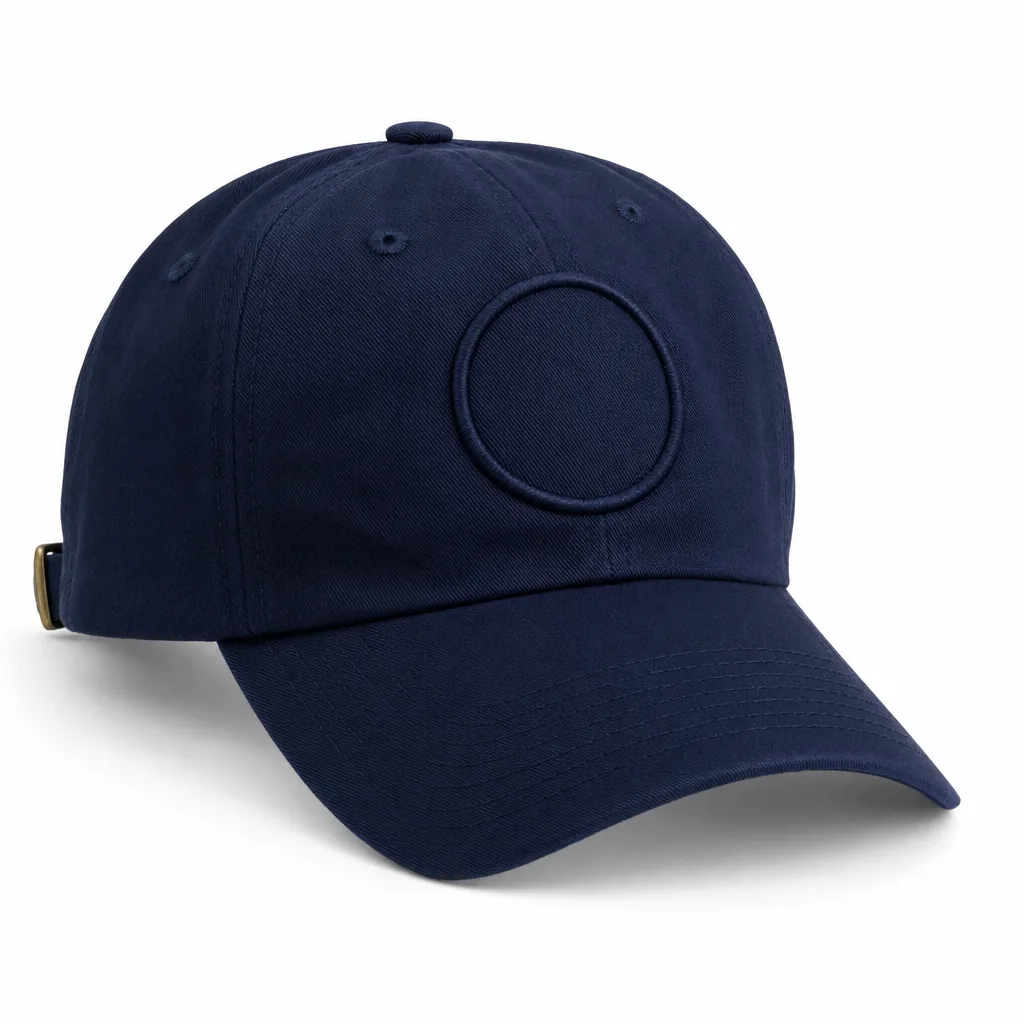
Custom Made Trucker Hat: The 2026 Sourcing & Manufacturing Playbook (2026 Update) (2026 Update) - 2026 Buyer's Guide
Read article →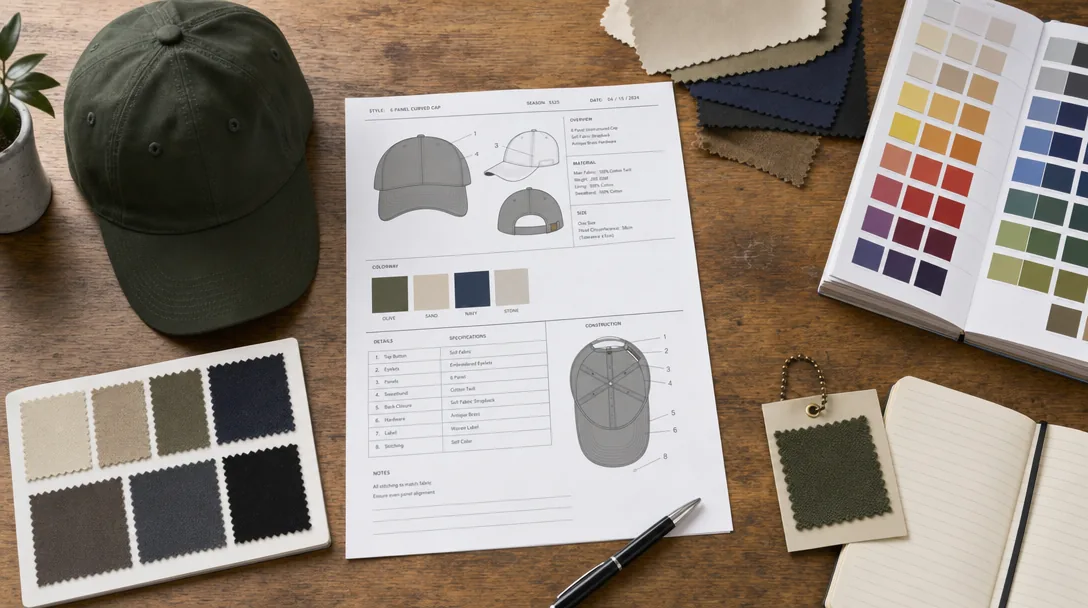
Performance & Athletic Caps: Moisture-Wicking, UPF and Buyer Specs (2026 Update) - 2026 Buyer's Guide
Read article →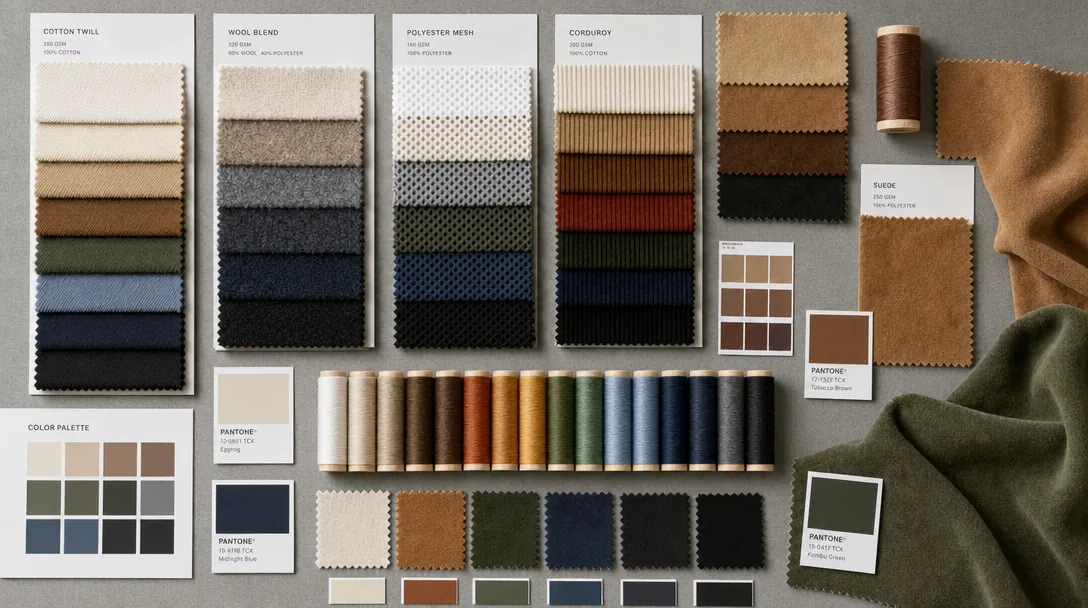
Corduroy Hat Men's: Properties, Costs and How to Spec It Right (2026 Update)
Read article →If you are ready to take the next step on custom golf hats: a manufacturer's guide to performance headwear - cost & moq breakdown - cost & moq breakdown, our team can put a tailored quotation and digital mock-up in your inbox within 24 hours. Send the inquiry form on our contact page or message us directly on WhatsApp.