
Custom Golf Hats: A Manufacturer's Guide to Performance Headwear - Cost & MOQ Breakdown - Cost & MOQ Breakdown - Supplier Checklist
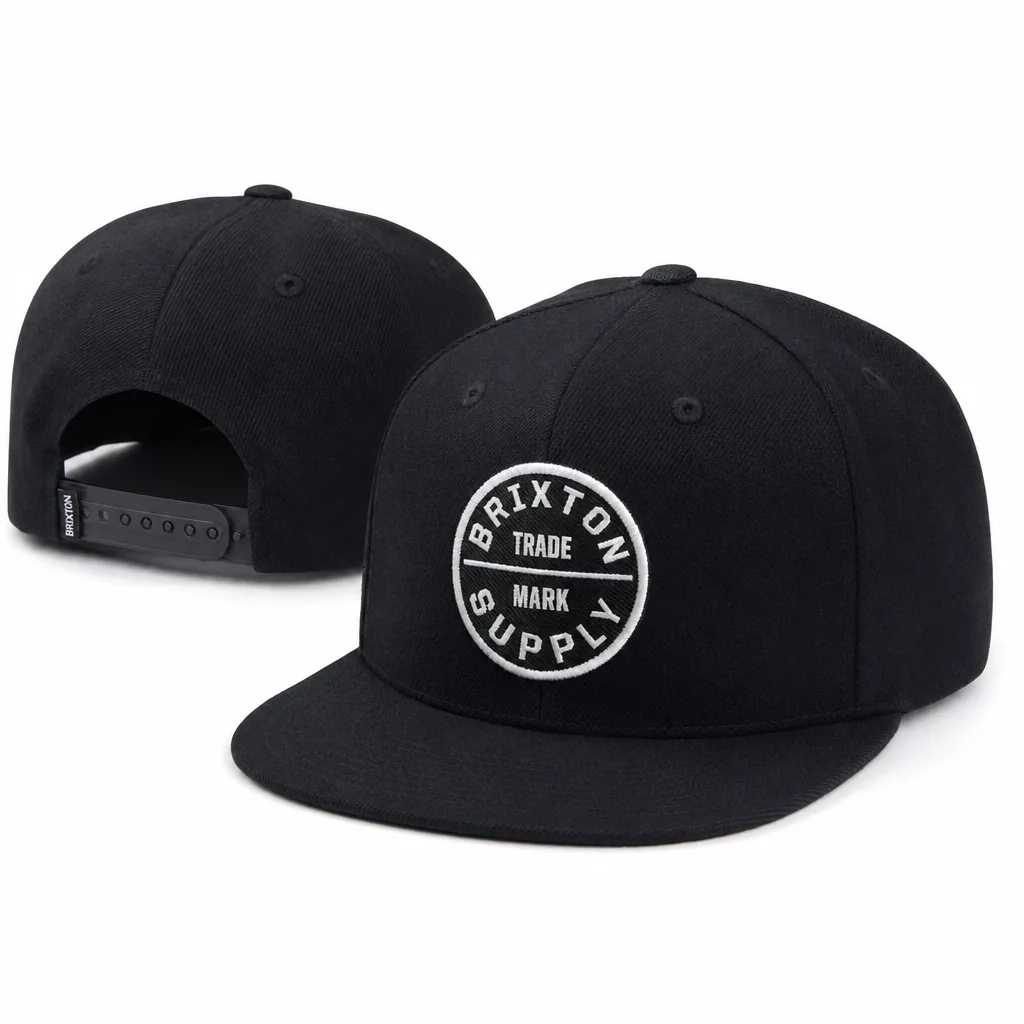
Custom Golf Hats: A Manufacturer's Guide to Performance Headwear - Cost & MOQ Breakdown - Cost & MOQ Breakdown - Supplier Checklist is one of the most-asked questions we receive from international buyers, and for good reason. With dozens of factories competing for your order and an alphabet soup of technical terms in every supplier quote, even experienced importers can feel lost. This guide consolidates what we have learned producing custom hats for clients in 40+ countries.
The golf-specific silhouettes that dominate retail and tournament programs
The volume driver in custom golf hats is still the performance 6-panel with a pre-curved visor, because golf exposes every weakness in a generic cap: trapped heat by the third hole, glare bouncing off a light undervisor, and pressure points after four to six hours on head. The commercial spec that keeps reordering is a mid-profile crown built in 110-140 gsm polyester microfiber or a 90/10 poly-spandex shell, with a Coolmax-type moisture-wicking sweatband, 2.5-3.0 mm PE visor board, and a black undervisor to reduce reflected light. Side ventilation is usually either laser perforation or sport mesh in the rear quarters; both work, but perforation reads cleaner at retail while mesh is more forgiving on lower-cost event programs. For tournament packs and corporate outings, hook-and-loop or micro-Velcro closures consistently generate fewer fit complaints than snapbacks because they cover a broader size range without the hard pressure points older players notice immediately. Retail programs typically take the same silhouette and upgrade execution rather than reinvent shape. The front decoration mix is usually flat embroidery, 3D puff on block initials, matte TPU badges, or welded silicone transfers, with logo placement controlled within +/-2 mm on center front and color matched to approved Pantone TCX standards. On the production floor, this is also the safest profile to scale: panel alignment, sweatband insertion, brim curve consistency, and embroidery registration are easier to hold inside spec than on fashion-forward crowns, especially when running Tajima or Barudan heads at volume. That matters commercially because fewer shape rejects and less rework translate into cleaner AQL 2.5 outcomes and lower real landed cost per usable cap.
The silhouette split between a true 5-panel, a rope cap, and sun-coverage styles is not cosmetic; each one sells into a different golf channel. A proper 5-panel golf cap usually carries a flatter front wall, slightly lower crown, and cleaner side profile than the standard 6-panel, which is why it performs better in resort shops, private-label collections, and club merchandise that wants a quieter look. The single uninterrupted front panel also solves a technical problem: no center seam means less logo distortion on satin stitch crests, direct-print appliqué, or thin TPU badges. Buyers who want understated branding should care about that more than trend language, because a 70-90 mm wide front logo simply looks sharper when the artwork is not fighting seam tension. Rope hats are driven more by merchandising than by pure athletic function, but they are strong sellers in pro shops and member-guest events when the trim work is disciplined. The rope itself is usually a 3-5 mm polyester cord set above the visor; if the crown uses weak buckram or the rope shade drifts more than Delta-E 1.5 from the approved standard, the cap looks cheap the moment it hits shelf. Good factories control rope spacing, visor symmetry, and recovery after carton compression, because distorted rope hats do not steam back cleanly. Bucket hats and visors round out custom golf hats programs in hotter markets, junior camps, caddie uniforms, and women's events, where UPF-rated coverage, lighter 80-120 gsm fabrics, and maximum airflow matter more than the mainstream pro-shop silhouette.
Why golf demands performance fabric (not cotton twill)
Cotton twill is the wrong benchmark for serious golf headwear because it gains weight as it absorbs sweat and traps heat in the part of the cap sitting directly on the forehead. A brushed 260-320 gsm cotton twill can visibly wet out, darken one to two shades at the brow, and lose panel stiffness after a few hours in 28-32°C summer play. That changes perceived fit: the crown feels heavier, the sweatband swells, and the hat that sat cleanly at tee-off starts feeling tight by the back nine. For custom golf hats, the better base fabric is usually a 100-150 gsm polyester microfiber, a mechanical-stretch woven, or a lightweight dobby built from 50D-75D filament yarns. Those fabrics are not just lighter on paper; they move moisture laterally so it can evaporate instead of pooling at the front seam and under the inner band, which is where players complain first. The bigger specification mistake is asking for “polyester” and assuming every mill will deliver the same result. Performance depends on the full package: shell weight, yarn denier, wicking finish, sweatband construction, and actual ventilation method. A 120-140 gsm woven paired with a Coolmax-type or mesh-backed sweatband usually outperforms a heavier shell trying to mimic cotton handfeel, while laser perforation, micro-mesh side panels, and 3D spacer mesh each change airflow, structure, and embroidery compatibility differently. Color control matters too, because moisture-management finishes can shift shade after setting. For tournament and licensed programs, I would want lab dips approved to Pantone TCX under D65 lighting and bulk production held within roughly Delta-E 1.0-1.5, especially on white, navy, and pastel colors where mismatch shows immediately after decoration. Good custom golf hats have to survive sweat, UV, and repeated wear without losing fit or drifting off brand.
UPF sun protection for golf programs
Fabric choice does most of the UPF work in custom golf hats; aftermarket sprays and vague “sun protection” claims usually do not survive real production. A tight 120-160 gsm polyester microfiber, interlock knit, or plain-weave 75D x 150D performance shell will often test around UPF 30-40 in dark shades before any added chemistry. Navy such as Pantone 19-4052 TCX, black, and deep forest routinely outperform white or pastel versions of the same construction because less UV transmits through the fabric. That baseline is usually fine for club shops, charity scrambles, and basic corporate programs. If the PO calls for UPF 50+, the requirement needs to be tied to the exact shell fabric code, color, and finishing recipe from the mill lot actually used in bulk production. In high-UV markets like Arizona, Florida, Hawaii, and Queensland, buyers increasingly reject generic mill declarations and ask for documented performance on the finished crown material, especially when the hats are sold through resorts, college athletics, or tournament merchandise programs. The failure point is almost always design drift after sourcing approval. A fabric that passed in navy may miss the target in white; add laser-cut perforations, spacer mesh side panels, or a heavy wicking finish, and the rating can drop again. For custom golf hats with ventilation, the only question that matters is whether the final material in that exact color and construction passed AATCC 183 or AS/NZS 4399 testing through SGS, Intertek, or Bureau Veritas. A usable report should list fiber content, specimen ID, colorway, and the tested fabric or finished SKU rather than a mill archive swatch. Formal UPF verification typically runs $300-$500 per SKU per color, so experienced buyers standardize one certified shell across several silhouettes and vary only embroidery, woven labels, or closure details. Our standard practice is to keep stock UPF-treated fabric programs at roughly 144-300 pieces per color; once you move into custom-dyed fabric with a Delta-E tolerance under 1.5, mills often require 500-1,000 meters, which pushes hat MOQ and landed cost up fast.
Moisture-wicking sweatband: the detail buyers don't notice until summer
The sweatband is the first place summer headwear fails, and buyers usually notice too late. A standard 100% cotton terry band at 240-280 gsm will absorb sweat quickly, but in real golf use—86°F to 95°F, 70%+ humidity, four-hour rounds—it stays wet, traps salt and sunscreen, and starts feeling swampy by the turn. For custom golf hats, a better spec is a moisture-management knit: typically 92/8 or 95/5 polyester-spandex at 180-220 gsm with a birdseye, pique, or micro-waffle face. That construction pulls perspiration off the skin, spreads it across a larger surface area, and dries inside the crown instead of leaving the hairline saturated. In wear tests, that comfort difference matters more than small changes in visor curve, crown height, or closure hardware, especially for resort shops, tournament programs, and walking golfers.
The spec has to be written into the tech pack, not buried under vague language like “performance sweatband.” Below about 170 gsm, the band tends to lose recovery and bag out after repeat wear; above 230 gsm, dry time slows and the crown feels hotter. I also watch stretch and attachment closely: around 15% to 20% crosswise stretch is usually enough for comfort without rolling, and uneven seam allowance or excess sewing tension will pucker the lower crown fast. Dark colors need perspiration colorfastness and crocking checks, with shade kept within an agreed Delta-E tolerance so black or navy bands do not bleed onto seam tape after dyeing or wash testing. In production, this upgrade is usually only $0.15-$0.25 per cap at scale, which is cheap compared with markdowns, returns, or complaint rates on club and event custom golf hats.
Most buyers overspend on visible trims and underspec the only component touching skin for five hours. Better factories should be able to confirm the exact band composition, knit structure, gsm, stretch ratio, source mill, and test results for washing and perspiration exposure. Stitching should be checked under AQL 2.5 because skipped stitches, twisted joins, and loose band tension show up quickly in hot-weather use. If a supplier cannot tell you whether the sweatband is brushed jersey, birdseye, or microfiber pique—or falls back on “moisture-wicking” with no lab data—they are guessing. For custom golf hats sold through pro shops, corporate outings, or summer giveaways, that missing detail is usually the difference between a cap that still feels dry on the 14th hole and one that gets discounted by July.
Rope hats: why this silhouette became the golf hero category
Rope hats became golf’s hero silhouette because they fix two retail problems at once: they look current on the wall, and they give decorators a cleaner canvas than a shallow low-profile cap. The rope—typically a 5 to 7 mm braided polypropylene or cotton-poly cord set directly above the visor seam—creates a hard horizontal break that makes a front logo read from 3 to 5 meters away. On a structured 5-panel crown with 8.5 to 9.5 cm front height, that separation gives 3D puff embroidery, flat stitch fills, and molded TPU or silicone patches much better presence than the same artwork on an unstructured chino dad cap. That matters in pro shops, member-guest events, and corporate sponsor programs where the club mark has to stay legible from a cart path or retail fixture, not just in hand. Most custom golf hats in this category land in medium-profile 5-panel or semi-structured 6-panel builds with a slight pre-curve visor, performance polyester sweatband, and snapback or micro-Velcro closure rather than antique brass hardware.
The silhouette moved from novelty to core golf product when club retail shifted away from giveaway-looking tournament caps and toward styles that could sell at $32 to $45 on the shelf. The best-performing builds are usually 120 to 150 gsm polyester or poly-spandex blends with 8 to 12 percent spandex for recovery, plus laser-perforated side and rear panels for airflow. Front logos commonly run 5,000 to 8,000 stitches on Tajima or Barudan machines; larger fills can push past 10,000 stitches, which is where crown buckling starts if the front panel backing is too soft. Woven patches and heat-applied silicone badges are also common when buyers want a lighter hand feel. The real factory trap is rope alignment: if anchor points drift more than 2 mm left to right, or cord tension is inconsistent, the line waves after packing and the whole cap looks crooked immediately. For custom golf hats, 100 pieces per colorway is a realistic MOQ, and current FOB China pricing is typically $4.20 to $7.80 per unit depending on fabric spec, closure, stitch count, seam taping, and whether color approval is tied to Pantone TCX with a commercial Delta-E tolerance around 1.5 to 2.0.
Tournament + club merchandise compliance and timing
Miss the calendar and compliance becomes the most expensive line on the PO. For tournament programs—PGA section events, member-guest weekends, club championships, and sponsor-funded charity outings—you should lock artwork and place the order 90 to 120 days before the in-hand date. That is not padding; it is the time needed for digitizing, thread mapping, strike-off approval, fabric-lot confirmation, color review, crocking checks, and at least one pre-production sample without defaulting to air freight. Color is usually what blows up the schedule. Sponsors may send Pantone Coated or Pantone TCX references, but embroidery on brushed cotton twill or 130 gsm performance polyester will never read like a printed sign. A realistic factory standard is Delta-E below 2.0 on dyed fabric and a commercial visual match on thread, especially on curved front panels where stitch direction changes reflectivity. Any supplier making custom golf hats should say that plainly instead of promising exact logo matches the substrate cannot physically deliver.
Pro-shop retail works on a different timeline because the risk is markdown, not event failure. If you need floor stock for the May-through-September season, January is the practical booking cutoff, and earlier if the range includes multiple silhouettes such as a structured rope cap, an unstructured 6-panel cap, and a microfiber bucket. Retail programs add work that giveaway orders often skip: UPC or EAN stickers, branded seam tape, size labels, polybag specs, carton marks, and hangtags tied to POS requirements. Material timing matters as much as trim timing. After Lunar New Year, even standard 75D to 100D poly-spandex shells, moisture-wicking mesh, or hook-and-loop closures can slip 2 to 3 weeks, and custom sweatbands or woven back labels usually slip with them. The last safe change point is normally before bulk fabric, closure, sweatband, and label approvals are signed off.
Compliance is broader than approving the front logo. If the hats will be sold through a club shop rather than handed out, buyers need to confirm trademark authorization, sponsor-placement rules, country-of-origin labels, fiber-content declarations, and carton marking before bulk production starts. For U.S.-bound retail, that also means checking FTC textile-labeling language and making sure any hangtag claim—UV protection, moisture wicking, recycled content—can be supported by the material spec or test report. MOQ and cost also move fast once the build gets more technical. A straightforward run of custom golf hats with one body fabric and flat or 3D embroidery may start around 144 pieces per colorway, but retail-ready caps with laser-perforated side panels, woven loop labels, inside taping, and two decoration locations usually need 288 to 500 pieces to keep FOB viable. In Zhejiang production, a realistic FOB range is about $4.20 to $6.80 for a mid-profile performance cap; add silicone patches, antimicrobial sweatbands, or multi-location Tajima or Barudan embroidery, and $8.50+ before freight is normal.
Working with CrownsForge on golf programs
The material call matters more than the mood board when you are building a golf program. For custom golf hats, the useful discussion starts with actual constructions and weight: 110-160 gsm performance polyester, 75D x 150D mechanical-stretch woven for lightweight tournament styles, micro-perforated dobby for airflow, or brushed poly when the hand feel needs to be softer without going heavy. Rope caps need a stiffer face fabric and more stable buckram than relaxed five-panels; if the front panel is underbuilt, the crown will torque after shaping and the rope line will wave. When a hat program has to match polos, quarter-zips, or licensed team merchandise, lock Pantone TCX references before sampling and hold lab dips to roughly Delta-E 1.5-2.0. Anything looser is obvious under retail LED lighting, especially on bright whites, heathers, and university colors. A moisture-wicking sweatband should be baseline spec, not an upsell, because golfers notice heat retention and salt marks faster than they notice a custom liner bag. The same goes for closure selection: laser-perf hook-and-loop works for event volume, but premium green-grass accounts usually expect a micro Velcro tuck strap, TPU snap, or matte-finish metal buckle that does not look promotional. At CrownsForge, our standard practice is to confirm crown height, visor curve, and fabric shrinkage before the first sample run, because small geometry mistakes on golf silhouettes show up immediately on-head. If the style includes perforated side panels, check whether they are woven-in ventilation or post-laser holes; the cheaper option can leave hardened edges and weak spots after repeated sweat and UV exposure.
Performance claims need evidence, not hangtag language. If a program is sold as sun-protective, the UPF rating should be supported by third-party testing to AATCC 183 or an equivalent method; calling a dark polyester cap UPF 50+ without a report is sloppy sourcing. Decoration also has to respect crown geometry. Low-profile custom golf hats usually sew cleaner with disciplined run-stitch embroidery, controlled 2 mm-3 mm 3D puff, or molded silicone and welded TPU badges than with dense fill areas that tunnel the front panel. On Tajima or Barudan heads, digitizing a golf logo often means cutting stitch count, opening the underlay, and compensating for lower crown height so the panel stays flat after pressing and packing. The commercial numbers should be clear before you approve samples. A complete tech pack usually gets you to a first prototype in 7-12 days; bulk production is commonly 25-32 days ex-factory after sample sign-off and deposit, assuming trims are in stock. MOQ is typically 144-300 pieces per colorway if you want efficient cutting, embroidery loading, and carton consolidation. Real FOB Yiwu pricing for custom golf hats lands around $4.20-$7.80 per piece: lower end for basic woven poly with flat embroidery and hook-and-loop closure, higher end for stretch fabric, perforation, multi-location decoration, and retail packing. Before issuing the PO, ask for current sedex-audit-cap-supplier-guide.html">BSCI 2.0 or Sedex SMETA 4-Pillar audit reports and confirm the inspection plan up front; AQL 2.5 is a sensible default for headwear, but logo placement tolerance and visor symmetry should be written into the approval standard, not left to interpretation.
Frequently Asked Questions
How long does production take?
Sampling takes 7 to 12 days. Bulk production runs 20 to 30 days depending on quantity, fabric availability and decoration complexity. Inspection and packing adds another 3 to 5 days before shipment.
Do you support sustainability certifications?
Yes. We work with GOTS organic cotton, GRS-certified recycled polyester, OEKO-TEX Standard 100 fabrics, and are BSCI and Sedex audited. Certification documentation can be provided per order.
What logo decoration techniques do you offer?
3D puff embroidery, flat embroidery, woven patch, leather patch, PVC patch, screen printing, sublimation, applique and laser etching, all in-house with no subcontracting.
Can I order a sample before bulk production?
Yes. We strongly recommend approving a pre-production sample before mass production. Samples are charged at 35 to 60 USD each plus express shipping, fully refundable against confirmed bulk orders over 500 pieces.
Which shipping methods do you support?
We support FOB, CIF and DDP shipping. Air express for samples and small orders, sea LCL for 100 to 500 pieces, sea FCL for 5,000+ pieces. Door-to-door DDP available for US, EU, UK, Canada and Australia.
What's the MOQ for custom embroidered baseball caps no minimum?
When evaluating custom embroidered baseball caps no minimum, the key considerations are construction quality, decoration capability, MOQ flexibility and lead time. Performance baseball cap with curved brim, 5-panel low-profile golf cap, rope hat with rope detail above the brim, performance bucket hat, and visor. Each has a specific use case — driving range, tournament play, club merchandise programs and pro-shop retail. Standard cotton twill absorbs perspiration and stays heavy. Golf demands moisture-wicking polyester (typically…
How does ordering baseball cap custom logo work?
When evaluating baseball cap custom logo, the key considerations are construction quality, decoration capability, MOQ flexibility and lead time. Performance baseball cap with curved brim, 5-panel low-profile golf cap, rope hat with rope detail above the brim, performance bucket hat, and visor. Each has a specific use case — driving range, tournament play, club merchandise programs and pro-shop retail. Standard cotton sweatband saturates within 9 holes of summer play; polyester-elastane wicking sweatband moves…
How does ordering custom baseball team hats work?
When evaluating custom baseball team hats, the key considerations are construction quality, decoration capability, MOQ flexibility and lead time. Performance baseball cap with curved brim, 5-panel low-profile golf cap, rope hat with rope detail above the brim, performance bucket hat, and visor. Each has a specific use case — driving range, tournament play, club merchandise programs and pro-shop retail. Rope hats (a 5-panel or 6-panel cap with decorative rope above the brim, often in contrast color) became the golf…
What's the MOQ for custom logo hats no minimum?
When evaluating custom logo hats no minimum, the key considerations are construction quality, decoration capability, MOQ flexibility and lead time. Rope hats (a 5-panel or 6-panel cap with decorative rope above the brim, often in contrast color) became the golf cap of the 2020s. Originally a fishing/outdoor silhouette adopted by Imperial, Melin and Branded Bills. We produce equivalents at MOQ 100 pieces. Performance baseball cap with curved brim, 5-panel low-profile golf cap, rope hat with rope detail above the brim,…
Looking for a reliable hat manufacturer in China?
CrownsForge has produced custom hats for 800+ brands across 40 countries. From 100-piece launches to 100,000-piece retail programs, we deliver on time and on spec.
Get in touchRelated guides
Camouflage Bucket Hat: Properties, Costs and How to Spec It Right - Cost & MOQ Breakdown - Cost & MOQ Breakdown - Cost & MOQ Breakdown
Read article →
Custom Hat Trucker: The 2026 Sourcing & Manufacturing Playbook - Cost & MOQ Breakdown
Read article →
Cap Sweatband Material Selection for Custom Headwear Buyers
Read article →We hope this guide demystifies custom golf hats: a manufacturer's guide to performance headwear - cost & moq breakdown - cost & moq breakdown - supplier checklist and helps you move forward with confidence. If you have questions specific to your project, our English-speaking sales engineers are one message away.