
Custom Golf Hats: A Manufacturer's Guide to Performance Headwear - Cost & MOQ Breakdown - Cost & MOQ Breakdown - Supplier Checklist - Cost & MOQ Breakdown
Every week, our sales team answers detailed questions about custom golf hats: a manufacturer's guide to performance headwear - cost & moq breakdown - cost & moq breakdown - supplier checklist - cost & moq breakdown. We wrote this guide so that wholesalers, streetwear brands, corporate buyers and promotional resellers can compare options with full information, and avoid the traps that show up only after production has started.
The golf-specific silhouettes that dominate retail and tournament programs
The volume leader in custom golf hats is still the structured 6-panel performance cap with a pre-curved visor, but golf programs spec it nothing like a cheap promo baseball cap. The silhouettes that hold in pro shops usually use 140–180 gsm polyester mechanical-stretch twill or a 90/10 to 92/8 poly-spandex shell, with laser-perforated rear quarters, a low-luster black or charcoal undervisor to reduce glare, and a moisture-management sweatband that can handle repeated salt loading without whitening or going stiff. Most U.S. fits are built around a 58 cm nominal head size with a practical adjustment range of about 56–60 cm through micro hook-and-loop, a woven tuck strap with metal clasp, or a slim snapback. Buyers reject tall crowns fast; if the front rise is too aggressive, the hat reads like teamwear instead of golf retail. UPF is also a real buying spec in this category, not a catalog throwaway. Serious accounts increasingly ask for lab-tested UPF 30+ to 50+ fabrics and want paperwork tied to the exact shell composition, because a performance twill and a perforated mesh version of the same color do not test the same. The other retail winner is the low-profile 5-panel rope cap, especially for club merchandise, resort stores, and younger tournament programs. Its uninterrupted front panel is more forgiving for flat embroidery, TPU heat transfers, silicone badges, and woven patches than a heavily seamed 6-panel crown, especially when logos have thin serifs or tight counters that would close up under dense stitching. Most clean executions use 110–140 gsm nylon taslon or lightweight polyester with micro-mesh side ventilation and a 3–5 mm braided rope above the visor.
Decoration limits are where good-looking custom golf hats separate from expensive rejects. On Tajima, Barudan, or ZSK heads, center-front 3D foam embroidery on a curved golf silhouette is safest under roughly 8,000–9,000 stitches if you want clean registration across 12 dozen without puckering, visor strike, or front-panel washboarding. Once buyers push oversized logos, dense satin borders, and small internal detail into the same file, the cap starts fighting back. Medium buckram is usually the right call for golf: enough support for raised embroidery or a structured patch, but not so rigid that the crown stands high and takes on that cheap licensed-merch shape that better private-label programs avoid. The rope cap earns its space because it changes retail perception for very little factory cost. A braided rope typically adds only about $0.18–$0.40 FOB depending on material and attachment method, yet in green-grass retail it can support an $8–$15 higher shelf price because it reads immediately as golf-specific. The common failure points are not dramatic; they are trim details buyers notice from six feet away on a display wall. Rope color drifting off spec, patch placement running 2–3 mm high, and undervisor shade variation will sink an otherwise solid run. Our standard practice is to hold visible trim matching to about Delta-E 1.5–2.0 under D65 light and inspect finished goods to AQL 2.5, because premium golf customers are less tolerant of cosmetic misses than promo headwear buyers.
Why golf demands performance fabric (not cotton twill)
Cotton twill is the wrong baseline for golf because it holds water, heat, and salt right when the wearer starts noticing fit and comfort. Most promo-grade cotton twills used in caps sit around 180–220 gsm and can absorb 7–10%+ moisture by weight before they even feel saturated; on a humid 18-hole round, that translates into a heavier crown, visible darkening on the front panel, and brim-edge softening that makes the hat look tired by the back nine. White, stone, and pastel colors show sweat migration fastest, especially when the sweatband is basic cotton terry with no moisture-management finish. For custom golf hats, a 100–150 gsm microfiber polyester or lightweight poly-spandex shell performs better because it moves moisture outward instead of storing it in the face fabric. On the factory floor the difference is obvious: cotton wets out and stays cool-damp, while a good filament polyester dries faster, keeps the front profile cleaner, and holds crown shape after repeated wear.
The spec that matters is not the word “performance”; it is fiber denier, weave, stretch behavior, and the internal package. For serious custom golf hats, I’d start with 50D–75D filament polyester, often in a plain weave or mini-ripstop, with mechanical stretch from construction or 8–12% spandex where side-panel recovery matters. Pair that shell with a moisture-wicking sweatband—usually polyester interlock or spacer mesh—instead of cotton terry, and add laser-perforated side or rear panels if the silhouette can tolerate it. Decoration can also ruin a good fabric package: a dense 10,000–15,000 stitch embroidery on the front of a structured 6-panel cap creates a heat spot and blocks air exchange. On Tajima or Barudan heads, reducing stitch density, opening underlay, or switching to a silicone heat transfer or welded badge usually gives a better result for actual play.
Polyester needs tighter color and finish control than cotton because golfers use these hats outdoors, where sunlight exposes every mismatch. A navy shell that looks acceptable under factory LEDs can shift noticeably in daylight if the lab dip is loose, so I’d approve fabric to Pantone TCX with a practical Delta-E target around 1.0–1.5 for core programs, then check the complete build—not just the shell. A breathable face fabric still fails if the front-panel backing is too heavy, the seam tape traps vapor, or the buckram is overbuilt. Our standard practice at CrownsForge is to test the cap as a package, including sweatband, interlining, closure tape, and decoration, then inspect bulk under AQL 2.5 with special attention to sweat visibility, shade consistency, and panel distortion after pressing. Cotton twill still works for lifestyle merchandise and low-cost event giveaways, but for custom golf hats meant for play, it is usually too absorbent, too slow to dry, and too inconsistent after repeated sweat exposure.
UPF sun protection for golf programs
UPF on custom golf hats is a fabric claim, not a styling claim. A lightweight cap can feel cool and still fail a defensible UPF 50+ standard once you introduce mesh, laser perforation, or high-stretch panels. In production, I see 110-140 gsm polyester interlock and microfiber shells often land around UPF 30+ without special chemistry, but that does not justify a retail or program claim unless the actual bulk fabric is tested. White, stone, and ice gray routinely transmit more UV than navy or black because cover factor and dye depth matter; panel tension during sewing can also open the knit enough to reduce performance. For programs shipping into Australia, Arizona, Florida, or Hawaii, I treat UPF 50+ as an engineered requirement: solution-dyed polyester or an approved UV-absorber finish, controlled fabric density, and lab validation on the exact mill lot used for production.
The safest route is to lock the shell spec at sourcing, then avoid cap constructions that undermine it. A 130 gsm 100% polyester twill crown can pass AS/NZS 4399 at UPF 50+, while the same silhouette with large rear mesh panels usually will not, no matter what the front panels test at. For junior golf, resort retail, and long-wear tournament programs, I prefer closed crown panels, a dark undervisor to cut reflected glare, and a 25-30 mm Cooldry-style polyester sweatband for heat management instead of opening the side walls too aggressively. If the sell sheet says UPF 50+, ask for SGS or Bureau Veritas reports and budget them early: testing to AS/NZS 4399 typically costs $300-$500 per SKU with a 5-10 working day turnaround, and different colors may require separate reports. A $400 test adds about $1.33 per cap on 300 pieces but only $0.08 on 5,000, so CrownsForge locks composition, gsm, mill, finish code, and color standard before PO release and retests if the mill changes yarn source, chemistry, or lot behavior.
Moisture-wicking sweatband: the detail buyers don't notice until summer
The sweatband is where custom golf hats usually fail first in summer, not the shell fabric. A brushed-cotton or standard twill band can absorb 2-3 times its own weight in moisture, then sit wet against the forehead for the rest of the round. In Florida, Texas, or Southeast Asia, that means comfort complaints long before anyone notices whether the front logo was run on Tajima or Barudan heads. For performance builds, the reliable spec is a warp- or circular-knit wicking band in 85/15 or 90/10 polyester-elastane, typically 180-220 gsm, using filament polyester rather than spun yarn. Filament yarn spreads moisture laterally and dries faster; spun yarn feels soft at first but holds sweat longer and pills sooner. If the crown fabric is microfiber polyester, laser-perforated poly, or poly-spandex at 110-160 gsm, pairing it with a basic cotton band is an obvious mismatch once the hat is worn for 18 holes.
The cost difference is small enough that downgrading rarely makes commercial sense. In bulk production, a true moisture-management sweatband usually adds $0.15-$0.25 per cap, or closer to $0.28 if you specify custom shade matching to internal taping within a practical visual tolerance such as Delta-E under 1.5-2.0. On a pro-shop or resort style retailing at $24-$38, that saving is too minor to justify the risk of returns, markdowns, or weak repeat orders. The real issue is consistency after wear: cheaper bands often pass the approval sample, then lose elastane recovery, curl at the edges, or pucker after 20-30 wears and light wash testing. Our standard practice is to lock the spec in the tech pack: fiber content, finished gsm, width, attachment method, and colorfastness requirement, with perspiration and crocking checks on dark shades like black, navy, and deep green. Sewing matters too; over-tensioned overlock seams or too much seam compression create a hard ridge behind the buckram, exactly where golfers feel pressure after four hours in the sun.
Rope hats: why this silhouette became the golf hero category
Rope hats became the hero silhouette in golf because they lift perceived value with almost no cost penalty. A 3 mm to 5 mm twisted polyester cord typically adds only $0.05 to $0.12 per cap, yet it creates a hard horizontal break that makes the front crown look engineered instead of blank. In clubhouse retail and resort shops, that matters more than buyers admit: custom golf hats have to read premium from 8 to 10 feet away, often before anyone touches the fabric or checks the closure. The shapes that keep selling are a structured 5-panel pinch front and a 6-panel A-frame with moderate front height around 8.5 to 9.5 cm. Both give enough billboard space for a clean logo without drifting into the oversized trucker look many golfers still reject. Compared with the old sandwich-visor programs that dominated promo headwear for years, rope bodies feel newer, more directional, and easier to merchandise across both performance and lifestyle assortments.
Golf borrowed the silhouette from fishing and marine caps, but the category only took off once younger golf labels and private clubs treated the rope as a permanent shape rather than novelty trim. On the factory floor, that changed development priorities: rope hats moved from sample-room experiments to core seasonal programs, which means the tolerance standard has to be tighter. The cord exaggerates every defect on center front. If the front seam drifts more than 2 mm, or the rope insertion sits uneven left to right, the cap reads crooked immediately, long before anyone checks embroidery registration. For structured builds, 140 to 160 gsm polyester performance twill gives the cleanest crown definition; for stretch programs, an 88/12 poly-spandex shell around 170 to 180 gsm holds front-panel memory better than lighter knits. A 5-panel body is also the safest choice for center-front embroidery on Tajima or Barudan machines because there is no seam running through the artwork. Our standard practice is to inspect rope alignment, crown height consistency, and logo position as critical appearance points under AQL 2.5, since those are the defects buyers notice first.
Tournament + club merchandise compliance and timing
Date-driven launches fail on trim and approval lag, not on sewing time. For custom golf hats tied to tournaments, member-guest events, or club-shop resets, 90-120 days from tech pack to delivered goods is the honest window. A realistic path is 5-7 days to finalize artwork, embroidery size, and panel placement; 2-4 days for Pantone Solid Coated or Pantone TCX confirmation; 7-12 days for proto and revised pre-production sample; 25-35 days for bulk cutting, sewing, embroidery, finishing, and packing; then 5-8 days by air or 18-28 days by LCL ocean depending on destination and customs clearance. The schedule compresses badly when the cap includes molded TPU patches, laser-perforated side panels, woven damask labels, or custom metal closures, because those components are sourced on separate lead times and can add 7-15 days if not booked early. Color control is where buyers lose the most time. A crest that looks correct on a PDF can shift visibly once stitched onto optical white polyester twill, mélange heather fabric, or dark performance microfiber, especially under D65 versus retail warm lighting. For embroidery, a Delta-E under 3.0 is a practical production target using Madeira or Gunold thread on Tajima, Barudan, or ZSK heads; asking for tighter tolerance on direct embroidery usually creates arguments without improving sell-through. For heat transfers and woven labels, below 2.0 is achievable if the artwork is clean and the substrate is stable. Our standard practice is to require a physical reference—existing teamwear, a cap sample, or a lab dip—because screen color is not a color standard.
Compliance problems are usually basic retail execution issues that surface too late. Tournament and club-store programs commonly require country-of-origin marking, fiber content labeling on retail units, scannable UPC or EAN barcodes, sponsor hangtags, size stickers, and fixed carton assortments such as 24 or 48 pieces per style-color. If the shipment touches California retail, Prop 65 review should happen before trim booking, especially when the design uses metal buckles, PVC patches, screen-printed packaging, or coated swing tags. Trademark clearance is another frequent failure point: a sponsor mark cleared for event signage is often not cleared for resale on custom golf hats, and that legal check can easily cost 10-14 days if it starts after sampling. Club merchandise also needs a different MOQ and replenishment strategy than event merch. A single logo on one stock silhouette can start around 144 pieces, but serious retail programs are cleaner at 300-600 pieces per style because digitizing, interior seam tape printing, barcode application, carton marking, and replacement stock planning become more economical. If a pro shop wants product on floor for April or May, the PO should normally be placed no later than January, with fabric and embroidery capacity reserved before Chinese New Year. I would not release a club order without a signed pre-production sample, approved thread card or lab dip, and final inspection at AQL 2.5 with checkpoints on crown symmetry, visor curve tolerance of plus/minus 3 mm, seam puckering, closure pull strength, embroidery registration, and carton accuracy. Late replenishment only works when the first run is documented and repeatable.
Working with CrownsForge on golf programs
The fastest way to derail custom golf hats is approving silhouette before the fabric package is proven. Golf caps are less forgiving than fashion snapbacks: a 5-panel rope body that stands clean in 75D x 150D woven microfiber at 135 gsm can collapse or front-seam pucker when someone swaps in a softer brushed polyester or unstable heather knit after the fit sample is signed off. At CrownsForge, we lock shell fabric, buckram weight, foam thickness, and rope diameter before finalizing crown depth or visor pitch. For performance programs, the safest range is usually 120-160 gsm polyester constructions with mechanical stretch, laser-perforated side panels, or tightly woven microfiber that holds shape after embroidery and repeated sweat exposure. Light shades need stricter control than most buyers expect; for white, stone, and pastel deliveries, we typically hold finished bulk fabric to Delta-E below 1.5 against approved Pantone TCX references because visor-edge mismatch, rope variation, and top-button drift are obvious on the sales floor. Pattern changes also have cost consequences that many buyers underestimate. A stock 5 mm or 7 mm braid rope is easy; changing crown angle, front-panel width, foam density, visor curvature, or closure placement means a new paper pattern, a new sample cycle, and often another fit round. That is where lead time gets burned. If the goal is a stable pro-shop body, start with one tested shell architecture and vary logos, colorways, and closures around it. We see fewer claims when buyers standardize on one moisture-wicking sweatband spec, one buckle family, and one internal seam-tape construction instead of treating every colorway like a new development. The hat may still look premium, but the risk profile is lower and bulk consistency is materially better.
Decoration should be engineered for a lower golf crown, not copied from a high-profile streetwear file. The most common embroidery failure on custom golf hats is over-digitizing: excessive underlay, satin columns below 2.5 mm, or 3D puff pushed onto a shallow front panel until the crown buckles above the rope seam. On low- and mid-profile bodies, I would usually keep front logos around 5,000-8,000 stitches, reduce density to suit lightweight performance shells, and avoid heavy backing that makes the cap sit stiff on the head. Tajima, Barudan, and ZSK heads can all run golf constructions well, but the file has to respect panel tension and seam placement. In practice, flat embroidery, TPU heat transfer, sonic-weld patches, and lightweight woven patches outperform aggressive puff on microfiber and perforated poly. Cost and timing become predictable only when trims are frozen early. A sales sample is typically 7-12 days if artwork, closure, fabric, and Pantone references are complete before booking; add custom metal hardware, imported molded badges, or new lab dips and the sample clock stretches quickly. Bulk production for a standard cut-and-sew golf cap with rope application, moisture-wicking sweatband, and flat embroidery usually runs 25-32 days, with extra buffer in peak season for pre-shipment inspection and vessel space. Real FOB pricing is driven by material yield, panel count, machine minutes, and trim count, not by the word premium. A workable 5-panel performance rope cap generally lands around $3.20-$4.60 FOB Yiwu at volume; perforated panels, TPU logos, branded seam tape, custom inner labels, and upgraded closures push it closer to $4.90-$6.80. MOQ is commonly 144-300 pieces per colorway, and QA should include AATCC 183 UPF verification on production fabric, visor symmetry within 2-3 mm, sweatband colorfastness, needle detection after embroidery, and final AQL 2.5 inspection.
Frequently Asked Questions
What is the minimum order quantity (MOQ) for custom hats?
Our standard MOQ is 100 pieces per design and color, with sampling available from 1 piece. For complex multi-color logos or premium fabric upgrades, the MOQ can be lowered with a small per-piece surcharge.
Do you support sustainability certifications?
Yes. We work with GOTS organic cotton, GRS-certified recycled polyester, OEKO-TEX Standard 100 fabrics, and are BSCI and Sedex audited. Certification documentation can be provided per order.
How long does production take?
Sampling takes 7 to 12 days. Bulk production runs 20 to 30 days depending on quantity, fabric availability and decoration complexity. Inspection and packing adds another 3 to 5 days before shipment.
What logo decoration techniques do you offer?
3D puff embroidery, flat embroidery, woven patch, leather patch, PVC patch, screen printing, sublimation, applique and laser etching, all in-house with no subcontracting.
Can I order a sample before bulk production?
Yes. We strongly recommend approving a pre-production sample before mass production. Samples are charged at 35 to 60 USD each plus express shipping, fully refundable against confirmed bulk orders over 500 pieces.
What's the MOQ for custom embroidered baseball caps no minimum?
When evaluating custom embroidered baseball caps no minimum, the key considerations are construction quality, decoration capability, MOQ flexibility and lead time. Performance baseball cap with curved brim, 5-panel low-profile golf cap, rope hat with rope detail above the brim, performance bucket hat, and visor. Each has a specific use case — driving range, tournament play, club merchandise programs and pro-shop retail. Standard cotton twill absorbs perspiration and stays heavy. Golf demands moisture-wicking polyester (typically…
How does ordering baseball cap custom logo work?
When evaluating baseball cap custom logo, the key considerations are construction quality, decoration capability, MOQ flexibility and lead time. Performance baseball cap with curved brim, 5-panel low-profile golf cap, rope hat with rope detail above the brim, performance bucket hat, and visor. Each has a specific use case — driving range, tournament play, club merchandise programs and pro-shop retail. Standard cotton sweatband saturates within 9 holes of summer play; polyester-elastane wicking sweatband moves…
How does ordering custom baseball team hats work?
When evaluating custom baseball team hats, the key considerations are construction quality, decoration capability, MOQ flexibility and lead time. Performance baseball cap with curved brim, 5-panel low-profile golf cap, rope hat with rope detail above the brim, performance bucket hat, and visor. Each has a specific use case — driving range, tournament play, club merchandise programs and pro-shop retail. Rope hats (a 5-panel or 6-panel cap with decorative rope above the brim, often in contrast color) became the golf…
What's the MOQ for custom logo hats no minimum?
When evaluating custom logo hats no minimum, the key considerations are construction quality, decoration capability, MOQ flexibility and lead time. Rope hats (a 5-panel or 6-panel cap with decorative rope above the brim, often in contrast color) became the golf cap of the 2020s. Originally a fishing/outdoor silhouette adopted by Imperial, Melin and Branded Bills. We produce equivalents at MOQ 100 pieces. Performance baseball cap with curved brim, 5-panel low-profile golf cap, rope hat with rope detail above the brim,…
Ready to start your custom hat project?
Send us your tech-pack, sketch or even just an inspiration photo. We will respond with a detailed quotation and digital mock-up within 24 hours.
Request a free quoteRelated guides
Fitted Hats Custom: A Vertical-Specific Sourcing Guide
Read article →
Custom Made Trucker Hat: The 2026 Sourcing & Manufacturing Playbook - 2026 Buyer's Guide - 2026 Buyer's Guide - 2026 Buyer's Guide
Read article →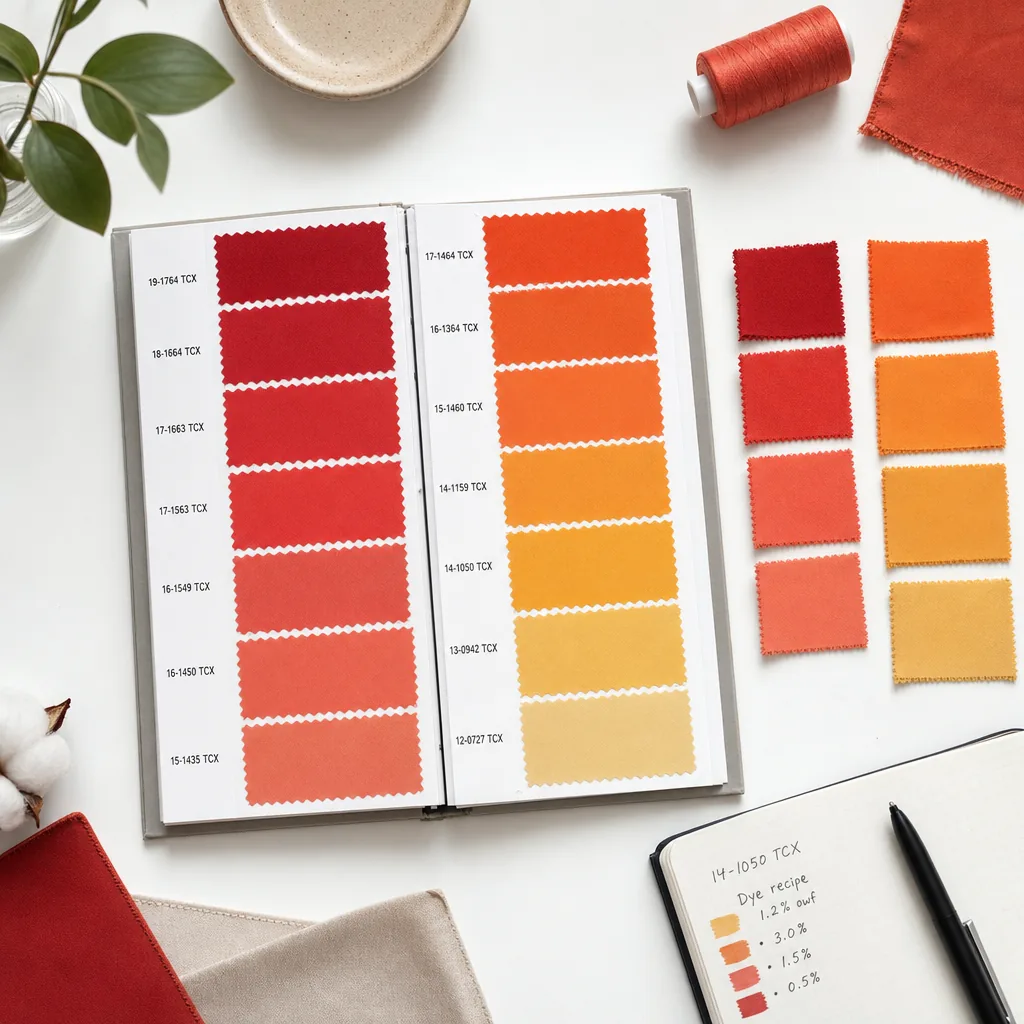
Pantone Color Matching for Custom Caps: A Manufacturer's Reference - 2026 Buyer's Guide
Read article →We hope this guide demystifies custom golf hats: a manufacturer's guide to performance headwear - cost & moq breakdown - cost & moq breakdown - supplier checklist - cost & moq breakdown and helps you move forward with confidence. If you have questions specific to your project, our English-speaking sales engineers are one message away.