
Custom Golf Hats: A Manufacturer's Guide to Performance Headwear - Cost & MOQ Breakdown - Cost & MOQ Breakdown - Supplier Checklist (2026 Update)
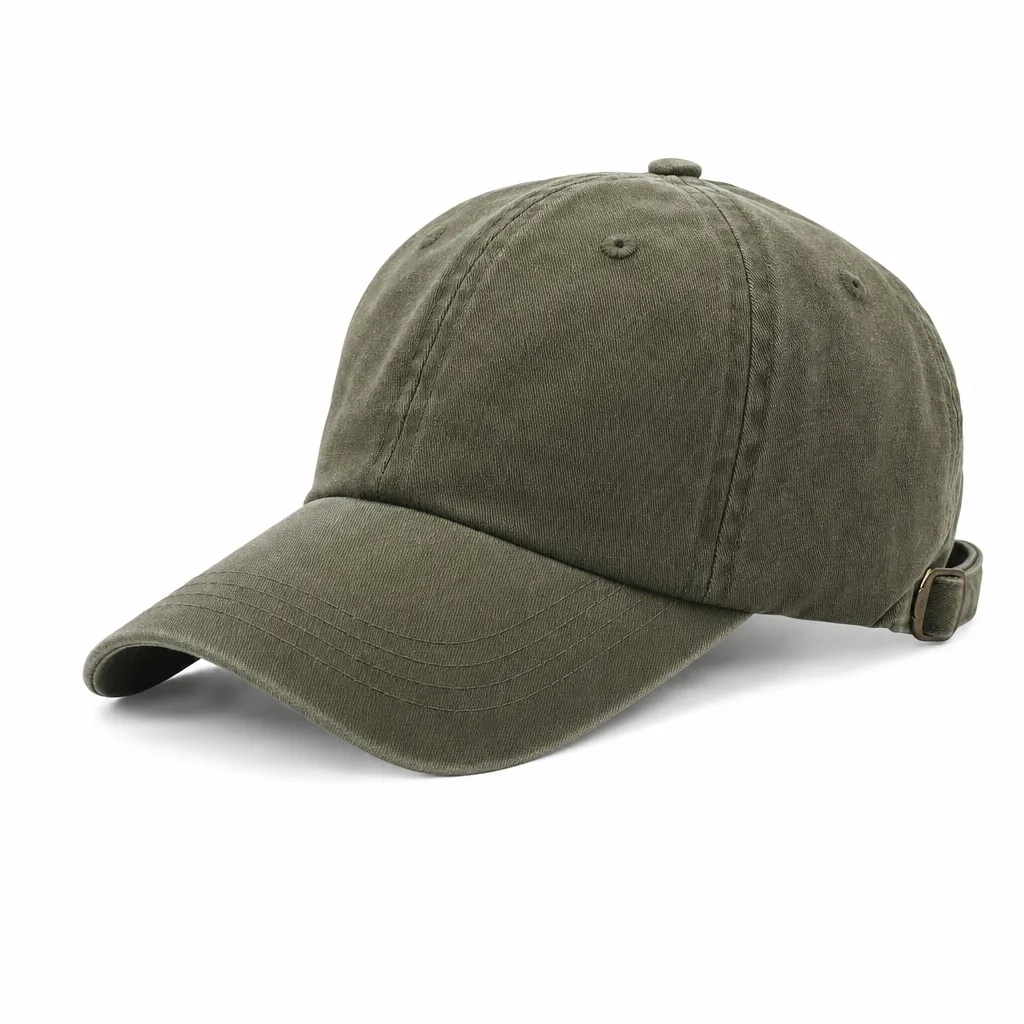
Every week, our sales team answers detailed questions about custom golf hats: a manufacturer's guide to performance headwear - cost & moq breakdown - cost & moq breakdown - supplier checklist (2026 update). We wrote this guide so that wholesalers, streetwear brands, corporate buyers and promotional resellers can compare options with full information, and avoid the traps that show up only after production has started.
The golf-specific silhouettes that dominate retail and tournament programs
The pre-curved performance baseball cap still carries the largest volume in custom golf hats because it works in three channels at once: player tee gifts, staff uniforms, and pro-shop retail. The most dependable build is a 6-panel low-to-mid crown using 92/8 polyester-spandex, 100% recycled performance polyester, or 140-180 gsm polyester twill, with either laser-cut side perforations or embroidered eyelets. Sweatband construction is the first place I check on a golf sample. Brushed tricot feels fine dry, but after nine holes it holds sweat and collapses against the forehead. A proper 3-layer moisture-wicking sweatband with antimicrobial treatment usually adds $0.18-$0.35 per piece versus a single-layer poly band, but it reduces complaints on humid tournament days.
Logo execution is more predictable on curved-brim 6-panel caps than many buyers assume, provided the factory controls panel tension and backing. Tajima, Barudan, and ZSK heads can run 6,000-10,000 stitch front logos cleanly when the crown shape is stable, the center seam is not overbuilt, and the digitizing avoids dense fill crossing the seam at a bad angle. For retail programs, I would keep front embroidery under roughly 55 mm high on low crowns and confirm puckering under steam, not just on a flat sample table. For white and light gray golf hats, bulk fabric should be checked against Pantone TCX references with Delta-E controlled before cutting; a half-shade drift is very visible once caps are lined up in a clubhouse display.
The 5-panel low-profile cap and rope hat are the silhouettes gaining fastest with younger club members, resorts, and sponsor-heavy tournaments. A 5-panel front gives a cleaner branding field for woven patches, silicone transfers, TPU badges, and flat embroidery, but front support has to match the retail goal. Overly stiff buckram can ripple after 45-60 days in a hot container, especially on polyester-spandex shells; I prefer EVA-supported or soft-structured fronts for golf unless the buyer specifically wants a sharp shelf shape. A moisture-wicking 5-panel custom golf hat from China commonly lands around $3.10-$4.80 FOB at 500-1,000 pieces, while recycled fabric, molded trims, and premium closures push it above $5.50. Rope trim only adds about $0.06-$0.15, but placement tolerance matters: keep alignment within 2-3 mm across the front seam or contrast rope on a white crown will fail visual review before AQL 2.5 inspection even begins.
Why golf demands performance fabric (not cotton twill)
Cotton twill works for a clubhouse cap, not for custom golf hats that must survive a 4- to 5-hour round under UV, sweat, sunscreen, and repeated hand washing. A typical brushed cotton twill at 210-260 gsm absorbs liquid into the yarn bundle, darkens around the sweatband, and gains noticeable weight by the back nine. Once the fibers swell, the front panel loses rebound; the crown caves, the visor holds heat, and embroidery tension becomes less predictable. On a structured golf cap, that often shows up as puckering around a 7,000-10,000 stitch logo or a wavy front seam after only a few wear cycles. For serious golf programs, I would start with 100-150 gsm polyester microfiber, 75D or 100D mini-ripstop, mechanical-stretch woven polyester, or a poly-spandex shell with 5-8% elastane. Those fabrics spread sweat across the surface instead of storing it at the forehead, so evaporation happens through the side and rear panels without making the cap feel thin or disposable.
Dry time is the performance line buyers should not ignore. Cotton has roughly 7-8% moisture regain under standard conditions and can hold far more liquid sweat inside the fabric structure; in humid markets like Florida, Singapore, or Guangdong, it stays damp against wet hair and starts to smell faster. Polyester moisture regain is typically below 1%, and with a durable wicking finish, cationic yarn, or hydrophilic treatment, the cap dries much faster between holes and between consecutive rounds. Our standard practice at CrownsForge is to pair performance shells with polyester interlock, cool-touch woven, or spacer-mesh sweatbands instead of cotton terry, because the sweatband is where cheap golf caps fail first. Decoration also benefits from a stable substrate: Tajima, Barudan, or ZSK embroidery heads can hold cleaner registration on dry, resilient fabric, while wet cotton can distort stitch density, reveal seam tape on light colors, and make a retail-grade cap look like a low-cost promotional giveaway.
Breathability has to be specified, not assumed from the word “performance.” Better golf builds use laser-perforated side panels, mesh-backed eyelets, moisture-wicking seam tape, anti-UV finishing, and colorfast dyeing that can handle sweat salt and sunscreen. White, stone, ice blue, mint, and pastel shells are especially unforgiving; a weak finish will yellow, gray out, or show band staining before the buyer finishes the first season. For repeat wholesale programs, I would hold lab dip to bulk and reorder lots within Delta-E 1.0-1.5, with AQL 2.5 inspection covering shade variation, panel torque, visor symmetry, and sweatband attachment. The cost difference is real: a basic cotton twill promo cap might land around US$2.20-US$3.20 FOB Yiwu, while a properly built performance golf cap is more often US$4.20-US$7.50 depending on fabric, perforation, closure, and decoration. If a supplier quotes cotton twill near the same price as a true performance build, the missing cost is usually in the wicking chemistry, sweatband, color control, or testing discipline.
UPF sun protection for golf programs
For custom golf hats, the gap between “good sun coverage” and a claimable UPF 50+ is usually fabric engineering, not branding. Most moisture-wicking polyester shells will land around UPF 30 to 40 without special treatment, but that does not justify putting UPF 50+ on a hangtag or tech pack. The fabrics that pass consistently are tighter constructions: 140 to 160 gsm interlock, mini-jacquard, or micro-pique made in 75D/72F or 100D filament polyester, where cover factor is high and pore size stays low under stretch. By comparison, a typical 8 to 10 oz cotton twill often feels substantial yet transmits more UV because the yarn hairiness and weave gaps are less controlled. Shade also changes the result in a measurable way; dark navy, black, and forest typically test stronger than white, stone, or pastel versions from the same mill lot because the dye package absorbs more radiation.
If a buyer wants a defensible UPF 50+ claim, the mill should specify the route: solution-dyed polyester, TiO2-loaded masterbatch, a UV-absorbing finish, or a dense filament construction validated to AATCC 183 or AS/NZS 4399. Testing is where weak programs get exposed. SGS, Intertek, or Bureau Veritas will usually charge about $300 to $500 per fabric-color-construction combination, and mixed-material caps are not a single test item. A white laser-perforated side panel, navy crown, and black underbrim need to be evaluated as separate risk points because perforation, mesh, and contrast fabrics routinely drag down the effective rating. On bulk orders around 3,000 pieces, a UPF-oriented finish typically adds only $0.18 to $0.45 per cap; below 300 units, the lab report cost is what hurts. Our standard practice is to lock one approved shell fabric across multiple custom golf hats, then verify fiber content, gsm, denier, finish chemistry, issuing lab, and whether the result holds after laundering, not just in pre-wash condition.
Moisture-wicking sweatband: the detail buyers don't notice until summer
The sweatband is where summer performance usually fails first. A brushed cotton or cotton-twill band feels acceptable in a showroom, but once you put it on a course at 86-95°F and 65-75% RH, it loads up with sweat, stays wet at the hairline, and starts leaving salt marks by the back nine. For custom golf hats, I specify a separate moisture-management sweatband, not a self-fabric foldover. The reliable build is a circular-knit polyester-spandex band at 180-220 gsm, typically 88/12 or 92/8, with either a hydrophilic wicking finish or cationic yarn construction that spreads moisture laterally before it evaporates through the crown panels. That matters even more when the shell fabric is light 75D or 150D stretch poly, because a high-performing crown cannot compensate for a cheap absorbent band sitting directly on the forehead.
The cost penalty is too small to justify cutting this corner. In volume, a proper wicking sweatband adds about $0.15-$0.28 per cap; a jacquard-logo version usually adds another $0.03-$0.06 depending on band width, repeat length, and yarn count. The technical checkpoints matter more than the ad copy: perspiration colorfastness should test at grade 4 minimum, wash fastness grade 4, and if the band is color-matched to a Pantone TCX target, lab dips should be held within Delta-E 1.5 before bulk approval. I also look closely at seam construction where the band joins the crown: 8-10 SPI is a sensible target, clean edge binding or soft seam tape beats exposed overlock, and any bulky join at the back seam will generate complaints faster than buyers expect. Our standard practice is to treat this as a core BOM item for custom golf hats, because players notice bad sweatbands immediately in real weather.
Rope hats: why this silhouette became the golf hero category
Rope hats won the golf floor because they solve two retail problems at once: they frame the logo better than a standard dad cap and still feel safe for broad-age buyers. The rope creates a hard horizontal line about 6 to 8 mm above the visor seam, so even a simple 4,500 to 6,500-stitch wordmark reads centered and deliberate from six feet away. That matters in pro shops, tournament gifting, and resort retail, where a buyer makes a quality judgment in seconds. For custom golf hats, the 5-panel rope build is usually the cleanest merchandising shape because the front panel has no center seam to split small lettering or satin columns. A 6-panel rope cap still has its place; it fits a wider head range and is more forgiving when sewing tension varies across larger production runs. Material choice is what pushes the silhouette from novelty to premium. A 180 to 200 gsm mechanical-stretch twill in 92% polyester / 8% spandex, or a 160 to 180 gsm micro-peached polyester, consistently presents better than entry cotton chino because the surface is tighter, cleaner, and more stable under embroidery.
The reason rope moved from trend to core golf category is off-course wearability. Buyers wanted a cap that could sit with performance polos and quarter-zips, then still look correct at the clubhouse bar or in lifestyle retail. The best builds are not complicated, but they are precise: slight pre-curve visor, braided polyester rope around 3 to 4 mm diameter, medium-structure buckram, and side ventilation through laser-perforated panels or a 35 to 40 mm moisture-wicking sweatband. On Tajima and Barudan heads, that structure is functional, not decorative; it reduces front-panel collapse and keeps satin edges cleaner when machines run at 700 to 800 spm. From a sourcing angle, rope caps are also practical. In Zhejiang, 120 to 144 pieces per colorway is realistic for standard custom golf hats, with FOB typically $4.30 to $6.60 depending on fabric, closure, and decoration. A structured performance rope cap with flat or 3D embroidery and plastic snapback usually lands around $5.00 to $5.70 FOB; add recycled poly, TPU or HD silicone patch, branded seam tape, and metal buckle, and you move past $6.80 quickly. The real quality risks are rope alignment, visor symmetry, and logo height above the rope line, so factories worth using will control rope placement within 2 mm, inspect to AQL 2.5, and verify body color to Pantone TCX at roughly Delta-E 1.5 to 2.0.
Tournament + club merchandise compliance and timing
For tournament merchandise, the real deadline is artwork lock, not event week. If a club, resort, or sponsor wants custom golf hats delivered without airfreight, substitutions, or skipped approvals, freeze logos, Pantone references, panel placement, and packaging requirements 90 to 120 days before in-hand date. A workable factory calendar is usually 7 to 10 days for tech pack cleanup and embroidery digitizing, 5 to 7 days for fabric and trim booking, 7 to 12 days for lab dips or strike-offs, 7 to 10 days for a pre-production sample, then 25 to 35 days for bulk sewing, decoration, finishing, and AQL 2.5 inspection. Add 5 to 12 more days if the style uses molded TPU badges, silicone heat transfers, braided rope, woven wrap labels, laser-perforated panels, or printed seam tape, because those components rarely come from the same workshop and each one needs its own approval cycle. Color control is where schedules usually collapse. If a club expects the cap body to match a blazer stripe, tee gift box, or existing pro-shop program, a JPEG proof is meaningless; specify whether the reference is Pantone C, Pantone TCX, or a physical approval sample, and define viewing under D65 light. For tournament-grade consistency, keep Delta-E below 1.5 on key embroidery thread matches and below 2.0 on dyed trims, cording, or edge binding. We have seen navy 100% polyester shells look acceptable under office LEDs and turn visibly purple outdoors at check-in. Once that happens, there is no same-day fix: thread re-approval, re-dye, or trim remake usually burns 10 to 14 days, which is enough to miss bag-drop and force a split shipment.
Compliance now affects receiving as much as production. Many clubs, resort operators, and licensed events will not book custom golf hats into inventory unless the shipment arrives with correct fiber-content labeling, country-of-origin marking, carton marks, barcode placement, and audit paperwork already aligned to their PO. Ask for those details before deposit, not after pre-production sample approval. In most private-label club programs, sedex-audit-cap-supplier-guide.html">BSCI 2.0 or Sedex SMETA 4-Pillar is the standard social-audit threshold; youth sizes may require CPSIA tracking labels, and some corporate sponsors still ask for AZO-free dye declarations or REACH screening for trims. If the order is feeding a resort RMS, tournament gifting portal, or sponsor fulfillment warehouse, pre-assigned carton numbering and SKU-level assortment breakdown save real money at receiving because nobody wants to open 40 cartons to sort navy S/M from white L/XL. Construction choices also change both lead time and reject risk. Lightweight golf caps in 92/8 polyester-spandex at 160 to 180 gsm behave very differently from 260 gsm brushed cotton twill; on a low-profile 6-panel silhouette, a left-front sponsor logo can tunnel or pucker if the stitch count is too dense or the backing fights the fabric stretch. Good factories test those files on Tajima, Barudan, or ZSK heads around 650 to 750 rpm, then adjust underlay, pull compensation, and backing weight before approving bulk. Cost planning should reflect that reality: stock-fabric programs usually make sense from 144 pieces per color at roughly $4.20 to $7.80 FOB, while fully custom moisture-wicking styles with laser-cut vents, molded patch, branded seam tape, and custom metal closure hardware are more realistically 300 to 500 pieces per style-color at $6.80 to $11.50 FOB, with 30 to 40 days ex-factory after approvals.
Working with CrownsForge on golf programs
For custom golf hats, lock the fabric from mill swatches and test reports, not a catalog render. A serious golf program normally starts with 120-165 gsm performance polyester: micro-pique for a cleaner pro-shop look, bird-eye mesh for airflow, 75D/72F interlock for smooth sublimation, and stretch twill with 3%-8% spandex for fitted or semi-structured caps. If the hat must match a club uniform, sponsor palette, or retail line, approve lab dips against Pantone TCX or a physical fabric standard, with Delta-E under 1.5 on solid panels and under 2.0 on heathered or optical-brightened fabric. Do not claim UPF 30+ or UPF 50+ unless SGS, Intertek, or Bureau Veritas has tested that exact composition, color, knit structure, and gsm. A white 135 gsm mesh panel and a navy 160 gsm interlock panel will not perform the same under UV exposure, even if both are sold as “performance polyester.”
Shape decisions matter more on golf caps than on most casual headwear because the front panel is shallow and the wearer expects a clean, technical silhouette. Low-profile crowns, rope placement, sandwich visors, curved visor blocks, closure type, and sweatband width should be fixed before the first sample; a 5 mm crown-height change can make the same logo look sharp or badly scaled. Tajima, Barudan, and ZSK embroidery heads can all run clean golf logos, but low crowns need shorter stitch runs, lighter underlay, and controlled pull compensation across the front curve. Avoid heavy 3D puff on thin performance fabric, especially above 8,000 stitches, because foam pressure can ripple the panel. Moisture-wicking sweatbands are usually 28-36 mm wide in polyester terry, Coolmax-style knit, or spandex-backed jacquard. Heat transfer is better for gradients, sponsor marks, and strokes under 1 mm, while raised embroidery still gives stronger perceived value for resort, tournament, and team merchandise.
Our standard practice at CrownsForge is to start bulk only after artwork, fabric, closure, crown depth, rope position, visor curve, and decoration method are frozen in the pre-production sample. Sampling usually takes 7-12 days; changing crown profile or rope position after review adds 5-7 days because the pattern, sewing sequence, and embroidery placement must be reset. Bulk production is typically 25-32 days after sample approval and deposit when trims are local, with extra lead time for custom-dyed fabric, jacquard sweatbands, molded rubber patches, or third-party UPF testing. Practical MOQs are 300 pieces per color for stock performance fabric with standard embroidery, 500-1,000 pieces for dyed-to-match fabric or custom trims, and higher when a UPF-tested textile must be knitted or dyed as a separate lot. For logistics, FOB Yiwu works for consolidated orders, while Ningbo or Shanghai is cleaner for container loading. Require AQL 2.5 major / 4.0 minor inspection, carton drop-test records for e-commerce packs, and BSCI 2.0 or Sedex SMETA 4-Pillar files when compliance teams are involved.
Frequently Asked Questions
How long does production take?
Sampling takes 7 to 12 days. Bulk production runs 20 to 30 days depending on quantity, fabric availability and decoration complexity. Inspection and packing adds another 3 to 5 days before shipment.
What file format should I send for my logo?
Vector files (AI, EPS, PDF) are ideal. High-resolution PNG or JPG at 300 dpi on transparent background works as a fallback. Provide Pantone color references for accurate reproduction.
Can I order a sample before bulk production?
Yes. We strongly recommend approving a pre-production sample before mass production. Samples are charged at 35 to 60 USD each plus express shipping, fully refundable against confirmed bulk orders over 500 pieces.
What is the minimum order quantity (MOQ) for custom hats?
Our standard MOQ is 100 pieces per design and color, with sampling available from 1 piece. For complex multi-color logos or premium fabric upgrades, the MOQ can be lowered with a small per-piece surcharge.
What logo decoration techniques do you offer?
3D puff embroidery, flat embroidery, woven patch, leather patch, PVC patch, screen printing, sublimation, applique and laser etching, all in-house with no subcontracting.
What's the MOQ for custom embroidered baseball caps no minimum?
When evaluating custom embroidered baseball caps no minimum, the key considerations are construction quality, decoration capability, MOQ flexibility and lead time. Performance baseball cap with curved brim, 5-panel low-profile golf cap, rope hat with rope detail above the brim, performance bucket hat, and visor. Each has a specific use case — driving range, tournament play, club merchandise programs and pro-shop retail. Standard cotton twill absorbs perspiration and stays heavy. Golf demands moisture-wicking polyester (typically…
How does ordering baseball cap custom logo work?
When evaluating baseball cap custom logo, the key considerations are construction quality, decoration capability, MOQ flexibility and lead time. Performance baseball cap with curved brim, 5-panel low-profile golf cap, rope hat with rope detail above the brim, performance bucket hat, and visor. Each has a specific use case — driving range, tournament play, club merchandise programs and pro-shop retail. Standard cotton sweatband saturates within 9 holes of summer play; polyester-elastane wicking sweatband moves…
How does ordering custom baseball team hats work?
When evaluating custom baseball team hats, the key considerations are construction quality, decoration capability, MOQ flexibility and lead time. Performance baseball cap with curved brim, 5-panel low-profile golf cap, rope hat with rope detail above the brim, performance bucket hat, and visor. Each has a specific use case — driving range, tournament play, club merchandise programs and pro-shop retail. Rope hats (a 5-panel or 6-panel cap with decorative rope above the brim, often in contrast color) became the golf…
What's the MOQ for custom logo hats no minimum?
When evaluating custom logo hats no minimum, the key considerations are construction quality, decoration capability, MOQ flexibility and lead time. Rope hats (a 5-panel or 6-panel cap with decorative rope above the brim, often in contrast color) became the golf cap of the 2020s. Originally a fishing/outdoor silhouette adopted by Imperial, Melin and Branded Bills. We produce equivalents at MOQ 100 pieces. Performance baseball cap with curved brim, 5-panel low-profile golf cap, rope hat with rope detail above the brim,…
Looking for a reliable hat manufacturer in China?
CrownsForge has produced custom hats for 800+ brands across 40 countries. From 100-piece launches to 100,000-piece retail programs, we deliver on time and on spec.
Get in touchRelated guides
10 Questions to Ask a Cap Manufacturer on Your First Call - Supplier Checklist
Read article →
Hat With Patch Decoration QC Checklist for Custom Hat Buyers
Read article →
Switching Hat Manufacturers Mid-Program Without Losing Quality - Supplier Checklist
Read article →We hope this guide demystifies custom golf hats: a manufacturer's guide to performance headwear - cost & moq breakdown - cost & moq breakdown - supplier checklist (2026 update) and helps you move forward with confidence. If you have questions specific to your project, our English-speaking sales engineers are one message away.