
Custom Golf Hats: A Manufacturer's Guide to Performance Headwear - Cost & MOQ Breakdown - Cost & MOQ Breakdown - Cost & MOQ Breakdown - Supplier Checklist
Custom Golf Hats: A Manufacturer's Guide to Performance Headwear - Cost & MOQ Breakdown - Cost & MOQ Breakdown - Cost & MOQ Breakdown - Supplier Checklist is one of the most-asked questions we receive from international buyers, and for good reason. With dozens of factories competing for your order and an alphabet soup of technical terms in every supplier quote, even experienced importers can feel lost. This guide consolidates what we have learned producing custom hats for clients in 40+ countries.
The golf-specific silhouettes that dominate retail and tournament programs
The volume driver in both green-grass retail and tournament programs is still the structured 6-panel performance cap with a pre-curved visor, because it gives the best balance of fit, decoration, and shelf presentation. In factory terms, the spec that actually works is usually 92/8 polyester-spandex or 100% recycled polyester at 140-180 gsm, with lighter front buckram than a promo baseball cap, laser-perforated side or rear panels, and a moisture-management sweatband in microfiber or cool-dry knit. That lighter structure matters: golf accounts want a crown that recovers after sweating and packing but does not stand up like a trucker cap in pro-shop lighting. For custom golf hats, this silhouette also has the least decoration risk. Flat embroidery, 3D puff using 3-4 mm EVA, TPU or welded badges, and stretch-friendly heat transfers all sit more predictably on a structured front panel than on softer unstructured builds. The reason buyers keep coming back to this shape is production stability, not nostalgia. On Tajima, Barudan, and ZSK heads, a structured 6-panel front gives cleaner registration on small sponsor copy and cleaner edge definition on satin columns under 1.2 mm than a low-profile soft crown, where fabric drift and seam torque show up fast. We normally see fewer rejects on center-front logos, especially when the art includes mixed densities or fine outlines. If the brief is one SKU that can survive mixed age groups, broad head-size variance, and sponsor-heavy layouts, the curved-brim 6-panel remains the safest commercial bet for custom golf hats.
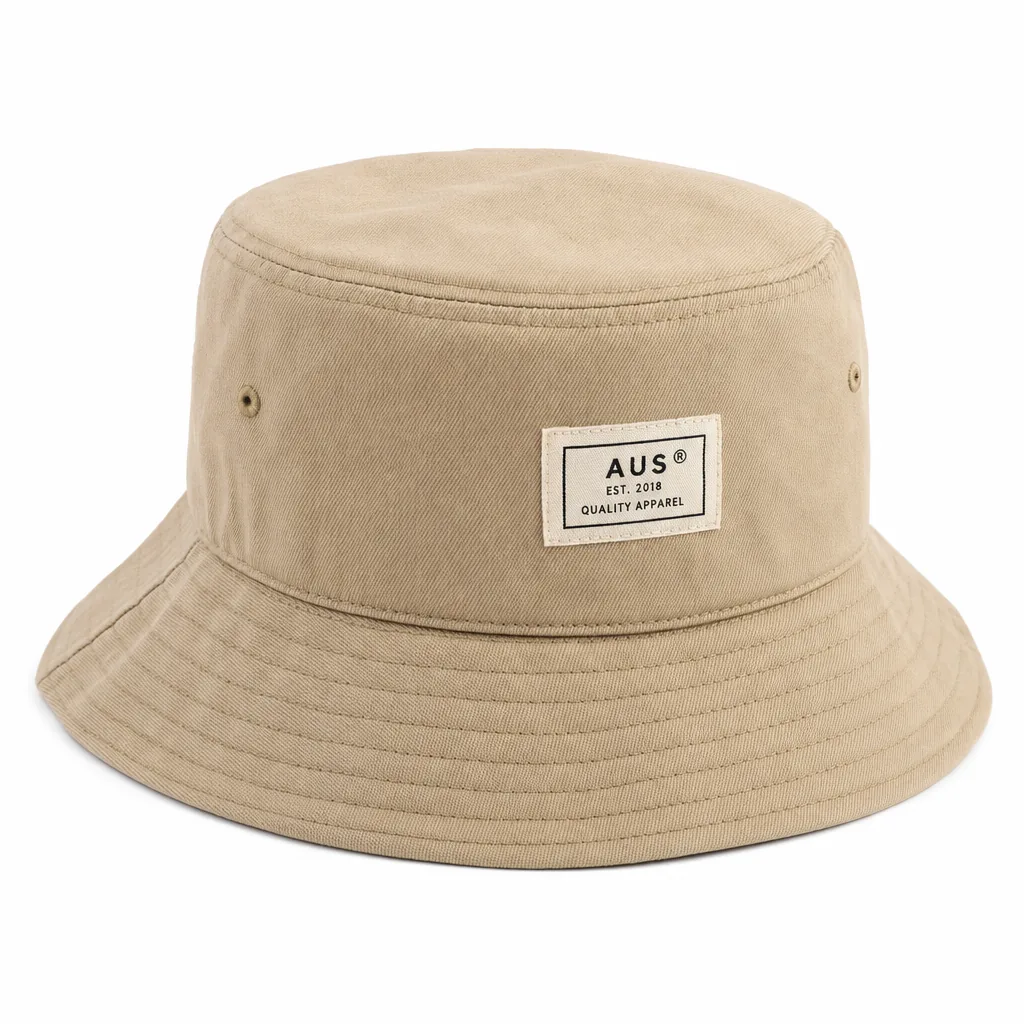
The two retail silhouettes that consistently outperform outside standard tournament issue are the low-profile 5-panel and the rope hat, but they serve different buyers. A true golf 5-panel uses a seamless front panel, lower crown height, and cleaner side profile, which is why it sells better in resort shops, private-label collections, and streetwear-influenced club merchandise. Without a center seam, oversized satin-stitch logos, silicone heat transfers, printed appliques, and molded patches show less distortion and fewer push-pull problems during sewing. In practical terms, it is the better silhouette when the logo is large, horizontal, or design-led rather than sponsor-led. It looks more premium on shelf, but the fit is less universal than a mid-profile 6-panel, so it is usually a retail-first style rather than the default event cap. Rope hats win on instant category recognition. The spec is usually a semi-structured crown with a slightly taller face and a 3-5 mm braid positioned about 5-8 mm above the visor seam; move that rope more than 2-3 mm off target and the cap starts to look cheap even if the embroidery is flawless. In club stores and destination golf, that nostalgic profile often outperforms a basic performance cap when the buyer wants stronger visual differentiation and higher perceived value. Bucket hats and visors remain secondary silhouettes. Buckets in 110-160 gsm poly micro-ripstop or lightweight stretch woven can work for hot-weather tournaments and resort programs, especially with fabric-stage UPF 50+ verification, but decoration is limited. Visors are typically 15-20% lower FOB than a full cap because they use less material and fewer sewing steps, yet they sell narrowly because fit forgiveness and logo real estate are both reduced.
Why golf demands performance fabric (not cotton twill)
Cotton twill is a bad baseline for custom golf hats because it stores moisture instead of moving it. A standard brushed twill shell at 220-260 gsm can absorb enough sweat during a 4- to 5-hour round that the hat gains noticeable weight, the sweatband stays wet, and the front panels soften by the back nine. On the factory side, we see the same failure pattern repeatedly: salt rings at the lower crown, visor-edge puckering after wet-dry cycles, and buckram distortion where the front profile loses its clean shape. Once UV is above 6 and ambient temperature is over 80°F, that slow dry-down stops being a minor comfort complaint and starts driving returns from resort and pro-shop accounts. The right spec is usually a 100-150 gsm microfiber polyester or a 125-140 gsm poly-spandex woven shell, typically in 50D-75D yarns, finished for capillary wicking and quick evaporation. That fabric spreads sweat across a larger surface area so it can flash off instead of soaking into the crown. Pair it with a 25-35 mm moisture-management sweatband, laser-perforated side or rear panels, and a light structured front, and the hat keeps its fit much better than cotton twill in hot-weather wear. For ventilation zones, 75D-150D mesh is the practical range; heavier mesh kills airflow and makes the cap feel dead on head, especially in humid markets like Florida or Southeast Asia.
Performance fabric also behaves better in production and decoration. Lightweight woven polyester holds cleaner dimensions than cotton after sewing, heat-setting, and repeated wear, which matters on 5-panel and 6-panel golf silhouettes where even slight panel growth shows up as wrinkling around the logo area. Embroidery is more stable as well: on Tajima or Barudan heads, a low-stitch-count logo or small 3D satin build sits flatter on dry, stable polyester than on cotton that swells when damp and shrinks again when it dries. For technical logos, TPU heat-transfer badges or welded patches usually outperform heavy embroidery because they add less weight to a lightweight shell and avoid tunneling on perforated panels. The cost premium is real but small compared with the risk of getting the fabric spec wrong. Moving from basic cotton twill to a true golf-performance shell typically adds $0.35-$0.90 per cap, depending on spandex content, perforation method, finish chemistry, and whether the fabric is piece-dyed or sublimated. A capable supplier should be discussing finish durability, not just saying "moisture wicking" on a swatch card. For custom golf hats, we normally want the shell to keep acceptable moisture-management performance after at least 5 home-laundry cycles, with shade control around Delta-E 1.0-1.5 on Pantone-matched polyester where the mill is capable. If a factory cannot talk in terms of denier, gsm, mesh weight, colorfastness, and shape recovery, they are still treating golf headwear like ordinary promo caps.
UPF sun protection for golf programs
If a golf program writes UPF 50+ into the PO, treat it as a testable compliance requirement, not a vague fabric preference. Too many suppliers say “polyester is naturally sun protective” and then ship a cap built from a different mill lot, lighter shade, or more open knit than the lab sample. In real production, a 140-160 gsm polyester interlock or mini-pique in navy, black, or dark heather will usually outperform the same construction in white, stone, or pastel, and perforated side panels can knock the result down fast. For custom golf hats going to Australia, Arizona, Florida, or Hawaii, buyers increasingly want a report tied to the actual shell fabric or finished cap, not a generic mill declaration. The practical route is lab testing through SGS or Bureau Veritas to AATCC 183 or AS/NZS 4399, depending on the customer’s market. Budget about $300-$500 per SKU for a valid report, and do not assume one certificate covers every colorway. UPF shifts with gsm, yarn denier, dye depth, mesh content, seam density, and even whether the crown uses laser-cut vents. We usually lock the approved shell by mill lot, retain swatches against the PO, and test the lightest color first because that is the hardest one to push over the UPF 50+ line. If white passes, darker shades normally pass with more margin.
Certified UPF costs real money, and the upcharge is not only the chemistry. A UPF 50+ knit or woven generally adds $0.18-$0.45 per cap at 1,000-3,000 pieces, depending on finish type, fabric yield, and whether the mill tightens the construction with 75D or 100D filament yarns to block UV mechanically. That choice affects hand feel and moisture management. Some UV finishes also shift surface tone enough to matter when the buyer is matching a Pantone TCX standard with a Delta-E tolerance under 1.5, especially on bright whites and clean resort colors. This is where many briefs contradict themselves. Buyers ask for ultra-breathable custom golf hats with bonded seams, low-gsm shells, rear mesh, and laser perforation, then expect certified UPF 50+ across the entire cap. Those goals often conflict. Every vent hole or open-structure panel improves airflow but weakens UV performance at that point. If the hats are for tournament giveaways, cooling may matter more than certification. If they are for junior academies, caddie teams, or resort staff working six-hour outdoor shifts, coverage should take priority over ventilation. The cleanest spec sheet separates “UV-resistant fabric” from “certified UPF 50+ finished hat” so procurement does not find out after bulk production that the cap felt good on course but failed the program requirement.
Moisture-wicking sweatband: the detail buyers don't notice until summer
The sweatband is the first place summer headwear fails, and buyers usually discover it after wear-test complaints, not during sample review. A brushed cotton or cotton twill band can feel fine in an air-conditioned showroom, but on a golf course at 82-95°F and 70%+ humidity it saturates quickly, especially by the back nine. Once loaded, it holds moisture against the forehead, increases front-crown weight, and leaves visible salt lines at the seam allowance. For custom golf hats, the practical spec is a moisture-wicking knit sweatband at 180-220 gsm in polyester-elastane, typically 88/12 or 92/8, with a brushed skin side and a more open outer face to push moisture into the crown for evaporation. The cost increase is modest, usually $0.15-$0.25 per cap at scale, but the difference in hot-weather comfort is not subtle. Do not accept vague trim language like "sports sweatband" in a tech pack. Specify fiber content, finished weight, cut width, stretch direction, and color standard if it needs to align to a Pantone TCX reference. Below roughly 8% elastane, recovery drops and the band starts to bag after repeated wear; too much spandex can make the hand slick and unstable. Construction matters just as much as material: a flatlock or clean 4-needle coverstitch at the back opening is noticeably better over 18 holes than a bulky overlap seam. On lightweight shells such as 70-100 denier performance woven polyester, micro-perf fabric, or laser-perforated side panels, a wicking band performs better because moisture has a path out of the crown instead of being trapped inside.
MOQ is rarely the problem. Black, white, and heather gray wicking sweatband tape is usually stocked by trim mills, so most custom golf hats can upgrade from cotton without changing pattern pieces or order minimums. The bigger risk is chemical and color performance after exposure to sweat salts, sunscreen, and UV. For white or pale bands, ask for perspiration fastness and crocking test results; if the shell is dark, heavily dyed, or sublimated, also request a migration check at the forehead edge. A poor finish can bleed once salts and sunscreen start breaking down the dye system, and that stain becomes a warranty issue fast. At CrownsForge, we flag this in pre-production because rejecting a trim lot before sewing is far cheaper than dealing with returns. This is also one of the easiest places for a factory to quietly strip cost out of a summer performance style. If the FOB price looks aggressive but the inside spec is still plain cotton, assume that choice was intentional. Better pro-shop programs, tournament merchandise, and licensed runs usually reject cotton bands because the complaint pattern is predictable: visible sweat marks, slower dry-down, more odor retention, and distortion after hours of saturation. AQL 2.5 inspection will not catch that at packing because the defect appears in wear, not in carton condition. In real use, a $0.20 trim upgrade improves perceived quality more than many visible add-ons buyers spend money on.
Rope hats: why this silhouette became the golf hero category
Rope hats became the hero silhouette in golf because they solve two retail problems at once: they read from a distance, and they hold decoration better than most soft performance caps. The rope itself is inexpensive—a 3 to 4 mm braided polyester or cotton-poly cord inserted at the crown-to-visor seam usually adds only $0.06 to $0.18 per unit at scale—but it creates a hard visual horizon line that makes the cap stand out on a pro-shop wall from 15 to 20 feet away. More important, the silhouette usually gives you a flatter, taller front panel, which is exactly what embroidery needs. Most custom golf hats in this lane are structured 5-panel pinch fronts or mid-profile 6-panel builds with crown heights around 9 to 10.5 cm, made in 140 to 180 gsm poly twill, taslon, or stretch woven polyester with buckram, EVA foam, or fusible backing behind the face panel. On Tajima, Barudan, or ZSK heads, a 6,000 to 9,000 stitch logo will generally track cleaner on that geometry than on a limp dad cap or aggressively curved unstructured profile, especially when the artwork includes satin borders, small text above 4 mm, or 2.5 to 3 mm 3D puff.
The reason rope hats took over the 2020s golf market is not nostalgia; it is channel efficiency. One silhouette can serve club shops, member-guest events, sponsor programs, and DTC drops without looking too technical or too traditional. That matters because buyers do not want separate inventories for resort merch, tournament giveaways, and lifestyle product. A good rope hat also gives more decoration options than lightweight laser-perforated performance caps: flat embroidery, 3D puff, TPU patches, woven badges, chenille, chain stitch, and printed or contrast undervisors all sit well if the front panel is properly stabilized. In production, the styles that get reordered are the ones with disciplined trim control and fit consistency. The rope should run level within 2 mm across the front seam, brim symmetry should be checked left-to-right, and snapback closures should pass repeated open-close cycles without whitening or cracking. Our standard practice is to verify trim and body color against approved Pantone TCX references with a Delta-E target under 1.5 and inspect finished caps at AQL 2.5, because crooked rope, weak front support, or a shiny off-shade visor is far more obvious on custom golf hats than on basic promo headwear.
Tournament + club merchandise compliance and timing
In tournament merchandise, the only date that matters is in-hands. For custom golf hats tied to a member-guest, club championship, or sponsor-backed amateur event, artwork, quantities, and packaging specs should be frozen 90 to 120 days before play. That sounds conservative until approvals start stacking: club committee sign-off, sponsor brand review, and licensed-logo clearance if a college or tour mark is involved. A practical backward plan is 2 to 4 working days for digitizing cleanup, especially when side-panel text or closure-tab copy drops below 4 mm cap height; 5 to 7 days for sew-out, fabric handfeel check, and lab-dip approval; 18 to 30 days for production; 3 to 5 days for AQL 2.5 final inspection, carton consolidation, and export booking. Transit is the variable buyers underestimate: courier is 4 to 7 days door-to-door, air freight 7 to 12, and ocean typically 22 to 35 days port-to-port before customs, drayage, and final delivery. Add 2 to 3 working days if the program includes hangtags, UPC stickers, or kitting with polos and towels, because packing errors are usually discovered at the end, when fixes are most expensive.
Technical decoration compresses that timeline fast. Performance shells in the 120 to 160 gsm range, whether poly-spandex, micro-perforated polyester, or lightweight brushed twill, do not run like standard 230 gsm chino twill. Small lettering over seam junctions, rope-cap front panels with different buckram weights, and silicone or TPU patches all need preproduction verification on Tajima, Barudan, or ZSK heads to control registration, puckering, and thread breaks. Our standard practice is to hold an extra day for seam-tolerance checks on 5-panel and unstructured golf silhouettes because front-panel distortion is the quickest way to turn a premium order into seconds. Skipping strike-offs to save a week usually costs more time later in rework, especially when sponsor marks have minimum clear-space rules or placement specs measured from the visor stitch line and side seam. Color is the other common delay point: Pantone TCX is only a reference, not a guarantee, across polyester microfiber, recycled woven performance fabric, twill tape, and woven labels. For pro-shop retail, I would not accept anything looser than Delta-E 1.5 under D65 lighting; event merchandise can sometimes live with 2.0 if every component, including Madeira Polyneon or Gunold thread, is approved together on physical swatches rather than screen proofs.
Club retail follows a different clock from one-off tournaments. If a pro shop wants inventory on the floor for May through September, January booking is the sensible cutoff, because once the PGA Show cycle passes, embroidery capacity, moisture-wicking blank inventory, and dyed performance fabric availability tighten quickly. Serious planning means locking not just colorways but also size ratio assumptions, carton pack, barcode format, and replenishment logic early, especially if the order includes peggable polybags, mixed-color case packs, or private-label swing tags. MOQ also shifts with complexity. For stock moisture-wicking bodies with direct embroidery, 144 to 288 pieces per colorway is typical. Once you add custom woven labels, proprietary sweatband tape, laser-cut perforation patterns, or molded silicone patches, a real factory quote usually starts at 300 to 500 pieces per colorway to keep setup and wastage under control. Miss the booking window and the penalty is rarely dramatic, but it is real: unit cost commonly rises by $0.30 to $0.80 per cap in spring peak season, and the bigger problem is reduced fabric choice and less room for sample revision before the selling season starts.
Working with CrownsForge on golf programs
For custom golf hats, fabric spec matters more than the front sketch because golf programs fail on heat, sweat, and repeat wear long before they fail on concept. The dependable range is 120-180 gsm performance woven: 75D microfiber peach when the customer wants a softer hand, 50D/72F mechanical-stretch polyester for cleaner laser perforation and less seam grin, or 88/12 recycled polyester-spandex when recovery and comfort matter more than a rigid front. Any factory worth using should provide swatches with fiber content, yarn denier, finish, and wash shrinkage, because two shells that look similar on a shade card can behave very differently under embroidery tension, heat-transfer dwell time, and seam pucker testing. That gap shows up immediately on vented side panels, bonded seam tape, and low-profile unstructured crowns. Repeatability is what separates a real golf program from a promo order. Crown pattern, front-panel height, visor curve, buckram thickness, rope diameter, and closure placement should be frozen from the approved sample and checked in-line, not just at final inspection. A 3-4 mm shift in crown height or a softer PE visor board is enough to make a reorder look like a different style in a pro shop, even if the logo sew-out is perfect. At CrownsForge, we treat fit points as production controls, with visor arc and panel height verified against the sealed sample during sewing and forming. Buyers usually notice silhouette drift before they notice stitch density, so stable tooling and archived specs matter more than constant redevelopment.
UPF claims and decoration need tighter discipline than many buyers realize. If custom golf hats are sold with sun-protection language, the exact shell fabric and color should be tested by a qualified third-party lab to AATCC 183; you cannot reuse a UPF 50+ report from one 150 gsm polyester twill on another fabric with different denier, weave density, or perforation spacing. Color control should be written the same way. If logos, rope, or closure tape are matched to Pantone TCX, agree the tolerance before sampling; for visible trims and transferred logos, Delta-E under 1.5 is a realistic target when the substrate allows it. Without that discipline, reorder variance becomes an argument instead of a measurement. Timelines stay reasonable when approvals are exact. A sales sample usually takes 7-10 days for standard flat embroidery, applique, or silicone heat transfer, and 10-14 days when the program needs fresh digitizing for Tajima or Barudan heads, lab dips for rope and hook-and-loop tape, or custom TPU patches. Bulk production is typically 25-30 days after sample sign-off and deposit if the shell fabric is ex-stock; custom-milled fabric, branded metal closures, or dedicated perforation dies will push that to 35-45 days. MOQ should follow process efficiency, not wishful budgeting: 144-300 pieces per color is workable for straightforward embroidered styles, while mixed-decoration or retail-packed programs usually need 500-1,000 pieces. FOB Yiwu pricing for a clean 6-panel performance golf cap generally lands around $3.20-$4.80, with molded patches, branded trims, moisture-wicking sweatbands, and individual polybag-plus-insert packaging pushing it beyond $6.00.
Frequently Asked Questions
What file format should I send for my logo?
Vector files (AI, EPS, PDF) are ideal. High-resolution PNG or JPG at 300 dpi on transparent background works as a fallback. Provide Pantone color references for accurate reproduction.
Which shipping methods do you support?
We support FOB, CIF and DDP shipping. Air express for samples and small orders, sea LCL for 100 to 500 pieces, sea FCL for 5,000+ pieces. Door-to-door DDP available for US, EU, UK, Canada and Australia.
Can I order a sample before bulk production?
Yes. We strongly recommend approving a pre-production sample before mass production. Samples are charged at 35 to 60 USD each plus express shipping, fully refundable against confirmed bulk orders over 500 pieces.
What logo decoration techniques do you offer?
3D puff embroidery, flat embroidery, woven patch, leather patch, PVC patch, screen printing, sublimation, applique and laser etching, all in-house with no subcontracting.
What is the minimum order quantity (MOQ) for custom hats?
Our standard MOQ is 100 pieces per design and color, with sampling available from 1 piece. For complex multi-color logos or premium fabric upgrades, the MOQ can be lowered with a small per-piece surcharge.
What's the MOQ for custom embroidered baseball caps no minimum?
When evaluating custom embroidered baseball caps no minimum, the key considerations are construction quality, decoration capability, MOQ flexibility and lead time. Performance baseball cap with curved brim, 5-panel low-profile golf cap, rope hat with rope detail above the brim, performance bucket hat, and visor. Each has a specific use case — driving range, tournament play, club merchandise programs and pro-shop retail. Standard cotton twill absorbs perspiration and stays heavy. Golf demands moisture-wicking polyester (typically…
How does ordering baseball cap custom logo work?
When evaluating baseball cap custom logo, the key considerations are construction quality, decoration capability, MOQ flexibility and lead time. Performance baseball cap with curved brim, 5-panel low-profile golf cap, rope hat with rope detail above the brim, performance bucket hat, and visor. Each has a specific use case — driving range, tournament play, club merchandise programs and pro-shop retail. Standard cotton sweatband saturates within 9 holes of summer play; polyester-elastane wicking sweatband moves…
How does ordering custom baseball team hats work?
When evaluating custom baseball team hats, the key considerations are construction quality, decoration capability, MOQ flexibility and lead time. Performance baseball cap with curved brim, 5-panel low-profile golf cap, rope hat with rope detail above the brim, performance bucket hat, and visor. Each has a specific use case — driving range, tournament play, club merchandise programs and pro-shop retail. Rope hats (a 5-panel or 6-panel cap with decorative rope above the brim, often in contrast color) became the golf…
What's the MOQ for custom logo hats no minimum?
When evaluating custom logo hats no minimum, the key considerations are construction quality, decoration capability, MOQ flexibility and lead time. Rope hats (a 5-panel or 6-panel cap with decorative rope above the brim, often in contrast color) became the golf cap of the 2020s. Originally a fishing/outdoor silhouette adopted by Imperial, Melin and Branded Bills. We produce equivalents at MOQ 100 pieces. Performance baseball cap with curved brim, 5-panel low-profile golf cap, rope hat with rope detail above the brim,…
Ready to start your custom hat project?
Send us your tech-pack, sketch or even just an inspiration photo. We will respond with a detailed quotation and digital mock-up within 24 hours.
Request a free quoteRelated guides
Cap Defect Catalog: 32 Production Issues to Inspect For - Cost & MOQ Breakdown - Cost & MOQ Breakdown
Read article →
Cap Fabric Guide: Cotton Twill, Wool Blend, Polyester & Performance Materials
Read article →
Custom Wool Blend Ball Cap: A 2026 B2B Sourcing Guide - Supplier Checklist - 2026 Buyer's Guide
Read article →If you are ready to take the next step on custom golf hats: a manufacturer's guide to performance headwear - cost & moq breakdown - cost & moq breakdown - cost & moq breakdown - supplier checklist, our team can put a tailored quotation and digital mock-up in your inbox within 24 hours. Send the inquiry form on our contact page or message us directly on WhatsApp.