
Custom Golf Hats: A Manufacturer's Guide to Performance Headwear - Cost & MOQ Breakdown - Cost & MOQ Breakdown - 2026 Buyer's Guide - Cost & MOQ Breakdown (2026 Update)
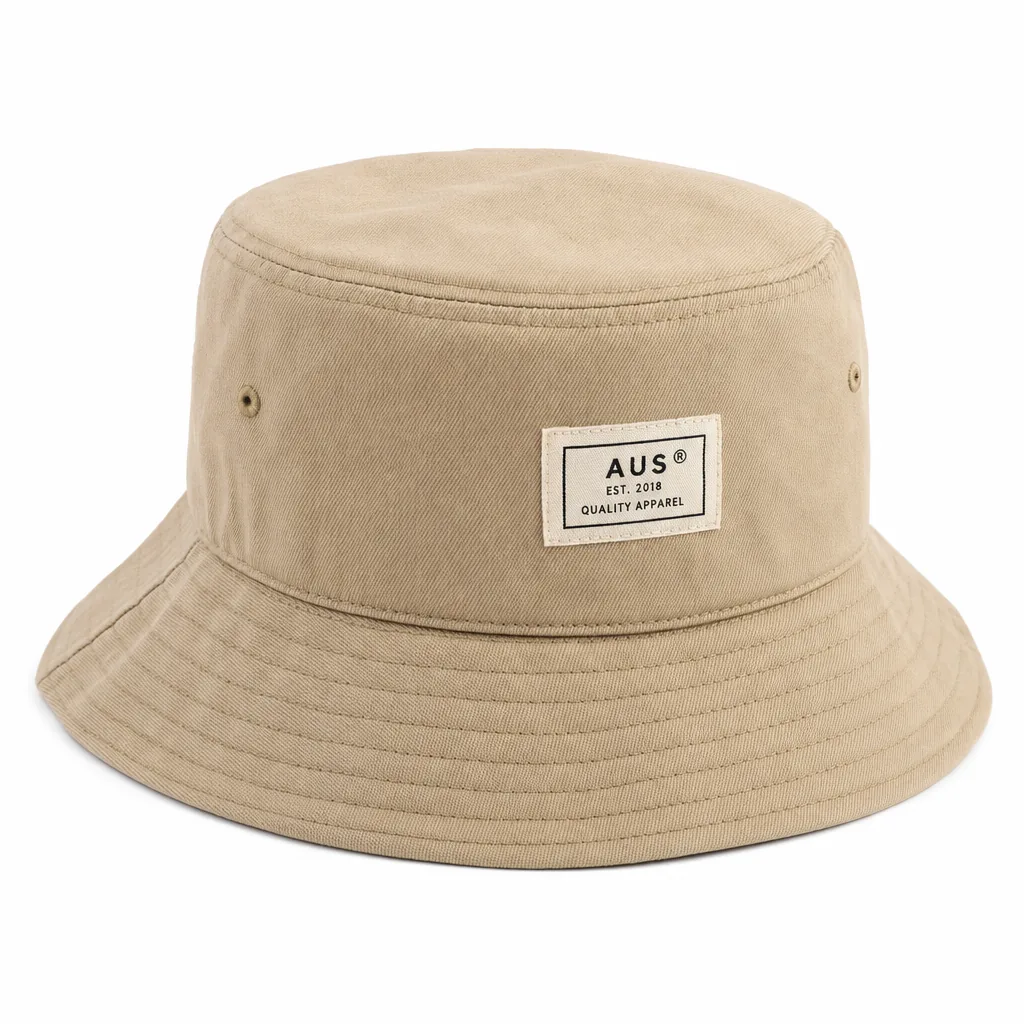
Every week, our sales team answers detailed questions about custom golf hats: a manufacturer's guide to performance headwear - cost & moq breakdown - cost & moq breakdown - 2026 buyer's guide - cost & moq breakdown (2026 update). We wrote this guide so that wholesalers, streetwear brands, corporate buyers and promotional resellers can compare options with full information, and avoid the traps that show up only after production has started.
The golf-specific silhouettes that dominate retail and tournament programs
Retail and tournament volume still sits with the structured or semi-structured 6-panel, pre-curved performance cap because it solves the two fit complaints golfers actually mention: visor glare and heat buildup at the side crown. The commercial spec is usually 120-160 gsm polyester-spandex or brushed microfiber, commonly 92/8 or 95/5, with laser-perforated side or rear panels, a 25-32 mm moisture-wicking sweatband, and a medium-profile front supported by light fused backing rather than heavy buckram. For custom golf hats, this silhouette is the safest buy across club shops, corporate outings, and licensed event programs because it fits a wider head-shape range than low-profile fashion crowns and accepts flat embroidery, TPU transfers, welded patches, or restrained 3D puff under 5 mm without distorting the panel. Realistic MOQ is 144-300 pieces per colorway, and FOB China pricing is typically $3.10-$5.80 depending on closure, fabric mill source, and whether decoration runs on Tajima or Barudan heads versus heat-applied trims.
The main factory risk on this shape is crown recovery after packing, not sewing difficulty. Light performance shells, especially recycled twill or 110-120 gsm poly, can lose front-profile memory in a 24-piece export carton if the panel support is too soft or the visor is over-curved before packing. On our line, we check recovery after a 48-hour stacked-load compression test and flag any lot where the front panel does not rebound cleanly before final AQL 2.5 inspection. Buyers ordering custom golf hats for tournament drops should ask for crown-retention testing at development stage, because a cap can pass final QC and still arrive tired after 28-35 days of ocean transit. This same silhouette also gives the best repeatability on reorders: fewer fit complaints than shallow 5-panels, lower trim-failure rates than rope styles, and more consistent logo registration when a club crest has to match across multiple PO cycles.
The growth shapes are the low-profile 5-panel, rope cap, and a smaller but steady bucket/visor segment, but each has tighter tolerances than buyers assume. A 5-panel works well for clubhouse retail because the seam-free front gives cleaner stitch registration for wordmarks, tonal crests, and compact 3D embroidery; small serif details hold better when there is no center seam pushing stitches off track. Most specs land at 130-180 gsm lightweight twill or performance poly with a shallow crown and slight-curve visor. Rope caps are less forgiving: a 3-5 mm braid above the visor creates a hard alignment line, so even 2 mm of drift reads immediately as defective, especially on white, stone, and muted resort colors. We normally hold rope color to Pantone TCX within Delta-E 1.5 and add extra visual checks after visor setting. Buckets and visors belong in event, caddie, and hot-weather programs, not as filler SKUs; visors usually run $2.20-$4.10 FOB at 288 pieces, while performance buckets in 75D-150D polyester or microfiber are closer to $3.60-$6.20 because fabric yield, brim stitching, and decoration handling are less efficient.
Why golf demands performance fabric (not cotton twill)
Cotton twill is the wrong baseline for golf because it stores moisture where the player notices it first: the sweatband, lower front panel, and visor edge. Most promo-grade twill used in cheap caps is 220-280 gsm brushed cotton; after 4-5 hours in direct sun, it picks up sweat, sunscreen, and salt, then starts showing tide marks above the eyebrow seam. It also gains weight and loses body, especially on unstructured or lightly fused crowns. For custom golf hats, that is not a minor comfort issue; it changes fit, appearance, and how long the cap still looks retail-ready by the back nine. A 100-150 gsm microfiber polyester or poly-spandex shell is the better engineering choice because it absorbs less moisture, dries materially faster, and keeps the crown from going soft during wear. The useful spec is not "performance fabric" on a tech sheet; it is denier, weave, and finish. In production, 50D-75D filament polyester in a tight plain weave, mini-ripstop, or mechanical-stretch construction gives the most consistent result for golf. Add a moisture-management finish that improves capillary spread, and sweat disperses across the panel face instead of forming one dark patch at center front. The sweatband matters just as much: polyester interlock, microfiber tricot, or Coolmax-type bands recover far better than cotton terry. Dense front embroidery can undo that benefit by turning the hottest area of the cap into a stiff heat trap, so stitch count, underlay, and backing weight need tight control on Tajima or Barudan runs when building custom golf hats with larger logos.
Golf is also brutal on dyeing and finishing, which is where cotton twill starts looking old long before it is actually worn out. UV exposure, sweat salts, and repeated drying cycles make cotton fade unevenly, especially on navy, black, stone, and white, where staining and panel-to-panel variation are obvious. Properly finished polyester holds up better, particularly solution-dyed or high-colorfastness stock that can stay within a commercial Delta-E tolerance around 1.5-2.0 against the approved Pantone reference. On licensed programs or repeat resort orders, that color stability matters more than buyers expect because a cap that misses shade tolerance on the second PO is a claim, not a styling problem. The cost premium is smaller than most sourcing teams assume. Moving from basic cotton twill to a solid 120-140 gsm performance polyester usually adds about $0.18-$0.45 per cap at normal factory MOQs, depending on spandex content, laser perforation, and whether the mill supplies wicking and colorfastness data. That is cheap insurance against returns tied to sweat staining, crown collapse, and inconsistent reorders. Our standard practice is to treat shell fabric as the first technical decision on golf headwear, then build decoration and construction around it. If the shell is wrong, no better closure, nicer patch, or cleaner embroidery will rescue custom golf hats that feel hot, heavy, and visibly wet by the third hole.
UPF sun protection for golf programs
UPF problems on custom golf hats usually start with documentation, not the fabric itself. A dense 120-160 gsm polyester microfiber or 150D high-cover woven can often test around UPF 30 without special treatment, but that does not support a contractual UPF 50+ claim. If a golf program is shipping into Arizona, Florida, Hawaii, or Australia, the shell fabric needs a current lab report tied to that exact material and construction, not a mill sales sheet. The most reliable builds are solution-dyed polyester, tight-cover recycled PET twill, or a mill-finished fabric with a declared UV-absorbing treatment on the lot paperwork. Most importers will accept AS/NZS 4399 or AATCC 183 results from SGS, Intertek, or Bureau Veritas. Expect $300-$500 per SKU for testing, and treat one SKU as one fabric set and one construction family. Swap woven side panels for mesh, add laser perforation, or change the crown fabric, and the original report may no longer apply.
Design details can quietly kill a strong UPF result. Mesh backs, side perforations, eyelet placement, contrast paneling, and oversized direct embroidery all reduce effective coverage, so testing a stock swatch is meaningless when the finished cap has different open-area geometry. Our standard practice is to lock shell fabric first, approve shade to Pantone TCX within an agreed Delta-E tolerance, then freeze the panel layout before bulk. Lead time matters too: lab work usually adds 5-10 business days after sample yardage is ready, and a failed first submission can push production back another week. The cost premium is usually modest on a standard 6-panel golf cap, roughly $0.18-$0.45 FOB per piece at 1,000 units for a certified UPF 50+ shell versus a generic UPF 30 fabric. The pain shows up at low volume, because a dyed-to-order mill may require 300-500 meters and the lab fee gets spread over only 144-300 hats. That is why disciplined buyers keep one approved shell across multiple logos, tournaments, and pro-shop drops, then vary embroidery, closures, labels, and undervisor color without reopening the compliance file.
Moisture-wicking sweatband: the detail buyers don't notice until summer
The sweatband is where custom golf hats usually fail first in hot weather, and the failure is predictable. A standard cotton twill band absorbs sweat quickly, but it dries slowly and holds salt, sunscreen, and skin oils right against the forehead. In real summer use—86-95°F, high UV, four to five hours on course—that band is often saturated by the turn, especially in structured 6-panel caps with 2.0-2.5 mm foam laminations or stiff buckram fronts that trap heat. Once loaded, cotton loses handfeel fast: it turns clammy, dries stiff, and starts yellowing long before the crown fabric shows wear. Buyers rarely log this as a lab issue; they hear it later as “felt hot” or “got uncomfortable after nine holes,” which is exactly why weak sweatband specs survive sampling. The practical upgrade is not exotic. A knitted polyester-elastane sweatband, typically 88/12 or 92/8 at 140-180 gsm, performs better because the brushed face sits softer on skin while the outer face spreads moisture for faster evaporation. If you want the spec to mean something, ask for wicking and perspiration colorfastness test results, not just “performance sweatband” on a BOM. We usually target colorfastness to perspiration at grade 4 minimum and watch dark shades closely, because low-grade disperse dyes on black or navy bands can crock or migrate into white seam tape after repeated wear. On light-colored golf programs, that bleed shows up faster than embroidery defects.
The cost delta is too small to justify cutting corners. Upgrading from a basic cotton band to a moisture-management knit usually adds $0.15-$0.25 per cap FOB at typical order volumes; if you need dyed-to-match trim against a Pantone TCX standard with Delta-E below 1.5 on dark colors, expect closer to $0.26-$0.30. MOQ is rarely the blocker. Most mills supplying cap components can support 144-288 pieces per colorway without forcing changes to the rest of the BOM. The bigger issue is compatibility with the hat build: a 75D or 100D lightweight polyester shell, laser-perforated side panels, and low-bulk seam tape help the sweatband actually do its job instead of fighting against a heat-trapping crown. Construction discipline matters as much as material selection. I have seen good wicking bands ruined by excessive stitch density at the join seam, creating a pressure ridge that players feel by the back nine. For golf, keep the attachment clean, flexible, and balanced—typically 6-8 SPI is enough, with no extra needle passes through thick front-panel transitions. Vent placement matters too. Embroidered eyelets are acceptable, but laser perforation or engineered mesh in side and rear panels dumps heat more efficiently when the front is logo-heavy. For green-grass shops, tournaments, and resort programs, this is not a luxury finish anymore. If a buyer focuses only on silhouette and logo decoration, the custom golf hats may look sharp in a sales sample but still generate comfort complaints once July humidity shows up.
Rope hats: why this silhouette became the golf hero category
Rope hats became the hero shape in golf because they solve a retail problem better than almost any other silhouette: they make the front logo read bigger without forcing the wearer into a tall tour cap. A 3 to 5 mm braided rope, usually polypropylene or polyester, set about 6 to 8 mm above the visor seam creates a hard horizontal break across the crown; on a 5-panel pinch-front body, that visual line enlarges the apparent decoration area and helps the cap sell from a 1 to 1.5 meter shelf view. That matters in pro shops, resort stores, and tournament gifting, where custom golf hats are often judged before anyone touches the fabric. The sweet spot is a medium-high front, roughly 8.5 to 9.5 cm, with a pre-curved visor and semi-structured hand feel. It sits between lifestyle and technical performance: cleaner than a washed dad cap, less severe than a high-crown tour fit, and wearable across younger streetwear buyers and older club members without looking forced.
From a manufacturing standpoint, rope hats are less forgiving than they look. The stable build is usually a 5-panel or 6-panel semi-structured shell with light buckram, a moisture-wicking sweatband, and either 140 to 180 gsm polyester twill or 90 to 120 gsm nylon/spandex for lighter performance programs. A properly fused front panel runs cleanly on Tajima or Barudan heads and will hold 5,000 to 9,000 stitches with much less push-pull distortion than a soft low-profile cap, which is why flat embroidery, light 3D puff, and satin-edge patches all work well on this silhouette. Pricing stays efficient only when the spec is disciplined: at 100 pieces, a rope-style custom golf hat with stock rope, snapback, and standard embroidery typically lands around $4.80 to $7.20 ex-factory; at 300 to 500 pieces, more like $3.60 to $5.80. The usual cost traps are custom-dyed rope matched to Pantone TCX, laser-perforated side panels, molded TPU or rubber patches, printed seam tape, and stacked decoration methods that add labor without improving sell-through.
Quality control is where rope hats either look premium or immediately fail at unboxing. The rope has to sit level across the crown with balanced tension, clean heat-cut ends, and identical seam bite at both insertion points; if the panel tension shifts before visor closing, the cord will wave, dip, or twist, and that defect is visible faster than a crooked embroidery file. Our standard practice is to check rope alignment inline before final topstitching and hold finished goods to AQL 2.5, because this trim is the first thing most buyers notice. Performance details matter just as much. Golf headwear gets hit with sweat salt, sunscreen, and trunk heat, so visor board rigidity, sweatband foam density, and colorfastness should be specified, not assumed; for darker shades, keeping panel-to-rope color variation within a practical Delta-E tolerance helps avoid obvious mismatch under daylight. The best 2026 programs keep the story tight: one credible performance fabric, one strong branding method, and trims that support the silhouette instead of crowding it.
Tournament + club merchandise compliance and timing
Approval is what breaks tournament schedules, not sewing capacity. For sponsor-driven events, member-guests, and sectional championships, artwork, size curves, carton splits, and pack instructions should be frozen 90-120 days before the first tee time; inside 60 days, every late logo revision starts multiplying cost through new strike-offs, relabeled inner packs, and revised UPC or sponsor inserts. Color is usually the slowest gate. Protected greens, deep navies, and metallic-accent logos routinely take 10-15 business days because we match against Pantone Solid Coated or Pantone TCX on the actual shell fabric, not on a monitor and not on generic lab dips. A 92/8 polyester-spandex shell, cationic heather twill, and 110 gsm microfiber can all shift the same Pantone differently, especially after heat setting and moisture-wicking finish. For custom golf hats, a workable control standard is Delta-E below 2.0 for dyed trims and below 3.0 for heat-transfer graphics, but only when the same supplier controls fabric lot, decoration, and finishing. On our standard practice at CrownsForge, sponsor sign-off includes the actual closure, sweatband print, and carton mark, because those are the details that get missed when buyers approve only a front-logo photo.
Club programs need to be planned like retail, not like event swag. If the sell-through window is May through September, January purchase orders are the safe line, particularly for laser-perforated side panels, recycled polyester yarns, performance mesh, or 110-140 gsm lightweight fabrics that require mill space instead of spot buying. A realistic critical path is 30-35 days for fabric booking, lab dips, and wear-test samples; 7-10 days for embroidery strike-offs on Tajima, Barudan, or ZSK heads; then 25-40 days for bulk production depending on whether the range mixes rope caps, unstructured 5-panels, sandwich visors, woven patch applications, and multiple back closures. Freight needs to be treated just as seriously: ocean freight from Ningbo to a U.S. West Coast DC is typically 18-28 days port-to-port, while DDP air is often 7-12 days but can add $1.80-$3.50 per hat on programs under 1,000 pieces. Once custom golf hats move into pro-shop or resort retail, compliance also gets tighter: country-of-origin and fiber-content labeling are basic, youth sizes can trigger CPSIA tracking requirements, and larger resort groups increasingly ask for sedex-audit-cap-supplier-guide.html">BSCI 2.0 or Sedex SMETA 4-Pillar records. MOQ discipline matters because color consistency does not scale well at tiny volumes; 144 pieces per color is usually the minimum for stable lot control, and 288-500 pieces per style typically improves unit cost by about $0.45-$1.20 depending on shell fabric, closure, and trim count.
Working with CrownsForge on golf programs
The real leverage in a golf program is repeatability, not another trendy silhouette. For custom golf hats, the smartest move is freezing a working bill of materials by fabric code, gsm, denier, sweatband spec, visor board, closure, and approved color lot so reorders do not restart development. In practice, that means maintaining a fabric library with proven constructions: 110-130 gsm mechanical-stretch microfiber for lighter unstructured fits, 140-160 gsm brushed polyester for a softer hand, and 75D-150D woven or warp-knit shells for cleaner 5-panel golf shapes with sharper panel definition. Polyester color control has to be managed by bulk lot, not by paper Pantone alone. Optic white, cool gray, and navy are where weak dye-house control shows up first. The workable standard is Pantone TCX plus approved lab dips, with Delta-E held under 1.5 for core colors and under 2.0 for fashion shades; otherwise a spring delivery and a holiday top-up will look mismatched on the pro shop wall. Most late shipments are caused by incomplete engineering, not lack of sewing capacity. Rope position, visor curve, PE board stiffness, crown height, and closure tension should be signed off before bulk PO release, especially on semi-structured 5-panel golf profiles where a 2-3 mm rope shift makes the front panel read crooked. Decoration also has to be digitized for the actual cap geometry. On Tajima and Barudan capping frames, lower-profile crowns usually sew cleaner with lighter underlay, lower stitch density, and wider satin columns on small text to prevent tunneling across the center seam. Our standard practice at CrownsForge is to cut 8-12% unnecessary stitch count rather than force a dense logo that looks acceptable on the sample but distorts after packing and transit.
Performance claims should be treated like artwork approvals: verify them on the real material, not on assumptions from a swatch card. If you are selling custom golf hats with UPF messaging, test the finished fabric through AATCC 183 or an equivalent lab method, because two 120 gsm polyester fabrics can perform very differently depending on yarn denier, knit density, dye depth, and chemical finish. Dark colors usually pass more comfortably; stone, white, and pastel colorways are where buyers get exposed if hangtags promise sun protection without test data. Moisture management is usually better improved at the sweatband than at the shell. A moisture-wicking polyester or poly-spandex sweatband adds roughly $0.12-$0.28 per cap depending on width, seam construction, print branding, and whether you specify anti-odor treatment. Lead times should be built around sampling discipline and finishing risk, not best-case promises. A realistic pre-production sample cycle is 7-12 days once artwork, trims, and fabric are approved; bulk production is typically 25-32 days FOB Yiwu after sample sign-off and deposit for standard runs of 300-3,000 pieces per colorway. Leave another 3-5 days for inline and final inspection under AQL 2.5, carton drop testing, needle detection if required by the retailer, and export document checks. For buyers running BSCI 2.0 or Sedex SMETA 4-Pillar compliance, factory paperwork should be cleared before booking, not after goods are packed. Embroidery-heavy golf programs usually fail in finishing—loose thread cleanup, crown crush, mixed size labels, or closure scratches—well before they fail at sewing.
Frequently Asked Questions
Do you support sustainability certifications?
Yes. We work with GOTS organic cotton, GRS-certified recycled polyester, OEKO-TEX Standard 100 fabrics, and are BSCI and Sedex audited. Certification documentation can be provided per order.
Can I order a sample before bulk production?
Yes. We strongly recommend approving a pre-production sample before mass production. Samples are charged at 35 to 60 USD each plus express shipping, fully refundable against confirmed bulk orders over 500 pieces.
What is the minimum order quantity (MOQ) for custom hats?
Our standard MOQ is 100 pieces per design and color, with sampling available from 1 piece. For complex multi-color logos or premium fabric upgrades, the MOQ can be lowered with a small per-piece surcharge.
How long does production take?
Sampling takes 7 to 12 days. Bulk production runs 20 to 30 days depending on quantity, fabric availability and decoration complexity. Inspection and packing adds another 3 to 5 days before shipment.
What logo decoration techniques do you offer?
3D puff embroidery, flat embroidery, woven patch, leather patch, PVC patch, screen printing, sublimation, applique and laser etching, all in-house with no subcontracting.
What's the MOQ for custom embroidered baseball caps no minimum?
When evaluating custom embroidered baseball caps no minimum, the key considerations are construction quality, decoration capability, MOQ flexibility and lead time. Performance baseball cap with curved brim, 5-panel low-profile golf cap, rope hat with rope detail above the brim, performance bucket hat, and visor. Each has a specific use case — driving range, tournament play, club merchandise programs and pro-shop retail. Standard cotton twill absorbs perspiration and stays heavy. Golf demands moisture-wicking polyester (typically…
How does ordering baseball cap custom logo work?
When evaluating baseball cap custom logo, the key considerations are construction quality, decoration capability, MOQ flexibility and lead time. Performance baseball cap with curved brim, 5-panel low-profile golf cap, rope hat with rope detail above the brim, performance bucket hat, and visor. Each has a specific use case — driving range, tournament play, club merchandise programs and pro-shop retail. Standard cotton sweatband saturates within 9 holes of summer play; polyester-elastane wicking sweatband moves…
How does ordering custom baseball team hats work?
When evaluating custom baseball team hats, the key considerations are construction quality, decoration capability, MOQ flexibility and lead time. Performance baseball cap with curved brim, 5-panel low-profile golf cap, rope hat with rope detail above the brim, performance bucket hat, and visor. Each has a specific use case — driving range, tournament play, club merchandise programs and pro-shop retail. Rope hats (a 5-panel or 6-panel cap with decorative rope above the brim, often in contrast color) became the golf…
What's the MOQ for custom logo hats no minimum?
When evaluating custom logo hats no minimum, the key considerations are construction quality, decoration capability, MOQ flexibility and lead time. Rope hats (a 5-panel or 6-panel cap with decorative rope above the brim, often in contrast color) became the golf cap of the 2020s. Originally a fishing/outdoor silhouette adopted by Imperial, Melin and Branded Bills. We produce equivalents at MOQ 100 pieces. Performance baseball cap with curved brim, 5-panel low-profile golf cap, rope hat with rope detail above the brim,…
Ready to start your custom hat project?
Send us your tech-pack, sketch or even just an inspiration photo. We will respond with a detailed quotation and digital mock-up within 24 hours.
Request a free quoteRelated guides
Ball Caps for Women: A 2026 Sourcing Playbook for International Buyers
Read article →
5-Panel vs 6-Panel Caps: Construction, Use Cases and Cost Compared
Read article →
Custom Made Trucker Hat: The 2026 Sourcing & Manufacturing Playbook (2026 Update) (2026 Update) - 2026 Buyer's Guide - 2026 Buyer's Guide
Read article →Sourcing custom hats does not have to be complicated. With the right manufacturing partner, clear specifications and a small upfront investment in sampling, you can launch a retail-quality product in 30 to 45 days.