
Custom Golf Hats: A Manufacturer's Guide to Performance Headwear - Cost & MOQ Breakdown - Cost & MOQ Breakdown - 2026 Buyer's Guide - Cost & MOQ Breakdown - 2026 Buyer's Guide
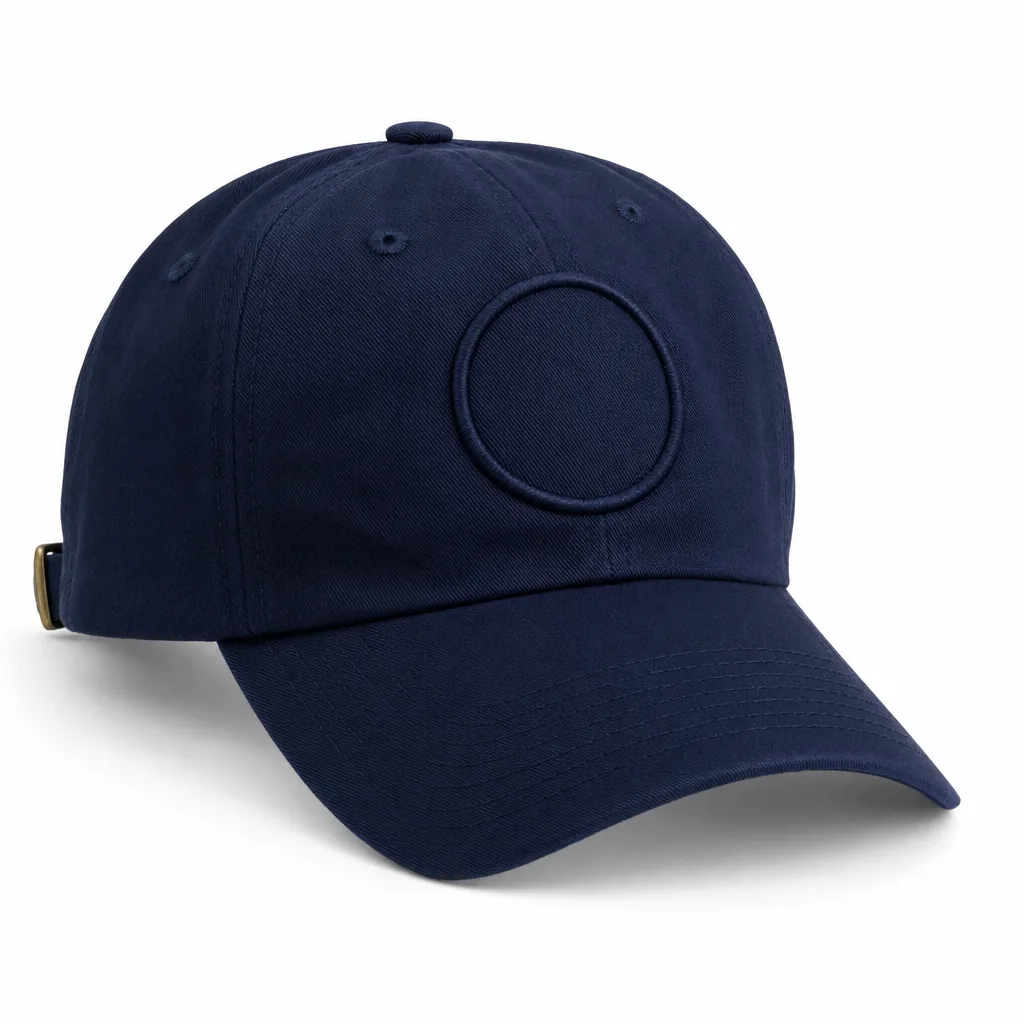
Custom Golf Hats: A Manufacturer's Guide to Performance Headwear - Cost & MOQ Breakdown - Cost & MOQ Breakdown - 2026 Buyer's Guide - Cost & MOQ Breakdown - 2026 Buyer's Guide is one of the most-asked questions we receive from international buyers, and for good reason. With dozens of factories competing for your order and an alphabet soup of technical terms in every supplier quote, even experienced importers can feel lost. This guide consolidates what we have learned producing custom hats for clients in 40+ countries.
The golf-specific silhouettes that dominate retail and tournament programs
The volume leader is still the curved-brim performance cap, not because it is exciting, but because it survives the widest range of tournament, resort, and sponsor use without size-risk or styling complaints. For custom golf hats, the safest retail-and-event spec is a 6-panel mid-profile or a clean 5-panel built in 110-140 gsm polyester stretch woven or 75D/144F recycled polyester, with laser-perforated side panels, a 35-40 mm moisture-wicking sweatband, and a black undervisor to reduce reflected glare on bright fairways. Front crown height is the detail buyers miss: 8.5-9.0 cm gives enough vertical space for a sponsor logo to sew cleanly, while low crowns crush the artwork and exaggerate puckering. On Tajima or Barudan heads, a front logo in the 8,000-12,000 stitch range is stable on this shape if the fabric stretch stays controlled; once spandex content gets too high, TPU patches, weld-on silicone badges, or flat heat transfers hold registration better than direct embroidery.
The low-profile 5-panel has grown fast in pro-shop retail because it reads more current than a standard baseball cap, but it is less forgiving on the sewing line. A single front panel gives a broad decoration field for oversized crests, tonal 3D puff, or high-density flat embroidery, yet it also exposes every weakness in pattern and support: poor seam balance, soft panel tension, or the wrong buckram weight will show as rippling above the eyes. I would normally spec lightweight nylon/spandex or fine-denier polyester with soft front support instead of hard fusing; that keeps the silhouette close to the head and avoids the boxy promo look that kills full-price sell-through. Across factory runs, acceptable visor curve variance should stay within about 5-7 mm, and color approval should be tied to Pantone TCX with a Delta-E target below 1.5 between fabric lots if you want tournament reorders to match.
Rope caps, buckets, and visors only make sense when the sales channel supports them. Rope caps work in private-club merchandise and younger resort programs, but the rope itself needs discipline: 3-5 mm braid diameter, even end knots, and a front panel stiff enough to keep the rope line straight after packing. Buckets are functional in caddie kits, summer staff uniforms, and hot-climate retail if they use UPF 50+ microfiber around 120-160 gsm with a 5.5-6.0 cm brim and clean topstitch spacing; anything heavier gets hot and collapses badly after washing. Visors still sell in women’s events and warm-weather markets, but only if elastic recovery, terry sweatband attachment, and forehead seam finishing are controlled to retail standards. Our standard practice is to inspect these fashion-adjacent shapes at AQL 2.5, because decoration alignment and visible sewing defects are judged much more harshly than on a conventional performance cap.
Why golf demands performance fabric (not cotton twill)
Cotton twill is the wrong baseline for custom golf hats because it manages sweat badly and loses shape when the round gets hot. A standard brushed cotton twill at 220-280 gsm will readily absorb moisture, then hold it in the yarn bundle instead of pushing it outward for evaporation. On a four-hour round, that means the crown gains weight, the front panel shows sweat darkening, and the bill edge starts to feel damp by the back nine. Golf exposes every weakness in an absorbent fabric: direct UV, repeated sweat loading, and alternating airflow between cart, tee box, and walking stretches. In production terms, cotton also has slower dry-back and poorer crease recovery after being stuffed into a side pocket or travel bag. The better starting point is usually a 100-150 gsm microfiber polyester woven, or a 130-170 gsm polyester-spandex shell with 8-12% stretch, because filament yarns shed moisture faster and keep panel geometry more stable.
The shell alone does not make a performance cap; the whole fabric package has to be engineered for heat and sweat. A proper golf build uses a 35-40 mm moisture-management sweatband in Coolmax-type polyester, brushed warp-knit, or spacer mesh, then pairs it with laser-perforated side panels or micro-mesh inserts to increase air exchange without collapsing the crown. That combination moves sweat off the forehead, spreads it across a larger surface area, and reduces the salt-line staining that buyers often see on cotton samples after wear testing. Decoration needs the same discipline. Dense 3D embroidery on a non-breathable front traps heat and distorts faster after repeated wet-dry cycles; on thin poly shells, our standard practice at CrownsForge is to reduce stitch density by roughly 8-12% on Tajima or Barudan heads, use backing only where needed, and avoid heavy underlay that causes puckering. For white or light-color custom golf hats, ask for perspiration colorfastness, UV resistance, and Delta-E control versus Pantone TCX under D65 lighting, because thread-to-shell mismatch becomes obvious across a team run.
UPF sun protection for golf programs
UPF 50+ is a lab result, not a design cue, and that distinction matters when you are sourcing custom golf hats for high-UV markets. A lightweight 120-140 gsm polyester pique or plain weave may feel technical, but untreated 100% polyester often tests anywhere from UPF 25 to 40 depending on yarn denier, cover factor, dye shade, and whether the fabric is stretched or wet in use. Dark navy and black usually score better than pastels because they absorb more UV, while open constructions lose protection fast once you introduce perforation or coarse mesh. If the brief is daily play in Arizona, Florida, Queensland, or resort programs with long on-course exposure, write the requirement exactly as “UPF 50+ certified shell fabric, tested to AATCC 183 or AS/NZS 4399” in the tech pack. If you only specify “sun protection,” many factories will quote standard moisture-wicking microfiber in 75D or 150D and treat the UV claim as implied rather than verified. Testing is cheap compared with a failed bulk run, but buyers routinely underestimate how often they need to retest. SGS, Intertek, and Bureau Veritas typically charge around $300-$500 per SKU for UPF validation, and that “per SKU” language matters: change the shell fabric, switch solid side panels to laser-perforated panels, widen the rear arch, or substitute a different mesh count, and the coverage profile may no longer match the original report. In production terms, moving from standard performance poly to a certified UPF 50+ fabric usually adds about $0.18-$0.45 per cap at 1,000 units, while the bigger constraint is mill minimums of 300-500 meters per color for treated fabric. Our standard practice at CrownsForge is to push smaller golf programs toward stock-supported UPF fabrics and reserve Pantone TCX color matching for core shades, because verified protection is more important than chasing an exact seasonal color on a run that cannot absorb fabric MOQ waste.
Ventilation is where good UV programs get compromised. A cap can wick sweat well and still miss the point of sun protection if the side panels are over-perforated, sandwich mesh is exposed across the crown, or the profile sits so low that it leaves the upper ear line and temple area too open. For tournament merchandise, academy uniforms, and country-club resale, I generally favor a tighter plain weave or interlock shell in the 140-160 gsm range with controlled vent zones rather than a heavily punched silhouette that only looks advanced on a line sheet. The practical tradeoff is simple: every extra square centimeter of open area improves airflow, but it also reduces actual UV coverage unless the vent fabric itself carries a tested rating. The right way to spec custom golf hats is to decide early whether the program prioritizes shade, airflow, or a balanced compromise, then lock panel geometry, crown height, brim length, and decoration zones before wear-test approval. Late-stage changes create most of the problems I see on the factory floor. A buyer approves a structured 6-panel shape, then adds a large 3D embroidery on the front, side logo on the temple, and laser holes after sampling, which forces us to rebalance seam placement and often reduces the protected area around the side head. That is why the UV brief should sit alongside artwork placement from day one. If the cap is meant to deliver real field performance, not just a catalog claim, coverage design has to be treated as part of the specification, not as an afterthought once the branding is finished.
Moisture-wicking sweatband: the detail buyers don't notice until summer
The first summer failure point in custom golf hats is usually the sweatband, not the crown fabric. A standard 100% cotton twill band at 180-220 gsm looks fine at sample approval, but on a 90°F round it wets out fast, traps sweat against the forehead, and starts showing salt lines at the front panel seam after a few wears. For on-course use, I would not spec cotton unless price is the only priority. A better choice is a moisture-wicking warp-knit or circular-knit band in 88/12 or 90/10 polyester-spandex, typically 140-170 gsm, with a brushed skin side and a more open technical face to spread and evaporate moisture. The cost impact is small—usually $0.12-$0.22 per cap in bulk, or around $0.18-$0.30 if you add an anti-odor finish such as Polygiene or a basic silver-ion treatment—but the comfort difference is immediate in wear testing.
Construction and colorfastness matter as much as fiber content. A functional wicking band should finish at 30-32 mm width, recover cleanly after repeated sweat cycles, and meet at least crocking grade 4 dry and 3-4 wet, with perspiration fastness tested before bulk approval. White bands are the first to look dirty; sunscreen, iron in sweat, and hair-product transfer will yellow or gray them quickly, so heather gray, charcoal, or black are safer commercial choices. At CrownsForge, we also check whether unstable dye bleeds into seam tape or the lower crown after perspiration exposure, because a cap can pass exterior color tolerance at Delta-E below 1.5 and still fail in actual use. The sweatband also needs the right cap build around it: pair it with 75D-150D polyester microfiber, 120-160 gsm mechanical-stretch woven fabric, laser-perforated side panels, and moderate front-panel structure. If you bury it behind heavy PE buckram and a dense 8,000-stitch logo with thick nonwoven backing, you create a forehead hot spot and waste most of the upgrade.
From a sourcing standpoint, this is one of the easiest performance upgrades to approve because it rarely changes pattern engineering, sewing SAM, or MOQ. Most factories can swap from cotton to a wicking band without new tooling, and line efficiency usually stays intact, so minimums remain in the normal 144, 288, or 500-piece range depending on fabric colors, closure mix, and decoration. That is why I treat it as standard on serious custom golf hats, not a premium add-on. If a supplier resists, ask for a basic comparative wear test instead of relying on showroom hand feel: 30 minutes of heat exposure, then measure surface dry-down, check forehead cling, and inspect for salt marking and dye migration at the front seam. In practice, that quick trial tells you more than a neat sample board or a generic fabric datasheet.
Rope hats: why this silhouette became the golf hero category
Rope hats became golf’s hero silhouette because the value jump is out of proportion to the cost increase. A 3 mm braided polyester or cotton-poly rope usually adds just $0.12 to $0.28 per cap, but it creates a clean horizontal break above the visor that makes a simple one-color logo read sharper at shelf distance and on-course photos. That visual structure matters more than buyers think. The best-performing custom golf hats in this category are typically structured 5-panel pinch-front builds, or occasionally high-crown 6-panel versions, with firmer front buckram, a flatter visor, and a taller face than a low-profile tournament cap. If the crown collapses, the rope looks decorative; if the crown holds, the hat reads premium immediately. The construction also gives decorators a bigger safety margin. On Tajima, Barudan, and ZSK heads, a stable front panel can handle 6,000 to 8,500 stitches with less tunneling and less distortion around block lettering or compact wordmarks. That is one reason rope hats outperform softer brushed-cotton caps for retail programs: the silhouette frames embroidery instead of fighting it. For execution, flat embroidery is still the safest default; 3D puff only stays clean when stroke widths are above roughly 2.0 mm and the front panel stiffness is consistent lot to lot. Once outlines drop below 1.2 mm, or the art includes gradients, woven patches usually produce a better result than thread.
What pushed rope hats from trend to staple was versatility without a full rebuild of the cap platform. The same silhouette can be sold in golf pro shops, resort retail, corporate merch, and fishing programs by changing fabric, closure, and sweatband spec rather than reinventing the pattern. Common materials are 110 to 140 gsm performance twill, microfiber peach skin, and 92/8 poly-spandex with laser-perforated side panels; better programs usually add moisture-wicking sweatbands, black undervisors to reduce glare, and snapback or micro hook-and-loop closures. At CrownsForge, MOQ is commonly 100 pieces per colorway, but 300-plus is the practical break point if you need Pantone-matched rope, custom interior taping, split sizes, or tighter undervisor color approval within a Delta-E tolerance a brand team will sign off. The pricing logic is straightforward: rope styles look retail, while old sandwich caps still read promotional. A solid custom golf hat in microfiber or performance poly typically lands around $4.80 to $7.50 FOB China at 100 to 300 pieces, depending on fabric, embroidery count, and closure. Add molded rubber patches, premium sweatbands, seam-sealed laser vents, or branded packaging, and the build moves into the $8.50 to $12.00 range. Shape control is where factories either protect margin or create claims. If rope placement drifts more than 2 mm across the front arch, logo centering is off, or the buckram is too soft, the cap loses the modern golf profile instantly. Those points should be treated as appearance-critical under AQL 2.5, because that is the line between premium headwear and a cheap promo cap.
Tournament + club merchandise compliance and timing
For tournament programs, the schedule for custom golf hats should be built backward from the in-hand date, not the sewing date. On a 1,200 to 3,000 piece order, bulk cutting, sewing, embroidery, and finishing are typically 25 to 35 calendar days, but approvals are what usually break the timeline. Sponsor logo clearance, club crest approval, Pantone signoff, embroidery digitizing revisions, pre-production sample comments, and carton assortment approval can easily consume another 15 to 20 days. Buyers who wait for final roster counts before locking artwork usually pay for it with air freight. If the cap uses custom-dyed rope, woven labels, laser-perforated side panels, or mixed decoration such as flat embroidery plus a molded TPU patch, 120 to 130 days before ship date is the safer planning window, especially around Lunar New Year.
Color control matters more on the golf course than it does under warehouse lighting. White and light-heather performance fabrics show shade variation immediately in midday sun, so we normally match trims to Pantone TCX or coated references and hold dyed fabric to Delta-E below 2.0, with trims and patch backgrounds below 1.5. A 110 gsm moisture-wicking polyester or perforated microfleece can shift slightly after heat setting, which is why a lab dip approval alone is not enough; buyers need a sewn pre-production sample with the actual sweatband, visor sandwich, rope, and closure. The most common event failures are avoidable: optic-white crowns paired with cream rope, sponsor logos stitched too dense on lightweight poly, or side perforation exposing contrasting seam tape. On our standard process, bulk does not start until one signed approval set covers fabric swatch, thread codes, patch material, packaging, and carton marks.
Club merchandise follows a different rhythm because pro-shop resets, spring sell-through, and China holiday shutdowns collide. If hats need to land for May through September sales, January is usually the latest safe PO date; February approvals for delivery before Memorial Day are already tight unless you use air. A realistic production map is 7 to 10 days for a pre-production sample, 30 to 40 days bulk on 180 gsm brushed cotton twill, recycled poly spandex, or lightweight performance polyester, then 5 to 7 days by standard air or 25 to 35 days port-to-port by ocean before drayage and final delivery. Once a program expands to four colors across two silhouettes, for example a structured six-panel and a perforated rope cap, packing accuracy becomes as important as sewing accuracy. Final inspection should be set at AQL 2.5 with checkpoints for crown symmetry, visor length tolerance, sweatband attachment, closure function, embroidery registration on Tajima or Barudan heads, barcode placement, and carton assortment accuracy so replenishment orders 90 to 120 days later do not drift from the original approved spec.
Working with CrownsForge on golf programs
The biggest mistake in golf headwear programs is approving artwork before the fit block and fabric are locked. For custom golf hats, start with proven bodies and stocked performance cloth, not a blank-page development cycle. The safest base materials are 100% polyester microfiber at 110-160 gsm for light structured crowns, poly-spandex stretch woven at 140-180 gsm for tour-style comfort, and laser- or pin-perforated polyester that vents without collapsing the front panel. If fabric selection drifts until strike-off stage, you usually burn 5-7 calendar days and end up evaluating decoration on a cap that already feels wrong in heat and humidity. CrownsForge typically narrows early sampling to three variables only: body fabric, closure, and decoration method. That matters because a golf program usually lives or dies on repeatability across colors, not on one perfect salesman sample. A sensible starting lineup is a 5-panel pinch-front rope profile, a low-profile 6-panel performance fit, and a medium-curve visor with enough projection for sun coverage but not so much that it reads off-price at retail. When the cap has to sit beside an existing pro-shop or resort assortment, color control needs to be specified in writing. Match shell fabric, rope, undervisor, and closure tape to Pantone TCX references, then hold production to a practical Delta-E tolerance of 1.0-1.5 on visible components. Optical whites, cool grays, and blue-leaning navies are the first shades to drift under daylight, especially across mixed mills and different dye lots, so those are the colors worth lab-dipping twice.
Compliance and decoration engineering carry more weight in golf than most buyers assume. If a hangtag or sales sheet mentions sun protection, UPF performance should be backed by third-party test reports on the actual bulk fabric, not guessed from handfeel or shade depth. Stretch ratio, perforation pattern, yarn denier, and finishing chemistry all affect the result; a dark 150 gsm interlock may clear UPF 50+, while a pale perforated woven can miss spec even if it feels denser in hand. The sweatband also belongs in the BOM as a defined component, not an afterthought. A 32-35 mm polyester wicking band with brushed backing or a light foam core usually adds only $0.08-$0.18 per cap and makes a noticeable difference during summer play and cart time. For custom golf hats with front logos, low-profile crowns need disciplined embroidery settings or the shape will collapse. On Tajima or Barudan heads, front logo height is usually safest around 50-58 mm, with underlay and stitch density tuned to avoid puckering the buckram and telegraphing through lightweight shell fabric. Once artwork gets too dense, HD silicone transfer, TPU patch, or fine twill applique will hold cleaner edges than forcing a 10,000-plus stitch count into a shallow crown. Practical timelines are 7-12 days for samples and 25-32 days for bulk production FOB Yiwu after approvals. At 300-1,000 pieces, most custom golf hats land around $3.20-$5.80 FOB depending on fabric, closure, and decoration, with rope trims or specialty patches adding roughly $0.30-$0.90. Bulk inspection should be run to AQL 2.5, with visor curvature, panel symmetry, embroidery centering, closure function, and sweatband attachment treated as primary checkpoints.
Frequently Asked Questions
What file format should I send for my logo?
Vector files (AI, EPS, PDF) are ideal. High-resolution PNG or JPG at 300 dpi on transparent background works as a fallback. Provide Pantone color references for accurate reproduction.
Which shipping methods do you support?
We support FOB, CIF and DDP shipping. Air express for samples and small orders, sea LCL for 100 to 500 pieces, sea FCL for 5,000+ pieces. Door-to-door DDP available for US, EU, UK, Canada and Australia.
Can I order a sample before bulk production?
Yes. We strongly recommend approving a pre-production sample before mass production. Samples are charged at 35 to 60 USD each plus express shipping, fully refundable against confirmed bulk orders over 500 pieces.
What logo decoration techniques do you offer?
3D puff embroidery, flat embroidery, woven patch, leather patch, PVC patch, screen printing, sublimation, applique and laser etching, all in-house with no subcontracting.
What is the minimum order quantity (MOQ) for custom hats?
Our standard MOQ is 100 pieces per design and color, with sampling available from 1 piece. For complex multi-color logos or premium fabric upgrades, the MOQ can be lowered with a small per-piece surcharge.
What's the MOQ for custom embroidered baseball caps no minimum?
When evaluating custom embroidered baseball caps no minimum, the key considerations are construction quality, decoration capability, MOQ flexibility and lead time. Performance baseball cap with curved brim, 5-panel low-profile golf cap, rope hat with rope detail above the brim, performance bucket hat, and visor. Each has a specific use case — driving range, tournament play, club merchandise programs and pro-shop retail. Standard cotton twill absorbs perspiration and stays heavy. Golf demands moisture-wicking polyester (typically…
How does ordering baseball cap custom logo work?
When evaluating baseball cap custom logo, the key considerations are construction quality, decoration capability, MOQ flexibility and lead time. Performance baseball cap with curved brim, 5-panel low-profile golf cap, rope hat with rope detail above the brim, performance bucket hat, and visor. Each has a specific use case — driving range, tournament play, club merchandise programs and pro-shop retail. Standard cotton sweatband saturates within 9 holes of summer play; polyester-elastane wicking sweatband moves…
How does ordering custom baseball team hats work?
When evaluating custom baseball team hats, the key considerations are construction quality, decoration capability, MOQ flexibility and lead time. Performance baseball cap with curved brim, 5-panel low-profile golf cap, rope hat with rope detail above the brim, performance bucket hat, and visor. Each has a specific use case — driving range, tournament play, club merchandise programs and pro-shop retail. Rope hats (a 5-panel or 6-panel cap with decorative rope above the brim, often in contrast color) became the golf…
What's the MOQ for custom logo hats no minimum?
When evaluating custom logo hats no minimum, the key considerations are construction quality, decoration capability, MOQ flexibility and lead time. Rope hats (a 5-panel or 6-panel cap with decorative rope above the brim, often in contrast color) became the golf cap of the 2020s. Originally a fishing/outdoor silhouette adopted by Imperial, Melin and Branded Bills. We produce equivalents at MOQ 100 pieces. Performance baseball cap with curved brim, 5-panel low-profile golf cap, rope hat with rope detail above the brim,…
Ready to start your custom hat project?
Send us your tech-pack, sketch or even just an inspiration photo. We will respond with a detailed quotation and digital mock-up within 24 hours.
Request a free quoteRelated guides
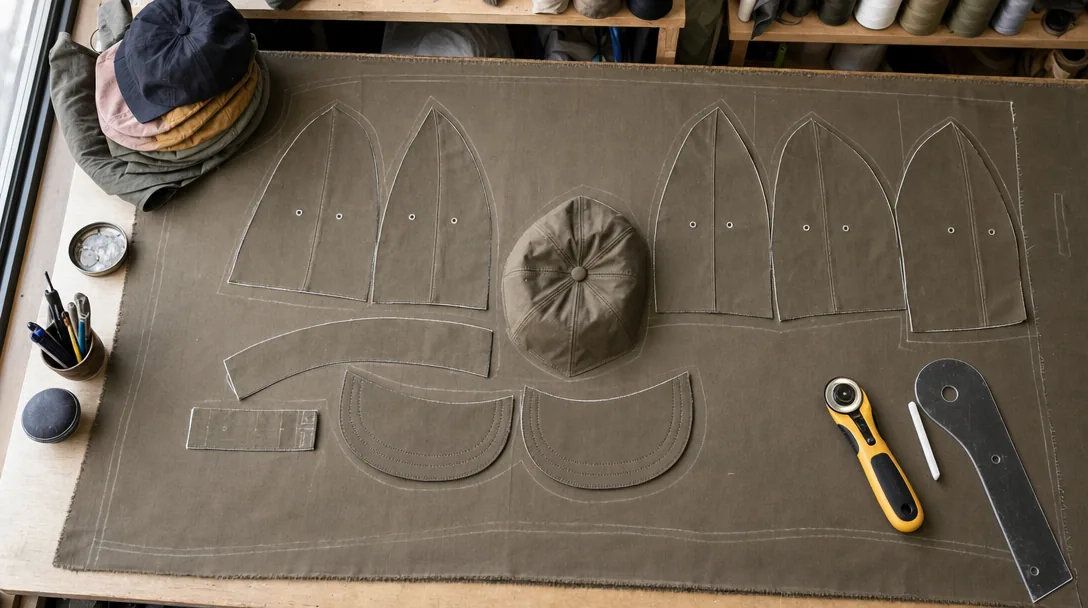
Cap Defect Catalog: 32 Production Issues to Inspect For - Cost & MOQ Breakdown - Cost & MOQ Breakdown
Read article →
Cap Fabric Guide: Cotton Twill, Wool Blend, Polyester & Performance Materials
Read article →
Custom Wool Blend Ball Cap: A 2026 B2B Sourcing Guide - Supplier Checklist - 2026 Buyer's Guide
Read article →If you are ready to take the next step on custom golf hats: a manufacturer's guide to performance headwear - cost & moq breakdown - cost & moq breakdown - 2026 buyer's guide - cost & moq breakdown - 2026 buyer's guide, our team can put a tailored quotation and digital mock-up in your inbox within 24 hours. Send the inquiry form on our contact page or message us directly on WhatsApp.