
Custom Dad Hat Low Minimum: A 2026 B2B Sourcing Guide
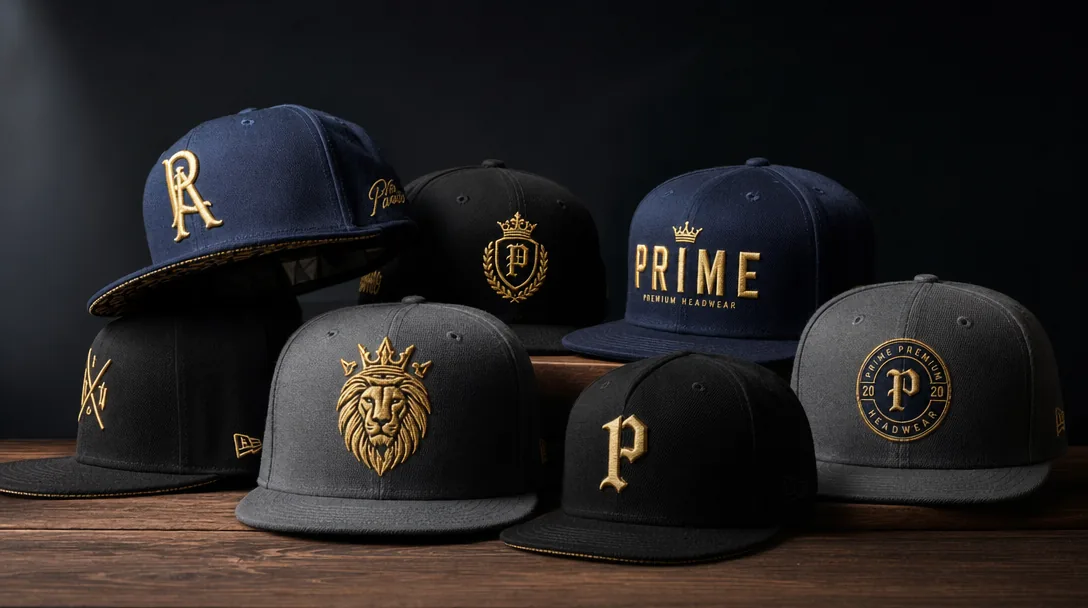
Every week, our sales team answers detailed questions about custom dad hat low minimum: a 2026 b2b sourcing guide. We wrote this guide so that wholesalers, streetwear brands, corporate buyers and promotional resellers can compare options with full information, and avoid the traps that show up only after production has started.
Custom Flat Brim Snapback Bulk
A flat brim snapback is built differently from an unstructured dad hat, and that matters when you are comparing it to a custom dad hat low minimum order. The shell is usually a 6-panel structured crown with buckram in the front panels, a pre-curved or flat PE visor board, and a plastic snap closure at the back. For bulk production, I would ask the factory to confirm crown height, brim shape tolerance, panel seam allowance, sweatband material, and whether the front panel uses full buckram or only half buckram. On the production floor, the biggest process points are embroidery placement, visor stitching density, and crown symmetry after blocking. If the sample is wobbling on the head form, it will look cheap on customers, no matter how clean the art file is. For sourcing, typical MOQ on a real custom flat brim snapback bulk order is 100 to 300 pieces per colorway if you accept stock fabrics and standard closures; true cut-and-sew with custom woven labels, underbrim prints, and private trim packages usually starts closer to 300 to 500 pieces. Factory pricing for a basic embroidered snapback in China often lands around USD 3.20 to 5.80 EXW at 300 to 500 units, depending on thread count, embroidery coverage, and fabric grade. If you need premium wool-like acrylic blend, sandwich visor, or metal snap hardware, add another USD 0.40 to 1.20. Buyers who are used to custom bucket hat small batch pricing are often surprised that snapbacks are not necessarily more expensive per piece, but they do require tighter shaping control and more defect checks.
The common quality problems are predictable: crooked center seams, off-center front embroidery, visor board warping, weak snap buttons, and dye lot variation between panels and visor fabric. I always request a pre-production sample with actual bulk fabric, not a showroom sample, and I check the cap on a 58 cm head form plus a real wearer test because a snapback can look balanced on a mannequin and still sit oddly on a human head. If the buyer wants a custom fitted cap no minimum style result without the risk of size returns, a snapback is usually safer because adjustment solves some fit variation, but only if the closure and back opening are reinforced properly. For inspection, AQL 2.5 is normal for cosmetic and workmanship checks, and I would add a drop test for snaps, stitch-count verification on the visor, and color matching against Pantone TCX when logos involve corporate colors. This decision also affects the broader hat program. If a brand is testing styles across unstructured dad hat wholesale, foam front trucker hat custom, or even a 5 panel camp cap wholesale line, the snapback often becomes the benchmark item because it exposes factory discipline fastest. CrownsForge’s standard practice is to lock down trim cards, embroidery files in DST format, and a sealed golden sample before bulk, because the same vendor that can make a good low-minimum dad hat may not automatically control structure on a flat brim style. For a buyer trying to keep cash tied up low, the practical move is to use snapbacks for the core SKU and reserve the more experimental low-MOQ items for the same production window. That way, you can compare landed cost, defect rate, and sell-through across styles instead of judging the factory on one silhouette alone.
Custom Sun Visor Cap Bulk
A custom sun visor cap bulk order is usually simpler than a full crown cap, but only if the factory knows what it is doing. The build starts with the brim: most buyers want either a 100% cotton twill body with a 2.5–3.0 mm PE or EVA sandwich brim, or a polyester-spandex visor with a pre-curved PP core. For retail-grade work, ask for fabric weight in gsm, sweatband composition, and closure type up front. If you want embroidery, request stitch count by size, thread brand, and a digitized sample from a Tajima, Barudan, or ZSK head before production. For low-volume programs, MOQ is commonly 100–300 pcs per colorway, with blank visors lower than decorated ones. Pricing in China typically lands around USD 1.20–2.80 FOB for basic visor caps, and more like USD 2.80–4.50 once you add woven labels, 3D embroidery, or custom rubber patches.
The specs that matter most are the ones factories usually leave vague. Lock down crown height, visor width, curvature radius, Velcro or buckle length, binding tape width, and color tolerance against Pantone TCX, not just a vague “black” or “navy.” For sweatbands, a 1.5–2.0 cm terry or poly-cotton band is standard; cheap elastic-only bands tend to twist after a few wears. If you are comparing a custom dad hat low minimum program with a custom bucket hat small batch or unstructured dad hat wholesale order, the visor cap sits in the middle: less fabric and sewing than a full hat, but more failure points than a simple foam front trucker hat custom run. The main cost drivers are decoration, closure hardware, and packaging. If the order needs retail folding polybags, hangtags, and carton barcodes, add another USD 0.20–0.60 per piece.
Quality issues show up fast if you inspect the right points. The usual failures are visor warp, uneven topstitching, sweatband puckering, loose thread at the side seam, and poor edge binding where the brim meets the front panel. For bulk, I would inspect under AQL 2.5, with special attention to measurement consistency across the first 30 pieces and color delta within Delta-E 1.5–2.0 if the buyer is matching an existing line. Ask the factory for pre-production samples, then a golden sample sealed for the whole run. If your broader sourcing strategy includes a custom fitted cap no minimum or a 5 panel camp cap wholesale program, the logic is the same: define the spec tightly, then push the supplier to prove repeatability before shipment. That is how a custom dad hat low minimum buyer avoids turning a small order into a rework problem.
Custom Bucket Hat Small Batch
A true custom bucket hat small batch is usually built from cut-and-sew panels, not a simple blank with a logo slapped on. The factory will ask for crown depth, brim width, stitch count on the brim, sweatband type, and whether you want a washed cotton twill, 16 oz canvas, nylon taslan, or washed denim. For low-volume work, most mills will not run a dedicated shade lot, so you should specify Pantone TCX targets and accept a practical Delta-E tolerance of around 1.5 to 2.0 if the order is under 300 pieces. For embroidery, a Tajima or Barudan head will handle left-front or center-front marks well, but thick foam or dense satin stitch on curved surfaces can distort fast. If the buyer is already sourcing a custom dad hat low minimum program, the bucket hat conversation should be treated the same way: lock construction first, then decoration, because changing brim binding or lining after sampling is what blows the schedule and the cost.
Typical MOQ for a custom bucket hat small batch is 100 to 300 pieces per colorway, with sampling at $35 to $80 per style depending on whether you need woven labels, custom taping, or all-over print strike-offs. In Guangdong and Zhejiang, a basic cotton twill bucket hat at 150 units often lands around $3.20 to $5.80 FOB, while a more complex reversible or lined version can move to $6.50 to $9.50 FOB before freight. Buyers asking for unstructured dad hat wholesale, custom fitted cap no minimum, foam front trucker hat custom, or 5 panel camp cap wholesale are usually trying to solve the same problem: reduce risk while keeping the retail margin intact. My standard practice is to request a full spec pack with topstitch spacing, sweatband width, seam allowance, shrinkage target, and packing method, because a 2 mm error on brim edge binding shows up immediately in photos and customer complaints.
The most common quality failures are not dramatic; they are sloppy and expensive. Watch for brim waviness, uneven topstitch tension, skipped stitches at the side seams, crooked sweatband attachment, and wash shrinkage above 3 percent on cotton builds. If the hat uses printed artwork, insist on a wash test and crocking check, especially for pigment-dyed or garment-washed fabrics, because low-MOQ suppliers often shortcut curing time. For inspection, AQL 2.5 is normal for general defects, but for logo placement and panel symmetry I would set a tighter visual tolerance in the golden sample and reject anything more than 5 mm off-center. The sourcing decision ties back to the broader custom dad hat low minimum model because the best factories can switch between an unstructured dad hat wholesale run and a small batch bucket hat without changing their QC discipline; the weak factories cannot, and that is where “low minimum” turns into high rework cost.
Unstructured Dad Hat Wholesale
Unstructured dad hat wholesale is basically a soft-crown cotton cap built around a simple sandwich of fabric, buckram-free front panels, stitched eyelets, a curved visor, and a self-fabric strap or tri-glide closure. The factory side looks simple until you start asking for consistency: crown height, panel symmetry, sweatband width, stitch density, and visor curve all need to be controlled or the hats look cheap in the hand. For a proper spec sheet, I’d request 100% cotton twill or washed chino, 260-320 gsm, 6-panel construction, 2-row or 4-row visor stitching, matching or contrasting thread callouts, and a clear logo method: flat embroidery, 3D is usually not ideal on soft front panels, woven label, or patch. If you want a custom dad hat low minimum order, the factory should also confirm whether they can do a pre-production sample off the same fabric lot and closure hardware, not just a “close enough” salesman sample.
Typical MOQ for unstructured dad hat wholesale usually lands at 100-300 pieces per colorway if the factory is set up for quick-turn cut-and-sew, but pricing changes fast with decoration. On a normal China FOB basis, a blank hat may sit around USD 1.20-2.20 depending on fabric, wash, and closure; add another USD 0.35-1.20 for flat embroidery, more if you need chenille, applique, or a woven patch with edge merrow. If the order is truly small batch, expect a surcharge for cutting waste, thread setup, and digitizing, especially if you are comparing it against a custom bucket hat small batch or a 5 panel camp cap wholesale run. Buyers sometimes chase custom fitted cap no minimum ideas, but fitted caps are a different animal: more size runs, more fit risk, and usually worse economics than a soft dad hat with an adjustable strap.
The quality issues I inspect first are panel puckering, crooked center fronts, uneven crown shape, bad seam matching at the back opening, and a visor that twists because the board is cut too thin or pressed badly. I also check embroidery tension on the front panel, because too much density can collapse the soft crown and warp the cap after washing. For soft washed styles, color consistency matters too: ask for Pantone TCX targets on the fabric side if you need repeatable shade, and verify against a Delta-E tolerance the factory can actually hold, not a vague “same as sample.” For inspection, AQL 2.5 is standard for general shipment checks; if the run includes special trims like a foam front trucker hat custom panel, screen print, or mixed closures, I’d tighten the visual acceptance criteria. The broader sourcing decision is simple: if your brand needs flexibility, lower risk, and a realistic entry point, unstructured dad hat wholesale is usually easier to launch than rigid caps, and it gives you a cleaner path to custom dad hat low minimum production without overcommitting cash to inventory.
Custom Fitted Cap No Minimum
A true custom fitted cap no minimum is usually not a real production promise; it is a sampling or stock-decorating workaround. In a factory setting, fitted caps need fixed crown blocks, graded sweatband lengths, matched shell panels, and often multiple size runs, which is why the practical MOQ is usually 100–300 pcs per colorway even before embroidery or applique. If a supplier claims zero minimum, they are almost always offering a blank body with decoration, not a fully custom block, curve, or sweatband spec. For buyers comparing this against custom dad hat low minimum options, the economics are different: unstructured dad hat wholesale programs can start lower because they use softer crowns, simpler sewing, and fewer size variables than a true fitted cap.
If you want a factory quote that is actually useful, ask for exact specs: crown height in cm, visor curve, panel count, shell fabric, sweatband material, sizing range, closure type, and decoration method. For fitted caps, I’d specify wool-acrylic blend or heavy brushed cotton twill, buckram level, taping width, and whether the front panel has fused backing; for decoration, ask whether the factory is using Tajima, Barudan, or ZSK embroidery heads, and what stitch density they will hold on small text. Typical FOB pricing for a basic custom fitted cap no minimum-style order, meaning stock body plus embroidery, is often around $4.20-$7.80 at 100 pcs, while fully custom production with molded blocks and size grading can land closer to $6.50-$11.50 before freight. If you also need a custom bucket hat small batch or 5 panel camp cap wholesale run, the factory should quote them separately because the material yield and sewing labor are not comparable.
The quality problems I see most often are inconsistent sizing between lots, puckering at the front seam after embroidery, and sweatband shrinkage after steam pressing or washing. Inspect the size tolerance with actual tape measure checks, not eyeballing; I want circumference within ±1/8 inch on production caps and seam alignment within 2-3 mm on the front panels. Also check color against Pantone TCX references, because dark wool blends and washed twills can drift by Delta-E 2.0 or more if the mill lot changes. For low-MOQ buyers, the smartest move is usually to combine a custom dad hat low minimum order with one or two adjacent styles, such as foam front trucker hat custom or unstructured dad hat wholesale, to share sample development and freight costs. That gives you better leverage on fabric sourcing and decoration setup than forcing a genuine no-minimum fitted cap program, which almost never exists at factory scale.
Foam Front Trucker Hat Custom
A foam front trucker hat custom order is usually built from five or six panels: a structured foam front, mesh back panels, a pre-curved or flat PE bill, and a plastic snap closure. The foam is typically 2.5 mm to 3.0 mm EVA or polyurethane laminated to the front shell, then covered with polyester twill or brushed cotton before embroidery or screen print. If you want the logo to sit cleanly, ask the factory for a 3D puff test on the foam and confirm stitch density at 9-10 stitches per centimeter. For color control, specify Pantone TCX for fabric and Pantone C for print or embroidery thread; otherwise you’ll get drift across batches. On a real production line, the main issue is heat and pressure during forming, because cheap foam warps and leaves a wrinkled crown after packing.
For B2B buyers, the practical MOQ for a foam front trucker hat custom program is usually 144-300 pieces per colorway, with sample costs around USD 25-60 and bulk pricing roughly USD 2.80-5.50 FOB Yiwu depending on embroidery size, patch type, and whether you add woven labels, sweatband printing, or custom hangtags. A low minimum works only if you keep the build simple: one body fabric, one foam spec, one closure, and one decoration method. Once you mix in contrast stitching, multiple mesh colors, or a molded rubber patch, the factory has to split labor and setup time, which pushes price up fast. Compared with a custom dad hat low minimum order, foam-front trucks are easier to scale but less forgiving on fit; if you need an unstructured dad hat wholesale program or a custom bucket hat small batch run, the sewing complexity is lower but the decoration area changes how the factory quotes.
Inspect the first article for crown symmetry, foam thickness consistency, mesh gauge, and how the front panel returns after compression; if the crown stays dented after 30 seconds, the foam density is too low. I also check the bill curve and snap alignment, because a 2 mm closure offset looks small on paper but feels sloppy on the head. For shipping, vacuum packing saves carton volume but increases deformation risk, so ask for 25-30 pieces per polybag carton unless you’re air-freighting urgent stock. If your buying strategy includes a custom fitted cap no minimum or a 5 panel camp cap wholesale line, the decision comes down to what your customer values more: soft handfeel and lower visual risk, or a more structured promotional look with higher branding impact. CrownsForge’s standard practice is to lock the BOM, approve a sealed pre-production sample, and inspect to AQL 2.5 for major defects before release.
Working with CrownsForge for custom dad hat low minimum programs
For a custom dad hat low minimum order, the real risk is not decoration quality — it is whether the factory can keep specs stable when the order is only 48, 72, or 120 pieces. Our standard practice is to separate sampling from production approval: 3 to 5 business days for a blank-fit sample or color strike-off, then another 5 to 7 business days for embroidered or patch-finished approval samples if the artwork is clean. If you are chasing an unstructured dad hat wholesale program with washed cotton twill, I will push for a pre-production signoff on crown height, brim curve, and closure type before cutting bulk. That avoids the common problem where a “low minimum” order turns into a spec drift order because the buyer only approved a flat mockup, not the real panel shape or stitch density.
MOQ flexibility only works if the decoration method matches the order size. For very small runs, we usually steer buyers toward flat embroidery, 3D puff only on larger logo areas, woven patches, or leather patches, because those hold up better than overcomplicated multi-pass stitching on 200 gsm brushed twill. On Tajima and Barudan heads, a clean 8,000 to 12,000 stitch logo is efficient; a messy 25,000-stitch badge on a soft crown just creates thread tension issues and inconsistent handfeel. The same logic applies across categories like custom bucket hat small batch, foam front trucker hat custom, and even 5 panel camp cap wholesale — low minimum does not mean the factory should force one decoration method onto every silhouette. If the buyer truly needs a custom fitted cap no minimum concept, I usually recommend a made-to-order style with limited fabric options, because full fitted sizing becomes expensive fast.
On compliance, we do not treat audit paperwork as a sales feature; it is basic sourcing hygiene. CrownsForge keeps traceable material files for shell fabrics, sweatbands, and closures, and the factory workflow is aligned with sedex-audit-cap-supplier-guide.html">BSCI 2.0 and Sedex SMETA 4-Pillar expectations for labor, health and safety, environment, and ethics. For color control, we work to Pantone TCX references where possible and confirm lab dips against a Delta-E target before bulk cutting, because a 1.5 to 2.0 shade swing is enough to trigger rejection in branded programs. Order management is handled with a production sheet, artwork approval record, and inline QC checkpoints at cutting, embroidery, sewing, and final packing, with AQL 2.5 as the normal acceptance benchmark. For first-time buyers, that structure is what makes a custom dad hat low minimum order manageable instead of risky.
Frequently Asked Questions
What logo decoration techniques do you offer?
3D puff embroidery, flat embroidery, woven patch, leather patch, PVC patch, screen printing, sublimation, applique and laser etching, all in-house with no subcontracting.
What file format should I send for my logo?
Vector files (AI, EPS, PDF) are ideal. High-resolution PNG or JPG at 300 dpi on transparent background works as a fallback. Provide Pantone color references for accurate reproduction.
How long does production take?
Sampling takes 7 to 12 days. Bulk production runs 20 to 30 days depending on quantity, fabric availability and decoration complexity. Inspection and packing adds another 3 to 5 days before shipment.
Do you support sustainability certifications?
Yes. We work with GOTS organic cotton, GRS-certified recycled polyester, OEKO-TEX Standard 100 fabrics, and are BSCI and Sedex audited. Certification documentation can be provided per order.
What is the minimum order quantity (MOQ) for custom hats?
Our standard MOQ is 100 pieces per design and color, with sampling available from 1 piece. For complex multi-color logos or premium fabric upgrades, the MOQ can be lowered with a small per-piece surcharge.
What's the MOQ for custom leather patch hat low minimum?
When evaluating custom leather patch hat low minimum, the key considerations are construction quality, decoration capability, MOQ flexibility and lead time. Cover everything buyers ask about custom flat brim snapback bulk: how it's manufactured, what specs to request from a factory, typical MOQ and pricing, common quality issues to inspect for, and how this ties back to the broader custom dad hat low minimum sourcing decision. Cover everything buyers ask about custom sun visor cap bulk: how it's manufactured, what specs to…
How does ordering custom foam trucker hat work?
When evaluating custom foam trucker hat, the key considerations are construction quality, decoration capability, MOQ flexibility and lead time. Cover everything buyers ask about foam front trucker hat custom: how it's manufactured, what specs to request from a factory, typical MOQ and pricing, common quality issues to inspect for, and how this ties back to the broader custom dad hat low minimum sourcing decision. Cover everything buyers ask about custom flat brim snapback bulk: how it's manufactured, what specs to…
What should I know about blank trucker cap wholesale bulk?
When evaluating blank trucker cap wholesale bulk, the key considerations are construction quality, decoration capability, MOQ flexibility and lead time. Cover everything buyers ask about custom sun visor cap bulk: how it's manufactured, what specs to request from a factory, typical MOQ and pricing, common quality issues to inspect for, and how this ties back to the broader custom dad hat low minimum sourcing decision. Cover everything buyers ask about custom flat brim snapback bulk: how it's manufactured, what specs to…
What should I know about custom rope hat wholesale bulk?
When evaluating custom rope hat wholesale bulk, the key considerations are construction quality, decoration capability, MOQ flexibility and lead time. Cover everything buyers ask about custom flat brim snapback bulk: how it's manufactured, what specs to request from a factory, typical MOQ and pricing, common quality issues to inspect for, and how this ties back to the broader custom dad hat low minimum sourcing decision. Cover everything buyers ask about custom sun visor cap bulk: how it's manufactured, what specs to…
Ready to start your custom hat project?
Send us your tech-pack, sketch or even just an inspiration photo. We will respond with a detailed quotation and digital mock-up within 24 hours.
Request a free quoteRelated guides
Custom Golf Cap Rope Bulk: A 2026 B2B Sourcing Guide
Read article →
Fitted Hats Sizes: A Vertical-Specific Sourcing Guide
Read article →
Organic Cotton Newborn Hat: Properties, Costs and How to Spec It Right
Read article →Sourcing custom hats does not have to be complicated. With the right manufacturing partner, clear specifications and a small upfront investment in sampling, you can launch a retail-quality product in 30 to 45 days.