
Custom Cap Material Trim Card: What Buyers Should Request
For brand owners, wholesalers and procurement teams entering the custom headwear category, custom cap material trim card: what buyers should request is one of the highest-leverage decisions you will make. Get it right and your unit economics, retail story and reorder cycle all improve. Get it wrong and you carry the cost for years.
What custom cap material trim card means in real production
A custom cap material trim card is not a mood board; it is the production reference that tells a custom hat manufacturer exactly what must be used before the first sample is cut. In a proper RFQ, it should list shell fabric, lining, sweatband, underbrim, closure, thread, eyelets, visor insert, sandwich piping, and any trims with real identifiers: fabric composition, weave, GSM, yarn count, dye method, and Pantone TCX or Pantone C references where color matching matters. If a buyer sends only a photo and a vague description like “black cotton twill,” they are asking for interpretation, not manufacturing. A serious custom cap material trim card should also note finish details such as enzyme wash, silicone coating, brushed handfeel, or water repellency, because those change both cost and performance.
Before sampling, the buyer should verify the trim card against the factory’s available stock and sampling capability. At a headwear factory China, the difference between a workable spec and a failed sample is often one missing detail: whether the crown fabric is 100 percent cotton twill at 260 GSM or poly-cotton at 240 GSM, whether the sweatband is self-fabric or 3D mesh, whether the visor board is recycled PE or standard black PE, and whether the closure is snapback, Velcro, buckle, or strapback. For embroidery, the trim card should also state thread type, stitch density, backing, and placement tolerance, because Tajima, Barudan, and ZSK machines will all reproduce a logo differently if the density is off. A private label hat supplier should confirm these items in writing before quoting PP samples.
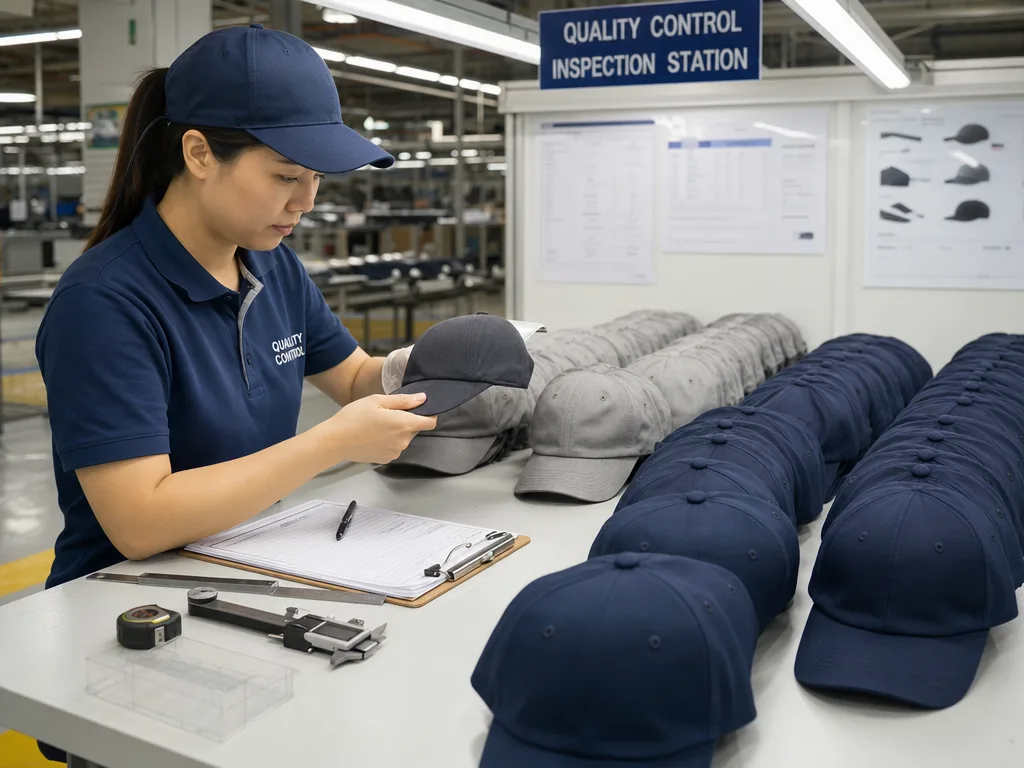
The best trim cards also force practical checks that buyers often skip: shrinkage tolerance after washing, colorfastness target, AQL inspection level, and whether the same lot can be held for repeat production. At CrownsForge, our standard practice is to cross-check the trim card against mill certificates, lab dips, and pre-production swatches so the buyer is not approving one sample and receiving another bulk lot. If the cap is meant for retail, ask for a physical swatch card with 5 to 10 cm cuts, labeled with supplier codes and approval signatures, plus a delta-E target under 1.5 for core colors and under 2.0 for secondary trims. A good custom cap material trim card reduces arguments later; a bad one just creates sample rounds and chargebacks.
Specs to request before a quote
A serious custom cap material trim card should start with dimensions, not marketing language. Ask for crown height measured from seam intersection to top button, brim length from center front to edge, panel count, closure type, sweatband width, and seam allowance. If you are comparing a snapback to a low-profile dad cap, the pattern block matters as much as the fabric; a 1/4 inch difference in crown depth can change the fit enough to trigger a full sample revision. For materials, require exact composition and weight: 100% cotton twill at 260 gsm, polyester mesh at 110 gsm, acrylic wool blend at 280 gsm, or 500D nylon if you want a firmer hand. A competent custom cap factory should give you the trim card with Pantone TCX references, not vague color names, plus acceptable Delta-E tolerance, usually under 2.0 for bulk runs.
Request tolerances in writing before you ask for a quote. On a proper cap material trim card, I want stitch density per inch, visor board thickness, eyelet diameter, sweatband foam thickness, and logo placement tolerance in millimeters. A headwear factory China supplier should state what is held to ±1 mm, what is ±2 mm, and what is allowed to float during production. Decoration files should be handled as vector AI or EPS for flat embroidery, with DST or EMB for machine stitch programming; if the artwork is for 3D puff, the file needs underlay and density settings called out, not just a JPG. For embroidery, a capable factory should show a sew-out from Tajima, Barudan, or ZSK heads, plus thread brand, needle size, and backing type. That is the evidence I trust more than a sales sheet from a private label hat supplier.
For carton requirements, specify inner polybag thickness, pack quantity, master carton dimensions, gross and net weight limits, and whether the carton must pass 1.2-meter drop handling without crushing the brim. If you are shipping FOB or DDP, the carton spec should also include palletization, export marks, and barcode format, because loose packing costs more in damage than it saves in freight. Ask for AQL level up front; standard headwear lots are often inspected at AQL 2.5 for major defects and 4.0 for minor defects, but promotional orders with strict branding usually need tighter checks on logo placement and color variance. A capable custom cap factory should provide actual evidence: pre-production sample photos, in-line QC records, final inspection report, fabric COA if relevant, and a signed trim card revision number so everyone is working from the same version.
Factory risks and quality checks
The biggest risk with a custom cap material trim card is thinking it replaces real factory verification. It does not. A decent cap material trim card should lock down crown fabric, visor fabric, undervisor color, sandwich piping, sweatband composition, seam tape, eyelet style, button finish, and label construction, but defects still happen in production. The usual failures are shade drift on dyed twill, inaccurate Pantone TCX matching on trims, visor boards that crack in cold shipping lanes, and embroidery thread lot changes that push logos outside Delta-E tolerance. On the floor, I check the first bulk run against the approved card under D65 light, then again under warm light because buyers often reject a hat in the warehouse only to approve the same shade in daylight. A serious custom hat manufacturer should also confirm shrinkage on washed cotton, stitch density on panels, and crown symmetry before cutting full volume.
For inspection, the non-negotiables are dimensional accuracy, color consistency, and component compatibility. On a cap material trim card, the buyer should request exact fabric content, GSM, denier if applicable, backing type, sweatband width, hook-and-loop or snapback specification, and the approved lab dip or strike-off reference. In a headwear factory china setup, I want the sample sign-off to include one pre-production sample, one sewn fit sample, and one gold seal sample with every trim physically attached or labeled by SKU. CrownsForge’s standard practice is to freeze the BOM before bulk cutting, because once you start cutting 10,000 panels, a 2 mm visor deviation or a 5 mm crown height error becomes rework, not an adjustment. Buyers should also insist on AQL 2.5 for major defects and define what counts as critical: wrong logo placement, wrong panel count, broken visor insert, or mixed color lots in the same carton.
Late shipment usually comes from sloppy approvals, not sewing speed. The safest process is to approve the custom cap material trim card, then approve the PP sample, then approve the pre-shipment sample from bulk production, with every revision documented in writing. A private label hat supplier should give you a trim card with version control, signed approval dates, and photo references for each component, because verbal okay on WeChat is how you end up with 3,000 hats that need relabeling. Prevent rework by sampling all incoming trim lots against the approved card before production starts, especially woven labels, inner tapes, and closure hardware, since those are the first items to drift when suppliers substitute materials. If the factory is using Tajima, Barudan, or ZSK embroidery heads, ask for a sew-out record on the actual production thread and backing so you can catch density or registration issues before mass run.
MOQ, lead time, and cost drivers
MOQ is the first lever that changes unit economics, because every custom cap material trim card decision creates setup work before the first sellable hat leaves the line. A real custom hat manufacturer has to open fabric rolls, match Pantone TCX targets, cut bias tape or sweatband rolls, set embroidery or patch parameters, and often approve strike-offs for thread and label positioning. If you ask for 50 pieces, the cost per unit looks ugly because you are paying for the same pre-production time that a 2,000-piece order spreads across a much larger run. In a headwear factory China buyers usually see the biggest jumps when they add multiple crown fabrics, contrast underbrims, woven labels, and special trims like rope, sandwich visors, or metal buckles. Our standard practice is to separate one-time sampling costs from mass-production costs so buyers can see where the real break-even sits, instead of hiding setup inside a blurry quoted FOB price.
Lead time follows the same logic: every extra trim choice adds a station, and every station adds waiting time. A simple six-panel cotton twill cap with one embroidery location might move in 20 to 25 days after approval, but once you add a custom cap material trim card with multiple swatches, moisture-wicking sweatband, laser-cut closure, and individual polybag + insert card packaging, you are usually looking at another 5 to 10 days. Testing also matters more than most buyers expect. Color approval against Delta-E, stitch density checks, needle damage checks, and AQL 2.5 inspection all cost labor, and if the buyer wants sedex-audit-cap-supplier-guide.html">BSCI or Sedex SMETA 4-Pillar-compliant documentation, the paperwork load increases too. A private label hat supplier that quotes only the sewing time is not telling you the full story.
Shipping can erase a good factory quote if the cap spec is bulky or heavy. Flat embroidery, paper inserts, and simple polybags keep carton density high, while molded inserts, zipper pouches, hang tags, and rigid gift boxes raise volumetric weight fast, especially on air freight. On a 500-piece order, a difference of 12 to 18 grams per cap can move freight enough to matter, and that is before you account for carton strength, moisture protection, and palletization. For buyers comparing a custom cap factory quote, I push them to ask for a landed-cost breakdown: ex-factory price, packaging cost, test fees, carton spec, and line-haul assumptions. If the supplier has not built the trim card around the actual MOQ and shipping method, the first invoice will not match the quote, which is exactly how margins get burned.
How CrownsForge manages this order type
At CrownsForge, a custom cap material trim card is treated as a controlled sample set, not a sales prop. We build it from the exact production inputs we expect to use later: shell fabric, visor board, sweatband, seam tape, eyelets, sandwich piping, thread shade, label base cloth, and closure hardware. For color approval, we reference Pantone TCX where possible and record a realistic tolerance target of Delta-E 1.5 to 2.0 on standard cotton twill and polyester blends, because anything looser tends to drift once a buyer reorders six months later. If a buyer wants a private label hat supplier workflow, we usually prepare two trim levels: a standard option for price benchmarking and a premium option that shows the upper bound on handfeel, stitch density, and finish quality.
Every sample pack comes with documentation that procurement teams can actually use on the factory side: fabric composition, gsm, yarn count or denier where applicable, panel structure, stitch count, buckle type, wash test notes, and which trims are stock versus custom-made. As a custom hat manufacturer and custom cap factory, we also note machine setup details when relevant, such as 9-thread or 12-thread embroidery limitations on Tajima, Barudan, or ZSK heads, because thread path and backing choice affect both logo sharpness and production cost. Our standard practice is to photograph each component under daylight-equivalent lighting, attach a written approval sheet, and keep a sealed reference set for later comparison. That matters when a buyer is working with a headwear factory China-side and needs something auditable, not just a loose sample in a box.
On quality control, we inspect trim cards the same way we inspect bulk: visual check against the approved master, stitch and seam review, pull test on closures, and carton-level verification before dispatch. For buyer confidence, we can map the sample to a practical AQL 2.5 acceptance plan so the approved trim card becomes the benchmark for incoming bulk inspection, not a vague style reference. Reorder support is where this process pays off: we archive the approved BOM, color refs, supplier lot numbers, and any correction notes, so repeat orders do not depend on memory or a sales email thread. If a buyer needs a revised run for a new season, we can quote from the same trim card structure and flag any material substitutions caused by stock changes, minimum order constraints, or BSCI/Sedex compliance requirements at the mill or accessory vendor level.
Frequently Asked Questions
Which shipping methods do you support?
We support FOB, CIF and DDP shipping. Air express for samples and small orders, sea LCL for 100 to 500 pieces, sea FCL for 5,000+ pieces. Door-to-door DDP available for US, EU, UK, Canada and Australia.
Do you support sustainability certifications?
Yes. We work with GOTS organic cotton, GRS-certified recycled polyester, OEKO-TEX Standard 100 fabrics, and are BSCI and Sedex audited. Certification documentation can be provided per order.
What file format should I send for my logo?
Vector files (AI, EPS, PDF) are ideal. High-resolution PNG or JPG at 300 dpi on transparent background works as a fallback. Provide Pantone color references for accurate reproduction.
How long does production take?
Sampling takes 7 to 12 days. Bulk production runs 20 to 30 days depending on quantity, fabric availability and decoration complexity. Inspection and packing adds another 3 to 5 days before shipment.
What logo decoration techniques do you offer?
3D puff embroidery, flat embroidery, woven patch, leather patch, PVC patch, screen printing, sublimation, applique and laser etching, all in-house with no subcontracting.
How do I find a reliable custom waterproof cap manufacturer?
When evaluating custom waterproof cap manufacturer, the key considerations are construction quality, decoration capability, MOQ flexibility and lead time. Explain custom cap material trim card in the context of a custom headwear RFQ, with the production details a buyer should verify before sampling. Cover dimensions, materials, tolerances, decoration files, carton requirements, AQL level, and the evidence a capable factory should provide.
How do I find a reliable custom hat manufacturer usa?
When evaluating custom hat manufacturer usa, the key considerations are construction quality, decoration capability, MOQ flexibility and lead time. Explain custom cap material trim card in the context of a custom headwear RFQ, with the production details a buyer should verify before sampling. Cover dimensions, materials, tolerances, decoration files, carton requirements, AQL level, and the evidence a capable factory should provide.
How does ordering custom made trucker hat work?
When evaluating custom made trucker hat, the key considerations are construction quality, decoration capability, MOQ flexibility and lead time. Explain custom cap material trim card in the context of a custom headwear RFQ, with the production details a buyer should verify before sampling. Cover dimensions, materials, tolerances, decoration files, carton requirements, AQL level, and the evidence a capable factory should provide.
What should buyers know about china cap?
When evaluating china cap, the key considerations are construction quality, decoration capability, MOQ flexibility and lead time. Explain custom cap material trim card in the context of a custom headwear RFQ, with the production details a buyer should verify before sampling. Cover dimensions, materials, tolerances, decoration files, carton requirements, AQL level, and the evidence a capable factory should provide.
Need a low-MOQ test order?
We help emerging brands launch with as few as 100 pieces. Premium fabric, in-house embroidery, retail-ready packaging.
Start a small orderRelated guides
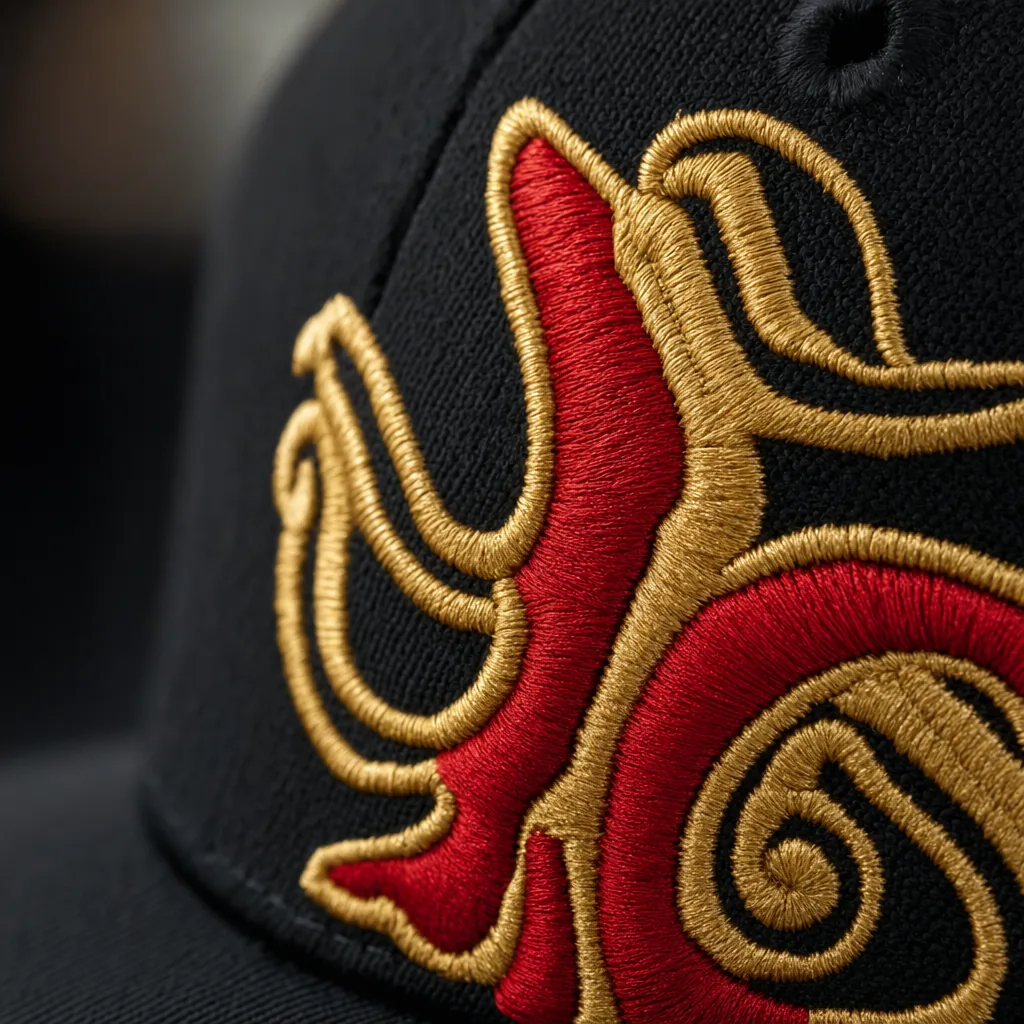
Embroidered Cap Thread Breakage QC: Factory Control Checklist
Read article →
Baseball Hats Snapback: A Vertical-Specific Sourcing Guide
Read article →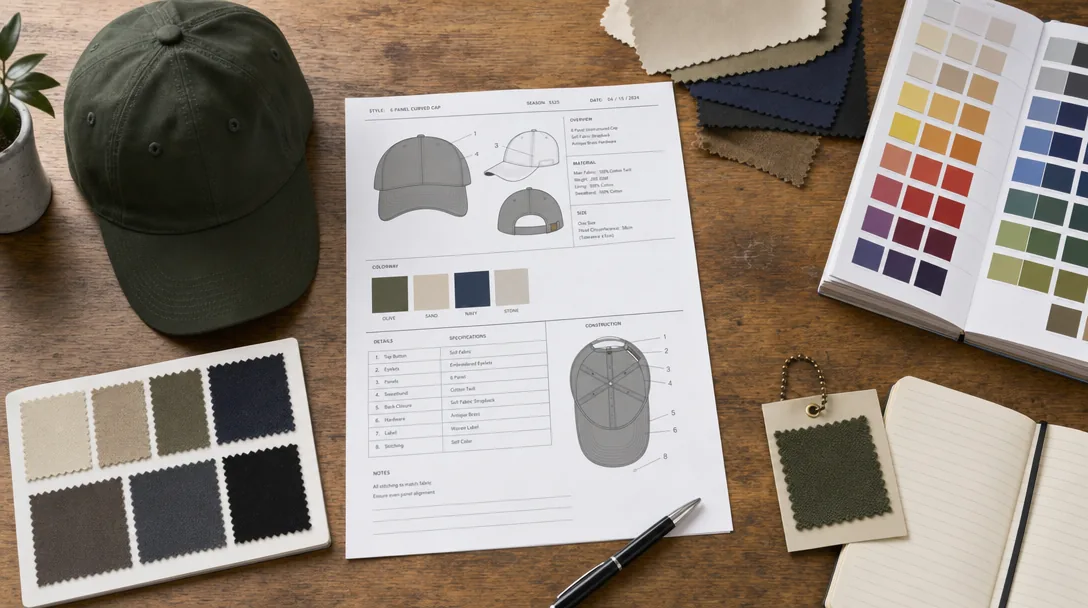
Switching Hat Manufacturers Mid-Program Without Losing Quality
Read article →If you are ready to take the next step on custom cap material trim card: what buyers should request, our team can put a tailored quotation and digital mock-up in your inbox within 24 hours. Send the inquiry form on our contact page or message us directly on WhatsApp.