Baseball Hats Snapback: A Vertical-Specific Sourcing Guide
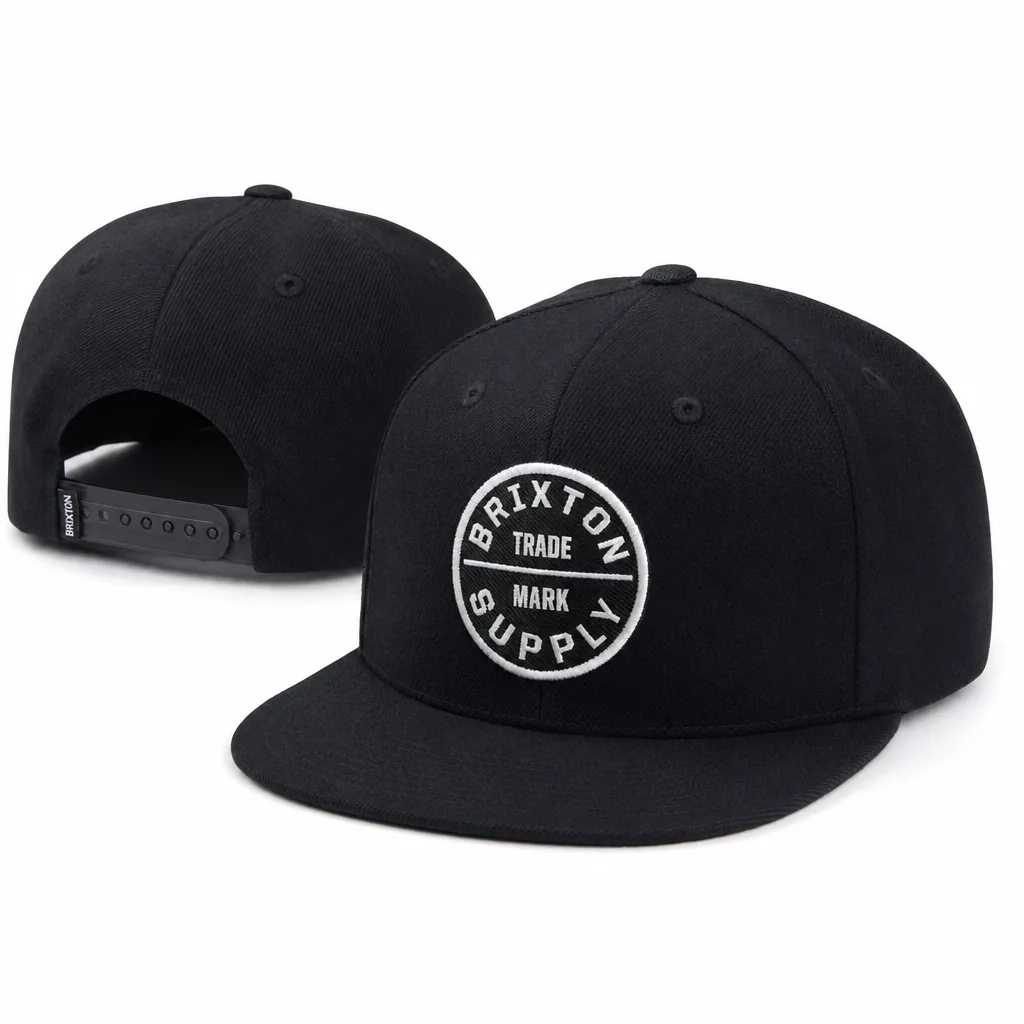
Every week, our sales team answers detailed questions about baseball hats snapback: a vertical-specific sourcing guide. We wrote this guide so that wholesalers, streetwear brands, corporate buyers and promotional resellers can compare options with full information, and avoid the traps that show up only after production has started.
Baseball Hats Women
Women’s baseball hats are usually built on the same core crown and visor platform as mainstream unisex caps, but the sourcing mistakes happen in the details: crown depth, front panel stiffness, and head opening tolerance. For a good fit, ask the factory to quote specific crown profiles rather than “one size fits all.” A medium-deep crown around 170–180 mm front height works for most retail buyers, while softer unstructured baseball hats women styles need lighter buckram or no buckram at all. If you want clean embroidery, request 600D polyester, heavy brushed cotton twill, or 100% acrylic wool-blend with front panel backing tested for needle deflection. For logos, lock in Pantone TCX, stitch count, and embroidery area before sampling; a 3D puff logo on a women’s snapback usually needs 3–5 mm foam and a flatter front than you’d use on fitted hats custom work.
If you’re comparing baseball hats snapback against baseball hats fitted, the manufacturing difference is not cosmetic. Snapbacks need a stable plastic closure, reinforced rear panels, and a size range that survives wear at 54–60 cm without warping the sweatband. Fitted hats sizes are more sensitive because the crown and sweatband must be matched by size, so grading errors show up immediately at 57, 58, and 59 cm. For baseball hats custom programs, a normal MOQ is 300–500 pcs per colorway for basic twill with flat embroidery, and 1,000 pcs if you want specialty fabrics, woven labels, sandwich visors, or private-mold trims. Factory pricing in Yiwu-style production is usually USD 1.80–3.20 FOB for simple women’s snapbacks, USD 2.80–4.80 for heavier wash finishes or complex decoration, with sampling at USD 30–80 depending on digitizing and trim changes.
The quality checks that matter are the ones buyers can measure, not the ones that sound nice in a catalog. Inspect brim curve symmetry, crown panel matching, sweatband stitching, and whether the closure sits centered when worn; a 3 mm offset at the back is enough to make a retail customer call it cheap. For women’s programs, also check hair-friendly interior finishing: low-profile seams, no sharp label edges, and moisture-wicking sweatbands in 260–320 gsm polyester terry if the cap is meant for activewear. Our standard practice is AQL 2.5 for major defects and Delta-E under 2.0 on color-critical trims, because inconsistent dye lots are what kill repeat orders. When you source baseball hats women as part of a broader baseball hats snapback range, the smartest move is to spec the same shell across snapback and fitted hats custom lines, then vary closure and sizing only where the market actually demands it.
Baseball Hats Fitted
A proper fitted cap starts with the size block, not the decoration. The factory should be cutting crown panels to a specific internal circumference, usually in the 6 7/8 to 8 range in 1/8-size steps, with the sweatband and seam take-up included in the pattern. If a supplier cannot tell you the exact fitted hats sizes tolerance, walk away. On a decent run, I expect a size variance within ±1/8 inch after stitching and sweatband insertion, using a 6-panel cotton twill or brushed poly-wool blend at 250-320 gsm, buckram or fused buckram front support, and a self-fabric or poly-sweatband. For baseball hats custom projects, ask for crown height, visor curve spec, panel stitch density, and thread type upfront; otherwise the hat may fit on the block but wear wrong on head shape. Top factories use Tajima, Barudan, or ZSK embroidery heads, but embroidery has to be matched to the panel structure so the crown does not pucker at the front seams.
The specs I ask for are practical, not theoretical: panel fabric composition, shrinkage after steam pressing, sweatband width, visor board thickness, and closure type if you are comparing fitted hats custom against a standard baseball hats snapback program. For branding, request Pantone TCX targets for fabric and thread, then define an acceptable Delta-E of 2.0 to 3.0 for repeat production. Typical MOQ for true fitted caps is 300 to 500 pieces per colorway if you want sane pricing; under that, the factory will charge for sampling, pattern setup, and size grading. Ex-factory pricing in Yiwu or nearby Zhejiang can land around $3.20 to $5.80 for basic cotton fitted caps, $5.50 to $8.50 with structured crown, 3D embroidery, and premium sweatband. Baseball hats women programs usually need a narrower fit range and lower crown; do not assume a men’s size run will sell as-is.
Quality inspection should focus on fit stability, not just appearance. Check crown symmetry, visor curve consistency, seam slippage at the front panel, sweatband alignment, and whether the finished fitted hats sizes match the size chart after 24-hour rest and light steam. Under AQL 2.5, I would flag any cap that measures more than 1/4 inch off target circumference, shows visible puckering above the front buckram, or has loose embroidery jumps inside the crown. Also inspect sweatband stitching, because bad tape tension causes hotspots on the forehead and gets returned fast. If you are deciding between baseball hats fitted and baseball hats snapback, the real tradeoff is inventory risk versus fit precision: snapbacks give you one size and easier sell-through, while fitted caps require tighter forecasting but usually feel more premium. For larger baseball hats custom assortments, many brands keep both so they can cover core size runs and offer baseball hats women in lower-profile fits without overcomplicating the main SKU line.
Fitted Hats Sizes
Fitted hats sizes are not guessed at the end of production; they are built into the pattern and sweatband spec before cutting starts. A real factory needs the exact crown block, panel seam allowance, and head circumference range in centimeters, then converts that into graded sizes like 6 7/8, 7, 7 1/8, up to 8. For baseball hats fitted, ask for the measurement method in writing: internal circumference measured 1 cm above the sweatband top edge, not the outer brim or stretched band. If you are buying baseball hats custom, the factory should also confirm shrinkage on the fabric, especially with wool-blend 280–320 gsm twill or acrylic-wool mixes, because even a 1.5% fabric shrink can push a borderline size out of spec after steam and pressing. Our standard practice is to use a size set approved against a fitted cap ring gauge, not just a tape measure.
When sourcing baseball hats women or mixed-gender programs, the size range matters more than the logo. Most buyers need a tighter distribution than men’s core sizes, typically 6 3/4 to 7 1/4, with the best-selling midpoint at 7 or 7 1/8 in the U.S. market. For fitted hats sizes, request a size chart with tolerance no wider than ±0.3 cm on circumference and ±2 mm on sweatband width. MOQ is usually 300–500 pieces per color per size for custom fitted programs, and if you split across 6–8 sizes, the unit cost rises fast because cutting, embroidery setup, and size-run packing all multiply. Factory pricing for basic six-panel fitted hats custom with direct embroidery is often around $3.80–$6.50 FOB depending on fabric, sweatband type, and whether you want buckram front reinforcement, sandwich visor, or a branded woven taping package. For baseball hats snapback comparisons, fitted styles usually cost a bit more to manage because there is no adjustable closure to absorb small size errors.
The quality checks are simple but strict: measure every size on a calibrated cap gauge, inspect sweatband stitching for waviness, and check symmetry from center front to brim tip and ear-to-ear. The most common defects are crown collapse after steam, oversized or undersized inside circumference, uneven visor curve, and mismatch between labeled size and actual block. For production control, I would ask for AQL 2.5 on critical dimensions and a pre-shipment sample of each size, not just one random master cap. Also check whether the inner taping twists after wear; cheap polyester sweatbands and weak seam binding will show problems after one warm day. In the broader baseball hats snapback sourcing decision, fitted caps are the better choice when size fidelity and a cleaner profile matter more than universal fit, but baseball hats snapback win on inventory flexibility, lower return risk, and easier sell-through if your demand is uncertain.
Baseball Hats Custom
A serious order for baseball hats custom starts with the crown structure, not the logo. Most factories build snapbacks from 100% cotton twill, acrylic-wool blends, or brushed poly-cotton, then choose between fused front panels or buckram reinforcement depending on how sharp the front profile needs to sit. For a clean mid-profile snapback, I ask for 6-panel construction, hard buckram front, matching undervisor, 8-row visor stitching, and a plastic adjustable closure with a metal snap insert if the buyer wants a more premium hand-feel. If you are comparing baseball hats women to standard unisex runs, check crown depth and inner circumference first; many women’s programs need a slightly shorter front height and lighter sweatband tension. For fitted hats custom, the factory has to grade by fitted hats sizes instead of one-size tooling, which changes both cutting waste and price.
When a buyer specs baseball hats custom, the details that actually protect margin are fabric weight, embroidery density, and trim quality. I usually want 280-320 gsm cotton twill for everyday streetwear, 120D-150D poly twill for lower-cost promotional runs, and front embroidery digitized at a sane stitch count so the panel does not pucker; 7,000-9,000 stitches is normal for a front logo, while dense 3D puff can jump higher fast. Typical MOQ from a decent hat factory is 300-500 pcs per colorway for stock fabric, but if you want custom Pantone TCX matching, special labels, or a washed finish, 1,000 pcs is more realistic. Ex-factory pricing for simple baseball hats snapback programs often lands around USD 2.20-3.80 at 500 pcs, while better fabric, woven patches, and premium closures can move into the USD 4.50-6.50 range before freight.
The quality failures I inspect first are boring but expensive: crooked center logos, crown asymmetry, loose topstitching at the visor, bad sweatband splicing, and color drift beyond Delta-E 2.0 if the buyer approved a specific shade. A factory should run inline checks on panel symmetry, visor curve consistency, and closure function, then final pack-out to AQL 2.5 for general inspection; on licensed or retail programs, I would push a higher internal threshold on logo placement because one bad batch is visible from ten feet away. This is where baseball hats snapback sourcing connects to the broader buy decision: if you need a wider fit range and easier inventory control, snapbacks are simpler than fitted hats custom because one closure covers multiple heads; if your sell-through depends on a cleaner silhouette or team-specific sizing, fitted hats sizes and true fitted hats custom may be worth the extra complexity. CrownsForge's standard practice is to sample both closure types early so buyers can compare hand-feel, fit range, and landed cost before locking the PO.
Fitted Hats Custom
Fitted hats custom are built differently from baseball hats snapback because the crown has to land on a precise circumference, usually 6 3/4 to 8 1/4 in 1/8-size steps, with no plastic closure to hide a sloppy shell. On the factory floor, that means tighter blocking control, cleaner seam matching, and more discipline in sweatband stitching, because any drift shows up immediately when the customer tries it on. For a proper spec sheet, buyers should request crown height, brim curve, panel count, buckram type, front structure, visor board thickness, thread count, embroidery density, and exact fitted hats sizes with tolerance no wider than ±3 mm on internal circumference. If you are doing baseball hats custom for a licensed team or fashion drop, also lock in Pantone TCX references, sew-in label position, taping color, and whether the underbrim should be cotton twill, polyester, or green undervisor.
Typical MOQ for fitted hats custom is higher than for baseball hats women or standard snapbacks because size runs create inventory risk; most factories want 300 to 500 pcs per colorway, with 50 to 100 pcs per size if you are doing full runs. At FOB Yiwu or Ningbo, a basic six-panel cotton twill fitted cap with flat embroidery usually lands around $3.20 to $4.80 depending on stitch count, wash treatment, and whether you specify wool blend, performance poly, or premium brushed cotton. If you want structured front panels, 3D puff, woven labels, and anti-bacterial sweatband tape, expect another $0.40 to $0.90. CrownsForge’s standard practice is to sample the full size curve before mass production, because a good size 7 1/4 sample can still hide a bad 7 5/8 grading rule. Buyers should ask whether the factory is using Tajima, Barudan, or ZSK heads for embroidery, and whether the visor is board-cut or molded, since that affects both shape retention and reject rate.
The biggest quality failures are dimensional inconsistency, crown asymmetry, uneven visor curvature, and sweatband puckering after steam pressing. I inspect fitted hats custom by checking inner circumference against the tech pack, then measuring panel symmetry, top button alignment, stitch SPI, and whether the sweatband joint creates a pressure point on the forehead. For embroidery, look for thread breaks, push/pull distortion, and bad registration on small text, especially when the design sits close to the seam. AQL 2.5 is common for general apparel, but for headwear I prefer stricter visual checks on major defects because one bad fit batch can poison a whole retail run. If your broader program includes baseball hats snapback, the sourcing decision comes down to sell-through behavior: snapbacks absorb sizing risk and work better for mixed retail, while fitted hats custom are better when you already know the end user’s fitted hats sizes and want a cleaner, more premium fit profile.
Fitted Hats 59fifty
A fitted hats 59fifty program is built differently from a typical baseball hats snapback order, because the crown has to hold a fixed circumference and a cleaner front shape without the forgiveness of an adjustable closure. In production, that means tighter control on panel cutting, buckram selection, seam alignment, and sweatband length. A proper spec sheet should call out crown height, brim curve, front panel stiffness, stitching density, and exact fitted hats sizes by inch or centimeter; common size runs are 6 7/8 through 8, with tolerance kept within about ±1/8 inch on wearable circumference. For fabric, most factories will quote 100% cotton twill around 260–290 gsm, polyester wool blends, or brushed performance fabric, but the real difference is in the interlining and sweatband construction. If you are buying baseball hats custom, ask for the embroidery file format, stitch count, backing type, and whether the factory uses Tajima, Barudan, or ZSK heads for the front logo and side hits.
The MOQ for fitted hats custom is usually higher than for baseball hats snapback because size runs complicate cutting, inventory, and carton packing. A practical starting point is 300–500 pcs per color per style, with 6–8 sizes spread across the run; smaller buyers can sometimes negotiate 200 pcs if they accept a limited size breakdown and a higher unit price. Factory pricing in China typically lands around USD 3.20–5.80 FOB for a basic twill fitted cap with one flat embroidery, and USD 5.50–8.50 for heavier fabric, 3D puff, or complex labeling. If the buyer wants baseball hats women styling, the patterns may need a slightly shallower crown, shorter visor, or narrower sweatband profile, because a straight copy of a men’s 59FIFTY fit often wears too tall. The better factories will quote based on fabric GSM, embroidery stitch count, tape quality, and whether the sweatband is woven or printed. CrownsForge’s standard practice is to lock a pre-production sample before bulk cutting, because size drift on fitted hats custom is expensive to fix after sewing.
Quality checks on fitted hats are less forgiving than on adjustable caps, so buyers should inspect circumference consistency, crown symmetry, panel puckering, visor curvature, and sweatband join quality. The most common failures are size inconsistency between lots, front buckram collapse after steaming, crooked center seams, loose top button attachment, and thread tension that causes tunneling around dense embroidery. I would insist on AQL 2.5 for major defects, a 100% size gauge check on first pieces from every size run, and a wash or steam test if the cap is selling into sports retail or licensed merchandise. This is where the sourcing decision ties back to baseball hats snapback: snapbacks are easier to size-serve and inventory, but fitted hats can command a cleaner premium look if your forecast is accurate. If you need broad sell-through and lower risk, snapback wins; if you need a more premium silhouette and can manage fitted hats sizes carefully, 59fifty-style construction is worth the tighter control.
Working with CrownsForge for baseball hats snapback programs
For baseball hats snapback programs, the biggest sourcing risk is not the cap body itself; it is whether the factory can sample fast enough and lock decoration before you waste a buying season. Our standard practice is a 5–7 day sample turnaround for existing blocks and a 10–14 day timeline for new crown/visor combinations, with PP samples built from the exact 100% cotton twill, polyester wool blend, or 3-layer foam front you want in production. We keep MOQ flexible on first orders — often 300 to 500 pcs per colorway for baseball hats custom — because most new brands need proof of fit, stitching density, and panel symmetry before they commit to a 2,000-piece run. For first-time buyers comparing baseball hats women programs against unisex streetwear assortments, we usually recommend separate fit approval, since crown height and front panel stiffness read differently on smaller head profiles.
Decoration is where a lot of fitted hats custom orders fail, because the artwork looks fine in PDF and then collapses on a curved front panel. We run Tajima, Barudan, and ZSK embroidery heads in-house, so we can control stitch count, underlay, pull compensation, and 3D puff density instead of handing it off to a subcontractor. For clean front logos, I usually spec 8,000–12,000 stitches for standard embroidery and keep thread matching within Delta-E 1.5 to 2.0 against Pantone TCX references; for heavier logos or badge applications, we’ll move to woven patches, PVC, or laser-cut appliqué. If a buyer needs fitted hats sizes rather than snapback adjustability, we build the size curve separately and verify circumference with a calibrated tape, because a 1/4 inch error shows up immediately in wear tests and returns.
Compliance and order control matter more than most new importers realize. We can support sedex-audit-cap-supplier-guide.html">BSCI 2.0 and Sedex SMETA 4-Pillar documentation, and our QC flow is built around inline inspection plus final AQL 2.5 checks for major defects, with photo reports tied to each PO line item. For baseball hats snapback shipments, we track every order by fabric lot, thread batch, back closure type, carton count, and carton mark, which reduces the usual confusion when a buyer is balancing baseball hats fitted and snapback SKUs across different channels. On logistics, we can quote FOB Ningbo or DDP to the U.S. and EU, but I push first-time buyers to approve the sample, then a pre-production pilot of 100–200 pcs, then the full run; that sequence catches size drift, embroidery registration issues, and sweatband color mismatches before they become chargebacks and dead stock.
Frequently Asked Questions
How long does production take?
Sampling takes 7 to 12 days. Bulk production runs 20 to 30 days depending on quantity, fabric availability and decoration complexity. Inspection and packing adds another 3 to 5 days before shipment.
Do you support sustainability certifications?
Yes. We work with GOTS organic cotton, GRS-certified recycled polyester, OEKO-TEX Standard 100 fabrics, and are BSCI and Sedex audited. Certification documentation can be provided per order.
What is the minimum order quantity (MOQ) for custom hats?
Our standard MOQ is 100 pieces per design and color, with sampling available from 1 piece. For complex multi-color logos or premium fabric upgrades, the MOQ can be lowered with a small per-piece surcharge.
What logo decoration techniques do you offer?
3D puff embroidery, flat embroidery, woven patch, leather patch, PVC patch, screen printing, sublimation, applique and laser etching, all in-house with no subcontracting.
Can I order a sample before bulk production?
Yes. We strongly recommend approving a pre-production sample before mass production. Samples are charged at 35 to 60 USD each plus express shipping, fully refundable against confirmed bulk orders over 500 pieces.
How does ordering custom baseball hats work?
When evaluating custom baseball hats, the key considerations are construction quality, decoration capability, MOQ flexibility and lead time. Cover everything buyers ask about baseball hats custom: how it's manufactured, what specs to request from a factory, typical MOQ and pricing, common quality issues to inspect for, and how this ties back to the broader baseball hats snapback sourcing decision. Cover everything buyers ask about fitted hats custom: how it's manufactured, what specs to request from a factory,…
What should buyers know about fitted hats women?
When evaluating fitted hats women, the key considerations are construction quality, decoration capability, MOQ flexibility and lead time. Cover everything buyers ask about baseball hats women: how it's manufactured, what specs to request from a factory, typical MOQ and pricing, common quality issues to inspect for, and how this ties back to the broader baseball hats snapback sourcing decision. Cover everything buyers ask about baseball hats fitted: how it's manufactured, what specs to request from a factory,…
How does ordering custom new era 59fifty fitted hats work?
When evaluating custom new era 59fifty fitted hats, the key considerations are construction quality, decoration capability, MOQ flexibility and lead time. Cover everything buyers ask about fitted hats custom: how it's manufactured, what specs to request from a factory, typical MOQ and pricing, common quality issues to inspect for, and how this ties back to the broader baseball hats snapback sourcing decision. Cover everything buyers ask about fitted hats 59fifty: how it's manufactured, what specs to request from a factory,…
How does ordering custom embroidered snapback hats work?
When evaluating custom embroidered snapback hats, the key considerations are construction quality, decoration capability, MOQ flexibility and lead time. Cover everything buyers ask about baseball hats custom: how it's manufactured, what specs to request from a factory, typical MOQ and pricing, common quality issues to inspect for, and how this ties back to the broader baseball hats snapback sourcing decision. Cover everything buyers ask about fitted hats custom: how it's manufactured, what specs to request from a factory,…
Ready to start your custom hat project?
Send us your tech-pack, sketch or even just an inspiration photo. We will respond with a detailed quotation and digital mock-up within 24 hours.
Request a free quoteRelated guides
Shipping Custom Hats from China: FOB, EXW, DDP & Incoterms Decoded
Read article →
Wholesale Trucker Hats with Custom Logo: A Complete Bulk Sourcing Playbook
Read article →
Launching a Hat Brand: Marketing Playbook for the First 12 Months
Read article →Sourcing custom hats does not have to be complicated. With the right manufacturing partner, clear specifications and a small upfront investment in sampling, you can launch a retail-quality product in 30 to 45 days.