
Custom Cap Closure Options and Cost: Snapback, Strap, Buckle - Cost & MOQ Breakdown
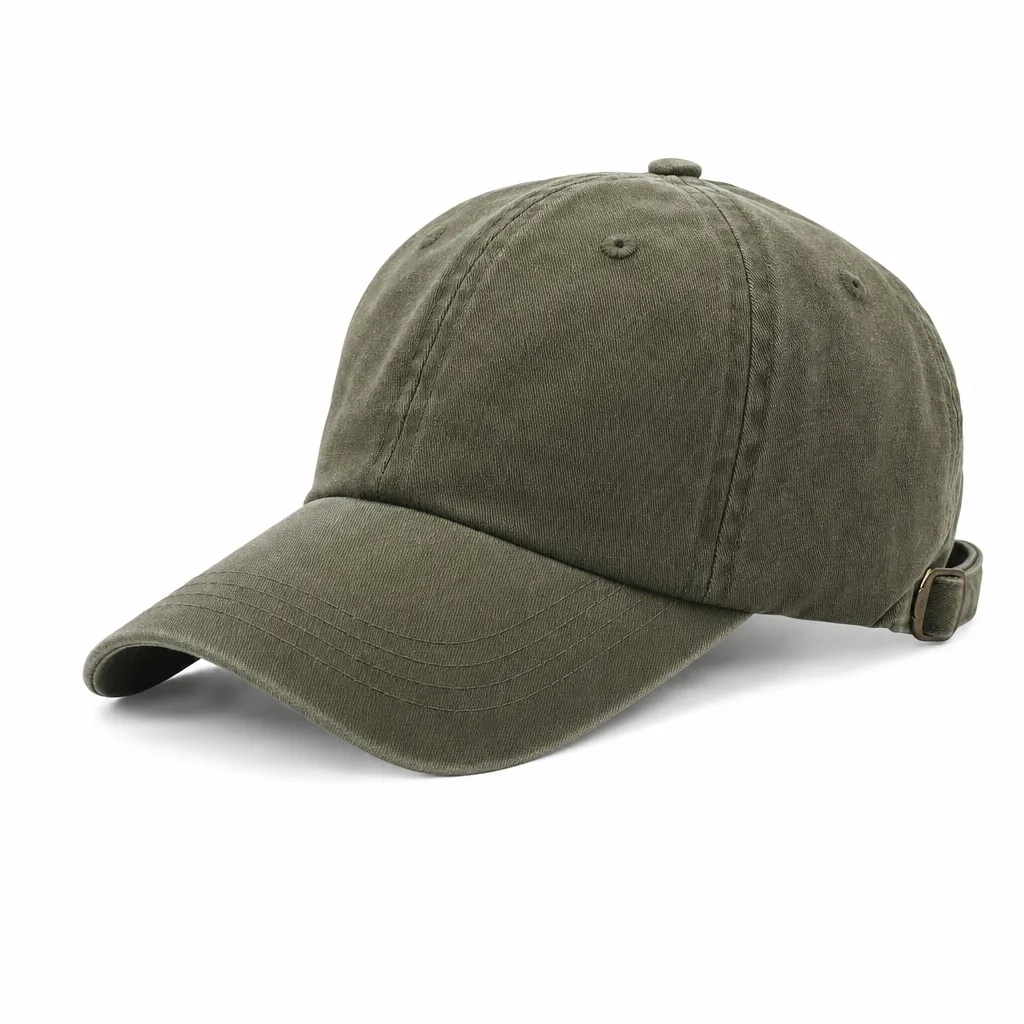
Every week, our sales team answers detailed questions about custom cap closure options and cost: snapback, strap, buckle - cost & moq breakdown. We wrote this guide so that wholesalers, streetwear brands, corporate buyers and promotional resellers can compare options with full information, and avoid the traps that show up only after production has started.
What custom cap closure options cost means in real production
The closure line on a cap quote is a real cost center, not a decorative add-on. It changes trim price, sewing time, back-opening pattern, and in some cases carton efficiency because bulkier buckles distort the cap profile in packing. In real factory quoting, custom cap closure options cost usually starts with three variables: hardware type, material grade, and whether the trim is stock or custom. On a 500-piece FOB China order, a stock PP snapback set typically adds $0.08 to $0.14 per cap. A 20 mm nylon webbing strap with a stock D-ring or tri-glide is more often $0.17 to $0.27, depending on webbing thickness and dye lot control. A zinc-alloy buckle with PU strap usually lands around $0.32 to $0.55, while split leather, logo debossing, or a custom logo plate can push the closure package to $0.60 to $0.85. If the quote does not define resin type, webbing gsm, metal base, plating color, and logo method, the first sample will almost always reset the number. The hardware spec matters because metal finish and assembly method are not interchangeable in production. Matte black electroplating costs differently than antique brass wash, and both perform differently in scratch resistance and 24-hour salt-spray testing. A sewn-in tuck strap also runs different labor than a snap set installed in pre-punched back tabs, especially on washed cotton twill where distortion at the rear opening is common. On the floor, we usually see 6-panel baseball caps, foam truckers, and 5-panel campers require different rear-arc widths, seam allowances, and reinforcement tapes, so the same buckle cannot be priced accurately without the cap profile.
The cleanest RFQs lock five details before sampling: closure construction, raw material, color standard, branding method, and back-opening structure. That is where most buyers either control custom cap closure options cost or lose it. If a self-fabric strap must match the shell, specify the Pantone TCX reference and an acceptable Delta-E tolerance; otherwise the mill and trim supplier will each approve a different shade. For hardware, state nickel, gunmetal, matte black, or antique brass, and confirm whether the logo is laser engraved, die-cast, stamped, or printed. If performance matters, ask for pull-force requirements, plating adhesion, and at least a 24-hour salt-spray benchmark on exposed metal parts. Those details prevent the common sampling loop where the first prototype looks right but fails during wear testing or final inspection. MOQ shifts fast once hardware moves beyond stock trims. Standard snaps and off-the-shelf buckles can often run from 144 to 300 pieces per color, but custom-molded snap clasps, logo-stamped sliders, or debossed leather tabs usually need 500 to 1,000 pieces, sometimes more if the trim factory is busy. Tooling is another hidden line item: a simple deboss die might be $80 to $120, while a custom metal mold or engraved plate setup can reach $180 to $300 before unit cost even starts. Under AQL 2.5 inspection, vague trim specs create the most expensive kind of quote: one that is technically approved but commercially unstable. Tight specs save more money than negotiating a cent off the FOB price.
Specs to request before a quote
Lock the closure specification before you ask for pricing; otherwise the cheapest quote usually gets rebuilt during sampling. The minimum RFQ should define closure type and geometry in measurable terms: snap tab hole count and post pitch, strap finished width, strap cut length, buckle inside width, number of keepers, strap tip construction, and the sewn back opening measured seam-to-seam. For adult caps, typical references are an 80-85 mm back opening, 20 mm self-fabric strap, 7-hole PE or PVC snap set, and 18-20 mm buckle hardware, but those “standard” numbers still need tolerances. In bulk production, ±2 mm on strap width, ±3 mm on cut length, and ±2 mm on back opening are realistic without slowing the line or driving rework. This is where custom cap closure options cost moves from guesswork to actual numbers: at 1,000 pieces, a stock plastic snapback usually adds about $0.10-$0.18 per cap, a self-fabric tuck strap lands around $0.22-$0.35, and a PU or leather-look strap with metal buckle, keeper, eyelet, and stitched tip can run $0.45-$0.90 depending on plating, labor steps, and whether hardware is stock or custom-molded.
Use technical material language, not fashion adjectives. Call out the exact substrate and finish: cotton twill 260-280 gsm, recycled polyester 150D or 300D, PU strap stock at 0.9-1.2 mm, genuine leather at 1.6-1.8 mm, and hardware finish such as matte black, nickel-free silver, or antique brass. If the program is for golf, outdoor, or licensed teamwear, ask whether the metal finish has passed a 24-hour salt-spray test and whether strap edges are folded, painted, or burnished, because each choice changes labor content and defect risk. For color control, specify Pantone TCX for textiles and Pantone Solid Coated for molded plastic or printed tabs, then set an acceptable Delta-E target; under 2.0 is a practical bulk standard, while 1.5 or tighter can trigger re-dye, re-plating, or higher rejection rates.
Packing and QC belong on the RFQ, not after bulk is cut. State inner-pack quantity, carton dimensions, board grade, gross-weight limit, shipping mode, and whether buckles need tissue wrapping to prevent transfer marks or pressure points on adjacent caps. Keeping export cartons below 15 kg usually reduces crush damage and warehouse handling claims, especially on buckle styles with hard metal contact points. Also define packing form—flat-packed, with crown support, or fully shaped—because closure hardware affects carton yield and freight cost. On the PO, set the inspection standard clearly: AQL 2.5 is the normal baseline, but closure checkpoints should include broken snap posts, plating flake, loose rivets, sharp edges, uneven hole spacing, and pull strength on stitched straps. Ask for documents, not promises: current sedex-audit-cap-supplier-guide.html">BSCI 2.0 or Sedex SMETA 4-Pillar audit reports, metal test records, needle-control policy, pre-production approvals, and dated in-line QC photos. That paperwork stabilizes custom cap closure options cost far better than vague price shopping.
Factory risks and quality checks
The biggest factory risk is tolerance stacking, not the snap, buckle, or strap by itself. A snapback can look fine on the table and still sit crooked on-head if the rear opening shifts 3-4 mm off center, the left and right seam allowance drifts beyond 2 mm, or the male and female snap strips come from different injection molds with inconsistent tooth depth. Strap closures fail in other ways: tuck slots cut off-axis, raw-edge 10-12 oz cotton twill straps fraying after wash, weak bartacks at the fold-back point, or plating mismatch between buckle, eyelets, and metal tip. Buyers comparing custom cap closure options cost often underestimate rework exposure here, because almost every closure correction is manual. Replacing 500 defective snap sets usually adds $0.18-$0.35 per cap in labor and trim, plus 2-4 lost production days; replacing misplated buckles on a mixed-color run can cost more because the cap has to be reopened at the back seam without damaging the sweatband setting. The control point is the tech pack, not final inspection. Lock the closure spec at material level: matte black acetal snap, 20 mm antique brass slider, #8 satin-finish steel buckle, 25 mm 420D nylon webbing, or PU strap matched to a Pantone TCX standard with approved edge paint. The PP sample should confirm rear opening width, strap length, hole spacing, closure alignment to the center-back seam, and stitch density at attachment points; for most cap programs, 7-9 SPI with clean backtack is a workable standard, while PU and leather tabs need needle checks to prevent surface cuts. A sealed golden sample and BOM should also define hardware color under D65 light and set measurable trim tolerances, such as Delta-E below 1.5 on dyed straps or fabric tabs against the approved lab dip.
Final inspection should treat the closure as a functional part under AQL 2.5, not a decorative add-on. Inspectors need to cycle snapbacks 10-15 times, apply light pull tension to buckle and strap assemblies, confirm hook-and-loop is stitched across the full bond area, and measure rear opening width to spec with no looser than +/-2 mm tolerance. On leather, PU, and nylon webbing closures, the repeat failures are needle damage, cracked edge paint, and heat marks after pressing, especially when crown shaping temperature is too aggressive. Carton accuracy matters too: once one cap body splits into multiple SKUs by closure type, packing errors rise fast unless assortment labels and carton marks are checked as a separate control point. The safest workflow is an in-line check after the first 30-50 pieces, a mid-line audit after sweatband setting and pressing stabilize, and a final random inspection before balance payment. In a disciplined factory, that means recording closure pull strength, center-back symmetry, logo-to-closure balance, plating consistency, and mixed-carton defects by major and minor classification. Our standard practice is to flag closure alignment and hardware finish variance early, because late correction wrecks shipment timing. A two-day delay on an FOB Ningbo or Shanghai booking can miss weekly vessel cutoff, and that logistics penalty usually costs more than whatever was saved by forcing custom cap closure options cost below a realistic trim and QC threshold.
MOQ, lead time, and cost drivers
MOQ is where custom cap closure options cost stops being theoretical and turns into a trim problem. On a standard 6-panel cap in 260 gsm cotton twill or 600D polyester, a stock plastic snapback usually adds only $0.07 to $0.16 per piece at 1,000 pcs because the strap set is pulled from common black, white, or navy inventory. Move to a brushed brass buckle, antique nickel tri-glide, tuck strap with clasp, or logo-debossed PU tab, and the closure cost typically jumps to $0.32 to $0.85 each before extra labor. The reason is simple: the crown may be generic, but the back hardware is not. Custom-dyed webbing, woven back tabs, and molded metal parts bring trim MOQs of 500 to 1,000 pcs per color, plus plating minimums, logo tooling, and Pantone TCX lab dips that can add $80 to $250 per colorway. In real factory terms, 300 pcs per style is workable for stock closures; once the closure itself is customized, small runs get expensive fast because the surcharge is spread over too few units.
Lead time follows the same logic. A basic snapback cap with standard embroidery on Tajima or Barudan heads can usually ship 18 to 25 days after sample approval if the fabric and profile are both in-line materials. Add a metal buckle, leatherette tuck strap, rivets, or branded clasp, and production typically extends to 28 to 38 days because plating approval, logo tooling, and back-strap color confirmation must clear before sewing can start. Installation also takes longer than many buyers expect: bartack reinforcement, hole spacing, rivet setting, and strap centering are manual operations, and even 3 mm of skew is obvious on a finished cap. Packaging and logistics widen the gap further. Basic bulk packing might run $0.12 to $0.20 per cap, but individual polybags, barcode stickers, hangtags, and buckle protection push that to $0.28 to $0.55. If the program also calls for REACH testing, pull-strength checks, or AQL 2.5 inspection on metal hardware, add another $150 to $400 per style. That is why any serious quote should lock closure material, plating finish, packaging spec, and shipping term—EXW, FOB Ningbo, or DDP—or the cheapest closure on paper often lands as the most expensive one delivered.
How CrownsForge manages this order type
Closure errors become expensive when the back closure is treated as a trim decision instead of a fit decision. When buyers ask about custom cap closure options cost, the right time to lock it is at sample stage, with a PP sample built to a signed tech pack listing closure type, strap finished length, back opening width, hole count, buckle gauge, tape width, and Pantone TCX references for shell, sweatband, edge tape, and thread. If the style uses dyed cotton webbing, PU tabs, or 210D nylon tape, color approval should be based on lab dips at Delta-E under 1.0 against the master under D65 light; otherwise the closure often ends up visibly off even when the crown fabric passes. In practice, one fit sample and one revised PP sample usually get the closure right. Once the order reaches roughly 3,000 pcs, a sealed golden sample should stay on the line and in final inspection because a 7-hole PE snap, 25 mm antique brass buckle, or self-fabric strapback changes more than trim price: it affects opening shape, pack-out compression, and sometimes carton quantity. The closure itself may shift cost only $0.08 to $0.45 per cap, but the downstream effect is usually where margins get lost.
The control point is documentation, not guesswork on the sewing floor. A workable PO package needs a closure-specific BOM, rear artwork placement sheet, stitch specification, needle and thread callout, tolerance table, and a measurement standard for strap extension, buckle centering, and back seam offset. On embroidery-heavy styles, the rear panel setup also needs to be called out—Tajima, Barudan, or ZSK cap frames, backing weight, and stitch density—because dense embroidery near the closure can distort the opening if the underlay is too aggressive or the backing is too light. MOQ should be clarified at the same time. Standard plastic snapbacks can often start around 144 pcs per color, but custom-logo metal buckles, molded rubber tabs, or branded jacquard straps usually carry trim MOQs of 500 to 1,000 sets, even if the finished cap order is smaller. At CrownsForge, incoming trims are checked for burrs, plating consistency, pull strength, and color migration, then bulk goods are audited at AQL 2.5 with functional checks for snap engagement, buckle roller movement, hook-and-loop peel strength, and bartack security. Keeping approved patterns, embroidery files, and trim supplier codes tied to the style number typically cuts repeat-order development by 7 to 10 days.
Frequently Asked Questions
How long does production take?
Sampling takes 7 to 12 days. Bulk production runs 20 to 30 days depending on quantity, fabric availability and decoration complexity. Inspection and packing adds another 3 to 5 days before shipment.
Do you support sustainability certifications?
Yes. We work with GOTS organic cotton, GRS-certified recycled polyester, OEKO-TEX Standard 100 fabrics, and are BSCI and Sedex audited. Certification documentation can be provided per order.
What is the minimum order quantity (MOQ) for custom hats?
Our standard MOQ is 100 pieces per design and color, with sampling available from 1 piece. For complex multi-color logos or premium fabric upgrades, the MOQ can be lowered with a small per-piece surcharge.
What logo decoration techniques do you offer?
3D puff embroidery, flat embroidery, woven patch, leather patch, PVC patch, screen printing, sublimation, applique and laser etching, all in-house with no subcontracting.
Can I order a sample before bulk production?
Yes. We strongly recommend approving a pre-production sample before mass production. Samples are charged at 35 to 60 USD each plus express shipping, fully refundable against confirmed bulk orders over 500 pieces.
How do I find a reliable custom waterproof cap manufacturer?
When evaluating custom waterproof cap manufacturer, the key considerations are construction quality, decoration capability, MOQ flexibility and lead time. Explain custom cap closure options cost in the context of a custom headwear RFQ, with the production details a buyer should verify before sampling. Cover dimensions, materials, tolerances, decoration files, carton requirements, AQL level, and the evidence a capable factory should provide.
How much does branded bills custom hat cost typically cost?
When evaluating branded bills custom hat cost, the key considerations are construction quality, decoration capability, MOQ flexibility and lead time. Explain custom cap closure options cost in the context of a custom headwear RFQ, with the production details a buyer should verify before sampling. Cover dimensions, materials, tolerances, decoration files, carton requirements, AQL level, and the evidence a capable factory should provide.
How do I find a reliable custom hat manufacturer usa?
When evaluating custom hat manufacturer usa, the key considerations are construction quality, decoration capability, MOQ flexibility and lead time. Explain custom cap closure options cost in the context of a custom headwear RFQ, with the production details a buyer should verify before sampling. Cover dimensions, materials, tolerances, decoration files, carton requirements, AQL level, and the evidence a capable factory should provide.
How does ordering custom embroidered snapback hat work?
When evaluating custom embroidered snapback hat, the key considerations are construction quality, decoration capability, MOQ flexibility and lead time. Explain custom cap closure options cost in the context of a custom headwear RFQ, with the production details a buyer should verify before sampling. Cover dimensions, materials, tolerances, decoration files, carton requirements, AQL level, and the evidence a capable factory should provide.
Ready to start your custom hat project?
Send us your tech-pack, sketch or even just an inspiration photo. We will respond with a detailed quotation and digital mock-up within 24 hours.
Request a free quoteRelated guides
Custom Leather Patch Hat Low Minimum: A 2026 B2B Sourcing Guide
Read article →
Mens Beanies: Properties, Costs and How to Spec It Right
Read article →
Custom Rope Hats: Manufacturing, Materials and Bulk Pricing (2026 Update)
Read article →Sourcing custom hats does not have to be complicated. With the right manufacturing partner, clear specifications and a small upfront investment in sampling, you can launch a retail-quality product in 30 to 45 days.