
Custom Camo Hats: Hunting, Outdoor and Tactical Cap Manufacturing - Cost & MOQ Breakdown
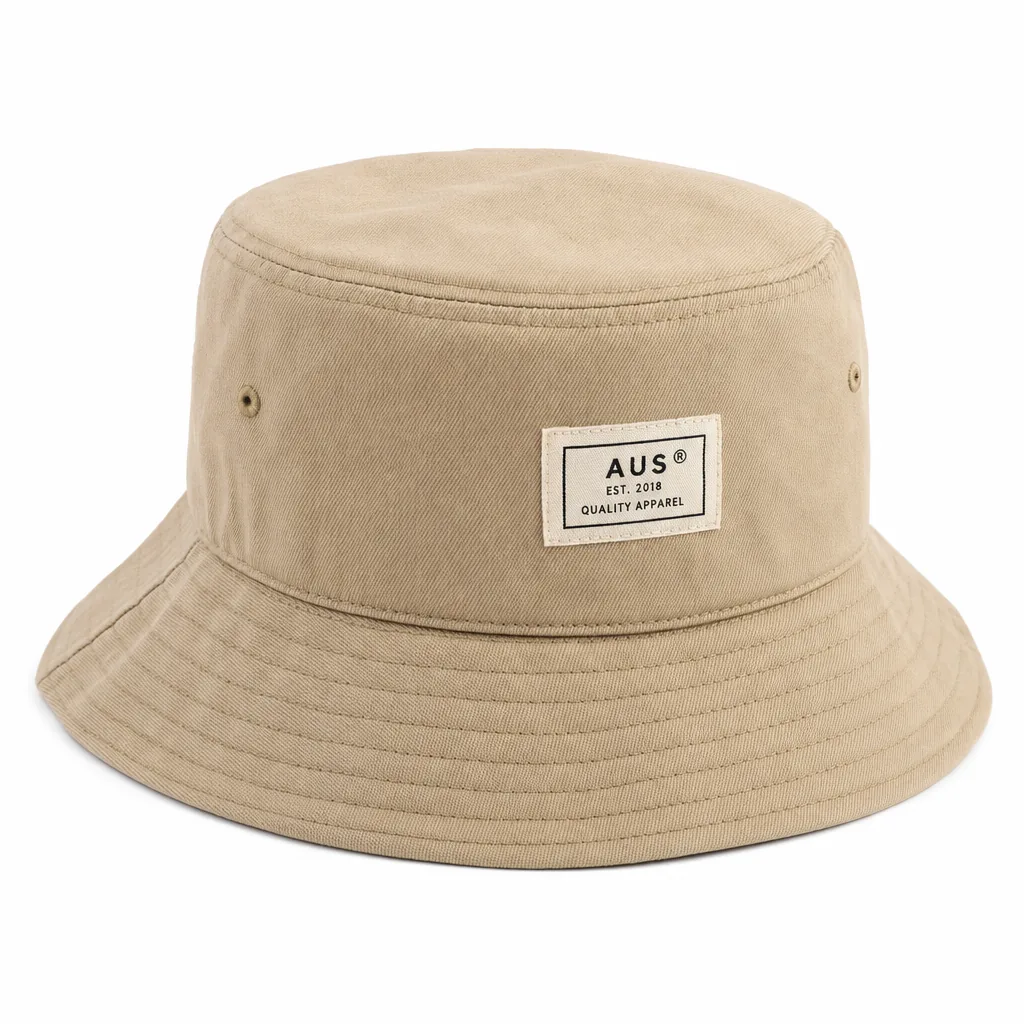
Custom Camo Hats: Hunting, Outdoor and Tactical Cap Manufacturing - Cost & MOQ Breakdown is one of the most-asked questions we receive from international buyers, and for good reason. With dozens of factories competing for your order and an alphabet soup of technical terms in every supplier quote, even experienced importers can feel lost. This guide consolidates what we have learned producing custom hats for clients in 40+ countries.
The four dominant camo families in retail and outdoor markets
Pattern family is the first costing decision, not a styling detail, because it affects artwork clearance, print yield, and where custom camo hats will actually sell. In production, four families drive most volume: photoreal hunting woods, digital pixel camo, M81/woodland derivatives, and fashion desert or multi-terrain variants. Photoreal woods sit in the Realtree- and Mossy Oak-type lane and are the most technically demanding. The file usually needs layered bark texture, leaf silhouettes, shadow gradients, and fine branch detail built at 300 dpi or higher at full repeat size; if the art is weak, the cap looks muddy fast. On brushed cotton twill below about 180 gsm, dark values collapse into each other and edge definition disappears from one meter away. Better results usually come on 210-260 gsm cotton twill with reactive print, or on polyester microfiber and interlock shells via sublimation or heat transfer, depending on panel construction. That family still dominates hunting specialty, farm-and-ranch chains, and licensed outdoor programs, where buyers want a cap that reads like actual hardwood cover rather than generic camo.
The commercial split gets sharper once licensing enters the conversation. Photoreal hunting camo carries the highest infringement risk, so the first factory question should be simple: do you own the artwork, hold a valid license, or need a forest-inspired pattern engineered from scratch. That decision changes unit economics immediately. In the market, camouflage royalties commonly add $0.35 to $1.20 per cap, and minimum guarantees, branded hangtags, or channel restrictions can push effective cost even higher on runs under 1,200 pieces. Our standard practice is to cost base fabric, pattern rights, and decoration separately, because too many buyers bury everything under “camo fabric” and then miss landed cost by 8% to 15%.
Digital camo, M81-type woodland, and non-licensed multi-terrain patterns are usually cleaner programs for tactical, team, and streetwear accounts. Pixel repeats hold their shape better across small crown panels, curved side pieces, and boonie brims, so they reproduce more consistently on 65/35 poly-cotton ripstop, 240-280 gsm twill, and even 500D to 600D tactical fabrics. Woodland derivatives are equally practical: the look is instantly recognizable, art separation is simpler, and mills can build a compliant lookalike without drifting into protected pattern territory. In factory terms, those three families are cheaper to sample, easier to color-control to within roughly Delta-E 2.0 to 3.0 against lab dips, and less likely to stall over approvals. If the end user is a hunting retailer, photoreal woods still convert best. If the target channel is airsoft, workwear, training, or tactical e-commerce, digital and woodland usually move faster with fewer legal and production headaches.
Licensing reality for branded camo patterns
If you want genuine Realtree or Mossy Oak on custom camo hats, treat it as a licensing project before you discuss crown profile, visor curl, or stitch count. Those camouflage layouts are protected artwork, and no compliant factory is going to download a “close enough” bark-and-leaf file and rotary print it onto 260 gsm brushed cotton twill or 210D poly ripstop. On the production floor, the rule is binary: either the buyer supplies written authorization from the IP holder and the fabric is sourced through an approved mill, converter, or nominated distributor, or the pattern cannot be used. At CrownsForge, that paperwork check happens before sampling because the legal exposure is larger than the sewing risk. For U.S. importers, the downside is practical, not theoretical: customs holds, marketplace takedowns, and brand claims can erase margin faster than a failed AQL 2.5 inspection or a crooked Barudan embroidery run.
If the program is not licensed, the clean route is to build an original hunting or tactical print that delivers the same field function without copying protected geometry. That means changing branch scale, leaf silhouettes, breakup spacing, and negative-space ratios, then locking the palette against Pantone TCX references for olive, soil, stone, and dry-grass tones. In development, 3 to 5 colors is the realistic sweet spot for cost and print stability; we normally approve strike-offs first, then bulk fabric, and hold major shade areas within Delta-E 2.0 to 3.0 so adjacent panels do not read mismatched in daylight. Typical base fabrics are 240 to 280 gsm cotton twill for traditional hunting caps, 140 to 180 gsm peach-finish microfiber for lightweight performance styles, and 500D to 600D polyester or nylon for more structured tactical builds. MOQ is usually 300 to 500 pieces per colorway for custom-printed fabric, while licensed fabric commonly adds 25% to 40% to total cap cost. A standard 6-panel hat that lands around $2.80 to $4.20 FOB in original printed twill often moves to $3.60 to $5.80 FOB once licensed yardage minimums, mill surcharges, and fabric yield loss are added, and lead time typically stretches from about 30 days to 45 to 60 days because every PO has to match the license trail.
Cap silhouettes that work with camo patterns
Silhouette decides whether custom camo hats look intentional or cheap, because camouflage already creates visual noise before you add embroidery, seams, or patches. For hunting programs, the safest commercial base is still a pre-curved 6-panel with a medium-profile crown: roughly 8.5-9.0 cm front height, a 7.0 cm visor, and structured front panels backed with 0.8-1.2 mm EVA or buckram. That geometry sells across the widest age range and handles brushed cotton twill, micro-peach polyester, or poly-cotton at 180-240 gsm without collapsing in transit. More importantly, it gives stable decoration placement for center-front flat embroidery, woven patches, or small side logos, and it holds camo seam matching to a realistic 3-5 mm on bulk production. That tolerance matters; once panel drift gets worse than that, the pattern looks off even if the sewing itself passes inspection. On factory runs controlled to AQL 2.5, this silhouette usually delivers the best balance of recognizable retail shape, usable field fit, and acceptable print alignment cost.
For tactical and performance assortments, a low-profile 5-panel often works better than a high-crown snapback because the front panel is cleaner and the overall shape feels less fashion-led. It is a strong choice for 210D-300D polyester ripstop, 228T nylon taslon, or nylon-spandex shells with C0 or C6 DWR, especially when buyers want laser-cut TPU badges, matte silicone patches, or flat embroidery instead of traditional hunting decoration. The catch is that the camo repeat has to be engineered before cutting; if the artwork is dropped onto the marker without planning, the front panel can look visually off-center even when the badge is technically straight. Trucker and bucket silhouettes still have a place, but only when the end use is honest. Truckers suit casual outdoor retail where mesh backs reduce weight and improve airflow, while buckets perform better for fishing and hot-weather field use in 150-190 gsm poly-cotton or quick-dry microfiber. I would avoid 3D puff on camo almost every time: Tajima and Barudan heads can run it cleanly, but raised logos usually fight the pattern and create weaker contrast than flat embroidery or woven labels.
Decoration on camouflage fabric
On camouflage, contrast is the whole game. For custom camo hats, flat embroidery is still the safest decoration because it physically sits above the printed ground and keeps a hard edge after sweat, briar abrasion, and roughly 20 to 30 home-wash cycles. On hunting programs, blaze orange thread is not a style choice; it is a visibility requirement if you want a logo to read over Realtree Edge, Mossy Oak Bottomland, or similar high-breakup patterns. For tactical caps, matte black, coyote, and olive drab usually outperform glossy tonal thread, which tends to disappear once the cap is outdoors instead of under showroom lighting. We normally run 120D/2 polyester on Tajima or Barudan embroidery heads, with front logos kept around 8,000 to 10,000 stitches and minimum text height at 4 mm. Below that, counters close up and edges fray visually. If the thread-to-ground contrast is under about Delta-E 8 against the dominant camo area, the mark often vanishes at two meters, so tonal logos need a sewn strike-off on actual fabric, not a screen approval.
Woven patches are the practical fix when direct embroidery cannot separate itself from the camo print. A damask woven patch with a merrow border or heat-cut edge creates a clean frame over noisy fabric and preserves fine detail that embroidery loses on brushed twill, ripstop, or peached microfiber. On front panels, 50 to 60 mm patch height is the safe working range; smaller than that, linework and small text start to collapse at retail distance. I usually spec a black, khaki, or hunter-orange border because the outline does half the readability work. On unstructured 5-panel and low-profile 6-panel caps, stitch-down attachment is more reliable than adhesive-only application, which can tunnel, lift, or telegraph through the crown after washing. At 300 to 1,000 pieces, woven patches typically add $0.28 to $0.55 per cap depending on size, edge finish, and sew time. Leather can work on waxed cotton, canvas, or heavy brushed twill, but only if the artwork is simplified: 1.2 to 1.6 mm stock, deep deboss, and thick strokes. Screen print and sublimation are usually poor choices on camouflage because the base pattern competes with the graphic, then UV and laundering flatten the image even further.
Blaze orange and hunter safety pairings
For the U.S. hunting channel, blaze orange on custom camo hats has to survive actual field use, not just pass a sample-table glance. The safest layouts put high-visibility area above the sightline of bibs, collars, and over-ear muffs: a full front panel, an upper crown band, or a pull-over shell cover that wraps at least 270 degrees around the crown. A sandwich visor, top button, or 3 mm piping does almost nothing once the hunter is in a blind or wearing a hood. On structured caps, we typically pair a camo body in 8-10 oz brushed cotton twill, 7.5 oz poly-cotton ripstop, or 600D polyester with blaze panels cut from 150-200 gsm polyester twill, because the tighter face gives cleaner color and less fuzzing than brushed orange fabric. For shade control, Pantone 16-1462 TCX is a common buyer reference, but the real factory rule is consistency across fabric, thread, binding, and heat-transfer trims. If orange components drift past Delta-E 2.0 under D65 light, the cap starts reading rusty or red-cast, which buyers in the hunting segment reject fast.
Embroidery is where a lot of otherwise solid custom camo hats fail, especially when blaze orange logos are sewn onto dark bark, marsh, or woodland prints. We spec 40 wt trilobal polyester thread over rayon because it gives better UV resistance, lower thread breaks, and cleaner coverage on Tajima and Barudan heads running 700-850 rpm. On camo, a 6,000-10,000 stitch logo often needs heavier edge-walk underlay, a wider satin column, or a knockdown stitch on brushed twill so the orange does not visually sink into the print. Mesh backs and foam-front truckers should be tested separately during pre-production because orange thread can read one-half shade darker on open mesh than on solid twill. Cost impact is small if decided before digitizing and marker planning: orange eyelets, top button, or visor sandwich usually add $0.08-$0.22 per cap at 1,200-3,000 pieces, while a removable blaze cover runs closer to $0.45-$0.90 because it needs separate cutting, elastic binding, size control, and extra packing steps. Our standard QC is visual placement and shade verification to AQL 2.5, since crooked orange trim is far more obvious on camouflage than on solids.
MOQ, lead time and pricing for camo cap programs
For custom camo hats, 100 pcs per style is the practical floor; once you split that into multiple camouflage patterns or colorways, FOB cost climbs fast because camo disrupts marker efficiency and panel matching. A standard 6-panel structured cap with buckram front, pre-curved PE visor, plastic snapback, and a 3,000 to 5,000-stitch front embroidery usually lands at $3.40 to $4.20 FOB using stock camo polyester twill or brushed twill in the 180 to 240 gsm range. Break that 100 pcs into two prints of 50 pcs each and expect roughly 12% to 18% uplift, mostly from poorer fabric utilization and more setup loss. Licensed Realtree or Mossy Oak programs are a different cost bracket: the same cap typically moves to $4.90 to $5.80 FOB once licensed yardage, stricter pattern placement, and extra cutting loss are factored in. If the buyer also wants camo carried onto the undervisor, eyelets, or back strap, cost rises again because those small parts magnify shade variation and waste more fabric than most people expect.
Lead time on custom camo hats is usually controlled by fabric readiness, not by sewing capacity. A solid-color cap sample can be done in 7 to 10 days, but camo sampling is more realistically 10 to 14 days because the factory has to confirm print availability, base cloth weight, hand feel, and usable repeat before cutting. If the mill needs to issue swatches, make a strike-off, or match the print against a Pantone TCX reference, add 3 to 4 more days; in production, acceptable shade control should be treated as a lot issue, with visible roll-to-roll variation kept tight enough that crown panels and visor tops do not drift beyond a buyer-acceptable Delta-E tolerance. Embroidery also needs more engineering on camouflage than on solids: on Tajima or Barudan heads, we often adjust edge-walk underlay, satin density, and thread color after sew-outs so the logo stays legible across both dark and light areas of the print. Bulk production is usually 25 to 30 days after sample approval and deposit, with final inspection run to AQL 2.5 and special attention on lot shading, crown symmetry, and panel balance before packing.
Tactical camo programs cost more because they add labor minutes at several stations, not just on the sewing line. An operator cap or boonie in 210D to 300D poly-cotton ripstop with loop panels, woven tabs, black undervisor, seam taping, and either multi-location embroidery or patch application typically runs 8% to 20% above a basic camo dad cap or trucker. Hook-and-loop patch bases, laser-cut loop fields, and reinforced attachment points slow throughput in a way buyers often underestimate, especially when the cap also needs cleaner internal finishing for military, outdoor, or airsoft retail channels. The safest way to protect price and delivery is to lock the fabric code, crown profile, closure, camouflage approval, and decoration method before sample sign-off. Late changes to the print, panel layout, or logo treatment usually create more delay than the sewing itself, because the factory has to re-check fabric yield, embroidery readability, and shade consistency before bulk can start.
Frequently Asked Questions
How long does production take?
Sampling takes 7 to 12 days. Bulk production runs 20 to 30 days depending on quantity, fabric availability and decoration complexity. Inspection and packing adds another 3 to 5 days before shipment.
What file format should I send for my logo?
Vector files (AI, EPS, PDF) are ideal. High-resolution PNG or JPG at 300 dpi on transparent background works as a fallback. Provide Pantone color references for accurate reproduction.
Can I order a sample before bulk production?
Yes. We strongly recommend approving a pre-production sample before mass production. Samples are charged at 35 to 60 USD each plus express shipping, fully refundable against confirmed bulk orders over 500 pieces.
What is the minimum order quantity (MOQ) for custom hats?
Our standard MOQ is 100 pieces per design and color, with sampling available from 1 piece. For complex multi-color logos or premium fabric upgrades, the MOQ can be lowered with a small per-piece surcharge.
Which shipping methods do you support?
We support FOB, CIF and DDP shipping. Air express for samples and small orders, sea LCL for 100 to 500 pieces, sea FCL for 5,000+ pieces. Door-to-door DDP available for US, EU, UK, Canada and Australia.
How does ordering custom embroidered trucker hat work?
When evaluating custom embroidered trucker hat, the key considerations are construction quality, decoration capability, MOQ flexibility and lead time. Pre-curved baseball cap (hunting standard), 5-panel low-profile (outdoor/tactical), trucker hat (festival/casual outdoor crossover), bucket hat (fishing). Avoid 3D puff embroidery on camo — the dimensional logo competes visually with the pattern. Realtree-style (high-detail forest pattern with leaves and branches), Mossy Oak-style (similar but distinct branding/licensing),…
What should I know about custom hats bulk order?
When evaluating custom hats bulk order, the key considerations are construction quality, decoration capability, MOQ flexibility and lead time. 100 pieces per design/color combination. Sample 10-14 days (fabric sourcing adds 3-4 days vs. solid cotton twill). Bulk 25-30 days. FOB pricing $3.40-$5.80 per cap depending on fabric tier (equivalent forest vs. licensed Realtree). Realtree-style (high-detail forest pattern with leaves and branches), Mossy Oak-style (similar but distinct branding/licensing), digital camo…
What's the MOQ for custom embroidered trucker hats no minimum?
When evaluating custom embroidered trucker hats no minimum, the key considerations are construction quality, decoration capability, MOQ flexibility and lead time. Pre-curved baseball cap (hunting standard), 5-panel low-profile (outdoor/tactical), trucker hat (festival/casual outdoor crossover), bucket hat (fishing). Avoid 3D puff embroidery on camo — the dimensional logo competes visually with the pattern. Realtree-style (high-detail forest pattern with leaves and branches), Mossy Oak-style (similar but distinct branding/licensing),…
How do I find a reliable custom hat manufacturer usa?
When evaluating custom hat manufacturer usa, the key considerations are construction quality, decoration capability, MOQ flexibility and lead time. Pre-curved baseball cap (hunting standard), 5-panel low-profile (outdoor/tactical), trucker hat (festival/casual outdoor crossover), bucket hat (fishing). Avoid 3D puff embroidery on camo — the dimensional logo competes visually with the pattern. Realtree-style (high-detail forest pattern with leaves and branches), Mossy Oak-style (similar but distinct branding/licensing),…
Need a low-MOQ test order?
We help emerging brands launch with as few as 100 pieces. Premium fabric, in-house embroidery, retail-ready packaging.
Start a small orderRelated guides
Custom Waterproof Cap Manufacturer: A 2026 B2B Sourcing Guide
Read article →
Beanies for Men: Properties, Costs and How to Spec It Right - Cost & MOQ Breakdown
Read article →
Cap Defect Catalog: 32 Production Issues to Inspect For - Cost & MOQ Breakdown
Read article →If you are ready to take the next step on custom camo hats: hunting, outdoor and tactical cap manufacturing - cost & moq breakdown, our team can put a tailored quotation and digital mock-up in your inbox within 24 hours. Send the inquiry form on our contact page or message us directly on WhatsApp.