
Corduroy Hat Vintage Export Shipping Checklist for Custom Hat Buyers
Corduroy Hat Vintage Export Shipping Checklist for Custom Hat Buyers is one of the most-asked questions we receive from international buyers, and for good reason. With dozens of factories competing for your order and an alphabet soup of technical terms in every supplier quote, even experienced importers can feel lost. This guide consolidates what we have learned producing custom hats for clients in 40+ countries.
Why corduroy hat vintage export shipping checklist needs a separate sourcing plan
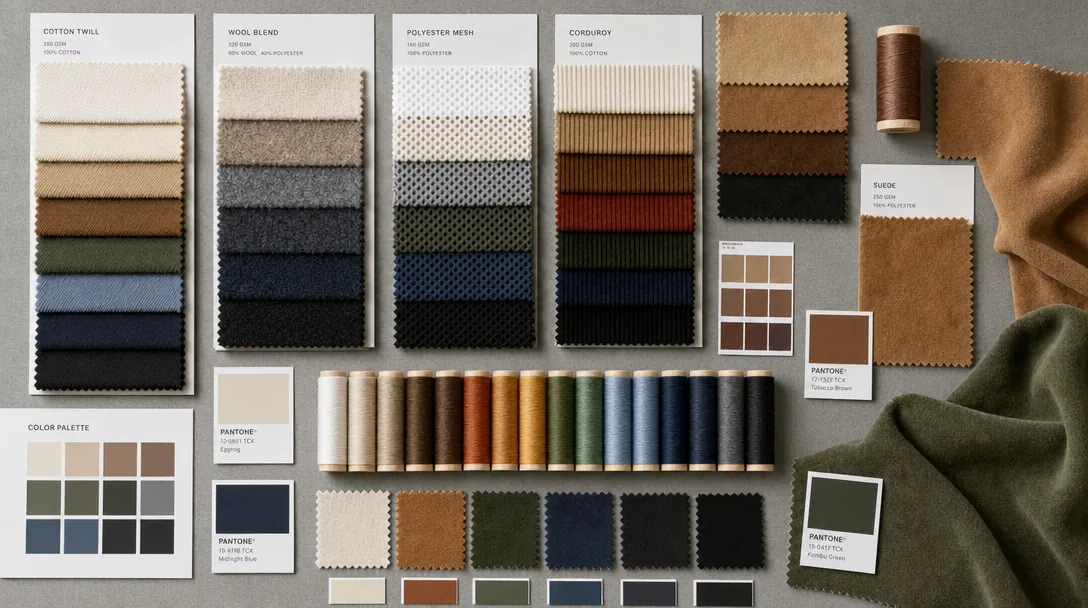
A corduroy hat vintage export shipping checklist needs a separate sourcing plan because the buyer is not just asking for a cap price; they are trying to control texture, color aging, packing pressure, and import risk before money is locked into bulk fabric. Corduroy behaves differently from twill or brushed cotton because wale count, pile height, and cutting direction change the visual shade from panel to panel. A 21-wale fine corduroy gives a cleaner streetwear look, while 8-wale or 11-wale reads more retro but shows seam distortion faster on curved crowns. If the spec says corduroy hat brown, the lab dip should be approved under D65 and TL84 light with Delta-E under 1.5 against a Pantone TCX reference, not judged from a phone photo. Generic hat sourcing usually starts with silhouette and logo; vintage corduroy sourcing starts with fabric handfeel, dye lot discipline, and whether the buyer accepts natural nap variation.
Cost and lead time shift quickly once you choose the structure. A 6-panel corduroy hat vintage dad cap with unstructured front, antique brass buckle, and 5,000-stitch flat embroidery may sit around US$3.20–4.60 FOB Ningbo at 500–1,000 pcs, depending on fabric weight and washing. A corduroy bucket hat often needs more fabric yield allowance because brim panels must match nap direction; that can add 6–10% material consumption versus cotton twill. Bucket hat corduroy styles also compress badly if cartons are overfilled, so export packing may move from 200 pcs per carton to 100–120 pcs with tissue support, increasing CBM and DDP freight cost. If the buyer asks for enzyme wash, garment dye, or a faded vintage edge, add 5–8 days for wash testing and shade approval before embroidery. Organic cotton hat claims add another layer: GOTS or OCS transaction certificates must match the mill invoice, not just a hangtag statement.
Compliance decisions should be made before sampling, not after inspection. For EU and U.S. buyers, I would confirm fiber composition label wording, country-of-origin marking, nickel release risk on metal closures, azo dye compliance, and whether the shipment needs CPSIA tracking labels for youth sizing. Our standard practice at CrownsForge is to inspect vintage corduroy orders under AQL 2.5 for major defects, but we add specific checks for nap reversal, pile crushing, shade banding, loose embroidery threads, and brim symmetry because those are the complaints that generic cap QC often misses. A proper corduroy hat vintage export shipping checklist should also separate production approval from shipment approval: PP sample, bulk fabric approval, inline inspection at 30–50%, final random inspection, carton drop check, packing list, commercial invoice, HS code review, and audit documents such as sedex-audit-cap-supplier-guide.html">BSCI 2.0 or Sedex SMETA 4-Pillar if the buyer’s retailer requires them. Skipping that sequence saves a few days on paper and usually costs weeks when customs or the brand QC team rejects the lot.
Factory capability checks before quoting
A serious quote starts with capability proof, not a pretty mockup. For a corduroy hat vintage export shipping checklist, I ask the factory to confirm embroidery limits first: maximum stitch count before puckering, thread brand, backing type, and whether they run Tajima, Barudan, or ZSK heads with cap frames. On 8-wale or 11-wale corduroy, fine lettering under 5 mm often sinks between ribs, so raised 3D puff needs a wider satin column and 0.2–0.3 mm pull compensation in the digitizing file. If the design uses chenille, felt, woven patch, leather patch, or heat-transfer badge, require a photo of the actual attachment method, not a catalog image. Edge stitching at 6–8 SPI, merrow border density, and adhesive bleed after pressing are common failure points on a corduroy hat vintage order.
Fabric capability is where many quotes become unreliable. Ask for wale count, composition, gsm, and color-control method before accepting any price for bucket hat corduroy, corduroy bucket hat, or a corduroy hat brown program. A proper mill spec should list 100% cotton, cotton-spandex, or recycled cotton blend, with shrinkage after washing under 3% and color tolerance within Delta-E 1.5–2.0 against a Pantone TCX target. If the buyer also runs an organic cotton hat line, the supplier should separate GOTS or OCS-certified fabric documentation from normal cotton claims; mixing those papers creates audit trouble later. Panel construction matters as much as fabric: confirm 5-panel, 6-panel, unstructured dad cap, camper, or bucket pattern, seam allowance, brim board thickness, sweatband material, and whether the factory can control nap direction across all panels.
Before quoting, I would also check sample-room speed and decision discipline. A capable sample room should produce a first physical sample in 7–10 days after artwork approval, with a fit block, brim curve, closure, and decoration matching bulk intent. Closure options need to be named exactly: brass buckle, antique silver buckle, plastic snapback, hook-and-loop, elastic strap, or self-fabric strap with tuck-in slot. Our standard practice at CrownsForge is to quote bulk only after the sample team confirms machine route, needle size, fusing, pressing temperature, and packing method. Audit readiness is not decorative; request current BSCI 2.0, Sedex SMETA 4-Pillar, ISO 9001, or social-compliance status if the order is for retail. Finally, test communication before money moves: the merchandiser should answer in BOM language, clarify Incoterms such as FOB Ningbo or DDP Los Angeles, and understand AQL 2.5 inspection requirements without being coached.
MOQ, pricing and sample approval
MOQ is where most corduroy hat vintage programs either stay profitable or quietly lose money. For a custom 6-panel corduroy cap, 300 pcs per color is usually the practical floor if the buyer accepts stock 8-wale or 11-wale cotton corduroy; 500 pcs per color gives better fabric shade control and steadier sewing output. For a bucket hat corduroy style, I prefer 500 pcs because brim binding, crown lining, and size grading create more handling loss than a baseball cap. Small runs at 100–200 pcs are possible, but expect a surcharge of about $0.60–$1.20 per piece and limited color options. A plain corduroy hat brown with woven label may land around $3.20–$4.80 FOB Ningbo at 500 pcs, while heavy embroidery, metal buckle, and custom inside tape can push it to $5.50–$7.80. Organic cotton hat versions add both fabric MOQ and certification paperwork; GOTS or OCS transaction documents should be confirmed before sampling, not after bulk cutting.
Decoration setup costs need to be approved before the pre-production sample, not buried in the final invoice. Embroidery digitizing is usually $25–$60 per logo, depending on stitch count and whether we run it on Tajima, Barudan, or ZSK heads. A small front logo may be 4,000–7,000 stitches; a dense retro script can exceed 12,000 stitches and distort corduroy ribs if the underlay is wrong. For a corduroy bucket hat, flat embroidery across a curved crown needs lower stitch density, often 0.36–0.42 mm spacing, plus tearaway backing to avoid puckering. Woven patches run $45–$90 mold/setup, leather patches $60–$120, and metal trims such as antique brass buckles need plating approval if the buyer wants low Delta-E variation against a Pantone reference. For Pantone matching, use Pantone TCX for fabric and Pantone C only for printed art; accepting a lab dip within Delta-E 1.5–2.0 is realistic on cotton corduroy.
The PPS is the control point in a proper corduroy hat vintage export shipping checklist because it locks the buyer’s decisions before bulk mistakes multiply. Our standard practice at CrownsForge is to submit one PPS with approved fabric shade, embroidery file, trims, sweatband, care label, hangtag, carton mark, and final polybag or plastic-free packaging. Buyers should check brim curve, crown height, seam alignment, label placement tolerance within ±3 mm, and embroidery color under D65 light, not warm office lighting. Sample lead time is normally 7–10 days after artwork and fabric are confirmed; dyed-to-order corduroy adds 10–15 days. Bulk production is usually 25–35 days after PPS approval for 500–3,000 pcs, and 40–50 days if custom dyeing, washed finishing, or organic cotton documentation is involved. For export packing, plan 100–200 pcs per carton depending on style; bucket hats compress better, structured caps do not. Final inspection should use AQL 2.5 for major defects before booking FOB or DDP shipment.
Quality inspection and shipping risk
The highest shipping risk on a corduroy program is not the vessel; it is inconsistent pile, shade, and panel shape leaving the factory unnoticed. For a corduroy hat vintage export shipping checklist, I require final random inspection under ANSI/ASQ Z1.4, General Inspection Level II, AQL 2.5 for major defects and 4.0 for minor defects. Critical defects such as mold, broken needle contamination, wrong care label, or metal detection failure are zero tolerance. Measurement tolerance should be written before cutting: crown height ±3 mm, brim width ±2 mm, circumference ±5 mm after steaming, and bucket hat corduroy styles should include side-wall height and brim drop because a soft brim can look acceptable flat but distort badly on head form. Inspectors must check wale direction panel by panel; mixed nap direction on a corduroy bucket hat makes one panel read darker even when the dye lot is correct.
Colorfastness matters more on corduroy hat brown and washed-black vintage shades because buyers often request garment washing or enzyme softening to get that worn-in hand feel. I usually ask for ISO 105-C06 washing fastness grade 3-4 minimum, ISO 105-X12 rubbing fastness dry 4 and wet 3, plus perspiration fastness grade 3-4 if the cap has a sweatband in light cotton twill. For an organic cotton hat, confirm the fabric certificate matches the purchase order and that no uncertified replacement fabric was used for underbrims or binding tape. Embroidery defects should be graded separately: broken thread longer than 3 mm, puckering around dense satin columns, registration drift above 1 mm, loose backing, oil stains from Tajima or Barudan heads, and thread shade outside approved Pantone TCX or Madeira reference should be major defects. A vintage look is not permission for random damage; distressing must match the sealed sample.
Carton control is where many otherwise good orders lose money. Export cartons should show PO number, style code, color, size ratio, quantity, gross/net weight, carton number, country of origin, and any buyer routing mark; I prefer no consumer-facing logo on master cartons unless the forwarder requires it. Inner polybags need suffocation warnings when shipping to the U.S., and moisture protection matters for corduroy because pile crush and mildew show quickly after 30-40 days at sea. FOB Ningbo or Shanghai gives the buyer freight control but requires clean handoff documents: commercial invoice, packing list, booking confirmation, VGM, and factory load photos. DDP is easier for small streetwear buyers, but duty, Section 301 exposure, and last-mile delivery surcharges must be priced honestly. Reorder documentation should include the approved sample, embroidery DST file, thread card, fabric gsm and wale count, carton dimensions, inspection report, and shipment photos so the next corduroy hat vintage run does not depend on memory.
Buyer checklist for the next RFQ
A firm RFQ starts with a tech pack, not a mood board. For a corduroy hat vintage export shipping checklist, send the exact silhouette first: 6-panel dad cap, unstructured 5-panel, bucket hat corduroy, or corduroy bucket hat with stitch-down brim. Include crown height, brim length, panel count, seam tape color, sweatband type, closure, eyelet style, and whether the fabric is 8-wale, 11-wale, or 14-wale corduroy. If you want a washed look, say enzyme wash, stone wash, or pigment garment wash; “vintage” alone is too loose for costing. For color, provide Pantone TCX references and a target Delta-E tolerance, ideally ΔE under 1.5 for solid colors and under 2.0 after wash. A corduroy hat brown can shift red or yellow after washing, so send one approved physical swatch if color is critical.
Artwork files decide embroidery price more than most buyers expect. Send vector files in AI, EPS, or PDF for flat embroidery, plus stitch-size placement in millimeters, not “center front.” For puff embroidery, chenille, felt applique, or woven patches, include reference photos showing edge thickness and backing. A Tajima or Barudan sample run with 8,000 stitches costs differently from a 22,000-stitch ZSK 3D puff logo, and that can move unit price by $0.35–$1.20 on a 500-piece order. If the order includes an organic cotton hat version, specify certification needs: GOTS transaction certificate, OCS blended claim, or simply organic cotton fabric with no consumer-facing claim. Also send trim requirements: recycled plastic buckle, brass clasp, YKK hook-and-loop, cotton twill sweatband, or private-label woven tape.
Before asking for FOB Ningbo, EXW Yiwu, DDP Los Angeles, or DDP EU pricing, provide packing and compliance details. State order quantity by color and size, carton marking format, polybag rules, barcode needs, hangtag language, and whether you require AQL 2.5 final inspection. For export shipping, we need finished cap dimensions and target carton loading; a normal corduroy cap packs around 100 pcs per 58 × 42 × 38 cm carton, while bucket styles often drop to 50–80 pcs because the brim deforms. Our standard practice at CrownsForge is to quote only after receiving front, side, back, inside, and closure reference photos, because hidden construction details change labor minutes. The best corduroy hat vintage export shipping checklist ends with ship date, destination ZIP/postcode, Incoterm, audit requirement such as BSCI 2.0 or Sedex SMETA 4-Pillar, and sample approval deadline.
Working with CrownsForge
A corduroy hat vintage export shipping checklist has to start before fabric cutting, not at the packing table. For sampling, our standard practice at CrownsForge is to lock the wale count, pile height, backing weight, and color tolerance on the first proto, because corduroy shifts shade badly under different light boxes. A common vintage program uses 8-wale or 11-wale cotton corduroy at 280–330 gsm, with a Pantone TCX target and Delta-E under 1.5 for approved bulk. For a corduroy hat brown order, I will not approve lab dips under only D65 lighting; we check TL84 and A light as well, because brown can turn greenish or red under retail lighting. A bucket hat corduroy sample also needs brim droop measurement after steam pressing, usually within ±3 mm, otherwise the final carton photos may look inconsistent even if the sewing is technically acceptable.
Decoration is where many corduroy hat vintage projects lose their old-school look. Flat embroidery on corduroy needs heavier underlay and slower stitch speed than twill, usually 600–750 rpm on Tajima or Barudan heads, because the ribs pull narrow lettering out of shape. For washed patches, I prefer woven labels or cotton twill appliqué over thin PU leather unless the buyer accepts edge cracking after abrasion. If the design is a corduroy bucket hat with front embroidery, we digitize around the wale direction and test 3D puff only on wider ribs; fine 2 mm strokes are risky. For an organic cotton hat, we separate GOTS transaction paperwork, fabric composition labels, and hangtag claims before mass production, because customs and retail compliance teams read those words literally. Decoration approvals should include stitch count, thread brand, backing type, placement tolerance, and one sealed counter sample for the sewing line.
Export coordination is mostly discipline: carton marks, polybag warnings, HS code, fiber content, and buyer SKU must match before the goods leave Yiwu. For the final corduroy hat vintage export shipping checklist, we run AQL 2.5 for major defects and AQL 4.0 for minor defects, with specific checks for crushed pile, oil marks, uneven brim topstitching, loose sweatband joins, and embroidery puckering. Hats are usually packed 24 or 48 pieces per master carton with crown supports or paper stuffing, depending on structure; a 58 cm bucket shape can deform if cartons exceed about 12–14 kg. For FOB Ningbo or Shanghai, documents normally include commercial invoice, packing list, booking confirmation, and certificate of origin if requested. For DDP shipments to the U.S. or EU, I want carton dimensions, gross weight, final SKU list, and Amazon/FBA labels frozen at least five working days before pickup.
Frequently Asked Questions
How long does production take?
Sampling takes 7 to 12 days. Bulk production runs 20 to 30 days depending on quantity, fabric availability and decoration complexity. Inspection and packing adds another 3 to 5 days before shipment.
Can I order a sample before bulk production?
Yes. We strongly recommend approving a pre-production sample before mass production. Samples are charged at 35 to 60 USD each plus express shipping, fully refundable against confirmed bulk orders over 500 pieces.
Do you support sustainability certifications?
Yes. We work with GOTS organic cotton, GRS-certified recycled polyester, OEKO-TEX Standard 100 fabrics, and are BSCI and Sedex audited. Certification documentation can be provided per order.
What logo decoration techniques do you offer?
3D puff embroidery, flat embroidery, woven patch, leather patch, PVC patch, screen printing, sublimation, applique and laser etching, all in-house with no subcontracting.
What file format should I send for my logo?
Vector files (AI, EPS, PDF) are ideal. High-resolution PNG or JPG at 300 dpi on transparent background works as a fallback. Provide Pantone color references for accurate reproduction.
What should buyers know about organic cotton bucket hat?
When evaluating organic cotton bucket hat, the key considerations are construction quality, decoration capability, MOQ flexibility and lead time. Explain the buyer intent behind corduroy hat vintage export shipping checklist, when it differs from generic hat sourcing, and what decisions affect cost, lead time and compliance. Describe how CrownsForge manages corduroy hat vintage export shipping checklist programs with sampling, decoration, QC and export coordination.
What should buyers know about brown corduroy bucket hat?
When evaluating brown corduroy bucket hat, the key considerations are construction quality, decoration capability, MOQ flexibility and lead time. Explain the buyer intent behind corduroy hat vintage export shipping checklist, when it differs from generic hat sourcing, and what decisions affect cost, lead time and compliance. Describe how CrownsForge manages corduroy hat vintage export shipping checklist programs with sampling, decoration, QC and export coordination.
What should buyers know about bucket hat men nike?
When evaluating bucket hat men nike, the key considerations are construction quality, decoration capability, MOQ flexibility and lead time. Explain the buyer intent behind corduroy hat vintage export shipping checklist, when it differs from generic hat sourcing, and what decisions affect cost, lead time and compliance. Describe how CrownsForge manages corduroy hat vintage export shipping checklist programs with sampling, decoration, QC and export coordination.
What should buyers know about vintage bucket hat mens?
When evaluating vintage bucket hat mens, the key considerations are construction quality, decoration capability, MOQ flexibility and lead time. Explain the buyer intent behind corduroy hat vintage export shipping checklist, when it differs from generic hat sourcing, and what decisions affect cost, lead time and compliance. Describe how CrownsForge manages corduroy hat vintage export shipping checklist programs with sampling, decoration, QC and export coordination.
Looking for a reliable hat manufacturer in China?
CrownsForge has produced custom hats for 800+ brands across 40 countries. From 100-piece launches to 100,000-piece retail programs, we deliver on time and on spec.
Get in touchRelated guides
Bulk Trucker Hats Supplier Audit Checklist for Custom Hat Buyers
Read article →
Golf Hats For Men Supplier Audit Checklist for Custom Hat Buyers
Read article →
Hat With Patch MOQ And Pricing Plan for Custom Hat Buyers
Read article →We hope this guide demystifies corduroy hat vintage export shipping checklist for custom hat buyers and helps you move forward with confidence. If you have questions specific to your project, our English-speaking sales engineers are one message away.