
Corduroy Hat Vintage Export Shipping Checklist for Custom Hat Buyers - Cost & MOQ Breakdown - Supplier Checklist
Every week, our sales team answers detailed questions about corduroy hat vintage export shipping checklist for custom hat buyers - cost & moq breakdown - supplier checklist. We wrote this guide so that wholesalers, streetwear brands, corporate buyers and promotional resellers can compare options with full information, and avoid the traps that show up only after production has started.
Why corduroy hat vintage export shipping checklist needs a separate sourcing plan
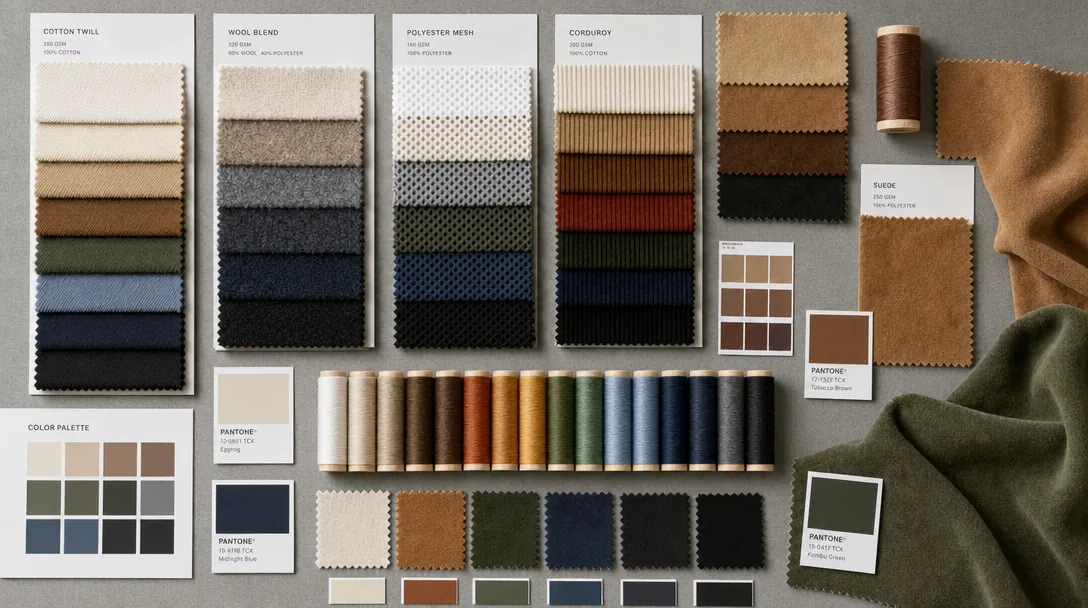
A separate sourcing plan is not optional because corduroy fails in places where chino, canvas, and brushed twill usually survive. The biggest problem is visual instability: wale count, pile height, fiber blend, and nap direction all change the color read under LED warehouse light and again after compression in transit. A 14-wale 100% cotton corduroy at 280-320 gsm behaves very differently from an 8-wale 98/2 cotton-spandex base at the same Pantone TCX reference; the tighter wale gives a cleaner vintage face, while the stretch blend rebounds unevenly after packing and washing. If the style includes pigment wash or enzyme wash, keeping body panels, visor, and strap within Delta-E 1.5 is already difficult; once mill dyeing and garment wash are handled by different suppliers, drift past Delta-E 2.0 is common. Any usable corduroy hat vintage export shipping checklist has to freeze fabric spec, nap direction, wash recipe, and approved shade band before PPS, because trying to correct shade or pile issues after cutting usually means remaking the lot.
Construction risk is the second reason the corduroy hat vintage export shipping checklist needs its own sourcing logic. Corduroy holds panel memory, so the same fusing used on a standard six-panel cap often causes seam grin, rib crush, and front crown distortion after carton pressure. Our standard practice is to test lighter non-woven or tricot-backed interlining, then check recovery after 48 hours under stacked-carton compression, especially on unstructured five-panel and vintage dad cap shapes. MOQ also shifts upward because the factory needs a stable fabric lot and disciplined cutting. While a stock twill cap can run at 144 pieces per color, vintage corduroy is usually safer at 300-500 pieces per color, with cutting loss running 8%-12% higher when all panels must follow the same wale direction. Decoration and freight both add cost: Tajima or Barudan embroidery speeds often drop from 800 spm to 600-650 spm to prevent pile drag, and master cartons should be loaded 10%-15% lighter using 5-ply export cartons, vented polybags, residual moisture checks below 12%, needle detection, and AQL 2.5 final inspection before ocean shipment.
Factory capability checks before quoting
Most bad quotes fail before price is even discussed: the factory is costing a generic cap shell, not your actual corduroy build. For a usable corduroy hat vintage export shipping checklist, confirm fabric capability first: wale count, fiber blend, finished weight, shrinkage after wash, and lot-to-lot shade control. An 11W 100% cotton corduroy at 280-310 gsm behaves very differently from a 14W 65/35 poly-cotton at 230-250 gsm; the first gives a heavier vintage hand but creates more seam bulk on unstructured 6-panels and buckets, while the second is easier to sew but looks flatter and less premium after wash. Ask for cut swatches with Pantone TCX references checked under D65 lighting, not edited phone images. For washed black, olive, and brown, a serious supplier should state a Delta-E tolerance around 1.5-2.0 and explain how enzyme wash, pigment wash, or garment over-dye will shift tone and crocking. If they cannot discuss pile direction, seam grin on wider wales, or whether the visor uses PE board, chipboard, or soft buckram, the quote is still guesswork.
Construction proof tells you more than a polished PDF. Ask for inside-out sample photos that show seam allowance width, taping, sweatband attachment, eyelet finish, and visor sandwich structure. On corduroy, weak workmanship shows up immediately: pile running opposite on adjacent panels, crown collapse after pressing, or topstitching wandering because the feed and presser-foot pressure were set for plain twill rather than ribbed fabric. A capable factory should give crown height in millimeters, visor length, closure fit range, and a costed explanation of each upgrade. In real terms, a self-fabric strap with antique brass slider usually adds about $0.18-0.28 per piece over a basic plastic snap, while a custom die-cast metal closure often adds $0.45-0.80 plus a $120-250 mold charge. Sample timing should also be believable: 7-10 days for a stock-fabric vintage cap, 12-15 days if wash approval, woven patch development, or branded trims are involved. Our standard practice is to quote cap body, decoration, and washing separately because on 144-300 pieces, trim and decoration choices can swing unit cost by $0.35-1.20.
Decoration and export compliance are where weak suppliers get exposed fastest. Corduroy punishes bad digitizing: embroidery sinks into the wale unless density is opened up, underlay is widened, and pull compensation is adjusted for pile height. If a supplier cannot tell you whether they run Tajima, Barudan, or ZSK heads, what backing weight they use, or whether your 3 mm text will close up on 8W or 11W fabric, they have not solved the problem on the production floor. A typical front logo on vintage corduroy lands around 6,000-9,000 stitches with fill density closer to 0.38-0.42 mm than the tighter settings used on cotton twill. Sometimes a woven patch, felt appliqué, or debossed PU label is the right technical answer even if direct embroidery is cheaper on paper. Export readiness needs the same scrutiny: current sedex-audit-cap-supplier-guide.html">BSCI 2.0 or Sedex SMETA 4-Pillar reports, needle logs, broken-needle procedure, carton drop-test discipline, and a written inspection standard such as AQL 2.5 major / 4.0 minor. A competent team should mark up a tech pack within 24-48 hours and quote Incoterms precisely as FOB Ningbo, FOB Shanghai, or DDP with duty assumptions stated.
MOQ, pricing and sample approval
MOQ on corduroy caps is driven by fabric and trim utilization, not sewing difficulty. For a 6-panel unstructured cap in stock 8-wale or 11-wale 100% cotton corduroy, the workable range is usually 144-300 pcs per color per style; below that, the cutting loss and trim breakage start distorting the unit cost. Move into custom Pantone-matched dyeing, branded seam tape, recycled PE buckles, or GOTS-certified fabric and the floor typically rises to 500-1,000 pcs because the mill wants a full dye lot and trim suppliers stop honoring short-run pricing. The key line item in any corduroy hat vintage export shipping checklist is whether MOQ is calculated by style, color, or total PO volume. Too many factories quote on aggregate quantity, then reject mixed-color ratios at PPS stage or back-charge a color surcharge later. Decoration changes the economics fast. Standard flat embroidery on Tajima or Barudan heads is routine, with digitizing at roughly $25-60 per file and clean run speeds if the artwork is under about 8,000-10,000 stitches. On corduroy, 3D puff is riskier because the wale can crush and the foam edge prints through, so many factories either refuse it or require a strike-off before approval. Woven patches, leather patches, custom metal badges, and logo buckles usually add separate setup or mold charges of $40-120, sometimes more if plating is custom. If the quote does not specify wale count, gsm, fusible backing weight, closure type, and whether hardware is stock or custom, it is not a fixed price; it is only a placeholder.
Once the spec is real, pricing narrows quickly. A vintage-look corduroy cap with stock fabric, cotton twill sweatband, one-location flat embroidery, standard woven main label, and export polybag usually lands around $2.80-4.20 FOB Ningbo or Shanghai at 300-500 pcs. A corduroy bucket hat with full lining, internal seam tape, woven care/content label, branded hangtag, and retail-ready polybag with suffocation warning is more often $3.60-5.80 FOB. The items buyers miss most often are custom metal slider buckles, debossed back straps, barcode stickers, size stickers, carton assortment labor, and premium embroidery thread such as Madeira Classic or Gunold Poly. Those details can add $0.08-0.35 per unit without changing the silhouette at all. Sample approval is where margin and claims prevention are won. Do not sign off from artwork or a digital mockup; require a PPS that shows wale direction, visor curve, crown height, stitch count, closure hardware, label set, and final packing method. On corduroy, embroidery density needs control: for broad fills, 0.35-0.40 mm spacing with the right underlay is usually safer than forcing dense coverage that causes puckering or tunneling. Fabric color should be approved from a physical lab dip or swatch against Pantone TCX with an agreed Delta-E tolerance of 1.5-2.0 under D65 lighting. Typical timing is 5-7 days for development, 7-10 days for PPS, and 25-35 days for bulk on 300-1,000 pcs; custom dyeing or bespoke trims often stretch production to 40-45 days. A solid corduroy hat vintage export shipping checklist should also lock carton dimensions, inner-pack ratio, and whether caps ship flat-packed, tissue-filled, or on cap frames, because those decisions directly affect CBM, freight cost, and crown recovery after transit.
Quality inspection and shipping risk
Most failures on a corduroy hat vintage export shipping checklist are surface and shade defects, not basic sewing faults. Corduroy punishes inconsistency because the pile reflects light differently panel to panel; on 8-wale to 12-wale cotton corduroy, a half-tone fabric lot shift, pile crush at the side seam, seam grin on the front panel, or a visor cut from a different roll is obvious under D65 or 6000K lighting. For final inspection, use ANSI/ASQ Z1.4, General Inspection Level II, with AQL 2.5 for major defects and 4.0 for minor, but only if the defect definitions are written tightly. On hats, I treat anything visible at about 60 cm on-head as a major: front logo off-center more than 3 mm, crown height out by more than 0.5 cm, visor width over tolerance by 0.3 cm, head opening circumference beyond plus or minus 1.0 cm, or brim width variation on a bucket exceeding 0.3 cm around the circumference. Blanket wording like “workmanship to approval sample” is useless at ex-factory stage; line-item tolerances stop arguments before loading.
Vintage color programs fail after landing when buyers approve only a Pantone and ignore the wash standard. If the style uses enzyme wash, pigment wash, or a faded olive, tobacco, or washed black effect, seal both the pre-wash lab dip and the approved post-wash standard, because Pantone TCX alone does not control abrasion, cast shift, or pile direction after washing. For bulk, keep shade variation within Delta-E 1.5 to 2.0 against the sealed washed standard under D65 light, and check crocking before shipment: dry crocking minimum grade 4, wet 3 to 4, perspiration 3 to 4. This matters on corduroy because loose dye and pile abrasion will stain light sweatbands, unbleached herringbone tape, or cream embroidery fast. Embroidery needs its own checkpoint as well; on Tajima, Barudan, or ZSK heads, poor underlay over pile causes edge wobble, fill registration drift above 0.8 mm, and logos sinking between wales even with a clean DST file. Shipping risk then comes down to packaging discipline: 5-ply export cartons, PE liner bags, 10 g to 20 g desiccant per carton in humid season ex-Ningbo or Shanghai, and carton markings that match invoice and packing list exactly, including PO, style, color, carton sequence, gross/net weight, dimensions, and COO. One mismatch creates more customs and warehouse disputes than most product defects.
Buyer checklist for the next RFQ
A workable RFQ for a corduroy hat vintage program starts with build data, not references pulled from Instagram. Specify the exact silhouette, panel count, crown height, visor length, and end use, because a 6-panel unstructured dad cap for promotions prices very differently from a 5-panel rope cap for retail or a bucket hat with taped seams. Fabric must be called out by wale count, composition, and weight: 8-wale 280 gsm 100% cotton corduroy, 11-wale 260 gsm CVC, and 14-wale 220 gsm cotton with 2% spandex do not sew, wash, or shrink the same way. Lock shade with Pantone TCX plus an approved swatch, and write the tolerance into the file; for solid piece-dyed corduroy, Delta-E 1.0-1.5 is realistic, while enzyme wash, pigment wash, or sanded vintage finishes usually need a wider approval window based on a sealed sample. Your corduroy hat vintage export shipping checklist should also force the factory to quote the hidden construction details buyers often forget: sweatband material and width, seam tape print or plain, visor board type, eyelet style, top button, closure, and abrasion points on brim edge or seams. For decoration, send vector art, millimeter logo size, and placement from crown seam or center front; on Tajima, Barudan, or ZSK heads, corduroy wale can bury fine detail, so direct embroidery below 0.8 mm line width is risky and small copy is usually cleaner as a woven patch, high-density twill badge, or leatherette patch with stitch-down spec. If you need certified fiber content, ask for GOTS or OCS transaction certificates, not generic claims about organic yarn.
The cleanest pricing comes from buyers who define commercial terms before sampling. State MOQ by colorway, size split, and delivery window; for most custom corduroy caps, 144-300 pcs per color is workable, while washed vintage finishes or mixed patch programs often need 300 pcs to control dye lot and trimming waste. Add a target ex-factory or FOB price, destination country, and in-house date. Material cost on corduroy typically lands around $2.20-$3.80 per meter depending on wale and blend, and bucket hats can consume 3%-5% more fabric between S/M and L/XL, so loose specs quickly turn into padded quotes. Our standard practice is to separate sample charge, embroidery digitizing, wash trials, and bulk carton CBM; when those items are undefined, suppliers often add a 3%-8% risk buffer. Shipping instructions need the same level of detail as the sewing spec. Write whether hats ship flat-packed or shape-kept, polybag or no polybag, insert card yes or no, barcode type such as Code 128 or EAN-13, carton packout, and maximum carton weight; many importers cap export cartons at 12-15 kg to reduce crushing and warehouse handling claims. Include carton dimensions target, destination ZIP or port, and Incoterm such as FOB Ningbo, FCA Yiwu, or DDP to one final address. Compliance should be explicit: AQL 2.5 final inspection, needle control log, AZO-free dyes, REACH SVHC, CPSIA tracking label if selling in the U.S., and any retailer packaging test. If production must run in a BSCI 2.0 or Sedex SMETA 4-Pillar audited facility, put that in the RFQ in writing; assuming it later is how lead times slip by 7-14 days.
Working with CrownsForge
Sampling discipline is where a corduroy hat vintage export shipping checklist either saves the order or fails before PP approval. The biggest risk is fabric lock, not freight. For vintage cap programs, the base cloth should be frozen before artwork is digitized: 8- to 11-wale cotton corduroy at 280-320 gsm works best for structured 6-panel caps, while 220-280 gsm is safer for unstructured buckets and soft crowns that need drape instead of panel memory. Wale direction, pile height, and wash shrinkage need sign-off on the first proto, because unstable mill finishing can move crown-panel dimensions by 2.5%-4.0% after enzyme wash. If the brief calls for organic cotton, check GOTS or OCS scope certificates before trims are booked; otherwise hangtags, carton marks, and transaction certificate paperwork get rebuilt mid-order, which usually costs more time than the fabric itself. Color control on corduroy also needs stricter rules than buyers expect. Vintage browns, olives, and washed black should never be approved from screens or flat lab dips alone because pile reflection shifts at every seam angle. We match against Pantone TCX under D65 light and usually hold face-fabric variance to Delta-E 1.5-2.0, with the understanding that rib direction will still read darker or lighter across adjacent panels. Decoration has to be engineered around the ribs as well: flat-fill embroidery that looks sharp on chino often sinks into 8-wale cord, especially when letter counters fall below 1.2 mm. Our standard practice is to test low-density embroidery on Tajima or Barudan heads with water-soluble topping, then compare it against chain stitch, felt applique, or woven patch construction before approving the final decoration method.
QC and shipping stay under control only when packing math is built into production, not tacked on after inspection. Corduroy is unforgiving because nap direction can make two technically correct panels look like two dye lots if cutting markers are careless. Cut bundles should be checked for nap flow before sewing, then monitored inline for crown symmetry, visor curve, stitch density, front-panel distortion, and embroidery registration. Final inspection should be run at AQL 2.5 major and 4.0 minor, with defect focus on cord bruising, oil marks, seam puckering, loose backing, underbill bubbling, and panel-to-panel shade swing. On bucket hats, brim width should be measured at four points; even a 3 mm deviation is obvious once the hat is worn and photographed. A practical corduroy hat vintage export shipping checklist also needs three physical approvals, not one salesman sample: a pre-production sample, a packing sample, and a wear-test sample after wash. That extra control loop typically adds $35-$80 per style, which is trivial compared with remaking 1,200 caps because the logo sank into the pile or the brim collapsed in transit. Freight should be estimated from carton density first. A structured corduroy cap usually packs 24-36 pcs per export carton depending on insert type and crown height; a soft bucket hat can reach 48-72 pcs. That changes shipping cost by roughly $0.08-$0.35 per piece depending on lane, season, and whether the move is FOB Ningbo or DDP to a U.S. warehouse. Economical MOQ is usually 144-300 pcs per color in stock fabric, but custom-dyed vintage washes more often need 500-1,000 pcs per color because dye-lot consistency and wash loss drive the real cost.
Frequently Asked Questions
What logo decoration techniques do you offer?
3D puff embroidery, flat embroidery, woven patch, leather patch, PVC patch, screen printing, sublimation, applique and laser etching, all in-house with no subcontracting.
What file format should I send for my logo?
Vector files (AI, EPS, PDF) are ideal. High-resolution PNG or JPG at 300 dpi on transparent background works as a fallback. Provide Pantone color references for accurate reproduction.
How long does production take?
Sampling takes 7 to 12 days. Bulk production runs 20 to 30 days depending on quantity, fabric availability and decoration complexity. Inspection and packing adds another 3 to 5 days before shipment.
Do you support sustainability certifications?
Yes. We work with GOTS organic cotton, GRS-certified recycled polyester, OEKO-TEX Standard 100 fabrics, and are BSCI and Sedex audited. Certification documentation can be provided per order.
Which shipping methods do you support?
We support FOB, CIF and DDP shipping. Air express for samples and small orders, sea LCL for 100 to 500 pieces, sea FCL for 5,000+ pieces. Door-to-door DDP available for US, EU, UK, Canada and Australia.
What should buyers know about organic cotton bucket hat?
When evaluating organic cotton bucket hat, the key considerations are construction quality, decoration capability, MOQ flexibility and lead time. Explain the buyer intent behind corduroy hat vintage export shipping checklist, when it differs from generic hat sourcing, and what decisions affect cost, lead time and compliance. Describe how CrownsForge manages corduroy hat vintage export shipping checklist programs with sampling, decoration, QC and export coordination.
What should buyers know about brown corduroy bucket hat?
When evaluating brown corduroy bucket hat, the key considerations are construction quality, decoration capability, MOQ flexibility and lead time. Explain the buyer intent behind corduroy hat vintage export shipping checklist, when it differs from generic hat sourcing, and what decisions affect cost, lead time and compliance. Describe how CrownsForge manages corduroy hat vintage export shipping checklist programs with sampling, decoration, QC and export coordination.
What should buyers know about bucket hat men nike?
When evaluating bucket hat men nike, the key considerations are construction quality, decoration capability, MOQ flexibility and lead time. Explain the buyer intent behind corduroy hat vintage export shipping checklist, when it differs from generic hat sourcing, and what decisions affect cost, lead time and compliance. Describe how CrownsForge manages corduroy hat vintage export shipping checklist programs with sampling, decoration, QC and export coordination.
What should buyers know about vintage bucket hat mens?
When evaluating vintage bucket hat mens, the key considerations are construction quality, decoration capability, MOQ flexibility and lead time. Explain the buyer intent behind corduroy hat vintage export shipping checklist, when it differs from generic hat sourcing, and what decisions affect cost, lead time and compliance. Describe how CrownsForge manages corduroy hat vintage export shipping checklist programs with sampling, decoration, QC and export coordination.
How to ship vintage hats?
In general, you can safely package most hats inside cardboard boxes. You should wrap them in a protective layer or place enough packing material inside to protect the hat from any residue that leaks onto the box. Most hats have a hard brim, visor, bill, or crown that must retain its shape during shipping.
How to clean a thrifted corduroy hat?
As long as it's not a vintage hat, needing special care, spot clean the hat with mild, diluted detergent before submerging it completely in water. Let it soak for up to 15 minutes. Then, rinse the hat thoroughly in warm or cold water before gently patting it dry with a towel, reshaping it and leaving it to air dry.
Can I ship hats in poly mailers?
You can wrap the hat in tissue paper or place it in a plastic bag for added protection against moisture or dust. Make sure it fits comfortably without being overstuffed. If you're using a poly mailer, you might add a small piece of bubble wrap for extra protection.
What size box to ship a hat in?
Something I learned this year: ship your hats in 16x16x6 boxes.
How to ship a hat without a box?
In some instances, maybe you don't need a box. Instead of always using a box, you can choose to ship soft and bendable hats in a plastic shipping bag with some protective material. This method can save you on shipping costs, but you do lose the protection of the box to keep the shape of the hat.
Ready to start your custom hat project?
Send us your tech-pack, sketch or even just an inspiration photo. We will respond with a detailed quotation and digital mock-up within 24 hours.
Request a free quoteRelated guides
Camouflage Bucket Hat: Properties, Costs and How to Spec It Right
Read article →
Custom Made Trucker Hat: The 2026 Sourcing & Manufacturing Playbook (2026 Update) - Supplier Checklist
Read article →
BSCI vs Sedex vs WRAP vs WCA: Compliance Audit Standards Compared (2026 Update) (2026 Update) (2026 Update)
Read article →Sourcing custom hats does not have to be complicated. With the right manufacturing partner, clear specifications and a small upfront investment in sampling, you can launch a retail-quality product in 30 to 45 days.