
Corduroy Hat Vintage Export Shipping Checklist for Custom Hat Buyers (2026 Update)
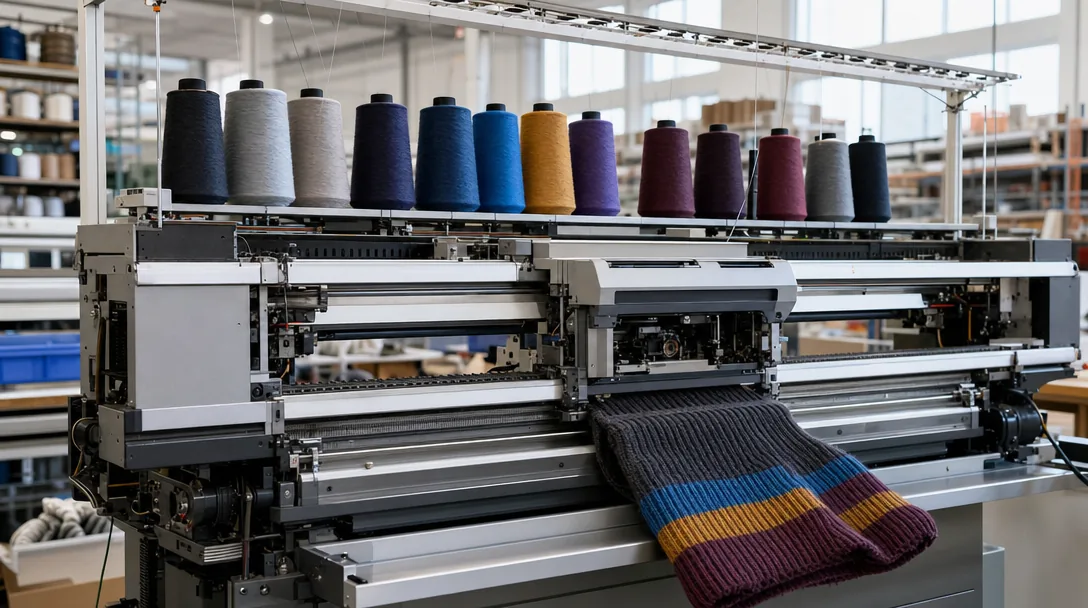
For brand owners, wholesalers and procurement teams entering the custom headwear category, corduroy hat vintage export shipping checklist for custom hat buyers (2026 update) is one of the highest-leverage decisions you will make. Get it right and your unit economics, retail story and reorder cycle all improve. Get it wrong and you carry the cost for years.
Why corduroy hat vintage export shipping checklist needs a separate sourcing plan
A usable corduroy hat vintage export shipping checklist starts at fabric lock, because corduroy fails in places where a normal brushed twill cap still passes. The three repeat problems are shade drift between dye lots, crown torque from off-grain cutting, and freight pressure that crushes the wale flat enough to look second quality on arrival. An 8-wale cotton corduroy at 280-320 gsm behaves nothing like a 14-wale article at 220-240 gsm: the heavier cloth gives a better vintage soft crown and cleaner top profile, but it also builds bulk at the side seams, increases needle heat, and shows panel misalignment immediately. If the mill cannot hold gsm within plus or minus 5 percent and width stability within about 2 percent after finishing, the cap maker is already compensating before sewing starts. That is why the sourcing plan has to freeze wale count, fiber blend, pile direction, shrinkage after wash, and acceptable crown collapse standard before bulk PO release. For washed browns, olives, and faded blacks, approval should sit against both a Pantone TCX target and a sealed post-wash standard, because pigment wash or enzyme wash can move final shade beyond Delta-E 1.5-2.0 very quickly when the mill and laundry are sampling separately.
The vintage requirement creates a different production path, not just a different look. Buyers are paying for controlled inconsistency: softened handfeel, seam fade, slight edge abrasion, and an aged surface that still passes wear and colorfastness expectations. That means embroidery usually needs fresh digitizing for corduroy, with stronger underlay, lower stitch density, and pull compensation tuned to wale direction on Tajima, Barudan, or ZSK heads; otherwise fills sink into the ribs and outlines snake across the pile. On bucket hats and unstructured 6-panels, brim stitch spacing, seam pucker, and post-wash crown symmetry become visible defect points, so those standards should be written into the PPS and top-of-production review, not argued at final inspection. Compliance also has to move earlier in the timeline: azo-free dye declarations, REACH checks on snaps and metal trims, wash-chemical records, and AQL 2.5 criteria for pile crush, shade banding, and wash variation need to be agreed before cutting. Our standard practice is to treat missing wash approvals, trim test reports, or carton moisture specs as booking risks, because one late correction can burn 7-12 days and turn a clean FOB shipment into expensive partial rework.
Logistics and costing are the final reason a corduroy hat vintage export shipping checklist needs its own sourcing plan instead of living inside a generic headwear SOP. Corduroy mills commonly ask for higher minimums on custom shades, and vintage finishing is not cosmetic fluff; it is usually another $0.35-$0.90 per piece for enzyme wash, softener, abrasion control, shade sorting, steaming, and re-pressing, with extra labor because sewing output drops on bulky wale fabric. Packaging has to be engineered around recovery, not just cube. If you overpack a 24-piece export carton, the crown can set with permanent sidewall creases; if you underpack, chargeable weight rises fast, especially on airfreight above 200 kg. The right sourcing brief specifies carton burst strength, stack height, inner support, PE bag venting, and desiccant loading such as 10-20 grams per carton depending on route humidity. Those details matter whether the goods ship FOB Ningbo, CIF Los Angeles, or DDP into an EU 3PL, because hats that arrive with crushed wale, moisture marks, or visible shade split are operationally delivered but commercially late.
Factory capability checks before quoting
Do not request a unit price until the factory proves it can decorate corduroy without wrecking the vintage look, because that is where margin usually disappears. On 8-wale to 11-wale cotton corduroy, the pile swallows fine satin stitches, pushes outlines off-register, and makes copy under 2.0 mm unreliable unless the digitizer adjusts edge-walk underlay, pull compensation, stitch angle, and backing weight to match nap direction. I care less whether the floor runs Tajima, Barudan, or ZSK heads than whether the sample room asks the right pre-quote questions: finished logo size in millimeters, minimum line thickness, Pantone TCX reference, crown panel placement, seam crossing risk, and whether the artwork will be flat embroidery, merrowed twill patch, woven label patch, TPU badge, or laser-cut faux leather. If a supplier can quote your corduroy hat vintage export shipping checklist from one mockup and a target price, they are not quoting; they are guessing.
Fabric capability should be spelled out in the quotation, not buried in a sample comment. A usable offer lists wale count, fiber content, finished weight, shrinkage, and color-control tolerance, because a 100% cotton 10-wale corduroy at 300 gsm behaves very differently from a 97/3 cotton-spandex corduroy at 240 gsm on a soft 6-panel crown. For washed black, olive, tobacco, or other vintage shades, require a lab dip or hanger swatch approved against Pantone TCX and cap bulk color variance at Delta-E 1.5 to 2.0; above that, the crown, visor, and top button can visibly drift if components come from separate dye lots. If the factory sells organic content, ask for GOTS or OCS scope certificates plus transaction certificates tied to the PO. CrownsForge also treats adhesive decoration on corduroy as a technical checkpoint: heat-pressed patches can leave glue read-through, crush the wale, or create shine marks unless dwell time, platen pressure, and cooling are tightly controlled and tested on the exact fabric lot.
The fastest credibility check is how the supplier breaks down sampling, compliance, and QC before taking a deposit. A serious export factory separates proto, revised fit, PP sample, and bulk lead times; in practice, expect 5 to 7 days for a straightforward cap sample, 10 to 14 days if washing, applique, or custom metal trims are involved, and about 30 to 45 days for production after PP approval. They should lock closure type early—antique brass buckle, self-fabric strap, snapback, hook-and-loop, or leather back strap—because each one affects trim sourcing, needle setup, carton dimensions, and pieces per carton. Ask for close-up photos of sweatband joins, eyelets, inside labels, seam taping, underbill fabric, and bartacks, plus a short sewing-line video if the style is technically sensitive. On compliance, current sedex-audit-cap-supplier-guide.html">BSCI 2.0 or Sedex SMETA 4-Pillar reports matter more than a polished factory deck, and QC should be written as inline, end-line, and final inspection at AQL 2.5, not a vague promise to check goods before shipment. Slow answers on BOM details, carton specs, or packing ratios are usually a better risk indicator than the quoted price.
MOQ, pricing and sample approval
MOQ is where most custom cap budgets go off track. For a 6-panel unstructured corduroy cap in 8-wale or 11-wale cotton, the factory may accept 144 pieces per style-color, but that is a survival MOQ, not an efficient one. In practice, FOB pricing starts to settle at 300 to 500 pieces and becomes meaningfully sharper at 1,000 because corduroy cutting loss, sweatband procurement, buckle plating, and carton allocation finally spread over enough units. A vintage-washed style with flat embroidery typically sits around $3.60 to $5.10 FOB China at 500 pieces in 2026; the same cap often jumps to $5.90 to $7.20 at 144 pieces because sewing minutes, thread changes, needle checks, trimming, and AQL 2.5 final inspection barely decrease with volume. Bucket hats usually add $0.40 to $0.95 if you specify full lining, edge binding, or 6 to 8 rows of brim stitching. Any serious corduroy hat vintage export shipping checklist should also flag certification-linked surcharges early: if the brief claims organic cotton, require GOTS or OCS transaction certificates tied to the actual lot, not a generic mill statement, because that paperwork affects both material cost and export file accuracy.
Sample approval is where corduroy programs either get locked down professionally or drift into avoidable claims. Corduroy pile direction, wale width, and enzyme or pigment washing all change logo appearance, so embroidery that runs clean on chino twill can sink badly on corduroy unless the digitizer rebuilds underlay, pull compensation, density, and stitch angle for the specific Tajima, Barudan, or ZSK head. Typical development costs are $35 to $80 for a fresh embroidery file, $60 to $120 for a woven label or patch, and another $50 to $150 for custom metal buckles, debossed leather tabs, or printed seam tape. Color approval should be matched to physical Pantone standards, usually TCX for dyed fabric and Solid Coated for printed components, with a realistic Delta-E tolerance around 1.5 to 2.0; on brushed or washed corduroy, visual variation will read wider because the pile reflects light unevenly. Before bulk cutting, the PPS should lock the exact wale, wash shade, crown depth, brim length, logo placement, closure construction, and packing method. At CrownsForge, we do not treat packaging as an afterthought: changing from a basic export pack to UPC labeling, recycled inserts, warning-print updates, or individual mailer boxes can add $0.18 to $0.65 per unit and materially change landed cost. Approving from photos alone, especially on olive, brown, or faded black vintage washes, is asking for a dispute.
Quality inspection and shipping risk
The expensive mistakes on a corduroy cap order rarely come from cutting; they surface at final inspection, after washing, embroidery, hand shaping, and trimming have already locked in the cost. A usable corduroy hat vintage export shipping checklist should therefore specify the release standard before bulk packing starts, not after cartons are taped. For a 3,000-piece order, I would put ANSI/ASQ Z1.4 single sampling in writing at General Inspection Level II, with AQL 2.5 for major defects and 4.0 for minor, then tie every checkpoint to the sealed pre-production sample and signed measurement sheet. On a six-panel vintage cap, inspectors should record crown height, brim width, head opening, visor curvature, top button centering, seam alignment, and stitch density in stitches per inch, with photos showing exactly where each tape measure starts and stops. That matters because corduroy pile can hide seam creep and make a cap pass on table but fail on head; in practice, ±0.5 cm works for crown height and brim width, while sweatband circumference should usually stay within ±0.3 cm. If the factory measures brim from the seam line and the inspector measures from the edge, you can manufacture an 8 percent false-reject rate out of a decent lot.
Color and decoration cause the next wave of chargebacks, especially on washed 8-wale or 11-wale cotton corduroy in darker shades like bottle green, navy, and chocolate. I would not ship without ISO 105 test results showing dry crocking at Grade 4 minimum and wet crocking at 3-4 or better, because long-haul humidity will transfer dye onto cotton twill sweatbands, woven labels, barcode stickers, and even adjacent panels inside a compressed carton. If shell, lining, and sweatband use different fiber contents, compare each component against the approved lab dip and the bulk roll under D65 light box conditions; once Delta-E moves past 1.5, the mismatch becomes visible at retail even if the sewing floor thinks it is close enough. Embroidery on Tajima or Barudan heads needs its own defect list: stitch sink between wales, registration drift over 1.0 mm, backing exposure, loose tails, thread breaks, and needle cuts across the raised ribs. For outbound packing, carton data must match the commercial invoice, packing list, and booking exactly—PO, style, color, quantity, gross weight, net weight, dimensions, COO, and consignee marks. Our standard practice is 5-ply export cartons for stable FOB shipments and 7-ply for DDP, Amazon FBA, or multi-stop 3PL handling, backed by drop-test records, pallet labels, AQL reports, PPS approvals, and date-stamped carton photos so a freight or quality dispute can be settled from documents, not memory.
Buyer checklist for the next RFQ
A usable quote lives or dies on the RFQ pack, not on a factory’s confidence. For a dependable corduroy hat vintage export shipping checklist, the first email should lock the silhouette, fabric, trim, logo method, quantity break, and shipping term in one place. “Vintage corduroy cap” is not a spec. State whether the style is a 6-panel unstructured dad cap, 5-panel camper, or bucket, then add crown height in millimeters, visor length, closure type, sweatband material, seam tape requirement, and wash target such as enzyme wash, pigment wash, or heavy garment wash. Corduroy must be called by wale, composition, and weight because those three variables move both cost and sewability: 14-wale 100% cotton at 280 gsm cuts and embroiders very differently from 8-wale cotton/spandex at 320 gsm, and the deeper rib will soften edge definition on small lettering. If you need a broken-in retail look, specify brim curve, seam puckering, abrasion level after wash, underbrim color, and hardware finish up front; otherwise the sample room will fill in the blanks and your quote will drift after first proto.
Color and artwork are where most revisions start. Call out body and trim colors by Pantone TCX, and for branded programs set an acceptable Delta-E tolerance on bulk fabric lots—1.5 is common, while looser promo work may accept 2.0 to 2.5. Send artwork as AI or press-ready PDF, then define logo size in millimeters, placement from seam or panel joint, and thread, patch, or ink colors by Pantone code. On corduroy, a 3 mm rib can bury thin serif strokes, so the decoration method has to match the wale scale: flat embroidery on Tajima or Barudan heads works for cleaner fills, while woven patch, suede patch, or screen print often reads better for fine detail than direct stitching into deep wale fabric. Add front, side, back, inside, and underbrim references plus a point-of-measure chart with tolerances for head opening, crown depth, visor width, and strap length to reduce sample revisions.
Freight assumptions belong in the RFQ, not after sample approval. In the corduroy hat vintage export shipping checklist, write the Incoterm exactly—`EXW`, `FOB Ningbo`, or `DDP` to a named ZIP code—because duty exposure, customs clearance, and carton math all change with that one line. If the destination is the U.S., ask whether the quote assumes courier, air freight, LCL, or FCL, and whether China-origin headwear may be exposed to Section 301 duties. Then lock packing rules: 24 or 48 pieces per master carton, maximum 15 kg per carton, outer carton dimensions, barcode format, hangtag spec, country-of-origin label, and whether caps ship crown-stuffed, tissue-filled, or individually polybagged with suffocation warning text. If the program needs certified materials, name `GOTS` or `OCS` at RFQ stage because transaction certificates, segregated storage, and audit handling add lead time and cost. If compliance matters, ask for `BSCI 2.0` or `Sedex SMETA 4-Pillar`; if quality matters, state `AQL 2.5` final inspection instead of writing “good quality.”
Working with CrownsForge
Most failures on a corduroy hat vintage export shipping checklist start at sample approval, long before the forwarder asks for carton counts. The export file should be opened when the buyer fixes wale size, fiber content, wash recipe, and trim BOM, because a 6-wale 100% cotton corduroy at 300-320 gsm behaves nothing like an 11-wale 80/20 cotton-poly blend at 250-270 gsm after enzyme wash, pigment spray, or a 9,000- to 12,000-stitch front logo. Those variables change pile crush risk, moisture regain, carton compression, needle policy, and even invoice wording. A usable pre-production matrix needs exact Pantone TCX references for shell, undervisor, sweatband, and top button; closure and hardware finish; logo method; stitch count; target carton ratio; net and gross weight; and whether wash-fastness, nickel release, or needle detection applies before ex-factory release. Approval should be split into three non-negotiable gates: fabric-and-trim card, decoration strike-off, and wearable prototype. Brown, olive, and washed black corduroy can shift visually beyond Delta-E 1.5 under D65 if pile direction flips between panels, so lab dip approval alone is not enough; the prototype must be checked panel by panel under controlled light. Decoration testing also has to run on the actual corduroy, not a substitute twill, because Tajima and Barudan heads sink thread differently into soft ribs, especially with chain stitch, felt applique, or direct-sewn patches. If the program carries an organic cotton claim, the paperwork must state whether it covers only the shell fabric or the full cap BOM, because that wording flows through carton marks, invoices, and customer declarations.
QC and export release should be one workflow, because the real failure point is usually pack-out accuracy rather than sewing quality. For corduroy caps, an AQL 2.5 inspection needs to go past loose threads and crooked labels and focus on nap crushing across crown panels, seam grin at the side band, embroidery registration across ribs, panel shading after master-carton pressure, sweatband staining, and oxidation on metal sliders after wash. Carton checks matter just as much: drop performance, barcode scan rate, polybag suffocation warning where required, silica-gel count, assortment ratio, and shipping-mark accuracy should all be verified against the approved pack plan. In practice, a 24-piece carton that runs 2 cm oversize or 1.0-1.2 kg overweight can push a shipment into a different freight bracket or trigger relabeling at the warehouse. The document set has to mirror the physical goods line for line. Manufacturer name, country-of-origin label, PO breakdown, carton measurements, and HS description should match across the packing list, commercial invoice, carton measurement sheet, and forwarder booking reference, with no shorthand added by the merchandiser. Buyer onboarding files should already be current on BSCI 2.0 or Sedex SMETA 4-Pillar status, and any third-party inspection release has to use the same shipment reference the forwarder and warehouse will receive. Our standard practice at CrownsForge is to treat that administrative match-up as part of final QC, because export holds and chargebacks on a corduroy hat vintage export shipping checklist usually come from mismatched declarations, missing labels, or carton variance, not from a bad sewing line.
Frequently Asked Questions
What logo decoration techniques do you offer?
3D puff embroidery, flat embroidery, woven patch, leather patch, PVC patch, screen printing, sublimation, applique and laser etching, all in-house with no subcontracting.
Can I order a sample before bulk production?
Yes. We strongly recommend approving a pre-production sample before mass production. Samples are charged at 35 to 60 USD each plus express shipping, fully refundable against confirmed bulk orders over 500 pieces.
Do you support sustainability certifications?
Yes. We work with GOTS organic cotton, GRS-certified recycled polyester, OEKO-TEX Standard 100 fabrics, and are BSCI and Sedex audited. Certification documentation can be provided per order.
What file format should I send for my logo?
Vector files (AI, EPS, PDF) are ideal. High-resolution PNG or JPG at 300 dpi on transparent background works as a fallback. Provide Pantone color references for accurate reproduction.
Which shipping methods do you support?
We support FOB, CIF and DDP shipping. Air express for samples and small orders, sea LCL for 100 to 500 pieces, sea FCL for 5,000+ pieces. Door-to-door DDP available for US, EU, UK, Canada and Australia.
What should buyers know about organic cotton bucket hat?
When evaluating organic cotton bucket hat, the key considerations are construction quality, decoration capability, MOQ flexibility and lead time. Explain the buyer intent behind corduroy hat vintage export shipping checklist, when it differs from generic hat sourcing, and what decisions affect cost, lead time and compliance. Describe how CrownsForge manages corduroy hat vintage export shipping checklist programs with sampling, decoration, QC and export coordination.
What should buyers know about brown corduroy bucket hat?
When evaluating brown corduroy bucket hat, the key considerations are construction quality, decoration capability, MOQ flexibility and lead time. Explain the buyer intent behind corduroy hat vintage export shipping checklist, when it differs from generic hat sourcing, and what decisions affect cost, lead time and compliance. Describe how CrownsForge manages corduroy hat vintage export shipping checklist programs with sampling, decoration, QC and export coordination.
What should buyers know about bucket hat men nike?
When evaluating bucket hat men nike, the key considerations are construction quality, decoration capability, MOQ flexibility and lead time. Explain the buyer intent behind corduroy hat vintage export shipping checklist, when it differs from generic hat sourcing, and what decisions affect cost, lead time and compliance. Describe how CrownsForge manages corduroy hat vintage export shipping checklist programs with sampling, decoration, QC and export coordination.
What should buyers know about vintage bucket hat mens?
When evaluating vintage bucket hat mens, the key considerations are construction quality, decoration capability, MOQ flexibility and lead time. Explain the buyer intent behind corduroy hat vintage export shipping checklist, when it differs from generic hat sourcing, and what decisions affect cost, lead time and compliance. Describe how CrownsForge manages corduroy hat vintage export shipping checklist programs with sampling, decoration, QC and export coordination.
How to ship vintage hats?
In general, you can safely package most hats inside cardboard boxes. You should wrap them in a protective layer or place enough packing material inside to protect the hat from any residue that leaks onto the box. Most hats have a hard brim, visor, bill, or crown that must retain its shape during shipping.
How to clean a thrifted corduroy hat?
As long as it's not a vintage hat, needing special care, spot clean the hat with mild, diluted detergent before submerging it completely in water. Let it soak for up to 15 minutes. Then, rinse the hat thoroughly in warm or cold water before gently patting it dry with a towel, reshaping it and leaving it to air dry.
What size box to ship a hat in?
Something I learned this year: ship your hats in 16x16x6 boxes.
How to pack a hat so it doesn't get ruined?
So this way your hat is totally secure now this isn't a guaranteed safe spot because things can shift around in your suitcase while in transit.
Ready to start your custom hat project?
Send us your tech-pack, sketch or even just an inspiration photo. We will respond with a detailed quotation and digital mock-up within 24 hours.
Request a free quoteRelated guides
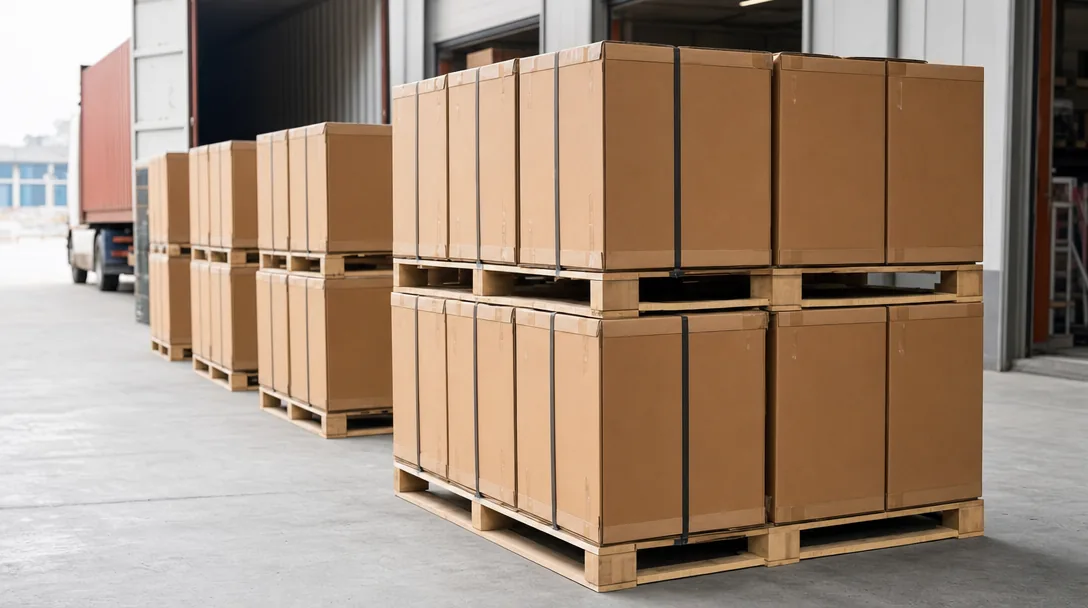
Embroidery Hats Machine: When to Use It, Costs, and What to Ask Your Factory - Cost & MOQ Breakdown
Read article →
Country Trucker Caps: The 2026 Sourcing & Manufacturing Playbook
Read article →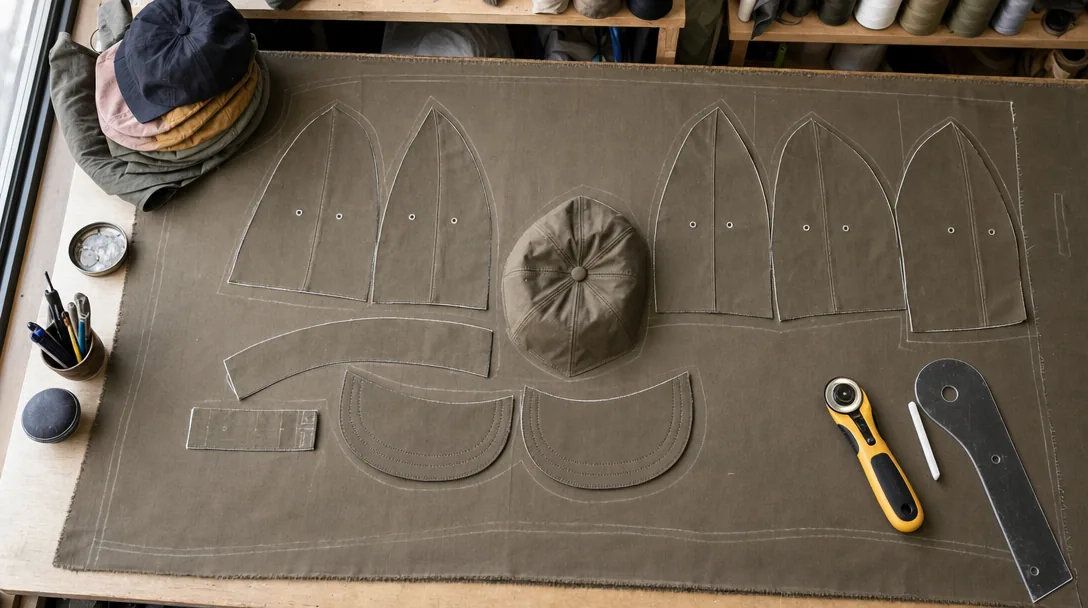
5-Panel vs 6-Panel Caps: Construction, Use Cases and Cost Compared (2026 Update)
Read article →If you are ready to take the next step on corduroy hat vintage export shipping checklist for custom hat buyers (2026 update), our team can put a tailored quotation and digital mock-up in your inbox within 24 hours. Send the inquiry form on our contact page or message us directly on WhatsApp.