
Corduroy Hat: Properties, Costs and How to Spec It Right - Cost & MOQ Breakdown
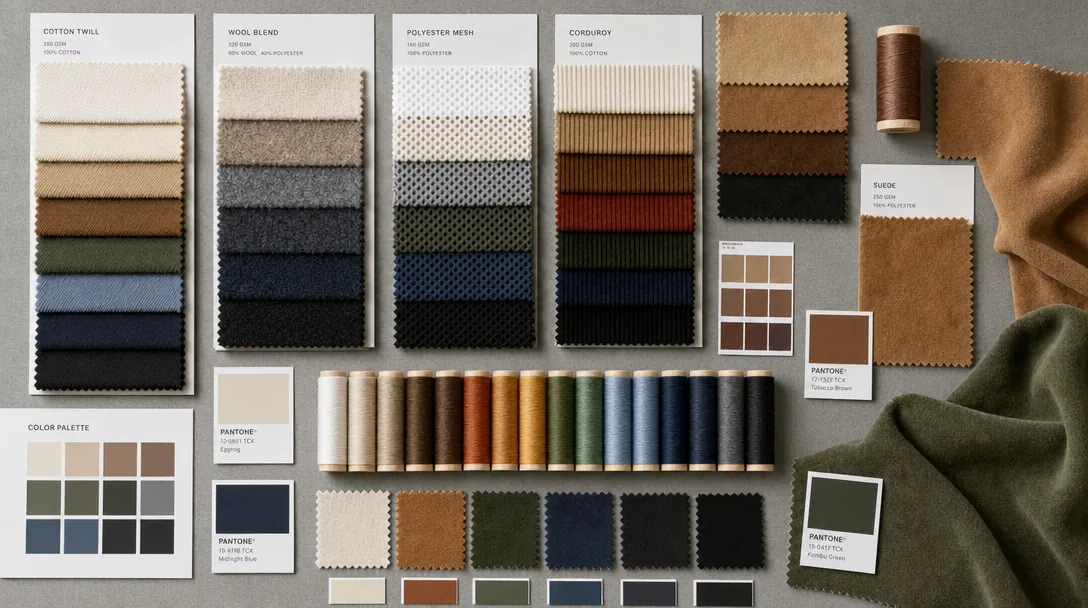
Corduroy Hat: Properties, Costs and How to Spec It Right - Cost & MOQ Breakdown is one of the most-asked questions we receive from international buyers, and for good reason. With dozens of factories competing for your order and an alphabet soup of technical terms in every supplier quote, even experienced importers can feel lost. This guide consolidates what we have learned producing custom hats for clients in 40+ countries.
Bucket Hat Women
For a women’s bucket program, the biggest risk is fabric behavior, not panel count. A bucket silhouette is simple on paper, but corduroy adds nap direction, seam bulk, and post-steam movement that will distort the brim if the tech pack is vague. If this body shares fabric with another corduroy hat style, lock the wale count up front: 8W for a chunkier casual hand, 11W to 14W for a cleaner fashion surface. Fiber content and finished weight also need to be fixed, not implied—100% cotton at 280-320 gsm behaves very differently from a cotton/poly blend at 240-300 gsm when you turn the brim, press the side band, or wash for a softened hand. I would spec finished crown height, brim width tolerance at +/-0.5 cm, topstitch gauge at 2.0-2.5 mm, stitch-row count on the brim, Pantone TCX for shell and lining, and interlining by weight and stiffness. If you leave any of that open, the sample room will make its own decisions, and that is usually where shape inconsistency starts.
Factory capability shows up fast on bucket hats because heavy-wale fabric exposes every weak process. A supplier can sew basic caps all day and still struggle here if they do not have brim pressing fixtures, stable feed on multi-row topstitching, or clean pre-assembly embroidery on Tajima, Barudan, or ZSK heads. Needle choice matters as well; on softer corduroy, the wrong size or point will cause tunneling and broken surface ribs around logos. Wale direction should be signed off panel by panel during sample approval, because one reversed panel can read like a shade mismatch even when the dye lot is within tolerance. On cost, a women’s corduroy hat usually lands at a higher MOQ than twill because mill dye-lot minimums drive the program: 300-500 pieces per color is a practical starting point, versus 144-300 pieces for stock twill. In Yiwu or Dongguan, a basic women’s bucket in corduroy with lining, woven label, and light embroidery typically runs about $3.40-$5.80 FOB China at 500 pieces; add pattern-matched seams, metal trims, or dense pre-assembly embroidery and you are quickly above $6.00. Inspection should stay at AQL 2.5 with measurements taken after final steaming, since corduroy can shift finished circumference by 0.5-1.0 cm and panel-to-panel nap inconsistency is the defect customers notice first.
Camouflage Bucket Hat
Specify a camouflage bucket hat as a print-and-cutting job before you treat it as a sewing job; most avoidable claims come from shade control, panel balance, and distortion after wash, not from the stitch line itself. The usual shell is 200-240 gsm cotton twill, 210-230 gsm cotton ripstop, or 240-280 gsm brushed canvas, with camouflage sourced either from stock greige programs or custom print runs matched to the fiber system. Stock camo is the practical route for 300-500 pieces per colorway; once you move to custom reactive print on cotton or disperse print on polyester blends, mill minimums typically push MOQ into the 800-1,200 piece range because of screen charges, strike-off approval, and print-run waste. A usable tech pack should lock crown height, finished brim width, brim stitch-row count, side-panel seam position, eyelet inside diameter, sweatband construction, and whether the underbrim must match the crown or can run in a solid contrast. If you want some of the texture appeal of a corduroy hat, keep 12 wale cotton corduroy to the hatband, brim binding, or a narrow overlay panel; a full corduroy shell adds seam bulk, raises marker loss, and makes wale-direction consistency much harder to control in bulk cutting.
The difference between a clean camouflage bucket hat and a return problem is usually print balance, wash stability, and brim geometry. Lock solid trims against Pantone TCX references, review bulk fabric under D65 light, and set a realistic Delta-E tolerance on the dominant ground shade rather than pretending every camo blotch can match panel to panel. Ask for dimensional stability after wash, especially if the shell is enzyme washed or garment washed; more than 3% shrinkage will start to distort brim shape and side-wall proportion. Brim symmetry also needs a measurable standard: a 5-7 mm deviation at the widest point is obvious on-head and reads as bad make, not acceptable handmade variance. Directional cutting matters more than many buyers expect: random print placement is fine, but visibly lopsided left-right panels, broken camo flow at the brim join, or mixed dye lots between crown and brim will fail at retail. In Yiwu, a basic unstructured camouflage bucket hat usually sits around $2.10-$3.40 FOB China at volume, while metal eyelets, seam taping, enzyme wash, woven branding, or corduroy trim can move it into the $3.80-$5.20 range. Final inspection should run to AQL 2.5 with a sealed sample covering acceptable pattern placement, skipped brim topstitching, eyelet tear-out, seam puckering, and crown-to-brim shade variation.
Corduroy Hat Men's
Wale count and cloth weight determine whether a men’s corduroy hat reads premium or bargain before you add a single stitch. For most 6-panel baseball caps and unstructured dad hats, the safe commercial range is 8-wale, 11-wale, or 14-wale cotton corduroy at roughly 280-340 gsm. Eight-wale gives a chunkier rib and heavier streetwear look; 14-wale looks cleaner, folds less at the seam line, and is easier to run on lower-profile crowns. I would always lock fiber content in the tech pack: 100% cotton for a drier hand and firmer shape, or a cotton/spandex blend only when the buyer explicitly wants softer recovery. Leave that line vague and mills may substitute lower-cost blends that shift shade after washing, steaming, or even aggressive cap pressing. The real production risk is nap direction, not sewing speed. Every panel marker should carry direction arrows so all crown pieces run with the same pile; otherwise one Pantone TCX can look like two shades on the finished cap. On dark colors, once surface variation pushes past about Delta-E 1.5 under D65 lighting, buyers start flagging it immediately.
A usable tech pack for a corduroy hat needs more than “6-panel cap.” It should call out crown height, visor curve, buckram or no buckram, closure type, sweatband material, seam tape color, eyelet method, and acceptable gsm tolerance, typically plus or minus 5%. Decoration needs even tighter controls because corduroy ribs eat detail. On Tajima, Barudan, or ZSK embroidery heads, I would specify a knockdown stitch under the logo; without it, text under 4 mm usually plugs up and satin edges break across the wale. For patches, define woven or twill base, merrowed or heat-cut edge, and stitch margin in millimeters so the line is not improvising. FOB China pricing for a basic men’s corduroy hat usually lands around $3.20-$5.80 at 300 pieces if the mill has stock-dyed fabric. Add custom inside taping, metal buckle hardware, woven label, and dense front embroidery, and the realistic range moves closer to $6.00-$6.80. If you need custom-dyed yardage, expect mill MOQs around 500-1,000 meters, which often means 600 or more caps after marker yield and cutting loss. Final inspection should stay at AQL 2.5 with specific checks for nap shading, visor symmetry, seam grin, skipped stitches at bulk joins, and pile crush from over-compressed carton pack-out.
Organic Cotton Newborn Hat
For an organic cotton newborn hat, construction and chemical control matter more than the hangtag claim. The reliable build is 100% certified organic combed cotton jersey or 1x1 rib at 180-220 gsm, cut under low lay tension and sewn with a 4-thread overlock plus narrow coverstitch so seams sit flat against the skin. I usually tell buyers to lock seam allowance at 4-6 mm, prohibit exposed overlock tails, and ban abrasive back-neck labels entirely; use printed care labels or ultra-soft satin only if CPSIA tracking still works. Dyes should be azo-free, formaldehyde within babywear limits, finished-goods pH at 4.0-7.5, and colorfastness no lower than grade 4 for wash, perspiration, and saliva. For cuffed beanies and knot hats, write in wash shrinkage under 5% in both warp and weft after one 40°C home-laundry cycle, because anything vaguer turns into size inconsistency and retail returns fast. The paperwork chain needs to be as tight as the sewing spec. Ask for GOTS or OCS transaction certificate coverage tied to the PO, CPSIA-compliant trims for U.S. orders, and nickel-free snaps if there is any closure or decorative hardware. Finished measurements should list head opening, crown height, cuff depth, and stretch-recovery after 24 hours, because infant rib can relax 1.5-2.0 cm in carton if finishing is unstable. If this sits in the same collection as a corduroy hat, do not assume one lab dip standard will behave the same across both categories. Organic cotton interlock, rib, and corduroy take dye differently due to pile, yarn count, and finish chemistry; for baby basics I would hold Delta-E under 1.0 against the approved standard, with under 1.5 only acceptable on deeper fashion shades.
MOQ is usually set by dyeing and certification administration, not by sewing complexity. If you work from stock greige organic cotton and stay in routine baby shades like natural, cream, blush, sage, or dusty blue, a practical MOQ is 300-500 pieces per color per style. Once you move to custom-knit rib, allover reactive print, contrast binding, matching bib sets, or gift-box retail packing, the floor rises to 800-1,500 pieces because knitting minimums, print screens, extra trim sourcing, and traceability paperwork all add cost before the first unit is sewn. In Zhejiang, FOB pricing for a basic single-layer newborn cap at 1,000 pieces is typically $0.78-$1.35; double-layer caps, knot-top styles, or cap-and-mitten sets usually land at $1.45-$2.40 depending on gsm, fold method, carton ratio, and whether third-party testing is included. Lab work such as CPSIA, REACH, or wash-performance testing commonly adds $250-$600 per style. Inspection should be stricter than most buyers use for basic knit accessories. The repeat failures are torque after wash, roping at the coverstitch, seam grin under stretch, needle oil marks, and a boardy handfeel caused by over-cured water-based prints or harsh heat-transfer labels. I would still inspect at AQL 2.5, but apply zero tolerance on stains, odor, seam irritation, and sharp trim edges because infant product claims escalate quickly. Measure head opening both relaxed and stretched, then recheck recovery after 24 hours outside the polybag; rib often looks stable on the table and then grows in carton. The same lesson applies to any corduroy hat program: clear specs on shrinkage, shade tolerance, finishing, and packing prevent more chargebacks than chasing the lowest unit price.
Corduroy Hat Wholesale
A wholesale corduroy hat program goes wrong when the factory treats corduroy like brushed twill. Shade variation is not only dye-lot drift; it is also nap direction, wale angle, and pile crush changing how panels reflect light under retail LEDs. If the cutting room does not lock lay direction and mark every bundle with nap arrows, the same Pantone TCX color can look half a tone darker from one crown panel to the next. For bulk orders, I spec the fabric before I spec the silhouette: 100% cotton 11- to 14-wale corduroy at 280-320 gsm works for structured 6-panel caps with fused fronts, while 16- to 21-wale at 220-260 gsm behaves better on unstructured dad hats and bucket hats where you want softer drape. Roll-by-roll face inspection matters more than buyers expect, because pile crush, reed marks, and side-to-center shading often pass a lab dip review but fail once caps are sewn and tilted under store lighting. The tech pack for a corduroy hat should call out more than color and logo placement. Include wale count, finished gsm tolerance of plus or minus 5%, visor board thickness, sweatband composition, topstitch density at 6-8 SPI, buckle finish, and a color tolerance target; for solid-dyed cotton corduroy, Delta-E under 1.5 against the approved standard is achievable if the mill is stable. Embroidery also needs different settings because the ribs eat fine detail. On Tajima or Barudan heads, we usually reduce stitch density, extend the edge-run underlay, and move to a firmer 70-90 gsm cutaway backing instead of the softer backing used on cotton drill. Small text under 4 mm height is risky on wide wale fabric, and satin columns crossing the ribs can sink unless the digitizer compensates for the channel depth. Strike-offs should be approved on the actual bulk corduroy, never on canvas substitute fabric.
MOQ and pricing are driven more by fabric availability than by sewing time. If the supplier has stock greige or ready-dyed corduroy, a realistic wholesale MOQ for a custom corduroy hat is 144-300 pieces per color and style. Once you ask for custom dyeing, most Zhejiang mills want roughly 500-1,000 meters per color to make the dye house setup worthwhile, and that usually pushes the commercial MOQ closer to 500 caps. For FOB Zhejiang pricing, a basic 6-panel corduroy hat with fused front panels, flat embroidery, a cotton twill sweatband, and metal buckle closure typically falls around $3.10-$4.80 at 300-500 pieces. Add chenille applique, debossed leather patch, custom metal trim, printed seam tape, or satin lining and you are more realistically in the $5.50-$7.20 range, with freight and duty still separate. Inspection should stay at AQL 2.5, but the visual standard for corduroy needs to be tighter than for standard baseball caps. I check pile shading under both D65 and warm light, wale alignment at adjoining seams, seam grin on the front curve, embroidery sink between ribs, crown symmetry, and visor size within plus or minus 3 mm. Compression damage is another common failure point in export packing: overpacked cartons can flatten the pile during line-haul, so the goods arrive looking second quality even if steaming revives part of the surface. Our standard practice is to reduce pack density, use tissue separation on dark shades, and verify carton compression before container loading, because pack-out is a quality variable on any corduroy hat order, not just a logistics detail.
Wholesale Hat Manufacturers Usa
Most companies showing up under “wholesale hat manufacturers usa” are not actual domestic cap factories. They are usually U.S. importers, contract decorators, or fulfillment houses buying offshore blanks and adding embroidery, patches, or relabeling stateside. For a corduroy hat, that matters because the real cost and quality decisions happen upstream: fabric wale count, panel cutting, front support, and embroidery sequencing are all locked before the goods ever hit a U.S. warehouse. If a supplier cannot state where the corduroy is woven, where the cap body is sewn, whether the shell is enzyme-washed before decoration, and whether branding is applied on assembled caps or flat panels, you are dealing with a sales layer, not a manufacturer. For a clean 6-panel spec, I would standardize 100% cotton corduroy at 14-wale or 16-wale, roughly 280-320 gsm, with a shorter pile to reduce seam bulk and front-panel puckering. Use a cotton twill sweatband, 8-row visor stitching, and only light buckram when you need shape retention; heavy buckram under corduroy tends to create a harsh break line that makes an otherwise premium cap look cheap.
Repeatability comes from measurable controls, not from telling a vendor to “match the sample.” A workable tech pack for a corduroy hat should call out Pantone TCX for shell, embroidery thread, labels, and closure trim; define acceptable shade variance at Delta-E under D65 lighting; and specify crown height, visor length, strapback hardware finish, and finished head circumference tolerance at +/-0.5 cm. Embroidery needs special handling because the ribs swallow fine detail: on Tajima, Barudan, or ZSK heads, strokes under 0.8 mm usually close up unless the file is redigitized with knockdown underlay, lower stitch density, and cleaner satin routing. Ask the supplier to confirm needle size, seam SPI, pre-shrink status, and dry/wet crocking results, especially for black, navy, forest, and olive shades that tend to bleed or mark. Pricing also tells you who you are dealing with. A true cut-and-sew factory quote is typically 144-300 pieces per color at about $3.80-$6.50 FOB China for a basic custom build, moving to $6.80-$9.50 with metal hardware, woven labels, inside taping, custom lining, or garment wash. By contrast, U.S.-decorated blank programs may start at 24-48 units, but landed cost often ends up at $12-$20 each. Inspection should be run at AQL 2.5, with special attention to wale direction mismatch, visor torque, crown seam grin, top-button alignment, and embroidery sink into the ribs.
Working with CrownsForge for corduroy hat programs
Pre-production control is where a corduroy hat program succeeds or fails; sewing output is secondary. Corduroy punishes sloppy setup because the nap reflects light differently panel to panel, so even one flipped cut piece can read like a shade mismatch under the same D65 light box. On a 6-panel cap in stock 8-wale or 11-wale cotton corduroy, I would expect first samples in 5 to 7 working days if trims are standard. Add custom metal hardware, contrast taping, mixed fabrics, or a branded sweatband and the sample window usually stretches to 7 to 10 working days because the bottleneck shifts to trim prep and panel matching, not stitching. Real MOQ is usually 144 to 300 pieces per colorway when the mill already holds greige or ready-dyed stock, but custom Pantone TCX dyeing, special rib spacing, or a non-stock cotton-poly blend can push the actual floor to 500 to 1,000 pieces since the fabric mill sets the minimum, not the cap factory. At CrownsForge, PPS approval should lock nap direction, panel balance, visor curve, and fusing construction, because once cutting starts, a corduroy hat gives you almost no room to hide mismatch or torque on the front crown.
Decoration is where buyers often use the wrong benchmark. Generic embroidery rates from brushed twill do not translate cleanly to corduroy because the pile and wale structure eat detail. Lettering below about 4.5 mm, narrow satin columns, and dense fills tend to sink, especially on broad-wale fabric. On Tajima or Barudan machines, the practical fix is heavier underlay, lower top stitch density, and added pull compensation, but there is a limit before the logo still looks crowded or starts tunneling between ribs. In production, broad wale usually carries 3D embroidery, chain stitch, woven patches, suede or leatherette patches, and applique better than dense flat embroidery. A basic embroidered logo on a corduroy hat typically adds around $0.35 to $0.80 per piece; mixed-process branding or patch application is more like $1.20 to $2.50 depending on stitch count, edge finish, and hand placement. For retail programs, I would treat lab-dip or bulk fabric approval, PPS sign-off, inline inspection, and final audit at AQL 2.5 as non-negotiable, then add Delta-E tolerance control, logo placement tolerance of plus or minus 3 mm, barcode scan checks, and carton drop testing. That discipline is what keeps a 5,000-piece reorder consistent instead of producing visible nap variation, crooked branding, or mismatched front panels across cartons.
Frequently Asked Questions
How long does production take?
Sampling takes 7 to 12 days. Bulk production runs 20 to 30 days depending on quantity, fabric availability and decoration complexity. Inspection and packing adds another 3 to 5 days before shipment.
What file format should I send for my logo?
Vector files (AI, EPS, PDF) are ideal. High-resolution PNG or JPG at 300 dpi on transparent background works as a fallback. Provide Pantone color references for accurate reproduction.
Can I order a sample before bulk production?
Yes. We strongly recommend approving a pre-production sample before mass production. Samples are charged at 35 to 60 USD each plus express shipping, fully refundable against confirmed bulk orders over 500 pieces.
What is the minimum order quantity (MOQ) for custom hats?
Our standard MOQ is 100 pieces per design and color, with sampling available from 1 piece. For complex multi-color logos or premium fabric upgrades, the MOQ can be lowered with a small per-piece surcharge.
Which shipping methods do you support?
We support FOB, CIF and DDP shipping. Air express for samples and small orders, sea LCL for 100 to 500 pieces, sea FCL for 5,000+ pieces. Door-to-door DDP available for US, EU, UK, Canada and Australia.
What should buyers know about kangol bucket hat mens?
When evaluating kangol bucket hat mens, the key considerations are construction quality, decoration capability, MOQ flexibility and lead time. Cover everything buyers ask about bucket hat women: how it's manufactured, what specs to request from a factory, typical MOQ and pricing, common quality issues to inspect for, and how this ties back to the broader corduroy hat sourcing decision. Cover everything buyers ask about camouflage bucket hat: how it's manufactured, what specs to request from a factory, typical MOQ…
What should buyers know about bucket hat men nearby?
When evaluating bucket hat men nearby, the key considerations are construction quality, decoration capability, MOQ flexibility and lead time. Cover everything buyers ask about bucket hat women: how it's manufactured, what specs to request from a factory, typical MOQ and pricing, common quality issues to inspect for, and how this ties back to the broader corduroy hat sourcing decision. Cover everything buyers ask about camouflage bucket hat: how it's manufactured, what specs to request from a factory, typical MOQ…
What should buyers know about cotton beanie men?
When evaluating cotton beanie men, the key considerations are construction quality, decoration capability, MOQ flexibility and lead time. Cover everything buyers ask about corduroy hat men's: how it's manufactured, what specs to request from a factory, typical MOQ and pricing, common quality issues to inspect for, and how this ties back to the broader corduroy hat sourcing decision. Cover everything buyers ask about organic cotton newborn hat: how it's manufactured, what specs to request from a factory,…
What should buyers know about corduroy hat womens?
When evaluating corduroy hat womens, the key considerations are construction quality, decoration capability, MOQ flexibility and lead time. Cover everything buyers ask about bucket hat women: how it's manufactured, what specs to request from a factory, typical MOQ and pricing, common quality issues to inspect for, and how this ties back to the broader corduroy hat sourcing decision. Cover everything buyers ask about camouflage bucket hat: how it's manufactured, what specs to request from a factory, typical MOQ…
Need a low-MOQ test order?
We help emerging brands launch with as few as 100 pieces. Premium fabric, in-house embroidery, retail-ready packaging.
Start a small orderRelated guides
Custom Waterproof Cap Manufacturer: A 2026 B2B Sourcing Guide
Read article →Beanies for Men: Properties, Costs and How to Spec It Right - Cost & MOQ Breakdown
Read article →
Cotton vs Polyester vs Wool: A Cap Fabric Decision Tree - Cost & MOQ Breakdown
Read article →If you are ready to take the next step on corduroy hat: properties, costs and how to spec it right - cost & moq breakdown, our team can put a tailored quotation and digital mock-up in your inbox within 24 hours. Send the inquiry form on our contact page or message us directly on WhatsApp.