
Corduroy Hat: Properties, Costs and How to Spec It Right - 2026 Buyer's Guide
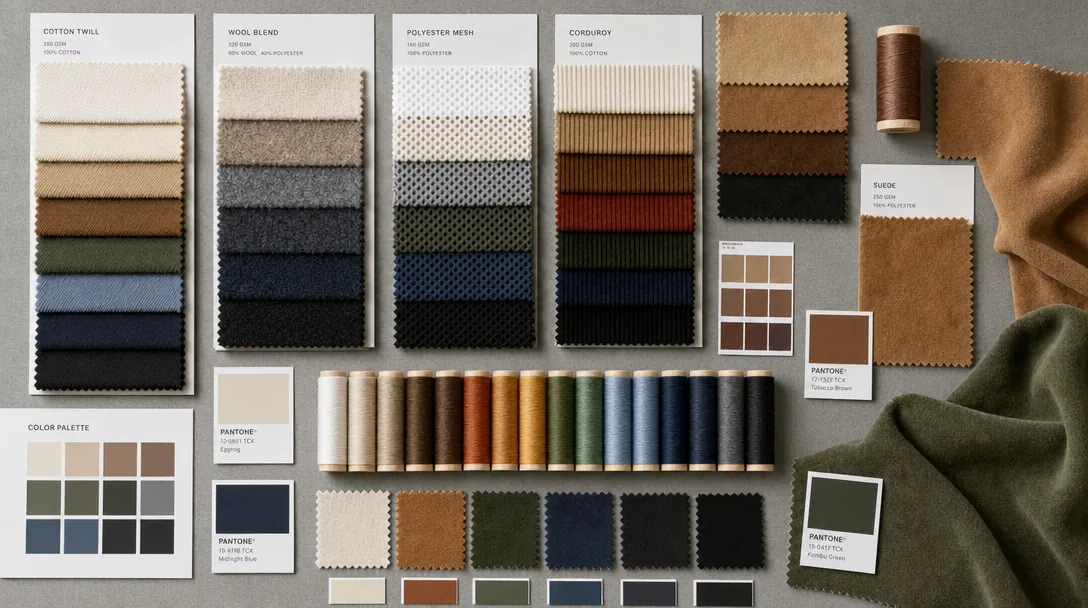
Corduroy Hat: Properties, Costs and How to Spec It Right - 2026 Buyer's Guide is one of the most-asked questions we receive from international buyers, and for good reason. With dozens of factories competing for your order and an alphabet soup of technical terms in every supplier quote, even experienced importers can feel lost. This guide consolidates what we have learned producing custom hats for clients in 40+ countries.
Bucket Hat Women
For a women’s bucket program, construction sells the style more than the sketch. A bucket that looks clean on paper can fail at retail if the brim collapses, the crown sits too high, or the nap runs in different directions. On a corduroy hat, wale and nap direction are the first callouts to lock in the tech pack because reversed pile on the brim or side wall will show obvious shade shift under D65 lighting even when the dye lot is technically acceptable. I’d spec 8 wale when the brief wants a softer, fashion-led hand, and 11 to 14 wale when the buyer needs crisper embroidery, lower seam bulk, and a cleaner face. For shell fabric, 220 to 280 gsm is the workable range for most women’s bucket silhouettes; lighter than 200 gsm looks cheap fast, while over 300 gsm makes the side wall bulky and the brim hard to shape. If the target shape is structured rather than floppy, the brim needs support on paper, not just in the sample room. A 0.35 to 0.45 mm fused nonwoven interlining usually holds the edge through steaming, carton pressure, and light wash better than an unfused insert. Core measurements should be fixed numerically: head circumference tolerance at ±0.5 cm, brim width at 5.5 to 7.0 cm, crown height, top diameter, and exact brim stitch rows, typically 6 to 8 for a stable finish. If you add embroidery, specify backing and minimum line width up front. On Tajima or Barudan heads, details under about 0.8 mm tend to sink into the pile, especially on soft 8-wale cloth, so artwork almost always needs simplification before digitizing.
Cost and QC move faster than most buyers expect once trims and fabric treatments stack up. Stock corduroy in common shades can work at 300 to 500 pieces per color, but custom dyeing to a Pantone TCX target, enzyme wash, printed lining, or branded seam tape usually pushes the practical MOQ closer to 800 to 1,200 pieces. In Zhejiang, a basic women’s bucket in stock twill may land around $2.20 to $3.10 FOB, while a lined corduroy hat with direct embroidery, metal eyelets, woven labels, and custom inside tape is more realistically $3.40 to $5.80 FOB at 500 pieces. That spread is normal because corduroy cutting loss is higher than twill, embroidery runs slower on pile, and reject rates climb if panel shading is not controlled tightly. The defect pattern is predictable, so write it into the bulk standard before cutting starts. The usual failures are brim waviness, uneven topstitch spacing, crown seam puckering, off-center embroidery, oil marks on the pile, loose sweatband joins, and visible shade variation from mixed nap or inconsistent brushing. For final inspection, AQL 2.5 is the sensible baseline, with shade checked under D65 and suspect panels compared for Delta-E drift because corduroy exaggerates small color differences that would pass on flat canvas. Sampling should include at least a pre-production sample and a fit-wear sample on a 56 to 58 cm base head size, since crown depth and brim drop read differently on head than on a table. The commercial upside is clear, but buyers should budget for stricter fabric control, one more sampling round, and a slightly higher rejection risk than a plain cotton bucket.
Camouflage Bucket Hat
Printed fabric control is where a camouflage bucket hat succeeds or fails. Unlike a corduroy hat, where wale direction, pile crush, and panel shading drive yield loss, camo quality depends on repeat placement across the crown, sidewall, and brim, so the marker and cutting plan should be approved before bulk. In practice, most factories build this style in 100% cotton twill at 240-280 gsm, brushed canvas at 220-260 gsm, or 65/35 poly-cotton ripstop around 210 gsm; each reacts differently once the brim gets six to eight rows of topstitching and is turned. Stock woodland, desert, or Multicam-style prints are workable for lower-risk programs, but a custom repeat usually means a 1,000-meter greige commitment, digital strike-off approval, then bulk print confirmation against Pantone TCX standards. If the artwork has tight olive, khaki, and black contrast, write Delta-E 1.5-2.0 into the spec and ban lot mixing, because even minor shade drift becomes obvious when adjacent panels break the print flow.
A usable spec sheet has to lock construction, not just appearance. Call out brim width, crown height, stitch-row count, eyelet finish, sweatband material, seam tape color, and interlining grade; for bucket hats, 1.5-2.0 mm EVA or 120-150 gsm non-woven is common, but the wrong insert makes the brim either collapse after packing or flare unevenly on head. Logo application should match the shell fabric: flat embroidery on Tajima or Barudan heads runs clean on twill and canvas, while ripstop usually presents better with a woven patch, printed patch, or heat-applied badge because needle penetration can distort the grid. FOB pricing in Zhejiang is typically $2.10-$3.40 at 500 pieces for stock camo with basic trims, while custom-printed programs with woven labels, inside taping, and two logo positions land closer to $4.20-$5.80. On final inspection, start with repeat alignment, brim symmetry, and stitch spacing; hold brim width to ±0.5 cm, inspect to AQL 2.5, and add crocking, perspiration, and seam-slippage tests for licensed outdoor or wash-treated programs. If a supplier cannot control those basics on camo, they are not ready for the tighter sewing tolerances and nap consistency a corduroy hat demands.
Corduroy Hat Men's
Fabric spec decides whether a men’s corduroy hat looks premium or turns into a returns problem. For most baseball-cap programs, 11-wale 100% cotton corduroy at 240-280 gsm is the safest range: 8-wale gives a richer hand but creates seam bulk at the center front and visor join, while 14-wale looks cleaner yet loses the texture customers expect from a corduroy hat. On a structured 6-panel crown with 0.45-0.55 mm buckram, anything above roughly 300 gsm starts causing crown torque, top-button distortion, and uneven seam take-up. Nap direction is non-negotiable in cutting; reverse one panel and the same dye lot can read visibly darker under D65 or retail LED. A workable tech pack should lock fiber content, wale count, finished weight tolerance of +/-5%, crown height, visor curve, sweatband material, closure finish, and Pantone TCX references, then tie color approval to both lab dips and a sewn prototype rather than fabric swatches alone.
Embroidery and QC are where weak suppliers get exposed. On Tajima, Barudan, and ZSK cap frames, text below 5-6 mm cap height usually sinks into the ribs unless the file includes a knockdown stitch, reduced fill density, and extra pull compensation; dense fills without those adjustments create tunneling and broken edge definition. In Zhejiang, a standard men’s 6-panel corduroy hat with 5,000-8,000 stitches, custom inside taping, and a metal slider typically prices around $3.40-$5.90 FOB at 300 pieces per colorway in 2026, assuming piece-dyed fabric and a standard PE visor board. Bulk inspection should run at AQL 2.5 with physical checks on at least 32 pieces per lot for crown symmetry, visor alignment, wale crush, and left-right nap shading. Color should be verified under D65 with Delta-E <=1.5 on shell fabric and <=2.0 on trims. If the fabric is not pre-shrunk and steam-relaxed before cutting, expect skew after embroidery heat or final pressing, especially on structured crowns.
Organic Cotton Newborn Hat
For an organic cotton newborn hat, the first gate is traceability, not a swing tag. Require GOTS or OCS transaction certificates linked to the exact yarn and dye lot, then back that up with OEKO-TEX Standard 100 Class I or equivalent infant-use chemical testing if the goods are headed to EU retail or better U.S. accounts. The fabric spec should be written tightly: 180-220 gsm single jersey for lightweight beanies, 230-260 gsm interlock for better shape retention, or 240-280 gsm 1x1 rib for cuffed styles. In practice, 95/5 organic cotton-elastane recovers cleaner after wash than 100% cotton, especially on cuff openings where pure cotton ribs go loose fast. I would also lock trims as azo-free, low-formaldehyde, nickel-free where applicable, with pH and saliva/perspiration colorfastness tested to infant standards. Do not recycle a corduroy hat spec into this category just because both sit on the same PO. Pile caps fail on wale distortion, nap crush, and abrasion; newborn knits fail on seam comfort, spirality, edge curl, and post-wash handfeel. Construction should reflect that. Skip bulky 4-thread overlock ridges across the forehead and specify flatlock or outward-seam construction, soft-fold care labels, and no abrasive seam tape. Finished measurements need actual tolerances: head circumference plus/minus 0.5 cm, crown height plus/minus 0.5 cm, finished weight plus/minus 5%, and wash shrinkage under 5% after one 40°C home-laundry cycle. If decoration is necessary, avoid dense fill embroidery on Tajima or Barudan heads unless the back is fully covered; for infant goods, water-based print, satin woven labels, or low-profile patches are safer and generate fewer comfort claims.
Cost is driven more by dyeing minimums and compliance paperwork than by the simple silhouette. In Zhejiang, 300-500 pieces per color is realistic if you are buying stock organic jersey in core shades such as natural, oatmeal, melange gray, or dusty blue. Once you ask for a custom Pantone TCX shade, the knitting and dye mill will usually want 80-120 kg per color, which can push the workable MOQ to roughly 1,200-1,800 pieces depending on marker yield and size ratio. Ex-factory pricing for a plain organic cotton newborn hat typically lands around USD 0.85-1.60 at that volume, then add USD 0.10-0.25 for a custom woven label, USD 0.18-0.40 for FSC carton or gift packaging, and another small premium for segregated GOTS handling and document control. The failures that create chargebacks are predictable: twisted side seams after laundering, rib openings with uneven rebound, neps from lower-grade ring-spun yarn, body-to-binding shade variation, and press marks that do not fully recover after packing. Color approval should be tied to a signed lab dip with Delta-E under 1.5 under D65 lighting, and bulk fabric should be checked for spirality before cutting, not after sewing. Our standard practice is AQL 2.5 final inspection with extra checkpoints for seam slippage, loose threads, detachable-component risk, handfeel, and needle control documentation; some retailers will also require recorded needle detection. If this infant style sits inside a broader corduroy hat program, keep the QA workflow separate. Combining them under one generic spec sheet usually saves an hour in admin and costs weeks in claims.
Corduroy Hat Wholesale
Most wholesale mistakes start with the fabric, not the silhouette. A corduroy hat has to be spec'd from the rib structure outward: wale count, fabric weight, and nap direction will affect color read, seam matching, embroidery performance, and even cutting yield more than whether the style is a 5-panel, 6-panel, or bucket. In cap production, the most workable range is usually 11 to 16 wale, 100% cotton, around 220 to 320 gsm for structured crowns and 180 to 260 gsm for softer buckets or unstructured low-profile builds. Go too coarse on wale count and the vintage look gets stronger, but front-panel seam matching becomes less forgiving, especially on center-front construction, curved applique placement, or oversized woven patches. If the pile direction is not locked before cutting, one dye lot can read visibly different from panel to panel under retail LEDs, even when the fabric passed shade approval. A usable RFQ needs more than “custom corduroy cap.” Buyers should define composition, wale count, gsm, crown structure, panel count, visor length and board, closure type, sweatband, seam tape, eyelets, top button, and logo method such as flat embroidery, chain stitch, woven patch, screen print, or felt applique. For repeat retail programs, color approval should be tied to an actual swatch or lab dip, with a dyed-fabric tolerance around Delta-E 1.5 or tighter against the approved standard. Pile direction should also be confirmed on the tech pack because it changes marker layout, fabric consumption, and occasionally FOB by a few cents per cap when yield drops on matching panels.
Price only becomes clear when the specification is honest. Corduroy is slower to spread, cut, align, and sew than brushed twill, so benchmarking it against a basic promo cap is a purchasing error. For 2026 sourcing, a custom corduroy hat in a standard 6-panel shape typically lands around FOB China $2.60 to $4.20 with straightforward flat embroidery, while a fully custom corduroy bucket more often sits at $3.20 to $5.20. Metal adjusters, printed lining, contrast seam tape, enzyme wash, felt applique, and large high-stitch-count logos will move cost quickly; MOQ is commonly 144 to 300 pieces per colorway for full custom, while stock-body decoration programs may start around 48 to 100 pieces with limited fabric and shade options. Inspection is where the margin gets protected. The recurring failures on a corduroy hat are nap shading between adjacent panels, twisted wale lines, needle cutting that leaves visible tracks in the pile, wandering visor topstitch, and embroidery that sinks because the file was digitized like flat twill instead of ribbed fabric. On Tajima or Barudan heads, small copy under 4 mm usually needs stronger underlay or a knockdown stitch so the letters do not close up after steaming and pressing. Bulk inspection should run at AQL 2.5 minimum, with tighter internal checkpoints on shade consistency, logo placement, visor symmetry, strap centering, and finished head size within plus or minus 0.5 cm. Cheap quotes usually fail on those details, not on the fabric invoice.
Wholesale Hat Manufacturers Usa
Most buyers using the search term wholesale hat manufacturers usa are actually comparing three very different supply chains: true U.S. cut-and-sew factories, U.S. decorators buying imported blanks, and offshore OEM producers shipping finished caps DDP to a domestic warehouse. Those models do not deliver the same control over a corduroy hat. The real work starts before decoration: 8 to 14 wale cotton or cotton-spandex corduroy, usually 220 to 320 gsm, has to be spread with the nap running one direction across every panel or the shade will flip under store lighting. On a 6-panel cap, you also need to lock front-panel structure, typically 40 to 60 gsm fusible backing for a soft crown or heavier buckram for a higher profile, plus PE visor board around 1.8 to 2.2 mm so the bill keeps its curve after packing. A supplier that can only discuss logo size and thread color is not really manufacturing your program. Ask where the fabric is woven, where cutting and sewing happen, what cap line they use for shaping, and whether embroidery runs on Tajima, Barudan, or ZSK heads after sewing. For U.S.-bound production, also verify whether any offshore process is covered by sedex-audit-cap-supplier-guide.html">BSCI 2.0 or Sedex SMETA 4-Pillar, because many "USA" vendors are managing imported production without saying so clearly. Our standard practice is to separate domestic decoration from actual factory capability: if they cannot define crown profile, sweatband spec, closure construction, and visor setting method, they are probably finishing a blank rather than building a custom corduroy hat from pattern onward.
The spec sheet is where most corduroy hat orders either stay profitable or turn into claim work. Lock the fabric composition, wale count, gsm tolerance, Pantone TCX references for shell and underbill, crown height, visor curve, stitch-per-inch target, seam tape material, closure hardware, and carton packout before sampling. Corduroy punishes vague embroidery instructions: small lettering sinks into the ribs, wide satin columns tunnel, and poor underlay causes visible puckering between wales. Call out thread type, usually 120D/2 polyester for durability, backing type, maximum stitch count, and minimum readable letter height; on this fabric, anything under about 4 mm uppercase often fills in unless the digitizer opens the pull compensation correctly. Use measurable approvals, not subjective comments like "looks good." Lab dips within Delta-E 1.5 to 2.0 are realistic for dyed shell fabric, head circumference tolerance should stay within plus or minus 0.5 cm, and bulk inspection at AQL 2.5 is standard for fashion headwear. Pricing follows construction and order size, not the word "USA": imported custom programs usually make sense from 300 to 500 pieces per style-color at roughly $3.20 to $6.80 FOB China, while true domestic cut-and-sew shops may accept 48 to 100 pieces but often land between $11 and $22 each before freight. The defects worth policing are always the same on a corduroy hat: nap shading between panels, mismatched wale direction, visor twist, weak front support, embroidery tunneling, and inconsistent wash tone after finishing.
Working with CrownsForge for corduroy hat programs
The make-or-break point in a corduroy hat program is fabric control before bulk cutting, not whether the sewing line can close seams. Corduroy has directional nap, and if front, side, and back panels are not laid in the same wale direction, the same Pantone-approved shade can look visibly off under retail lighting. We usually pre-test 8-wale, 11-wale, and 14-wale cotton corduroy for steam shrinkage and seam torque because crown panels can move 2% to 4% after fusing and pressing, especially on unbrushed 280 to 320 gsm fabric. A workable first proto timeline is 5 to 7 working days from a complete tech pack, then 3 to 5 days for a revised sample after fit comments, visor curve changes, or embroidery strike-off approval. If the buyer wants custom-dyed fabric instead of stock black, rust, forest, or navy, add about 7 to 10 days for lab dip approval and bulk dye reservation. MOQ needs to match the actual complexity of the cap, not just the sales target. For a standard 6-panel or unstructured 5-panel corduroy hat using stock fabric, common snapback or self-fabric strap closure, and ordinary polybag packing, 144 pieces per colorway is a realistic factory floor minimum. Development runs can sometimes go to 72 pieces, but only if decoration is simple and there is no custom metal trim, printed tape, or special insert card. Decoration is where weak programs burn money. On Tajima and Barudan embroidery heads, corduroy pile swallows fine detail, so anything under 0.8 mm line width or below 4 mm text height tends to fill in after sewing. For dense logos, I would spec a twill patch with merrow or satin border, or a debossed PU badge, rather than forcing a high-stitch-count logo straight into the crown.
Once the sample is approved, discipline in pre-production matters more than creativity. Our standard practice at CrownsForge is to lock the BOM, confirm a PPS sample, and check first-off panels, embroidery registration, and crown height before the line runs at speed. On corduroy, we also monitor pile crush around eyelets, sweatband puckering, and visor seam grin because those defects often show up only after pressing and carton compression. For color, thread and fabric should be approved against Pantone TCX or TPG references, but buyers need a practical tolerance: on textured corduroy, a visual Delta-E under 1.5 is not always achievable across dye lots because pile direction changes reflectance. The right control point is side-by-side lot review under D65 light box conditions, with nap brushed in the same direction. For volume orders above 1,000 pieces, buyers should insist on real process control, not just a final photo set. Inline inspection plus final AQL 2.5 is standard; for major licensed or retail programs, some importers push critical measurement points to tightened review at first-off and midline, especially head opening, crown depth, and visor width. Social compliance should be current BSCI 2.0 or Sedex SMETA 4-Pillar, and that needs to include any subcontractor handling washing, printing, or gift-box packing. Lead time for a standard custom corduroy hat is usually 22 to 30 days after deposit and PPS approval; custom-dyed fabric, FSC-certified paper packaging, or branded metal buckles can extend that to 35 to 45 days. On landed cost, freight is not a rounding error: a basic FOB Ningbo cap might increase by $0.18 to $0.60 per piece under DDP depending on cube, destination, and warehouse appointment rules.
Frequently Asked Questions
How long does production take?
Sampling takes 7 to 12 days. Bulk production runs 20 to 30 days depending on quantity, fabric availability and decoration complexity. Inspection and packing adds another 3 to 5 days before shipment.
What file format should I send for my logo?
Vector files (AI, EPS, PDF) are ideal. High-resolution PNG or JPG at 300 dpi on transparent background works as a fallback. Provide Pantone color references for accurate reproduction.
Can I order a sample before bulk production?
Yes. We strongly recommend approving a pre-production sample before mass production. Samples are charged at 35 to 60 USD each plus express shipping, fully refundable against confirmed bulk orders over 500 pieces.
What is the minimum order quantity (MOQ) for custom hats?
Our standard MOQ is 100 pieces per design and color, with sampling available from 1 piece. For complex multi-color logos or premium fabric upgrades, the MOQ can be lowered with a small per-piece surcharge.
Which shipping methods do you support?
We support FOB, CIF and DDP shipping. Air express for samples and small orders, sea LCL for 100 to 500 pieces, sea FCL for 5,000+ pieces. Door-to-door DDP available for US, EU, UK, Canada and Australia.
What should buyers know about kangol bucket hat mens?
When evaluating kangol bucket hat mens, the key considerations are construction quality, decoration capability, MOQ flexibility and lead time. Cover everything buyers ask about bucket hat women: how it's manufactured, what specs to request from a factory, typical MOQ and pricing, common quality issues to inspect for, and how this ties back to the broader corduroy hat sourcing decision. Cover everything buyers ask about camouflage bucket hat: how it's manufactured, what specs to request from a factory, typical MOQ…
What should buyers know about bucket hat men nearby?
When evaluating bucket hat men nearby, the key considerations are construction quality, decoration capability, MOQ flexibility and lead time. Cover everything buyers ask about bucket hat women: how it's manufactured, what specs to request from a factory, typical MOQ and pricing, common quality issues to inspect for, and how this ties back to the broader corduroy hat sourcing decision. Cover everything buyers ask about camouflage bucket hat: how it's manufactured, what specs to request from a factory, typical MOQ…
What should buyers know about cotton beanie men?
When evaluating cotton beanie men, the key considerations are construction quality, decoration capability, MOQ flexibility and lead time. Cover everything buyers ask about corduroy hat men's: how it's manufactured, what specs to request from a factory, typical MOQ and pricing, common quality issues to inspect for, and how this ties back to the broader corduroy hat sourcing decision. Cover everything buyers ask about organic cotton newborn hat: how it's manufactured, what specs to request from a factory,…
What should buyers know about corduroy hat womens?
When evaluating corduroy hat womens, the key considerations are construction quality, decoration capability, MOQ flexibility and lead time. Cover everything buyers ask about bucket hat women: how it's manufactured, what specs to request from a factory, typical MOQ and pricing, common quality issues to inspect for, and how this ties back to the broader corduroy hat sourcing decision. Cover everything buyers ask about camouflage bucket hat: how it's manufactured, what specs to request from a factory, typical MOQ…
Need a low-MOQ test order?
We help emerging brands launch with as few as 100 pieces. Premium fabric, in-house embroidery, retail-ready packaging.
Start a small orderRelated guides
Custom Waterproof Cap Manufacturer: A 2026 B2B Sourcing Guide
Read article →Beanies for Men: Properties, Costs and How to Spec It Right - Cost & MOQ Breakdown
Read article →
Cotton vs Polyester vs Wool: A Cap Fabric Decision Tree - Cost & MOQ Breakdown
Read article →If you are ready to take the next step on corduroy hat: properties, costs and how to spec it right - 2026 buyer's guide, our team can put a tailored quotation and digital mock-up in your inbox within 24 hours. Send the inquiry form on our contact page or message us directly on WhatsApp.