
Cap Defect Catalog: 32 Production Issues to Inspect For - Cost & MOQ Breakdown (2026 Update) - Cost & MOQ Breakdown
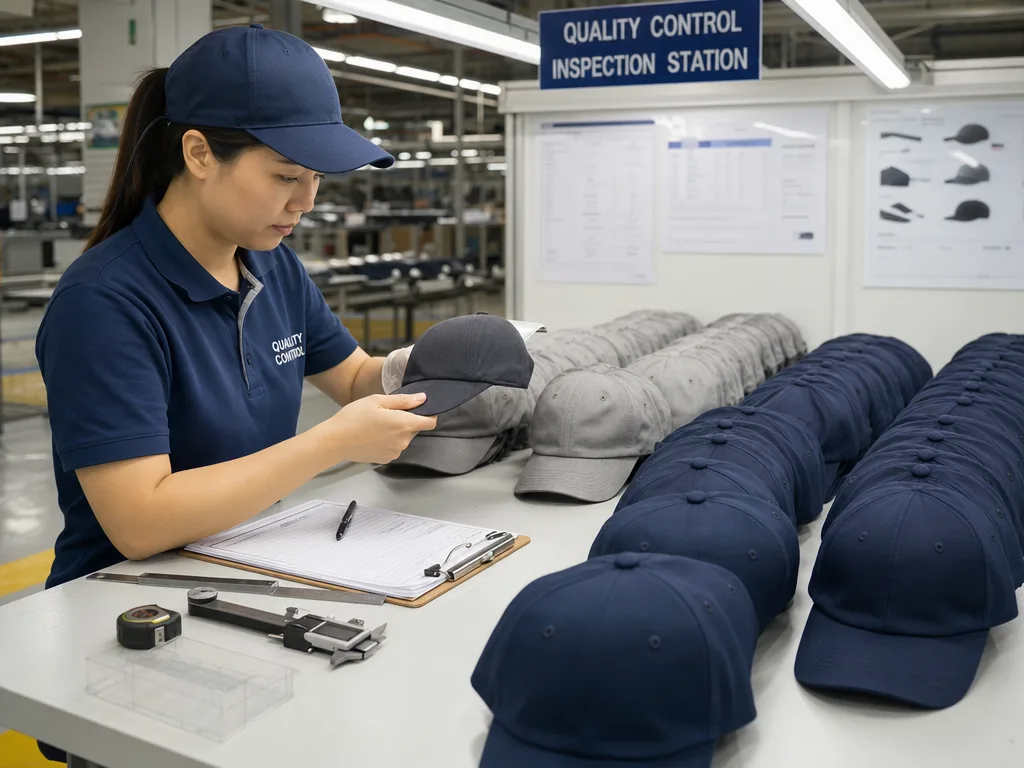
Cap Defect Catalog: 32 Production Issues to Inspect For - Cost & MOQ Breakdown (2026 Update) - Cost & MOQ Breakdown is one of the most-asked questions we receive from international buyers, and for good reason. With dozens of factories competing for your order and an alphabet soup of technical terms in every supplier quote, even experienced importers can feel lost. This guide consolidates what we have learned producing custom hats for clients in 40+ countries.
How to read this catalog
Read the catalog by severity before you read it by process. That is how cap production defects turn into real commercial exposure under ANSI/ASQ Z1.4 and AQL 2.5. Critical defects are automatic rejects because they create safety, legal, or shipment-risk issues: broken needle fragments trapped in the crown, exposed metal burrs under the sweatband, a sharp visor insert edge, mixed cartons carrying the wrong SKU or licensed logo, or mandatory labeling errors on fiber content, country of origin, or CPSIA tracking data. Major defects are the ones that drive chargebacks and consumer returns: front logo placement outside +/-2 mm, visible crown asymmetry at arm’s length, panel shading beyond approved tolerance, visor curve outside approved profile, closure failure under normal pull, or a loose top button. Minor defects are cosmetic and should stay in that lane: thread tails under 3 mm, slight inside seam puckering, light tailor’s chalk transfer, or a small oil spot in a non-selling area. If you classify the 32 issues this way, the catalog stops being a random list of hat complaints and becomes a workable inspection standard.
Then read by cap zone, because root cause usually follows the sewing and decoration sequence. Front panel defects often start upstream with fabric bow, cutting drift, or fusing mismatch on buckram-backed 6-panel styles. Visor issues usually trace to PE board thickness variance, sandwich piping misalignment, edge binding tension, or pressing temperature and dwell time. Embroidery defects are rarely “just machine error”; they usually come from digitizing density set too high for the base fabric, the wrong underlay, unstable backing weight, bad bobbin tension, or poor maintenance on Tajima, Barudan, or ZSK heads. A practical inspection flow checks front panel, side and back panels, visor, closure, sweatband, seam taping, eyelets, decoration, labeling, and finally packing. That zoning matters because ownership becomes obvious: sewing is responsible for seam grin and crown shape, embroidery for registration and thread breaks, and final QC for assortment accuracy, carton marks, needle control, and metal detection.
Use the severity labels as acceptance math, not as opinion. Under ANSI/ASQ Z1.4, General Inspection Level II, a 1,200-piece lot and a 12,000-piece lot do not share the same sample size or accept/reject number, even when the defect itself is identical. AQL 2.5 only works if tolerances are locked before bulk starts. At CrownsForge, the PP sample is where measurable limits should be frozen in writing: logo position +/-2 mm, visor left-right symmetry within 3 mm, fabric weight within +/-5% of agreed gsm, closure strap length within 5 mm, embroidery thread colors approved to Pantone TCX or lab dip, and fabric shade aligned to an agreed Delta-E tolerance under D65 lighting. Once those limits exist, inspectors are no longer debating taste or “normal workmanship.” They are judging cap production defects against the same documented standard the buyer, factory, and QC team already signed off on.
Panel and crown defects (8 categories)
The crown defects that actually drive claims are the ones that change silhouette, because buyers will forgive a loose thread sooner than a twisted profile. In this part of the cap production defects checklist, the most expensive categories are seam puckering, panel mismatch at the crown junction, front-panel torque after embroidery, and crown height inconsistency. Puckering usually starts before sewing: brushed cotton twill under 220 gsm, peach-finished microfiber polyester, and lightly coated nylon taslon will ripple if lockstitch tension is too tight, presser-foot pressure is uneven, or a worn Nm 90/14 needle is cutting yarns instead of piercing cleanly. Add aggressive hooping on a Tajima or Barudan front-logo run and the front panel grain gets pulled off-axis before closing. On a standard 6-panel cap, puckering over 1.5 mm on the front quarter seam or crown-height variance above 3.0 mm between left and right panels should be classified as major under AQL 2.5; steaming may flatten it for final inspection, but it usually returns after carton compression and ocean transit.
Panel alignment defects are just as unforgiving because the eye reads the button area first. If adjacent seam junctions at the top button are off by more than 2.0 mm, or if the center front seam drifts more than 1.5 mm from visor center, the cap looks twisted even when the visor curve and embroidery are clean. Fabric-origin defects are worse because they are rarely repairable: cross-shade between panels, slubs on the front panel, weave bars, grain skew above 3%, and fused buckram delamination all belong in the major-fault bucket. On dark navy, black, or bottle green, a bulk lab dip can still pass within Delta-E 1.0 to Pantone TCX and flash visibly different because nap direction, calendering pressure, or yarn density changes reflectance. Eyelet and vent issues sound minor but generate uniform-order claims fast: vent holes punched down from 4.5 mm spec to 2.5-3.0 mm restrict airflow, while loose satin stitching or nearest-stock thread substitution is obvious under D65 light. At CrownsForge, in-line control focuses on roll segregation, nap direction, crown-top symmetry, and eyelet shade approval, because a seam repair costs roughly $0.12-$0.45 per cap, but one mixed dye lot can scrap a 144-288 piece cut lot.
Brim defects (5 categories)
Brim defects are some of the most expensive cap production defects because the visor is highly visible, difficult to rework after binding, and easy for buyers to compare side by side in a carton. I break brim inspection into five failure modes: profile variance, stiffness variance, undervisor color mismatch, undervisor print misregistration, and brim-edge stitching defects. Profile should be checked with a hard acrylic template or go/no-go jig against the sealed golden sample, never by eye. On a standard 58 cm structured baseball cap with a pre-curved PE insert, more than ±2 mm deviation at either tip, or any left-right asymmetry visible on a flat table, is rejectable. Most profile failures start before sewing: visor blanks pressed at uneven platen temperature, inconsistent cooling dwell, or operators hand-bending finished caps to “fix” shape after top buttoning. If one side of the brim springs higher, check the forming press first, not the sewing line.
Stiffness is a separate defect with different root causes. Two brims can match the same curve and still fail if one lot uses 1.8 mm PE board and another comes in at 2.2 mm, or if paperboard, EVA, and recycled composite inserts are mixed within one PO. That inconsistency shows up immediately on licensed sports, school uniform, and retail programs where caps are shelved front-facing. Hand feel alone is too subjective; compare first-off pieces to the approved sample and record flex after center-front compression. If the target hand is roughly equivalent to 58-60 Shore A and part of the batch collapses, creases, or rebounds slowly, the culprit is usually insert thickness, moisture pickup, or bad pressing conditions rather than stitching. At CrownsForge, we lock visor material by incoming lot and reject mixed-lot blanks before line release because this is preventable, not random.
Undervisor and brim-edge defects need the same level of control because they trigger returns fast. For solid dyed twill, brushed cotton, or microfiber undervisors, evaluate shade under D65 light with a practical tolerance of Delta-E 1.5 to 2.0 against the approved Pantone TCX reference; beyond that, black reads charcoal and dark green drifts olive. For sublimated or screen-printed undervisors, misregistration over 1.5 mm at the center seam, sandwich edge, or brim tip is a clear reject, especially when graphics are meant to mirror the crown front. The fifth category is brim-edge stitching: skipped stitches, looping, blown tension, or wavy topstitching caused by incorrect presser-foot pressure, needle heat, or over-speeding on 8-10 oz chino twill. Typical stitch density is 5 to 6 SPI around the brim edge; visible spacing variation, thread sink, or loose ends should be booked as major defects under AQL 2.5 because they quickly turn into field failures.
Embroidery defects (6 categories)
The embroidery-related cap production defects that generate the most claims are not dramatic blowouts; they are the subtle misses that survive a quick carton check: thread shade drift, stitch misregistration, and logo misplacement. Thread approval should be locked to a Pantone TCX reference under D65 lighting at roughly 1000-1500 lux, because cool LED or warm fluorescent tubes can shift navy, maroon, and forest green enough to pass in-line but fail at retail. On licensed or corporate programs, Delta-E 1.5-2.0 is a sensible working limit between the approved sew-out and bulk; above that, buyers start seeing carton-to-carton variation immediately. Misregistration usually shows up first in satin borders below 1.2 mm width or in small text under 4.5 mm cap height, where weak pull compensation causes outlines to creep, overlap, or leave fill peeking through. On Tajima, Barudan, and ZSK heads, that is usually a digitizing issue before it is a maintenance issue.
Placement and structure are where factories often rely on operator judgment when they should be using hard tolerances. Center-front embroidery on a 6-panel cap should normally sit within +/-2 mm of panel center, with baseline skew held within about 1 degree relative to the crown seam; side logos should be checked from the seam reference, not by eye from the visor. Density defects are another common source of confusion in QC. A file running clean on 260 gsm cotton twill can turn grainy on 180-200 gsm brushed chino or distort an unstructured acrylic-wool front if the fill spacing and underlay are not redigitized for the fabric. In practice, standard flat fill on caps often lands around 0.38-0.45 mm spacing; tighter than that can create ridging, needle heat, thread fray, and a boardy hand, while looser settings expose underlay and fabric show-through.
The sixth category is finishing failure: loose trims, backside bird nesting, and embroidery-induced puckering should be treated as separate checkpoints because the root causes differ. Loose thread tails longer than 3 mm, untrimmed jump stitches, or tangled nests on the inside usually point to poor trimming, unstable upper/lower tension, or hook timing drift; our standard practice is to flag any backside tangle that can snag a finger or distort the sweatband join. Puckering is especially common on lighter shells below 220 gsm, where the logo may be technically complete but the panel face ripples or dimples around the sew area. That defect is often caused by excessive density, weak backing selection, or hooping tension that stretches the panel before sewing. Under AQL 2.5, any embroidery defect that affects logo readability, Pantone accuracy, or crown shape should be classified as major because it is rarely repairable without replacing the panel, and panel replacement on small runs can add $0.25-$0.80 per cap depending on fabric and construction.
Patch defects (4 categories)
Patch defects are expensive because they sit in the buyer’s focal zone, and most are process failures, not random damage. The first category is placement error. On front-center patches, a 2 mm drift already looks crooked on a structured 6-panel cap or 5-panel foam trucker because the center-front seam and visor stitch line act like visual guides. This is one of the most visible cap production defects, especially on runs under 300 pcs where operators still rely on chalk marks instead of steel guides or acrylic positioning templates. A workable factory tolerance is ±2 mm for front patches and ±3 mm for side or back locations; licensed team, golf, and corporate uniform programs often tighten front placement to ±1.5 mm. Good QC does not judge symmetry by eye. Inspectors should measure from the center seam, visor seam, and patch corners with a metal rule, then compare to the approved tech pack or golden sample. The second category is bonding failure on heat-applied patches: glue bleed, edge bubbling, corner lift, and platen marks. It shows up most on PU leather, suede microfiber, silicone badges, and woven labels with thick twill or nonwoven backing. In production, the problem is usually bad press setup on curved crown panels: platen temperature pushed past 145-155°C, dwell time over 10-12 seconds, or uneven pressure across buckram-backed fronts. On polyester foam truckers, excess heat can also leave a permanent gloss box or crush mark around the badge. Under AQL 2.5, exposed adhesive or lifting on a front patch should be graded major because field repair is unreliable once glue has migrated into the fabric grain or foam laminate. Our standard practice is first-piece press testing on actual cap bodies, not flat fabric swatches, because panel curvature changes both heat transfer and pressure distribution.
Leather, woven, and molded patches should never be grouped together in QC because the failure modes are different. The third category is edge failure. Leather and faux-leather patches show rough die-cut edges, laser burn, fuzzy nap, or perimeter cracking when the supplier uses low-grade split leather, a dull die, or skips edge paint and sealing. Stitch-down versions also reveal sewing instability fast: below roughly 6-8 SPI on the perimeter, corners start to lift after carton compression, hand flexing, and routine handling. A simple dry-rub test with a white cotton cloth for 20 cycles will expose weak finish or color transfer, particularly on vegetable-tanned leather. Woven patches fail differently. Merrow borders hold on larger circles and rectangles, but narrow shields, mini tabs, and heat-cut woven badges often feather at corners when the backing film is too thin or the cut temperature is inconsistent. The fourth category is color mismatch, and it is worst on PVC and molded rubber because textile references do not translate cleanly into plastic pigmentation. Matching shell fabric to a Pantone TCX swatch is not enough; soft PVC should be approved against a physical chip and checked under D65 lighting with a defined Delta-E target. In practice, Delta-E under 2.0 is realistic for premium retail programs, while under 3.0 is acceptable for promotional caps. Without that control, reds go muddy, navies skew too saturated, and white logos pick up translucency from the base compound. Incoming lot inspection should include color verification, edge flex testing, and first-piece placement approval before the sewing line starts. Catching a bad patch lot before it reaches front-panel assembly is far cheaper than reworking 500 finished caps after stitching, shaping, and packing.
Sweatband defects (3 categories)
Loose sweatband attachment is not a cosmetic flaw; it is a fast wear-failure that buyers will see within a few uses. The failure points are predictable: the side join, the curve above the back opening, and any overlap where stitch density drops under 9 SPI or the operator misses a proper backtack. On a 25-32 mm sweatband, I classify separation over 20 mm, exposed serged edge, seam grin, skipped stitches, or a rolled seam allowance contacting the forehead as major under AQL 2.5. These cap production defects usually trace back to poor feed control on older Juki or Brother post-bed machines, a #11 needle run too long on brushed cotton tape, or excessive top-thread tension that puckers the crown edge and weakens the seam under compression. Inspection has to be mechanical, not subjective. I use a 180-degree hand-peel check at both side seams, confirm 10-12 SPI on the curved sections with a seam gauge, and check overlap length at 10-12 mm. On structured baseball caps, anything looser starts opening after carton compression or normal sweat-and-wear cycles. Performance bands with terry backing, EVA foam lamination, or moisture-wicking polyester are even more sensitive: once needle heat builds during runs above roughly 2,500 rpm, thread can cut into the laminate and create early lift-off that a casual visual check misses.
Material mismatch and size inconsistency are the two sweatband defects that create the most buyer disputes because the sewing can look clean while the cap is still functionally wrong. If the approved BOM specifies 180-220 gsm cotton twill, cotton terry, or a cotton/poly blend, and the trim mill substitutes polyester tricot to save $0.03-$0.08 per cap, the result is different moisture absorption, hand feel, shrinkage, and sometimes fiber-label noncompliance. On private-label programs, I also check the sweatband against the approved trim card; if inside branding matters, Delta-E should stay within 1.0-1.5, because black-on-black shade drift between dye lots is common and very obvious once the cap is opened at retail. A burn test can screen obvious swaps on the floor, but FTIR or a basic fiber-content lab report is what actually settles claims. Size inconsistency is less visible and more damaging because it affects the whole run. A finished inner-circumference drift of 5-8 mm is enough to turn one cap wearable and the next one painfully tight, especially on fitted caps and low-stretch snapbacks. The usual causes are hand-cut bands, uneven join overlap, or operators stretching the band during attachment. In a 1,200-piece order without die-cut or pre-marked bands, 3%-7% size variance is realistic. Our standard practice is to measure finished circumference at four points per carton against the approved tolerance, typically +/-3 mm for premium programs and +/-5 mm for promo grade, then recheck after 24 hours out of carton because low-denier polyester bands often relax differently after packing and ocean transit.
Closure defects (3 categories)
Functional closure failure is the closure defect buyers notice fastest, and it gets classified as a quality problem even when the rest of the cap is clean. On snapbacks, the weak points are usually poor stud geometry, molding flash, short posts, or brittle PP resin that stress-whitens after one or two cycles. A proper check is not just one click in the middle position; QC should engage all 7-hole or 8-position settings, then apply light pull tension at the tightest and loosest ends where failure shows first. If the snap pops under normal hand tension, seats unevenly, or leaves visible whitening after a single open-close cycle, I would log it as a major item within cap production defects. The hardware itself is cheap—typically $0.03-$0.08 for a plastic snap set, $0.10-$0.18 for standard hook-and-loop, and $0.18-$0.35 for a basic metal buckle assembly—but post-sewing correction is not. Once the sweatband is closed and the rear arch is pressed, replacing closure hardware usually runs $0.25-$0.45 per cap in real rework cost, and more if the back panels need steaming to recover shape.
Cosmetic and sewing-related closure defects should be treated as separate categories because they come from different processes and trigger different claims. Color mismatch is common when the crown fabric is approved to Pantone TCX but the closure supplier matches against a plastic chip or unverified plating sample. Under D65 lighting, a black snap drifting warm charcoal against a neutral black cotton twill crown is obvious at roughly 50 cm; on licensed programs, visible mismatch without side-by-side comparison is usually a major under AQL 2.5. Metal hardware adds its own risk: die-cast burrs, scratched plating, bent tongues, and edge abrasion from bulk-packed buckles without cell trays. Our standard practice is to inspect closure color and surface condition before assembly, because once a scratched buckle marks the strap, repair means opening the rear panel and running a second final inspection. The third category is sewing and performance failure on fabric straps and hook-and-loop systems. Most returns are not caused by bad webbing; they come from weak backtacks, skipped stitches over folded bulk, poor lockstitch tension, or missing box-x reinforcement at the rear opening. On 20-25 mm straps in chino, brushed twill, or washed canvas, 40/2 polyester core-spun thread holds adjustment cycles better than softer spun polyester, and stress points should have a clean 6-8 stitch backtack with no underside looping or seam grin. Hook-and-loop also needs functional testing after separation and reseating, especially if cartons have seen container temperatures above 45°C, which can flatten hook tape. Misalignment over 2-3 mm, exposed raw tape edges, contaminated hook, or low-grade nylon hook that scratches the neck should be reported as separate cap production defects because the root causes differ—folder setup, tape spec, packing pressure, or operator handling.
Packaging defects (3 categories)
The expensive packaging failures are not cosmetic; they are the cap production defects that turn a passed sewing lot into a receiving problem. I split them into three categories: unit pack, ticketing/labeling, and master carton. Unit-pack defects usually start with the wrong polybag spec. For adult caps, 30–40 micron LDPE is the normal floor; below that, side seals split once a 24-piece carton is stacked 5 or 6 high in ocean transit. A bag that is too short compresses the crown and leaves front-panel set marks, especially on buckram-backed 6-panel caps. Missing suffocation warnings, absent recycle marks, or the wrong resin ID code—typically LDPE 04 or PP 05—also trigger retailer non-compliance. At origin, replacing a bag costs about $0.01–$0.03 each; at a U.S. 3PL, rebagging is usually $0.12–$0.30 per cap before chargebacks and delayed put-away fees. Ticketing and labeling defects are almost always process failures, not technical ones. The common misses are absent hangtags, skewed visor stickers, barcode labels placed over embroidery, and country-of-origin labels sewn or attached in the wrong location. Under AQL 2.5, a crooked sticker may be minor, but an unreadable barcode or missing legal label is typically major because the item cannot be booked into inventory. The control points are basic and should be mandatory: approved first-pack sample at the line, placement jigs for stickers and labels, hourly in-line audits, and 100% barcode scan verification before sealing. On licensed programs, attachment method matters too; a kimble loop and a plastic fastener are not interchangeable if the hangtag can leave a visible hole in brushed cotton twill or 75D performance polyester. Our standard practice is to sign off packaging QC separately from sewing QC because many packing defects happen after the cap itself has already passed final inspection.
Master carton defects cause the widest downstream damage because they affect freight, receiving, and inventory at the same time. The worst offenders are mixed SKUs in one carton, wrong color names, missing PO references, short-packed quantities, and carton labels printed with weak thermal transfer ribbon that smears during humidity swings. One bad carton in a 600-carton shipment can force a recount of the entire PO if the size or color breakdown does not match the packing list. For retailer programs, outer labels should be printed at 300 dpi minimum, with scannable Code 128 or GS1-128 barcodes and verified print contrast before loading. Carton number must reconcile to the packing list by actual carton ID, not just total quantity, otherwise tracing shortages after arrival becomes guesswork. Carton construction is the other half of the problem. For most ocean shipments, 5-ply corrugate with 140–180 psi burst strength or equivalent 32 ECT is sufficient, but only if pack density matches the cap structure. Unstructured dad caps tolerate tighter pack-outs; high-profile snapbacks with HD embroidery or a molded front panel do not. If the carton is overpacked, you see visor deformation, panel crushing, and sweatband creasing by the time the container is devanned. Moisture-resistant BOPP tape and legible side marks are cheap insurance because container condensation is routine on long sailings from Ningbo or Shanghai. MOQ changes the packaging math as well: stock bags and generic carton marks work at 300–500 pieces, while custom printed polybags, FSC paper tags, multilingual compliance labels, and retailer-specific carton markings usually make sense closer to 3,000–5,000 units per SKU. That is why export packing can run $0.08–$0.15 per cap, while retail-ready packing lands around $0.22–$0.45.
Frequently Asked Questions
Can I order a sample before bulk production?
Yes. We strongly recommend approving a pre-production sample before mass production. Samples are charged at 35 to 60 USD each plus express shipping, fully refundable against confirmed bulk orders over 500 pieces.
Do you support sustainability certifications?
Yes. We work with GOTS organic cotton, GRS-certified recycled polyester, OEKO-TEX Standard 100 fabrics, and are BSCI and Sedex audited. Certification documentation can be provided per order.
What logo decoration techniques do you offer?
3D puff embroidery, flat embroidery, woven patch, leather patch, PVC patch, screen printing, sublimation, applique and laser etching, all in-house with no subcontracting.
What file format should I send for my logo?
Vector files (AI, EPS, PDF) are ideal. High-resolution PNG or JPG at 300 dpi on transparent background works as a fallback. Provide Pantone color references for accurate reproduction.
What is the minimum order quantity (MOQ) for custom hats?
Our standard MOQ is 100 pieces per design and color, with sampling available from 1 piece. For complex multi-color logos or premium fabric upgrades, the MOQ can be lowered with a small per-piece surcharge.
What should buyers know about cotton twill army cap kangol?
When evaluating cotton twill army cap kangol, the key considerations are construction quality, decoration capability, MOQ flexibility and lead time. Sweatband attachment loose, sweatband fabric mismatch (cotton requested but polyester delivered), sweatband size inconsistency (varies cap-to-cap within batch). The 32 defect categories below group by area of the cap (panel, brim, embroidery, etc.) and severity (critical, major, minor under AQL 2.5). Critical defects mean reject. Major defects must remain under the AQL 2.5…
How does ordering baseball cap embroidered custom work?
When evaluating baseball cap embroidered custom, the key considerations are construction quality, decoration capability, MOQ flexibility and lead time. The 32 defect categories below group by area of the cap (panel, brim, embroidery, etc.) and severity (critical, major, minor under AQL 2.5). Critical defects mean reject. Major defects must remain under the AQL 2.5 sample limit. Minor defects are tolerated within wider limits. Stitch puckering on panels, fabric weave irregularity, color shading between panels of supposedly…
How does ordering custom embroidered trucker hat work?
When evaluating custom embroidered trucker hat, the key considerations are construction quality, decoration capability, MOQ flexibility and lead time. The 32 defect categories below group by area of the cap (panel, brim, embroidery, etc.) and severity (critical, major, minor under AQL 2.5). Critical defects mean reject. Major defects must remain under the AQL 2.5 sample limit. Minor defects are tolerated within wider limits. Stitch puckering on panels, fabric weave irregularity, color shading between panels of supposedly…
What should buyers know about kangol bucket hat mens?
When evaluating kangol bucket hat mens, the key considerations are construction quality, decoration capability, MOQ flexibility and lead time. The 32 defect categories below group by area of the cap (panel, brim, embroidery, etc.) and severity (critical, major, minor under AQL 2.5). Critical defects mean reject. Major defects must remain under the AQL 2.5 sample limit. Minor defects are tolerated within wider limits. Stitch puckering on panels, fabric weave irregularity, color shading between panels of supposedly…
What are the defects of plastic bottle caps?
Types of bottle caps defects that can be detected damages (chips, cracks, scratches); deformations (pinches, bents, dents, warping, buckling, roundness loss); missing parts (absence of caps, absence of tamper rings);
What are production defects?
A production defect is any deviation in a manufactured part from its defined specification — dimensional, functional, visual or material. The definition sounds simple; in practice, most disagreements in a quality meeting come from confusing four related terms that are not the same thing.
What are common manufacturing defects?
Manufacturing defects arise during the production process, where an otherwise safe product is rendered dangerous due to errors or irregularities in its manufacturing. This might include issues such as substandard materials, improper assembly, or other deviations from the intended design.
What are the top 3 defects?
How Many Types of Quality Defects Are There? In quality control inspections, quality defects are typically categorized into three main types, Critical defects, Major defects and Minor defects, based on their severity and impact on product performance and safety.
What is CAP in production?
Businesses often use a corrective action plan, or CAP, to determine the steps that can help them find a solution to an issue that's impacting their daily operations. With a CAP, a company may resolve its workflow issues, leading to increased output.
What are three types of defects?
Minor defects are usually cosmetic and not considered to be serious. Major defects may inhibit the product's ability to function as intended and are considered somewhat serious. Critical defects may pose hazards and are considered to be very serious.
Ready to start your custom hat project?
Send us your tech-pack, sketch or even just an inspiration photo. We will respond with a detailed quotation and digital mock-up within 24 hours.
Request a free quoteRelated guides
Festival Bucket Hat: A Vertical-Specific Sourcing Guide
Read article →Baseball Caps Canada: A Vertical-Specific Sourcing Guide
Read article →
Refreshing a Hat Collection: A Repeat-Order Playbook for Established Brands (2026 Update)
Read article →We hope this guide demystifies cap defect catalog: 32 production issues to inspect for - cost & moq breakdown (2026 update) - cost & moq breakdown and helps you move forward with confidence. If you have questions specific to your project, our English-speaking sales engineers are one message away.