
Cap Defect Catalog: 32 Production Issues to Inspect For - Cost & MOQ Breakdown (2026 Update) - 2026 Buyer's Guide
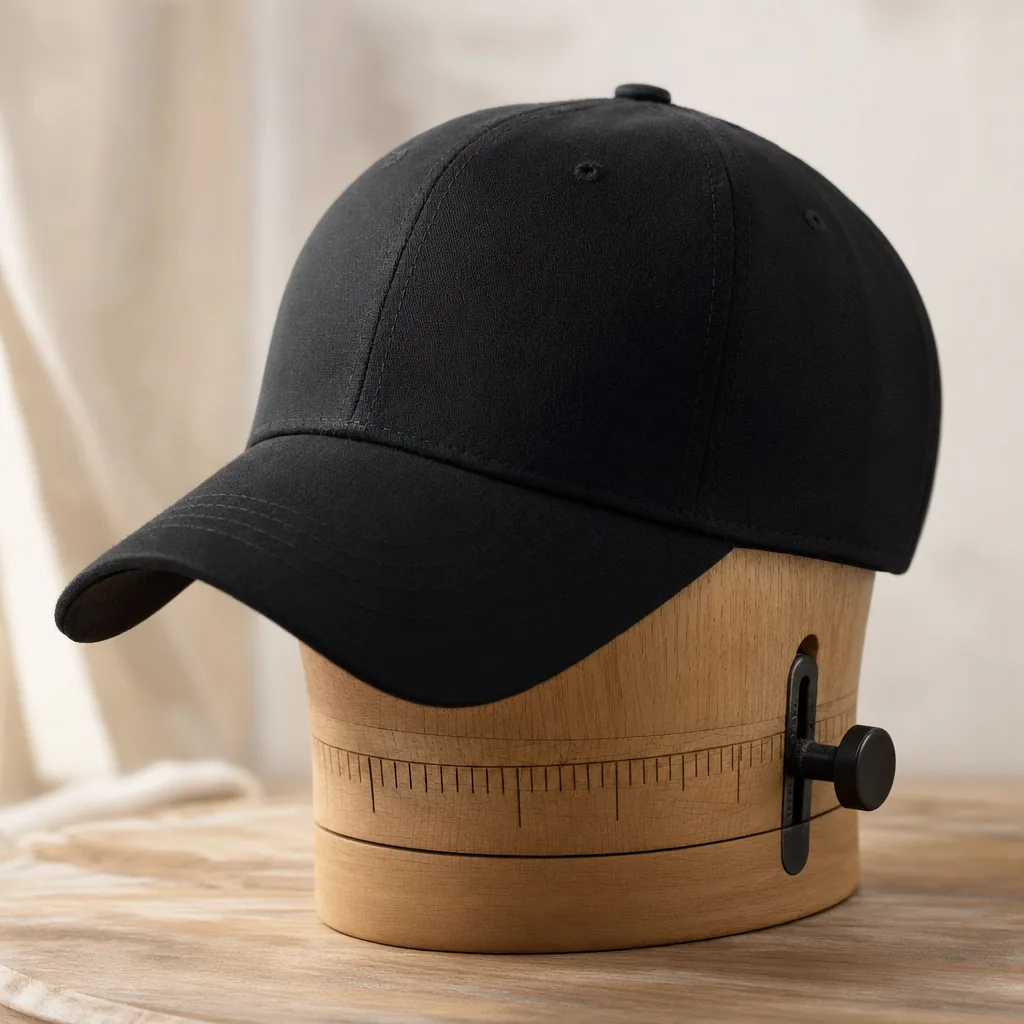
For brand owners, wholesalers and procurement teams entering the custom headwear category, cap defect catalog: 32 production issues to inspect for - cost & moq breakdown (2026 update) - 2026 buyer's guide is one of the highest-leverage decisions you will make. Get it right and your unit economics, retail story and reorder cycle all improve. Get it wrong and you carry the cost for years.
How to read this catalog
Read the catalog by cap location first, then by severity; that mirrors where cap production defects are actually created. Front-panel wrinkles, buckram bubbling, and crown collapse usually start in fusing and molding: buckram weight out of spec, fuse temperature too high for the shell fabric, or dwell time too short to set shape. Visor twist, sandwich exposure, and brim asymmetry come from PE board thickness drift, die-cut tolerance, edge binding tension, or a bad repress curve. Embroidery defects nearly always trace back to upstream decisions—poor digitizing, wrong backing weight, cap frame slippage, or thread tension drift on Tajima, Barudan, or ZSK heads. Two defects may look equally ugly in a QC photo but have very different recovery paths. A visor edge wave can often be corrected with steam and repress if the 1.8-2.2 mm PE insert has not heat-warped; a skewed 6-panel seam caused by off-grain cutting or mismatched panel nesting is usually scrap because the geometry is already locked in at sewing.
Severity only means anything if the acceptance standard was fixed before bulk cutting. Critical defects are automatic rejects: needle fragments trapped in the sweatband, sharp burrs on metal eyelets or buckles, mold contamination, or unauthorized licensed artwork. Major defects should be judged against the agreed sampling plan, commonly ANSI/ASQ Z1.4 General Inspection Level II, AQL 2.5 for workmanship and appearance; minor defects can pass only when they do not affect wear, function, or retail presentation. The practical test is simple: is the defect obvious at roughly 24 inches under D65 or TL84 lighting, or does it change fit, structure, or approved branding? To keep cap production defects from turning into arguments, the catalog has to tie back to a sealed sample and a written tech pack with measurable tolerances: Pantone TCX references, Delta-E limits of 1.0-1.5 for close-match trims, logo placement tolerance of ±3 mm, crown height tolerance of ±5 mm by style, brim curve standard, and SPI or stitch density by operation.
Use the catalog to estimate cost exposure and MOQ risk, not just reject rate. Some defects are cheap to prevent but expensive to sort. Loose top-button wraps, skipped stitches at the sweatband join, and long thread tails can trigger 100% inspection across whole bundles even though each repair only takes 20-40 seconds. Others are expensive at the source but easy to classify, such as molded TPU patch misalignment, laser-cut appliqué shrinkback, or heat-transfer scorching on 100% polyester twill. On a 1,200-piece order, one repeating major defect typically adds $0.08-$0.35 per cap once you include rework labor, steaming, repressing, thread cleanup, repacking, and third-party inspection. If cartons must be reopened after export booking, the true cost jumps again through handling fees and schedule slippage. At low MOQs like 144 or 288 pieces, one bad bundle can distort the sample result and push unit cost up fast. Our standard practice is to treat cap production defects as a process-control and costing problem first, and a pass/fail checklist second.
Panel and crown defects (8 categories)
Front-panel puckering is the crown defect that most often turns a sellable cap into a chargeback. On structured 5-panel and 6-panel styles, the visible ripple usually starts long before final pressing: a 200-220 gsm cotton twill shell fused to PE or resin-treated buckram that shrinks at a different rate, paired with the wrong seam setup. If the operator closes the crown at 8-9 SPI with a heavy Tex 40 thread on fabric that really wants Tex 27 and 10-11 SPI, the seam will draw the panel and flatten the profile. On Juki sewing stations, we reject ripple height above about 2.5-3.0 mm along the front seam because steam cannot hide it under retail lighting. A collapsed front panel also causes embroidery distortion upstream on Tajima or Barudan heads, where logos start to arc or sink into the face of the cap. That is why this sits near the top of any serious list of cap production defects: it affects appearance, fit, and decoration yield at the same time.
Raw material variation creates another cluster of crown issues that should be stopped before cutting. On brushed cotton, peach twill, wool-blend melton, and recycled poly twill, slubs, missed picks, bowing, skew, and coating streaks become far more obvious once panels are sewn over curvature. Even an 8-10 gsm roll-to-roll shift can change hand feel enough to alter seam tension across one lot, and one bad roll can contaminate 500-1,000 caps if bundles are not segregated by lot number. Our standard practice is to inspect crown fabric under D65 lighting, confirm shade continuity against the approved swatch, and quarantine rolls with visible weave defects or face-side inconsistency before marker planning. Color shading between panels is equally unforgiving: on black, navy, charcoal, and dark olive, adjacent panels with Delta-E above roughly 1.5-2.0 are commercially visible, especially on clean crowns with minimal decoration. Add crown-point drift over 2 mm, twisted top-button alignment, or eyelets set off-center by even 1 mm, and the cap reads crooked immediately. These cap production defects are easy to photograph, hard to dispute, and usually not economical to rework once the sweatband is in; post-sewing fixes typically add $0.18-$0.40 per cap.
Brim defects (5 categories)
Brim problems are some of the most expensive cap production defects because they show up after the crown is blocked, the sweatband is set, and the top button is already clinched. Once the visor is wrong, repair usually means opening the sweatband, splitting the front band, replacing the insert, and resewing the brim binding or edge seam. On a standard 6-panel baseball cap, that adds about 6 to 9 labor minutes per unit; on sandwich brims or multilayer builds, it can push past 10 minutes and still leave needle marks. The first two defect categories to police are curve tolerance and insert consistency. For adult caps, we normally judge the visor against the approved arc template at the left edge, center tip, and right edge, with a practical tolerance of ±2 mm. Anything outside that range reads crooked at retail even when panel alignment is technically acceptable. Insert inconsistency is the quieter failure, but buyers notice it immediately by hand. If one carton uses 1.8 mm PE visor board and another is packed with mixed HDPE stock, the bend memory and rebound will not match. In basic flex testing, a spread like 18 N versus 25 N on the same style is already enough to make a PO feel patched together. The root causes are usually mixed insert sourcing, uneven dwell time on the heat-forming press, or operators over-curving visors on manual jigs before cooling is complete. At CrownsForge, we treat mixed visor stock inside one production lot as a preventable process failure, not a cosmetic issue, because once the brim profile drifts, no amount of crown pressing will make the cap look balanced.
The other three brim categories worth isolating are undervisor shade mismatch, print registration error, and brim stitch failure. Undervisor color drift is a common reject on streetwear, golf, and licensed programs where contrast is deliberate. A black undervisor shifting to charcoal, or a Pantone TCX-matched microfiber suede landing above Delta-E 1.5 under D65 light, will fail side-by-side against the sealed sample even if the crown fabric is within tolerance. Printed undervisors create another risk point: on sublimation and screen print builds, more than 1.5 mm of registration shift, or artwork drifting off center after binding and turning, is visible without any measuring tool. These are major cap production defects because the brim sits in the eye line when the cap is worn or merchandised. Stitch failure is the last brim category and often the first one end customers feel with their fingers. Most baseball caps run 6 to 8 visor rows at 3 to 4 mm pitch; on heavier cotton twill or brushed canvas, inconsistent upper tension on a Juki or Brother post-bed machine can cause looping, skipped stitches, or row spacing that opens near the visor tip. We also see defects from dull Nm 90/14 needles, the wrong point type for multilayer seams, and poor feeding over sandwich brims with contrast piping. Under AQL 2.5, visible color mismatch, broken visor rows, and obvious registration drift are typically booked as major defects. The financial hit is real: brim-related waste and rework usually add $0.12 to $0.40 per cap, and on orders below 144 pieces the risk climbs because factories are more likely to substitute available visor stock unless the PO explicitly locks insert material, row count, and undervisor shade standard.
Embroidery defects (6 categories)
The embroidery defects buyers notice first are color mismatch, misregistration, edge breakdown, and thread breaks on the front crown; these generate claims fast because they sit at eye level and are difficult to rework cleanly. For branded programs, thread approval should be tied to a physical Pantone TCX reference or an approved Madeira or Gunold shade card under D65 lighting, not a phone image from the sewing floor. On trilobal polyester thread, critical logo shades should be held to Delta-E below 2.0; for secondary tones, below 3.0 is usually the practical limit before the logo starts looking off-brand. Factories sometimes swap to nearest-stock rayon or low-luster polyester to save $0.01 to $0.03 per cap, but that is exactly how navy shifts purple and athletic gold turns brownish. In any serious review of cap production defects, that is artwork noncompliance, not a minor cosmetic variance. Registration needs equally hard limits. On satin borders, appliqué edges, and layered fills, adjacent colors should stay within 0.5 mm; once creep passes 1.0 mm, small text and outlined crests lose definition. White underbase peeking past black, red, or royal top stitching usually comes from weak digitizing, poor hooping, or timing drift on Tajima, Barudan, or ZSK heads, not from some unavoidable “embroidery spread.” Edge breakdown, frayed columns, and dropped stitches are usually mechanical or setup failures: burrs in the needle path, incorrect top tension, worn needles, or trying to run 120D/2 thread too fast on unstable buckram-backed fronts. If an operator is pushing 850 to 900 stitches per minute on a raised logo with dense satin columns, you are inviting breakage and messy edges.
Patchy density, visible underlay, puckering, and backside thread mess tell you immediately whether the file was engineered for the cap body or just copied across substrates. A logo that runs clean at 0.35 to 0.45 mm fill spacing on 280 gsm cotton twill can fail badly on acrylic-wool melton, brushed chino, or foam-front truckers if pull compensation, stitch angle, and underlay are not rebuilt. When center-walk or zigzag underlay telegraphs through a satin column, top coverage is too open or top tension is too tight; when the fill is over-digitized, the cap gets a boardy hand, reduced thread luster, and visible crown distortion around the center seam. Puckering is especially common on unstructured 6-panels when embroidery sits too low near the visor seam or the operator uses only one layer of cutaway backing where two are needed. Backside cleanliness and placement are where isolated embroidery issues become process-control failures. Jump-thread tails longer than 5 mm on the reverse should be defect-counted on export orders, especially for youth or sports programs where snagging and skin irritation matter. Trimmed threads are acceptable only if they are secured and hidden by the approved sweatband, seam tape, or backing patch. Placement should be measured, not guessed: front embroidery is usually centered within ±2 mm of crown midpoint, with logo height commonly 12 to 18 mm above the visor seam depending on profile and artwork size. If logos lean with panel grain, cross the center seam inconsistently, or drift by workstation, stop the line and check the hooping fixture, laser guide, and operator template before final AQL 2.5 inspection. One bad jig can throw off 200 caps in a shift.
Patch defects (4 categories)
Patch defects should be broken into four categories because each one fails for a different production reason: placement, adhesive contamination, patch construction, and molded-PVC color/form control. Placement is the fastest retail reject. On a front-center patch for a 6-panel structured cap, anything beyond 2.0 mm left-right drift from the placket centerline is a major defect, and 3.0 mm vertical shift from the approved strike-off usually means rework. On a 58 cm finished baseball cap, a 50 x 25 mm badge sitting 2.5 mm off-center is visible from about 1 meter, especially once the brim curve exaggerates the crown’s visual horizon. The common factory mistake is aligning to the seam only; operators should reference both seam and crown shape, then verify again after final sewing because stitch tension can pull twill, canvas, or PU patches out of square. Adhesive contamination is the second category, and it is usually not recoverable. PU leather, suede-touch microfiber, genuine leather, and merrowed woven badges are often pre-tacked with hot-melt film before edge stitching; if the film is not die-cut at least 1.0-1.5 mm inside the patch outline, it bleeds out as a glossy ring. On black brushed cotton twill, that halo shows clearly under 5000K inspection lights, and on microfiber it can permanently flatten or darken the nap. Good process control is simple: platen temperature around 120-135°C, short dwell time, and enough pressure to tack without flooding adhesive. Under AQL 2.5, any visible glue from 30 cm should be logged as a major cosmetic defect. These are the cap production defects buyers should isolate early, because cleanup usually leaves staining, burnishing, or heat marks that are worse than the original flaw.
Woven and embroidered patches should never be checked under one vague pass/fail note. Woven patch failures usually start at the edge: weak ultrasonic cutting, poor heat sealing, or loose border stitching beyond roughly 0.40 mm pitch will fray quickly in abrasion or wash testing. Laser-cut woven labels are particularly risky if the sealing trial was skipped before bulk. Embroidered patches fail for different reasons: bad digitizing creates exposed trims, uneven satin coverage, border tunneling, and poor fill registration that looks minor on a flat strike-off but obvious once sewn over a curved crown. On Tajima, Barudan, or ZSK heads, the fix is proper underlay, pull compensation, balanced thread tension, and a stable merrow or satin border instead of depending on a weak heat-cut edge alone. PVC and rubber patches are mostly a molding and color-control problem. Buyers often approve from screen artwork, then complain when the molded part shifts in hue; that is predictable, because plasticizer content, translucency, and Shore A hardness all affect final color. For licensed programs, I would hold Delta-E under 1.5 against the sealed approval sample or molded color chip; for promotional caps, under 2.0 is more realistic. Other frequent defects are border flash, short-fill in recessed details, sink marks, and warped backs caused by uneven cooling, especially on patches wider than 60 mm. If the patch is sewn down, inspect for needle cracking at the stitch line; if heat-applied, check peel strength after 24 hours and again after carton compression simulation. At CrownsForge, we treat lifting corners and edge cracking as separate cap production defects because both can pass inline inspection and still fail in summer transit.
Sweatband defects (3 categories)
Loose or twisted sweatband attachment is a wear failure, not a minor appearance issue, and it usually starts on the inside-finishing line. The root causes are predictable: weak bobbin tension, skipped back-tacking at the rear overlap, operators stretching the band to gain speed, or dull needles on Brother or Pegasus post-bed machines snagging rib knit or brushed tricot. On a standard 6-panel baseball cap, the sweatband should sit flat against the seam tape with no lifting over 3 mm, no seam grin, and no raw-edge exposure at the join. Once separation starts at the overlap or side seam, shaping, visor setting, and carton compression only open it further. Under AQL 2.5, visible detachment or twisting is a major defect because the end user feels it immediately. Among common cap production defects, this one is tightly linked to process discipline: 8-10 SPI is normal for sweatband attachment, but only if needle size, top and bobbin tension, and operator handling stay stable lot to lot. The right checkpoint is before shaping, when rework is still realistic. I want a 10-piece pull test per lot, seam appearance checked under D65 lighting, and a full hand-feel around the inner circumference because early lifting often hides on a flat table. Stretch-sensitive materials like terry knit, brushed polyester, and pre-folded elastic bands are especially risky; if they are elongated during sewing, they relax later and pull away from the shell. Our standard practice is inline QC on overlap security, stitch balance, and lay-flat condition, because repairing a detached sweatband after visor setting usually costs $0.12-$0.30 per cap and can wipe out the margin on runs below 1,000 pieces.
Material mismatch and size inconsistency are different sweatband defects, but buyers often discover them together because both show up as comfort complaints, fit variation, and returns. If the approved sample specifies 100% cotton twill at 180-220 gsm and production substitutes brushed polyester or a CVC stock band, that is not an acceptable equivalent. Polyester absorbs sweat differently, reflects more light, and often creates a visible shade shift even when the trim card says the Pantone TCX is close; under D65, a Delta-E above 1.5-2.0 against adjacent shell-facing trims is usually noticeable. For licensed sports, premium streetwear, or any program with fiber-content labeling, wrong sweatband composition is a major defect and can become a compliance issue. The control point is trim issuance and incoming verification: roll labels, approved trim cards, lot segregation, and random burn tests or lab fiber-content checks, not just final inspection. Size inconsistency is less obvious on the table but more damaging in wear. A 20 mm cut-length swing, such as 560 mm versus 580 mm, changes internal circumference enough to create rear overlap bulk, lower-crown puckering, and even slight visor mis-centering after shaping. This ranks high on any serious list of cap production defects because once embroidery, eyelet setting, and blocking are finished, correction is slow and expensive. I normally check at least 13 pieces per size-color lot for internal circumference, overlap placement, and sweatband height, with height tolerance held to +/-3 mm and cut length controlled by hard acrylic templates rather than operator judgment. Steam exposure matters too; elasticized bands stored near a press can relax before sewing and create mixed fit within one carton. Typical rework cost is $0.18-$0.45 per cap, enough to turn a small order unprofitable.
Closure defects (3 categories)
Closure issues create disproportionate claims because the wearer finds them the first time they adjust the cap, so they deserve their own line in any cap production defects checklist. The three categories that matter are snapbacks, strap-and-buckle systems, and hook-and-loop, because the root causes are different. For snapbacks, the only useful inspection is full engagement across all 8 positions, not a quick check on the middle holes. Every post-and-socket pair should seat with consistent force and release without whitening, stress cracking, partial bite, or drift between the two strips. Most failures come from low-grade POM acetal with unstable shrinkage, or from back-opening distortion after the arch seam is sewn under tension and the closure lands 2-3 mm off center. In AQL 2.5 inspection, a snap that will not fully engage is a major defect; one that functions but needs clearly excessive force is usually minor unless it is recurring in the sample. Color mismatch is another avoidable miss: a shell matched to Pantone Black 6 C can still fail visually if the snap is blue-black or too glossy, and under D65 lighting a Delta-E above roughly 1.5-2.0 is already noticeable on branded programs.
Strap closures usually fail at the sewn anchor before the buckle fails in service. On 220-280 gsm cotton twill, chino, washed canvas, or 16-21 wale corduroy, the strap box should hold with balanced top and bobbin tension, normally around 8-10 SPI with a clean backtack and no seam grin on the underside. If the line switches from self-fabric straps to 20-25 mm webbing and does not reset needle size, folder width, and tension, you start seeing skipped stitches, strap creep, and opening seams after 15-20 pull cycles. Our standard practice is a quick pull check in the 7-10 kgf range; any visible stitch popping, anchor shift, or roping gets reworked before packing. Buckle defects are a separate category: bent prongs, burrs on slide bars, plating scratches, and sharp edges on zinc-alloy or iron hardware, often caused by bulk packing after oil removal with no separators.
Hook-and-loop closures are the third defect class, and they are often underestimated because they look fine in a carton. Hook tape contaminated by thread fly, brushed-cotton lint, embroidery trimmings, or polybag debris loses holding power before the cap reaches retail. The right check is to fully separate the hook and loop before testing, then cycle the closure and inspect for crushed hooks, fuzzy loop-face damage, edge lifting, and weak peel after repeated opening. Cheap tape also creates alignment problems because width can wander by 1-2 mm, which makes the back opening look skewed even when the sewing is straight. Upgrading from low-end mixed-fiber tape to stable nylon hook-and-loop typically adds about $0.05-$0.12 per cap at 3,000 pieces, which is cheaper than replacing packed rejects. Custom-molded snap colors or logo buckles usually need 5,000-10,000 sets minimum, so below that volume buyers should lock stock hardware to a sealed sample and verify finish, gloss, and fit before bulk production.
Packaging defects (3 categories)
Packaging errors cause retail chargebacks as fast as crooked embroidery, so they belong on any serious cap production defects checklist. The three categories that matter are primary bag failures, ticketing or sticker mistakes, and outer-carton labeling errors. Thin polybags are the repeat offender. A 0.03 mm LDPE bag is usually under-specced for structured 6-panel caps with buckram fronts, pre-curved sandwich visors, metal clasp back straps, or raised 3D embroidery because crown points and visor edges puncture during case-pack compression. In practice, 0.04-0.05 mm LDPE or OPP performs much better, especially with a clean side seal and consistent bag width so the cap is not forced into the seam. For U.S. and EU retail programs, the suffocation warning must remain legible after rub testing, and many buyers want a 30-40 mm clear print zone plus recycle mark and material ID on the back panel. Missing disposal wording for EU or UK retail is not cosmetic; it can trigger inbound non-compliance before the carton is even opened. Our standard practice is to inspect bag gauge with a micrometer, verify warning copy against approved artwork, and treat packaging as its own station rather than something rushed at end line.
Ticketing defects are usually created by sloppy manual handling, but buyers still book them under cap production defects because compliant caps become unsellable the moment the wrong tag or sticker is attached. The common failures are missing hangtags, kimball fasteners punched through visible crown panels, size stickers placed on the undervisor or top button, and barcode labels applied over embroidery where scanners cannot read them. The cleaner method is fixed placement: tag loop through the sweatband seam or back strap hardware, size sticker on the polybag or visor protector, and barcode verified against the PO by handheld scan. On orders above 5,000 pcs, a simple acrylic jig and scanner check usually adds less than $0.008-0.012 per cap and prevents expensive sorting later. Carton labeling is where a packing miss turns into a logistics failure. Direct-thermal labels smear in humid warehouses and on ocean freight, so for export cartons I prefer thermal-transfer at 300 dpi or better, with fields for PO, style, color, carton sequence, quantity, gross and net weight, dimensions, country of origin, and SSCC if the retailer uses ASN receiving. Wrong PO numbers, mixed size-color ratios, or missing carton IDs can stop receiving immediately at a 3PL or retailer DC. Under AQL 2.5, unreadable carton marks and missing shipping labels should be treated as major defects. Relabeling at a forwarder typically costs $1-3 per carton in China and more once the goods reach the destination market, before any retailer chargeback is added.
Frequently Asked Questions
What file format should I send for my logo?
Vector files (AI, EPS, PDF) are ideal. High-resolution PNG or JPG at 300 dpi on transparent background works as a fallback. Provide Pantone color references for accurate reproduction.
What logo decoration techniques do you offer?
3D puff embroidery, flat embroidery, woven patch, leather patch, PVC patch, screen printing, sublimation, applique and laser etching, all in-house with no subcontracting.
Which shipping methods do you support?
We support FOB, CIF and DDP shipping. Air express for samples and small orders, sea LCL for 100 to 500 pieces, sea FCL for 5,000+ pieces. Door-to-door DDP available for US, EU, UK, Canada and Australia.
How long does production take?
Sampling takes 7 to 12 days. Bulk production runs 20 to 30 days depending on quantity, fabric availability and decoration complexity. Inspection and packing adds another 3 to 5 days before shipment.
Do you support sustainability certifications?
Yes. We work with GOTS organic cotton, GRS-certified recycled polyester, OEKO-TEX Standard 100 fabrics, and are BSCI and Sedex audited. Certification documentation can be provided per order.
What should buyers know about cotton twill army cap kangol?
When evaluating cotton twill army cap kangol, the key considerations are construction quality, decoration capability, MOQ flexibility and lead time. Sweatband attachment loose, sweatband fabric mismatch (cotton requested but polyester delivered), sweatband size inconsistency (varies cap-to-cap within batch). The 32 defect categories below group by area of the cap (panel, brim, embroidery, etc.) and severity (critical, major, minor under AQL 2.5). Critical defects mean reject. Major defects must remain under the AQL 2.5…
How does ordering baseball cap embroidered custom work?
When evaluating baseball cap embroidered custom, the key considerations are construction quality, decoration capability, MOQ flexibility and lead time. The 32 defect categories below group by area of the cap (panel, brim, embroidery, etc.) and severity (critical, major, minor under AQL 2.5). Critical defects mean reject. Major defects must remain under the AQL 2.5 sample limit. Minor defects are tolerated within wider limits. Stitch puckering on panels, fabric weave irregularity, color shading between panels of supposedly…
How does ordering custom embroidered trucker hat work?
When evaluating custom embroidered trucker hat, the key considerations are construction quality, decoration capability, MOQ flexibility and lead time. The 32 defect categories below group by area of the cap (panel, brim, embroidery, etc.) and severity (critical, major, minor under AQL 2.5). Critical defects mean reject. Major defects must remain under the AQL 2.5 sample limit. Minor defects are tolerated within wider limits. Stitch puckering on panels, fabric weave irregularity, color shading between panels of supposedly…
What should buyers know about kangol bucket hat mens?
When evaluating kangol bucket hat mens, the key considerations are construction quality, decoration capability, MOQ flexibility and lead time. The 32 defect categories below group by area of the cap (panel, brim, embroidery, etc.) and severity (critical, major, minor under AQL 2.5). Critical defects mean reject. Major defects must remain under the AQL 2.5 sample limit. Minor defects are tolerated within wider limits. Stitch puckering on panels, fabric weave irregularity, color shading between panels of supposedly…
What are the defects of plastic bottle caps?
Types of bottle caps defects that can be detected damages (chips, cracks, scratches); deformations (pinches, bents, dents, warping, buckling, roundness loss); missing parts (absence of caps, absence of tamper rings);
What are production defects?
A production defect is any deviation in a manufactured part from its defined specification — dimensional, functional, visual or material. The definition sounds simple; in practice, most disagreements in a quality meeting come from confusing four related terms that are not the same thing.
What are common manufacturing defects?
Manufacturing defects arise during the production process, where an otherwise safe product is rendered dangerous due to errors or irregularities in its manufacturing. This might include issues such as substandard materials, improper assembly, or other deviations from the intended design.
What are the top 3 defects?
How Many Types of Quality Defects Are There? In quality control inspections, quality defects are typically categorized into three main types, Critical defects, Major defects and Minor defects, based on their severity and impact on product performance and safety.
What is CAP in production?
Businesses often use a corrective action plan, or CAP, to determine the steps that can help them find a solution to an issue that's impacting their daily operations. With a CAP, a company may resolve its workflow issues, leading to increased output.
What are three types of defects?
Minor defects are usually cosmetic and not considered to be serious. Major defects may inhibit the product's ability to function as intended and are considered somewhat serious. Critical defects may pose hazards and are considered to be very serious.
Need a low-MOQ test order?
We help emerging brands launch with as few as 100 pieces. Premium fabric, in-house embroidery, retail-ready packaging.
Start a small orderRelated guides
Custom Made Trucker Hat: The 2026 Sourcing & Manufacturing Playbook (2026 Update) (2026 Update) - 2026 Buyer's Guide
Read article →
Corduroy Hat Vintage Supplier Audit Checklist for Custom Hat Buyers
Read article →
Bulk Trucker Hats Export Shipping Checklist for Custom Hat Buyers - Cost & MOQ Breakdown - Cost & MOQ Breakdown
Read article →We hope this guide demystifies cap defect catalog: 32 production issues to inspect for - cost & moq breakdown (2026 update) - 2026 buyer's guide and helps you move forward with confidence. If you have questions specific to your project, our English-speaking sales engineers are one message away.