
Camouflage Bucket Hat: Properties, Costs and How to Spec It Right - Cost & MOQ Breakdown - Cost & MOQ Breakdown - 2026 Buyer's Guide
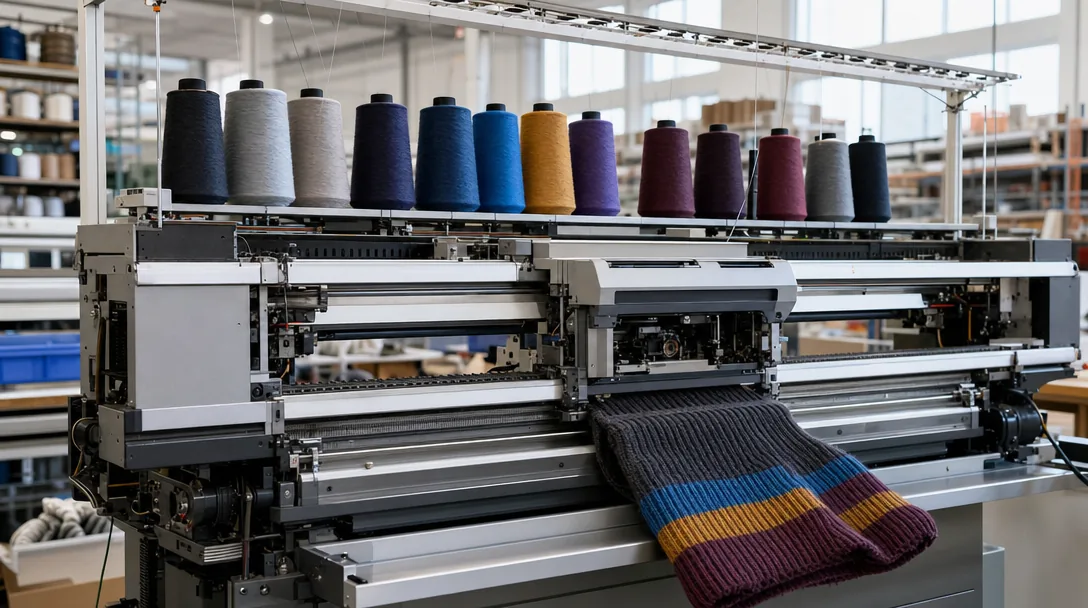
Every week, our sales team answers detailed questions about camouflage bucket hat: properties, costs and how to spec it right - cost & moq breakdown - cost & moq breakdown - 2026 buyer's guide. We wrote this guide so that wholesalers, streetwear brands, corporate buyers and promotional resellers can compare options with full information, and avoid the traps that show up only after production has started.
Bucket Hat Women
Fit and print control are what separate a sellable women’s style from a cheap souvenir hat. A camouflage bucket hat for women usually needs a slightly lower crown and cleaner brim roll than a unisex promo shape, otherwise it wears bulky and the camo repeat breaks awkwardly at the side seams. For reliable structure, I’d spec 210–260 gsm cotton twill, cotton-nylon ripstop around 180–220 gsm, or 7–10 wale corduroy only if the look matters more than print continuity. Below 200 gsm, the brim often collapses after garment wash; above 300 gsm, the sidewall can stand too rigid unless crown height is reduced to about 8.5–9.0 cm. A useful tech pack should call out brim width at 5.5–6.5 cm, topstitch row count at 6–8 rows with 6–8 mm spacing, seam allowance at 0.7–1.0 cm, sweatband width, and whether the brim uses 35–60 gsm fusible interlining. On camouflage fabric, reactive print on woven cotton is still the safest choice for wash fastness and crocking. I’d set Pantone TCX references for the key ground shades and require Delta-E under 2.0 on base colors and under 2.5 on dark overprints after wash testing.
Cost is driven by how many custom steps the camouflage bucket hat carries, not by the silhouette itself. If you are buying stock twill in a standard olive or black and adding only a woven label, 300–500 pcs per color is realistic. Once you move to custom camo artwork, strike-off approval, branded seam tape, printed lining, metal eyelets, and size labeling, most print mills and sewing lines in Zhejiang want 800–1,500 pcs per pattern to absorb cylinder setup, fabric loss from pattern placement, and extra QC. In current FOB terms, a basic women’s cotton bucket usually lands around $1.90–$3.00 at 500–1,000 pcs. A custom camouflage bucket hat in reactive-printed twill with flat embroidery or woven patch, lining, and eyelets is more typically $3.40–$4.90 FOB, and can push above $5.20 if the brim requires precise print matching or memory-wire construction. The failure points are obvious the moment the carton opens: brim asymmetry, side-seam repeat mismatch, crown puckering, eyelet misalignment, and inconsistent stitch tension across visible brim rows. I would not approve bulk from sample yardage that came off a different print run; ask for a strike-off first, then a pre-production sample cut from actual bulk fabric. Standard inspection is AQL 2.5, but for women’s fashion headwear I’d tighten internal tolerances to crown height +/-0.3 cm, brim width +/-0.2 cm, and clear shade segregation under D65 light. Our standard practice is to lock dimensional stability, rubbing fastness, and sweatband color migration before cutting, because dark camo grounds with poor crocking generate more claims than sewing defects. If decoration is added, confirm machine and backing up front: a Tajima or Barudan setup with the wrong underlay on 210 gsm twill will tunnel the shell and visibly distort the print around the logo.
Corduroy Hat Men's
Quote the construction first, not the silhouette. A men’s corduroy hat should be specified with the same discipline as a camouflage bucket hat: fabric content, wale count, gsm, brim build, backing, sweatband, and decoration method must be fixed before pricing. The workable commercial range is usually 8-wale or 11-wale corduroy at 260-320 gsm in 100% cotton or a 97/3 cotton-spandex blend; once you move below 240 gsm, the crown starts to collapse and seam grin becomes obvious after washing. Pile direction has to run consistently across crown panels and brim pieces, or the nap will reflect light differently and create an apparent shade shift even when the lab dip is within tolerance. On dark olive or brown, I have seen a visually obvious mismatch at Delta-E under 1.5 simply because one side panel was cut against the nap. Lock residual shrinkage under 3%, stitch density at 6-8 SPI, brim insert thickness at 1.2-1.8 mm, and Pantone TCX references for any matching woven labels or binding. Without that, every supplier is quoting a different hat and calling it comparable.
Decoration is where corduroy stops forgiving mistakes. Front embroidery that runs clean on brushed twill can sink into the ribs on corduroy unless the digitizing compensates for pile height and wale direction; underlay, pull compensation, and column width all need adjustment before the first strike-off. On Tajima, Barudan, or ZSK heads, I would normally run a 75/11 or 80/12 sharp-point needle, medium cutaway backing, lower RPM than standard twill, and a real production-fabric test rather than a paper approval. Hoop pressure and seam placement matter more than buyers think, especially on bucket silhouettes where the front panel curve and side seam proximity can push embroidery off center by 2-3 mm. Cost follows trim complexity, not just fabric price: a basic corduroy cap might land at $2.20-$4.20 EXW, while a corduroy bucket with multi-row brim stitching, taped seams, and interior binding is usually higher; by comparison, a camouflage bucket hat is driven more by printed fabric yield, print registration, and brim construction than by hardware. Realistic MOQs are 300-500 pcs per color for stock fabric, but 800-1,000 pcs is more typical once you add custom dyeing, woven labels, or plated metal trims.
The defects worth watching are predictable and expensive: glazed pile from over-pressing, rib mismatch at side seams, seam slippage after steaming, twisted sweatbands, and embroidery drift caused by fabric creep during hooping. These are easy to miss in approval photos and obvious in retail lighting. I would inspect first bulk at AQL 2.5 and add wash, crocking, and dimensional-stability checks before final packing, because corduroy often relaxes after finishing and exposes bad cutting that looked acceptable on the line. For camouflage programs, there is a different failure pattern: print repeat mismatch at seam joins, inconsistent camo orientation between brim and crown, and edge abrasion where a reactive print sits on lower-denier cotton. Our standard practice is to compare landed cost per sellable unit across both categories, not just quoted EXW. The cheaper unit price becomes irrelevant if 4% of the lot needs rework, replacement air freight adds $0.60-$1.20 per hat, or a failed carton drop test turns into a delayed shipment.
Organic Cotton Newborn Hat
For a newborn cap, skin-contact performance is the whole job; decoration is secondary. Specify combed ring-spun organic cotton in 30s or 40s singles, either single jersey at 180-200 gsm for a softer hand or 1x1 rib at 200-220 gsm when you need more recovery around the opening. Construction matters more than buyers think: 4-thread flatlock or fine-gauge coverstitch reduces seam height over the fontanel and side head, while ordinary overlock with bulky seam allowance is exactly what causes complaint photos. If you need certified input, write GOTS as the fiber and processing standard and OEKO-TEX Standard 100 Class I as the chemical screen; infant claims get scrutinized far harder than an adult camouflage bucket hat order. I would cap residual shrinkage at under 5% after 3 home-laundry cycles, spirality under 3%, skew within 3%, and fabric pH within the infant-safe range required by the buyer protocol. Keep trims stripped down. No metal snaps, no hard woven neck labels, no heat-transfer prints with a stiff hand, and no embroidery backing sitting against the scalp. For shade control, call out Pantone TCX references, approve bulk lab dips before cutting, and hold Delta-E to 1.0-1.5 versus the sealed standard under D65 and TL84, because baby pinks, naturals, and heathers drift easily lot to lot. If you want undyed “natural,” state whether cottonseed specks are acceptable; otherwise mills will over-bleach to chase a cleaner look and you lose the point of the organic story.
The tech pack needs to be unforgivingly specific: fiber content, finished gsm tolerance of +/-5%, panel count, stitch class, SPI, seam allowance, opening circumference, crown height, and wash-care construction details. For newborn sizes, I would normally hold finished head circumference tolerance to +/-0.5 cm, not +/-1 cm, because a full centimeter is enough to turn a stay-on fit into a returns problem. Compliance should name the destination market, not just say “safe for babies”: CPSIA for the US, REACH for the EU, azo and formaldehyde limits suitable for newborns, colorfastness to laundering minimum grade 4, and saliva or perspiration fastness where the retailer requires it. If there is any printed branding, write out phthalate restrictions and migration requirements instead of assuming the factory will infer them. Cost moves fast once you add real compliance and traceable materials. A plain organic cotton newborn cap usually lands around $0.90-$1.60 FOB China at 1,000 pieces in one colorway; 300-piece runs are commonly 12%-25% higher because cutting loss, certification handling, and inspection overhead do not scale down well. GOTS-certified fabric, custom reactive dyeing, folded size stickers, recycled polybags, or individual barcode labels can add $0.05-$0.30 per piece each, depending on volume. Our standard practice is to watch the failure points that actually trigger chargebacks: seam puckering, needle cuts on light jersey, loose thread tails over 3 mm, crown torque after wash, measurement drift after finishing, and 100% metal detection before packing. If you bundle this with a camouflage bucket hat program, make sure the supplier can separate infant compliance paperwork from adult headwear files; that administrative mistake is more common than most buyers realize.
Corduroy Hat Wholesale
Fabric control is where most wholesale hat programs drift, and camo is less forgiving than buyers expect. For a camouflage bucket hat, do not write “camo cotton” and hope the factory interprets it the same way you do. Specify the base cloth as 100% cotton twill, ripstop, or brushed canvas, usually 220 to 320 gsm for a bucket that holds shape without feeling stiff; if you need softer recovery at the crown, a 97/3 cotton-spandex blend can work, but only if you accept a slightly more relaxed drape. Lock the print method too: pigment print is cheaper, reactive print holds tone better on lighter grounds, and sublimation is only sensible on polyester. Set a gsm tolerance of plus or minus 5%, shrinkage under 3% after wash, and color control against approved artwork using Pantone TCX for trims and Delta-E under 2.0 for printed fabric, under 1.5 on solids. If the supplier cannot give strike-offs and lab dips before bulk, they are not controlling the process.
Construction is where a cheap hat shows itself. A practical bucket brim is usually 5 to 6 cm, with a finished brim that stays flat enough to wear but does not turn into cardboard. For a camouflage bucket hat, specify brim interlining explicitly: 150 to 220 gsm fusible nonwoven for a cleaner hand, or a thin EVA insert if you want more structure. Topstitch spacing around the brim should be consistent, typically 3 to 4 mm from the edge with even SPI, because uneven rows telegraph immediately on patterned fabric. Keep embroidery modest on unstructured crowns; dense fills on Tajima, Barudan, or ZSK heads will pucker lightweight twill unless the backing and needle choice are right. On custom cut-and-sew, a realistic MOQ is 300 to 500 pcs per colorway, with sampling at roughly $40 to $90 and bulk pricing around $2.60 to $4.80 FOB China at 1,000 pcs, depending on print complexity, lining, and whether the brim uses a fused layer or inserted board.
Inspection should measure repeatability, not just whether the hat looks acceptable on a table. For a camouflage bucket hat, check print registration at the side seam, crown height tolerance, brim roundness, and panel symmetry; a 0.5 cm deviation is enough to make the hat look twisted once worn. Put the defect definitions in writing before bulk: AQL 2.5 is normal for major defects, but define major as shade mismatch beyond the approved range, skipped topstitching, embroidery placement off by more than 0.5 cm, brim asymmetry over 0.3 cm, or wash shrinkage outside spec. Also require seam allowance, thread ticket, reinforcement points, and packing method on the sewing spec sheet, because crushed brims from sloppy carton packing are a common avoidable failure. sedex-audit-cap-supplier-guide.html">BSCI 2.0 or Sedex SMETA 4-Pillar audits help confirm process discipline, but they do not replace inline checks on the first production run. The only reliable way to keep a camouflage bucket hat consistent is to seal the approved sample and compare bulk under daylight-equivalent light before carton sealing.
Wholesale Hat Manufacturers Usa
U.S. hat manufacturing makes sense when the order is small, the deadline is tight, or the buyer needs domestic chain-of-custody; it is usually not the cheapest route for a fully custom camouflage bucket hat. Most wholesale hat manufacturers USA either sew small runs from imported fabric and trims or decorate imported blanks, and those are different programs with different economics. A sewn bucket hat should be specified as 200-260 gsm cotton twill, ripstop, brushed chino, or polyester-cotton, with a fused crown, 4-8 rows of brim stitching, 1.0 cm seam allowance, and a 180-220 gsm sweatband. For camo, do not leave the print method vague: pigment print on cotton, reactive print for better washfastness, or sublimation on polyester. If you do, you get quotes that compare unlike constructions. In practice, domestic production is most defensible below about 1,000 pieces, especially when the program also needs local Tajima, Barudan, or ZSK embroidery, patch application, or replenishment in 3-5 weeks instead of 45-70 days offshore.
The tech pack needs to pin down everything the buyer can actually measure. For a camouflage bucket hat, that means fabric composition, finished gsm tolerance, crown height, brim width, stitch SPI, eyelet diameter, sweatband material, seam tape, label placement, carton packout, and acceptable shade variation. I would also lock the dominant camo tones to Pantone TCX references and require Delta-E under 1.5 on any solid contrast component; otherwise the olive binding or thread may pass under factory LEDs and fail in daylight. A serious U.S. quote should separate fabric, print, cutting, sewing, finishing, packing, domestic freight, sample charges, and any over/under tolerance. Real 2026 pricing for U.S.-made sewn bucket hats is usually $8.50-$15.00 at 300 pieces, while stock-fabric domestic MOQs often start at 144-300 units per colorway. Custom-printed camo yardage usually pushes the workable MOQ to 500-1,200 pieces. If someone offers custom camo under $7 domestically, check the bill of materials first; the usual shortcuts are 150-180 gsm fabric, fewer brim rows, softer interlining, or an imported shell dressed up as local work.
Inspection is where weak suppliers get exposed. The common failures on a camouflage bucket hat are brim waviness from uneven feeding, crown-panel mismatch, print shade shift between top brim and underbrim, sweatband puckering, and logo distortion when embroidery is run on light camo twill without enough backing. I would inspect to AQL 2.5 for majors and 4.0 for minors, measure finished circumference to plus or minus 0.5 cm, check brim symmetry on a hard template, and run pull tests on eyelets and bartacks. If there is embroidery or a patch, ask which machine platform they use, because Tajima, Barudan, and ZSK heads behave differently on dense camo grounds, and ask what stabilizer weight sits behind the panel. Bad digitizing can disappear inside the pattern until the hat is worn outdoors. Our standard practice is to approve a pre-production sample from bulk fabric, not a salesman sample, then review top-of-production photos or an inline check at 10-20 percent output. That is the only reliable way to compare manufacturing capability instead of just comparing lead times.
Black Beanie Hat
The costly mistakes on a black beanie start before knitting: buyers leave the yarn spec vague and assume black is easy to control. It is not. For a commercial cuffed beanie, lock fiber content, yarn count, gauge, finished weight, body height, cuff depth, and stretch-recovery targets in the PO. In Yiwu, common builds are 100% acrylic 2/28Nm at 7G for winter bulk, 12G acrylic or recycled poly-acrylic blends for cleaner cuff embroidery, and cotton-rich knits above 60% for spring programs. Cotton feels softer, but it usually gives up 8% to 12% more recovery after repeated wear, so the fit has to be cut tighter. Shade control matters more on black than on mid-tone yarns: reference Pantone Black 6 C or a tied TCX standard, then hold bulk within Delta-E 1.5 versus the approved lab dip under D65 light. That same discipline is useful when a camouflage bucket hat line later gets a black extension, because a dyed knit program drifts more easily than printed camo on 240 gsm cotton twill or brushed poly twill.
Production is straightforward only when the tech pack is specific. The normal flow is computerized flat or circular knitting, crown take-down, linking or overlock close, steam setting if the yarn needs it, cuff forming, thread trimming, metal detection, and packed inspection. For branding, cuff embroidery is still the cleanest option, but keep the file around 5,000 to 8,000 stitches on Tajima or Barudan heads or the rib will show strike-through and distortion. Woven loop labels work better for minimalist retail, while patches need the attachment method written down upfront: merrowed-edge stitch-down is stable, and thick faux leather with heat-seal backing often warps after carton compression. Realistic 2026 Yiwu FOB pricing runs about $1.10 to $1.85 for basic acrylic, $1.80 to $3.20 for cotton or recycled blends, and $2.80 to $5.50 with poms, jacquard patterning, or premium patch work. MOQ is usually 300 to 500 pieces per color on stock yarns, but custom-dyed black or certified recycled content can push mills to 1,000.
Inspection has to catch the defects that show up after handling, not just what looks fine on the packing table. The repeat problems on black knit hats are spiraling ribs, uneven crown take-down, seam grin at the top close, loose sinker loops, and crocking from under-fixed dark dyes. AQL 2.5 is normal for mainstream retail, but premium programs should tighten visual checks for oil marks, shade banding under cool LED light, and logo centering within plus or minus 3 mm. Pay for the tests that actually move risk: dry and wet rubbing, dimensional stability after one wash cycle, pilling at 2,000 to 5,000 rubs, azo and formaldehyde compliance, and nickel release if metal trims are added. Our standard practice is to treat knit hats as a separate program from cut-and-sew headwear, because a factory that can make a solid camouflage bucket hat is not automatically controlling gauge consistency, cuff recovery, or black shade repeatability across reorders.
Working with CrownsForge for camouflage bucket hat programs
Most failures in a camouflage bucket hat program come from vague specs, not “bad camo fabric.” If the tech pack is disciplined, cost is fairly predictable. At 300-500 pcs, a basic style in 180-220 gsm cotton twill with a stock woodland or desert print, self-fabric sweatband, and single-layer brim usually sits around $1.35-$2.40 EXW. Move to custom reactive-printed twill, double-layer brim, 4-row topstitching, seam taping, woven label, and branded inner sweatband, and the same hat quickly becomes $2.80-$4.20 EXW. The expensive mistakes are usually hidden in construction details buyers fail to lock: brim width shifting from 5.5 cm to 6.5 cm, crown depth drifting by 0.8 cm, or stitch count dropping from 7-8 SPI to 5-6 SPI between sample rounds. Those changes alter both look and sewing time.
Color control is where many camouflage bucket hat programs go off track. You can hold solid trims, logo embroidery, and woven labels to Pantone TCX references with a practical Delta-E target under 1.5, but camouflage ground fabric should be approved by physical strike-off, not by screen mockup or Pantone callout alone. A camo repeat has too many interacting tones for a flat chip to be meaningful, especially on pigment or reactive prints where wash and finishing shift the visual balance. CrownsForge standard practice is to freeze handfeel, fabric gsm tolerance, brim stiffness, repeat scale, and trim list before PP approval; otherwise buyers end up comparing three different hats and arguing about “color” when the actual issue is construction drift. If the fabric supplier cannot match bulk against the signed strike-off under D65 lighting, the problem should be caught before cutting, not during final inspection.
Sampling should eliminate ambiguity, not just generate another photo for email approval. With stock fabric and trims, a first sample for a camouflage bucket hat is usually 7-10 days. Custom reactive printing, pigment printing, or yarn-dyed camo development typically needs 12-18 days, and add 2-4 more if you are testing embroidery registration on uneven print grounds, PVC patch adhesion, or heat-transfer placement after washing. MOQ should follow the bill of materials, not the salesperson’s script: 100-200 pcs is workable for stock twill and standard labels, but 300-500 pcs is the real floor once you introduce custom fabric, woven branding, or retail packaging and still want stable shade lots and reasonable unit cost. Clean programs separate approvals into development sample, PP sample, inline check, and final inspection to AQL 2.5. For embroidery on camo panels, digitizing must be tuned to the actual fabric on Tajima, Barudan, or ZSK heads; underlay, pull compensation, and density that work on flat art often fail on printed twill and create muddy logos in bulk.
Frequently Asked Questions
What logo decoration techniques do you offer?
3D puff embroidery, flat embroidery, woven patch, leather patch, PVC patch, screen printing, sublimation, applique and laser etching, all in-house with no subcontracting.
Can I order a sample before bulk production?
Yes. We strongly recommend approving a pre-production sample before mass production. Samples are charged at 35 to 60 USD each plus express shipping, fully refundable against confirmed bulk orders over 500 pieces.
What is the minimum order quantity (MOQ) for custom hats?
Our standard MOQ is 100 pieces per design and color, with sampling available from 1 piece. For complex multi-color logos or premium fabric upgrades, the MOQ can be lowered with a small per-piece surcharge.
How long does production take?
Sampling takes 7 to 12 days. Bulk production runs 20 to 30 days depending on quantity, fabric availability and decoration complexity. Inspection and packing adds another 3 to 5 days before shipment.
What file format should I send for my logo?
Vector files (AI, EPS, PDF) are ideal. High-resolution PNG or JPG at 300 dpi on transparent background works as a fallback. Provide Pantone color references for accurate reproduction.
What should buyers know about organic cotton bucket hat?
When evaluating organic cotton bucket hat, the key considerations are construction quality, decoration capability, MOQ flexibility and lead time. Cover everything buyers ask about organic cotton newborn hat: how it's manufactured, what specs to request from a factory, typical MOQ and pricing, common quality issues to inspect for, and how this ties back to the broader camouflage bucket hat sourcing decision. Cover everything buyers ask about bucket hat women: how it's manufactured, what specs to request from a…
What should buyers know about men's corduroy bucket hat?
When evaluating men's corduroy bucket hat, the key considerations are construction quality, decoration capability, MOQ flexibility and lead time. Cover everything buyers ask about corduroy hat men's: how it's manufactured, what specs to request from a factory, typical MOQ and pricing, common quality issues to inspect for, and how this ties back to the broader camouflage bucket hat sourcing decision. Cover everything buyers ask about corduroy hat wholesale: how it's manufactured, what specs to request from a factory,…
What should buyers know about nike bucket hats for men?
When evaluating nike bucket hats for men, the key considerations are construction quality, decoration capability, MOQ flexibility and lead time. Cover everything buyers ask about corduroy hat men's: how it's manufactured, what specs to request from a factory, typical MOQ and pricing, common quality issues to inspect for, and how this ties back to the broader camouflage bucket hat sourcing decision. Cover everything buyers ask about bucket hat women: how it's manufactured, what specs to request from a factory,…
What should buyers know about cotton beanie men?
When evaluating cotton beanie men, the key considerations are construction quality, decoration capability, MOQ flexibility and lead time. Cover everything buyers ask about corduroy hat men's: how it's manufactured, what specs to request from a factory, typical MOQ and pricing, common quality issues to inspect for, and how this ties back to the broader camouflage bucket hat sourcing decision. Cover everything buyers ask about organic cotton newborn hat: how it's manufactured, what specs to request from a…
Looking for a reliable hat manufacturer in China?
CrownsForge has produced custom hats for 800+ brands across 40 countries. From 100-piece launches to 100,000-piece retail programs, we deliver on time and on spec.
Get in touchRelated guides
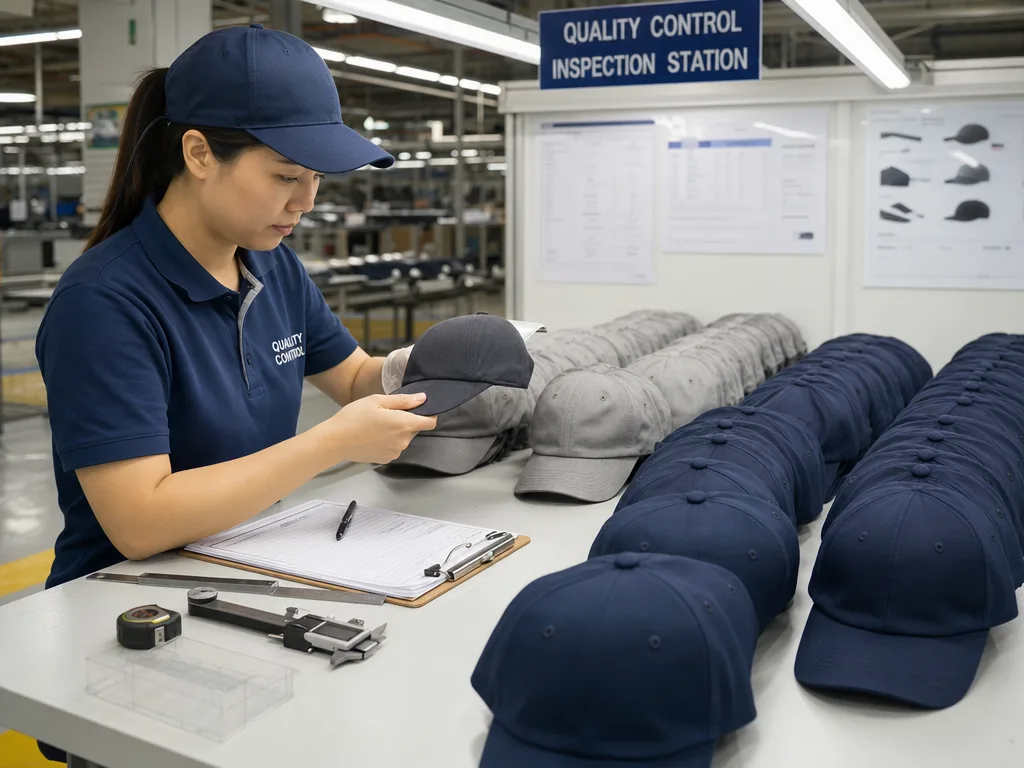
BSCI vs Sedex vs WRAP vs WCA: Compliance Audit Standards Compared (2026 Update) - 2026 Buyer's Guide
Read article →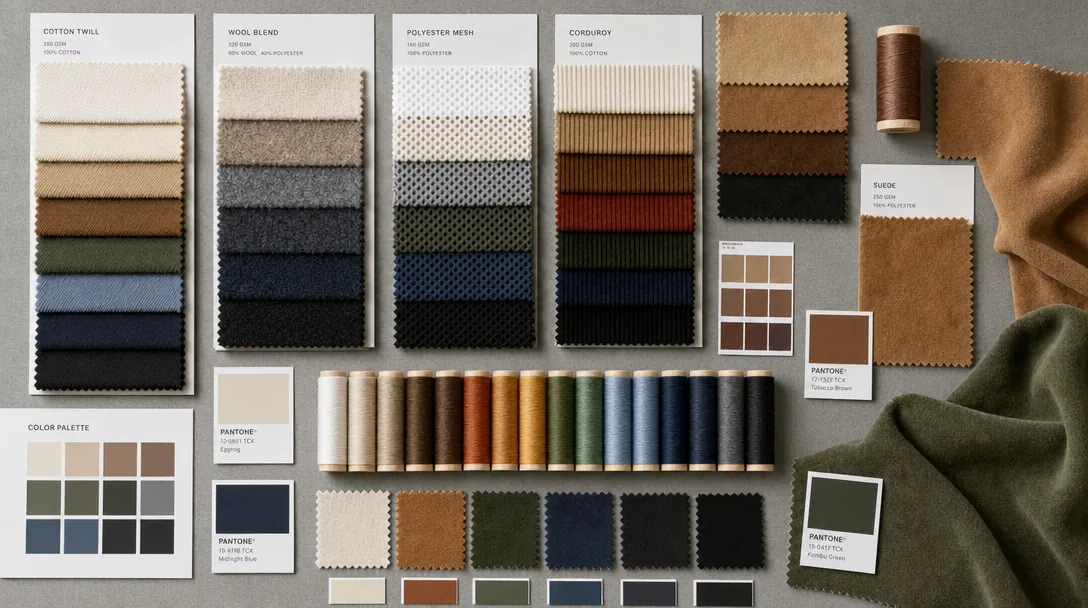
Sustainable Cap Packaging: Options, Costs and Retail-Buyer Demands - 2026 Buyer's Guide
Read article →Bucket Hat Corduroy Fabric And Trim Spec Guide for Custom Hat Buyers
Read article →Sourcing custom hats does not have to be complicated. With the right manufacturing partner, clear specifications and a small upfront investment in sampling, you can launch a retail-quality product in 30 to 45 days.