
Bulk Trucker Hats Retail Packaging Guide for Custom Hat Buyers
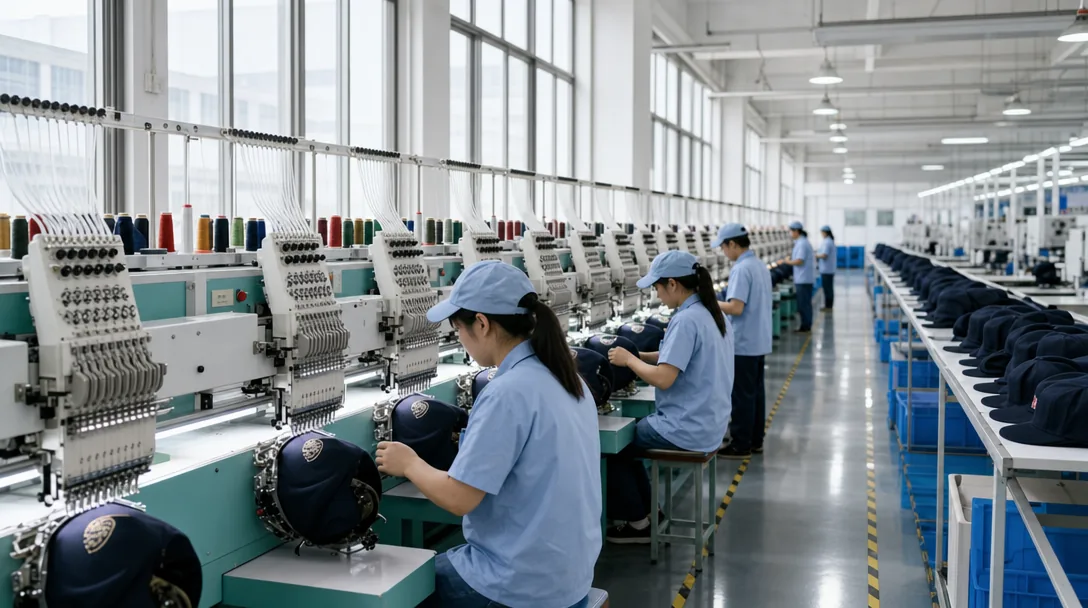
Every week, our sales team answers detailed questions about bulk trucker hats retail packaging guide for custom hat buyers. We wrote this guide so that wholesalers, streetwear brands, corporate buyers and promotional resellers can compare options with full information, and avoid the traps that show up only after production has started.
Why bulk trucker hats retail packaging guide needs a separate sourcing plan
A buyer searching for a bulk trucker hats retail packaging guide is usually past the “can you make this cap?” stage. They are trying to land a sellable unit: cap, hangtag, sticker, barcode, inner polybag, carton mark, and sometimes an Amazon FBA or retailer routing label. That is a different sourcing job from generic bulk custom trucker hats, where the factory may only quote the cap FOB Ningbo or Shanghai. Retail packaging changes the production flow because packing is no longer a back-end warehouse task; it becomes part of the approved sample. A 5-panel foam trucker with a 5,000-stitch front embroidery might take 18–22 days in bulk, but adding custom kraft boxes, UPC labels, silica gel, neck labels, and master-carton segregation by SKU can add 7–15 days if artwork and barcode files are not locked before fabric cutting.
The cost drivers are small individually but painful when missed in the original RFQ. A standard PE polybag is often $0.03–$0.06 per cap, while a printed frosted bag can run $0.12–$0.25 depending on MOQ and film thickness. A woven label may add $0.08–$0.18, a swing tag $0.05–$0.15, and a rigid retail box can add $0.45–$1.20 before freight. For bulk custom embroidered hats, packaging also affects dimensional weight: a 58 x 45 x 38 cm carton that holds 100 nested trucker caps may only hold 40–60 boxed caps. That can move a DDP air quote from roughly $1.80 per unit to over $3.00, even when the branded bills custom hat cost looks acceptable at the factory gate.
Compliance decisions should be made before placing the purchase order, not during final inspection. If the buyer sells to big-box retail, packaging may need CPSIA tracking labels for kids’ styles, Prop 65 language for California, country-of-origin marking, GS1-valid UPCs, and carton labels matching the retailer’s routing guide. AQL 2.5 inspection should include scan testing, carton drop checks, moisture checks, and label placement tolerance, not just embroidery defects or mesh tension. Our standard practice at CrownsForge is to treat custom bulk trucker hats with retail packaging as a separate bill of materials, with Pantone TCX references for printed inserts, Delta-E tolerance for brand colors, and packing photos attached to the pre-production sample file. That discipline matters because a custom hat manufacturer can remake a crooked patch quickly, but misprinted barcodes or noncompliant carton marks can hold an entire shipment at a 3PL.
Factory capability checks before quoting
A serious quote starts with capability proof, not a pretty PDF. For embroidery, ask what machines are actually on the floor: Tajima, Barudan, or ZSK heads, how many running heads, max stitch field, and whether they digitize in-house or outsource DST files. Bulk custom embroidered hats with 8,000-12,000 stitches on a front panel behave very differently from a 3D puff logo at 18,000 stitches; the factory should flag thread breaks, foam height, pull compensation, and backing type before pricing. For patches, separate woven, embroidered, chenille, rubber PVC, leather debossed, and sublimated twill because MOQ, mold cost, and lead time vary sharply. A PVC mold may add $80-$180, while a leather patch die can be $40-$90. This is where a bulk trucker hats retail packaging guide becomes practical: decoration thickness affects how the cap nests, whether tissue stuffing is needed, and how many pieces safely fit per export carton.
Fabric and panel construction checks are where many custom bulk trucker hats go wrong. A factory should identify front fabric by composition and weight, such as 260 gsm cotton twill, 300 gsm brushed chino, 160 gsm polyester foam, or recycled rPET mesh in 75D/150D yarn. Ask whether the mesh is soft hand, hard hand, or high-density sports mesh, and whether color matching is done against Pantone TCX with a Delta-E tolerance under 1.5 for dyed lots. Panel structure matters: 5-panel foam truckers need clean laminate bonding, while 6-panel structured caps require consistent buckram stiffness and crown height control within about 3 mm. Closure options also change cost and packaging compression: plastic snapback is cheapest, usually $0.06-$0.12, while metal buckle, elastic Flexfit-style bands, and leather straps can add $0.18-$0.65. A competent custom hat manufacturer should show stitched samples of each closure, not just catalog photos.
Before quoting bulk custom trucker hats, check the sample room and compliance desk as carefully as the sewing line. A real sample room should turn a basic trucker sample in 5-7 working days after artwork approval, or 10-14 days when custom patches, dyed fabric, or branded inner taping are involved. They should send pre-production photos with crown height, bill length, seam alignment, embroidery scale, and packaging layout marked in centimeters, not vague “looks good” messages. For retail programs, ask if they can test barcode stickers, hangtags, polybags with suffocation warnings, size labels, and carton drop strength before mass production. Our standard practice at CrownsForge is to quote packaging as a separate line because branded bills custom hat cost can be distorted by inserts, UPC labels, and carton protection. Audit readiness is non-negotiable for chain retail: request current sedex-audit-cap-supplier-guide.html">BSCI 2.0, Sedex SMETA 4-Pillar, or WRAP documents, then confirm AQL 2.5 final inspection records and who speaks English during production escalation.
MOQ, pricing and sample approval
MOQ is where packaging decisions start to affect unit cost, not afterthought logistics. For bulk custom trucker hats, a realistic factory MOQ is usually 144 pieces per colorway for blank-panel foam or cotton twill mesh caps, 300 pieces for custom-dyed fabric or private-label trims, and 500–1,000 pieces when you need molded patches, custom buckles, printed seam tape, or retail-ready cartons. Embroidery setup is normally US$35–80 per logo for digitizing, depending on stitch count and whether the file runs clean on Tajima, Barudan, or ZSK heads. A flat front logo under 8,000 stitches is cheap; a dense 3D puff mark at 12,000–15,000 stitches uses more thread, slower machine speed, and more rejects. Woven labels, hangtags, barcode stickers, and individual polybags usually add US$0.08–0.35 per piece, while a printed retail box can add US$0.45–1.20 depending on board weight and MOQ. This is why a bulk trucker hats retail packaging guide should tie MOQ to trims, not just cap quantity.
Pricing should be quoted as a full build, because the cheapest cap body can become expensive once decoration and retail handling are added. For standard custom bulk trucker hats in 5-panel or 6-panel construction, I usually see FOB China pricing around US$2.20–3.20 for basic embroidery, US$3.40–4.80 for 3D puff or woven patch work, and US$5.00–7.50 when buyers add custom mesh color, branded sweatband, sandwich visor, metal clasp, UPC labels, and shelf-ready packaging. Branded bills custom hat cost depends heavily on technique: screen-printed underbrims are often US$0.15–0.35, sublimated bills US$0.45–0.90, and embroidered bill hits can add US$0.40–1.00 because the panel must stay flat and registration is less forgiving. Bulk custom embroidered hats also need stitch-density control; 0.35–0.45 mm spacing is common, but foam-front truckers can pucker if the digitizer chases coverage instead of using proper underlay. A custom hat manufacturer should flag that before sampling, not after bulk production.
Never approve production from a mockup alone; the pre-production sample is the contract in physical form. Our standard practice at CrownsForge is to issue a PPS with fabric weight, mesh denier, crown height, visor curve, thread chart, Pantone TCX reference, trim sheet, packing method, and carton markings locked before cutting bulk. Pantone matching on dyed fabric should be judged with a lightbox and a practical tolerance, usually Delta-E under 1.5 for main fabric and under 2.0 for mesh or thread, because polyester mesh, cotton twill, and embroidery rayon reflect color differently. For retail packaging, confirm polybag thickness, suffocation warning language, hangtag string type, carton drop-test expectation, and whether the buyer needs FBA-style labels or retailer-specific GS1 barcodes. Lead time is normally 7–10 days for digitizing and PPS, 20–30 days for bulk production after approval, and another 5–12 days for final inspection, packing, and vessel or air booking. A serious bulk trucker hats retail packaging guide should also include AQL 2.5 inspection before shipment, especially when packaging accuracy matters as much as sewing quality.
Quality inspection and shipping risk
Shipping risk is mostly carton discipline and Incoterms clarity. Master cartons should show PO number, SKU, color, size if applicable, carton count, gross/net weight, destination, and country of origin; for retail programs, add scannable carton labels that match the buyer’s routing guide. A typical 58 x 48 x 38 cm export carton holds 100 structured trucker hats if nested correctly, but 3D puff, flat bills, or premium inserts can reduce that to 50–72 pieces. FOB Ningbo or Shanghai usually gives the buyer better freight control, while DDP is simpler for first-time importers but hides customs duty, Section 301 exposure, brokerage, and last-mile surcharges inside the unit price. If a buyer asks for branded bills custom hat cost, separate mold/setup, printing, undervisor fabric, and packaging line labor rather than burying it in the cap price. Reorder documentation should include PP sample photos, carton packing photos, barcode files, Pantone references, AQL report, and the final commercial invoice template.
Buyer checklist for the next RFQ
A serious RFQ starts with the hat spec, not the target price. For bulk custom trucker hats, send the style code or reference photo, panel construction such as 5-panel foam front, 6-panel structured, or 7-panel high crown, crown height in cm, bill type, back mesh material, closure type, and size range. Fabric details matter: 100% polyester foam at 3–4 mm, cotton twill at 260–320 gsm, nylon ripstop at 210D, or recycled polyester mesh should be named if you have a requirement. Include Pantone TCX or TPX colors for fabric and thread, not screenshots from Instagram. If color is brand-critical, state the acceptable Delta-E tolerance; most buyers use Delta-E under 2.0 for main panels and under 1.5 for licensed team colors. A useful bulk trucker hats retail packaging guide should also ask buyers to state whether the quote is EXW, FOB Ningbo/Shanghai, DDP, or delivered to an Amazon FBA warehouse.
Artwork files decide whether a quote is firm or just a guess. Send vector logo files in AI, EPS, or PDF with fonts outlined, plus a JPG mockup showing placement and size in inches or mm. For bulk custom embroidered hats, specify flat embroidery, 3D puff, woven patch, leather patch, rubber patch, sublimated patch, or heat transfer, because machine time and rejection risk are different. A 10,000-stitch flat embroidery on Tajima or Barudan heads may add about $0.35–$0.55 per hat, while a 3D puff front logo can add $0.55–$0.90 depending on foam density and thread coverage. If the bill has sandwich piping, underside print, edge embroidery, or branded bills custom hat cost needs to be separated, call that out line by line. For licensed or retail programs, include hangtag, UPC, country-of-origin label, care label, and carton mark files before asking any custom hat manufacturer for a locked price.
Packaging requirements should be quoted with the same discipline as the cap itself. Tell the factory if each hat needs a polybag, recycled PE bag, tissue wrap, silica gel, hangtag, sticker barcode, molded crown insert, kraft box, or retail-ready master carton. For custom bulk trucker hats shipped to retail, give inner carton count, master carton count, carton drop-test requirement, and whether cartons must pass 32 ECT or 44 ECT. A common low-cost setup is 25 hats per inner carton and 100 per master carton, but foam-front truckers with crown inserts may need 50–60 per master carton to avoid bill deformation. Our standard practice at CrownsForge is to request finished sample approval photos from front, side, back, inside seam tape, sweatband, label, packaging, and carton marks before issuing the production PI. Add AQL 2.5 major / 4.0 minor inspection criteria, BSCI 2.0 or Sedex SMETA 4-Pillar audit needs, and the requested ship window to make the RFQ actionable.
Working with CrownsForge
The biggest packaging mistake buyers make is treating retail prep as an afterthought after the caps are already sewn. For a serious bulk trucker hats retail packaging guide program, we lock the packaging spec during sample approval: cap profile, visor curve, crown support, hangtag position, barcode label size, polybag vent holes, carton count, and master carton drop-test requirement. A typical approval set includes one decorated cap, one folded or stuffed retail-ready unit, one inner carton, and one export carton with marks. For bulk custom trucker hats, we usually run a 20–50 piece pre-production sample lot before mass cutting, especially when foam fronts, 5-panel seams, rope trim, or sandwich bills affect packing height. Pantone TCX fabric matching is checked under D65 light, and we keep color tolerance around Delta-E 1.5–2.0 for key brand colors. CrownsForge’s standard practice is to approve decoration and packaging together, because a perfect embroidery can still fail at retail if the crown arrives crushed.
Decoration control starts before the Tajima, Barudan, or ZSK heads run production. For custom bulk trucker hats with flat embroidery, 3D puff, woven patches, PVC patches, or heat-transfer labels, we test thread density, backing weight, needle size, and stitch pull on the actual front panel material, not a random swatch. Foam trucker fronts around 3–5 mm behave differently from brushed cotton twill or 100% polyester mesh, so digitizing has to account for panel compression and hoop tension. For bulk custom embroidered hats, we inspect logo placement against a centerline tolerance of about ±2 mm and embroidery height tolerance of ±1.5 mm. QC follows AQL 2.5 for major defects and AQL 4.0 for minor defects unless the buyer requires stricter retail standards. Packaging defects are counted too: wrong UPC, cloudy polybag, loose hangtag, crushed visor, mixed colorways, carton under-fill, or missing suffocation warning can all stop shipment.
Export coordination is where retail packaging either saves money or burns it. A structured bulk trucker hats retail packaging guide program should define FOB Ningbo/Shanghai versus DDP delivery, carton dimensions, CBM, gross weight, and label rules before the purchase order is signed. A standard 5-panel or 6-panel trucker packed 25 pieces per inner carton and 100 pieces per master carton may land around 0.10–0.14 CBM per 100 units, but molded inserts, individual boxes, or premium gift packaging can double that volume. That affects branded bills custom hat cost more than many buyers expect: a $0.18 hangtag is minor, but oversized cartons can add $0.35–$0.80 per cap on air freight. As a custom hat manufacturer, we also coordinate factory audit documents when needed, including BSCI 2.0, Sedex SMETA 4-Pillar, packing lists, commercial invoices, HS code classification, and retailer carton mark templates so the shipment clears cleanly at the warehouse.
Frequently Asked Questions
What logo decoration techniques do you offer?
3D puff embroidery, flat embroidery, woven patch, leather patch, PVC patch, screen printing, sublimation, applique and laser etching, all in-house with no subcontracting.
What file format should I send for my logo?
Vector files (AI, EPS, PDF) are ideal. High-resolution PNG or JPG at 300 dpi on transparent background works as a fallback. Provide Pantone color references for accurate reproduction.
How long does production take?
Sampling takes 7 to 12 days. Bulk production runs 20 to 30 days depending on quantity, fabric availability and decoration complexity. Inspection and packing adds another 3 to 5 days before shipment.
Do you support sustainability certifications?
Yes. We work with GOTS organic cotton, GRS-certified recycled polyester, OEKO-TEX Standard 100 fabrics, and are BSCI and Sedex audited. Certification documentation can be provided per order.
What is the minimum order quantity (MOQ) for custom hats?
Our standard MOQ is 100 pieces per design and color, with sampling available from 1 piece. For complex multi-color logos or premium fabric upgrades, the MOQ can be lowered with a small per-piece surcharge.
How does ordering custom embroidered trucker hat work?
When evaluating custom embroidered trucker hat, the key considerations are construction quality, decoration capability, MOQ flexibility and lead time. Explain the buyer intent behind bulk trucker hats retail packaging guide, when it differs from generic hat sourcing, and what decisions affect cost, lead time and compliance. Describe how CrownsForge manages bulk trucker hats retail packaging guide programs with sampling, decoration, QC and export coordination.
What should I know about custom trucker hats bulk?
When evaluating custom trucker hats bulk, the key considerations are construction quality, decoration capability, MOQ flexibility and lead time. Explain the buyer intent behind bulk trucker hats retail packaging guide, when it differs from generic hat sourcing, and what decisions affect cost, lead time and compliance. Describe how CrownsForge manages bulk trucker hats retail packaging guide programs with sampling, decoration, QC and export coordination.
What's the MOQ for custom embroidered trucker hats no minimum?
When evaluating custom embroidered trucker hats no minimum, the key considerations are construction quality, decoration capability, MOQ flexibility and lead time. Explain the buyer intent behind bulk trucker hats retail packaging guide, when it differs from generic hat sourcing, and what decisions affect cost, lead time and compliance. Describe how CrownsForge manages bulk trucker hats retail packaging guide programs with sampling, decoration, QC and export coordination.
What should I know about custom rope hat wholesale bulk?
When evaluating custom rope hat wholesale bulk, the key considerations are construction quality, decoration capability, MOQ flexibility and lead time. Explain the buyer intent behind bulk trucker hats retail packaging guide, when it differs from generic hat sourcing, and what decisions affect cost, lead time and compliance. Describe how CrownsForge manages bulk trucker hats retail packaging guide programs with sampling, decoration, QC and export coordination.
Ready to start your custom hat project?
Send us your tech-pack, sketch or even just an inspiration photo. We will respond with a detailed quotation and digital mock-up within 24 hours.
Request a free quoteRelated guides
Golf Hats For Men Reorder Planning Guide for Custom Hat Buyers
Read article →
Patch Hats Decoration QC Checklist for Custom Hat Buyers
Read article →Hat With Patch Sample Approval Process for Custom Hat Buyers
Read article →Sourcing custom hats does not have to be complicated. With the right manufacturing partner, clear specifications and a small upfront investment in sampling, you can launch a retail-quality product in 30 to 45 days.