
Bucket Hat Men: A Vertical-Specific Sourcing Guide
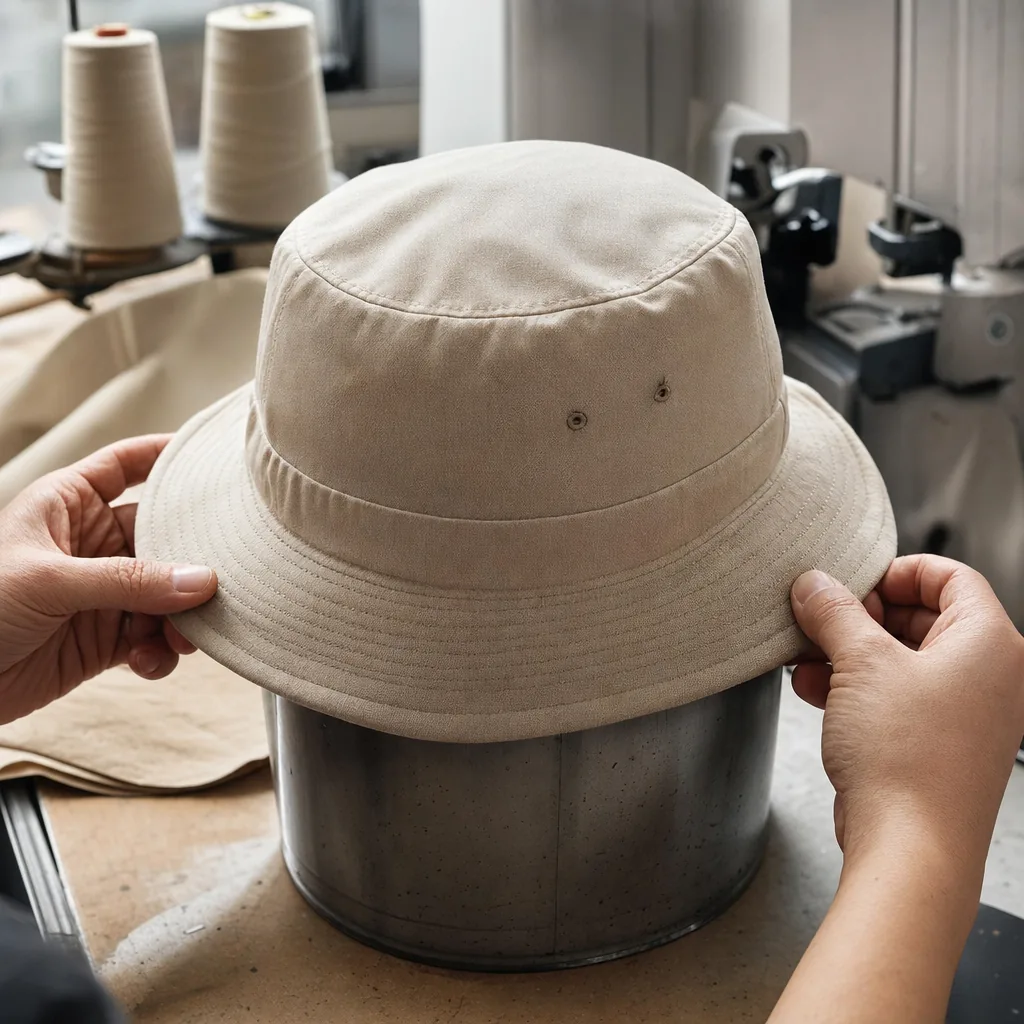
Bucket Hat Men: A Vertical-Specific Sourcing Guide is one of the most-asked questions we receive from international buyers, and for good reason. With dozens of factories competing for your order and an alphabet soup of technical terms in every supplier quote, even experienced importers can feel lost. This guide consolidates what we have learned producing custom hats for clients in 40+ countries.
Baseball Hats Men's
A proper baseball hat starts with the crown structure, not the logo. For baseball hats men's orders, I ask buyers to lock down crown height, visor curve, front panel construction, and closure type before sampling. A 6-panel unstructured cap in 100% cotton twill behaves very differently from a structured cotton/poly cap with fused buckram and a pre-curved PE visor. If you want baseball hats custom for retail, specify fabric weight in the 220–280 gsm range, thread count on the sweatband, eyelet type, and embroidery placement tolerance in millimeters. For fitted hats sizes, the factory needs a size range map, usually 6 7/8 to 7 5/8 for core U.S. programs, because one inconsistent elastic back or sweatband can create returns that cost more than the cap itself.
Typical MOQ for baseball hats women's or men's programs is 300–500 pcs per color if you want a single embroidery position and stock fabric; custom fabric, washed finishes, or specialty closures usually push that to 800–1,000 pcs. FOB China pricing for a standard cotton twill cap with 3D embroidery is often USD 1.90–3.20 at 1,000 pcs, while better trims, heavier buckram, and detailed back stitching can move it to USD 3.50–5.00. On the factory side, I care more about color control than most buyers do: ask for Pantone TCX matching on fabric, Delta-E under 1.5 on approved lab dips, and a signed pre-production sample with stitch count, thread type, and visor insert confirmed. That discipline applies whether you are buying baseball hats fitted or planning a wider headwear line that also includes bucket hat men.
The defects that actually show up are usually boring but expensive: crooked center-front embroidery, uneven crown symmetry, wrinkled visor stitching, loose top buttons, sweatband twisting, and poor size consistency on fitted hats sizes. For inspection, AQL 2.5 is normal for general retail, but I tighten critical points like logo placement, panel alignment, and seam puckering because buyers notice those immediately in hand. For a broader bucket hat men sourcing decision, the lesson is simple: don’t treat baseball hats and bucket hats as interchangeable just because they are both low-profile headwear. Bucket hats depend more on brim edge stiffness, stitch spacing, and wash behavior, while baseball hats depend on crown shape retention and closure accuracy, so the factory capability, machine setup, and QC checklist should be different for each program.
Men's Bucket Hat
For a men's bucket hat, the manufacturing route is simpler than a structured cap, but buyers still get into trouble when they treat it like a commodity. A standard build is 4-panel or 6-panel crown, 5.5 to 7 cm brim, self-fabric sweatband, and either woven eyelets or embroidered eyelets depending on fabric weight. Most commercial orders use 180 to 240 gsm cotton twill, brushed chino, washed canvas, or 210T recycled polyester for outdoor programs; lighter fabrics collapse better, while 10 oz canvas holds shape but can create a stiff brim if the interlining is too heavy. If you are sourcing bucket hat men alongside baseball hats women or baseball hats fitted in one program, specify whether trims, labels, and Pantone references must match across categories, because the dye lot tolerance on washed cotton can drift beyond Delta-E 1.5 if production is split across mills. On the floor, the cleanest embroidery results usually come from a flat panel before crown seaming, run on Tajima or Barudan heads with backing selected to stop puckering around the logo area.
The tech pack should be more detailed than most buyers expect. Ask for crown height, finished circumference by size, brim width with tolerance of plus or minus 0.3 cm, stitch rows on the brim, seam tape requirement, sweatband material, eyelet count, label placement, and whether topstitching is 301 lockstitch or decorative chainstitch. Bucket hats are often ordered as one-size, but if the customer base overlaps with fitted hats sizes buyers, request at least S/M and L/XL size grading with target inner circumferences such as 58 cm and 60 cm. MOQ is typically 300 to 500 pcs per color for stock fabric, while custom-dyed fabric or printed lining usually pushes the threshold to 800 to 1,000 pcs. In China today, a basic unwashed cotton twill hat with simple woven label lands around $2.10 to $3.20 ex-factory at 500 pcs; add direct embroidery, contrast binding, all-over print, or recycled content and it can move to $3.80 to $5.80. For baseball hats custom programs bundled with bucket styles, our standard practice is to quote by shared fabric usage and trim consolidation, which can shave 3 to 7 percent off material waste.
Inspection is where many bucket hat men orders are won or lost, because defects are obvious once the hat is worn. The most common issues are brim waviness from uneven fusing, off-center embroidery, mismatched panel shading after garment wash, twisted sweatband joins, and circumference running small because factories measure flat rather than on the inside seam. Set AQL 2.5 for major defects and 4.0 for minor, and make the factory check roundness on a head form instead of tabletop measurement only. If the style includes prints, ask for color fastness to washing at grade 4 minimum and crocking tests on dark shades; black and olive cottons are where complaints usually show up first. For men’s bucket hat programs sold beside baseball hats fitted, buyers should also watch carton compression because a crushed brim changes sell-through more than a tiny sewing issue. The broader sourcing decision comes down to use case: promo hats can accept stock twill and one size, but fashion retail needs size grading, wash consistency, and better embroidery registration if you want fewer chargebacks after delivery.
Baseball Hats for Men
A proper baseball hat for men starts with the crown build, not the logo. Most factory issues come from the wrong fabric weight, sloppy buckram, or a bad crown stitch map that makes the front panel collapse after one wash. For structured styles, ask for 100% cotton twill around 260-300 gsm, poly-cotton for lower shrink risk, or 100% acrylic/wool blends if you need a firmer hand for baseball hats fitted. The back closure matters too: metal buckle, tri-glide, plastic snap, or full closed-back sizing all change labor and scrap rates. If you are sourcing baseball hats custom, request a tech pack with panel count, visor curve radius, sweatband width, stitch density, and logo placement in millimeters, not just a mockup.
For production, the factory should quote by construction type, embroidery method, and wash risk. A typical MOQ is 300-500 pcs per colorway for simple 6-panel caps, while fully custom fitted hats sizes with multiple head sizes can push MOQ to 500-1,000 pcs because of grading and inventory risk. In China, FOB pricing for a basic cotton twill cap with flat embroidery often lands around USD 2.10-3.20 at 500 pcs, while premium structured caps with woven labels, sandwich visors, and multi-color 3D embroidery can move to USD 3.50-5.80 depending on stitch count and closure. If a supplier quotes far below that, check whether they are cutting on buckram quality, sweatband gsm, or embroidery thread count.
Quality control on baseball hats for men is usually about fit consistency and front-panel shape, not just thread breaks. Inspect panel symmetry, visor alignment, crown height tolerance, sweatband stitching, and whether the size tape actually matches the labeled circumference; a 1.5 cm error is common in weak factories and will kill a line of baseball hats women or men's bucket hat adjacent programs because buyers assume one supplier can scale across silhouettes. For bucket hat men, the sourcing decision often comes down to the same discipline: ask for fabric certification, shrinkage test data, color tolerance within Delta-E 2.0-3.0, and AQL 2.5 inspection on finished goods. A factory that can hold those specs on caps is usually the one that can also handle stable headwear programs without blowing up returns.
Designer Bucket Hats
Designer bucket hats live or die on silhouette control and material behavior, not on a logo alone. A good men's bucket hat usually starts with 6 or 8 crown panels, a 5.5 to 6.5 cm brim, and a crown height around 8.5 to 9.5 cm, but the exact balance depends on whether the brand wants a soft drape or a more architectural luxury look. For bucket hat men programs, the biggest manufacturing mistake is treating it like a cheap promo hat: using 180 gsm cotton twill with no structured support, then wondering why the brim collapses after wash or shipment compression. If you want a designer hand feel, specify shell fabric by weight and composition up front—240 to 320 gsm brushed cotton twill, nylon taslan around 120 to 160 gsm, washed canvas at 280 gsm, or cotton-nylon blends with a light fused backing. Also call out stitch density on the brim, usually 6 to 8 rows at 0.6 to 0.8 cm spacing, plus seam allowance width, sweatband construction, and whether topstitch thread should tonal-match within Delta-E 1.0 to approved Pantone TCX.
The factory spec sheet should be more detailed than what buyers use for baseball hats custom or baseball hats fitted, because a bucket shape shows every inconsistency. Ask for panel pattern dimensions, brim width tolerance of plus or minus 2 mm, circumference tolerance of plus or minus 0.5 cm, SPI target at 8 to 10 for woven fabric, and shrinkage test results after one wash if the style is garment washed. For trims, define eyelet material, woven label fold type, care label position, and embroidery limitations if you are putting a logo on the front panel; dense fills over 12,000 stitches can distort lighter bucket fabrics unless backing is adjusted on Tajima or Barudan heads. MOQ is usually 300 to 500 pcs per colorway for stock fabric, but true designer development with custom dyed fabric, printed lining, and branded metal trim often starts at 800 to 1,200 pcs per style. Typical FOB China pricing in 2025 is about $2.20 to $3.80 for basic cotton twill, $3.90 to $6.50 for washed or contrast-panel designer styles, and $6.80 to $10.50 if you add specialty fabrics, appliqué, or all-over embroidery. The same buyer who is already managing fitted hats sizes for cap assortments should request head size grading here too, usually S/M at 58 cm and L/XL at 60 cm.
Inspection should focus on shape symmetry, brim waviness, seam roping, embroidery puckering, and color migration between shell and lining after pressing. I reject more designer buckets for visual imbalance than for sewing strength: one panel off by 3 mm can twist the whole crown, and uneven brim topstitch spacing is obvious from two meters away on a black hat under retail lighting. Use AQL 2.5 for bulk inspection, but add measured checkpoints for crown height, brim depth, and circumference because bucket hats are fit-sensitive in a way baseball hats women assortments often are not. If the style uses reactive-dyed cotton or dark denim, require crocking tests and a metal trim salt spray check if the product is positioned as premium. Our standard practice at CrownsForge is to press a pre-production sample after 24 hours of packing compression, then re-measure and photograph the side profile; that catches the soft-brim collapse problem before bulk cutting. For buyers comparing categories, designer bucket hats should be sourced with the same discipline used for baseball hats fitted programs: fit grading, fabric stability, logo execution, and repeatable QC. That is the real link back to the broader bucket hat men decision—if the factory cannot control profile and tolerance, the style will not survive scaling.
Cool Bucket Hats for Guys
A good men's bucket hat starts with the fabric, not the logo. For a serious bucket hat men program, ask the factory to quote 100% cotton twill at 240 to 280 gsm for a clean drape, or nylon taslan around 90 to 120 gsm if you want a lighter, more technical hand feel. The crown should be cut with 4 to 6 panels, brim width usually 5.5 to 6.5 cm for adult sizing, and topstitching needs to be consistent at 7 to 9 stitches per inch. If the factory cannot tell you what needle system, seam allowance, and shrinkage allowance they use, that is usually a warning sign. For custom programs, the safest request sheet includes Pantone TCX color reference, logo placement in millimeters, thread color, sweatband spec, and whether you want unstructured, lightly structured, or reversible construction.
MOQ and pricing are usually lower than baseball hats custom because the build is simpler, but the range still depends on fabric and decoration. For plain cotton bucket hats, a workable factory MOQ is often 300 to 500 pieces per color, while embroidered or printed runs usually start around 500 to 1,000 pieces total. In China, ex-factory pricing for a standard cotton style is commonly USD 2.10 to 4.80 at 500 pieces, while heavier wash treatment, cord trim, or all-over print can push it to USD 5.50 to 7.50. Buyers who already know baseball hats women or baseball hats fitted programs often underestimate how much bucket hats depend on brim shape control; one weak interlining or sloppy stitch line and the whole silhouette collapses. That is why the sample stage matters more than the price sheet.
The common defects are boring but expensive: uneven brim width, twisted side seams, mismatched panel symmetry, poor colorfastness after washing, and embroidery puckering near the seam intersections. On inspection, I would check panel balance against the center line, brim stiffness after steam pressing, and measurement tolerance on crown height and head opening, ideally within ±0.5 cm. For fitted hats sizes, buyers are used to a tighter size logic, but bucket hats need a different approach: one size fits most only works if the inner circumference lands around 58 to 60 cm with enough seam allowance and a decent sweatband. CrownsForge's standard practice is AQL 2.5 final inspection with special attention to stitch density, shade banding, and contamination in light colors. If you are sourcing a men's bucket hat for retail, the broader decision is not just style; it is whether the factory can hold shape, color, and sizing consistently across repeat orders without drifting on trim or fabric lots.
Funny Bucket Hats
Funny bucket hats are usually just standard 5-panel or 8-panel bucket construction with a novelty print, patch, woven label, or applique added on top, so the factory process is straightforward but the spec sheet still matters. For a men's bucket hat, I’d ask for fabric content, GSM, crown height, brim width, stitching density, sweatband type, and decoration method in writing before sampling. Cotton twill at 240–280 gsm is common for casual retail; polyester peach skin or microfiber is cheaper for full-coverage prints, but it shows seam puckering faster if the pattern is sloppy. If the hat uses all-over print, demand Pantone TCX references for the background and a strike-off approval, because novelty graphics can drift badly once the fabric is cut and sewn.
The MOQ for funny bucket hats is usually 300–500 pcs per colorway if you are doing a basic print or embroidery, with sample charges around USD 30–80 depending on stitch count and whether a special woven label or patch is involved. Factory pricing often lands around USD 2.20–4.80 FOB for simple cotton builds, and closer to USD 5.50–7.50 if you add custom lining, contrast binding, or complex appliques. Buyers comparing bucket hat men programs often forget that small details change cost fast: a 3D puff patch, taped seams, or custom printed underbrim can add 8–20 percent. If you are also sourcing baseball hats women or baseball hats custom, the same supplier may quote lower because they already have digitizing and trim supply in-house, but do not assume the construction tolerances are the same as fitted hats sizes.
The main quality failures are easy to spot if you know where factories cut corners: crooked brim stitching, uneven crown symmetry, print misregistration, loose thread at the side seam, and shrinkage after steam pressing. Check the brim width at four points with a ruler, inspect the sweatband seam for skipped stitches, and run a light color rub test on dark novelty prints, especially on polyester blends. For higher-end programs, I would still ask for AQL 2.5 inspection at final packing, even on a low-price men’s bucket hat, because one bad carton of off-center graphics can wreck a wholesale order. The broader sourcing decision is simple: if the fun design is a one-season sell, keep the structure plain and spend money on graphic quality; if you need repeatable sell-through, treat funny bucket hats like any other bucket hat men style and lock the same fit, fabric, and QC standards you would use for a core cap line.
Working with CrownsForge for bucket hat men programs
For bucket hat men programs, the main sourcing risk is not fabric selection; it is whether the supplier can hold shape, stitch quality, and color consistency across the first sample, the pre-production sample, and the bulk lot. Our standard sampling cycle is 7 to 10 working days for a first proto if the crown structure is simple, and 12 to 15 days when you need multiple trims, contrast stitching, or washed finishes. For first-time buyers, I prefer starting with 200 to 300 pcs per colorway rather than forcing a full production MOQ on day one. That gives enough room to test fit, shrinkage, and brim balance without tying up cash in a style that might need a 3-5 mm pattern adjustment after wear testing. We also handle adjacent programs like men's bucket hat and baseball hats women in the same development queue, which helps brands compare crown depth, sweatband spec, and decoration cost before committing to a broader run.
Decoration is where a lot of bucket hat men orders go wrong if the factory only knows how to push a logo onto a flat panel. We run Tajima, Barudan, and ZSK embroidery heads in-house, so we can do flat embroidery, 3D puff on structured zones, woven labels, heat transfer, silicone patches, and small-run applique without outsourcing the artwork. For baseball hats custom and baseball hats fitted, that matters because the same logo can behave very differently on a curved panel versus a soft brim; on bucket hats, the brim edge and side seam are the failure points, not the front panel. Our order management flow is basic but effective: tech pack review, pantone matching to TCX, pre-production sample, inline QC, then final AQL 2.5 inspection before carton close. For fitted hats sizes, we keep size grading records by head circumference because one-off fit complaints usually trace back to skipped measurement control, not bad stitching.
Compliance is where buyers usually under-budget. If you are selling through retail, licensing, or promotional channels, ask for the documents up front: fabric composition, test reports for azo dye and colorfastness, and audit evidence such as sedex-audit-cap-supplier-guide.html">BSCI 2.0 or Sedex SMETA 4-Pillar if your customer requires it. Our standard practice is to tie every PO to a written spec sheet with tolerance ranges for crown height, brim width, stitch count, and acceptable Delta-E against the approved lab dip. That reduces the back-and-forth that kills margins on small orders. For scale-up brands, the biggest operational advantage is visibility: you should know which lot number was cut, which embroidery head ran the job, and which carton went into each shipment. That level of control matters whether you are building a core bucket hat men line or comparing it against baseball hats women and fitted hats sizes as part of a seasonal headwear program.
Frequently Asked Questions
What logo decoration techniques do you offer?
3D puff embroidery, flat embroidery, woven patch, leather patch, PVC patch, screen printing, sublimation, applique and laser etching, all in-house with no subcontracting.
Do you support sustainability certifications?
Yes. We work with GOTS organic cotton, GRS-certified recycled polyester, OEKO-TEX Standard 100 fabrics, and are BSCI and Sedex audited. Certification documentation can be provided per order.
Which shipping methods do you support?
We support FOB, CIF and DDP shipping. Air express for samples and small orders, sea LCL for 100 to 500 pieces, sea FCL for 5,000+ pieces. Door-to-door DDP available for US, EU, UK, Canada and Australia.
How long does production take?
Sampling takes 7 to 12 days. Bulk production runs 20 to 30 days depending on quantity, fabric availability and decoration complexity. Inspection and packing adds another 3 to 5 days before shipment.
What file format should I send for my logo?
Vector files (AI, EPS, PDF) are ideal. High-resolution PNG or JPG at 300 dpi on transparent background works as a fallback. Provide Pantone color references for accurate reproduction.
How does ordering baseball cap embroidered custom work?
When evaluating baseball cap embroidered custom, the key considerations are construction quality, decoration capability, MOQ flexibility and lead time. Cover everything buyers ask about baseball hats men's: how it's manufactured, what specs to request from a factory, typical MOQ and pricing, common quality issues to inspect for, and how this ties back to the broader bucket hat men sourcing decision. Cover everything buyers ask about baseball hats for men: how it's manufactured, what specs to request from a factory, typical…
How does ordering custom embroidered hats near me work?
When evaluating custom embroidered hats near me, the key considerations are construction quality, decoration capability, MOQ flexibility and lead time. Cover everything buyers ask about baseball hats men's: how it's manufactured, what specs to request from a factory, typical MOQ and pricing, common quality issues to inspect for, and how this ties back to the broader bucket hat men sourcing decision. Cover everything buyers ask about baseball hats for men: how it's manufactured, what specs to request from a factory, typical…
How does ordering custom baseball hats with logo work?
When evaluating custom baseball hats with logo, the key considerations are construction quality, decoration capability, MOQ flexibility and lead time. Cover everything buyers ask about baseball hats men's: how it's manufactured, what specs to request from a factory, typical MOQ and pricing, common quality issues to inspect for, and how this ties back to the broader bucket hat men sourcing decision. Cover everything buyers ask about baseball hats for men: how it's manufactured, what specs to request from a factory, typical…
What's the MOQ for custom embroidered baseball caps no minimum?
When evaluating custom embroidered baseball caps no minimum, the key considerations are construction quality, decoration capability, MOQ flexibility and lead time. Cover everything buyers ask about baseball hats men's: how it's manufactured, what specs to request from a factory, typical MOQ and pricing, common quality issues to inspect for, and how this ties back to the broader bucket hat men sourcing decision. Cover everything buyers ask about baseball hats for men: how it's manufactured, what specs to request from a factory, typical…
Need a low-MOQ test order?
We help emerging brands launch with as few as 100 pieces. Premium fabric, in-house embroidery, retail-ready packaging.
Start a small orderRelated guides
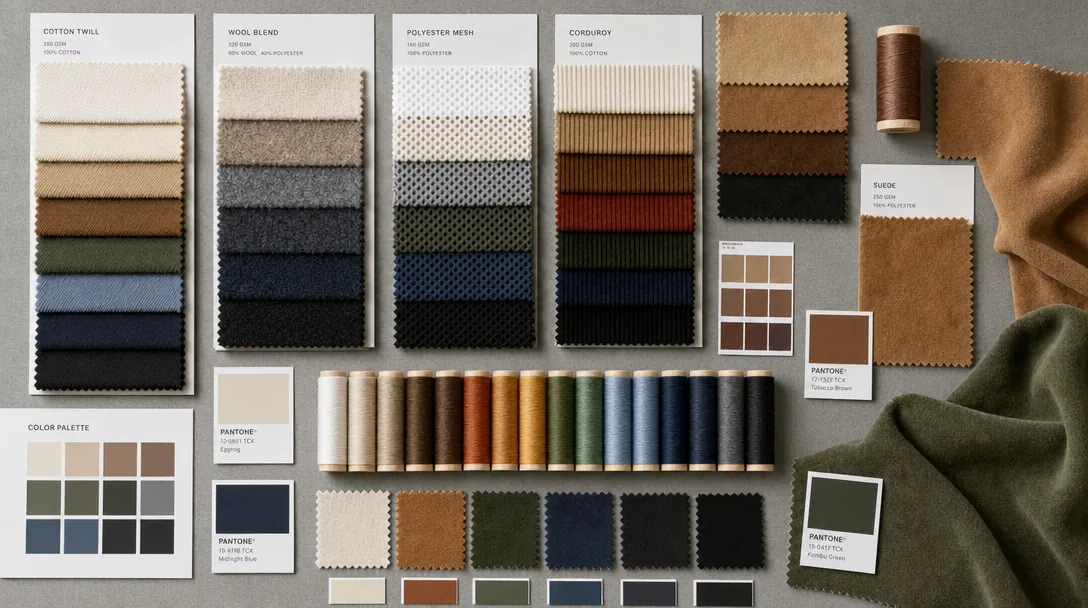
Corduroy Hat: Properties, Costs and How to Spec It Right
Read article →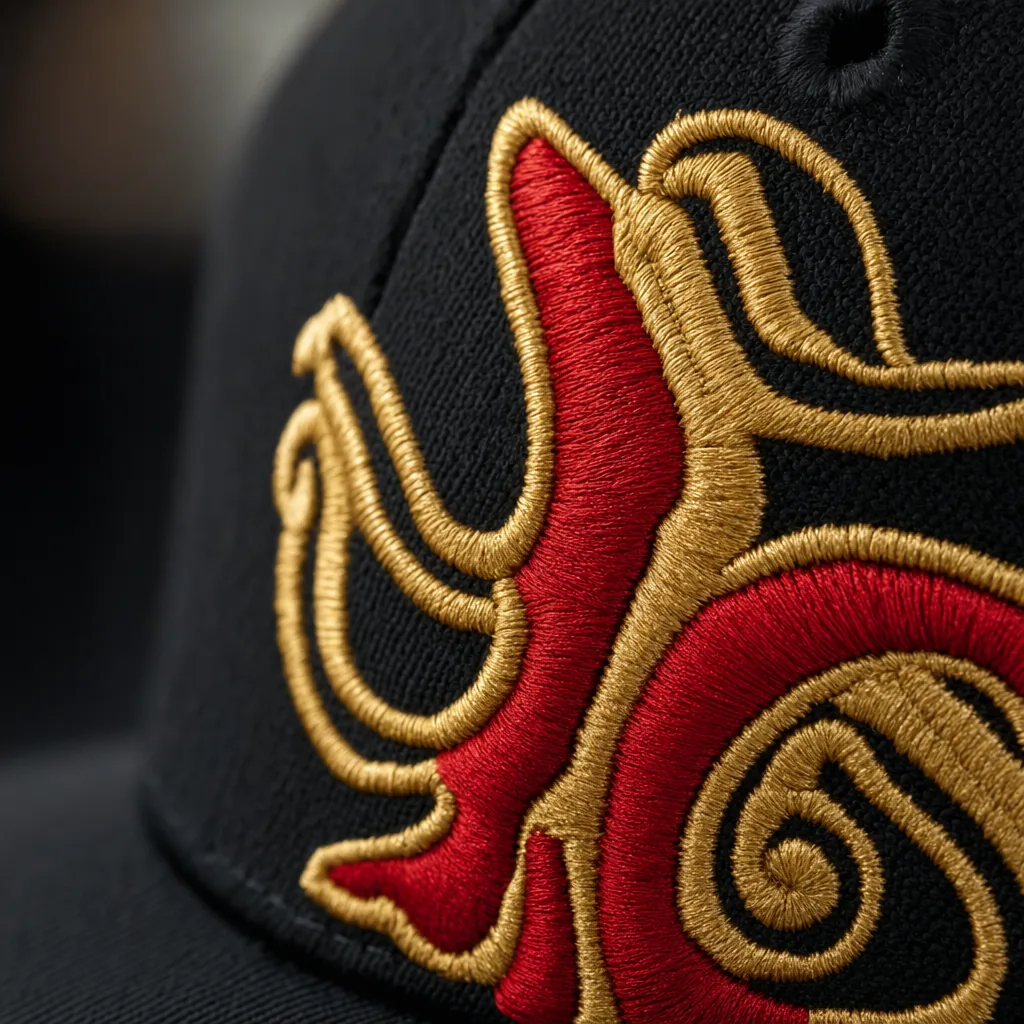
Custom Embroidered Patches: When to Use It, Costs, and What to Ask Your Factory
Read article →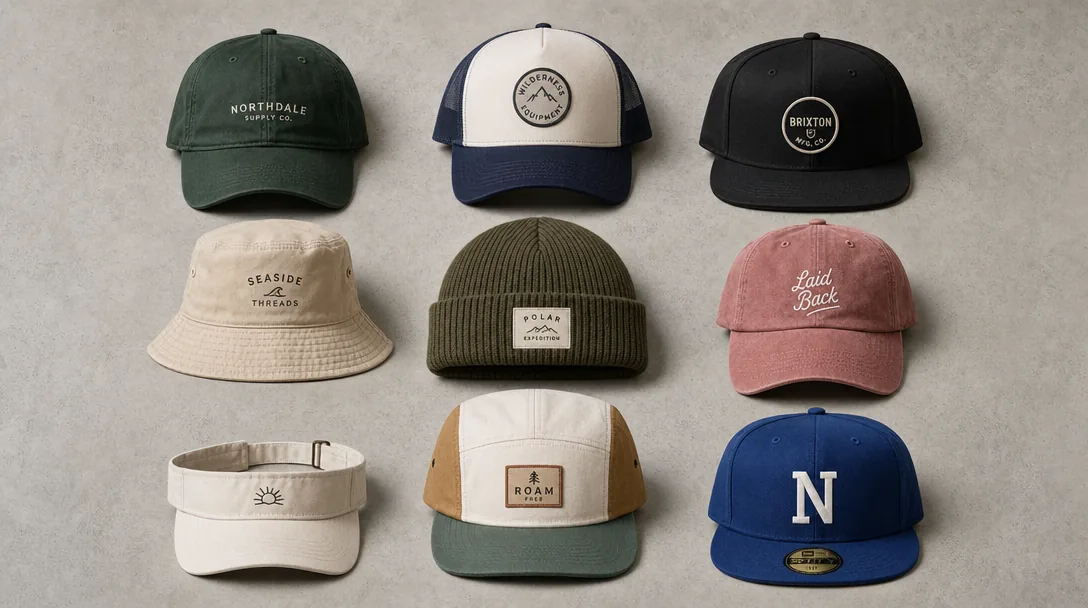
Promotional Caps & Corporate Gifts: Bulk Custom Hats for Brand Events
Read article →Sourcing custom hats does not have to be complicated. With the right manufacturing partner, clear specifications and a small upfront investment in sampling, you can launch a retail-quality product in 30 to 45 days.