
BSCI vs Sedex vs WRAP vs WCA: Compliance Audit Standards Compared - Supplier Checklist - 2026 Buyer's Guide
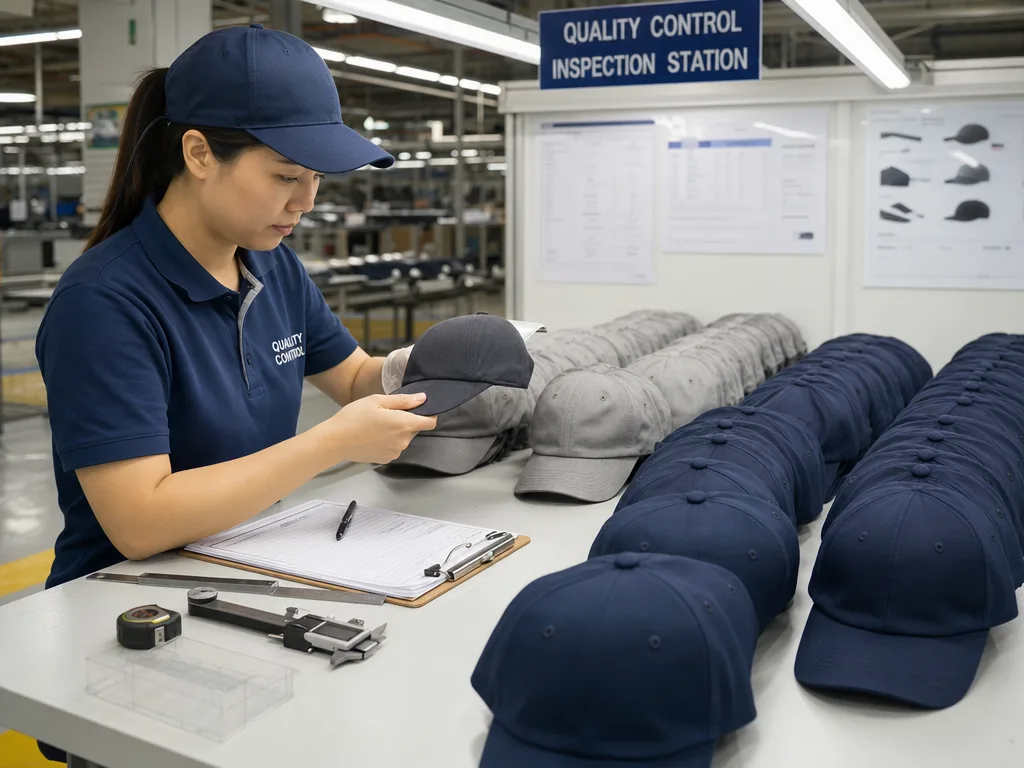
BSCI vs Sedex vs WRAP vs WCA: Compliance Audit Standards Compared - Supplier Checklist - 2026 Buyer's Guide is one of the most-asked questions we receive from international buyers, and for good reason. With dozens of factories competing for your order and an alphabet soup of technical terms in every supplier quote, even experienced importers can feel lost. This guide consolidates what we have learned producing custom hats for clients in 40+ countries.
The four audits hat factories actually hold
If you are weighing sedex-audit-cap-supplier-guide.html">BSCI vs Sedex SMETA for a hat supplier, start with the buyer’s compliance portal, not the factory’s sales deck. They are not interchangeable badges. BSCI 2.0 still carries the most weight with EU importers, supermarket private label, and discount retail groups operating under amfori rules, and many sourcing teams will not even issue a tech pack or quote request without a current A or B result. A C can be workable, but only if the corrective action plan has hard deadlines, evidence of closure, and no zero-tolerance findings. On the audit day, BSCI is more forensic than many first-time buyers expect: auditors usually reconcile 12 months of attendance records, wage registers, labor contracts, social insurance payments, leave records, disciplinary logs, and age-verification files against worker interviews and floor conditions. In a cap factory, they also look at needle-control logs, broken-needle reconciliation, guarding on eyelet presses and cutting machines, emergency-light lux levels, dormitory exits, and whether solvents, inks, and heat-transfer chemicals match the SDS, secondary containment, and labeling rules.
Sedex SMETA 4-Pillar is usually the more usable document for UK retailers and mid-market global brands because the report is easier for compliance managers to read line by line: findings, root causes, photographic evidence, and CAP status sit in one standard format. In the BSCI vs Sedex SMETA comparison, SMETA often wins when the buyer wants labor standards, health and safety, environmental controls, and business ethics reviewed together without the amfori scoring logic. For a hat factory, that usually means deeper scrutiny on wastewater permits, scrap segregation, anti-bribery procedures, compressor noise, boiler certificates where steam blocking is done in-house, canteen hygiene, and storage controls for adhesives used in brim lamination, seam taping, or patch bonding. Sedex is not a certificate; it is a methodology and reporting platform, so “Sedex approved” means nothing unless the factory can produce a recent SMETA audit from an APSCA-member firm and show which findings are still open.
WRAP and WCA serve a different channel. WRAP is still common in licensed sports merchandise, collegiate headwear, and large US retail programs where annual renewal, country-of-origin traceability, and unauthorized subcontracting controls matter as much as labor records. WCA, typically run through Intertek, is more tightly tied to Walmart-linked supply chains and can be a hard gate for direct or indirect Walmart programs. Both systems are unforgiving on zero-tolerance issues: underage labor, blocked fire exits, double books, falsified timecards, or undeclared subcontract embroidery will sink the audit faster than a missing PPE sign. Buyers should also keep one point straight: none of these audits measures production quality. A factory can hold WRAP or WCA and still fail AQL 2.5 on visor symmetry, seam puckering, stitch density, embroidery registration on Tajima or Barudan heads, or panel shade variance above Delta-E 1.0 against the approved Pantone TCX standard and lab dip.
BSCI 2.0 scope and audit process
BSCI 2.0 is broad enough that a weak factory usually gets exposed in the first half day. The amfori BSCI Code of Conduct checks 13 performance areas, and the practical pressure points in a hat plant are always the same: timecard accuracy, piece-rate wage reconciliation, signed labor contracts, legal working-hour limits, dormitory and canteen conditions if provided, machine guarding, fire exits, PPE issuance, and hazardous chemical control for screen printing, washing, and adhesive use. Age verification is not just an ID copy in a file; auditors will cross-check hiring dates, attendance logs, payroll, and any apprentice records to rule out underage labor. In a social compliance audit hat factory, grievance channels also matter more than many suppliers expect. If workers cannot explain how to report abuse anonymously, that gap gets noted even when the policy is posted on a wall.
The audit process itself is disciplined and document-heavy. An amfori-approved auditor usually spends 1 to 2 days on site depending on headcount, process complexity, and whether the factory also handles trimming, washing, or subcontract embroidery. Opening meeting, facility tour, document review, and confidential worker interviews are standard. For a china hat factory, the records pack needs to be clean for at least the prior 12 months: payroll ledgers, attendance, social insurance evidence where applicable, labor contracts, emergency drill logs, fire inspection reports, electrical checks, MSDS or SDS files, chemical inventory, and training records. Our standard practice is to prepare payroll and attendance in both raw format and summary format, because auditors regularly test whether monthly overtime totals match the actual punch data instead of trusting management spreadsheets.
Where BSCI vs Sedex SMETA becomes important is scope and buyer expectation. BSCI is especially common with European retail chains such as H&M, Aldi, Lidl, and Carrefour, and the report is typically valid for 12 months, though serious findings can trigger a follow-up much sooner. It is not a pass-fail sticker in the simplistic sense buyers imagine; ratings depend on the severity and quantity of nonconformities, and corrective action plans are where many factories lose time. The most frequent findings in an ethical audit comparison are incomplete wage records for dispatch workers, blocked exit routes in peak season, missing secondary containment for chemicals, and inconsistent contract renewals for temporary staff. Compared with other supplier compliance audit standards and any WRAP vs WCA audit discussion, BSCI 2.0 tends to be strongest when the buyer wants a structured labor-and-safety baseline tied closely to EU sourcing expectations.
Sedex SMETA 4-Pillar scope and process
When buyers compare BSCI vs Sedex SMETA, the practical question is how much operational risk the audit will actually surface. SMETA 4-Pillar goes beyond a labor-only review because auditors test four areas at once: Labor Standards, Health and Safety, Environment, and Business Ethics. On a cap factory floor, the heaviest scrutiny still falls on hours, wages, and safety controls. Auditors will usually pull 12 consecutive months of attendance, payroll, and production records, then reconcile overtime peaks against shipment schedules, line output, dorm occupancy, and worker interviews. That is where factories get exposed for underpaid overtime, rest-day violations, falsified punch records, juvenile-worker control gaps, or undeclared subcontracting during pre-holiday rushes. The 4-Pillar scope matters because the extra modules are not paper exercises; they reach into chemical storage, waste segregation, spill kits, wastewater vendors, anti-bribery training, gift registers, and approval controls for third-party payments. In other words, SMETA 4-Pillar tests whether management discipline extends beyond HR files into the way the site actually runs.
A credible SMETA 4-Pillar audit normally takes 2 to 3 auditor-days for a factory with about 150 to 300 employees, with the report typically used for 12 months unless critical findings trigger a faster follow-up. Strong audit teams from firms like SGS, Intertek, Bureau Veritas, TÜV SÜD, or QIMA do not accept summary spreadsheets; they sample raw payroll, social insurance records, accident logs, fire-drill reports, disciplinary notices, and maintenance files, then walk cutting, sewing, embroidery, finishing, packing, warehouse, and dormitory areas. In embroidery rooms, they often inspect needle-control logs on Tajima or Barudan multi-head machines, machine guarding, compressed-air hose condition, lockout practice during servicing, and noise exposure where several heads run continuously above roughly 85 dB. At CrownsForge, our standard practice is to prepare original Chinese records with indexed English cross-references because translation mistakes and inconsistent filenames create avoidable CAPs even when the underlying control is sound.
The value of SMETA is not the scorecard; it is the comparability. A retailer assessing BSCI vs Sedex SMETA can line up findings across suppliers and benchmark them against WRAP or WCA without rebuilding the whole risk model. In cap manufacturing, the recurring SMETA findings are very predictable: blocked fire exits during peak packing weeks, missing PPE issuance records for heat-transfer or spot-cleaning operators, no secondary containment around inks and solvent removers, overdue extinguisher inspections, and attendance data that suddenly stops matching pre-Lunar-New-Year export volume. Buyers should ask for the full CAP, not just a green-amber-red label. A factory that closes root causes within 30 to 60 days with dated evidence, responsible owners, current SDS files, and payroll formulas aligned to local wage law is usually a lower risk than a superficially clean site with thin records and weak internal controls.
WRAP scope and process
WRAP is narrower and more certificate-driven than BSCI vs Sedex SMETA, and that distinction matters when a buyer needs a current certificate tied to a specific street address, not just an audit record in a platform. The standard is built on 12 principles, but in a cap factory the real failure points are usually undeclared subcontracting, time-and-pay inconsistencies, age-verification gaps, chemical control, and customs compliance. I see the same blind spots repeatedly in headwear: flat embroidery sent to a satellite shop with 12-head Tajima machines, heat-transfer logos applied at an outside workshop, enzyme washing handled by a separate laundry, or metal buckle assembly pushed to a trim vendor. A factory may cut, sew, and pack in-house yet still fall out of scope if those external processes are omitted from the facility profile and supporting licenses. A serious WRAP assessment is document-heavy and difficult to fake if the records are weak. Auditors typically reconcile 12 months of payroll, attendance, labor contracts, leave, social insurance, disciplinary logs, fire drill records, chemical registers, and dormitory files where housing is provided. On a China hat line, they will look closely at broken-needle logs, machine guarding on snap-fastener and eyelet presses, MSDS or SDS availability for inks and spot cleaners, and locked storage for solvents used in brim shaping or transfer application. Our standard practice is to cross-check piece-rate output from Barudan or ZSK embroidery heads against declared overtime hours, because a 20 to 30 percent mismatch between stitched volume and payroll often exposes hidden overtime faster than worker interviews do.
WRAP site visits are usually compressed into 1 to 2 days, but the pace is misleading; experienced firms such as Intertek, Bureau Veritas, or CTI can cover a lot of ground quickly. They normally start with permits, payroll trails, and worker files, then walk the plant in production order: cutting, sewing, embroidery, finishing, packing, warehouse, and dormitory if applicable. In headwear, auditors should be checking compressor inspection tags, eyewash access near cleaning chemicals, PPE issuance at laser appliqué or heat-transfer stations, flammable segregation for screen-print inks and cleaners, and locked medicine cabinets with usage logs. If the factory runs cotton twill, recycled poly, and brushed canvas in the same workshop, they should also verify whether dust extraction, needle control, and waste handling match the actual process mix rather than the factory's written policy. The rating structure is straightforward, but buyers routinely overread it. Gold is typically valid for 12 months, Silver for 6 months when corrective follow-up risk is higher, and Platinum is reserved for facilities that maintain three consecutive years of certification with strong continuity. That shorter Silver cycle is commercially important because it signals the site is not in the same stability band as a mature Gold factory. WRAP also tends to carry more practical weight in licensed sports, collegiate, and entertainment programs because legal teams recognize the certificate format immediately. Even so, one certificate does not automatically cover an embroidery annex, wash house, bonded warehouse, or off-site packing unit; the scope line and facility list need to be checked process by process.
WCA scope and process
WCA is not a general ethical audit you can swap in and out beside other reports; it is a Walmart-controlled acceptance program tied to Walmart’s Standards for Suppliers and the site-status logic used for Walmart and Sam’s Club orders. For a China cap factory shipping private-label baseball caps, truckers, or fitted styles into that channel, a valid BSCI 2.0 grade or Sedex SMETA 4-Pillar report does not replace WCA, because the protocol, scoring rules, and approved audit bodies sit inside Walmart’s own compliance system. In practice, the validity window is usually 12 months, and that date can become a hard shipping constraint: if approval lapses in August, a back-to-school replenishment or holiday program can be blocked even when inline inspection passed at AQL 2.5 and goods are ready ex-factory. For buyers comparing BSCI vs Sedex SMETA, the key point is simple: WCA is not primarily a market-facing signal to show broad social-compliance coverage; it is an access-control requirement tied directly to shipment eligibility under a specific retail account.
The audit flow looks familiar to anyone who has sat through a serious social compliance visit, but WCA is unforgiving when records do not reconcile cleanly. Auditors typically start with an opening meeting, then move through document review, payroll and attendance sampling, management interviews, confidential worker interviews, and a site walk covering production floors, warehouses, dormitories, and canteens where applicable. In a hat plant, that means they will physically inspect embroidery rooms running Tajima, Barudan, or ZSK multi-head machines, cutting tables, eyelet and snapback installation stations, heat-transfer areas, steam pressing tables, trimming lines, and chemical storage for spot removers, screen-printing inks, and cleaning solvents. The weak point is usually not one headline violation; it is a mismatch across a 3- to 12-month sample where timecards, payroll, piece-rate sheets, social insurance records, and daily output logs do not support the same story on hours worked and wages paid.
The first buyer check is brutally practical: confirm the WCA is active under the exact legal entity, physical address, headcount profile, and production scope that will make the hats. I have seen suppliers present a respectable BSCI report for one building and a Sedex SMETA report for another, then quietly route sewing, embroidery, washing, or packing through a floor outside Walmart-approved scope. That is why BSCI vs Sedex SMETA is the wrong final question when Walmart is the end customer. The right question is whether the audited site matches the real production route, including any outsourced flat embroidery, screen printing, laser perforation, or retail packing. Preparation should cover at least 12 months of payroll ledgers, electronic attendance records, labor contracts, age-verification files, social insurance receipts, grievance logs, fire-drill records, machine-maintenance logs, and hazardous-chemical inventories. Our standard practice is to reconcile these before booking the audit, because small gaps such as missing PPE issuance signatures, inconsistent overtime calculations, or an unexplained payroll delta can turn a technically capable factory into a shipment-delay risk.
What overlap exists and what differs
The overlap is larger than most buyers assume. In a practical BSCI vs Sedex SMETA comparison, about 70% to 80% of the evidence pack is the same: ID and age verification, labor contracts, payroll and time records, social insurance, overtime premiums, one rest day in seven, grievance handling, disciplinary controls, machine guarding, PPE issuance, fire exits, and dorm hygiene where housing is provided. Auditors from both schemes usually sample the latest 12 months, then cross-check at least three months in detail against payroll, attendance, leave, and bank transfer or cash-signature records. On a hat production floor, the route is equally predictable—raw material warehouse, cutting, embroidery, sewing, eyelet and closure attachment, finishing, packing, needle control, chemical storage, canteen, and dormitory. Whether the lines run Tajima TMEZ, Barudan BEKY, or ZSK Sprint heads makes no difference to the audit logic; the auditor still wants needle logs, broken-needle reconciliation, guarding on moving parts, and evidence that evacuation drills and electrical inspections were actually carried out, not just filed. What changes is the protocol wrapped around that evidence. BSCI 2.0 leans harder into management systems, cascading policies, responsible person assignment, root-cause analysis, and CAP closure discipline, so a factory with tidy aisles can still score weakly if procedures are unsigned, training matrices are outdated, or corrective actions drift past deadline. Sedex SMETA 4-Pillar covers labor, health and safety, environment, and business ethics, but its commercial advantage is buyer visibility on the Sedex platform, which is why BSCI vs Sedex SMETA is often less about ethical substance than customer acceptance. Our standard practice is to prepare the same core records for either route, then adjust the presentation depth: BSCI typically probes system maturity, while SMETA buyers often focus on transparent evidence they can benchmark across multiple suppliers.
The real divergence shows up when auditors test how numbers reconcile, not when they read the code of conduct posted on the wall. WCA is usually more granular on working-hours traceability, payroll math, dorm occupancy, and permit validity; if punch records show 68 hours in a week but wages only reflect 12 overtime hours, the gap will be challenged line by line. WRAP, meanwhile, is common in apparel and licensed-merchandise programs and often gets pulled in when brand legal teams want a recognizable standalone certification rather than a shared data platform. None of these standards changes the basic expectation on forced labor, child labor, harassment, or emergency readiness, but each has a different tolerance for weak documentation discipline. That matters because a factory can ship caps that pass AQL 2.5 or even AQL 1.5 on appearance and measurement, yet still lose audit points on records that do not reconcile to the hour. Common failures are social insurance enrollment that misses dispatch or probation workers, overtime approvals signed after the fact, emergency-light tests logged irregularly, chemical SDS not matching the actual spot-cleaning agents in use, or dorm floor area documented loosely against local fire and occupancy rules. In textile terms, the audit does not care whether the shell is 260 gsm brushed cotton twill, 300D heather polyester, or recycled RPET verified under GRS; it cares whether the people making it are employed, paid, housed, and supervised under a system that can survive document sampling without contradictions.
What the audit doesn't tell you
The biggest blind spot in any BSCI vs Sedex SMETA discussion is execution control. A passed BSCI 2.0 or Sedex SMETA 4-Pillar audit tells you the site can evidence wages, working hours, fire exits, chemical storage, grievance channels, and dormitory conditions; it does not tell you whether that same factory can hold a 6-panel cap spec through 5,000 to 20,000 pieces of bulk. I have seen compliant sites miss ex-factory by 14 to 21 days because line loading was built on theoretical output, embroidery digitizing was outsourced with no version control, or peak-season overflow quietly moved to an undeclared subcontractor. None of that shows up as a major finding if the paperwork is clean. On the production floor, the failures are more practical: crown height drifting 4 to 6 mm between lots, visor curve changing after the press creeps from 145°C to 160°C, or the top button landing 3 mm off center after packing compression. Those are not audit nonconformities, but they are exactly the defects that trigger retailer chargebacks, rework, and missed launch dates.
Quality discipline sits in the same gap. A social audit rarely shows whether greige fabric is checked roll by roll under the 4-point system, whether Pantone TCX lab dips are approved to a defined Delta-E tolerance such as 1.0 to 1.5, or whether final random inspection is genuinely run at AQL 2.5 instead of reconstructed on paper after cartons are sealed. It will not tell you whether Tajima and Barudan heads are tension-calibrated to keep 3D puff height, satin coverage, and fill density consistent on the same logo, or whether a 210 gsm cotton twill starts seam puckering because the factory paired it with the wrong fusible interlining weight. The same applies to delivery control: WRAP, WCA, and social audit reports do not show true on-time performance, partial shipment frequency, or whether delays came from missed CY cutoff, failed carton drop testing, or a late VGM filing. Our standard practice is to treat a clean audit as entry-level screening, then ask for a 12-month shipment log, recent AQL reports, and real capacity data by machine type and shift output; for caps, a flat logo may run 35 to 45 pieces per head per hour, while a dense 3D puff front often drops below 18.
Frequently Asked Questions
Can I order a sample before bulk production?
Yes. We strongly recommend approving a pre-production sample before mass production. Samples are charged at 35 to 60 USD each plus express shipping, fully refundable against confirmed bulk orders over 500 pieces.
How long does production take?
Sampling takes 7 to 12 days. Bulk production runs 20 to 30 days depending on quantity, fabric availability and decoration complexity. Inspection and packing adds another 3 to 5 days before shipment.
Do you support sustainability certifications?
Yes. We work with GOTS organic cotton, GRS-certified recycled polyester, OEKO-TEX Standard 100 fabrics, and are BSCI and Sedex audited. Certification documentation can be provided per order.
What is the minimum order quantity (MOQ) for custom hats?
Our standard MOQ is 100 pieces per design and color, with sampling available from 1 piece. For complex multi-color logos or premium fabric upgrades, the MOQ can be lowered with a small per-piece surcharge.
What logo decoration techniques do you offer?
3D puff embroidery, flat embroidery, woven patch, leather patch, PVC patch, screen printing, sublimation, applique and laser etching, all in-house with no subcontracting.
How does ordering custom embroidered trucker hat work?
When evaluating custom embroidered trucker hat, the key considerations are construction quality, decoration capability, MOQ flexibility and lead time. BSCI 2.0 (Business Social Compliance Initiative by amfori) — European retailer favorite. Sedex SMETA 4-Pillar (Social, Health & Safety, Environment, Business Ethics) — used by UK and increasingly global retailers. WRAP (Worldwide Responsible Accredited Production) — US retailer favorite for licensed merchandise. WCA (Walmart Conformance Audit) — required by Walmart and…
How does ordering custom bucket hat embroidery work?
When evaluating custom bucket hat embroidery, the key considerations are construction quality, decoration capability, MOQ flexibility and lead time. BSCI 2.0 (Business Social Compliance Initiative by amfori) — European retailer favorite. Sedex SMETA 4-Pillar (Social, Health & Safety, Environment, Business Ethics) — used by UK and increasingly global retailers. WRAP (Worldwide Responsible Accredited Production) — US retailer favorite for licensed merchandise. WCA (Walmart Conformance Audit) — required by Walmart and…
What should buyers know about bucket hat men nike?
When evaluating bucket hat men nike, the key considerations are construction quality, decoration capability, MOQ flexibility and lead time. BSCI 2.0 (Business Social Compliance Initiative by amfori) — European retailer favorite. Sedex SMETA 4-Pillar (Social, Health & Safety, Environment, Business Ethics) — used by UK and increasingly global retailers. WRAP (Worldwide Responsible Accredited Production) — US retailer favorite for licensed merchandise. WCA (Walmart Conformance Audit) — required by Walmart and…
How does ordering custom made hats for men work?
When evaluating custom made hats for men, the key considerations are construction quality, decoration capability, MOQ flexibility and lead time. BSCI 2.0 (Business Social Compliance Initiative by amfori) — European retailer favorite. Sedex SMETA 4-Pillar (Social, Health & Safety, Environment, Business Ethics) — used by UK and increasingly global retailers. WRAP (Worldwide Responsible Accredited Production) — US retailer favorite for licensed merchandise. WCA (Walmart Conformance Audit) — required by Walmart and…
What is the difference between BSCI and Sedex?
BSCI audits follow a fixed framework, whereas SEDEX supports multiple audit types, including BSCI itself. BSCI membership is required for suppliers, while SEDEX enables transparency by sharing audits with multiple buyers.
Is BSCI recognized globally?
The BSCI certification is recognized globally and demonstrates a company's commitment to responsible sourcing and ethical business practices. It helps companies ensure that their supply chains meet internationally recognized social standards and supports the protection of workers' rights and welfare.
Are Sedex and Smeta the same?
SMETA audits are carried out by auditors from Sedex's named independent, third-party Affiliate Audit Companies (AACs). Sedex owns and evolves the SMETA methodology, oversees its usage and drives SMETA auditing consistency through our Audit Quality Programme.
Are Smeta and BSCI the same?
Differences in Focus and Outcomes BSCI audits primarily focus on issues such as compliance with the law, freedom of association, collective bargaining, prohibition of discrimination, compensation, and working hours. SMETA audits, therefore, fall under the category of social responsibility inspections.
Is the BSCI certification legit?
The BSCI certification is recognized globally and demonstrates a company's commitment to responsible sourcing and ethical business practices. It helps companies ensure that their supply chains meet internationally recognized social standards and supports the protection of workers' rights and welfare.
Looking for a reliable hat manufacturer in China?
CrownsForge has produced custom hats for 800+ brands across 40 countries. From 100-piece launches to 100,000-piece retail programs, we deliver on time and on spec.
Get in touchRelated guides
Ball Caps for Men: A 2026 Sourcing Playbook for International Buyers - Cost & MOQ Breakdown
Read article →
10 Questions to Ask a Cap Manufacturer on Your First Call - Supplier Checklist
Read article →
Hat With Patch Decoration QC Checklist for Custom Hat Buyers
Read article →We hope this guide demystifies bsci vs sedex vs wrap vs wca: compliance audit standards compared - supplier checklist - 2026 buyer's guide and helps you move forward with confidence. If you have questions specific to your project, our English-speaking sales engineers are one message away.