
BSCI vs Sedex SMETA: Which Audit Does Your Cap Supplier Actually Need? (2026 Update)
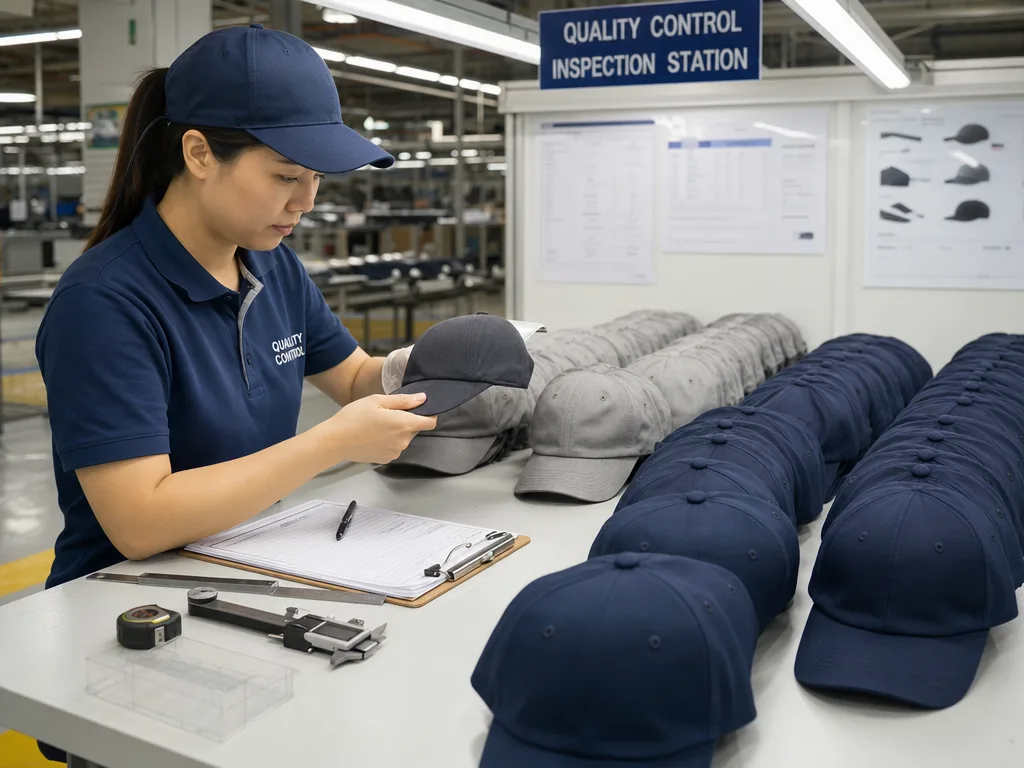
BSCI vs Sedex SMETA: Which Audit Does Your Cap Supplier Actually Need? (2026 Update) is one of the most-asked questions we receive from international buyers, and for good reason. With dozens of factories competing for your order and an alphabet soup of technical terms in every supplier quote, even experienced importers can feel lost. This guide consolidates what we have learned producing custom hats for clients in 40+ countries.
The four audits you'll actually be asked for
The shortlist is smaller than most buyers think: sedex-audit-cap-supplier-guide.html">BSCI (amfori), Sedex SMETA 4-Pillar, WCA, and WRAP are the four reports that repeatedly come up once a cap program moves from sampling into retail onboarding. They are not interchangeable, even if the factory conditions on the floor are the same. A BSCI report is often the baseline for European importers and brand compliance teams, while a sedex smeta cap supplier profile is more commonly requested by UK retailers, supermarket groups, and private-label programs that want data logged inside the Sedex platform. Walmart-linked business still tends to ask for WCA because their compliance teams are trained around that scoring logic, and WRAP remains common for apparel-heavy customers who want a recognizable certification badge with annual renewal discipline. Buyers working with a bsci hat factory usually assume that covers every downstream retailer; it does not.
The practical difference is in format, scoring, and how non-conformities are written up. BSCI 2.0 focuses heavily on management systems, working hours, wages, grievance channels, and subcontracting control, with findings graded against amfori protocols. Sedex SMETA 4-Pillar adds environmental and business ethics review on top of labor, health and safety, and it is the version many mature sourcing teams now ask for instead of 2-Pillar. WCA is more score-driven and often shows up when a large-box retailer wants a simple pass threshold across labor and facility controls. WRAP, meanwhile, is document-intensive and tends to probe production records, age verification, payroll traceability, and dormitory controls in a way that catches weak admin teams. If you are evaluating a social audit hat manufacturer, ask not just whether they passed, but whether the report format matches your customer's portal requirement and whether the audit was announced, semi-announced, or unannounced.
The expensive mistake is waiting until retailer nomination to sort this out. A compliance audit cap factory china can pass one scheme and still need 4 to 8 weeks to book, prepare, and close findings for another, especially if corrective actions involve fire-door hardware, chemical labeling, secondary egress markings, or time-record reconciliation. In real cap factories, the paperwork gaps are usually around peak-season overtime logs, needle-control records for embroidery lines running Tajima or Barudan heads, and subcontract declarations for washing, printing, or special packaging. Our standard practice is to keep all four current and refresh annually because buyers who skip the ethical hat manufacturer audit conversation early are the ones who get blocked later by retailer compliance teams. If your end customer mentions Walmart, ask for a wca audit cap supplier report first; if they mention UK grocery, department store, or marketplace onboarding, SMETA 4-Pillar is usually the document they will actually upload.
What the auditor actually checks
The fastest way an auditor breaks a weak factory is by reconciling worker records line by line, not by reading the policy binder. In a bsci hat factory, they typically sample 10 to 25 employees across embroidery, sewing, brim molding, eyelet punching, finishing, packing, and warehouse, then trace each person through 12 months of attendance, payroll, labor contract, leave, social-insurance enrollment, and resignation or disciplinary records where relevant. The key test is mathematical consistency: hours on the attendance system must match payroll, payroll must match bank transfer or signed wage slip, and piece-rate output must still convert back to at least local minimum wage with the legally required overtime premium. When a pre-CNY rush week shows 76 hours but the extra time is buried inside a “bonus,” that is exactly the kind of wage manipulation auditors flag. Underage labor is checked the same way: PRC ID, date of birth, hiring date, personnel file, and station assignment. On cap production, auditors pay particular attention to steam pressing, multi-head embroidery, eyelet machines, and brim pressing because those are higher-risk posts for young workers and new hires.
Documents alone never clear an audit; auditors triangulate interviews, physical evidence, and digital records until the story either holds or falls apart. They will pull operators directly off Tajima, Barudan, or ZSK heads, ask about rest days, fines, resignation notice, document retention, and whether social insurance is actually paid, then compare those answers against gate-access logs, payroll registers, and final settlement slips. A factory that cannot retrieve one worker’s full file by ID number within 10 minutes is already showing poor internal control. The biggest findings in cap factories are often outside the sewing row: dormitory conditions, fire safety, machine guarding, and chemical management. Under BSCI 2.0 and Sedex SMETA 4-Pillar, a blocked exit, missing extinguisher inspection tag, failed emergency-light test, or cartons narrowing a marked aisle can escalate quickly. Chemical checks are equally practical: current SDS in Chinese, GHS labels, secondary containment, eyewash access, and separate storage for spot removers, screen-print inks, adhesives, and cleaning solvents. If workers only know the grievance channel as “the poster on the wall,” auditors will treat the mechanism as cosmetic, not functional.
Reading an audit report: red flags vs accepted-with-CAR
Read the finding mix before you look at the grade. In both BSCI 2.0 and Sedex SMETA 4-Pillar, “accepted with CAR” is routine; a report with zero findings is often less credible than one carrying 5 to 9 minor nonconformities with clean closure evidence. The minor issues I see most in cap plants are not child labor or wage theft; they are control gaps: first-aid certificates expired by a few weeks, missing signatures on monthly fire-drill logs, incomplete new-hire induction records, PPE issuance sheets not updated, aisle markings faded near the sewing line, or chemical labels missing secondary language. Those usually close within 30, 60, or 90 days depending on the auditor’s deadline. If a bsci hat factory can tie each CAR to a dated CAPR item, retraining attendance sheet, revised SOP, timestamped workshop photo, and manager sign-off against the auditor’s finding number, that is normal factory housekeeping. What matters is traceability and recurrence control, not a polished PDF with a few staged photos.
Major CARs are where buyers should stop negotiating with themselves. Locked or obstructed fire exits, absent age-verification checks, payroll that does not reconcile to attendance, missing labor contracts in the sample set, unpaid social insurance for eligible workers, or overtime hitting 110 to 130 hours in a month are not administrative slips; they show either management intent or a failed control system. The fastest credibility test is three-way consistency between attendance records, wage sheets, and worker interviews. If timecards show 26 days worked, payroll shows only flat base pay with no 150% or 200% overtime premium, and stitchers interviewed describe 12- to 13-hour peak-season shifts, the records are compromised. I put more weight on wording such as “management could not provide original records,” “documents appeared amended,” or “worker testimony contradicted documentation” than on the final letter grade. A factory with 8 minor CARs closed within 45 days is usually lower risk than one with 2 repeat wage or hours findings across consecutive audit cycles. Once repeat nonconformities stay open past 12 months, management has usually decided noncompliance is cheaper than fixing the system.
Audit duration and what you can verify by video
If a supplier says the social audit was "finished in one day," assume the scope was narrow or the sampling was weak. A real Sedex SMETA 4-Pillar audit at a cap factory usually runs 1.5 to 3 auditor-days, depending on headcount, dormitories, canteen, and whether embroidery, washing, or screen-printing are on site. The auditor is expected to review payroll, time records, age verification, labor contracts, grievance channels, machine safety, fire protection, chemical management, and environmental controls, then cross-check that paperwork against worker interviews and floor observations. In a 150- to 300-worker factory with cutting, sewing, embroidery, QC, and packing under one roof, that cannot be done credibly in a few rushed hours. A BSCI 2.0 review at a bsci hat factory can also stretch across multiple days when the site has satellite warehouses, subcontracted processes, or shared registration entities. Buyers should care less about the badge and more about the sampling depth: how many workers were interviewed, how many payroll months were checked, and whether peak-season records from October to December were included, when overtime abuse usually surfaces in headwear production.
Do not accept a certificate screenshot as proof. Ask for the redacted audit report summary and the CAP, with the site profile, exact production address, audit scope, applicable pillars, nonconformities by severity, and target closure dates. If the supplier only provides a cover page, you cannot tell whether the findings were trivial housekeeping issues or material gaps like blocked fire exits, incomplete wage ledgers, missing needle-control logs, unguarded eyelet presses, or undeclared subcontracting to a small embroidery workshop. For cap manufacturing, undeclared outsourcing around flat embroidery, washing, trimming, and hand-applied patches is where compliance reports often stop matching reality.
Video is useful only as a verification tool, not as a substitute for audit evidence. Ask for a live walk-through, not edited clips, covering sewing lines, Tajima or Barudan embroidery heads, finished-goods storage, canteen, dormitory if applicable, and any ink, solvent, or chemical room. Then test what you see against the report date and findings: aisle widths should be open, exit doors unlocked, evacuation maps posted, fire extinguishers within inspection date, first-aid kits stocked, and carton labels traceable back to PO, style, color, and lot. At CrownsForge, we also advise buyers to request random close-ups of attendance boards, payroll period notices, metal-detection or needle logs, and machine ID plates, because those details help confirm the camera is showing the audited site rather than a cleaner showroom floor. If the supplier mentions WCA, BSCI, or SMETA, verify that the audit covered the same legal entity and exact production address on your purchase order.
Cost: who pays for the audit?
Baseline social compliance should sit on the factory P&L, not get slipped into your PO as a surprise line item. For a China cap plant with roughly 150 to 300 workers, a current amfori BSCI 2.0 audit or Sedex SMETA 4-Pillar audit typically costs about RMB 8,000 to 18,000 for the audit body fee alone, depending on headcount, dormitory scope, and whether payroll and time records are reviewed across peak season months. That invoice is the cheap part. The expensive part is corrective action: replacing non-compliant fire doors, adding illuminated exit signage, guarding eyelet and cutting machines, bunding chemical storage for inks and solvents, and cleaning up working-hours records so they match payroll, punch data, and subcontractor logs. A credible bsci hat factory budgets those items the same way it budgets AQL 2.5 final inspection, needle detector calibration, and annual extinguisher servicing. If a supplier exports regularly and still asks the buyer to fund a baseline ethical audit, I read that as a warning that compliance is being managed reactively, not built into operating cost.
The only time cost sharing is commercially reasonable is when the buyer demands a customer-specific protocol that is not broadly reusable. A factory may already hold a valid BSCI rating or SMETA report in the amfori or Sedex system, yet still be asked for WCA, FCCA, or another retailer-nominated audit with different scoring logic, document templates, and CAP deadlines. In practice, those programs in Asia often land around USD 1,200 to 2,500 before re-audits, translator support, and corrective-action administration. That is why the quotation stage needs plain language: state which audit is currently valid, the expiry month, whether the customer accepts BSCI or SMETA equivalency, and who pays if a failed or non-accepted result triggers a follow-up visit. The cleanest suppliers put this into one clause covering direct audit fees, CAP ownership, and re-audit responsibility. That matters more than buyers think. On a 50,000-piece cap order, a hidden USD 1,500 compliance debit note is far more disruptive than paying a few extra cents per cap to a factory that already has usable social compliance in place.
What changes with the 2026 UFLPA and EU CSRD
By 2026, the headline change is simple: a social audit no longer protects a shipment. Under the UFLPA rebuttable presumption, CBP is not interested in a framed certificate unless the importer can prove chain of custody at PO and lot level. A bsci hat factory still needs shipment-specific records that actually tie back to the goods on the water: cotton origin declaration, spinner and knitter details, greige and finished-fabric invoices, trim BOM, dye-lot references, carton-to-packing-list reconciliation, and the bill of lading matched to the commercial invoice. In caps, the weak points are rarely sewing; they sit upstream in brushed cotton twill, RPET, melton wool blends, buckram, and sweatband materials bought through trading companies in Keqiao, Shaoxing, or Qingdao. If the shell fabric lot cannot be linked to a named mill, production date, and invoice quantity, a valid BSCI 2.0 or Sedex SMETA 4-Pillar report has almost no value at the port. The timing is what punishes importers. When CBP places a hold, the response window is often 24 to 72 hours, and one broken link can freeze the entire entry. The files that fail most often are recycled-content claims without a valid GRS transaction certificate, yarn traceability that stops at the trader, and origin affidavits that do not match HTSUS descriptions, net weights, or invoice quantities. On hat programs, I also see mismatches between fabric mill declarations and actual cap components, especially when the visor board, buckram, or closure strap came from a different source than the shell. The practical standard has shifted from “show me your audit” to “show me the exact mill, lot code, and document trail for this SKU, this colorway, and this booking.”
EU CSRD pushes the same supplier in a different direction: less pass-fail, more disclosed operating data that can survive scrutiny in an annual report. Large EU brands now ask factories for auditable inputs they can roll into CSRD reporting, not broad statements about “ethical production.” In practice that means monthly headcount, peak weekly working hours, migrant-worker ratio, disclosed subcontractors, grievance-channel logs, corrective-action closure rate, electricity consumption in kWh, fuel type for steam or heat, wastewater destination, and increasingly Scope 1 and Scope 2 estimates by site. A cap factory that was organized only to pass a one-day customer audit usually struggles here, because buyers compare the same supplier across seasons and flag inconsistencies in overtime, utility intensity, and labor data. The operational consequence is tighter document control between merchandising, warehouse, compliance, and finance. Our standard practice is a live buyer matrix showing who requires amfori BSCI, who accepts SMETA, who needs CAP closure evidence, and who adds UFLPA fields such as farm region, spinner name, or GRS certificate number. That matters because Lidl, Inditex, Walmart, and mid-sized private-label importers no longer ask the same questions, even when they buy the same 260 gsm cotton twill cap. In 2026, the stronger supplier is often not the one saving $0.05 on sewing cost; it is the one that can return a clean compliance pack with consistent supplier names, chop-marked invoices, matching packing data, and lab-dip or bulk-color records that actually correspond to the shipped lot rather than a generic Pantone TCX approval.
Frequently Asked Questions
What logo decoration techniques do you offer?
3D puff embroidery, flat embroidery, woven patch, leather patch, PVC patch, screen printing, sublimation, applique and laser etching, all in-house with no subcontracting.
Can I order a sample before bulk production?
Yes. We strongly recommend approving a pre-production sample before mass production. Samples are charged at 35 to 60 USD each plus express shipping, fully refundable against confirmed bulk orders over 500 pieces.
Do you support sustainability certifications?
Yes. We work with GOTS organic cotton, GRS-certified recycled polyester, OEKO-TEX Standard 100 fabrics, and are BSCI and Sedex audited. Certification documentation can be provided per order.
What file format should I send for my logo?
Vector files (AI, EPS, PDF) are ideal. High-resolution PNG or JPG at 300 dpi on transparent background works as a fallback. Provide Pantone color references for accurate reproduction.
Which shipping methods do you support?
We support FOB, CIF and DDP shipping. Air express for samples and small orders, sea LCL for 100 to 500 pieces, sea FCL for 5,000+ pieces. Door-to-door DDP available for US, EU, UK, Canada and Australia.
What should I know about wholesale custom baseball cap?
When evaluating wholesale custom baseball cap, the key considerations are construction quality, decoration capability, MOQ flexibility and lead time. BSCI (amfori), Sedex SMETA 4-Pillar, WCA (Walmart), and WRAP. Each retailer requires a specific format. We hold all four and refresh annually. Buyers who don't ask are the ones who get surprised by retailer onboarding. Working hours, wage records, contract documentation, dormitory conditions, fire-safety drills, chemical storage, factory-floor safety equipment, child-labor…
How does ordering custom dad hat work?
When evaluating custom dad hat, the key considerations are construction quality, decoration capability, MOQ flexibility and lead time. BSCI (amfori), Sedex SMETA 4-Pillar, WCA (Walmart), and WRAP. Each retailer requires a specific format. We hold all four and refresh annually. Buyers who don't ask are the ones who get surprised by retailer onboarding. Working hours, wage records, contract documentation, dormitory conditions, fire-safety drills, chemical storage, factory-floor safety equipment, child-labor…
How does ordering custom baseball cap motorcycle helmet work?
When evaluating custom baseball cap motorcycle helmet, the key considerations are construction quality, decoration capability, MOQ flexibility and lead time. BSCI (amfori), Sedex SMETA 4-Pillar, WCA (Walmart), and WRAP. Each retailer requires a specific format. We hold all four and refresh annually. Buyers who don't ask are the ones who get surprised by retailer onboarding. Working hours, wage records, contract documentation, dormitory conditions, fire-safety drills, chemical storage, factory-floor safety equipment, child-labor…
How does ordering custom baseball hats for men work?
When evaluating custom baseball hats for men, the key considerations are construction quality, decoration capability, MOQ flexibility and lead time. BSCI (amfori), Sedex SMETA 4-Pillar, WCA (Walmart), and WRAP. Each retailer requires a specific format. We hold all four and refresh annually. Buyers who don't ask are the ones who get surprised by retailer onboarding. Working hours, wage records, contract documentation, dormitory conditions, fire-safety drills, chemical storage, factory-floor safety equipment, child-labor…
Ready to start your custom hat project?
Send us your tech-pack, sketch or even just an inspiration photo. We will respond with a detailed quotation and digital mock-up within 24 hours.
Request a free quoteRelated guides
Custom Logo Hats: When to Use It, Costs, and What to Ask Your Factory (2026 Update)
Read article →
Mesh Caps Wholesale: Trucker Cap Manufacturing Specifications and Pricing
Read article →
Country Hats For Men Fabric And Trim Spec Guide for Custom Hat Buyers
Read article →If you are ready to take the next step on bsci vs sedex smeta: which audit does your cap supplier actually need? (2026 update), our team can put a tailored quotation and digital mock-up in your inbox within 24 hours. Send the inquiry form on our contact page or message us directly on WhatsApp.