
Blank Hats Supplier Audit Checklist for Custom Hat Buyers
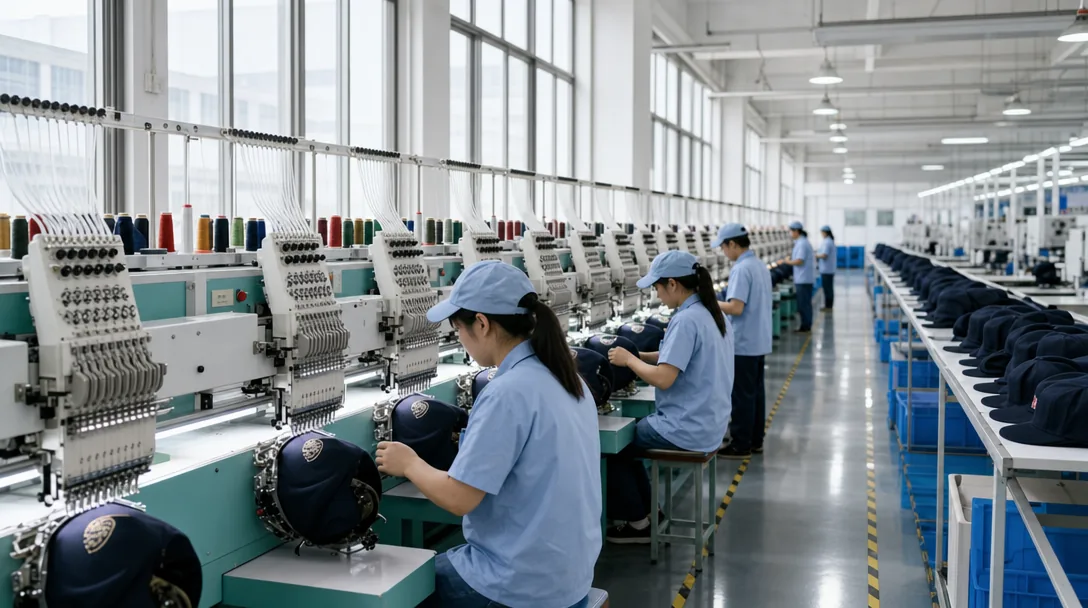
Every week, our sales team answers detailed questions about blank hats supplier audit checklist for custom hat buyers. We wrote this guide so that wholesalers, streetwear brands, corporate buyers and promotional resellers can compare options with full information, and avoid the traps that show up only after production has started.
Why blank hats supplier audit checklist needs a separate sourcing plan
A blank hats supplier audit checklist needs its own sourcing plan because the buyer is usually not asking, “Who can make a cap?” They are asking, “Can this factory supply undecorated inventory consistently enough that my decorator, retail program, or license holder will not reject it later?” That is a different risk profile from buying finished embroidered caps. With wholesale blank hats, small defects that might be hidden under a front logo become visible product failures: off-center front panels, puckered seams, wavy visor stitching, loose snapback teeth, poor crown blocking, or dye shade drift between lots. For buyers building country hats for men, outdoor promo caps, or private-label basics, the audit has to check fabric stability, shape retention, carton packing, and repeatability across reorders, not only decoration quality. A generic hat sourcing checklist usually overweights logo execution; a blank program lives or dies on base cap engineering.
The biggest cost and lead-time decisions are made before decoration is even discussed. Cotton twill at 260–300 gsm, brushed chino, polyester performance fabric, foam-front trucker panels, 100D–150D mesh, metal buckles, plastic snaps, and pre-curved versus flat visors all change the unit cost and production window. A basic six-panel blank cap may run about USD 1.10–2.20 FOB China at 1,000–5,000 pieces, while structured blanks with heavier buckram, sandwich visors, custom sweatbands, or washed finishes can move into the USD 2.60–4.50 range before freight. Bulk custom trucker hats and custom bulk trucker hats need special attention because mesh tension, foam thickness, and crown height affect both packing volume and decoration performance later. A good audit should confirm whether the supplier controls cutting, sewing, blocking, washing, and final AQL 2.5 inspection in-house or quietly subcontracts the hard parts.
Compliance planning also changes when blanks are used as inputs for downstream decoration or resale. If a brand will later embroider on Tajima, Barudan, or ZSK heads, the blank cap must pass needle penetration, panel stability, and seam clearance checks before mass production. If the goods enter U.S. retail, buyers should verify fiber content labeling, CPSIA relevance for youth sizes, azo dye restrictions, nickel release on metal closures, and carton marking rules. For European programs, REACH testing and documented dye lots matter more than a nice sample photo. Our standard practice at CrownsForge is to separate factory capability review from product conformance review: sedex-audit-cap-supplier-guide.html">BSCI 2.0 or Sedex SMETA 4-Pillar covers labor and systems, while the blank hats supplier audit checklist covers measurements, Pantone TCX shade tolerance, Delta-E targets, shrinkage, torque, seam strength, and packed-carton condition. A custom hat manufacturer that passes one side but fails the other is still a sourcing risk.
Factory capability checks before quoting
A serious blank hats supplier audit checklist starts with machine capacity, not a catalog PDF. Ask how many active embroidery heads are on the floor, broken down by Tajima, Barudan, or ZSK, and whether they run 270-degree cap frames, flat frames, and 3D puff without subcontracting. For wholesale blank hats that later become branded programs, you need to know the maximum stitch count they quote before surcharge; in China, 8,000 to 10,000 stitches is often included, while complex front logos at 14,000 to 18,000 stitches may add $0.18 to $0.45 per cap. Patch work needs the same scrutiny: woven patch, rubber PVC, leatherette, chenille, sublimated twill, and merrowed-edge patch each require different MOQ, heat-press temperature, and failure risks. I would ask for pull-test results on heat-applied patches and photos of their clamping jigs, because crooked patches are usually a process problem, not a worker-attitude problem.
Fabric and construction checks should happen before the supplier quotes, because a cheap price on the wrong crown shape is useless. Confirm whether they cut and sew 5-panel, 6-panel, unstructured, semi-structured, foam-front trucker, rope cap, and low-profile dad hat bodies in-house. For cotton twill, common weights are 180 to 260 gsm; for polyester performance caps, check denier, UPF claims, and whether color approval is by Pantone TCX with Delta-E under 1.5 for dark shades and under 2.0 for heathers. If the buyer is sourcing country hats for men or bulk custom trucker hats, mesh quality matters: 100% polyester mesh can be 80 to 120 gsm, but poor recovery causes baggy rear panels after steaming. Closure options should be physically reviewed: plastic snapback, brass buckle, hook-and-loop, nylon strap, Flexfit-style elastic, and metal tuck-in clips all change labor cost and sizing consistency.
Sample room capability separates a custom hat manufacturer from a broker with a WeChat list. Ask how many pattern makers and sample machinists are assigned to caps, what their normal first-sample lead time is, and whether they can revise crown height, visor curve, seam tape, sweatband, and eyelet placement without waiting for a subcontractor. For custom bulk trucker hats, a good sample room should turn a basic embroidered trucker in 5 to 7 working days after digitizing approval; complicated applique or multi-material patch sampling may take 10 to 14 days. Our standard practice at CrownsForge is to review audit readiness at the same time: BSCI 2.0 or Sedex SMETA 4-Pillar status, needle-control logs, metal detector records, AQL 2.5 final inspection reports, and export carton drop-test records. Communication is also an audit item: the merchandiser should answer in measurements, Pantone codes, tolerances, and dates, not vague lines like “quality is no problem.”
MOQ, pricing and sample approval
MOQ is where a buyer can quickly tell whether a supplier is quoting from a real production floor or just forwarding catalog photos. For wholesale blank hats, I expect clear bands: 144–288 pieces for low-risk stock blanks, 500–1,000 pieces for private-label colorways, and 1,000–3,000 pieces when the buyer wants custom fabric dyeing, sandwich brims, woven labels, or molded rubber patches. A serious blank hats supplier audit checklist should ask whether MOQ is per style, per color, per logo, or per fabric lot, because those are very different cost drivers. For example, bulk custom trucker hats with the same front embroidery but three mesh colors may trigger three fabric allocation lines even if the total order is 600 pieces. If a supplier says “no MOQ” on fully customized caps, I usually assume they are either using leftover panels or planning to surcharge the order heavily.
Pricing should be broken into the cap body, decoration, trims, packaging, and export terms, not hidden in one attractive unit price. A basic 5-panel foam trucker blank may sit around $1.20–$1.80 FOB Ningbo at 1,000 pieces, while custom bulk trucker hats with 3D embroidery, branded taping, woven back label, and printed polybag can move to $2.60–$4.20 before freight. Embroidery setup is normally $35–$80 per logo for digitizing, with Tajima, Barudan, or ZSK machine time affected by stitch count; a 6,000-stitch flat logo costs very differently from a 14,000-stitch 3D puff front. For country hats for men, buyers often underestimate curved brim shaping, rope trim alignment, and sweatband quality, but these details decide whether the hat looks retail-grade or promotional. A custom hat manufacturer should also quote carton dimensions, hangtags, UPC stickers, and whether the price is FOB, CIF, or DDP.
Sample approval must be treated as a production gate, not a courtesy photo. A proper PPS should confirm crown height, brim curve, panel symmetry, thread color, stitch density, logo placement tolerance, closure tension, trims, and packaging before bulk cutting starts. Pantone matching needs a standard: Pantone TCX for fabric, Pantone C/U for printed trims, and a Delta-E tolerance around 1.5–2.0 for critical brand colors, because phone photos under factory LEDs are not color approval. At CrownsForge, our standard practice is to lock PPS with a signed spec sheet, physical sample, and embroidery file reference before issuing the production order. Realistic lead time is 5–7 days for embroidery sampling, 10–15 days for PPS with custom trims, and 25–40 days for bulk production after approval; add 7–12 days if fabric dyeing or new mold patches are involved. This is why the blank hats supplier audit checklist should verify approval workflow before discussing discounts.
Quality inspection and shipping risk
Quality risk on wholesale blank hats is usually not the fabric roll; it is uncontrolled variation after cutting, sewing, blocking, embroidery, packing, and reordering. A serious blank hats supplier audit checklist should require AQL inspection terms before deposit, not after the goods are finished. For export caps, I normally set Critical 0, Major 2.5, Minor 4.0 under ANSI/ASQ Z1.4, with measurement checks pulled across sizes, colors, and carton positions. Crown height should hold within +/-3 mm, visor length within +/-2 mm, sweatband width within +/-2 mm, and circumference within +/-5 mm unless the buyer approved a special fit. For structured trucker caps, front panel buckram weight, foam thickness, and mesh denier must be checked because a 10% material change can make the same pattern look like a different hat.
Inspection must include color, wash, and decoration abuse, not just a pretty top sample. For cotton twill, brushed chino, or polyester mesh, I want Pantone TCX or TPX references with Delta-E under 1.5 for fashion colors and under 2.0 for promotional orders, plus dry/wet crocking at Grade 4 minimum for dark navy, black, red, and country hats for men using heavy contrast stitching. Embroidery defects are counted as major when there are skipped stitches over 3 mm, loose bobbin thread, puckering around dense fills, wrong thread color, off-center placement over 2 mm, or 3D puff foam collapse. On Tajima, Barudan, and ZSK heads, the same DST file can behave differently if thread tension, backing gsm, or cap-frame pressure is not locked, so production should keep a signed embroidery swatch with stitch count, Madeira/Rayon thread code, needle size, backing type, and approved placement grid.
Shipping risk starts at the carton, not the vessel. Carton markings should show PO number, style code, color, size if applicable, quantity, gross/net weight, carton dimensions, country of origin, and carton sequence such as 1/86; missing marks cause warehouse receiving errors and Amazon or 3PL chargebacks. For bulk custom trucker hats and custom bulk trucker hats, I prefer 25 or 50 pieces per polybag-lined carton with crown supports when foam-front or high-profile caps are used, because crushed panels are rarely repairable at destination. FOB Ningbo or Shanghai gives buyers control when they already consolidate apparel, while DDP makes sense for smaller brands that need landed cost certainty but should still demand HS code, duty assumptions, and insurance terms in writing. Our standard practice at CrownsForge is to keep reorder documentation for 24 months: tech pack, fabric lot, Pantone record, approved sample photos, embroidery file, carton spec, inspection report, and defect photos from the last shipment. A custom hat manufacturer without this paper trail will drift on repeat orders.
Buyer checklist for the next RFQ
The fastest way to get a firm quote is to send a complete tech pack before you ask for price breaks. A useful blank hats supplier audit checklist for RFQ stage should include cap style, crown height, panel count, brim type, closure, fabric, color standard, decoration method, packing, target quantity, delivery term, and destination ZIP or port. For wholesale blank hats, do not write “cotton cap” and expect accurate pricing; specify 16x12 cotton twill at 260–300 gsm, brushed or unbrushed, or 100D polyester mesh for trucker backs. Color should be Pantone TCX or TPX, with an acceptable Delta-E tolerance, usually under 1.5 for brand programs and under 2.0 for promo work. If you are sourcing country hats for men with camouflage panels, submit the exact camo print artwork or name the licensed pattern, because generic woodland and Realtree-type prints do not cost the same.
Send photos from five angles: front, side, back, inside sweatband, and underside of visor. If you have a physical sample, ship one marked “for quotation sample only”; photos alone miss crown structure, buckram stiffness, visor curve, seam tape width, and sweatband hand-feel. For bulk custom trucker hats, the RFQ must state whether the front is foam, cotton twill, polyester, or canvas, and whether the mesh is standard 100D, softer 75D, or recycled RPET. Decoration files should be production-ready: vector AI/PDF for patches and screen prints, DST or EMB files if already digitized, and stitch count expectations for embroidery. On Tajima, Barudan, or ZSK heads, a 9,000-stitch flat embroidery logo costs differently from a 17,000-stitch 3D puff logo with underlay and foam trimming.
Before final pricing, give the supplier your commercial rules, not just the cap design. State MOQ, size run, hangtag and barcode needs, carton markings, polybag requirements, inspection level, and shipping term. For custom bulk trucker hats, a realistic RFQ should ask for EXW, FOB Ningbo/Shanghai, and DDP if you need landed cost comparison; DDP to the U.S. can swing by $0.35–$1.20 per cap depending on carton cube, duty classification, and peak-season freight. If you are auditing a custom hat manufacturer, request BSCI 2.0 or Sedex SMETA 4-Pillar reports, recent AQL 2.5 inspection records, needle-control procedure, and metal detection logs where required. Our standard practice at CrownsForge is to quote only after confirming artwork, fabric basis, decoration process, packing method, and logistics term, because otherwise the cheapest number is usually the least reliable one.
Working with CrownsForge
The useful part of a blank hats supplier audit checklist is not the form itself; it is whether the factory can connect sampling, trim control, decoration risk, and export paperwork without losing information between departments. For wholesale blank hats, we start with a pre-production sample set: one fit sample, one fabric/trim approval sample, and one decorated sample if embroidery, patch, heat transfer, or screen print is involved. Crown panels are checked for gsm, hand feel, shrinkage after a 40°C wash, and color tolerance against Pantone TCX or TPX references, typically holding Delta-E under 1.5 for solid-dyed cotton twill and under 2.0 for heather or recycled polyester. For trucker styles, mesh denier, snapback pull strength, and front-panel buckram stiffness matter more than many buyers realize. A cap can pass a photo review and still fail on crown collapse, visor wave, or sweatband torque after packing.
CrownsForge manages decoration approvals as a production-control issue, not a last-minute artwork task. Flat embroidery on Tajima or Barudan heads is sampled with stitch density, pull compensation, backing type, and thread color recorded in the tech pack; 3D puff requires separate testing because foam height and satin stitch width change the logo edge. For bulk custom trucker hats and custom bulk trucker hats, we normally run a 20–50 piece pilot before mass decoration when the order includes raised embroidery, woven patches, leather patches, or multi-position branding. Buyers sourcing country hats for men often request distressed cotton, rope trims, camouflage panels, or flag patches, and those details need abrasion checks and needle-breakage control before full production. A serious custom hat manufacturer should keep the approved sample, digitizing file, thread card, and packing spec together so QC can inspect against the same standard the buyer approved.
Final inspection should be written into the audit plan before the purchase order is issued, not negotiated after goods are finished. Our standard practice is inline QC at cutting, panel sewing, visor setting, sweatband attachment, decoration, and final packing, then a finished-goods inspection using AQL 2.5 for major defects and AQL 4.0 for minor defects unless the buyer specifies tighter limits. Major defects include wrong logo placement over ±3 mm, broken embroidery thread, oil stains, cracked transfers, asymmetric visor shape, incorrect carton marks, and mixed SKU packing. Export coordination is also part of the blank hats supplier audit checklist: HS code confirmation, carton dimensions, polybag warnings, country-of-origin marking, FCL/LCL booking, FOB Ningbo or Shanghai terms, and DDP documentation when required. For audited programs, we also maintain BSCI 2.0 or Sedex SMETA 4-Pillar records, payroll evidence, needle-control logs, and subcontractor declarations because compliance gaps usually surface after the price is already agreed.
Frequently Asked Questions
What logo decoration techniques do you offer?
3D puff embroidery, flat embroidery, woven patch, leather patch, PVC patch, screen printing, sublimation, applique and laser etching, all in-house with no subcontracting.
What file format should I send for my logo?
Vector files (AI, EPS, PDF) are ideal. High-resolution PNG or JPG at 300 dpi on transparent background works as a fallback. Provide Pantone color references for accurate reproduction.
How long does production take?
Sampling takes 7 to 12 days. Bulk production runs 20 to 30 days depending on quantity, fabric availability and decoration complexity. Inspection and packing adds another 3 to 5 days before shipment.
Do you support sustainability certifications?
Yes. We work with GOTS organic cotton, GRS-certified recycled polyester, OEKO-TEX Standard 100 fabrics, and are BSCI and Sedex audited. Certification documentation can be provided per order.
What is the minimum order quantity (MOQ) for custom hats?
Our standard MOQ is 100 pieces per design and color, with sampling available from 1 piece. For complex multi-color logos or premium fabric upgrades, the MOQ can be lowered with a small per-piece surcharge.
What should I know about blank trucker cap wholesale bulk?
When evaluating blank trucker cap wholesale bulk, the key considerations are construction quality, decoration capability, MOQ flexibility and lead time. Explain the buyer intent behind blank hats supplier audit checklist, when it differs from generic hat sourcing, and what decisions affect cost, lead time and compliance. Describe how CrownsForge manages blank hats supplier audit checklist programs with sampling, decoration, QC and export coordination.
How does ordering custom embroidered trucker hat work?
When evaluating custom embroidered trucker hat, the key considerations are construction quality, decoration capability, MOQ flexibility and lead time. Explain the buyer intent behind blank hats supplier audit checklist, when it differs from generic hat sourcing, and what decisions affect cost, lead time and compliance. Cover embroidery, patch, fabric, panel construction, closure options, sample room capability, audit readiness and communication checks.
What should I know about custom rope hat wholesale bulk?
When evaluating custom rope hat wholesale bulk, the key considerations are construction quality, decoration capability, MOQ flexibility and lead time. Explain the buyer intent behind blank hats supplier audit checklist, when it differs from generic hat sourcing, and what decisions affect cost, lead time and compliance. Cover embroidery, patch, fabric, panel construction, closure options, sample room capability, audit readiness and communication checks.
What should I know about custom trucker hats bulk?
When evaluating custom trucker hats bulk, the key considerations are construction quality, decoration capability, MOQ flexibility and lead time. Explain the buyer intent behind blank hats supplier audit checklist, when it differs from generic hat sourcing, and what decisions affect cost, lead time and compliance. Describe how CrownsForge manages blank hats supplier audit checklist programs with sampling, decoration, QC and export coordination.
Ready to start your custom hat project?
Send us your tech-pack, sketch or even just an inspiration photo. We will respond with a detailed quotation and digital mock-up within 24 hours.
Request a free quoteRelated guides
Golf Hats For Men Reorder Planning Guide for Custom Hat Buyers
Read article →
Patch Hats Decoration QC Checklist for Custom Hat Buyers
Read article →Hat With Patch Sample Approval Process for Custom Hat Buyers
Read article →Sourcing custom hats does not have to be complicated. With the right manufacturing partner, clear specifications and a small upfront investment in sampling, you can launch a retail-quality product in 30 to 45 days.