
Blank Hats Sample Approval Process for Custom Hat Buyers
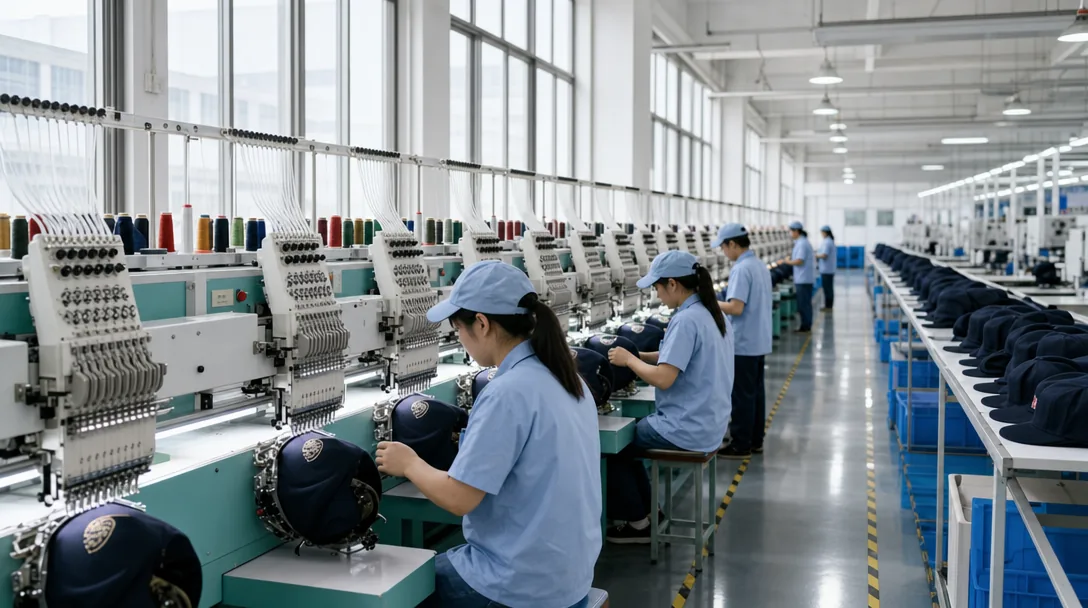
Blank Hats Sample Approval Process for Custom Hat Buyers is one of the most-asked questions we receive from international buyers, and for good reason. With dozens of factories competing for your order and an alphabet soup of technical terms in every supplier quote, even experienced importers can feel lost. This guide consolidates what we have learned producing custom hats for clients in 40+ countries.
Why blank hats sample approval process needs a separate sourcing plan
The blank hats sample approval process needs its own sourcing plan because the buyer is not only checking “a cap,” but locking the physical base that every later logo, patch, label, and packing decision depends on. For wholesale blank hats, the risk is usually hidden in the unbranded details: crown height drifting 5 mm between lots, brim curve memory changing after steam, sweatband shrinkage after washing, or a mesh back that looks fine in a photo but feels cheap at 70 denier instead of 100 denier. Generic hat sourcing often starts with price and style; sample approval should start with a control spec: fabric composition, gsm, panel count, buckram stiffness, closure type, stitching SPI, carton method, and acceptable Delta-E for dyed fabric versus Pantone TCX references. If the buyer plans decoration later, we also check whether the front panel can hold Tajima or Barudan embroidery without puckering, especially on foam truckers and washed cotton twill.
This process differs from normal sourcing when the blank itself becomes the commercial product or the production platform for several SKUs. A buyer selling country hats for men may care more about curved visors, rugged canvas, and sweatband comfort than logo placement, while a brand preparing bulk custom trucker hats needs the same blank to run cleanly through embroidery, woven patch heat press, and private-label sewing. Custom bulk trucker hats also expose a common mistake: approving a nice sample made from stock fabric, then discovering bulk fabric has a different hand-feel or mesh shade. Our standard practice at CrownsForge is to separate fit sample, material swatch card, and pre-production sample, because one approved cap cannot prove all three. A serious custom hat manufacturer should quote sample charges separately, usually $30–$80 for blank development and $80–$180 if pattern adjustment, dyed fabric, or special trims are involved.
Cost, lead time, and compliance are decided before the sample is cut, not after the buyer says “looks good.” Stock blank samples can ship in 3–5 days, but a true pre-production blank with custom fabric, Pantone TCX dyeing, metal buckle plating, or low-profile pattern revision often takes 10–18 days before courier time. MOQ also changes the plan: 144 pieces may use available fabric, while 1,000–5,000 pieces justify lab dips, fabric testing, and a tighter AQL 2.5 inspection plan for major defects. Compliance adds another layer if the order is for corporate retail, sports licensing, or EU/US distributors. Buyers should confirm sedex-audit-cap-supplier-guide.html">BSCI 2.0 or Sedex SMETA 4-Pillar expectations, restricted substance requirements, fiber labeling, and carton marking before approval, because changing a sweatband supplier or metal eyelet finish after sample sign-off can reset testing and delay FOB or DDP delivery by one to two weeks.
Factory capability checks before quoting
A serious capability check happens before price, not after the buyer sends a deposit. For embroidery, I want to see the actual logo file, target size, stitch type, and placement on the crown curve. A 55 mm front logo on a 5-panel foam trucker behaves differently from the same logo on a low-profile unstructured dad cap; distortion, thread breaks, and puckering show up fast if the factory only quotes from a JPG. A competent custom hat manufacturer should confirm Tajima, Barudan, or ZSK head capacity, thread brand, maximum stitch count before surcharge, and whether 3D puff foam is EVA 2 mm or 3 mm. For patches, ask if they can handle woven, rubber PVC, leather debossed, chenille, and sublimated patches in-house or through approved partners. Heat-press patches need temperature and dwell control, usually 150–165°C for 12–18 seconds, while stitched patches need edge-density planning so the crown does not collapse.
Fabric and construction checks separate real wholesale blank hats suppliers from catalog traders. For cotton twill, confirm weight in gsm, shrinkage after wash, and color tolerance against Pantone TCX or TPX standards; Delta-E under 1.5 is tight, under 2.5 is more realistic for repeat bulk lots. Polyester mesh should list denier and hole size, because cheap mesh on bulk custom trucker hats loses shape after carton compression. Panel construction matters just as much: 5-panel seamless fronts suit large prints and patches, 6-panel mid-profile caps support embroidery better, and country hats for men often need taller crowns, curved brims, and heavier buckram to hold a retail shape. Closure options should be quoted with exact hardware: plastic snapback, brass buckle, matte black metal clasp, hook-and-loop, or elastic Flexfit-style bands. If the buyer wants custom bulk trucker hats, the factory should also confirm sweatband type, seam tape color, eyelets, visor board thickness, and whether the sample room can cut and sew one-off panels rather than faking with stock blanks.
The blank hats sample approval process should include audit readiness and communication discipline before any counter sample is made. A factory that cannot provide current BSCI 2.0, Sedex SMETA 4-Pillar, or WRAP documentation may still sew caps well, but licensed sports, corporate, and retail buyers will hit compliance problems later. Our standard practice at CrownsForge is to check machine loading, material availability, sample room schedule, and QC documentation before issuing a formal quote, because a cheap price is useless if the sample cannot be repeated at 5,000 pieces. Buyers should ask for an approval workflow covering blank shell inspection, logo strike-off, pre-production sample, size-set confirmation, and final AQL 2.5 inspection criteria. Communication is also a factory capability: the merchandiser should answer in measurable terms, not vague promises. If they cannot confirm lead time, MOQ, carton dimensions, HS code, FOB Ningbo/Shanghai pricing, and DDP cost assumptions clearly, the risk is already visible before the first sample ships.
MOQ, pricing and sample approval
MOQ only makes sense when it is tied to fabric booking, decoration setup, and carton efficiency. For wholesale blank hats, a practical starting band is usually 144 pieces per color/style if we use stock cotton twill, polyester mesh, or washed chino; true OEM fabric, custom dyed panels, or private mold buckles normally push MOQ to 300–500 pieces per color. Bulk custom trucker hats are often cheaper to scale because the foam front and mesh back are standardized, but the buyer still pays setup: embroidery digitizing runs about US$25–60 per logo, woven patch artwork US$35–80, rubber patch mold US$90–180, and sublimated patch setup around US$40. At 144 pieces, decoration may add US$0.80–2.20 per cap depending on stitch count and patch type; at 1,000 pieces, that same work may drop by 20–35% because machine setup time is spread across more units.
The blank hats sample approval process should lock down the PPS before bulk fabric cutting, not after the line is already moving. A proper pre-production sample confirms crown height, visor curve, sweatband quality, button color, seam tape, closure, label placement, and packaging method. Pantone matching should be stated clearly: fabric mills normally work from Pantone TCX, while printed patches and hangtags use Pantone C/U; for dyed fabric we accept Delta-E under 1.5 for premium programs and under 2.5 for promotional caps. Embroidery must be checked for stitch density, pull compensation, thread sheen, and backing choice. On Tajima, Barudan, or ZSK heads, a 3D puff logo that looks clean at 6,000 stitches may fail at 9,000 if the satin columns are too narrow or the foam is cut poorly. This is why PPS approval should include close-up photos and a physical signed sample when color or logo accuracy is critical.
Lead time expectations need to be honest because trims and packaging cause more delays than sewing. Stock blank hats with simple flat embroidery can sample in 5–7 days and bulk ship in 18–25 days after approval; custom bulk trucker hats with dyed fabric, woven labels, printed inner tape, barcode stickers, and retail polybags are closer to 30–45 days. Country hats for men with rope trim, leather patches, antique brass buckles, and distressed washing need extra tolerance because wash shrinkage changes crown fit by 2–4 mm. Our standard practice at CrownsForge is to submit one PPS with a measurement sheet, Pantone references, decoration spec, packing layout, and AQL 2.5 inspection checklist before production release. Buyers should also decide FOB Ningbo/Shanghai versus DDP early, because carton size, HS code classification, and Amazon FBA labeling can change the final landed cost more than the cap price itself.
Quality inspection and shipping risk
Quality risk on blank hats is usually not fabric failure; it is small, repeatable variation that nobody defined before production. For wholesale blank hats, I set AQL 2.5 for major defects and AQL 4.0 for minor defects unless the buyer’s license agreement is stricter. Major defects include twisted panels, broken top-stitching, cracked buckram, wrong closure, dirty sweatbands, and embroidery registration off by more than 1.5 mm. Minor defects are loose threads under 10 mm, slight seam puckering, or shade variation inside an approved Delta-E limit. Cap measurements need written tolerance: crown height ±5 mm, visor length ±3 mm, circumference ±10 mm after closure adjustment, and front panel symmetry checked against the approved fit sample. For cotton twill and washed canvas used on country hats for men, I also ask for shrinkage records after 40°C wash testing, because a 2% shrinkage can change the way the crown sits.
Color and decoration must be inspected as separate risks during the blank hats sample approval process, not treated as a final packing issue. Fabric color should be matched under D65 and TL84 light boxes against Pantone TCX or a sealed swatch, with Delta-E normally held under 1.0 for solid black, navy, and red programs, and under 1.5 for heather or washed fabrics. Colorfastness should cover dry rub 4.0, wet rub 3.5 or better, perspiration 4.0, and light fastness grade 4 where the hat will be sold for outdoor use. Embroidery defects are easy to miss on bulk custom trucker hats because foam fronts hide tension problems; I check thread breaks, bird-nesting, pull compensation, bobbin showing, and edge sawtoothing under side light. On Tajima, Barudan, or ZSK heads, a dense logo above 12,000 stitches should have a real production sew-out, not just a digitizer’s screenshot.
Shipping risk starts with carton control, because a good inspection report is useless if the warehouse cannot identify the goods on arrival. Master cartons should show PO number, SKU, color, size or closure type, quantity, gross/net weight, carton dimensions, country of origin, and a scannable barcode if the buyer’s 3PL requires ASN receiving. For custom bulk trucker hats, I prefer 144 pcs per carton only when visors are supported; otherwise 72 pcs reduces crushed crowns and bent brims, especially on foam mesh styles. FOB Ningbo or Shanghai gives the buyer freight control and clearer cost separation, while DDP is practical for smaller Amazon or promotional orders but needs HS code, duty rate, and delivery address locked before deposit. Our standard practice at CrownsForge is to keep the approved sample, carton label, BOM, Pantone record, embroidery file, and AQL report in the reorder folder so a custom hat manufacturer can repeat the same cap six months later without guessing.
Buyer checklist for the next RFQ
A firm RFQ starts with a tech pack, not a mood board. Send the hat style first: 5-panel, 6-panel, unstructured dad cap, foam trucker, snapback, bucket, rope cap, or country hats for men with curved visor and mesh back. Then specify fabric by type and weight: 100% cotton twill 260–320 gsm, washed chino twill, polyester ripstop, nylon taslan, corduroy 8-wale, or 100D/150D performance polyester. For wholesale blank hats, state whether you need completely undecorated stock, private-label blanks, or blanks prepared for later embroidery. Include size range, crown height, visor length, closure type, sweatband material, taping color, eyelets, button, seam count, and any packaging requirement. If you already have a target cost, say it plainly: for example, FOB Ningbo under $2.20 for 5,000 blank truckers, or DDP Los Angeles under $4.80 including cartons, duties, and inland delivery. That single number prevents three rounds of useless quoting.
Artwork files decide whether the blank hats sample approval process takes five days or three weeks. For embroidery, send vector AI/EPS/PDF plus a PNG preview, Pantone TCX or Coated references, final logo size in millimeters, and placement from the visor seam or center front panel. If you want 3D puff, flat embroidery, appliqué, woven patch, leather patch, rubber patch, heat transfer, or sublimation, identify the method instead of writing “logo on front.” For bulk custom trucker hats or custom bulk trucker hats, send mesh color, foam thickness, front panel lamination requirement, and whether the crown must hold shape after compression. Good photos help: front, side, back, inside sweatband, under visor, label, and closure, shot under neutral light with a ruler in frame. If color matching matters, quote a Delta-E tolerance, usually under 1.5 for solid fabrics and under 2.0 for mesh, because camera photos are not a production standard.
Before asking a custom hat manufacturer for a firm quote, confirm quantity breaks, sample expectations, compliance, and shipping terms. List order quantities by colorway, not just total units; 10,000 pieces split across 12 colors prices differently than two 5,000-piece colors because cutting, thread setup, and panel inventory change. State whether you need a sales sample, pre-production sample, size set, or photo sample only, and whether approval will be based on physical courier delivery or video inspection. Our standard practice at CrownsForge is to quote sampling separately when new molds, special buckles, custom dyeing, or embroidery digitizing are involved, because those costs do not behave like unit production costs. Include AQL level, usually AQL 2.5 major / 4.0 minor, plus any BSCI 2.0, Sedex SMETA 4-Pillar, CPSIA, Prop 65, or brand audit requirements. Finish the RFQ with Incoterms, destination ZIP/postcode, carton labeling rules, barcode format, and required delivery date; otherwise the blank hats sample approval process cannot be tied to a reliable production calendar.
Working with CrownsForge
The cleanest blank hats sample approval process starts with locking the base cap before anyone touches embroidery or patches. At CrownsForge, we treat blank approval as a separate gate: crown height, panel shape, brim curve, sweatband feel, closure type, and fabric hand are checked against the tech pack before decoration sampling begins. For wholesale blank hats, we usually prepare 2–3 base options using 260–320 gsm cotton twill, 160–180 gsm poly mesh, nylon taslan, or brushed canvas, depending on the buyer’s channel. If the buyer is developing country hats for men, I push harder on brim stiffness, darker underbrims, anti-sweat tape, and shape retention after steam blocking, because those hats are often worn outdoors and get abused faster than fashion caps.
Decoration sampling is controlled like production, not treated as a mock-up. For embroidery, digitizing is tested on Tajima, Barudan, or ZSK heads with the same thread count, backing, and needle size planned for bulk production. A 3D puff logo on bulk custom trucker hats may need 0.18–0.22 inch foam, wider satin columns, and slower machine speed around 650–750 spm to avoid broken edges. Woven patches, silicone badges, leatherette patches, and heat-transfer labels are matched to Pantone TCX or coated references with Delta-E generally kept under 1.5 for approved brand colors. If the order involves custom bulk trucker hats, we also test patch placement against the front seam and crown curve, because a flat artwork proof does not show how the logo will sit on a structured 5-panel or 6-panel crown.
Quality control and export coordination are built into the approval file so the sample can actually be repeated at scale. The approved sample is sealed with a signed trim card, fabric swatches, thread cones, Pantone references, stitch count, logo dimensions, packing method, and carton marks. Before shipment, our inspectors use AQL 2.5 for major defects and AQL 4.0 for minor issues, checking crown symmetry, loose threads, embroidery registration, stain marks, brim torque, closure strength, and barcode accuracy. As a custom hat manufacturer shipping FOB Ningbo, FOB Shanghai, or DDP to the U.S. and EU, we also align HS codes, polybag warnings, carton drop-test expectations, BSCI 2.0 or Sedex SMETA 4-Pillar documentation, and buyer-specific labeling before bulk cutting starts. That prevents the common failure where the sample looks fine but the export shipment gets delayed over packaging, compliance, or labeling details.
Frequently Asked Questions
What logo decoration techniques do you offer?
3D puff embroidery, flat embroidery, woven patch, leather patch, PVC patch, screen printing, sublimation, applique and laser etching, all in-house with no subcontracting.
What file format should I send for my logo?
Vector files (AI, EPS, PDF) are ideal. High-resolution PNG or JPG at 300 dpi on transparent background works as a fallback. Provide Pantone color references for accurate reproduction.
Can I order a sample before bulk production?
Yes. We strongly recommend approving a pre-production sample before mass production. Samples are charged at 35 to 60 USD each plus express shipping, fully refundable against confirmed bulk orders over 500 pieces.
How long does production take?
Sampling takes 7 to 12 days. Bulk production runs 20 to 30 days depending on quantity, fabric availability and decoration complexity. Inspection and packing adds another 3 to 5 days before shipment.
Do you support sustainability certifications?
Yes. We work with GOTS organic cotton, GRS-certified recycled polyester, OEKO-TEX Standard 100 fabrics, and are BSCI and Sedex audited. Certification documentation can be provided per order.
What should I know about blank trucker cap wholesale bulk?
When evaluating blank trucker cap wholesale bulk, the key considerations are construction quality, decoration capability, MOQ flexibility and lead time. Explain the buyer intent behind blank hats sample approval process, when it differs from generic hat sourcing, and what decisions affect cost, lead time and compliance. Describe how CrownsForge manages blank hats sample approval process programs with sampling, decoration, QC and export coordination.
How does ordering custom embroidered trucker hat work?
When evaluating custom embroidered trucker hat, the key considerations are construction quality, decoration capability, MOQ flexibility and lead time. Explain the buyer intent behind blank hats sample approval process, when it differs from generic hat sourcing, and what decisions affect cost, lead time and compliance. Cover embroidery, patch, fabric, panel construction, closure options, sample room capability, audit readiness and communication checks.
What should I know about custom rope hat wholesale bulk?
When evaluating custom rope hat wholesale bulk, the key considerations are construction quality, decoration capability, MOQ flexibility and lead time. Explain the buyer intent behind blank hats sample approval process, when it differs from generic hat sourcing, and what decisions affect cost, lead time and compliance. Cover embroidery, patch, fabric, panel construction, closure options, sample room capability, audit readiness and communication checks.
What should I know about custom trucker hats bulk?
When evaluating custom trucker hats bulk, the key considerations are construction quality, decoration capability, MOQ flexibility and lead time. Explain the buyer intent behind blank hats sample approval process, when it differs from generic hat sourcing, and what decisions affect cost, lead time and compliance. Describe how CrownsForge manages blank hats sample approval process programs with sampling, decoration, QC and export coordination.
Ready to start your custom hat project?
Send us your tech-pack, sketch or even just an inspiration photo. We will respond with a detailed quotation and digital mock-up within 24 hours.
Request a free quoteRelated guides
Rave Bucket Hat: A Vertical-Specific Sourcing Guide
Read article →
Custom Made Trucker Hat: The 2026 Sourcing & Manufacturing Playbook
Read article →
Promotional Caps & Corporate Gifts: Bulk Custom Hats for Brand Events
Read article →Sourcing custom hats does not have to be complicated. With the right manufacturing partner, clear specifications and a small upfront investment in sampling, you can launch a retail-quality product in 30 to 45 days.