
Blank Hats Decoration QC Checklist for Custom Hat Buyers
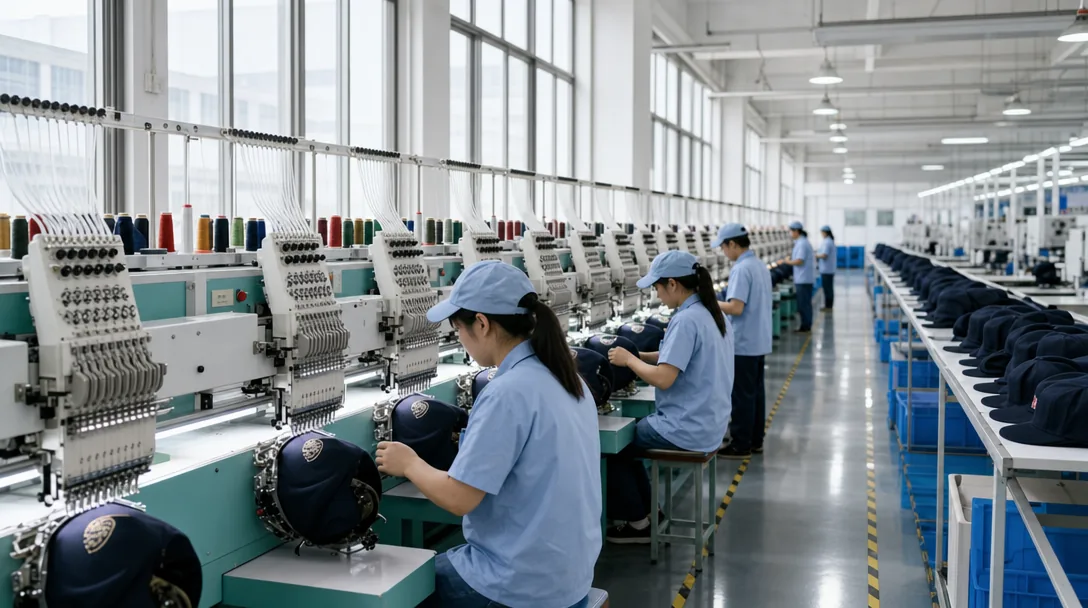
Blank Hats Decoration QC Checklist for Custom Hat Buyers is one of the most-asked questions we receive from international buyers, and for good reason. With dozens of factories competing for your order and an alphabet soup of technical terms in every supplier quote, even experienced importers can feel lost. This guide consolidates what we have learned producing custom hats for clients in 40+ countries.
Why blank hats decoration qc checklist needs a separate sourcing plan
A blank hats decoration qc checklist needs its own sourcing plan because the highest-risk work happens after the cap body is already “accepted.” Generic hat sourcing checks crown shape, stitch density, seam balance, visor curve, sweatband tension, and carton strength; decoration QC adds thread color accuracy, logo placement tolerance, backing residue, heat-press gloss, needle cuts, and panel distortion. A buyer ordering wholesale blank hats for later embroidery in Los Angeles has different risks than a buyer asking a custom hat manufacturer to embroider 8,000 pieces before FOB Ningbo. Once a Tajima or Barudan head punches through a structured front panel, a bad digitized file can ruin inventory that was otherwise saleable. For decoration programs, I normally lock the blank cap spec, decoration method, and QC limits together: front logo position within ±2 mm, Pantone TCX or TPX thread match within Delta-E 1.5–2.0 where possible, and embroidery density usually around 0.38–0.45 mm stitch spacing depending on twill weight.
The cost and lead-time drivers are different from plain cap purchasing. Bulk custom trucker hats using 5-panel foam fronts may look cheap at $1.60–$2.40 FOB blank, but a large raised embroidery can add $0.45–$1.20 per piece, plus a $35–$80 digitizing charge per logo and 2–4 days for strike-off approval. Custom bulk trucker hats with woven patches, silicone labels, or heat-transfer logos need separate tests for adhesion, edge fray, crocking, and heat resistance; a 170 gsm polyester mesh back reacts differently than cotton twill or 600D polyester. Buyers also need to decide whether decoration happens before or after final assembly. Embroidering flat panels gives cleaner tension and faster output on ZSK or Tajima machines, but it limits late-stage blank substitution. Decorating finished caps is more flexible for mixed SKUs, such as country hats for men with several regional patches, but hooping marks and crown deformation become bigger QC issues.
Compliance planning also changes once decoration is included. A basic blank cap order may only need fabric composition, nickel-free buckle confirmation, and AQL 2.5 final inspection, but decorated hats can trigger trademark control, restricted chemical checks, and social audit review if the buyer sells through major retailers. Heat transfers should be checked for phthalates and heavy metals; embroidery thread and patch backings may need AZO-free declarations or OEKO-TEX documentation. If the order ships DDP to the U.S. or EU, incorrect country-of-origin marking, fiber labeling, or licensed logo paperwork can delay customs longer than production itself. At CrownsForge, our standard practice is to inspect decoration at three points: pre-production strike-off, inline after the first 100–300 pieces, and final random inspection under AQL 2.5 major / 4.0 minor. That is why a blank hats decoration qc checklist is not a paperwork exercise; it is a sourcing control tool that prevents finished-goods rejection after the blank cap cost is already sunk.
Factory capability checks before quoting
Capability checking should happen before price negotiation, because a low quote means nothing if the factory cannot hold decoration tolerance on the actual blank. For embroidery, ask what machines are on the floor: Tajima, Barudan, and ZSK heads all behave differently on foam-front truckers, brushed cotton twill, and 5-panel camp caps. A serious custom hat manufacturer should confirm maximum stitch count, thread brand, backing type, needle size, and whether they digitize in-house or outsource DST files. For 3D puff, I want to see proof they can keep raised letters clean above 6 mm height without thread breaks or foam showing at corners. For flat embroidery on wholesale blank hats, Delta-E color matching against Pantone TCX or TPX should be discussed before sampling, not after bulk fabric is cut.
Patch decoration needs a separate check because the bottleneck is often heat bonding, edge finishing, or placement, not the patch itself. Woven patches should be judged by denier, yarn density, merrow border consistency, and whether small text below 4 mm remains readable. Leather, rubber PVC, TPU, chenille, and sublimated patches each need different attachment methods: satin stitch, zigzag, heat press at 150–165°C, or rivet reinforcement. On bulk custom trucker hats, patch alignment can drift badly on curved front panels if the factory does not use a cap-frame jig or laser positioning. For country hats for men, especially rope caps and foam truckers, ask whether the rope is sewn before or after patch attachment; the wrong sequence creates puckering along the lower crown seam.
Panel construction and closure options tell you whether the factory really understands the product category. Check if they can build 5-panel, 6-panel, unstructured, mid-profile, high-profile, and foam-front crowns with consistent seam allowance, usually 6–8 mm on cotton twill and polyester mesh. Ask for available closures: plastic snapback, brass buckle, hook-and-loop, elastic Flexfit-style bands, nylon webbing, and metal tuck straps. The sample room should be able to cut, sew, decorate, and revise a cap within 5–7 working days, not just forward your request to a subcontractor. Our standard practice at CrownsForge is to confirm audit readiness at quoting stage, including sedex-audit-cap-supplier-guide.html">BSCI 2.0 or Sedex SMETA 4-Pillar status, AQL 2.5 inspection tolerance, and one English-speaking merchandiser responsible for the blank hats decoration qc checklist from sample approval through final packing.
MOQ, pricing and sample approval
MOQ is where many custom hat projects become either efficient or expensive. For wholesale blank hats, a factory-stock style can usually start at 144 pieces per color, but true cut-and-sew programs normally sit at 300–500 pieces per color because fabric dyeing, panel cutting, and trim purchasing all have minimums. Bulk custom trucker hats are usually easier to scale: 144 pieces if using existing mesh and twill colors, 300 pieces if the buyer wants private-label sweatbands, custom sandwich visors, or a nonstandard closure. Decoration setup should be quoted separately, not hidden in the unit price. A flat embroidery tape charge is commonly USD 35–80 per logo; 3D puff may add USD 0.25–0.60 per cap; woven patches are often USD 80–150 for mold/setup plus USD 0.45–1.20 each depending on size and backing. A useful blank hats decoration qc checklist should flag these cost drivers before sampling, because changing artwork after digitizing wastes both time and money.
Pre-production sample approval is the control point I trust most, not a PDF mockup. A PPS should confirm crown shape, visor curve, embroidery placement tolerance, thread colors, trims, label position, carton marks, and final packaging. Pantone matching must be defined by material: Pantone TCX for fabric, Pantone C/U for printed labels and hangtags, and physical thread cards for embroidery because polyester thread does not visually match paper chips exactly. For cotton twill, I normally accept Delta-E under 1.5–2.0 against the approved lab dip; for mesh panels, slightly wider tolerance may be realistic because yarn denier and light transmission shift the color. Stitch density also needs approval: flat embroidery often runs 0.38–0.45 mm spacing, while dense small lettering below 5 mm height can close up on brushed cotton. On Tajima, Barudan, or ZSK heads, bad digitizing shows immediately as puckering, broken thread, or distorted outlines.
Lead time should be quoted from approved PPS and deposit, not from first inquiry. For custom bulk trucker hats using stock fabric and standard trims, sampling is usually 5–7 days and bulk production takes 18–25 days after approval. If dyeing fabric, developing country hats for men with custom camo, leather patches, metal buckles, or private-label packaging, expect 30–45 days before inspection, plus transit. Packaging also affects schedule and cost: a normal export carton with 25 or 50 pieces in polybags is cheap, but individual UPC stickers, retail hangtags, silica gel, carton drop-test requirements, or Amazon FBA labeling can add USD 0.10–0.35 per unit and 2–4 packing days. Our standard practice at CrownsForge is to inspect decoration under AQL 2.5 for major defects and AQL 4.0 for minor defects before final packing. A serious custom hat manufacturer should freeze the approved sample, BOM, and packing spec before cutting bulk fabric.
Quality inspection and shipping risk
Shipping risk starts at final inspection, not at the freight forwarder’s warehouse. For wholesale blank hats, I like AQL 2.5 for major defects and AQL 4.0 for minor defects, with carton-level sampling pulled after packing, not from a “golden” pile near the sewing line. A practical blank hats decoration qc checklist should include crown height tolerance of ±5 mm, brim length ±3 mm, back strap length ±5 mm, and panel symmetry checked against an approved pre-production sample. On bulk custom trucker hats, mesh tension and foam-front waviness matter because embroidery exaggerates uneven panels; a 1.5 mm logo tilt may pass on cotton twill but look crooked on a high-crown foam trucker. For color, use Pantone TCX or TPX references and control Delta-E under 1.5 for main fabric when the program is brand-sensitive. Colorfastness should be tested to rubbing and perspiration, especially for black, navy, red, and camo sweatbands that can stain foreheads in hot markets.
Decoration QC needs sharper eyes than general cap inspection because most disputes come from logos, not stitching. For embroidery, check thread breaks, bird-nesting, loose jump stitches, poor registration, puckering around dense fills, and satin columns that collapse below 1.2 mm. Tajima, Barudan, and ZSK heads can all produce clean work, but only if the digitizing uses correct underlay, density around 0.38–0.45 mm for standard polyester thread, and backing matched to the fabric. Country hats for men often use leather patches, woven labels, or 3D puff, so the checklist should confirm patch edge burn, adhesive bleed, stitch spacing, and puff height consistency within about ±1 mm. Our standard practice at CrownsForge is to keep approved strike-offs, thread cards, stitch counts, needle records, and photos of known rejects in the order file so the inspector is not making taste-based decisions at the packing table.
Carton control is where many otherwise good custom bulk trucker hats become a receiving problem. Outer cartons should show PO number, style, color, size ratio, carton count, gross/net weight, country of origin, and scannable SKU or FNSKU if the goods go to Amazon or a 3PL. I prefer five-ply export cartons around 58 x 42 x 38 cm for structured caps, with 24, 48, or 72 pieces per carton depending on crown height and whether individual polybags are used. FOB Yiwu/Ningbo gives the buyer more freight control, but DDP is safer for smaller reorder runs when the buyer lacks customs brokerage and Section 301 or duty classification experience. A serious custom hat manufacturer should archive reorder documentation: tech pack revision, Pantone standard, fabric gsm or denier, embroidery DST file, decoration placement grid, carton label template, and final inspection report. That archive is the cheapest insurance against shade drift, logo creep, and mismatched packaging on repeat orders.
Buyer checklist for the next RFQ
Before asking a custom hat manufacturer for a firm price, also define the inspection standard and commercial assumptions. State your acceptable color tolerance, usually Delta-E under 1.5–2.0 for fabric lots and visually approved strike-offs for embroidery thread, because lab dips and production fabric rarely match a screen rendering. Confirm whether you need pre-production samples, salesman samples, photo samples, or top-of-line samples, and who pays courier cost; a realistic sample charge is often $50–$120 per style with 5–10 working days after artwork approval. Your RFQ should include packing method, hangtags, UPC stickers, carton marks, polybag rules, and Amazon FBA labels if needed. Our standard practice at CrownsForge is to quote only after checking artwork, BOM, decoration process, quantity breaks, and AQL 2.5 inspection requirements, because missing specs usually turn into price revisions, late approvals, or rejected production later.
Working with CrownsForge
A workable blank hats decoration qc checklist starts before decoration, not at final inspection. Our standard practice at CrownsForge is to lock the base cap spec first: crown profile, panel symmetry, visor curve, sweatband width, closure type, fabric gsm, mesh denier, and color tolerance against Pantone TCX or TPX under D65 light. For wholesale blank hats and bulk custom trucker hats, we normally make one fit sample, one decoration strike-off, and one sealed pre-production sample before mass cutting. If the buyer supplies artwork, we check stitch density, thread conversion, puff height, patch edge allowance, and heat-press temperature range before quoting production risk. A 3D puff logo that looks clean on a structured cotton twill cap can collapse on soft foam-front mesh if the underlay and column width are wrong. That is why we reject many “approved” mockups at the digitizing table before they become 5,000 bad caps.
Decoration control is handled by process, not by hoping the operator notices defects. Embroidery runs are tested on Tajima, Barudan, or ZSK heads using the same backing, needle size, and thread lot planned for production; we measure logo placement from center seam, visor edge, and panel break, usually with a ±2 mm placement tolerance for front embroidery and tighter limits for woven patches. For custom bulk trucker hats, foam thickness, mesh tension, and snapback alignment are checked because distortion after sewing can shift the logo even when the embroidery file is correct. Heat-transfer and silicone patch programs get peel tests after 24 hours, not immediately off the press, because adhesive failure often shows after cooling and flexing. Country hats for men with heavy twill, leather patches, or distressed washes need extra shade-band control, since enzyme wash can push khaki, olive, and brown outside Delta-E 1.5 if the fabric mill and dye lot are not controlled.
Final QC combines decoration checks with export readiness so the buyer does not discover problems at Amazon intake, retail DC, or customs clearance. We use AQL 2.5 for major defects and AQL 4.0 for minor defects unless the purchase order specifies a stricter level, and inspection points include loose threads, skipped stitches, puckering, crooked visors, crown height variance, carton assortment, barcode labeling, polybag warnings, and metal detector records when required. A proper blank hats decoration qc checklist also covers packing compression, because over-tight cartons can permanently flatten structured caps during a 30-day ocean shipment. For FOB Ningbo or Shanghai, documents are matched against the commercial invoice, packing list, HS code, and country-of-origin marking; for DDP orders, duty rate, IOR details, and last-mile carton limits are confirmed before production release. A custom hat manufacturer that treats QC and logistics separately will miss the defects that happen between the sewing line and the buyer’s warehouse.
Frequently Asked Questions
How long does production take?
Sampling takes 7 to 12 days. Bulk production runs 20 to 30 days depending on quantity, fabric availability and decoration complexity. Inspection and packing adds another 3 to 5 days before shipment.
Can I order a sample before bulk production?
Yes. We strongly recommend approving a pre-production sample before mass production. Samples are charged at 35 to 60 USD each plus express shipping, fully refundable against confirmed bulk orders over 500 pieces.
Do you support sustainability certifications?
Yes. We work with GOTS organic cotton, GRS-certified recycled polyester, OEKO-TEX Standard 100 fabrics, and are BSCI and Sedex audited. Certification documentation can be provided per order.
What logo decoration techniques do you offer?
3D puff embroidery, flat embroidery, woven patch, leather patch, PVC patch, screen printing, sublimation, applique and laser etching, all in-house with no subcontracting.
What file format should I send for my logo?
Vector files (AI, EPS, PDF) are ideal. High-resolution PNG or JPG at 300 dpi on transparent background works as a fallback. Provide Pantone color references for accurate reproduction.
What should I know about blank trucker cap wholesale bulk?
When evaluating blank trucker cap wholesale bulk, the key considerations are construction quality, decoration capability, MOQ flexibility and lead time. Explain the buyer intent behind blank hats decoration qc checklist, when it differs from generic hat sourcing, and what decisions affect cost, lead time and compliance. Describe how CrownsForge manages blank hats decoration qc checklist programs with sampling, decoration, QC and export coordination.
How does ordering custom embroidered trucker hat work?
When evaluating custom embroidered trucker hat, the key considerations are construction quality, decoration capability, MOQ flexibility and lead time. Explain the buyer intent behind blank hats decoration qc checklist, when it differs from generic hat sourcing, and what decisions affect cost, lead time and compliance. Cover embroidery, patch, fabric, panel construction, closure options, sample room capability, audit readiness and communication checks.
What should I know about custom rope hat wholesale bulk?
When evaluating custom rope hat wholesale bulk, the key considerations are construction quality, decoration capability, MOQ flexibility and lead time. Explain the buyer intent behind blank hats decoration qc checklist, when it differs from generic hat sourcing, and what decisions affect cost, lead time and compliance. Cover embroidery, patch, fabric, panel construction, closure options, sample room capability, audit readiness and communication checks.
What should I know about custom trucker hats bulk?
When evaluating custom trucker hats bulk, the key considerations are construction quality, decoration capability, MOQ flexibility and lead time. Explain the buyer intent behind blank hats decoration qc checklist, when it differs from generic hat sourcing, and what decisions affect cost, lead time and compliance. Describe how CrownsForge manages blank hats decoration qc checklist programs with sampling, decoration, QC and export coordination.
Looking for a reliable hat manufacturer in China?
CrownsForge has produced custom hats for 800+ brands across 40 countries. From 100-piece launches to 100,000-piece retail programs, we deliver on time and on spec.
Get in touchRelated guides
Bulk Trucker Hats Supplier Audit Checklist for Custom Hat Buyers
Read article →
Golf Hats For Men Supplier Audit Checklist for Custom Hat Buyers
Read article →
Hat With Patch MOQ And Pricing Plan for Custom Hat Buyers
Read article →We hope this guide demystifies blank hats decoration qc checklist for custom hat buyers and helps you move forward with confidence. If you have questions specific to your project, our English-speaking sales engineers are one message away.