
Blank Hats Decoration QC Checklist for Custom Hat Buyers - Cost & MOQ Breakdown - Cost & MOQ Breakdown
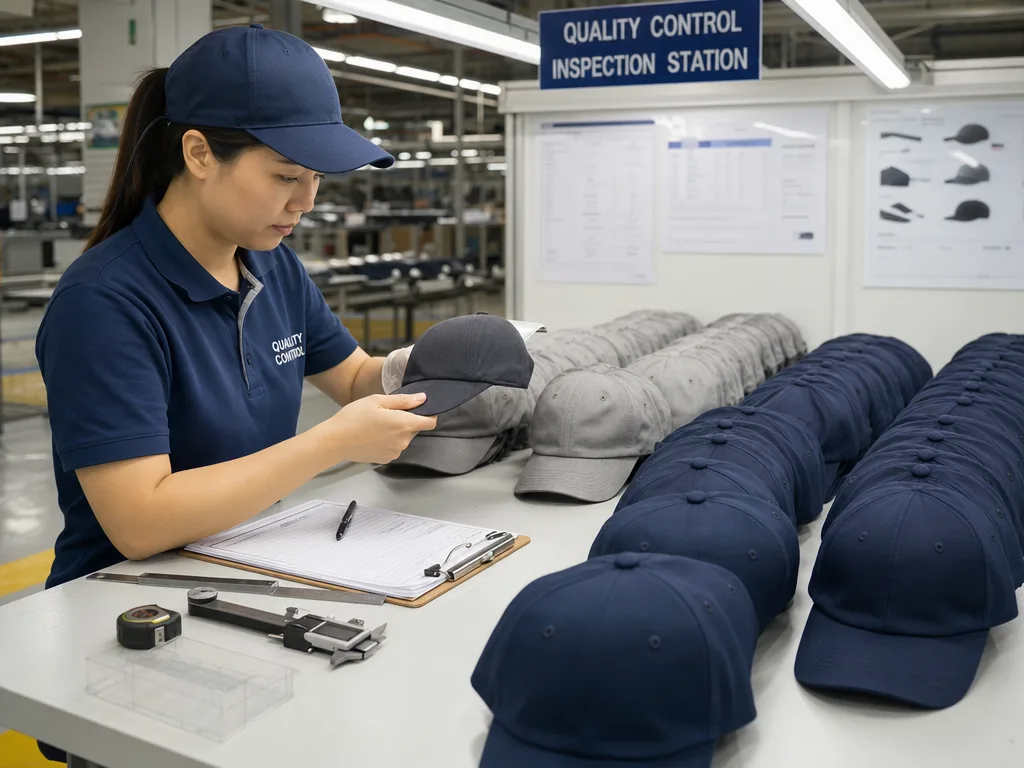
For brand owners, wholesalers and procurement teams entering the custom headwear category, blank hats decoration qc checklist for custom hat buyers - cost & moq breakdown - cost & moq breakdown is one of the highest-leverage decisions you will make. Get it right and your unit economics, retail story and reorder cycle all improve. Get it wrong and you carry the cost for years.
Why blank hats decoration qc checklist needs a separate sourcing plan
A separate sourcing plan is not optional once a blank cap is getting decorated, because the risk profile shifts from one BOM to two. The blank shell may be straightforward—say 260 gsm brushed cotton twill, 100% polyester mesh, or 600D recycled polyester—but the decoration layer adds its own compliance, color, and adhesion variables. A trucker cap body can pass fabric testing and still fail the program after a soft PVC badge with excessive phthalates, a PU patch with poor hydrolysis resistance, or a heat-transfer film with the wrong adhesive activation range hits the line. Buyers who run sedex-audit-cap-supplier-guide.html">BSCI 2.0 or Sedex SMETA 4-Pillar programs usually need documentation on decoration inputs as well: azo-free embroidery thread, lead content on metal trims, formaldehyde limits in bonding agents, and CPSIA or REACH support where applicable. If the blank hats decoration qc checklist only covers crown symmetry, stitch density, and visor curvature, you are approving half the product while the decoration supplier is still working off the wrong Pantone TCX, wrong twill base, or an untested glue sheet.
Decoration also fails in ways sewing never does, and rework costs are much uglier. We usually inspect seam construction and logo execution as separate checkpoints, because embroidery, patching, printing, and heat application each need different controls. For front-logo placement, ±2 mm is a realistic tolerance; on left or right side decoration, ±3 mm is usually acceptable because panel curvature introduces more distortion. Color should be checked against the approved standard under D65 lighting, with Delta-E held around 1.5 to 2.0 for premium retail and up to 2.5 for promotional programs. Common major defects on decorated blanks include embroidery registration drift on Tajima, Barudan, or ZSK heads, foam puncture on trucker fronts from excessive needle penetration, edge lifting on woven or PU patches after a 70°C heat exposure test, and ghosting or migration on sublimated polyester. Our standard practice is to lock these points into the blank hats decoration qc checklist before bulk booking, including packaging details like country-of-origin labels, suffocation warning text, carton drop resistance, and FOB versus DDP terms. If decoration is approved late, repacking alone typically adds $0.08 to $0.18 per cap and can easily cost three to five days against vessel cutoff.
Factory capability checks before quoting
Capability checks should happen before you even compare unit price, because decoration failure is usually a process-limit issue, not a labor-rate issue. For embroidery, ask what is actually on the floor: Tajima, Barudan, or ZSK cap machines, number of heads, cap-driver setup, and whether they run automatic thread trimming and 270-degree cap frames. A factory that knows its limits will give you measurable numbers: minimum clean text height of 4.5 to 5.0 mm on structured cotton twill, satin column width limits around 7 to 8 mm before snagging or looping, and practical 3D puff foam thickness of 2 mm or 3 mm EVA depending on cover stitch density. They should review the digitizing file before quoting: total stitch count, run sequence, edge walk, tatami vs. satin balance, underlay type, backing weight, and thread brand such as Madeira Classic 40 or Gunold Poly 40. If they insist every logo can be embroidered, they are guessing. Distressed edges, tonal gradients, and oversized fills usually need applique, woven labels, or printed twill to avoid thread breaks, registration drift, and a front panel that puckers after the first wash.
Patch capability needs the same scrutiny because the decoration type has to match the cap construction. Separate woven, embroidered, PVC, debossed PU, leather, sublimated twill, chenille, and silicone badges, then confirm the attachment method for each: merrow edge stitch, satin border, zigzag, direct sew, or heat press with TPU or PES film adhesive. On a 5-panel foam trucker or a buckram-backed 6-panel cap, front placement tolerance should be no worse than ±1.5 mm for centering and about 2 degrees for rotation; looser than that, the patch reads crooked from normal shelf distance. Ask for strike-offs and bulk photos from similar builds, especially rope hats, seam-front caps, and low-profile unstructured styles where patch edges can tunnel or lift. A solid blank hats decoration qc checklist also verifies cap material and compliance readiness before MOQ discussion: 260 to 320 gsm cotton twill, 120 to 180 gsm performance polyester, or 70D/210D nylon should be specified by weight or denier, not by vague terms like premium. Our standard practice is to lock Pantone TCX approval under D65 lighting, target Delta-E under 1.5 on solids, and require AQL 2.5 reports, needle-control logs, and current BSCI 2.0 or Sedex SMETA 4-Pillar records before confirming lead time.
MOQ, pricing and sample approval
MOQ is set by decoration and trims, not by the blank cap itself. For stock blank hats with one standard embroidery hit, 144 pcs per color/style is a practical minimum because you still have digitizing, hooping loss, and thread changeover to absorb. Add a private-label sweatband, woven flag label, inside seam tape print, or custom hangtag set, and the commercial MOQ usually lands at 300-500 pcs. Once you move into custom shell fabric, proprietary mesh, molded PVC patches, laser-cut appliqué, or branded metal buckles, 1,000 pcs per color is where material yield and setup costs stop inflating the FOB too badly. Typical pre-production charges are straightforward if the factory is honest: embroidery digitizing USD 35-80 per file, woven patch sampling USD 50-120, PVC mold fee USD 120-250, and custom buckle tooling can easily add another USD 180-400 depending on plating and mold complexity.
Decoration cost should be quoted off runtime and technical difficulty, not vague terms like “small logo.” An 8,000-stitch flat front on a Tajima or Barudan head is often only USD 0.35-0.60 per cap, but a 3D puff logo at 20,000+ stitches with dense columns, EVA foam, cap-frame slowdown, and manual foam cleanup can exceed USD 1.00-1.20 before you add side or back hits. The blank hats decoration qc checklist should be locked before PPS approval, or the price you thought you bought will drift in production. That checklist needs measurable tolerances: logo placement within ±3 mm, visor stitching count, crown height, seam alignment, backing type, closure spec, carton pack-out, and approved thread references from Madeira, Gunold, or Isacord cards rather than screen proofs. For color-critical programs, fabric should be matched to Pantone TCX and held within Delta-E 1.5-2.0 under D65 light; bulk should be audited to at least AQL 2.5 major, 4.0 minor against the sealed PPS. As a factory rule at CrownsForge, realistic timing is 5-7 days for artwork and digitizing, 7-12 days for PPS, and 20-35 days for bulk, while custom-dyed fabric or hardware usually stretches the full cycle to 45-60 days.
Quality inspection and shipping risk
AQL is the point where a hat program is either controlled at source or becomes an expensive rework after landing. In a workable blank hats decoration qc checklist, set critical defects at 0, major at AQL 2.5, and minor at AQL 4.0, then lock the defect library before bulk cutting. On caps, major defects usually include skipped visor topstitching, panel seam grin, front logo placement more than 3 mm off approved centerline, loose buckram, wrong closure, visible oil contamination, missing care/content label, or embroidery backing showing through the crown. Minor defects are thread tails over 3 mm, slight bill-edge waviness, or shade variation still inside approved tolerance. Put measurement tolerances directly in the PO and inspection SOP: crown height ±5 mm, visor length ±3 mm, head circumference ±5 mm, sweatband join mismatch under 5 mm, and snapback peg alignment within one hole pitch. If those limits are not written before production, every dispute turns subjective at final inspection.
Decoration needs its own checkpoint because many factories sew the shell in-house but outsource embroidery, patches, heat transfers, or woven labels. That handoff is where traceability usually breaks. For embroidery on Tajima, Barudan, or ZSK cap frames, inspect thread breaks, bird-nesting, registration drift, fill coverage, puckering, and stitch sink on foam truckers. Machine brand matters less than digitizing quality, underlay, cap frame setup, and stitch density; on structured cotton twill fronts, a fill density around 0.40-0.45 mm is generally safer than pushing a heavy fill that warps the panel. Satin borders below about 1.2 mm often fray visually after steaming and packing, so artwork should be simplified at sample stage, not excused during final QC.
Shipping failures usually start with weak standards long before the cartons are loaded. Never approve bulk color from phone photos; use Pantone TCX references or a sealed cutting swatch, then set acceptance at Delta-E below 1.5 for main fabric and below 2.0 for secondary materials like mesh, underbill, or sandwich trim. For cotton twill, brushed chino, washed canvas, and polyester mesh, ask for dry crocking grade 4 minimum and wet crocking grade 3-4, especially on black, red, and pigment-washed shades that can bleed into sweatbands and topstitching. If the cap uses patches or heat-applied badges, check adhesion after application and after a basic peel test, because merrowed borders can hide shape inconsistency that laser-cut TPU or woven badges will expose immediately. Cartons should be marked with PO, style, color, quantity, carton number, gross/net weight, dimensions, and country of origin; mixed cartons need both an external mark and an internal ratio list. For trucker caps, a common export carton is about 58 x 48 x 38 cm packed 100-150 pieces, but once carton weight exceeds roughly 14-16 kg, crown deformation and visor crush rise sharply during stacking and devanning.
Buyer checklist for the next RFQ
A quote is only as accurate as the RFQ. For the next round, send the variables that actually move cost, MOQ, and lead time: exact blank hat construction, decoration method by placement, quantity by colorway, Incoterm, and your required ex-warehouse or in-DC date. “Baseball cap, embroidered logo” is not a spec. A 6-panel 12 oz brushed cotton twill cap, a 5-panel 100% polyester foam trucker, and an unstructured 270 gsm washed chino dad hat run on different patterns, buckram grades, visor inserts, seam operations, and carton efficiencies. Call out crown height, visor curve, closure type, sweatband composition, shell fabric weight in gsm, and mesh or strap denier where relevant. If the quote is built on assumptions, the correction comes later as surcharge, delay, or both. A practical blank hats decoration qc checklist should also identify the approval standard for bulk: approved counter sample, PP sample, or a sealed golden sample held by both buyer and factory. Color and decoration specs need the same discipline. Use Pantone TCX for dyed textiles and Pantone Solid Coated for printed trims, then state your tolerance. On serious branded programs, I usually see Delta-E under 1.5 for shell fabric and under 2.0 for snaps, undervisors, or injection-molded closures where resin drift is harder to eliminate. For artwork, send editable AI, EPS, or layered PDF; PNG is only a visual reference. For embroidery, specify finished size in millimeters, placement on a cap silhouette, and whether the file is flat, 3D puff, or mixed technique. If you want puff, state foam height—normally 2 mm or 3 mm—and flag any strokes under 1.2 mm that may close up after capping. A dense front logo that runs clean at 750 rpm on a Tajima may still need extra underlay, fewer trims, and a revised pull-compensation value to hold shape on low-profile caps.
Commercial terms should be locked before sampling, not negotiated after the factory has already booked fabric. State MOQ by style and by color split, because 300 pieces in one color is straightforward, while 300 pieces across six colorways creates booking waste, setup loss, carton fragmentation, and usually adds around $0.20 to $0.60 per cap depending on decoration count. End use matters too. Retail, team issue, promotional giveaway, and uniform programs do not need the same build. If the cap is meant for daily wear, call out requirements like sweatband weight, buckle plating rub resistance, seam security at the back opening, and wash or crocking expectations. Without that context, suppliers will quote the lowest workable spec, not the most durable one. Packaging and QC standards belong in the RFQ line by line. Specify units per polybag if allowed, pieces per inner, master carton quantity, carton size limits, barcode format, hangtag attachment method, and whether cartons must pass parcel-network handling or only palletized ocean freight. Our standard practice is to ask buyers to write the inspection standard directly into the RFQ: AQL 2.5 for major defects and 4.0 for minor is common for caps, with clear tolerances for logo placement at plus/minus 3 mm, visor symmetry, crown shape retention after packing, thread trims, embroidery coverage, and panel-to-panel shading. If you need third-party inspection, say whether it is inline, pre-final, or final random inspection, and whether the audit basis is BSCI 2.0, Sedex SMETA 4-Pillar, or only product QC. That level of specificity is what turns a blank hats decoration qc checklist from a nice idea into a usable buying document.
Working with CrownsForge
The first control point in any blank hats decoration qc checklist is pre-production approval, because most decoration defects are designed into the job before bulk sewing or pressing starts. The sequence should be fixed: approve the blank cap construction sheet, approve the decoration strike-off, then approve placement on the actual cap profile. A front logo that reads clean on flat cotton twill will distort on a 5-panel foam trucker with 3-5 mm EVA if the digitizing ignores crown curvature, center seam height, or seam allowance bulk. For embroidery, I would not release bulk unless the file is digitized in Wilcom or Pulse, tested on the same machine family used for production—Tajima, Barudan, or ZSK—and run at true factory speed, typically 700-850 stitches per minute. Slow sample-room runs hide thread fray, cap-driver bounce, and registration drift. Color and material approvals need numbers, not subjective comments like “close enough.” Thread, TPU transfer film, and woven patch yarns should be checked to Pantone TCX or Pantone Solid Coated with a Delta-E target under 2.0 for hero logos and under 3.0 for secondary trims. Measure front logo placement from visor seam, center front seam, and crown height; on adult caps, I usually hold tolerance at ±2 mm for embroidery and ±1.5 mm for transfers. Backing weight matters as much as thread tension: a 100-120 gsm cutaway may stabilize brushed cotton, while foam-front truckers often need a lighter setup to avoid crown collapse and needle perforation. At CrownsForge, we also test fitted samples after 24 hours of rest, because puckering and heat-transfer edge lift often show up only after the cap relaxes off the hoop or platen.
Final inspection alone is an expensive way to learn what went wrong. Decoration QC needs inline checkpoints every 50-100 pieces per line, with operators and inspectors recording stitch count, top and bobbin tension balance, seam deflection, visor skew, and logo centering against the sealed sample. For heat transfers and patches, log platen temperature, dwell time, pressure, and peel method on every lot; mesh truckers can scorch above 150-160°C, while low-pressure applications often pass visual inspection and then fail after a 24-hour cure when the adhesive crystallizes. The repeat defects on stock blank hats are predictable: off-center front art, over-hooping that flattens the crown, sweatband staining from handling, hidden needle cuts at the front seam, and patch edges lifting where the buckram creates uneven pressure. Release standards should be written into the QC file, not argued at shipment stage. A practical benchmark is AQL 2.5 for major defects and AQL 4.0 for minor, with functional defects—broken seams, weak snapback closures, sharp burrs on metal hardware, wrong size labels, unreadable barcodes—classified separately from cosmetic issues. Before booking freight, reconcile PO quantity, packed quantity, carton count, net and gross weight, carton dimensions, and shipping marks against the physical packed count; that step prevents short-shipment claims and customs holds more often than buyers realize. U.S. and EU programs should also verify country-of-origin labeling, fiber content, CPSIA tracking where required, and suffocation warnings before packing, not after cartons are sealed. A disciplined single-factory process typically saves $0.12-$0.28 per cap on FOB Ningbo or Shanghai by cutting rework, relabeling, and emergency LCL freight, while realistic decorated MOQ usually lands at 144-300 pieces per colorway and moves closer to 500 when you add leather patches, mixed assortments, or multiple decoration methods.
Frequently Asked Questions
What logo decoration techniques do you offer?
3D puff embroidery, flat embroidery, woven patch, leather patch, PVC patch, screen printing, sublimation, applique and laser etching, all in-house with no subcontracting.
Can I order a sample before bulk production?
Yes. We strongly recommend approving a pre-production sample before mass production. Samples are charged at 35 to 60 USD each plus express shipping, fully refundable against confirmed bulk orders over 500 pieces.
What is the minimum order quantity (MOQ) for custom hats?
Our standard MOQ is 100 pieces per design and color, with sampling available from 1 piece. For complex multi-color logos or premium fabric upgrades, the MOQ can be lowered with a small per-piece surcharge.
Which shipping methods do you support?
We support FOB, CIF and DDP shipping. Air express for samples and small orders, sea LCL for 100 to 500 pieces, sea FCL for 5,000+ pieces. Door-to-door DDP available for US, EU, UK, Canada and Australia.
What file format should I send for my logo?
Vector files (AI, EPS, PDF) are ideal. High-resolution PNG or JPG at 300 dpi on transparent background works as a fallback. Provide Pantone color references for accurate reproduction.
What should I know about blank trucker cap wholesale bulk?
When evaluating blank trucker cap wholesale bulk, the key considerations are construction quality, decoration capability, MOQ flexibility and lead time. Explain the buyer intent behind blank hats decoration qc checklist, when it differs from generic hat sourcing, and what decisions affect cost, lead time and compliance. Describe how CrownsForge manages blank hats decoration qc checklist programs with sampling, decoration, QC and export coordination.
How does ordering custom embroidered trucker hat work?
When evaluating custom embroidered trucker hat, the key considerations are construction quality, decoration capability, MOQ flexibility and lead time. Explain the buyer intent behind blank hats decoration qc checklist, when it differs from generic hat sourcing, and what decisions affect cost, lead time and compliance. Cover embroidery, patch, fabric, panel construction, closure options, sample room capability, audit readiness and communication checks.
What should I know about custom rope hat wholesale bulk?
When evaluating custom rope hat wholesale bulk, the key considerations are construction quality, decoration capability, MOQ flexibility and lead time. Explain the buyer intent behind blank hats decoration qc checklist, when it differs from generic hat sourcing, and what decisions affect cost, lead time and compliance. Cover embroidery, patch, fabric, panel construction, closure options, sample room capability, audit readiness and communication checks.
What should I know about custom trucker hats bulk?
When evaluating custom trucker hats bulk, the key considerations are construction quality, decoration capability, MOQ flexibility and lead time. Explain the buyer intent behind blank hats decoration qc checklist, when it differs from generic hat sourcing, and what decisions affect cost, lead time and compliance. Describe how CrownsForge manages blank hats decoration qc checklist programs with sampling, decoration, QC and export coordination.
What makes a hat high quality?
High-quality hats start with high-quality materials. If it's wool, it should feel dense but soft, not thin or scratchy. If it's felt, it should be smooth and structured, not flimsy or rough. Cheap hats often use low-grade blends that feel stiff or papery—and those won't hold up with time, sweat, or sun.
What is the QA/QC checklist?
Quality control (QC) focuses on identifying defects in the final product, while quality assurance (QA) is process-oriented and aims to prevent defects during production. QC checklists are typically used at the inspection stage, making them a QC tool rather than a QA process.
What are the 5 ways QC inspectors use checklists?
Pull a random sample. Check products against your specifications. Verify packaging requirements. Classify and report quality defects. Perform on-site product tests.
Looking for a reliable hat manufacturer in China?
CrownsForge has produced custom hats for 800+ brands across 40 countries. From 100-piece launches to 100,000-piece retail programs, we deliver on time and on spec.
Get in touchRelated guides
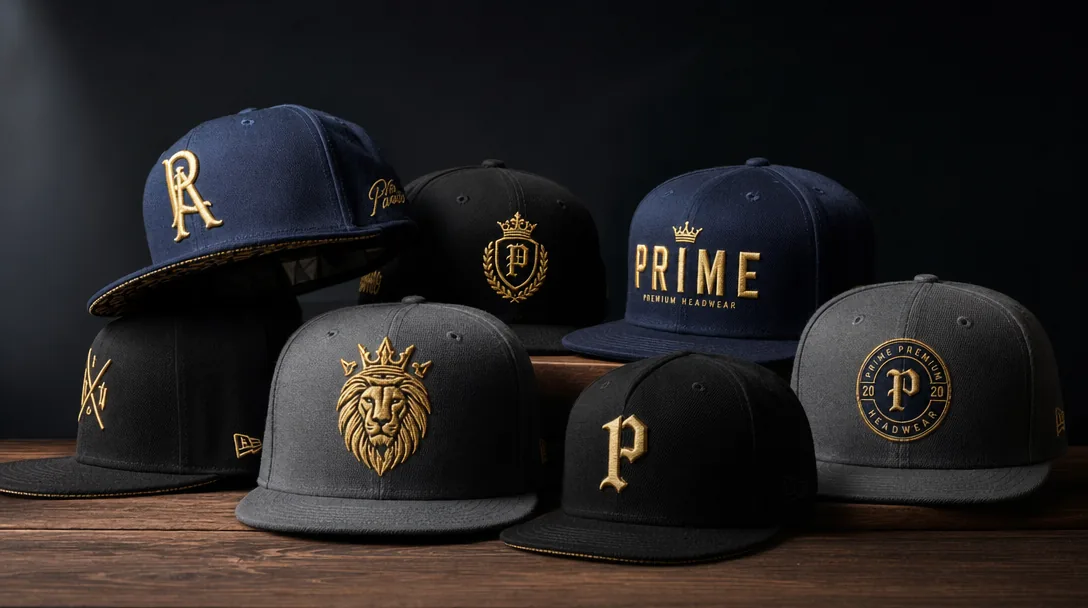
Refreshing a Hat Collection: A Repeat-Order Playbook for Established Brands (2026 Update)
Read article →
Funny Bucket Hats: A Vertical-Specific Sourcing Guide
Read article →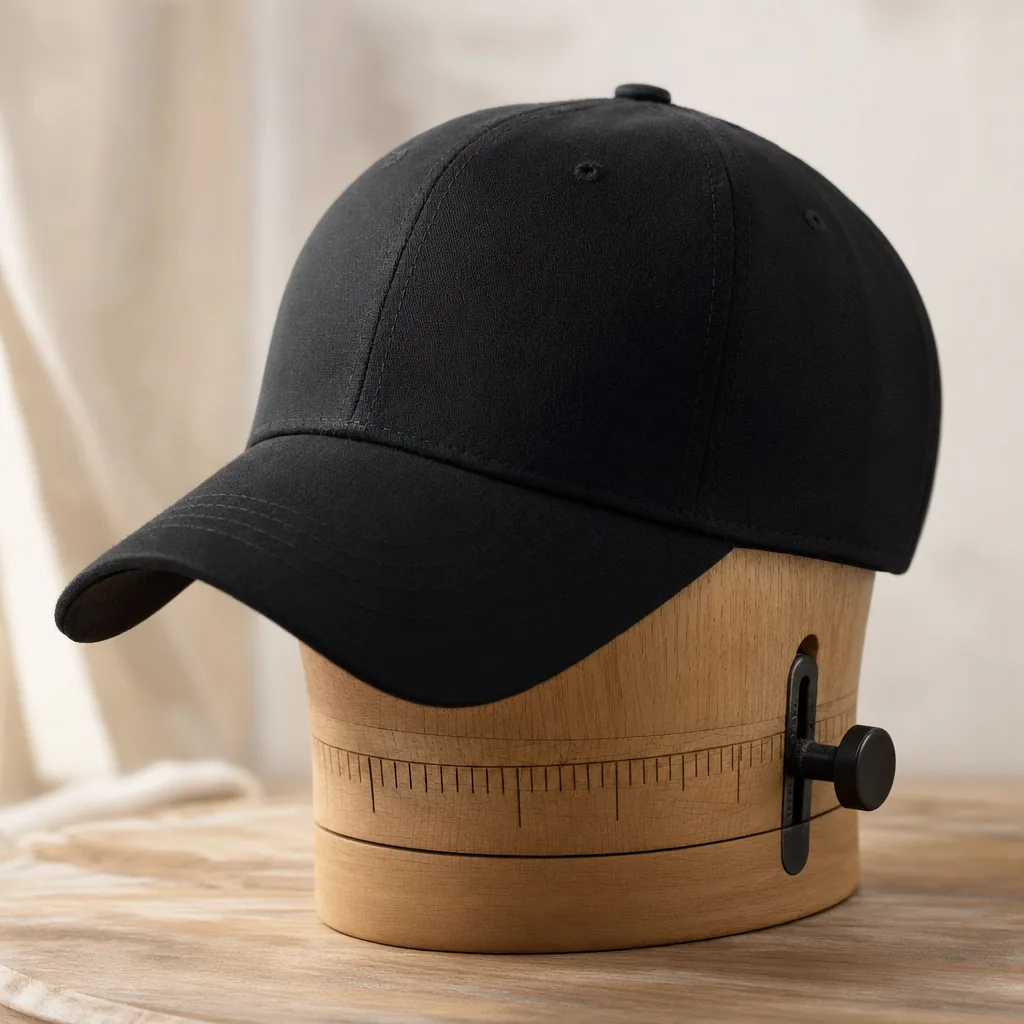
Customizing Blank Fitted Caps: New Era 59FIFTY, Otto, Imperial Buyer's Guide - Supplier Checklist
Read article →If you are ready to take the next step on blank hats decoration qc checklist for custom hat buyers - cost & moq breakdown - cost & moq breakdown, our team can put a tailored quotation and digital mock-up in your inbox within 24 hours. Send the inquiry form on our contact page or message us directly on WhatsApp.