
Blank Hats Decoration QC Checklist for Custom Hat Buyers - Cost & MOQ Breakdown (2026 Update)
For brand owners, wholesalers and procurement teams entering the custom headwear category, blank hats decoration qc checklist for custom hat buyers - cost & moq breakdown (2026 update) is one of the highest-leverage decisions you will make. Get it right and your unit economics, retail story and reorder cycle all improve. Get it wrong and you carry the cost for years.
Why blank hats decoration qc checklist needs a separate sourcing plan
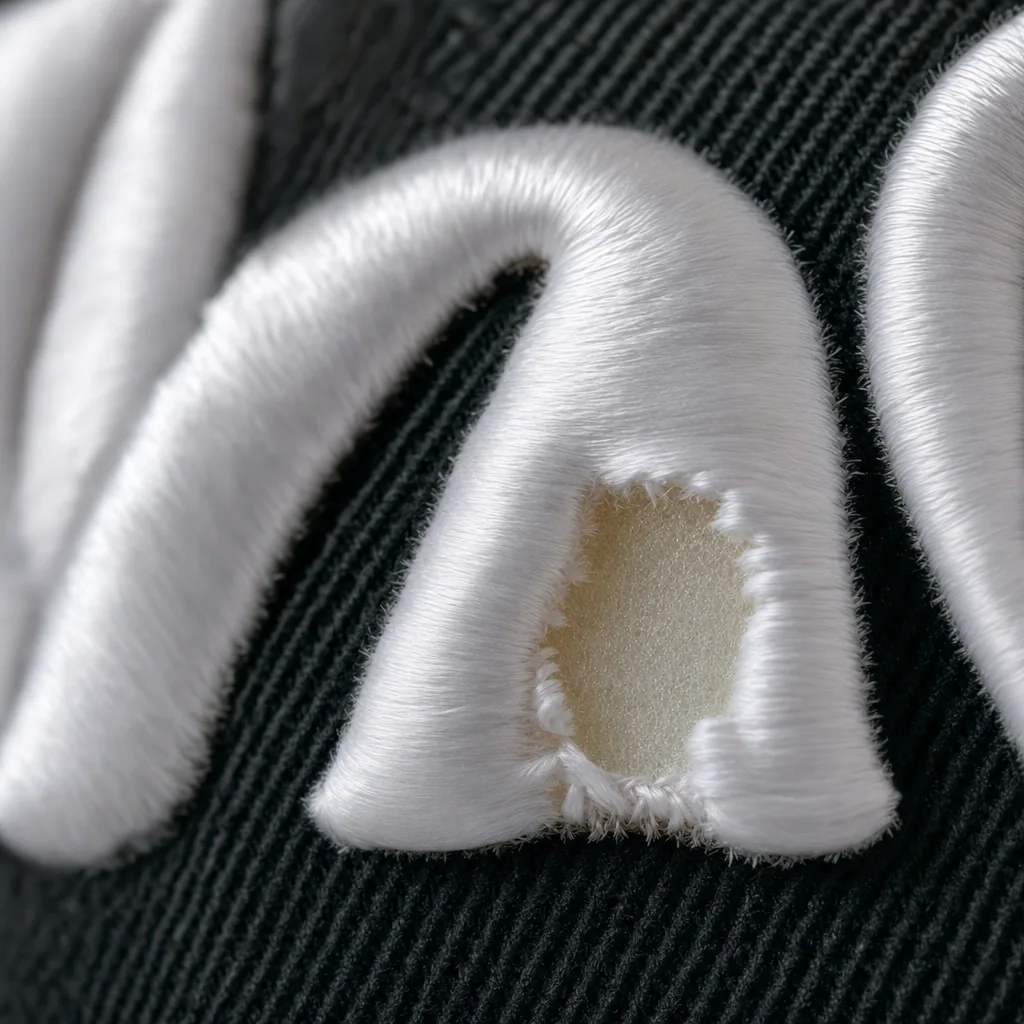
A blank hats decoration qc checklist needs a separate sourcing plan because a cap that looks acceptable as a blank often fails the moment it becomes a decoration substrate. The failure points are mechanical, not cosmetic: front-panel buckram that is too soft for 3D puff, seam allowance drift beyond ±2 mm that throws off logo centering, visor board thickness variation that changes hoop stability, and shade inconsistency above Delta-E 1.5 across dye lots that makes patch and thread matching look sloppy under retail lighting. On the floor, we check front-panel stiffness, crown height tolerance, top-button centering, and moisture content before running a Tajima or Barudan head, because stitchability and press response drive reject rates more than shelf appearance. A generic blank-cap buying spec usually stops at silhouette, color, and FOB price. A decoration-driven plan adds needle penetration behavior, surface hairiness, resin finish, and seam bulk at the logo area, which is where real waste shows up. The decoration method changes the sourcing logic immediately. Foam-front truckers are the classic trap: if foam density or lamination glue varies, embroidery tunnels and heat-applied patches ghost after pressing at 145 to 155°C. Washed cotton twill creates a different risk set—enzyme wash variation, seam grin after hooping, and front-panel distortion once the cap is clamped. For promo caps, buyers may live with AQL 2.5 on minor mesh wave or slight visor mismatch; licensed retail programs usually tighten tolerance on panel alignment, visor curve consistency, and logo placement window to within ±1.5 mm. MOQ moves with that decision. Readily available stock blanks may be workable at 144 to 288 pieces per color, but once you lock Pantone TCX shell matching, custom sweatband content, taping, and decoration-ready reinforcement, most factories need 500 to 1,000 pieces per style/color to control consistency and keep spoilage under 5%.
Compliance and traceability are the other reason a blank hats decoration qc checklist cannot sit inside a generic blank-cap sourcing file. A cap can pass incoming visual inspection and still fail after decoration because the risk often sits in the combined bill of materials: azo dyes in dyed twill, formaldehyde in resin finishing, phthalates in PVC or silicone patches, or nickel release from buckles and eyelets for EU resale. Once shells, transfers, woven labels, and patch trims come from different vendors, traceability breaks fast unless batch coding and document matching are set before purchase orders are issued. In practical terms, that means lot control for shell fabric gsm, mesh denier, sweatband fiber composition, buckram grade, visor board type, and trim supplier records, not just a final carton audit. The cost argument is straightforward. Freeze the blank specification before artwork approval, then run strike-offs, hoop trials, wash tests, and adhesion checks before bulk release; otherwise the cheapest blank becomes the most expensive line item. Our standard practice is to treat decoration spoilage above 5% as a sourcing failure, because low-grade blanks regularly create 8% to 15% rejects once embroidery, heat transfer, or patch application starts. That erases a nominal $0.20 to $0.40 per cap saving very quickly, especially when rework consumes thread, operator time, and ex-factory days. A proper sourcing plan also requires every handling site to have current sedex-audit-cap-supplier-guide.html">BSCI 2.0 or Sedex SMETA 4-Pillar records, plus matching test reports for fabric and trims. That discipline costs a few days up front—typically 3 to 7 days for approvals—but it prevents chargebacks, missed launch dates, and mixed-lot quality claims later.
Factory capability checks before quoting
Capability mismatch is where a low quote turns into rework, chargebacks, and missed ship dates. Before you ask for pricing, verify that the factory decorates your exact hat profile on the floor today: high-profile 6-panel with buckram, low-profile dad cap, foam trucker, rope cap, or unstructured 5-panel. For embroidery, ask for real machine count and configuration, not a sales line. A shop running Tajima, Barudan, or ZSK cap embroidery heads should be able to tell you the usable sew field by position, cap-frame setup for front panels, and what they will reject at art stage. On caps, failure usually starts where buyers push detail past the structure: text below 3.0 mm high, satin columns under 0.8 mm, fills above roughly 0.40 mm stitch spacing over a center seam, or 3D puff stacked onto low crown heights. If your blank hats decoration qc checklist has one non-negotiable, it is matching logo density and placement to crown depth, seam construction, and the machines actually running bulk production.
Patch and trim capability exposes weak factories faster than standard front embroidery. Ask what is in-house versus outsourced: woven patch, merrowed-edge embroidered patch, molded TPU badge, debossed PU, sublimation emblem, heat-transfer label, or direct embroidery patch. MOQ and lead time are not interchangeable. Woven or embroidered patches often start at 100 pieces per design; molded TPU or rubber usually needs 300-500 pieces because of mold cost, typically $80-$180 depending on size and cavity count. Placement tolerance should be controlled to ±2 mm on structured fronts and closer to ±1.5 mm when a rope, center seam, or visor stitch line creates an obvious visual reference. Then check the base blank spec with numbers, not photos: cotton twill at 260-320 gsm, poly body fabric at 300-400 gsm or 600D, trucker mesh in 75D-150D yarn, visor board around 1.8-2.2 mm, sweatband fiber content, and snap closure source. Two blank hats can look identical online and behave completely differently once heat, pressure, or stitch tension hits them.
The sample room tells the truth faster than any quote sheet. A factory that can turn a pre-production sample in 5-7 working days with a placement map, Pantone TCX or TPG reference, Madeira or Gunold thread approval, and construction notes usually has pattern control and trim sourcing under discipline. If a standard trucker cap sample takes 10-14 days before revisions, expect the same drag during bulk approval and repeat orders. You also want unprompted technical data: crown height in centimeters, visor stitch count, seam tape width, buckram type, thread brand, and color tolerance. For dyed shell fabric, Delta-E under 1.5 is a realistic target; for patch-to-body color match, under 2.0 is usually acceptable under D65 light box conditions. Before quoting, they should also provide current BSCI 2.0 or Sedex SMETA 4-Pillar audit reports, needle-control records, metal-detection procedure where applicable, and confirmation that final inspection is run to AQL 2.5. Our standard practice is to include sample-stage QC photos because communication discipline belongs on any serious blank hats decoration qc checklist.
MOQ, pricing and sample approval
The biggest pricing mistake on caps is treating MOQ as a round-number negotiation instead of a factory-efficiency threshold. For most blank programs, the first real cost break is 288 to 500 pcs per style-color, not 1,000 pcs. Below that, you are paying for spread loss on shell fabric, underused embroidery time, and cartons shipping half-empty. A standard 6-panel structured cotton twill cap at 260-280 gsm with flat front embroidery usually lands around $2.20-$3.10 FOB China at 300 pcs, then drops to about $1.75-$2.40 at 1,000 pcs if you keep the closure basic: plastic snap, self-fabric strap, or stock metal buckle. Foam-front truckers in polyester with 20x10 mesh often run $1.60-$2.30 at 500 pcs, but rope trim, printed seam tape, woven loop labels, and custom inner tape can add $0.08-$0.35 per hat quickly. Specialty western silhouettes are less forgiving; brushed canvas, suede-touch polyester, and shaped brims often push MOQ higher because trim suppliers surcharge short runs or refuse them outright.
A practical blank hats decoration qc checklist should force the supplier to separate unit price from setup cost. Left-front embroidery digitizing typically costs $25-$60, and 3D puff almost always needs its own sew-out because satin columns under 2.5 mm tend to split, sink, or show foam on buckram-backed fronts. On Tajima, Barudan, or ZSK heads, a clean front logo is commonly 5,000-12,000 stitches; once density tightens past roughly 0.40-0.45 mm, thread buildup, poor coverage, and edge distortion start showing up, especially on foam truckers. Before approving any quote, ask for stitch count, logo size in mm, backing weight, thread brand, and whether the sample was sewn at production speed or slowed down for appearance only.
Sample approval is where pricing discipline turns into shipment control. A PPS should lock crown height, panel shape, visor curve, embroidery placement tolerance, stitch density, closure spec, inside labels, barcode sticker position, and packing method. Approving artwork alone is how buyers end up fighting over bulk. The signed PPS should also become the inspection standard for AQL 2.5, with measurable points such as logo position from seam centerline, visor topstitch offset, button alignment, and taping stitch count. If the approved sample shows 6 stitches per cm on seam taping or a 1.2 mm visor topstitch offset, bulk should match that, not drift line by line. Packaging details matter too: polybags add about $0.03-$0.06 per cap, size stickers $0.01-$0.02, and custom inner boxes often carry a separate 500-1,000 set MOQ. New metal trims or buckle tooling can add $80-$250 and 7-12 days, so a realistic timeline is 5-7 days for development, 7-10 days for PPS revision, and 25-35 days for production after final approval.
Quality inspection and shipping risk
Most chargebacks on decorated caps start with defects nobody defined before bulk packing. A workable blank hats decoration qc checklist should tie final inspection to ANSI/ASQ Z1.4 single sampling, normal level II, with AQL 2.5 for majors and 4.0 for minors; under 500 pcs, a 100% visual sort is usually cheaper than absorbing a landed claim. Write major defects in measurable terms: embroidery off-center over 3 mm, skipped stitches visible at 50 cm, open seam above 5 mm, broken top button, wrong fabric or colorway, needle cuts, oil stains, hoop burn on washed cotton twill, or crown puckering that changes the fit. Minor defects should stay cosmetic and saleable: visor waviness, seam grin under 10 mm, thread tails under 10 mm, or slight taping print shift inside the crown. Embroidery needs its own control points because a clean approval sample does not guarantee clean bulk. On Tajima, Barudan, or ZSK multi-head runs, especially foam-front truckers, the factory should lock the approved sew-out with stitch count, backing spec, needle size, Madeira or Gunold thread code, pull compensation, and tension settings. Common bulk failures are satin columns closing up under 3 mm text, top thread sinking into EVA foam, registration drift after panel distortion, and backing shadow around fills. Our standard practice is to check three moments, not one: right after decoration, again after packing, and once more from sealed export cartons. In-line goods often look fine, then fail after shaping, nesting, or carton pressure.
Measurement and color tolerances should be written by component, not buried under a vague '+/- acceptable' note. For trucker caps, I would hold crown height at +/-3 mm, visor length at +/-2 mm, finished head circumference at +/-5 mm after sweatband setting, and front logo placement within 2-3 mm depending on art size and cap profile. If the PO specifies Pantone TCX for fabric and coated Pantone for print reference, bulk fabric and embroidery thread need checking under D65 light with a calibrated spectrophotometer; Delta-E under 1.5 is realistic for premium retail, while 2.0 is more common for promo-grade runs. Dark pigment-washed cotton, brushed canvas, and reactive-dyed twill should also pass crocking and perspiration at grade 4 minimum, because compression in humid transit makes bleed and rub-off worse. Shipping risk is usually packaging risk in disguise. Export cartons need to match the booking exactly on PO, style, color, carton count, quantity, gross and net weight, dimensions, COO, and shipping marks; one suffix mistake can trigger relabel fees or DC receiving delays. For caps, 5-ply corrugate is acceptable for palletized air or short sea moves, but 7-ply is safer for monsoon-season sea freight and floor-loaded containers. Structured hats generally pack best at 100-144 pcs per carton, depending on crown profile and visor curve; above that, crown crush starts before the board fails. FOB can run about $0.08-$0.22 per cap cheaper than DDP on a 5,000-piece program, but only when the buyer controls loading specs, pallet rules, and export documents. If ETD slips a week, recheck corrugate moisture, carton deformation, and desiccant status before loading.
Buyer checklist for the next RFQ
A usable RFQ starts with the base cap locked down, because decoration pricing is meaningless if the shell spec keeps moving. In your blank hats decoration qc checklist, identify the silhouette first—5-panel foam trucker, 6-panel structured twill, unstructured dad cap, rope cap, snapback, or bucket—then define crown height, buckram, visor curve, closure, and finished head size, for example 58 cm standard or graded 56/58/60 cm. Every colorway should be its own SKU with shell fabric, weight, and color standard: Pantone TCX for dyed fabric, Pantone Solid Coated for print or trim references, and an acceptable tolerance such as Delta-E 1.0 to 1.5 on visible front panels and up to 2.0 on interior tape or underbill. Send artwork as AI, EPS, or layered PDF; low-res JPGs usually mean a redraw charge of $15 to $40 per logo and at least one extra day before sampling even starts. Placement has to be measurable, not implied. Call out logo size in millimeters, distance from center front or panel seam, and whether the factory should measure on a flat panel or finished cap; that matters on curved visors and low-profile crowns. Name the decoration method explicitly—flat embroidery, 3D puff, woven patch, TPU patch, chenille, screen print, DTF, sublimation, or applique—and include the cost driver: stitch count, patch size, print area, or mold charge. An 8,000-stitch front logo on a 6-head Tajima or Barudan is priced very differently from a 22,000-stitch front-and-side program with metallic thread and multiple trims. If you want 3D puff, specify 2 mm or 3 mm EVA foam, target loft, and minimum text height; letters under 4 mm usually collapse and should be converted to flat fill. Also include BOM details buyers often miss: 260 gsm brushed cotton twill versus 210 gsm chino twill, mesh denier, sweatband composition, seam tape print, eyelet style, top button wrap, care label language, barcode sticker, and packing method.
Most quote delays come from missing commercial assumptions, not sewing problems. Put them in one RFQ table: quantity by style and color, MOQ flexibility, size split, Incoterm needed—FOB, CIF, or DDP—destination port or ZIP code, target ex-factory window, and carton rules such as maximum 15 kg or 24 pcs per inner. Then define the approval and QC path in order: digital mockup, embroidery tape-out or strike-off, pre-production sample, top sample if required, inline inspection, and final inspection to AQL 2.5, or AQL 1.5 if your retailer is stricter on appearance defects. If the sample is the standard, attach six clear views—front, left, right, back, interior, and underbill/closure—and label which details are approval points versus reference only. Compliance needs to be called out at RFQ stage because it changes trims, dyes, lead time, and testing cost. State whether the order must meet CPSIA, REACH Annex XVII, California Prop 65, azo-free dye restrictions, phthalate limits, or nickel release requirements for metal closures. If you require factory social compliance, specify BSCI 2.0 or Sedex SMETA 4-Pillar instead of writing “audited factory preferred,” which tells production nothing. For patches and heat-applied logos, add backing type, attachment method, and tolerance in millimeters; a woven patch with merrow border and heat seal behaves differently from a laser-cut TPU patch stitched down at 1.5 mm edge margin. A tight blank hats decoration qc checklist removes guesswork early, and on the factory floor that usually saves one to three email rounds, 24 to 72 hours of quoting time, and at least one preventable sample revision.
Working with CrownsForge
A usable blank hats decoration qc checklist is locked before production, not argued over after the first 500 pieces are sewn. The factory should freeze one signed pre-production sample against one BOM and one decoration spec sheet, with measurable inputs: 260 gsm brushed cotton twill versus 280 gsm acrylic/wool blend, 5 mm EVA or polyester foam front, PE visor board thickness, sweatband fiber content, snap or metal buckle closure, embroidery thread brand, backing type, and Pantone TCX references for shell, mesh, undervisor, and trims. For decorated blanks, the approval file also needs logo width and height, stitch count range, placement from center front and visor edge, and shade tolerance under D65 lighting; on cap bodies and trims, Delta-E 1.5-2.0 is a realistic control band, though textured substrates like heather acrylic usually need more allowance. If the standard just says “match approved cap,” bulk drift shows up fast: crown height moves 3-5 mm, buckram stiffness changes, mesh denier gets swapped, and embroidery starts walking off center. A low-profile dad cap, a structured 6-panel snapback, and a foam-front trucker will not behave the same on Tajima, Barudan, or ZSK heads, so the spec has to reflect the cap type, not some generic artwork approval.
Most claims start where decoration starts, so the blank hats decoration qc checklist should split control into four gates: incoming blank inspection, first-piece approval, in-line audit, and final inspection at AQL 2.5. Incoming checks should reject defects before value is added: panel asymmetry, seam puckering, uneven visor curve, sweatband join gaps, closure failure, dirty tape, fabric slubs, and color mismatch by lot. On the decoration line, tolerances need to be numerical: embroidery placement within +/-2 mm, top button centering within 3 mm, patch edge lift under 1 mm after heat press, no exposed bobbin thread, no needle cuts on foam fronts, and no roping distortion along the seam. For trucker caps, stitch density often needs to open to about 0.35-0.40 mm with lighter underlay so the needle does not slice the foam and telegraph the backing; that should be written into the work instruction, not left to the operator. Final QC should also verify pack-out ratio, barcode readability, carton dimensions, gross weight, shipping marks, and ASN accuracy, because one retailer labeling chargeback can erase the $0.25-$0.60 per cap a buyer thought they saved by pushing decoration too hard.
Export readiness is the last real control point, and sloppy paperwork can undo otherwise clean production. After final inspection, the QC file should link inspection results to SKU-level packing lists, carton count, carton size, master carton weight, HS code, country-of-origin marking, and booking terms such as FOB Ningbo or DDP Los Angeles. As a practical limit, master cartons above roughly 16-18 kg are asking for handling damage on cap programs, especially with structured crowns that crush under bad stacking. Summer loading out of Zhejiang also needs moisture control written into the checklist: desiccant quantity by carton volume, polybag ventilation if required, and clear rules for mildew-sensitive cotton twill and suede finishes. Buyers should confirm current BSCI 2.0 or Sedex SMETA 4-Pillar audit records before vessel cutoff and make sure the factory file includes needle logs, metal detection records where required, final inspection photos by SKU, and carton marking photos. Those are not office formalities; they are what prevent customs holds, mismatched labels, retailer deductions, and claim costs that are usually higher than the sewing margin on the entire PO.
Frequently Asked Questions
What logo decoration techniques do you offer?
3D puff embroidery, flat embroidery, woven patch, leather patch, PVC patch, screen printing, sublimation, applique and laser etching, all in-house with no subcontracting.
Do you support sustainability certifications?
Yes. We work with GOTS organic cotton, GRS-certified recycled polyester, OEKO-TEX Standard 100 fabrics, and are BSCI and Sedex audited. Certification documentation can be provided per order.
What is the minimum order quantity (MOQ) for custom hats?
Our standard MOQ is 100 pieces per design and color, with sampling available from 1 piece. For complex multi-color logos or premium fabric upgrades, the MOQ can be lowered with a small per-piece surcharge.
How long does production take?
Sampling takes 7 to 12 days. Bulk production runs 20 to 30 days depending on quantity, fabric availability and decoration complexity. Inspection and packing adds another 3 to 5 days before shipment.
Can I order a sample before bulk production?
Yes. We strongly recommend approving a pre-production sample before mass production. Samples are charged at 35 to 60 USD each plus express shipping, fully refundable against confirmed bulk orders over 500 pieces.
What should I know about blank trucker cap wholesale bulk?
When evaluating blank trucker cap wholesale bulk, the key considerations are construction quality, decoration capability, MOQ flexibility and lead time. Explain the buyer intent behind blank hats decoration qc checklist, when it differs from generic hat sourcing, and what decisions affect cost, lead time and compliance. Describe how CrownsForge manages blank hats decoration qc checklist programs with sampling, decoration, QC and export coordination.
How does ordering custom embroidered trucker hat work?
When evaluating custom embroidered trucker hat, the key considerations are construction quality, decoration capability, MOQ flexibility and lead time. Explain the buyer intent behind blank hats decoration qc checklist, when it differs from generic hat sourcing, and what decisions affect cost, lead time and compliance. Cover embroidery, patch, fabric, panel construction, closure options, sample room capability, audit readiness and communication checks.
What should I know about custom rope hat wholesale bulk?
When evaluating custom rope hat wholesale bulk, the key considerations are construction quality, decoration capability, MOQ flexibility and lead time. Explain the buyer intent behind blank hats decoration qc checklist, when it differs from generic hat sourcing, and what decisions affect cost, lead time and compliance. Cover embroidery, patch, fabric, panel construction, closure options, sample room capability, audit readiness and communication checks.
What should I know about custom trucker hats bulk?
When evaluating custom trucker hats bulk, the key considerations are construction quality, decoration capability, MOQ flexibility and lead time. Explain the buyer intent behind blank hats decoration qc checklist, when it differs from generic hat sourcing, and what decisions affect cost, lead time and compliance. Describe how CrownsForge manages blank hats decoration qc checklist programs with sampling, decoration, QC and export coordination.
What makes a hat high quality?
High-quality hats start with high-quality materials. If it's wool, it should feel dense but soft, not thin or scratchy. If it's felt, it should be smooth and structured, not flimsy or rough. Cheap hats often use low-grade blends that feel stiff or papery—and those won't hold up with time, sweat, or sun.
Ready to start your custom hat project?
Send us your tech-pack, sketch or even just an inspiration photo. We will respond with a detailed quotation and digital mock-up within 24 hours.
Request a free quoteRelated guides
Acrylic Beanie: Properties, Costs and How to Spec It Right
Read article →
Custom Hat Design: The 2026 Sourcing & Manufacturing Playbook
Read article →
Bucket Hat Corduroy Retail Packaging Guide for Custom Hat Buyers
Read article →We hope this guide demystifies blank hats decoration qc checklist for custom hat buyers - cost & moq breakdown (2026 update) and helps you move forward with confidence. If you have questions specific to your project, our English-speaking sales engineers are one message away.