
Customizing Blank Fitted Caps: New Era 59FIFTY, Otto, Imperial Buyer's Guide - Cost & MOQ Breakdown
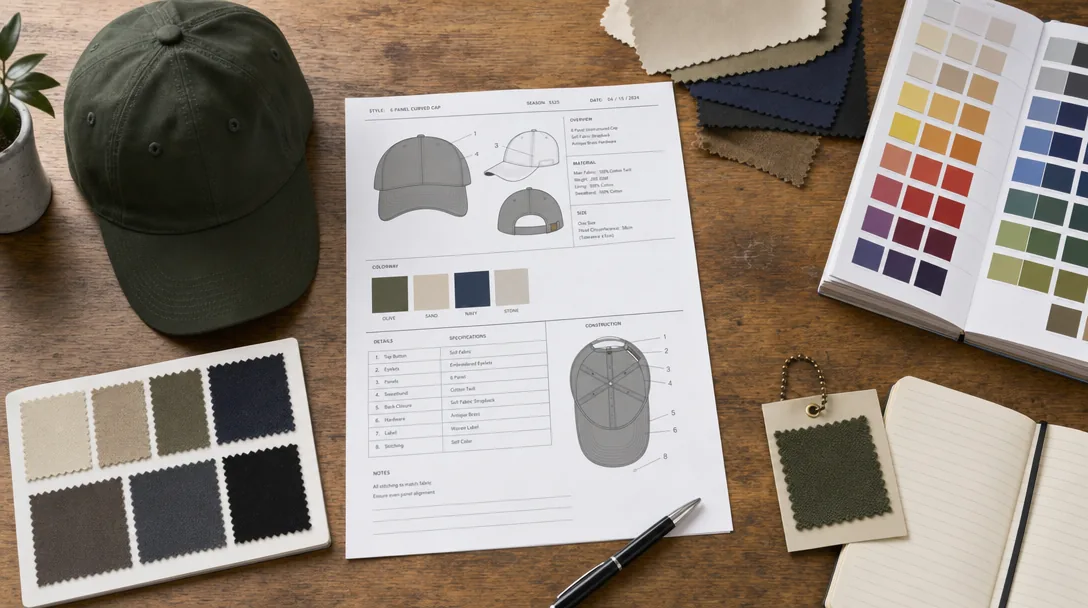
Customizing Blank Fitted Caps: New Era 59FIFTY, Otto, Imperial Buyer's Guide - Cost & MOQ Breakdown is one of the most-asked questions we receive from international buyers, and for good reason. With dozens of factories competing for your order and an alphabet soup of technical terms in every supplier quote, even experienced importers can feel lost. This guide consolidates what we have learned producing custom hats for clients in 40+ countries.
Why brands ask about 'custom New Era' (and what they actually need)
Most buyers asking for custom new era hats are not really asking for a trademarked brand name; they are asking for a very specific fit block and build standard. In practical terms, they want a 59FIFTY-style silhouette: high crown, firm front panels, six-panel construction with 2.5–3.0 mm PE visor board, tight seam taping, and a fitted shape that survives steaming, packing pressure, and repeated wear without collapsing. The same applies to 9FIFTY-style requests: buyers usually mean a structured snapback with the correct crown angle, visor pitch, and panel balance, not just any flat-bill cap with a plastic closure. Those details are measurable on the factory floor. Front buckram is commonly 180–220 gsm, sweatbands run 32–35 mm in cotton-poly or moisture-management polyester knit, and even eyelet stitch count affects how clean the cap reads at retail distance. Buyers searching for new era custom hats usually recognize the silhouette by handfeel first, then learn the technical language later. That is why decorating authentic blanks and building OEM are two completely different sourcing paths. If you start from genuine blanks, availability is the constraint: color, size curve, and season can limit what you can buy before you even discuss decoration. Once the body is finished, you can usually add front embroidery, side embroidery, patches, or heat transfers on Tajima or Barudan machines, but you cannot materially change crown depth, seam tape print, undervisor color, buckram stiffness, sweatband construction, or the fit block itself. In realistic mid-volume programs, decorated branded blanks often land in the U.S. at about US$18–US$28 per piece before domestic pick-and-pack, especially if you are using multi-location embroidery, manual relabeling, and DDP freight instead of FOB.
OEM is the route for buyers who care more about shape control than logo access. Once a custom new era hats inquiry gets translated into factory language, the discussion becomes fabric weight, crown depth, visor rebound, size grading, and color tolerance rather than brand names. A solid fitted cap program might use 100% wool serge at 360–400 gsm, or 65/35 poly-cotton twill at 240–280 gsm for a cleaner promotional cost target. Trim colors can be matched to Pantone TCX references with a practical bulk tolerance of around Delta-E 1.5–2.0, while production approval should cover size set, embroidery strike-off, and final carton-drop testing. For bulk QC, AQL 2.5 is the normal baseline, not an upgrade. In Zhejiang, fitted OEM programs usually start at 144–288 pieces per colorway, with ex-factory pricing around US$5.20–US$9.80 depending on fabric, embroidery count, tape customization, and how many sizes you need in the run. Snapbacks generally come in lower because size complexity disappears and wastage is easier to control. The real choice is straightforward: use licensed stock goods if the brand equity matters more than specification control, or build private-label caps if you need authority over profile, trims, and consistency from PP sample through final inspection. CrownsForge handles this as a spec decision first, because once the silhouette is wrong, no amount of embroidery can rescue the cap.
Blank-cap brands and their positioning
New Era sits at the top of the blank fitted-cap market because the shell itself carries licensed-sports equity before decoration starts. The 59FIFTY is still the benchmark silhouette: 6-panel closed-back construction, high crown, firm buckram front, taped seams, and a flat visor with a controlled curve after packing. For buyers sourcing custom new era hats, the real bottleneck is almost never embroidery capacity; it is authorization, artwork compliance, and placement rules. In practice, New Era programs are usually constrained by who can buy blanks, which logos can appear on the wearer’s left or rear panels, and whether undervisor, side hit, or interior taping customization is permitted under the account. That is why two caps with the same 10,000 to 12,000 stitches can have very different timelines. Decorated 59FIFTY orders in the U.S. commonly land around $18 to $32 per piece before final parcel freight, and specialty add-ons push that up fast: metallic thread, 3D puff foam, chain stitch, woven loop labels, or multi-location embroidery on Tajima or Barudan heads can add $1.20 to $4.50 per cap. MOQ is often less about carton count than account approval and trademark control.
Otto competes on access and cost, not on brand cachet. On fitted and snapback bodies, blank cost typically pencils out around $4 to $8 FOB Asia equivalent depending on fabric weight, acrylic-wool blend versus 100% polyester, crown structure, and volume break. After decoration, many Otto programs still finish 25% to 45% below a comparable New Era order, which is exactly why they dominate promo, brewery merch, school spirit, and regional workwear. Buyers can usually move at 48 to 144 pieces per style-color-art combination with fewer brand-side restrictions and shorter artwork approval cycles. The tradeoff is visible on the factory floor: lighter buckram, softer crown memory after master-carton compression, and wider variance in visor curve straight out of the case. Those issues show up most on dense front fills, 2.5 mm 3D puff, and left-panel embroidery where tension stability matters. Imperial belongs in a different lane entirely—golf, resort, and corporate tournament product—where 140 to 180 gsm polyester, poly-spandex blends, moisture-wicking sweatbands, and rope profiles sell better than fitted streetwear shapes. These brands are not interchangeable blanks; the right choice depends on end use, decoration method, and how much shape consistency your customer expects at retail.
Path 1: Buying blanks from these brands for in-house embellishment
Branded blank programs only work when you accept that the blank, not the embellishment, drives the economics. For custom new era hats, authorized wholesale on 59FIFTY and related fitted silhouettes typically lands around $18 to $28 per cap before decoration, depending on account status, color, and size availability. Core sizes like 7 1/8 through 7 5/8 usually sell through first, so replenishment risk is real if you are building a full size run. Standard front embroidery on a Tajima or Barudan head at 8,000 to 12,000 stitches adds roughly $1.20 to $2.80; add side and back locations, metallic thread, or applique and total embellishment can reach $4 to $7. That means a decorated branded fitted often lands at $24 to $32 before outbound freight, pick-pack, marketplace fees, or returns. On keystone or 2.2x wholesale math, that pushes retail well past $60, and often closer to $70 to $85 if you want margin left after spoilage and size-break leftovers.
The real trap is process sensitivity. A 59FIFTY crown is structured and consistent, but that same buckram stiffness makes bad digitizing obvious: dense fills, 3D puff, or seam-crossing layouts can cause push-pull distortion, needle deflection, and registration drift above 0.8 mm if the file is not tuned for crown angle and panel tension. Because decorated branded blanks are usually non-returnable, buyers need to lock down visor sticker policy, allowable decoration zones, carton assortments, and size-run ratios before releasing production. Our standard practice is to approve sew-outs first, then inspect finished caps to AQL 2.5, checking logo centering, seam alignment, crown collapse, and thread trims. That discipline matters more on a $24 fitted than on a $6 commodity cap: one bad sew-out on a cheap blank is noise, but the same miss on branded inventory erodes margin immediately.
Otto, Imperial, Branded Bills, and Melin sit in completely different cost lanes, so treating them as substitutes is how buyers misprice programs. Otto blanks generally run $4 to $10, with a basic acrylic-wool snapback often around $5.50 to $6.50 and better twill or heather styles closer to $8 to $9. Imperial is usually $9 to $18 and fits golf, resort, and corporate accounts better than streetwear; Branded Bills often lands around $25 to $40, while Melin can be $35 to $55 before a single stitch is added. Decoration cost barely changes across brands, but the percentage impact does. On a $6 Otto, embroidery is a major cost component; on a New Era fitted, it is secondary to the blank itself. If the buyer wants brand pedigree and fitted authenticity, custom new era hats can justify the premium. If the customer mainly values your artwork and target retail is under $35, Otto or Imperial usually leaves healthier room for rejects, freight, and markup.
Path 2: Equivalent OEM manufacturing
Equivalent OEM is where the unit economics usually beat licensed programs. If you do not need protected branding, a 59FIFTY-style fitted made to retail-grade spec generally lands at $4.90 to $7.40 FOB China with front embroidery included; licensed supply chains usually add approval lag, restricted trim sourcing, and a higher base cost before freight. Buyers comparing custom new era hats to an unbranded factory equivalent should ignore marketing language and measure build tolerances instead: crown height within about +/-2 mm, balanced front panel pitch, visor thickness, stitch density, and size grading in true 1/8 increments from 6 7/8 to 8. A workable spec is a high-crown 6-panel fitted with full buckram, 22-row visor stitching, 8-row top button lock, taped seams, and an 80/20 wool-acrylic shell around 285 to 310 gsm, paired with woven size tape and a cotton twill or poly-cotton sweatband that will not torque after carton compression.
At 288 pieces per color, a credible OEM fitted in wool-acrylic with 3D front embroidery, one flat side logo, and standard export packing usually runs $5.20 to $6.50 on Tajima or Barudan machines. Add heather melton, suede visor, contrast undervisor, woven inside labels, satin seam tape, or tighter hand-feel matching, and the cost moves closer to $6.90 to $8.10. The biggest quality gaps rarely show up on a quote sheet: use a 0.35 mm PE visor board instead of paperboard so the brim holds shape after 30 to 45 days of humid ocean transit, specify thread matching to approved Pantone TCX or Pantone Coated references under D65 lighting, and set a realistic color tolerance such as Delta-E below 1.5 on critical logo areas. For fitteds, MOQ is usually 144 to 288 pieces per colorway because size runs complicate cutting yield, embroidery batching, and carton assortment. Do not approve from photos alone; require a full spec sheet and an AQL 2.5 final inspection focused on internal circumference, visor arc, eyelet centering, buckram stability, and sweatband attachment.
MOQ and timing differences between the two paths
Lead time is the only decisive edge in the blank-cap route, and for fitteds that edge is material. U.S. distributors like S&S Activewear or SanMar usually sell branded blanks by size and color, not as a freely mixed run, so the practical MOQ is driven by case-pack logic rather than the number printed on a price sheet. If the buy-in is 12 units per size per color, a size range of 6 7/8 through 7 5/8 across one color already puts you at 96 pieces before decoration; add a second color and you are carrying 192 units of inventory. When the SKU is in stock domestically, outbound is often same day to 48 hours, but decoration still adds 5 to 10 business days depending on whether the program is flat embroidery, 3D puff, laser-cut twill applique, or multi-location hits. That speed is why event merch, team-store top-ups, and retail test drops often start with stocked shells. The tradeoff is that crown height, visor shape, buckram stiffness, seam tape, sweatband, and fabric content are fixed before you ever approve artwork.
OEM cut-and-sew is slower, but the MOQ math is more rational once you are building a real fitted program. Below roughly 288 to 300 pieces per style, size grading becomes inefficient because each size ratio affects markers, cutting yield, sweatband allocation, carton assortment, and embroidery setup tolerances. Proto samples usually take 7 to 12 days if the tech pack is complete with Pantone TCX references, vector logos, fabric callouts, and trim approvals; bulk production is typically 25 to 35 days after sample sign-off and deposit, stretching longer for wool serge, custom woven labels, printed seam tape, or specialty closures and trims. Buyers researching custom new era hats often miss the point here: OEM is not just a lower-cost substitute for a stocked fitted. It is the route that lets you lock the crown profile, visor board thickness, buckram density, stitch count, sweatband material, and embroidery execution across Tajima, Barudan, or ZSK heads with repeatable tolerances.
The cost crossover usually happens earlier than buyers expect, especially once decoration gets heavy. A branded fitted blank can easily sit at $14 to $22 before embellishment; add a 7,000 to 12,000-stitch front logo, side hit, rear logo, inside label, swing tag, and domestic freight, and your landed cost often ends up at $18 to $28 per cap. A comparable OEM fitted made in China is commonly $6.50 to $9.50 FOB at 300 pieces in wool blend, acrylic-wool, or polyester twill, with sample cost amortizing fast after the first reorder. The working rule is blunt: buy blanks when you need speed, licensed brand equity, or low-risk size testing; move to OEM when you need margin, repeatability, and exact spec control. That same logic applies whether you are comparing New Era-style fitteds, Otto programs, or other private-label caps where AQL 2.5 consistency matters more than the logo on the sweatband.
When to choose which path
Choose blank-cap decoration when the buyer cares more about brand recognition, low MOQ, and speed than full factory control. That is the cleanest use case for boutique retail drops, licensed team programs, golf shops, and premium merch where the request is specifically for New Era. A blank 59FIFTY usually costs about $18 to $28 before decoration, depending on color, size curve availability, and distributor stock. Front embroidery on Tajima, Barudan, or ZSK heads typically adds $2.20 to $5.50 per location at roughly 8,000 to 15,000 stitches, with 3D puff or metallic thread pushing the upper end. At 24, 48, or 72 pieces, that math is still reasonable because you skip pattern development, sample rounds, and factory MOQs that make small OEM orders inefficient. The same logic applies to custom new era hats built from blank 9FIFTY or 59FIFTY stock: you pay a premium, but you get a recognized retail label, consistent sizing, and a much easier replenishment path than rebuilding a cap from scratch.
Speed is the second decisive factor. If blanks are in stock and decoration stays simple—flat embroidery, one side hit, woven loop label, maybe a heat-transfer inside label—a domestic finisher can often turn an order in 2 to 4 weeks. OEM fitted-cap development is rarely that fast once you include digitizing, fit sample review, PPS approval, and bulk booking; even efficient factories usually need 4 to 6 weeks before bulk sewing begins, and one failed shape correction or lab dip can add another 7 to 10 days. Move to OEM when volume reaches roughly 300 to 500 pieces per colorway, because the unit economics flip hard at that point. A custom fitted cap from a factory will often land around $6.50 to $11.50 depending on fabric, stitch count, trims, and packaging, versus paying blank-cap pricing forever. More importantly, OEM gives control over fabric weight, visor board, buckram stiffness, taping print, sweatband construction, and QC standards such as Pantone TCX color approval, Delta-E 1.5 to 2.0 tolerance, and AQL 2.5 final inspection. If your customer will judge silhouette and durability six months later, OEM is usually the better permanent platform.
Decoration restrictions and licensing implications
The real risk sits in the sales language, not the embroidery file. Buying blank 59FIFTY inventory gives you ownership of the physical cap; it does not grant trademark rights to market it as an official collaboration, licensed release, or brand-endorsed product. That distinction is where many programs for custom new era hats go sideways. New Era controls its word marks, the flag logo, model names like 59FIFTY, and any consumer-facing use that suggests sponsorship. A distributor invoice in the $6.80-$11.50 range per blank only covers the goods. It does not automatically clear your Shopify title, Amazon bullets, hangtags, belly bands, or retail cartons. In the field, decorated blanks are routinely used for corporate uniforms, local team orders, campus stores, and event merchandise, but phrases such as "official New Era collaboration" or even "custom New Era 59FIFTY" can trigger takedowns, distributor escalations, or payment disputes if you cannot produce separate written approval. Before issuing a PO, separate three rights on paper: the right to buy the blank, the right to decorate it, and the right to advertise the base brand name.
The factory side gets complicated once interior branding enters the scope. On fitted caps, relabel work usually happens at the sweatband join or over the existing inside identifier, and that is not simple trim replacement. A structured six-panel shell with fused buckram and taped seams can lose crown balance fast if the operator opens the rear join incorrectly or runs a cover label under uneven tension. The usual options are a damask woven label, printed satin tape, or a heat-transfer size mark, with ex-factory adders typically running $0.35-$0.90 per cap depending on whether it is a clean cover-up, full seam-open replacement, or relabel plus size sorting and rebagging. Poor execution shows up immediately as needle damage, seam grin, sweatband puckering, or a wavy edge that should fail at AQL 2.5. Our standard practice is to lock four points in writing before embroidery goes on the Tajima or Barudan heads: whether relabeling is permitted, whether original stickers stay or are stripped, whether model names can appear on cartons and invoices, and whether marketplace listings may reference the base cap brand at all. That admin work is cheaper than repacking 3,000 finished units after decoration.
Working with CrownsForge on either path
The cost split is not subtle: decorating buyer-supplied branded blanks is a service job, while building a fitted cap from scratch is manufacturing with a completely different cost structure. If you already control New Era blanks through an authorized channel, the workable scope is usually embellishment only—receiving count, inbound defect log, digitizing, strike-off approval, decoration, final AQL 2.5 inspection, and re-pack under FOB, EXW, or your courier account. On buyer-supplied goods, the real risk is liability on the blank, not whether the factory can keep a Tajima or Barudan line busy. For a structured fitted cap, a raised 3D front logo normally runs $1.10 to $2.40 per piece, depending on stitch count, foam thickness, thread type, and whether you add side embroidery, rear embroidery, or an interior seam-tape print. Patch applications move again: woven, TPU, leatherette, and merrowed patches usually add $0.35 to $1.20 each, plus placement labor if the panel shape is tight. Practical MOQ is 48 to 96 pieces per design and colorway; under that, hooping time, machine setup, thread changes, and QC minutes eat the order alive. Our standard practice is to photograph pre-existing blank issues at receiving—visor warp, crushed buckram, panel skew, sticker residue—so decoration faults and blank defects do not get argued over later.
If you do not need licensed blanks, scratch production usually wins on unit economics by a wide margin. A 59FIFTY-style private-label fitted cap in 80/20 acrylic-wool serge or 100% polyester twill, with full buckram, flat visor, embroidered eyelets, taped seams, woven main label, and hangtag, typically lands around $3.80 to $6.80 FOB China at 144 to 300 pieces per colorway. At 500-plus pieces, branded blank plus re-decoration programs often stop making financial sense, especially when the design calls for multi-location embroidery, custom visor sandwich, Pantone-matched trims, or difficult size curves. That is the comparison serious buyers should make when weighing custom new era hats against a private-label build: quote both paths against the same decoration map, same size breakdown, and same delivered terms. Sampling for factory-made caps is usually $35 to $80 per cap, embroidery tape edits run $15 to $40, and low-volume fabrics or appliqué details can push MOQ from 144 up to 300. A competent factory should lab-dip shell fabric, match thread to Pantone TCX or coated references within an agreed Delta-E tolerance, and run embroidery strike-offs on Tajima, Barudan, or ZSK heads before bulk, because color variance and front-panel distortion are the two failures that usually turn a fitted-cap order into a chargeback fight.
Frequently Asked Questions
How long does production take?
Sampling takes 7 to 12 days. Bulk production runs 20 to 30 days depending on quantity, fabric availability and decoration complexity. Inspection and packing adds another 3 to 5 days before shipment.
Can I order a sample before bulk production?
Yes. We strongly recommend approving a pre-production sample before mass production. Samples are charged at 35 to 60 USD each plus express shipping, fully refundable against confirmed bulk orders over 500 pieces.
What file format should I send for my logo?
Vector files (AI, EPS, PDF) are ideal. High-resolution PNG or JPG at 300 dpi on transparent background works as a fallback. Provide Pantone color references for accurate reproduction.
Do you support sustainability certifications?
Yes. We work with GOTS organic cotton, GRS-certified recycled polyester, OEKO-TEX Standard 100 fabrics, and are BSCI and Sedex audited. Certification documentation can be provided per order.
What logo decoration techniques do you offer?
3D puff embroidery, flat embroidery, woven patch, leather patch, PVC patch, screen printing, sublimation, applique and laser etching, all in-house with no subcontracting.
What should I know about new era blank hats wholesale?
When evaluating new era blank hats wholesale, the key considerations are construction quality, decoration capability, MOQ flexibility and lead time. Most blank-cap brands sell to authorized distributors (SanMar, S&S Activewear, Alphabroder) at wholesale prices that build in their brand margin. Cost per blank cap: New Era $18-$28, Otto $4-$10, Imperial $9-$18, Branded Bills $25-$40, Melin $35-$55. Plus your decoration cost. Plus your margin for retail. Most searches for 'custom New Era hats' come from brand owners who…
What should buyers know about new era 9fifty snapback?
When evaluating new era 9fifty snapback, the key considerations are construction quality, decoration capability, MOQ flexibility and lead time. Most searches for 'custom New Era hats' come from brand owners who want the New Era silhouette and quality — premium 59FIFTY fitted construction, 9FIFTY structured snapback — without necessarily needing the New Era licensed brand. There are two viable paths: (1) buy New Era blanks and customize them, or (2) commission equivalent silhouettes from an OEM manufacturer at lower…
What's the MOQ for custom hat embroidery no minimum?
When evaluating custom hat embroidery no minimum, the key considerations are construction quality, decoration capability, MOQ flexibility and lead time. We produce silhouette equivalents — 59FIFTY-style fitted, 9FIFTY-style structured snapback, Imperial-style rope hat, Otto-style mid-tier promotional — at $4-$8 per piece including decoration. Same construction quality (we run Tajima embroidery, full buckram structure, retail-grade wool blend), at a fraction of the licensed-brand cost. Most searches for 'custom New Era hats'…
How does ordering custom embroidered hats new era work?
When evaluating custom embroidered hats new era, the key considerations are construction quality, decoration capability, MOQ flexibility and lead time. Most searches for 'custom New Era hats' come from brand owners who want the New Era silhouette and quality — premium 59FIFTY fitted construction, 9FIFTY structured snapback — without necessarily needing the New Era licensed brand. There are two viable paths: (1) buy New Era blanks and customize them, or (2) commission equivalent silhouettes from an OEM manufacturer at lower…
Looking for a reliable hat manufacturer in China?
CrownsForge has produced custom hats for 800+ brands across 40 countries. From 100-piece launches to 100,000-piece retail programs, we deliver on time and on spec.
Get in touchRelated guides
Reflective Trim Running Cap Bulk: A 2026 B2B Sourcing Guide
Read article →
Bulk Trucker Hats Reorder Planning Guide for Custom Hat Buyers
Read article →
Custom Hats for Men: A 2026 B2B Sourcing Guide - Cost & MOQ Breakdown
Read article →Sourcing custom hats does not have to be complicated. With the right manufacturing partner, clear specifications and a small upfront investment in sampling, you can launch a retail-quality product in 30 to 45 days.