
Baseball Hats For Men Export Shipping Checklist for Custom Hat Buyers - Cost & MOQ Breakdown - 2026 Buyer's Guide
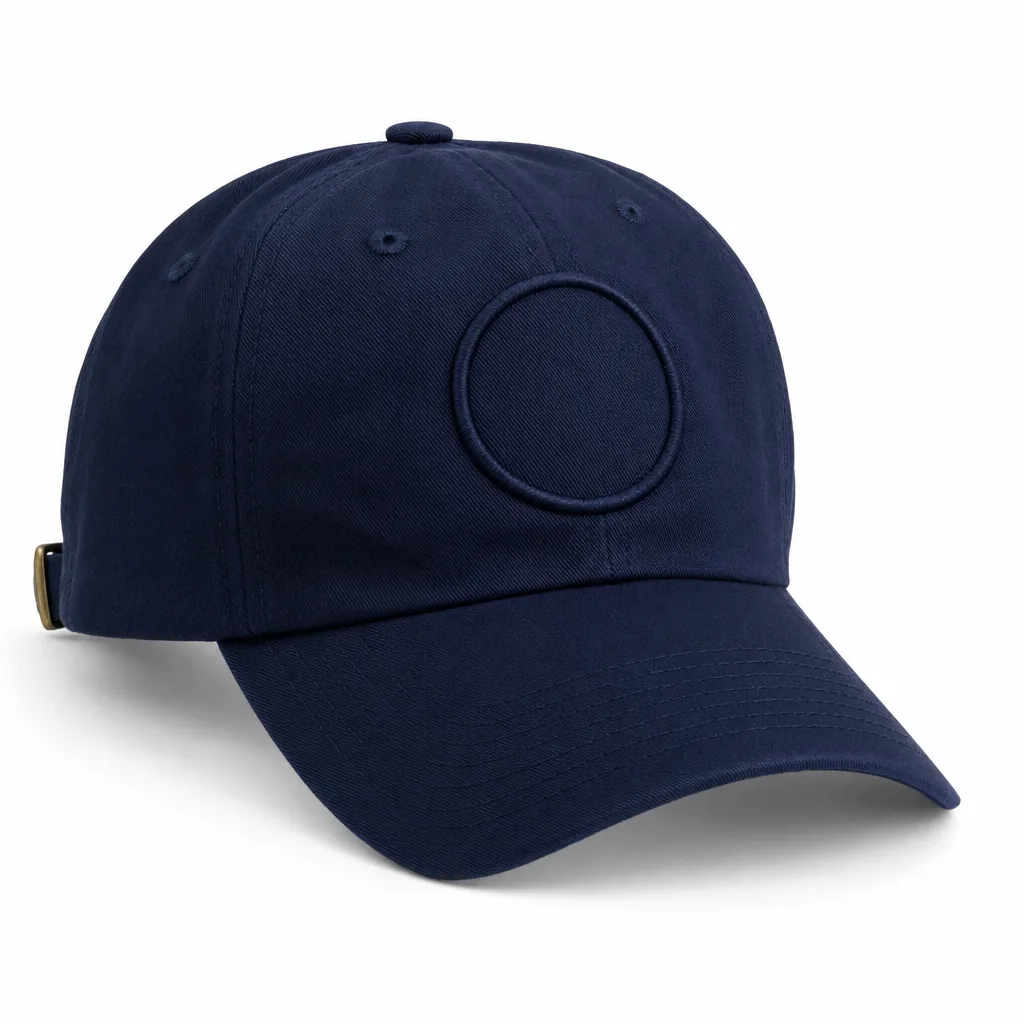
Baseball Hats For Men Export Shipping Checklist for Custom Hat Buyers - Cost & MOQ Breakdown - 2026 Buyer's Guide is one of the most-asked questions we receive from international buyers, and for good reason. With dozens of factories competing for your order and an alphabet soup of technical terms in every supplier quote, even experienced importers can feel lost. This guide consolidates what we have learned producing custom hats for clients in 40+ countries.
Why baseball hats for men export shipping checklist needs a separate sourcing plan
A baseball hats for men export shipping checklist needs a separate sourcing plan because sizing, packing cube, labeling, and landed cost are locked together earlier than most buyers think. A men’s structured 6-panel cap normally uses a deeper crown block, 58-60 cm grading, a 3.5-4.0 cm sweatband, medium or hard buckram, and a 2.5-2.8 mm PE brim; that build does not pack like an unstructured fashion cap. A 280-320 gsm cotton twill cap with curved brim typically cartons at 144 pcs in a 58 x 48 x 46 cm master carton, while enzyme-washed unstructured cotton can often fit 180-200 pcs in nearly the same cube. On a 3,000-piece shipment, that difference can move chargeable weight enough to change air freight from about $1.10 per cap to $0.72-$0.85 before duty, brokerage, and inland trucking. For Canada or EU shipments, approve fiber content, COO marking, importer details, care label language, and HS code before cutting; relabeling finished caps after packing is slow, uneven, and usually costs $0.08-$0.18 per piece plus delay.
Decoration control is the main reason a men’s cap RFQ cannot be sourced from a generic checklist. Team, workwear, and streetwear programs often require Pantone TCX or Pantone Coated color targets, Delta-E tolerance under 1.5-2.0 for key panels, numbered size or fit runs, and logo placement held within 2-3 mm. Flat embroidery on Tajima, Barudan, or ZSK heads can run cleanly at 650-750 stitches per minute when the digitizing includes correct underlay and pull compensation, but 3D puff slows the line and raises rejects if foam height, satin width, and edge sealing are not specified. Patch programs add different risks: merrow border density, heat-press temperature around 150-165 C, adhesive migration on polyester twill, needle penetration on leather patches, and crown distortion after pressing. Our standard practice at CrownsForge is to price embroidery by stitch-count bands because a 6,000-stitch wordmark and a 14,000-stitch mascot do not use the same thread, trim time, or machine capacity.
Cost, compliance, and freight terms should be frozen before the purchase order, not negotiated during final inspection. For stock 280-320 gsm cotton twill or polyester twill, a realistic MOQ is usually 300 pcs per color; custom-dyed fabric, recycled polyester certificates, private-label buckles, or Pantone-matched sandwich brims usually push MOQ to 1,000-3,000 pcs. A proper baseball hats for men export shipping checklist should state AQL 2.5 for major defects and 4.0 for minor defects, seam allowance tolerance, shade band approval, logo position tolerance, carton drop-test rules, polybag suffocation warning text, and needle detection if required by the retailer. Audit files are not paperwork decoration: sedex-audit-cap-supplier-guide.html">BSCI 2.0, Sedex SMETA 4-Pillar, ISO 9001, OEKO-TEX or recycled material reports can decide whether a buyer’s compliance team releases the booking. Freight language must be exact: FOB Ningbo, FOB Shanghai, LCL sea freight, air courier, or DDP with duty and last-mile delivery included. A cheap cap price can disappear fast once bulky cartons reach the destination warehouse.
Factory capability checks before quoting
Before any FOB or DDP price is believable, confirm the factory can build the exact cap, decoration, and packing method listed in your baseball hats for men export shipping checklist. For embroidery, ask what is running in bulk production, not what sits in the sample room. Tajima, Barudan, and ZSK heads handle 3D puff, curved six-panel fronts, metallic thread, and lettering under 5 mm with different reject rates. A proper quote should name the DST file version, stitch count, thread brand, backing, foam thickness, and whether the logo crosses a front seam. Flat embroidery at 8,000 stitches usually adds $0.25-$0.45 per cap; dense 3D puff at 12,000-18,000 stitches can add $0.60-$1.20 because trimming, thread changes, and puckering rejects rise. If flat embroidery, puff, applique, chenille, PVC, and leather patches are priced the same, the costing is not real.
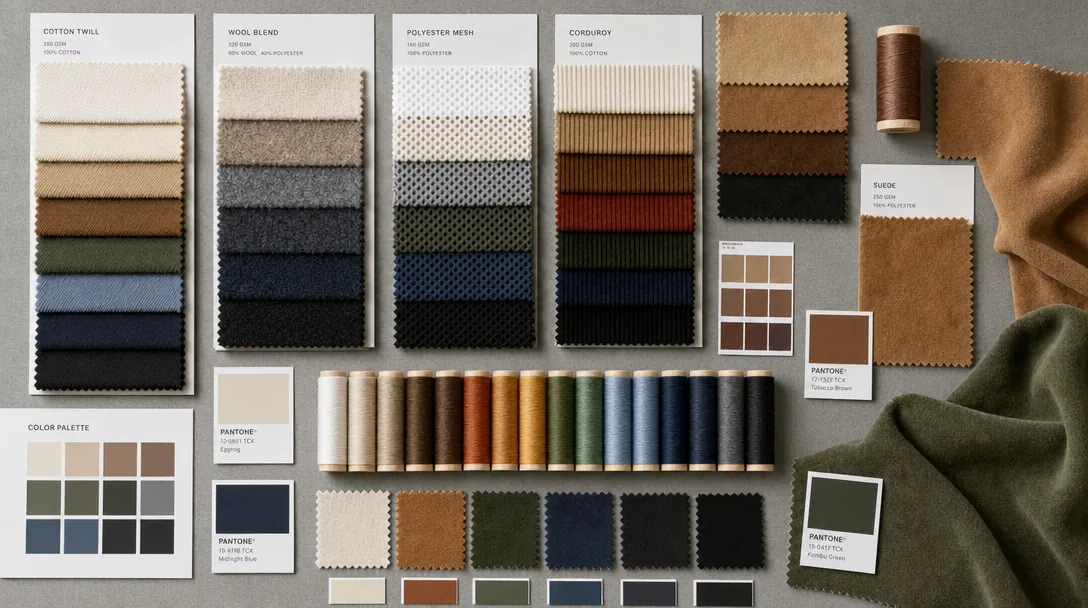
Fabric capability should be verified before negotiation, because a cheap quote based on the wrong cloth is useless after lab dips fail. Specify composition, weight, shrinkage, hand feel, and color-control method: 260-300 gsm cotton twill, 150-180 gsm polyester performance fabric, nylon taslan, brushed canvas, acrylic-wool blend, and foam-backed trucker fronts all sew, steam, and carton-pack differently. For repeat orders, approve Pantone TCX or TPX lab dips before cutting and hold bulk color around Delta-E 1.5-2.0 where the substrate allows it. Name the construction clearly: 5-panel camper, 6-panel structured, unstructured dad cap, foam-front trucker, low-profile crown, or high-profile pro shape. Closure affects both cost and MOQ. Plastic snapback is the safest for mixed sizing; metal buckle with tuck strap adds about $0.18-$0.35; fitted sizing from 6 7/8 to 7 5/8 requires a size matrix before fabric booking.
Compliance, paperwork, and packing are capability checks, not after-quote administration. Ask for current BSCI 2.0, Sedex SMETA 4-Pillar, or ISO 9001 records if audited production is required, then verify needle-control sheets, broken-needle logs, metal-detection records, carton drop-test results, and AQL 2.5 final inspection reports. Our standard practice at CrownsForge is to confirm sample-room capacity, daily embroidery output, carton dimensions, gross weight, HS code, Incoterms, warning labels, polybag rules, and export carton marks before releasing a formal quote, because freight, relabeling, and repacking can erase a low unit price. Separate MOQ by fabric, color, and process. Stock cotton twill with flat embroidery may work at 300 pcs, while custom-dyed fabric, molded rubber patches, private-label taping, retail barcode stickers, or size-graded fitted caps usually push the practical MOQ to 1,000-3,000 pcs per color. Require written specs, dated sample comments, and production photos from cutting through final packing before balance payment.
MOQ, pricing and sample approval
MOQ has to be costed by colorway, size run, and committed material, not by the headline PO quantity. For basic 5-panel or 6-panel baseball hats for men in stock 16x12 or 20x10 cotton twill, stock sweatbands, and standard plastic snapback or metal buckle closure, 300 pcs per colorway is usually workable. Once you move to custom-dyed fabric, the practical floor is closer to 500 pcs because the dye house charges for lab dips, minimum vat loading, and shade control against Pantone TCX. Yarn-dyed plaid, recycled polyester twill, 75D-150D performance fabric, specialty spacer mesh, private-mold buckles, and custom jacquard taping often start at 1,000 pcs. Fitted caps need stricter math: a 576-piece run split from 6 7/8 to 8 can leave unproductive quantities in slow sizes, so grade rules and carton ratios must be approved before price negotiation. Bucket hats are not automatically cheaper; extra fabric consumption, wider brim fusing, and slower pressing can make them 12-25% higher than a comparable embroidered cap.
For 2026 costing, a structured cotton twill cap with 3D front embroidery is typically $2.80-$4.60 FOB Ningbo or Shanghai at 500 pcs, assuming 8,000-12,000 stitches on Tajima, Barudan, or ZSK heads and no developed trim. A fitted cap with buckram front panel, woven patch, branded taping, size sticker, sandwich visor, and back embroidery is more realistically $4.80-$7.20 FOB before freight, duty, and destination handling. Keep tooling and setup outside the unit price so comparisons stay clean: embroidery digitizing is usually $35-$80 per logo, woven patch setup $50-$100, PVC or rubber patch molds $120-$250, and metallic, glow, or heavy rayon thread can add $0.08-$0.30 per cap. Specify fabric in Pantone TCX, printed and molded trims in Pantone C or U, and agree whether Delta-E under 1.5 is mandatory or only a target. CrownsForge blocks bulk cutting until the PPS confirms stitch density, thread tension, crown height, visor curve, sweatband handfeel, label placement, polybag warnings, and carton marks.
A useful baseball hats for men export shipping checklist should freeze the PPS sample before bulk fabric booking, because changing crown height, visor radius, or Pantone shade after cutting turns a sample correction into a remake claim. Plan 7-10 days for artwork cleanup, digitizing, lab dips, and first sample; 5-7 days for a PPS revision if embroidery pull, patch merrow edge, visor curve, or thread color is wrong; and 25-40 days for bulk production after deposit and signed PPS. Final inspection should be booked to AQL 2.5 major / 4.0 minor, with specific checks for loose threads, oil stains, distorted visors, skipped stitches, sweatband puckering, barcode readability, carton drop strength, and size ratio. Add 4-7 days for inspection release, carton sealing, commercial invoice, packing list, booking confirmation, and certificate documents if requested. For Canada, confirm HS code 6505, bilingual retail labeling where applicable, and DDP duty/GST assumptions. Packaging changes both cost and damage rate: plain polybag $0.03-$0.06, printed retail bag $0.08-$0.15, crush-resistant inner box $0.25-$0.60 per unit.
Quality inspection and shipping risk
Close quality risk before vessel booking, because once cartons are sealed the argument shifts from manufacturing facts to claims paperwork. Put AQL 2.5 major / 4.0 minor into the baseball hats for men export shipping checklist, using ANSI/ASQ Z1.4 General Inspection Level II for final random inspection. For 300-1,000 pcs, that usually means checking 50-80 hats depending on lot size; for 5,000 pcs and above, add an inline inspection after the first 300 finished hats and a pre-final carton audit at 80% packed. Define defects in measurable terms: front embroidery off-center over 2 mm, skipped stitches over 3 mm, visor curve variance beyond the approved sample, sweatband puckering, loose top button, oil marks, panel shade mismatch beyond Delta-E 1.5 against the approved Pantone TCX, and carton shortage. Embroidery must be inspected against the approved DST file, not just the artwork PDF. Record machine output from Tajima, Barudan, or ZSK heads, thread brand and color, stitch count, backing type, needle size, and whether EVA foam was used for 3D puff logos.
Treat shipping terms as liability control, not a line on the proforma invoice. FOB Ningbo or Shanghai is usually the cleanest structure when the buyer has a forwarder, but local China charges still commonly add USD 180-350 per shipment before ocean freight. DDP can work for 300-1,000 pc reseller orders, but only when the quote separately names import duty, customs clearance, fuel surcharge, remote-area fees, and last-mile delivery; otherwise the factory or trader is hiding risk in a single landed price. Baseball caps normally fall near HS 6505, but exact classification depends on fiber content, knit versus woven construction, lining, and destination customs practice, so the commercial invoice, packing list, care label, and material declaration must tell the same story. Our standard practice is to archive the gold sample, fabric lot number, embroidery file, thread chart, carton label artwork, inspection report, and final packing list for every export order. Confirm master carton size early: a 58 x 42 x 38 cm carton versus a compressed 54 x 38 x 34 cm carton can change volumetric billing enough to wipe out a narrow DDP margin.
Buyer checklist for the next RFQ
A serious RFQ starts with a manufacturing build sheet, not mood-board images. Name the exact cap body first: 5-panel camp cap, 6-panel dad cap, structured snapback, low-profile fitted, trucker, rope cap, or unstructured running cap. Then give measurable specs: crown height in cm, visor length, visor curve radius if fixed, buckram yes/no, eyelet count, closure type, sweatband fabric, inside taping width, under-visor color, and button color. Fabric must be called out by composition and weight, such as 100% cotton twill at 260-300 gsm, brushed chino twill at 240 gsm, recycled polyester at 150-180 gsm, 70D nylon taslan, 8-wale cotton corduroy, or 100D polyester mesh for trucker backs. Use Pantone TCX for dyed fabric and Pantone C or U for printed trims; phone photos and website screenshots are not color standards. For repeat programs, attach the approved sample number and a Delta-E tolerance, usually below 1.5 for licensed sports, retail replenishment, or multi-drop orders.
Artwork and trim details decide whether a factory can quote cleanly or has to pad the price. Send AI, EPS, or vector PDF files with fonts outlined, plus a placement map showing front, side, back, under-visor, closure, sweatband label, and inside seam label positions in mm from fixed seams or panel edges. Flat embroidery is usually costed by stitch count; a typical front logo is 8,000-12,000 stitches on Tajima, Barudan, or ZSK heads, while 3D puff needs 2-3 mm foam, wider satin columns, slower machine speed, and more trimming labor. For patches, specify woven, embroidered, chenille, PVC, leather deboss, silicone transfer, sublimated twill, or heat-applied felt, with finished dimensions, border type, backing, and minimum bend radius. Low-profile fitted caps need special review because stiff PVC or leather patches can wrinkle the crown during heat pressing. For U.S., Canada, or EU shipments, put fiber content, country of origin, RN or CA number, bilingual wording, barcode format, hangtag language, and carton marks into the RFQ before sampling.
The baseball hats for men export shipping checklist should lock MOQ, packing, inspection, and incoterms before unit price is negotiated. State quantity by color, size, and delivery drop: 600 pieces in one black Pantone TCX shade is not the same as 600 pieces split across six colors and three fitted sizes. Practical MOQ is 300-500 pieces per color for standard cotton twill caps, about 1,000 pieces for custom-dyed fabric, and 100-200 pieces only when stock fabric, stock closures, and simple embroidery are acceptable. Separate tooling from the unit cost: embroidery digitizing is typically $20-$60 per logo, PVC patch molds run $80-$180, custom metal buckle tooling starts around $150, and mill lab dips may add $25-$45 per color. Ask for FOB Ningbo or Shanghai, EXW Yiwu, DDP, and courier pricing as separate lines, with carton limits such as 58 x 42 x 38 cm and 12-15 kg gross weight. CrownsForge normally lists AQL 2.5 final inspection, BSCI 2.0 or Sedex SMETA 4-Pillar audit availability, and polybag versus plastic-free packing as separate RFQ decisions.
Working with CrownsForge
Export planning has to lock before bulk sewing closes, because carton cube, HS code, origin marking, and Incoterms can change landed cost by more than a $0.20 sewing-price gap between factories. For U.S., Canada, EU, and UK entries, the commercial invoice, packing list, fiber label, and importer-of-record data must match line by line: “100% cotton twill” on the invoice and “65/35 cotton-poly” on the care label is a customs hold waiting to happen. A normal 2,000-piece order of structured 6-panel men’s baseball caps packs into about 20-26 master cartons at 58 x 42 x 45 cm, usually 75-100 pieces per carton depending on crown height and visor curve. Unstructured promo caps can compress closer to 16-20 cartons if nested correctly, but over-compression will crease buckram, deform sandwich visors, and create complaints that no freight claim will cover.
A practical baseball hats for men export shipping checklist is really a release-control document, not a stack of forms made after packing. Before pickup, I want AQL 2.5 final inspection status, needle-detection or broken-needle logs, carton drop-test photos, moisture readings under 12%, UPC or FNSKU scan results, SKU ratio by carton, country-of-origin label position, and carton marks matching the booking. For licensed sports, retail, or Amazon FBA shipments, add hangtag photos, polybag suffocation warnings, inner-carton assortment shots, and GS1 barcode verification before the forwarder confirms cut-off. CrownsForge keeps BSCI 2.0 and Sedex SMETA 4-Pillar files ready because social-compliance paperwork requested after packing can cost three to seven days and miss a Ningbo or Shanghai vessel. For 2026 budgets, allow $0.18-$0.35 per cap for export cartons, PE bags, desiccants, labels, palletizing if required, and factory handling before ocean freight, duty, brokerage, and final-mile delivery.
Frequently Asked Questions
Can I order a sample before bulk production?
Yes. We strongly recommend approving a pre-production sample before mass production. Samples are charged at 35 to 60 USD each plus express shipping, fully refundable against confirmed bulk orders over 500 pieces.
How long does production take?
Sampling takes 7 to 12 days. Bulk production runs 20 to 30 days depending on quantity, fabric availability and decoration complexity. Inspection and packing adds another 3 to 5 days before shipment.
What file format should I send for my logo?
Vector files (AI, EPS, PDF) are ideal. High-resolution PNG or JPG at 300 dpi on transparent background works as a fallback. Provide Pantone color references for accurate reproduction.
Do you support sustainability certifications?
Yes. We work with GOTS organic cotton, GRS-certified recycled polyester, OEKO-TEX Standard 100 fabrics, and are BSCI and Sedex audited. Certification documentation can be provided per order.
Which shipping methods do you support?
We support FOB, CIF and DDP shipping. Air express for samples and small orders, sea LCL for 100 to 500 pieces, sea FCL for 5,000+ pieces. Door-to-door DDP available for US, EU, UK, Canada and Australia.
How does ordering custom fitted hats for men work?
When evaluating custom fitted hats for men, the key considerations are construction quality, decoration capability, MOQ flexibility and lead time. Explain the buyer intent behind baseball hats for men export shipping checklist, when it differs from generic hat sourcing, and what decisions affect cost, lead time and compliance. Describe how CrownsForge manages baseball hats for men export shipping checklist programs with sampling, decoration, QC and export coordination.
What should buyers know about nike bucket hats for men?
When evaluating nike bucket hats for men, the key considerations are construction quality, decoration capability, MOQ flexibility and lead time. Explain the buyer intent behind baseball hats for men export shipping checklist, when it differs from generic hat sourcing, and what decisions affect cost, lead time and compliance. Describe how CrownsForge manages baseball hats for men export shipping checklist programs with sampling, decoration, QC and export coordination.
How does ordering custom embroidered baseball hats work?
When evaluating custom embroidered baseball hats, the key considerations are construction quality, decoration capability, MOQ flexibility and lead time. Explain the buyer intent behind baseball hats for men export shipping checklist, when it differs from generic hat sourcing, and what decisions affect cost, lead time and compliance. Describe how CrownsForge manages baseball hats for men export shipping checklist programs with sampling, decoration, QC and export coordination.
How does ordering custom leather patches for hats work?
When evaluating custom leather patches for hats, the key considerations are construction quality, decoration capability, MOQ flexibility and lead time. Explain the buyer intent behind baseball hats for men export shipping checklist, when it differs from generic hat sourcing, and what decisions affect cost, lead time and compliance. Describe how CrownsForge manages baseball hats for men export shipping checklist programs with sampling, decoration, QC and export coordination.
What is the best shipping method for hats?
It's always better to package the hat in a size-appropriate box and not mash it into a smaller one. In some instances, maybe you don't need a box. Instead of always using a box, you can choose to ship soft and bendable hats in a plastic shipping bag with some protective material.
Ready to start your custom hat project?
Send us your tech-pack, sketch or even just an inspiration photo. We will respond with a detailed quotation and digital mock-up within 24 hours.
Request a free quoteRelated guides
Corduroy Hat: Properties, Costs and How to Spec It Right (2026 Update)
Read article →Camouflage Bucket Hat: Properties, Costs and How to Spec It Right - Cost & MOQ Breakdown - Cost & MOQ Breakdown - Cost & MOQ Breakdown
Read article →
Custom Hat Trucker: The 2026 Sourcing & Manufacturing Playbook - Cost & MOQ Breakdown
Read article →We hope this guide demystifies baseball hats for men export shipping checklist for custom hat buyers - cost & moq breakdown - 2026 buyer's guide and helps you move forward with confidence. If you have questions specific to your project, our English-speaking sales engineers are one message away.