
5-panel Hat Men: A 2026 B2B Sourcing Guide - 2026 Buyer's Guide
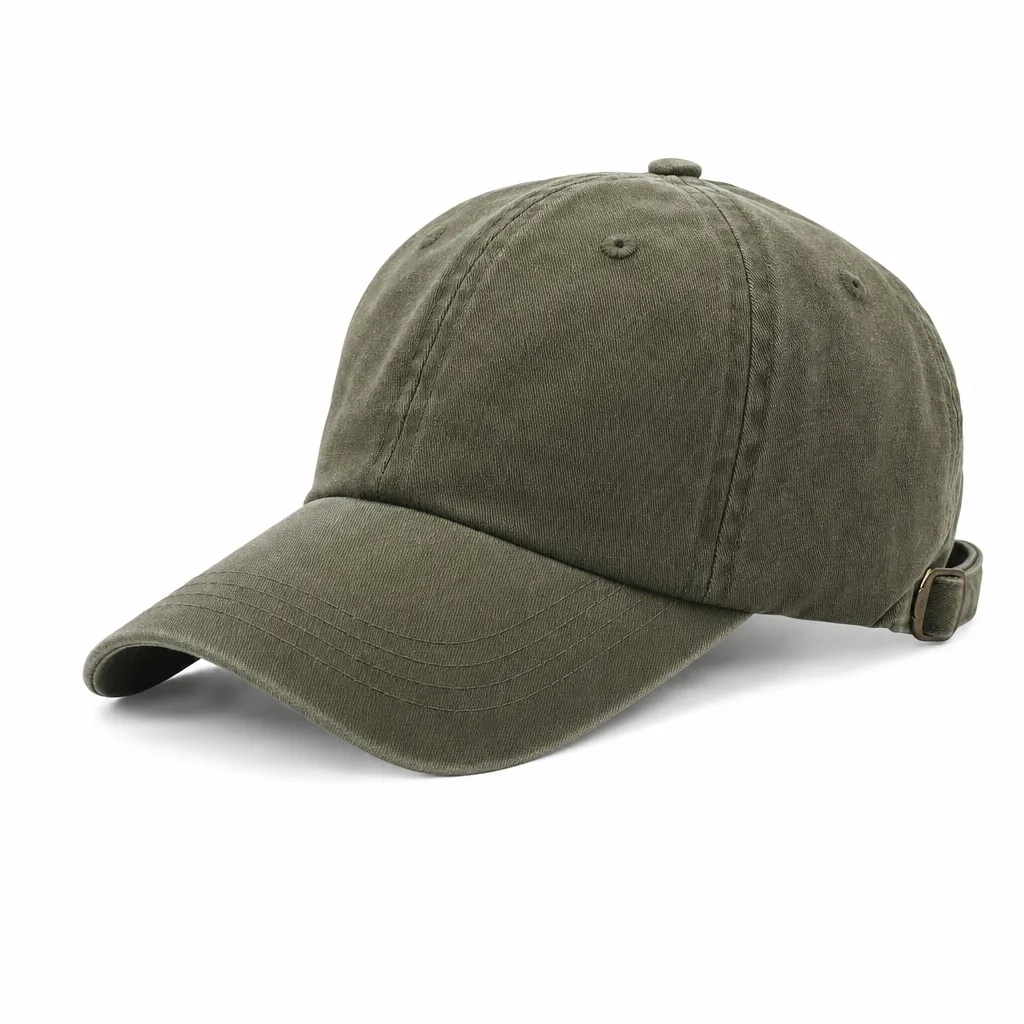
Every week, our sales team answers detailed questions about 5-panel hat men: a 2026 b2b sourcing guide - 2026 buyer's guide. We wrote this guide so that wholesalers, streetwear brands, corporate buyers and promotional resellers can compare options with full information, and avoid the traps that show up only after production has started.
6 Panel Hat Custom
A custom 6-panel cap is a different product architecture, not a simple variant of a 5-panel hat men block. The extra seam changes the crown geometry, front break, and decoration window: on a 6-panel, the front logo has to work around a center seam, while a 5-panel crown gives one uninterrupted billboard panel. That difference should be locked before pricing. A washed low-profile dad cap in 260 gsm cotton twill with no buckram, a self-fabric tuck strap, and 6 stitches per cm will not consume the same labor or hold the same profile as a structured team cap in 320 gsm poly-cotton twill with 0.8 mm buckram, a pre-curved PE visor insert, and a 7-hole plastic snap. In a usable tech pack, I would freeze crown height in mm, visor length and curve, seam allowance, top-button diameter, eyelet construction, sweatband spec, underbill color, and Pantone TCX references for shell and trims. For dyed fabrics, a realistic approval standard is Delta-E 1.5 to 2.0 against signed lab dips; anything looser creates visible shade variation across crown panels and closure parts.
Most claims on 6-panel programs come from decoration accuracy and shape retention, not from the shell fabric itself. If the logo is embroidered, specify the machine platform—Tajima, Barudan, or ZSK—the thread brand, stitch count ceiling, backing weight, and placement tolerance. For retail-grade caps, plus or minus 2 mm on logo position is a fair factory limit; beyond that, the center seam can visibly pull satin columns off register or create edge shadowing on dense fills. FOB Yiwu pricing is usually $2.10 to $3.40 at 500 pcs for a basic brushed twill cap with flat embroidery; pigment wash, woven flag label, printed seam tape, metal buckle, 3D embroidery, or applique typically pushes landed factory cost to $3.80 to $5.20. MOQ is often quoted at 144 to 300 pcs per color, but once you add specialty fabrics, custom visor molds, or split deliveries, 500 pcs is the practical floor. For QC, AQL 2.5 is still the normal export standard. I would check crown symmetry, visor alignment, sweatband join, seam puckering, and carton recovery after a 24-hour compression test, because weak buckram and cheap PE inserts deform quickly in hot containers.
The commercial decision is whether the 6-panel shape serves the channel better than 5-panel hat men styles. Six-panel caps usually outperform in teamwear, uniform, golf, and promotional programs because the fit is familiar and more forgiving across head shapes. A 5-panel works better when the artwork needs a clean front billboard for screen print, heat transfer, or large centered embroidery; on a 6-panel, the center seam can split text, distort faces, or force the digitizer to rework column angles and underlay. That matters more than a $0.20 to $0.40 FOB difference. Buyers also make a repeat mistake: approving one sample and assuming any factory can clone it. They cannot. Pattern blocks, visor molds, sewing sequence, needle density, and operator handling can move crown height or opening by 5 to 8 mm, which is enough to change the fit and silhouette. Our standard practice is to approve fit samples from the actual production line, then back the order with sedex-audit-cap-supplier-guide.html">BSCI 2.0 or Sedex SMETA 4-Pillar records when the customer’s compliance team requires them.
6 Panel Hat Wholesale
Six-panel wholesale lives or dies on geometry, not trend. The extra two vertical seams create a rounder crown and more forgiving grading, which is why school, teamwear, and promo programs above 5,000 pieces usually report fewer fit complaints than comparable 5-panel hat men runs. You do give up some front-decoration real estate: a center seam and adjacent wedges break up oversized prints and wide satin fills. In return, you get better crown recovery after carton compression and ocean transit, especially when the front is built with 0.6 to 0.8 mm buckram and a PE visor insert in the 1.8 to 2.2 mm range. For a standard baseball profile, I’d lock crown height, visor length, bill curl angle, eyelet count, seam tape width, and closure spec before the first proto; leaving those open is how approvals drift from sample room to bulk. Fabric is where quoting gets sloppy fast. A dependable baseline is 100% cotton twill at 260 to 320 gsm; brushed chino at 220 to 250 gsm gives a softer hand but shows needle cuts and hoop marks more readily during embroidery. Heather poly twill in 150D to 180D yarn looks clean in CADs but needs stricter shade control because melange lots can shift enough to show panel-to-panel mismatch under daylight. If the style leans trucker, 3 to 5 mm foam fronts and 100 to 120 gsm mesh change crown tension and stitch behavior, so the same logo developed for a 5-panel hat men silhouette cannot simply be dropped onto a 6-panel shell without redigitizing underlay and pull compensation.
Costing should start from decoration and color tolerances, not from a generic cap body. For dyed shells, use Pantone TCX; for embroidery thread, use Pantone Solid Coated, then hold bulk fabric to Delta-E 1.5 if repeat POs matter. On embroidery specs, call out finished logo size, stitch count, tatami vs. satin areas, underlay, backing weight, and machine assumptions. A 6,000-stitch center logo runs one way on Tajima or Barudan heads and another on ZSK when you add dense satin borders, and that difference affects edge clarity, thread-break rate, and output per head-hour. In Yiwu, stock-fabric six-panel MOQ is commonly 144 to 300 pieces per color, but dyed-to-match fabric, woven seam tape, molded PVC patches, or custom metal trims usually push the minimum to 500 to 1,000. Final inspection is where weak six-panel production gets exposed. The failures that trigger claims are rarely obvious in approval photos: embroidery off-center by more than 2 mm, visor sandwich shift over 3 mm, crown asymmetry, top-button misplacement, seam puckering at the front wedges, and sweatband join bulk at the back closure. Run finished goods to AQL 2.5, General Level II, with tighter internal limits on logo centering and visor shape because those are the first defects end customers notice. Our standard practice is also to test closure cycling, seam slippage, button pull, needle contamination, and salt-spray or rust resistance on metal hardware for DDP orders into humid markets. If the brief calls for a large uninterrupted billboard, 5-panel hat men is still the cleaner platform; if the priority is classic baseball shape, stable grading, and lower return risk, six-panel is the safer wholesale choice.
Custom 6 Panel Hat
A custom 6-panel cap should not be treated as a minor variation inside a 5-panel hat men program. The extra seam changes both fit and decoration economics. A standard 6-panel crown uses six narrower body panels, usually cut from 10-12 oz cotton twill, brushed chino at 220-280 gsm, nylon taslon at 110-160 gsm, or 65/35 poly-cotton for uniform and promotional orders. Structured builds typically use 0.45-0.60 mm PE buckram behind the two front panels; unstructured versions drop the backing and instead balance crown height, sweatband tension, and top-button pull so the cap collapses cleanly without twisting. In production, that means the same artwork can behave very differently on a 6-panel front than on a 5-panel hat men silhouette.
The front center seam is the make-or-break point. Oversized embroidery, 3D puff, and high-fill satin work will pucker or split visually if the digitizer ignores seam compensation, especially on enzyme-washed cotton or low-denier nylon. On Tajima, Barudan, or ZSK heads, our standard practice is to lower stitch density to around 0.38-0.42 mm, add edge-run or double zigzag underlay, and run a strike-off on actual shell fabric rather than a generic backing swatch. A 5-panel hat men shape gives one uninterrupted decoration field, so it is usually better for large streetwear graphics, screen-printed patches, or broad woven appliqué. A 6-panel cap wears closer to the head, grades more naturally across adult sizes, and generally fits sports, promo, and evergreen retail programs better when the logo is moderate in scale.
Most failures on custom 6-panel orders are written into the tech pack long before AQL 2.5 inspection catches them. The spec should lock crown height in centimeters, visor length and curve radius, seam allowance, eyelet type, stitch count on the visor, closure hardware finish, sweatband composition, and shell fabric tolerance within plus or minus 5 percent gsm. Color must be tied to Pantone TCX or TPX with lab-dip approval at Delta-E 1.0-1.5 under D65 light; vague notes like match closely are how you end up with mixed lots. For dark shades and outdoor use, add crocking, perspiration, and lightfastness requirements, especially on black, navy, and forest programs.
Pricing is driven by fabric and trim more than crown geometry. In Yiwu, a stock-twill 6-panel with flat embroidery, woven label, and metal buckle usually lands around $2.20-$4.30 FOB China at 500 pieces, while washed canvas, suede brim contrast, chain stitch, silicone patch, or two logo locations will move the range to roughly $4.80-$7.80. MOQ is commonly 144-300 pieces per colorway on stock fabric, but custom-dyed cloth or special trims often push it to 500-1,000. The defects that actually matter are front seam torque, visor edge exposure, eyelet drift, loose button wrapping, crown panel mismatch, and logo placement variance beyond 2 mm. Compared with a 5-panel hat men style, the 6-panel gives up some billboard space but usually wins on contour, commercial wearability, and reorder consistency.
7 Panel Hats Wholesale
A 7-panel cap is not a cosmetic variant of a 5-panel hat men program; it is a different pattern-making and sewing problem with a narrower tolerance window. The extra front geometry gives you a taller, squarer crown, but it also creates another seam junction that can print through the face if the front pieces are not cut and paired tightly. On production lines in Yiwu, a 6 mm seam allowance is standard, but the real control point is seam matching: even 1.5 to 2.0 mm drift at center front is enough to make the brim read off-axis when worn. Structured 7 panels also need a firmer front support than most 5-panel builds. We usually spec 0.55 to 0.80 mm PET buckram or resin-treated nonwoven, depending on crown height and fabric weight. Go too soft and the crown caves after steam pressing or carton compression; go too stiff and you get a hard ridge at the seam intersection. Decoration is where wholesale buyers misjudge 7-panel feasibility. A center seam cuts usable embroidery width to about 85 to 95 mm on clean flat runs unless the design is split, converted to a woven or PVC patch, or sewn post-forming on a cap frame with Tajima, Barudan, or ZSK heads. Fabric choice matters just as much as machine setup. A 210 to 230 gsm brushed cotton twill or chino will tolerate dense fill and edge walk far better than 70D to 110D taslon or recycled nylon, which show needle cuts, seam grin, and logo distortion fast when underlay is too heavy. Lock the spec sheet early: crown height in cm, visor length and curl, fabric gsm, closure type, seam tape color, and Pantone reference—TCX for dyed fabric, coated Pantone for print—with Delta-E below 1.5 on key panels. In today’s Yiwu market, MOQ is usually 144 to 300 pieces per colorway in stock fabric, closer to 500 for perforation, piping, or engineered print. FOB pricing typically lands around $2.30 to $3.60 basic, and $4.00 to $6.10 for recycled performance fabric with custom trims and inside branding.
Inspection on 7-panel hats has to focus on wear appearance, not just flat-table measurements, because these caps fail differently from 6-panel and 5-panel hat men styles. The front seam must look visually straight on-head under normal viewing distance; if the crown twists 3 to 4 mm, the buyer will usually blame the visor even when the root cause is panel imbalance. Check top button centering, left-right visor symmetry, sweatband join quality, closure pull strength, and shading variance under a D65 light box. On color-sensitive retail programs, I would cap panel and webbing variance at Delta-E 2.0 maximum, with a tighter target of 1.5 on the front crown. Embroidered logos crossing the seam need separate scrutiny for registration drift, underlay show-through, and uneven stitch tension where the needle crosses bulk. AQL 2.5 works for general promotional bulk, but it is too loose for licensed sports, streetwear, and department-store private label where logo cosmetics drive claim rates. For those accounts, we normally hold visual logo defects and seam alignment to AQL 1.5, even if the rest of the cap stays at 2.5. CrownsForge also treats closure hardware and sweatband stitching as functional checkpoints because failure there creates returns long after receipt inspection. Cost-wise, buyers should budget 8 to 15 percent above a comparable 5-panel or 6-panel run once slower sewing time, higher reject risk, and decoration limits are priced honestly. That premium is justified when the silhouette is central to the brand concept; it is wasted when the artwork is wide, seam-sensitive, or the target price is under $3.00 FOB.
5 Panel Hat Vintage
A vintage program for 5-panel hat men is decided by pattern control first, then wash recipe. The single front panel exposes every drafting mistake: if the side-panel pitch or center-front seam alignment drifts by even 2 mm, the crown will torque, the visor will read off-center, and front embroidery will pucker after laundering. For a credible 1990s hand feel, lock the shell before you talk decoration: 220-260 gsm cotton twill, 8-10 oz brushed canvas, or pigment-dyed herringbone are the safe range, with wash shrinkage under 3% and skew below 2% after enzyme or garment wash. If the customer wants a flatter streetwear profile, specify crown height at 8.5-9.0 cm, visor length at 7.0 cm, and either fully unstructured construction or 0.5-0.6 mm EVA support instead of hard buckram, which tends to blister and telegraph through washed shells. Keep the trims matte and quiet: antique brass clip closure, 30 mm cotton twill sweatband, tonal sewn eyelets, and low-sheen woven labels rather than bright plated hardware that looks wrong once the fabric is aged.
Most approval failures happen because buyers sign off photos instead of tolerances. A workable RFQ for 5-panel hat men should call out visor thickness at 3.0-3.5 mm, 6 or 8 brim stitch rows at 8-10 SPI, closure position tolerance within +/-3 mm, and color against the approved Pantone TCX standard at Delta-E below 1.5 before wash and below 2.5 after wash. If you are adding front embroidery, ask whether the factory is running Tajima, Barudan, or ZSK heads and whether the digitizer will cut stitch density, underlay, and pull compensation for softened fabric; washed cotton punishes stock embroidery files with tunneling and edge bite. At CrownsForge, we also simulate bulk wash before pre-production approval because shell, thread, sweatband, and visor board rarely shrink at the same rate.
Cost and lead time move sharply once washing and distressing enter the cap. In Zhejiang or Fujian, a stock-fabric vintage 5-panel hat men order typically lands around $2.40-$3.60 FOB at 300-500 pieces per color for cotton twill, flat embroidery, and standard trims. Add custom-dyed shell fabric, chain stitch, woven applique, printed seam tape, or heavy abrasion and you are more realistically at $3.80-$5.20 FOB, with practical MOQ rising to 800-1,200 pieces because laundries and mills do not optimize tiny runs. Production for cut-and-sew alone is usually 18-25 days, but enzyme wash, shade-band approval, anti-rust checks on metal trims, and crown rework often push ex-factory timing to 30-40 days. Final inspection should be run at AQL 2.5 with attention to seam torque after wash, visor-edge abrasion consistency, enzyme staining on sweatbands, hardware burrs, and carton-level shade variation. Any supplier quoting far under market should explain exactly what was removed: lighter gsm shell, lower-grade visor board, loose seam tolerances, or no salt-spray testing on metal trims.
5 Panel Trucker Hat
The appeal of a trucker is the uninterrupted front billboard, and that is exactly why weak workmanship shows immediately. In a 5-panel hat men program, the front crown is typically built with either 2.0 to 3.0 mm EVA foam laminated to polyester tricot or 0.6 to 0.8 mm buckram for a firmer hand, then matched with 120 to 150 gsm polyester mesh at the side and back. Standard commercial constructions use 8x8 or 10x10 hole mesh, a 10 to 12 oz cotton twill or 70D x 160D nylon taslon front panel, and a PE visor insert with 6-row stitching. The practical advantage is decoration space: you can run a 110 to 120 mm embroidery, TPU patch, or screen-printed badge without a center seam cutting through the artwork. That said, this profile is unforgiving. If the front panel leans more than 2 to 3 mm off center after blocking, buyers read it as cheap immediately. The recurring factory risks are foam lamination drift, mesh seam torque, visor mis-centering, and uneven crown shaping after heat setting.
Decoration on a foam trucker has to be engineered, not just approved from a mockup. On Tajima, Barudan, or ZSK embroidery heads, dense fills over foam should run at reduced penetration speed with lighter underlay and controlled stitch count, otherwise the needle perforates the foam, the top thread sinks, and the logo edge puckers. For 5-panel hat men styles, placement tolerance matters more than on a 6-panel cap because there is no center seam to disguise bad alignment; I would lock the logo baseline from visor seam to artwork at a fixed measurement on the tech pack and hold placement within ±2 mm. Buyers should also specify thread brand such as Madeira or Gunold, backing weight, patch border width, and, if heat-applied trims are involved, the exact press temperature and dwell time. Low-density foam starts to collapse fast if the transfer is over-pressed, especially above roughly 145 to 155°C for 12 to 15 seconds. Most failed truckers come from vague specs, not difficult sewing: crown height should be called out at 10.5 to 12.0 cm for a mid-profile adult fit, circumference at 58 cm ±0.5 cm, and color approval should use Pantone TCX with Delta-E under 1.5 on dyed front panels.
Cost is driven less by the 5-panel shell than by materials, decoration, and how tightly you control consistency. In 2026, a stock-fabric trucker in cotton twill and polyester mesh usually lands around $2.20 to $3.30 FOB Ningbo at 300 pcs per color with flat or 3D embroidery. Add woven or sublimated patches and you are more realistically at $3.40 to $4.90. If the brief calls for RPET mesh, moisture-wicking sweatbands, branded seam tape, and custom-dyed fabric, expect $4.80 to $6.80 and an MOQ of 500 to 1,000 pcs because mills typically want around 100 meters per shade. The inspection standard should be AQL 2.5, but I would apply tighter functional checkpoints on truckers: visor stitch rows within ±1 row, artwork placement within ±2 mm, snap closure riveting even, and brim symmetry checked against a centerline template. At CrownsForge, the defects that trigger rework are predictable and worth naming in the PO: twisted brim, foam collapse after carton compression, mesh tearing at side seam joins, off-axis crown shaping, and embroidery sinking after masters are overpacked beyond about 72 pcs per carton.
Working with CrownsForge for 5-panel hat men programs
The biggest risk in a 5-panel hat men program is weak front-end control, not whether one supplier is $0.10 cheaper. If the factory gets a usable tech pack on day one—AI or PDF artwork, Pantone TCX references, crown and bill measurements, closure specification, fabric callout in gsm, and DST/EMB files for embroidery—you can usually move to a blank prototype in 5 to 7 working days and a decorated salesman sample in 7 to 12. If those inputs are vague, you burn 2 to 3 weeks correcting avoidable issues like front rise, foam thickness, underbrim shade, or logo scale on the single front panel. On a five-panel shape, a 2 mm change in crown height or bill curve is visible immediately in hand, especially on streetwear fits where silhouette matters more than artwork. Realistic sample fees are $35 to $80 for a standard cotton twill or nylon cap with one decoration method, and $120 to $180 once you add molded TPU badges, printed seam tape, alternate closures, or multiple patch options.
MOQ planning needs to be honest early, because decoration setup usually drives cost harder than sewing minutes. For 5-panel hat men test orders, 144 to 300 pieces per colorway is workable; established programs often start making sense at 600 to 1,200 units when shell fabric, sweatband, buckram, and closures are shared across SKUs. One Tajima or Barudan embroidery file plus a woven flag label is easy to control. Three patch types, two closures, custom inner tape, and contrast underbrims will push both reject risk and unit cost up fast. CrownsForge typically prices straightforward 10x10 cotton twill builds around FOB Ningbo at $2.10 to $3.40 in volume, while 210 gsm nylon taslon, microfiber peach, webbing straps, silicone branding, or mixed decoration methods usually land in the $4.20 to $7.50 range. Buyers save more by standardizing trims and locking a clean BOM than by forcing the last few cents out of unit price.
Execution lives or dies on decoration control and factory discipline. A five-panel crown gives you a clean front billboard, but it also exposes digitizing mistakes immediately: high stitch density on 120 to 160 gsm nylon will pucker, and weak underlay on foam-backed fronts causes tunneling around patch edges. Sew-outs should be approved on actual shell fabric, not generic test cloth, and thread shade should be checked to a practical Delta-E tolerance when exact Pantone matching is not available in stock cones. Common methods are flat embroidery on Tajima, Barudan, or ZSK heads, 3D puff with EVA support, woven or merrowed patches, side-panel screen print, heat-transfer labels, and molded TPU or silicone badges for performance builds. The controls that actually de-risk bulk are less glamorous: current BSCI 2.0 or Sedex SMETA 4-Pillar audit reports, needle logs, restricted-substance procedures, and final inspection at AQL 2.5 with zero tolerance on critical defects. For retail-facing 5-panel hat men orders, 30 to 40 days production after PP approval is normal, plus 18 to 28 days ocean transit to Los Angeles under FOB; DDP air can land in 8 to 12 days, but freight can exceed the sewing cost of the cap.
Frequently Asked Questions
How long does production take?
Sampling takes 7 to 12 days. Bulk production runs 20 to 30 days depending on quantity, fabric availability and decoration complexity. Inspection and packing adds another 3 to 5 days before shipment.
Do you support sustainability certifications?
Yes. We work with GOTS organic cotton, GRS-certified recycled polyester, OEKO-TEX Standard 100 fabrics, and are BSCI and Sedex audited. Certification documentation can be provided per order.
What is the minimum order quantity (MOQ) for custom hats?
Our standard MOQ is 100 pieces per design and color, with sampling available from 1 piece. For complex multi-color logos or premium fabric upgrades, the MOQ can be lowered with a small per-piece surcharge.
What logo decoration techniques do you offer?
3D puff embroidery, flat embroidery, woven patch, leather patch, PVC patch, screen printing, sublimation, applique and laser etching, all in-house with no subcontracting.
Can I order a sample before bulk production?
Yes. We strongly recommend approving a pre-production sample before mass production. Samples are charged at 35 to 60 USD each plus express shipping, fully refundable against confirmed bulk orders over 500 pieces.
How does ordering custom hat trucker work?
When evaluating custom hat trucker, the key considerations are construction quality, decoration capability, MOQ flexibility and lead time. Cover everything buyers ask about 6 panel hat custom: how it's manufactured, what specs to request from a factory, typical MOQ and pricing, common quality issues to inspect for, and how this ties back to the broader 5-panel hat men sourcing decision. Cover everything buyers ask about custom 6 panel hat: how it's manufactured, what specs to request from a factory, typical…
What should I know about wholesale trucker hats?
When evaluating wholesale trucker hats, the key considerations are construction quality, decoration capability, MOQ flexibility and lead time. Cover everything buyers ask about 7 panel hats wholesale: how it's manufactured, what specs to request from a factory, typical MOQ and pricing, common quality issues to inspect for, and how this ties back to the broader 5-panel hat men sourcing decision. Cover everything buyers ask about 6 panel hat wholesale: how it's manufactured, what specs to request from a factory,…
How does ordering custom hats for men work?
When evaluating custom hats for men, the key considerations are construction quality, decoration capability, MOQ flexibility and lead time. Cover everything buyers ask about 6 panel hat custom: how it's manufactured, what specs to request from a factory, typical MOQ and pricing, common quality issues to inspect for, and how this ties back to the broader 5-panel hat men sourcing decision. Cover everything buyers ask about custom 6 panel hat: how it's manufactured, what specs to request from a factory, typical…
How does ordering custom embroidered trucker hats work?
When evaluating custom embroidered trucker hats, the key considerations are construction quality, decoration capability, MOQ flexibility and lead time. Cover everything buyers ask about 6 panel hat custom: how it's manufactured, what specs to request from a factory, typical MOQ and pricing, common quality issues to inspect for, and how this ties back to the broader 5-panel hat men sourcing decision. Cover everything buyers ask about custom 6 panel hat: how it's manufactured, what specs to request from a factory, typical…
Ready to start your custom hat project?
Send us your tech-pack, sketch or even just an inspiration photo. We will respond with a detailed quotation and digital mock-up within 24 hours.
Request a free quoteRelated guides
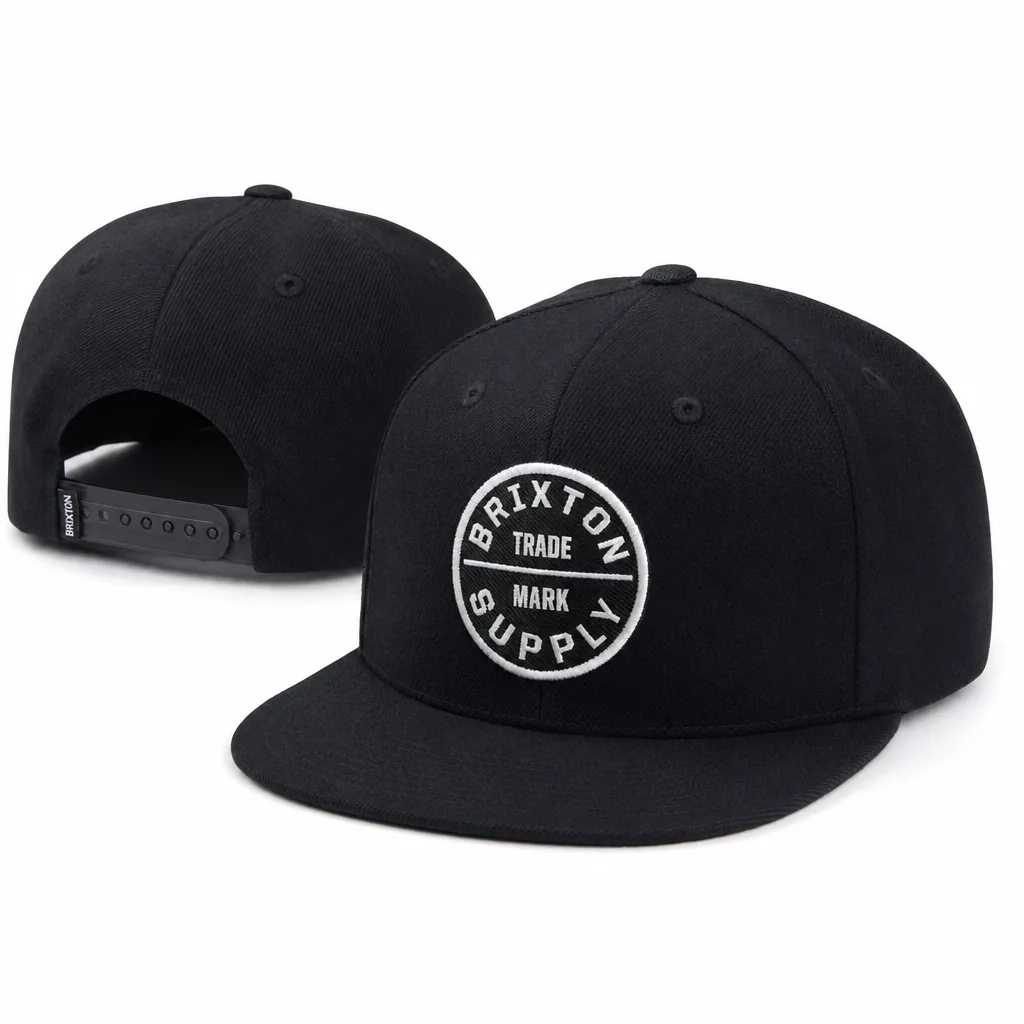
Snapback vs Fitted vs Adjustable: Cap Closure Systems Compared
Read article →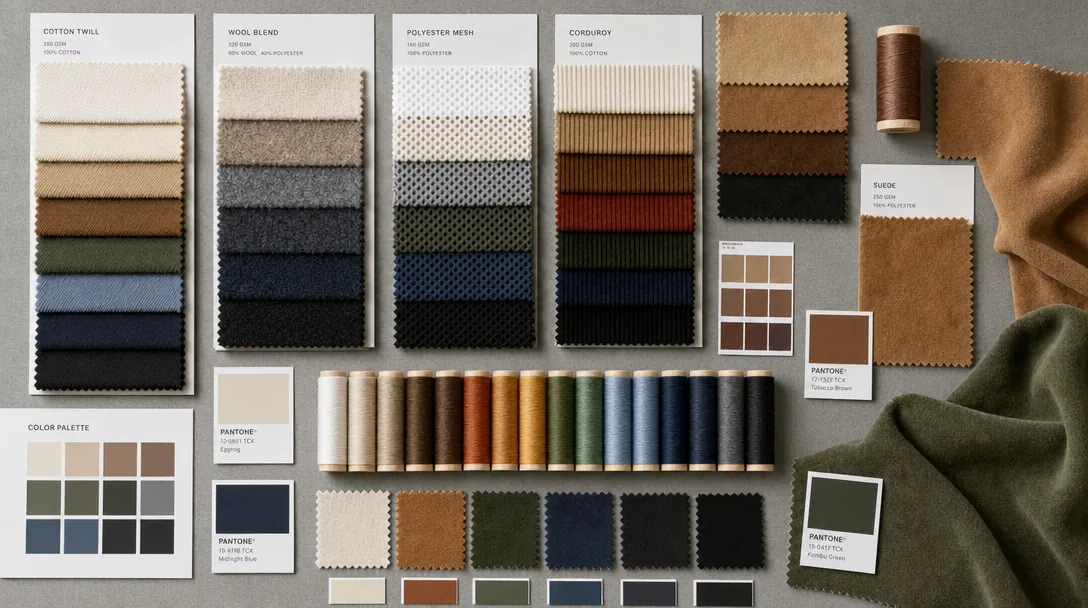
Sustainable Custom Hats: Eco-Friendly Materials, Recycled Fabrics & Certifications
Read article →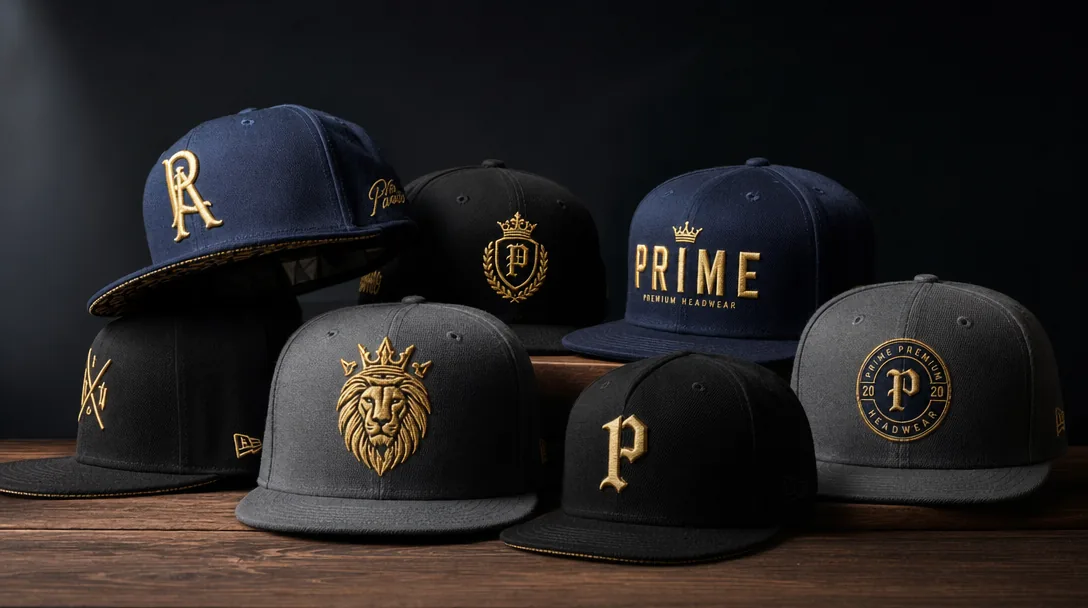
Woven Label Beanie Custom Bulk: A 2026 B2B Sourcing Guide
Read article →Sourcing custom hats does not have to be complicated. With the right manufacturing partner, clear specifications and a small upfront investment in sampling, you can launch a retail-quality product in 30 to 45 days.